Trail
vsRockhopper
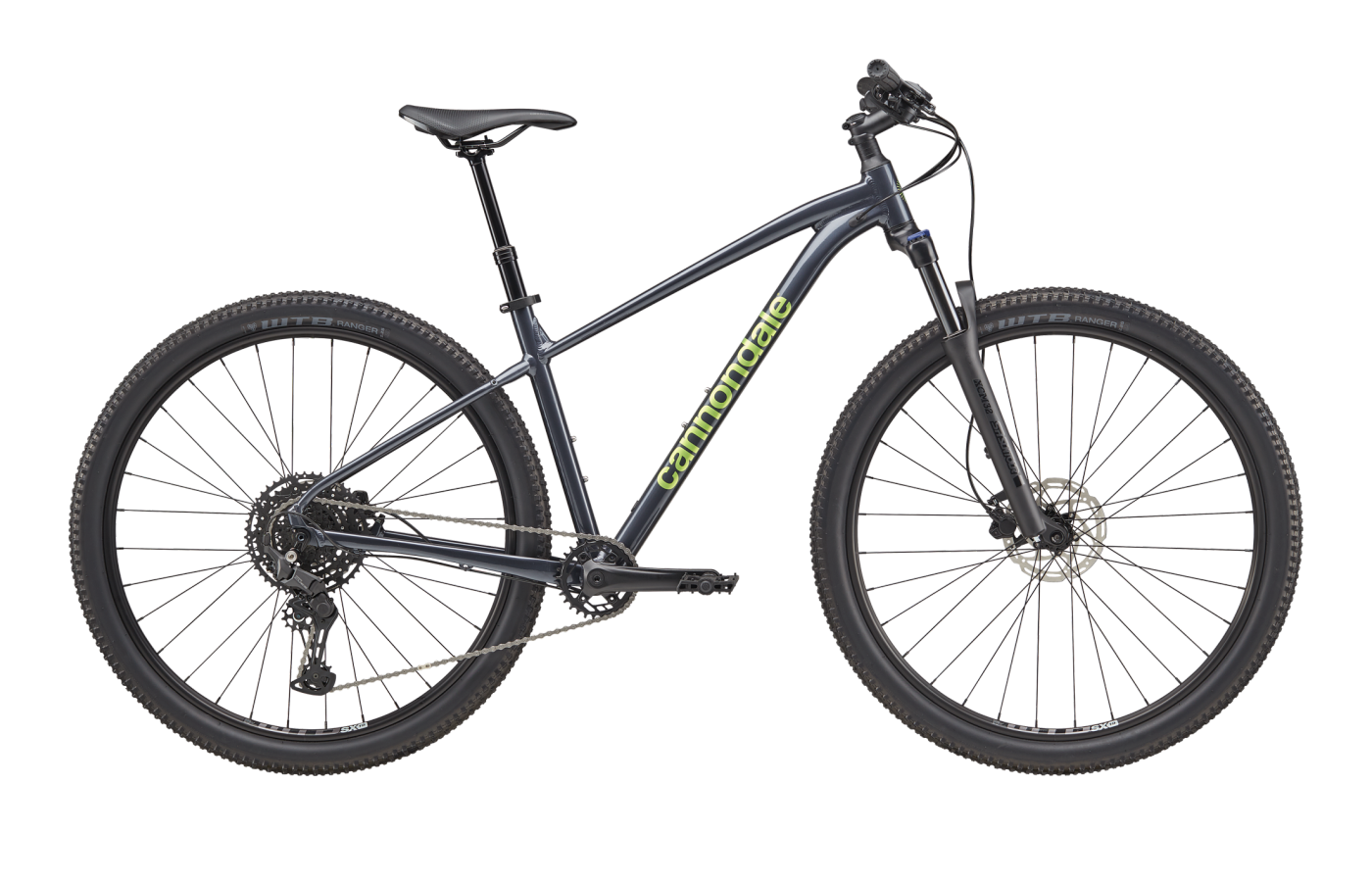
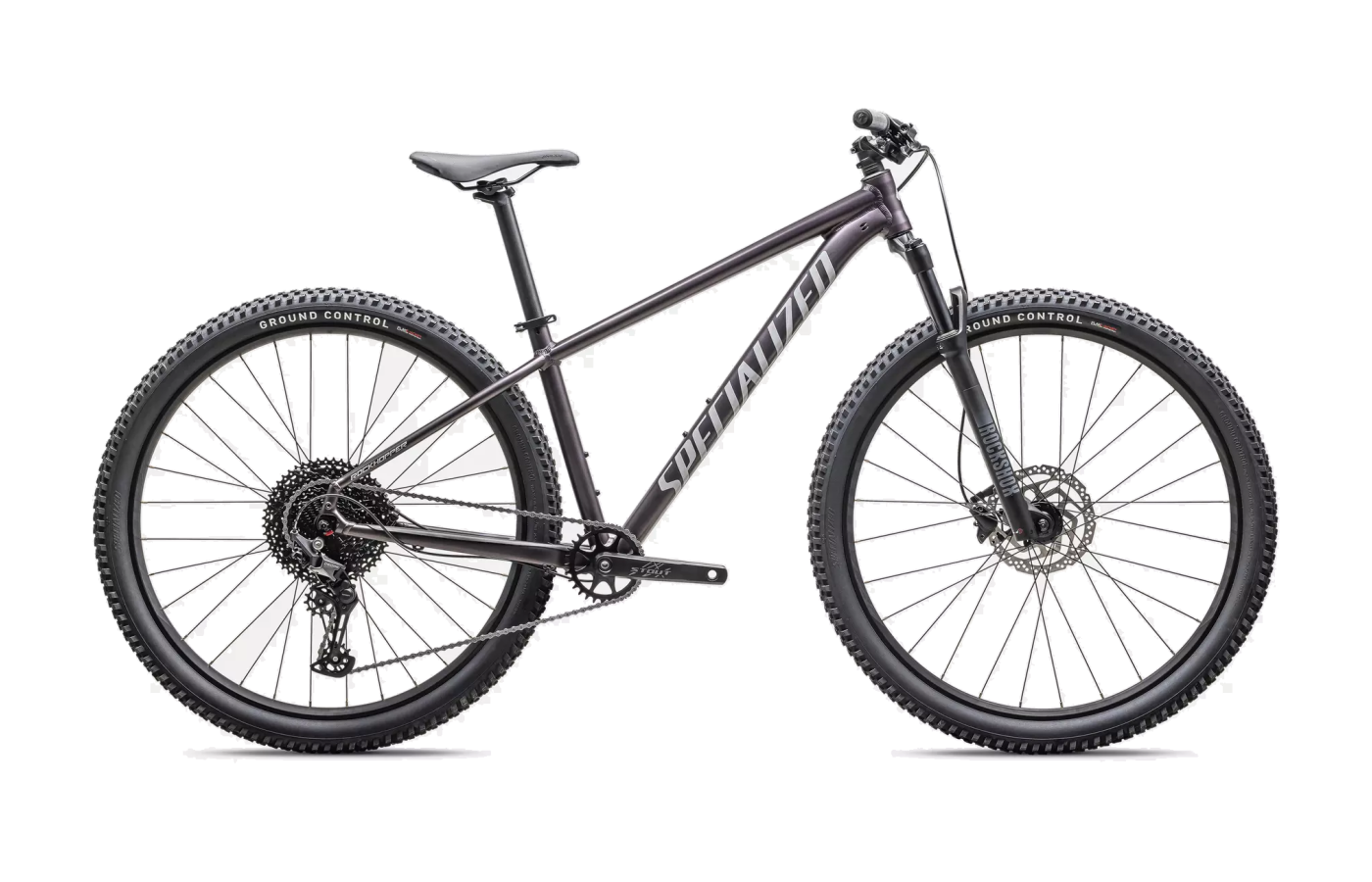
Two sub-$1k hardtails, two ideas of what an entry MTB should do.
The Cannondale Trail is the broad, beginner-friendly platform that scales down to $699. The Specialized Rockhopper is a tighter XC tool tuned for climbing speed.
Trail
- Cheapest way in at $699 — Trail 8 and Women's 8 undercut every Rockhopper build by $50 minimum.
- Right-Sized Wheels — XS/S frames roll on 27.5" so shorter riders aren't oversized; M/L/XL get 29".
- 120 mm SE option — the Women's SE 4 ships with Boost thru-axles and a longer fork for actual trail use.
- Forks are coil across the entire range — no air-sprung option even at the $1,175 top trim.
- Drivetrains top out at Shimano Deore 10-speed; no 12-speed Eagle or Deore M6100 here.
Rockhopper
- Lighter frame — BikeRadar weighed a size-small Elite at 13 kg; Rockhopper Comp comes in around 13.3 kg vs ~15 kg for the comparable Trail.
- Air fork on the upper builds — RockShox Judy Solo Air on Comp/Expert, tunable to rider weight, a "quantum leap" over coil.
- Wider tire clearance (59.7 mm vs Trail's 57.1 mm) and steeper seat angle put the rider in a stronger climbing position.
- Quick-release 9 mm axles and a straight 1-1/8" head tube — limited upgrade path to Boost wheels or modern forks.
- Conservative XC reach and 68.5° head angle feel "twitchy" or "nervous" once descents get steep.
Editor’s analysis
Same shelf, same shopper, same alloy hardtail bracket — but two very different bets on what a first mountain bike should reward.
On paper the Cannondale Trail and Specialized Rockhopper occupy the same corner of the bike shop: butted-aluminum hardtails, 9–12-speed drivetrains, coil or low-end air forks, both topping out around $1,300. Both have decade-plus model names and millions of riders behind them. But the lineups tell two different stories about what an entry-level rider should get.
The Cannondale Trail is the broader, more permissive ladder. Seven builds spanning $699 to $1,175, with both 7-speed microSHIFT bargain trims and a 120 mm-fork SE variant, plus Cannondale's SAVE rear-stay flex and a 68° head tube angle that reviewers consistently call "stable" and "confidence-inspiring." Right-Sized Wheels keep XS and S frames on 27.5" so smaller riders aren't fighting an oversized bike. It's pitched at the rider who isn't sure yet what they want — commuter, gravel-path cruiser, occasional singletrack — and gives them room to grow into the platform.
The Specialized Rockhopper picks a lane: cross-country efficiency. Geometry borrowed from the race-bred Epic, a 68.5° head tube angle, a steep ~74.5° effective seat angle reviewers measured, and a frame light enough that BikeRadar weighed an Elite at 13 kg. The Expert and Comp builds get the RockShox Judy air fork — a real upgrade over the coil units on every comparable Trail — and Bicycling called it "the new king of cheap mountain bikes" when it landed. Riders consistently praise the climbing position; just as consistently, they call the front end "nervous" or "twitchy" once the trail gets steep or chunky.
Put another way: the Cannondale Trail is the bike you buy when you don't know if you'll love mountain biking yet. The Specialized Rockhopper is the bike you buy when you already know you want to go fast uphill.
Where the builds differ.
Comparing our editor's-pick builds side-by-side. Winners highlighted row-by-row — lower price and weight, and the better-spec component, each mark a point.
Build variants & pricing
Both ranges sit between roughly $650 and $1,300, with seven (Cannondale) and nine (Specialized) trims to pick from. Spec jumps within each lineup are bigger than the price gap suggests.
Prices are current US MSRP. Cannondale's Trail line stops at coil-sprung forks across every build; if you want an air-sprung fork at this price point, only the Rockhopper Comp ($999) and up deliver it. The Trail's $699 Women's 8 and Trail 8 builds have no equivalent on the Rockhopper side, which floors at $649 with similar Altus components.
How they fit, how they steer.
Identical 425 mm reach. The Rockhopper's L-29 sits 7 mm lower in stack, runs a half-degree steeper head angle (68.5° vs 68°), and tucks the rear in 5 mm — a tighter, more XC-focused cockpit. The Trail's M frame trades a little reach-per-stack for stability.
Which size should I buy?
Size recommendations based on stack, reach, and effective top tube. Cannondale uses simple S/M/L labels; Specialized splits sizes by wheel size, with smaller frames on 27.5" and M/L/XL/XXL on 29".
→These are starting points. Flexibility, riding style, and preferred position all shift the answer — if you’re between sizes, a professional fit beats a chart.
What the magazines said.
Published reviews from trusted cycling outlets. Click through for the full write-up.
Which one should you buy?
If you want the cheapest way into a real hardtail and room to grow, get the Trail. If you want to climb fast and rack up XC miles, get the Rockhopper.
Trail
If you're not yet sure mountain biking is going to stick — and you want a confidence-inspiring bike that handles gravel, greenways, and the occasional blue-graded trail without overcommitting your wallet — the Trail is the safer call. The 27.5" small frames are a real win for shorter riders, and the SE build leaves room to push harder if you catch the bug.
Rockhopper
If you already know you want to go fast uphill and put down miles on flowy singletrack, the Rockhopper rewards the effort. The light frame, steep seat angle, and air fork on the upper builds make it one of the most efficient sub-$1.5k climbers on the market — provided you stay within its XC remit.
Questions buyers actually ask.
Short answers to the things we get emailed about most often.
01Which is the better climber?
The Specialized Rockhopper, by a meaningful margin. Reviewers consistently weigh the Rockhopper Elite around 13 kg and the Comp at ~13.3 kg, while comparable Cannondale Trail builds land closer to 14–15 kg. BikeRadar measured the Rockhopper's effective seat angle at 74.5° — a degree steeper than the quoted 73.5° — which puts the rider directly over the cranks and pays off on sustained climbs.
The Trail's slightly slacker head angle and stability bias don't help it on the way up. If most of your riding goes uphill, the Rockhopper is the more efficient tool.
02Which handles technical trails better?
The Cannondale Trail, especially the Women's SE 4 build. The SE ships with a 120 mm SR Suntour XCR fork (vs 100 mm on every Rockhopper) and Boost 12x148 mm thru-axles front and rear — a stiffer, more capable platform than the Rockhopper's 9 mm quick-release axles.
Reviewers were blunt about the Rockhopper's limits: the short reach and 68.5° head angle make it feel "nervous" or "twitchy" on steeper descents, and the QR axles add measurable steering flex when you push the front wheel. Neither bike is a dedicated trail bike, but the Trail SE moves further in that direction.
03What's the maximum tire clearance?
Cannondale Trail: roughly 57 mm (about 2.25") — most builds ship with WTB Ranger Comp or Trail Boss tires in 2.25".
Specialized Rockhopper: roughly 60 mm (about 2.35") — most builds ship with Specialized Ground Control or Fast Trak in 2.35".
The Rockhopper's slightly wider clearance lets you run a beefier 2.4" tire if you want extra cushion. Neither bike clears true plus-size 2.6"+ rubber.
04Do either of these come with an air-sprung fork?
Only the Rockhopper. The Comp ($999) and Expert builds use the RockShox Judy Solo Air, which reviewers called a "quantum leap" over the coil forks on the rest of the lineup — you can tune it to your weight, and it's measurably more supple.
Every Cannondale Trail build, including the $1,175 Women's SE 4, ships with an SR Suntour coil fork (XCR, XCM, XCT, or M3030 depending on trim). If air-sprung suspension matters to you at this price point, the Rockhopper Comp or Expert is the only path.
05How upgradeable are these frames long-term?
Both are limited, but the Trail SE is the more future-proof of the two. The Trail's higher-end builds (Women's SE 4, Trail 1) include Boost spacing and tapered head tubes, which is what modern aftermarket forks and wheelsets use.
The Rockhopper, even at the $1,299 Expert level, sticks with a straight 1-1/8" head tube and 9 mm quick-release axles (135 mm rear, 100 mm front). Bike Perfect and Off.road.cc both flagged this as a real ceiling: most quality aftermarket forks need a tapered steerer, and Boost wheels won't fit. If you plan to incrementally upgrade, the Trail is the better long-term chassis.
06Are the lower builds (Trail 8, base Rockhopper) actually any good?
They're honest at their prices, but expect compromises. The Trail 8 ($699) runs a 7-speed microSHIFT drivetrain and a 75 mm SR Suntour M3030 coil fork — Bikexchange called it "phenomenal for a beginner" but warned it's "not made to be abused."
The base Rockhopper ($649) uses a 9-speed Shimano Altus drivetrain and an SR Suntour XCM coil fork. Reviewers called the coil action "sticky" or "pogo-stick"-like.
For purely casual riding — paved paths, mellow gravel, the occasional dirt road — both are fine. For real singletrack, save up for at least the Trail 1 / Rockhopper Comp tier.
07Which has more sizes?
The Specialized Rockhopper, by a wide margin. The Rockhopper offers eight size/wheel combinations — XS-27.5, S-27.5, M-27.5, S-29, M-29, L-29, XL-29, and XXL-29 — covering riders from roughly 4'10" to 6'5".
The Cannondale Trail offers five sizes (XS through XL), also using smaller wheels on smaller frames (27.5" on XS/S, 29" on M/L/XL).
Both brands handle the small-rider-on-big-wheels problem the same way; Specialized just goes further at both ends of the height range.
08Are these bikes good for commuting?
Both work well for it. Both frames have rear rack mounts and internal cable routing, both ship with hydraulic disc brakes from at least the mid-tier builds up, and both run 2.25"–2.35" tires that handle pavement, gravel, and mild dirt without complaint.
The Trail edges ahead for pure commuting because Cannondale's mid-and-low builds include a hidden KickFlip kickstand mount port — a small detail, but useful if you lock the bike outside daily. The Rockhopper's lighter frame edges ahead if your commute includes sustained climbs.
Similar bikes
If your priorities don’t map cleanly onto either of these, one of these adjacent bikes probably fits better.
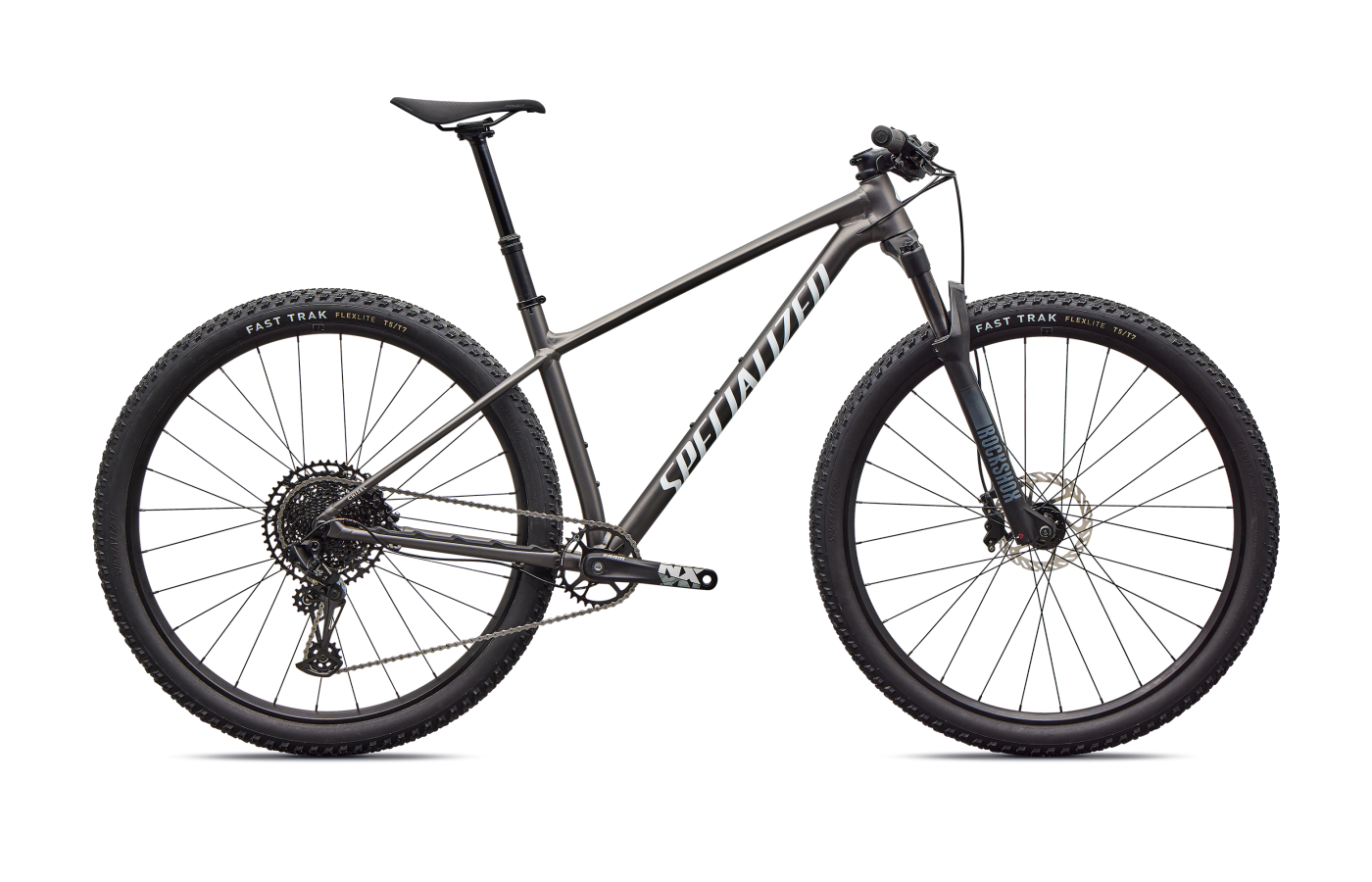
Chisel
Specialized's lighter, race-oriented hardtail with the modern thru-axle and tapered head tube standards the Rockhopper skips. The logical step up if you've outgrown the Rockhopper's upgrade ceiling but still want a Specialized XC frame.
Compare →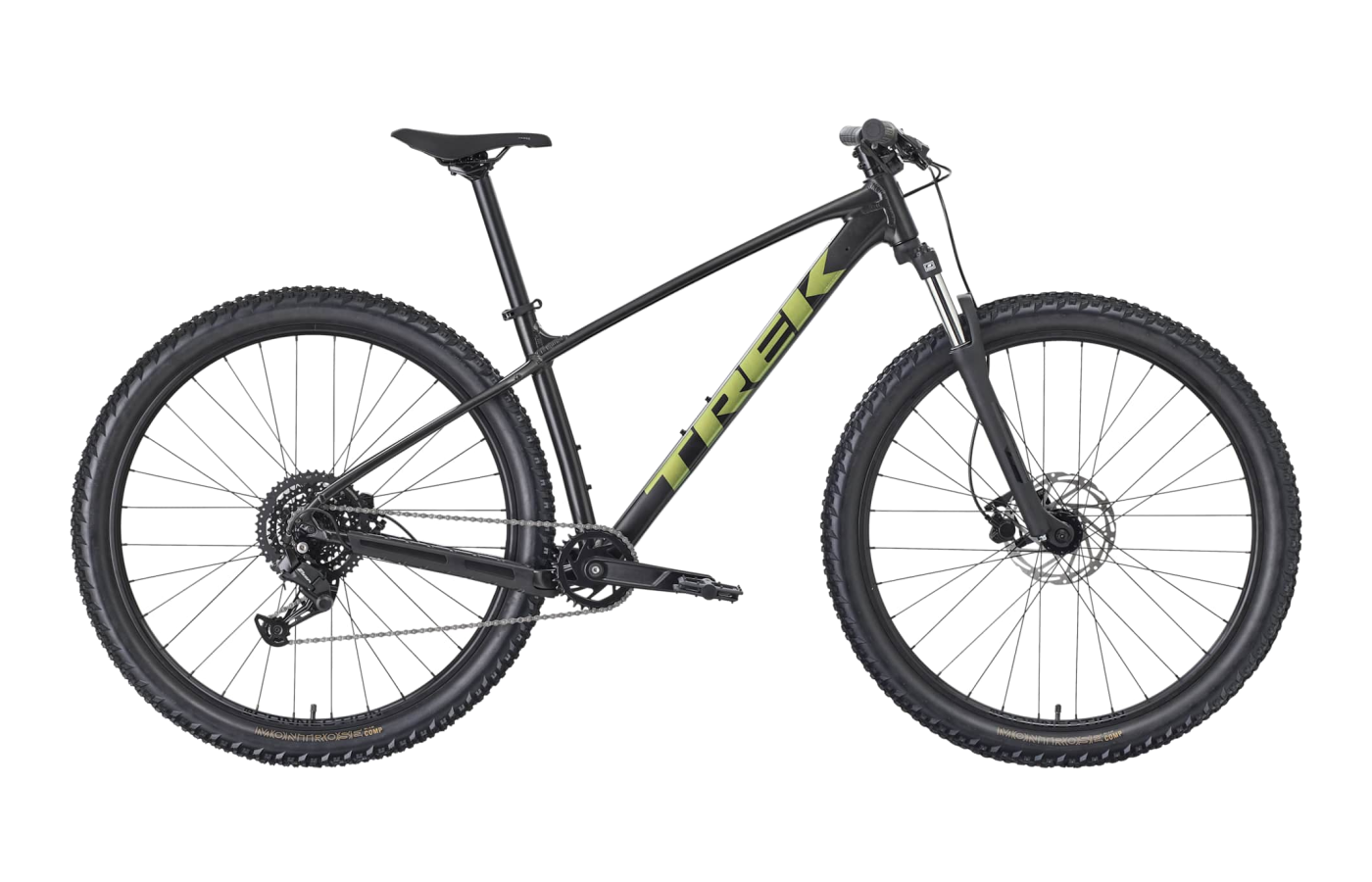
Marlin
Trek's direct answer to the Rockhopper — same XC-leaning geometry, same massive size range, similar price ladder. Often where the same shopper lands when their local Specialized dealer is sold out.
Compare →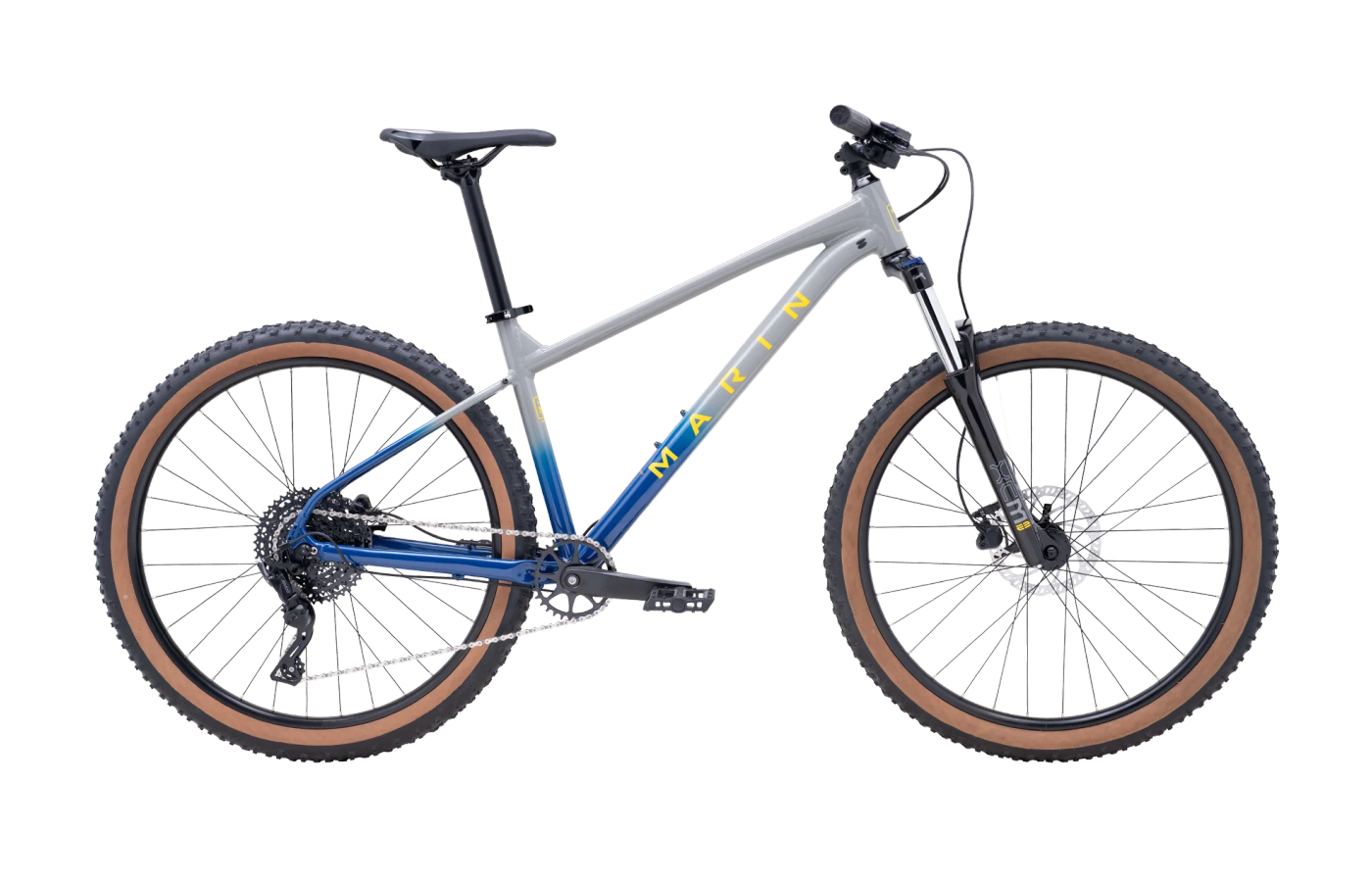
Bobcat Trail
Marin's entry hardtail mirrors the Cannondale Trail SE's slacker, more trail-ready geometry but adds modern Boost thru-axle standards at lower price points. A strong alternative if you want capability over brand cachet.
Compare →