Aeroad
vsSoloist
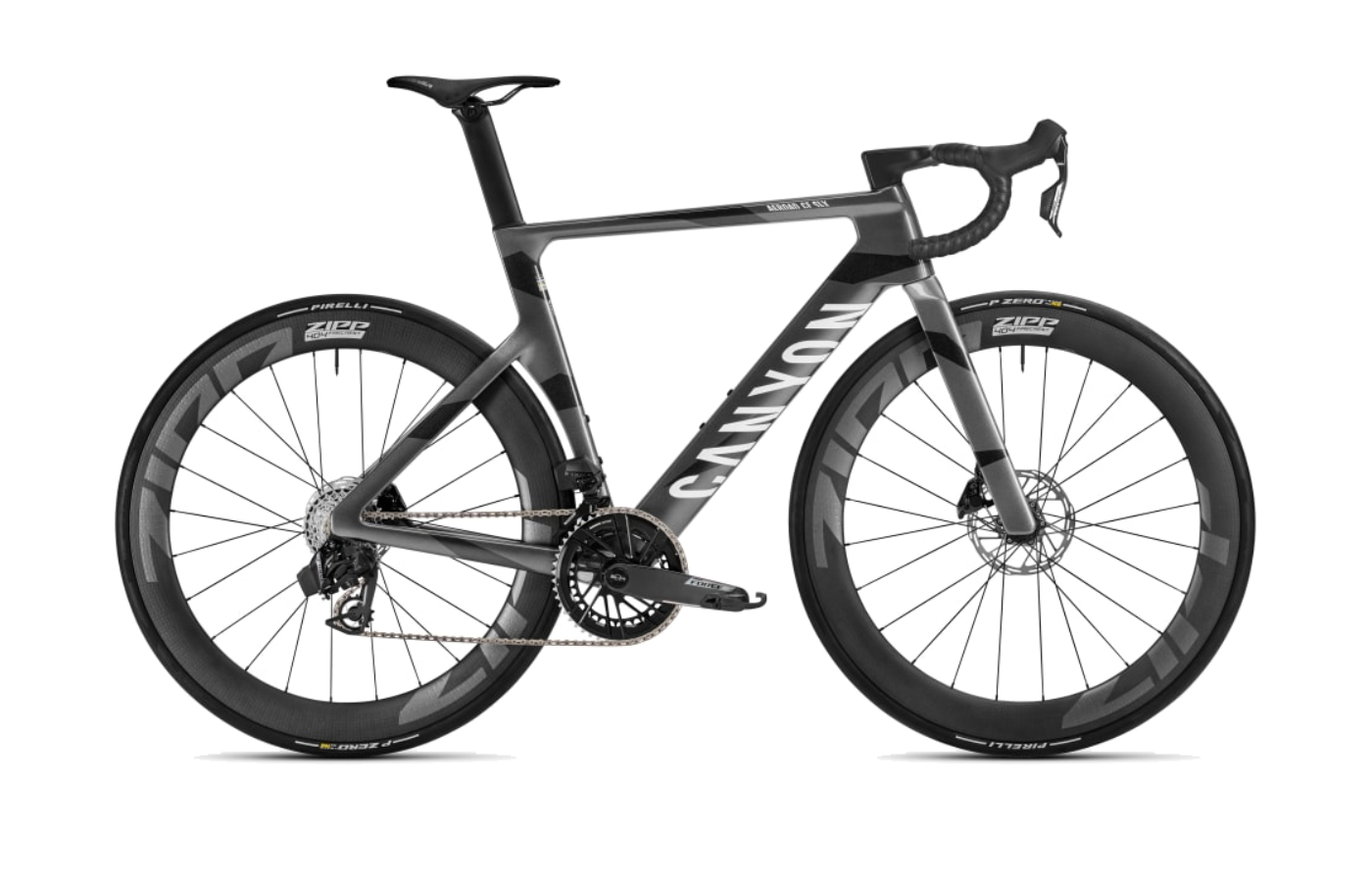
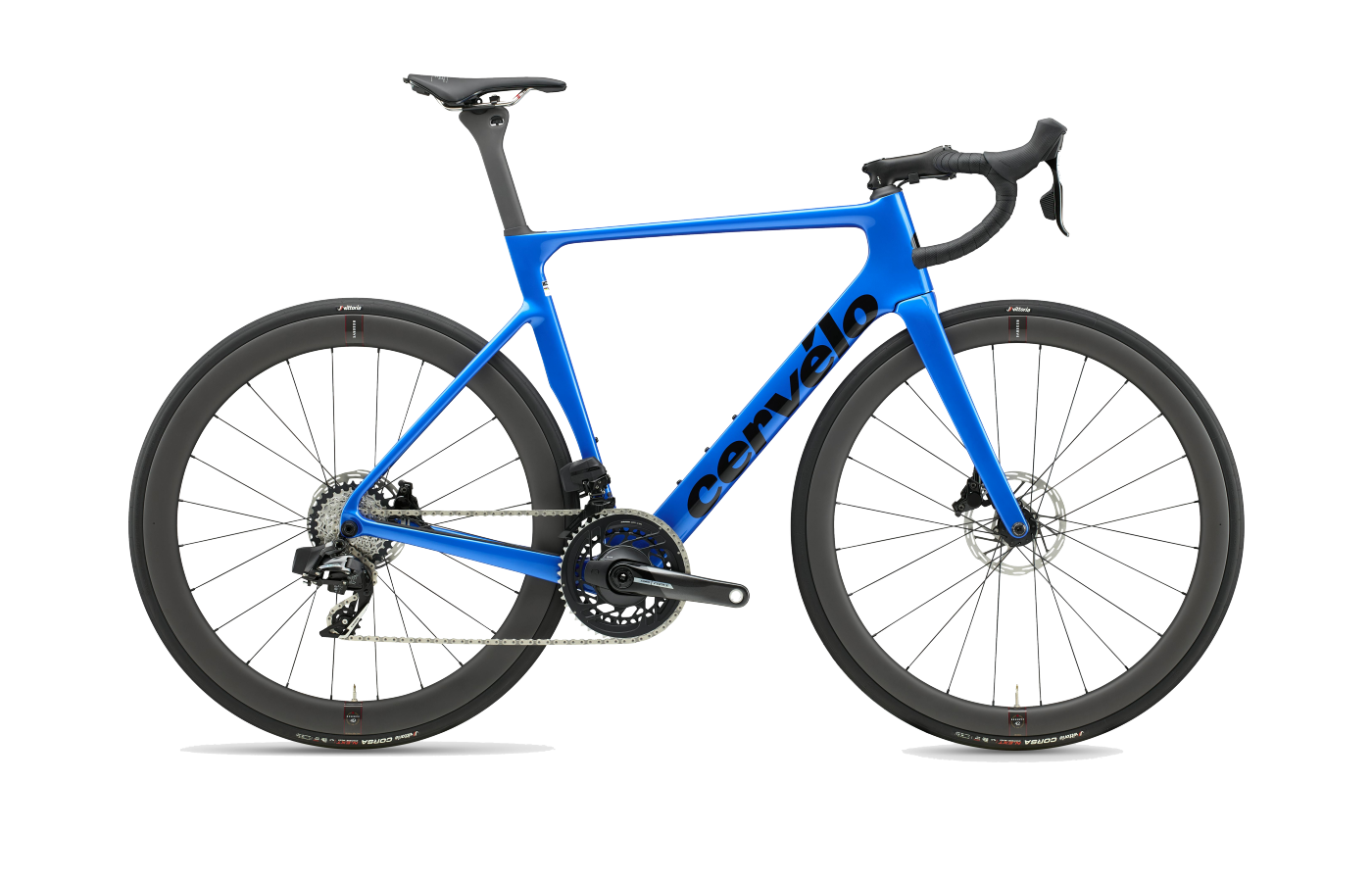
Two aero bikes, two definitions of "enough."
The Aeroad chases WorldTour speed at a discount. The Soloist splits the difference between aero and climber, and tops out below where the Aeroad starts swinging.
Aeroad
- WorldTour spec for the money — top CFR builds undercut S-Works, Madone SLR, and Dogma F by thousands while running the same Dura-Ace or Red AXS.
- Pace Bar adjustability — 50 mm of width and 20 mm of height adjustment without bleeding brakes, plus optional aero drops Canyon claims save 14 W at 45 km/h.
- Genuinely fast frame — stiff bottom bracket, refined tube shapes, and 50 mm-deep wheels that come alive above 30 km/h.
- Proprietary one-piece cockpit — stem length and aero drops are paid aftermarket upgrades, not at-purchase choices.
- Press-fit bottom bracket and a stiff frame that several reviewers flagged as harsh on a 25 mm front tire.
Soloist
- Mechanic-friendly by design — external under-stem cable routing and a threaded T47 bottom bracket let you swap bar/stem without bleeding hydraulics.
- Wider tire clearance (34 mm vs. the Aeroad's 32 mm) opens it to light gravel and chunky tarmac without changing bikes.
- Same frame across every build — even the $3,900 105 build gets the WorldTour-grade frameset and lifetime warranty, not a downgraded layup.
- Slower than the Aeroad in the wind tunnel — Cervélo's own numbers put it 190 g of drag behind the S5 and behind the Aeroad too.
- Stock alloy bar and stem on Ultegra Di2 and Force builds feel utilitarian for a $7k+ bike.
Editor’s analysis
Both bikes call themselves aero, but they're aiming at different riders — one is the pro's discount weapon, the other is the everyman's one-bike quiver.
The Canyon Aeroad is a fourth-generation race tool with two world-tour teams under it and a top build at $10,999. The Cervélo Soloist is a deliberately less-extreme bike — Cervélo's own pitch is that it lives between the S5 and R5, designed for the rider who isn't on a pro contract. The price floors say it plainly: the Aeroad starts at $5,099, the Soloist starts at $3,900.
On the road, the Canyon Aeroad is the firmer, sharper instrument. Reviewers describe it as a "rigid race machine" that makes slow riding almost impossible — a 73.25° head tube and a 988 mm wheelbase in a size M, designed to reward efforts above 30 km/h. Mathieu van der Poel asked Canyon for a stiffer rear end and got it; that comes through in the sprints and shows up as firmness on cobbled tarmac. The Pace Bar cockpit lets you adjust width by 50 mm and swap to narrower aero drops that Canyon claims save 14 watts at 45 km/h.
The Cervélo Soloist borrows its geometry from the R5 climber and adds aero shaping — Cervélo's own published numbers put it 190 g of drag slower than the S5 but 126 g faster than the R5. A 34 mm tire clearance (vs. the Aeroad's 32 mm), externally-integrated routing under the stem instead of through the headset, and a threaded T47 bottom bracket make it the more practical bike to live with. On a size 54, the head tube angle matches the Aeroad at 73°, but the chainstays stay a fixed 410 mm across every size where Canyon stretches them on the larger frames for stability.
Put another way: the Canyon Aeroad is the bike you buy when you want pro-spec aero and you'll do the upgrades to Canyon's proprietary bar later. The Cervélo Soloist is the bike you buy when you want to swap your own stem, run a 30 mm tire on Sunday, and not care that the Reserve wheels are only "plenty fast" instead of fastest.
Where the builds differ.
Comparing our editor's-pick builds side-by-side. Winners highlighted row-by-row — lower price and weight, and the better-spec component, each mark a point.
Build variants & pricing
The Canyon range stretches from $5,099 to $10,999. The Cervélo Soloist tops out at $7,600 — roughly where the Aeroad's middle builds begin.
Prices are current US MSRP. Tier-matched at SRAM Force AXS for an apples-to-apples comparison: the Aeroad CF SLX 8 AXS Speed at $6,499 vs. the Soloist Force AXS at $7,500 — about a $1,000 gap in the Canyon's favor, mostly attributable to the direct-to-consumer model.
How they fit, how they steer.
Canyon size S vs. Cervélo size 54 — the fit-picked frames for the same rider on each bike. The Aeroad sits 1 mm lower at the bars (539 vs. 540 stack) with 7 mm more reach (390 vs. 383); the Soloist's wheelbase runs 5 mm shorter at this size, but Canyon stretches its larger frames' chainstays where Cervélo holds 410 mm flat across the range.
Which size should I buy?
Size recommendations from stack, reach, and effective top-tube length. The Cervélo runs in numeric sizes (48–61); the Canyon uses 2XS–2XL — the cross-walk is approximate.
→These are starting points. Flexibility, riding style, and preferred position all shift the answer — if you’re between sizes, a professional fit beats a chart.
What the magazines said.
Published reviews from trusted cycling outlets. Click through for the full write-up.
Which one should you buy?
If you want pro-spec aero and the lowest dollar-per-watt, get the Aeroad. If you want one bike that's mechanic-friendly, takes a 32 mm tire, and lives below $8k, get the Soloist.
Aeroad
If you're chasing crit results and Strava KOMs and you'd rather have Dura-Ace and a power meter than a swappable stem, the Aeroad is the better tool. The Pace Bar's aero drops and 50 mm wheels are a measurable advantage above 30 km/h, and the price-for-spec on the CFR builds is the real story — there isn't a cheaper way into a WorldTour aero bike.
Soloist
If you race the local series on Saturday and ride 80 miles on Sunday, the Soloist is built for that life. The 34 mm clearance handles light gravel detours, the T47 bottom bracket and external routing let you wrench on it yourself, and the lifetime-warranty frame is the same on the $3,900 build as on the $7,600 one.
Questions buyers actually ask.
Short answers to the things we get emailed about most often.
01Which is faster on flat roads?
The Canyon Aeroad, by Cervélo's own admission. Cervélo's published numbers put the Soloist about 190 grams of drag slower than the S5 in their own wind-tunnel testing, and Granfondo's group test put the Soloist behind the Aeroad in pure aero efficiency at speed. Canyon claims its optional Pace Bar aero drops save 14 watts at 45 km/h on top of the frame gains.
In practice, you'll feel the difference on long flat efforts above 30 km/h. Below that, the gap collapses to something most riders won't notice.
02Which climbs better?
The Canyon Aeroad CFR, narrowly. Top-tier CFR builds land around 7.0–7.2 kg (Cyclingnews measured 7.0 kg for a size S Dura-Ace build), where the Soloist Ultegra Di2 was weighed at 8.47 kg by road.cc. That's a real 1+ kg gap that shows up on sustained gradients.
The lower CF SLX builds of the Aeroad close that gap somewhat, but on equivalent Force AXS spec, the Aeroad is still the lighter bike. Reviewers consistently describe the Soloist as "competent but not lively" on long climbs — its weight is the limiter, not its stiffness.
03What's the maximum tire clearance?
Canyon Aeroad: 32 mm. Stock bikes ship with 26 mm front / 28 mm rear Continental setups; some early review samples even ran a 25 mm front, which several reviewers flagged as harsh.
Cervélo Soloist: 34 mm. Stock builds run 29 mm Vittoria Corsa N.EXT, which plump up closer to 30–31 mm on the wide Reserve rims.
Neither is a gravel bike. But the extra 2 mm on the Soloist, combined with the Reserve hoops' 23 mm internal width, is the difference between "chip-seal tolerable" and "comfortable on a dirt detour."
04How serviceable are they?
The Soloist is the clear winner here. Cables run under the stem (not through the headset), so you can swap to any standard 1 1/8" stem or any 31.8 mm bar without re-bleeding hydraulics. The T47 threaded bottom bracket installs without a press, and most reviewers cite it as a major reason to buy.
The Aeroad uses a fully proprietary CP0048 one-piece cockpit and a press-fit bottom bracket. Canyon did standardize on T25 Torx for nearly every user-facing bolt and even hid a T25 bit in the thru-axle — genuine improvements — but stem-length changes still mean buying a new cockpit (~£200–230) and partial disassembly.
05Can I run a power meter?
Both editor's-pick builds ship with one as standard. The Aeroad CF SLX 8 AXS Speed comes with a SRAM Force AXS power meter crankset; the Soloist Force AXS does too. If you go higher in either range, the CFR Aeroads include Dura-Ace or Red dual-sided meters; the Soloist Force AXS 1 also includes one.
All standard aftermarket options (4iiii, Stages, Power2Max, Favero pedals) work on either frame without issue.
06Does the Aeroad really undercut the competition?
Yes, materially. Multiple reviewers (BikeRadar, Cycling Weekly, road.cc) called out that the top Aeroad CFR Dura-Ace at $9,999–$10,999 lands roughly $2,000–$3,000 below comparably-specced S-Works Tarmac SL8, Trek Madone SLR, and Pinarello Dogma F builds. That's the direct-to-consumer trade — no local dealer, no in-shop fit, no test ride unless you can find a Canyon demo event.
The Soloist undercuts those same shop brands too, but by less, since it's positioned as the value bike within Cervélo's own range rather than a discount-flagship play.
07Are both compatible with mechanical shifting?
Mostly no on the Aeroad — every current build is electronic (Dura-Ace Di2, Ultegra Di2, 105 Di2, or SRAM AXS). The frame is wireless/electronic-only.
The Soloist is the more flexible of the two: Cervélo still sells it down to a Shimano 105 mechanical build at $3,900, and the frame supports cable routing for mechanical drivetrains. If you specifically want mechanical shifting on a modern aero-leaning bike, the Soloist is one of very few options left in the category.
08What warranty do they come with?
Both come with a lifetime frame warranty to the original owner against manufacturing defects. Canyon and Cervélo both offer crash-replacement programs at reduced pricing if you damage a frame in a wreck.
Reviewers (notably road.cc on the Soloist) consistently flag that Cervélo applies the same WorldTour-grade frame and lifetime warranty across every build in the Soloist range — even the entry $3,900 model — which is unusual. Canyon's CFR (top) and CF SLX (rest of the range) are different layups, so the warranty applies but the frame underneath isn't identical.
Similar bikes
If your priorities don’t map cleanly onto either of these, one of these adjacent bikes probably fits better.
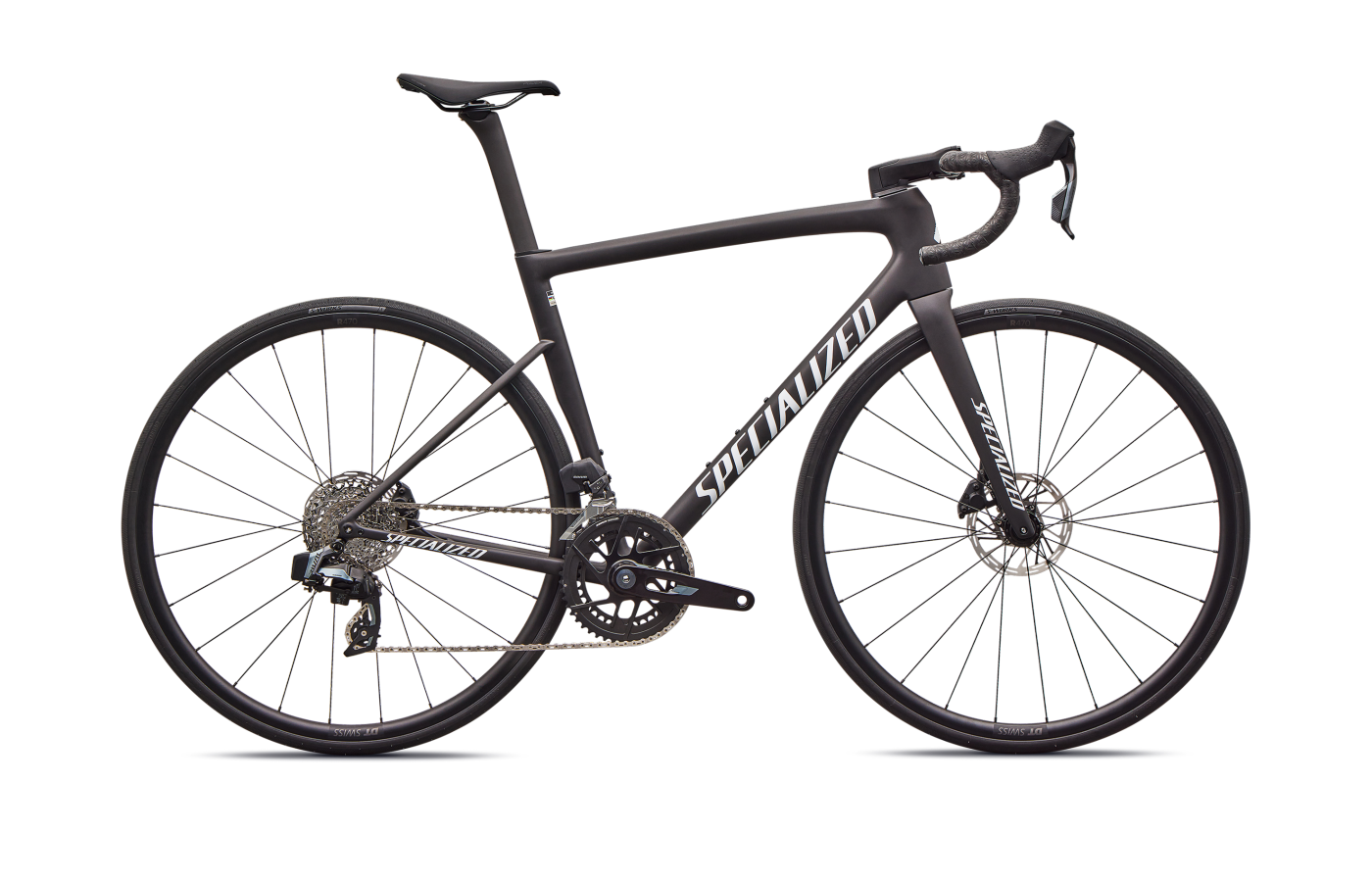
Tarmac
The benchmark one-bike-does-everything aero-and-light platform — more premium feel than the Soloist, deeper build range than the Aeroad, and the dealer network neither Canyon nor Cervélo can match. The default cross-shop.
Compare →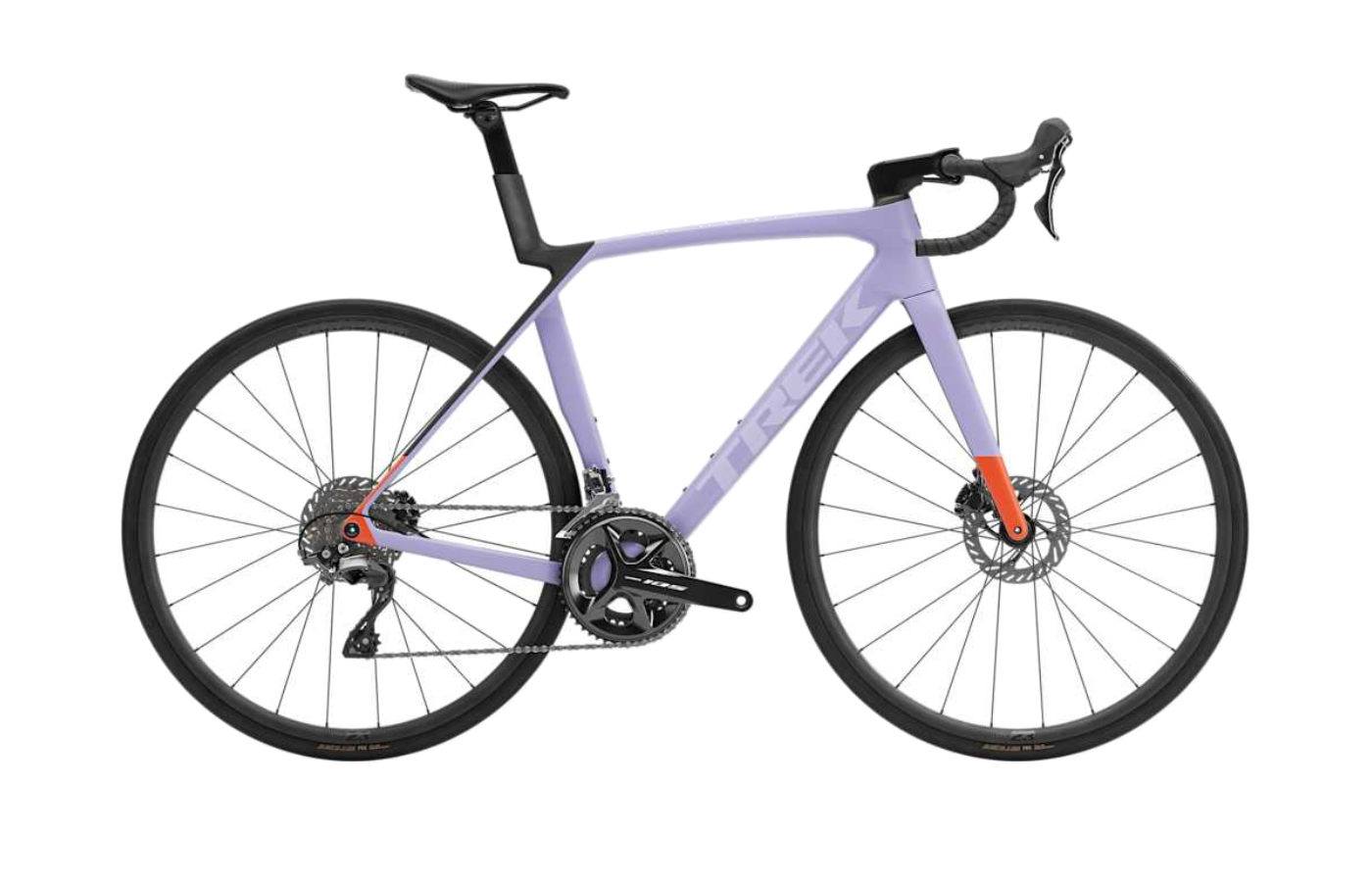
Madone
Trek's aero-race flagship with the IsoFlow seat-tube cutout — claims Aeroad-rivalling drag numbers but with measurably better vertical compliance. The bike to look at if the Aeroad reads as too stiff on your roads.
Compare →
SuperSix EVO
Often called the best-handling bike in the category and a direct Soloist rival — versatile, racer-friendly, and sold through dealers. Closer in spirit to the Soloist than to the pure-aero Aeroad.
Compare →