Aeroad
vsV4Rs
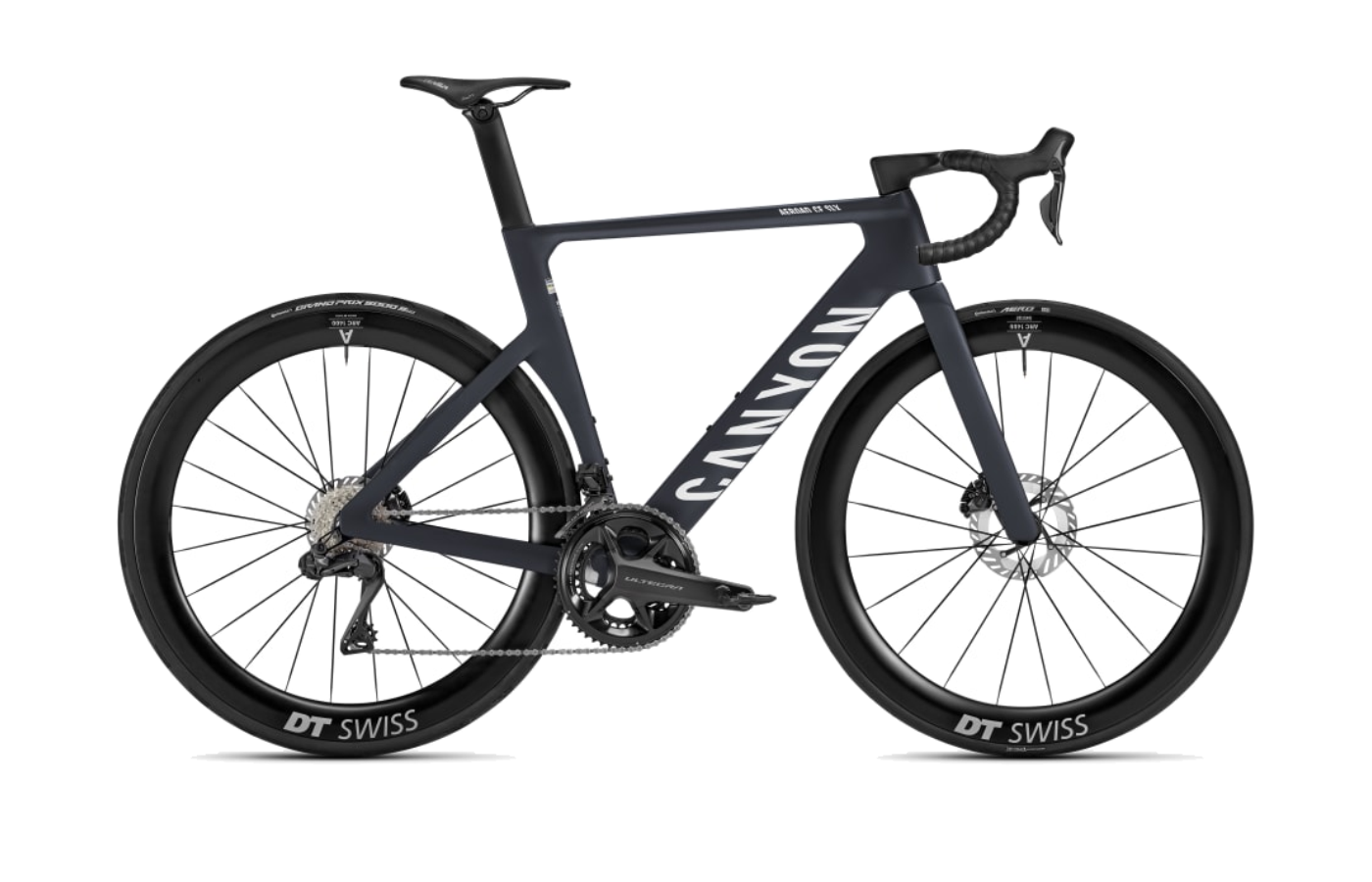
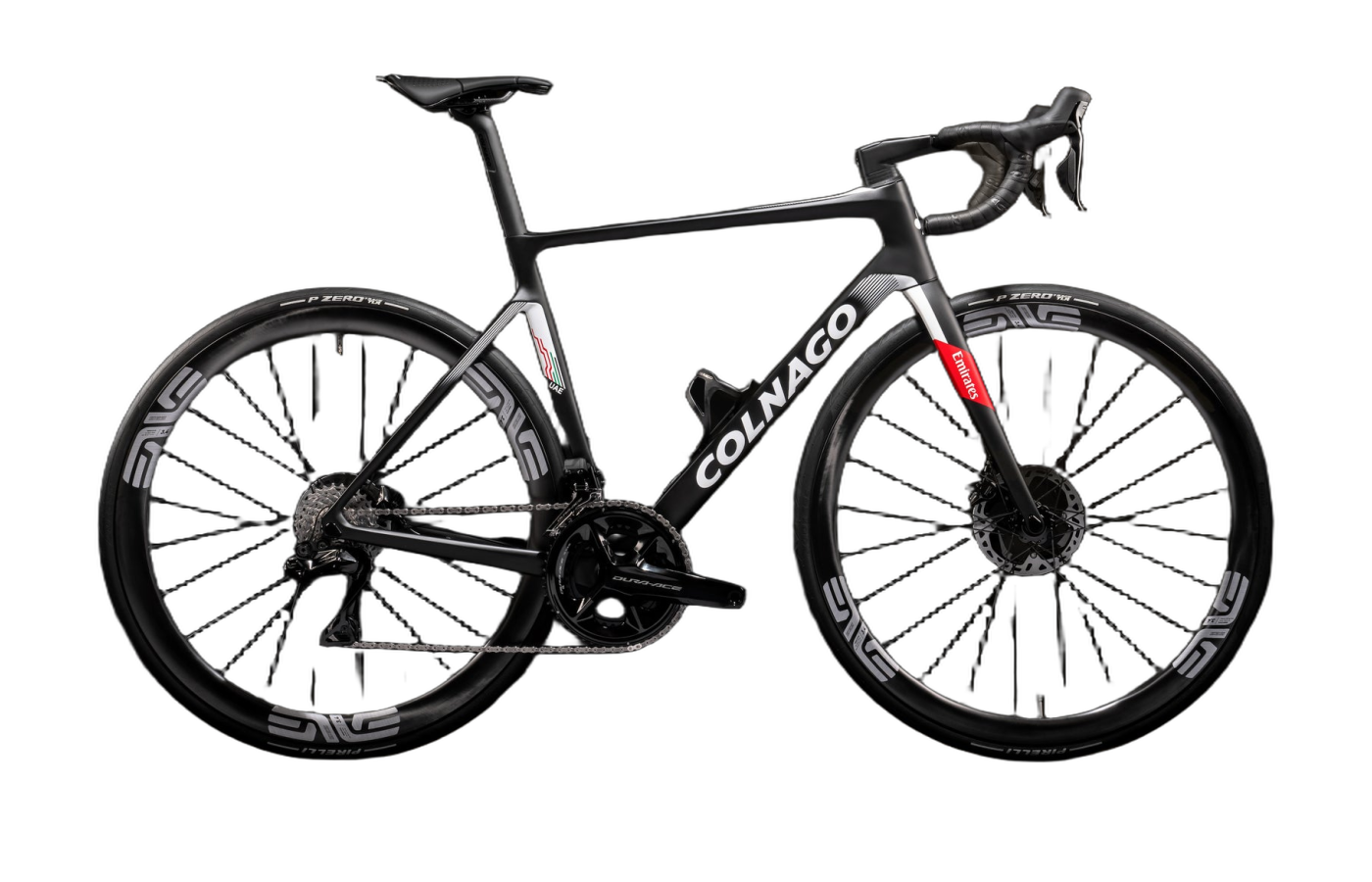
Direct-to-consumer aero vs. Italian race pedigree.
The Canyon Aeroad is a wind-tunnel weapon priced to undercut every dealer brand. The Colnago V4Rs is the bike Pogačar wins on — and you pay for that.
Aeroad
- Massive price advantage — full Dura-Ace Di2 builds for around $10k, roughly $2–3k under comparable dealer brands.
- Easiest aero bike to live with — universal T25 Torx bolts, T25 in the thru-axle, modular Pace Bar, sealed-bearing headset.
- Wider tire clearance (32 mm) than the V4Rs, with rear-end compliance reviewers actually call "surprisingly" comfortable.
- No local dealer — fit, demo rides, and warranty work all happen by mail.
- Stem length, integrated drops, and aero bars are paid aftermarket upgrades, not order-time options.
V4Rs
- Class-leading high-speed composure — a slacker 71.5° head angle and longer trail make it a reference-grade descender.
- Pro-grade frame engineering — 798 g monocoque (size 485), T47 threaded BB, CeramicSpeed SLT "lifetime" headset bearings.
- Pogačar pedigree — Tour de France and Monument wins under one of the most dominant riders of the era.
- Eye-watering price floor — roughly double the Canyon for an equivalent groupset tier.
- Geometry is unapologetically pro — Cycling News flat-out says it needs to be ridden at race pace to be enjoyed.
Editor’s analysis
Same WorldTour bracket, opposite philosophies — one is engineered to be cheap and easy to live with, the other to win the next Tour.
On paper these are both pro-spec race bikes that have crossed Grand Tour finish lines first. The Canyon Aeroad (Gen 4) is Mathieu van der Poel's tool. The Colnago V4Rs is Tadej Pogačar's. Both run flagship electronic groupsets, both ship with deep carbon wheels, both are stiff enough that reviewers complain about it. But the philosophies behind them couldn't be further apart.
The Canyon is a pure aero bike that has been engineered to be lived with. Canyon switched every rider-touched bolt on the frame to T25 Torx and hid a T25 bit in the thru-axle lever — a level of practical thinking the Italian frame doesn't bother with. The new Pace Bar cockpit lets you change drop width by 50 mm or swap to narrower aero drops without disconnecting hoses. And the whole platform starts at $5,099 with 105 Di2 — roughly a third of what a comparable Colnago costs.
The Colnago is a more focused weapon — and a more selective one. The V4Rs is built around stiffness-to-weight, not aero numbers (Colnago's own figure is a modest 13.2 W frame saving at 50 km/h vs. the V3Rs). Its head angle is meaningfully slacker than the Canyon — 71.5° on the 485 vs. 72.8° on the Canyon S — which buys remarkable composure on fast descents and a reputation, even from skeptical reviewers, as one of the most surefooted bikes they've ridden. But it starts at $7,000 for a Force AXS build, climbs past $12,000 quickly, and shares no carbon grade tier with the cheaper Canyon CF SLX builds.
Put another way: the Canyon Aeroad is the bike you buy when you want WorldTour-level aero performance and you'd rather spend the saved money on a power meter, race entries, or a second wheelset. The Colnago V4Rs is the bike you buy when descending lines and pro-pedigree finish quality matter more than the dollars on the sticker.
Where the builds differ.
Comparing our editor's-pick builds side-by-side. Winners highlighted row-by-row — lower price and weight, and the better-spec component, each mark a point.
Build variants & pricing
Both span roughly $5k of range, but they don't overlap. The Canyon starts at $5,099; the Colnago doesn't sell anything under $7,000.
Tier-matched at Shimano Ultegra Di2 to keep the comparison apples-to-apples — even there, the Colnago costs about $2,300 more. Prices are current US MSRP. Note that Canyon's CF SLX uses a step-down carbon layup vs. the top CFR; Colnago only offers one carbon grade across all V4Rs builds.
How they fit, how they steer.
Stack lands identically at 539 mm. The Aeroad's reach is 7 mm longer (390 vs. 383) and its head angle is 1.3° steeper (72.8° vs. 71.5°), giving it a quicker, more aggressive front end; the Colnago's slacker angle and longer trail are why reviewers call it a class-leading descender.
Which size should I buy?
Size recommendations come from stack, reach, and effective top tube. The Canyon range runs 2XS–2XL; the Colnago jumps in larger numerical increments (420, 455, 485, 510…) so consider trying both sizes either side of the suggestion.
→These are starting points. Flexibility, riding style, and preferred position all shift the answer — if you’re between sizes, a professional fit beats a chart.
What the magazines said.
Published reviews from trusted cycling outlets. Click through for the full write-up.
Which one should you buy?
If you want WorldTour aero performance for thousands less, get the Canyon Aeroad. If you want the pro-pedigree descender and don't flinch at the price, get the Colnago V4Rs.
Aeroad
If you want a bike that goes as fast as anything in the WorldTour but you'd rather not pay a $4,000 dealer-brand premium to get it, the Aeroad is hard to argue with. The catch is direct-to-consumer ownership — no shop fittings, no demos, no walk-in warranty desk.
V4Rs
If you do most of your riding in the mountains, you race or ride at pace, and you want the brand that wins Tours, the V4Rs delivers a class-of-its-own descending feel and pro-grade build quality. You will pay roughly double the Canyon for it.
Questions buyers actually ask.
Short answers to the things we get emailed about most often.
01Which is the better aero bike?
The Canyon Aeroad, by design and by spec. The Aeroad is a dedicated aero platform — deep tube profiles, integrated cockpit with optional narrower aero drops Canyon claims save 14 W at 45 km/h, and 50 mm-deep wheels stock on most builds.
The V4Rs is fast but it's an all-rounder, not a pure aero bike. Colnago's own claim for the frameset is a 13.2 W saving at 50 km/h vs. the V3Rs and a further 16% drag reduction from the integrated CC.01 cockpit. Real, but more modest than the Aeroad's positioning.
If flat-road speed is the goal, the Canyon.
02Which descends better?
The Colnago V4Rs, with broad reviewer consensus. Its head angle is 71.5° on the size 485 vs. 72.8° on the Canyon size S — that's a meaningful 1.3° difference, and combined with the longer trail it produces what BikeRadar calls "unerringly poised" handling and what road.cc rates the bike's standout feature.
The Aeroad descends well — reviewers report confidence at 50+ mph — but it's a sharper, more steering-input-driven feel. Different tools for different roads.
03What's the maximum tire clearance?
Canyon Aeroad: 32 mm officially. Canyon raised this from prior generations specifically at Mathieu van der Poel's request for the cobbled classics, and reviewers consistently treat it as the bike's main lever for ride comfort.
Colnago V4Rs: 30 mm officially per the spec sheet, though some reviewers report wider tires fit visually. Stock builds ship 28 mm.
Neither is a gravel bike — for chip-seal or gravel detours, the Canyon has the small but real edge.
04Why the huge price gap?
Two reasons. First, business model — Canyon sells direct, skipping dealer markup; Colnago sells through traditional shops with the associated margin stack.
Second, brand positioning — Colnago carries decades of pro pedigree and Italian heritage that the brand prices into every frame. Reviewers across the board acknowledge you can get "99% of the performance from bikes half the price," but the V4Rs commands its premium on prestige and pedigree, not raw value.
05Is the Canyon really as well-made?
The Gen 4 Aeroad is a deliberate response to past Canyon quality issues. The previous generation had a handlebar recall, a stop-ride notice, and seatpost problems — Canyon engineered the Gen 4 specifically to be "easier to live with" with reinforced top tube layup, hermetically sealed bearings, a titanium crown race, and a redesigned two-bolt seat clamp.
Reviewers note the build quality has materially improved. Whether it matches Colnago's pro-team-tested finish is more subjective — Cyclist Magazine flagged peeling decals and an awkward seatpost clamp cover on the V4Rs too. Neither is flawless; both are now reliable.
06How serviceable are the integrated cockpits?
The Canyon Pace Bar is one of the more user-friendly integrated cockpits on the market. You can adjust width by 50 mm and swap to narrower aero drops without disconnecting brake hoses — a genuine practical advantage. Stem length is not adjustable post-purchase without a new T-Bar section (~$200–230).
The Colnago CC.01 is a one-piece integrated unit. Changing fit means a new cockpit, which is expensive and requires re-routing brake hoses through the frame. Plan your fit at order time.
07Which has the better stock build?
Both ship with quality components, but the Canyon punches above its price. Even mid-tier Aeroad builds include a Shimano or SRAM power meter as standard and DT Swiss ARC carbon wheels.
The Colnago typically pairs Dura-Ace builds with Shimano C50 carbon wheels or Fulcrum Wind 420s, but reviewers (Cyclist, Just Ride Bikes) have called the Fulcrum Wind 40s on lower builds "adequate rather than excellent" for the price. Per dollar, the Canyon spec sheet wins.
08Are both compatible with mechanical shifting?
No. Both frames are designed around electronic groupsets — Canyon ships only Di2 or AXS builds, and the Colnago integrated cable routing is built around wireless or semi-wireless setups. If you want mechanical Shimano or Campagnolo, look elsewhere.
Similar bikes
If your priorities don’t map cleanly onto either of these, one of these adjacent bikes probably fits better.
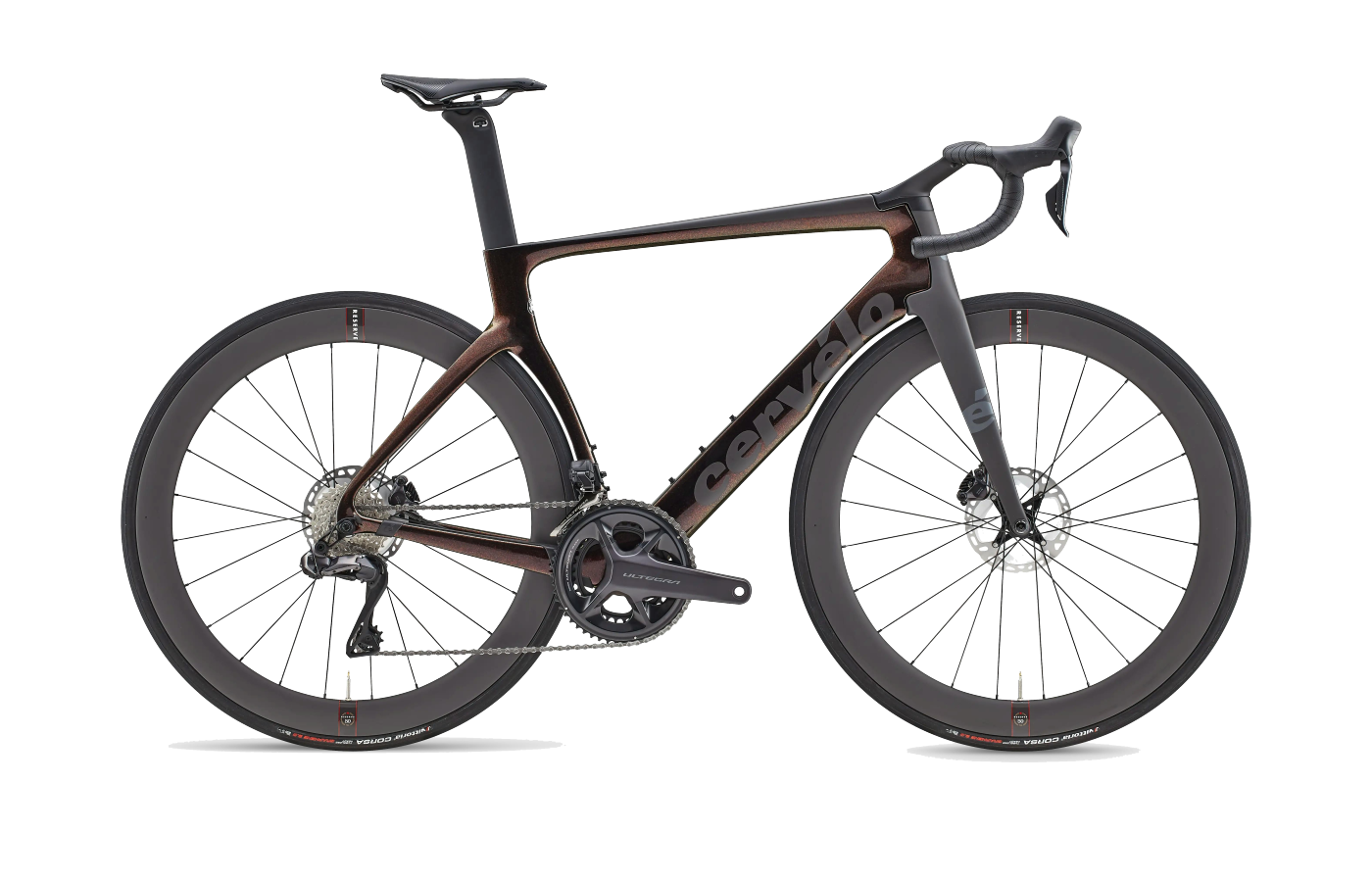
S5
The most extreme aero bike on the market — Cervélo's V-stem, deeper tubes, and integrated AB09 cockpit are arguably faster than either bike here. Costs more than the Canyon, less than the Colnago.
Compare →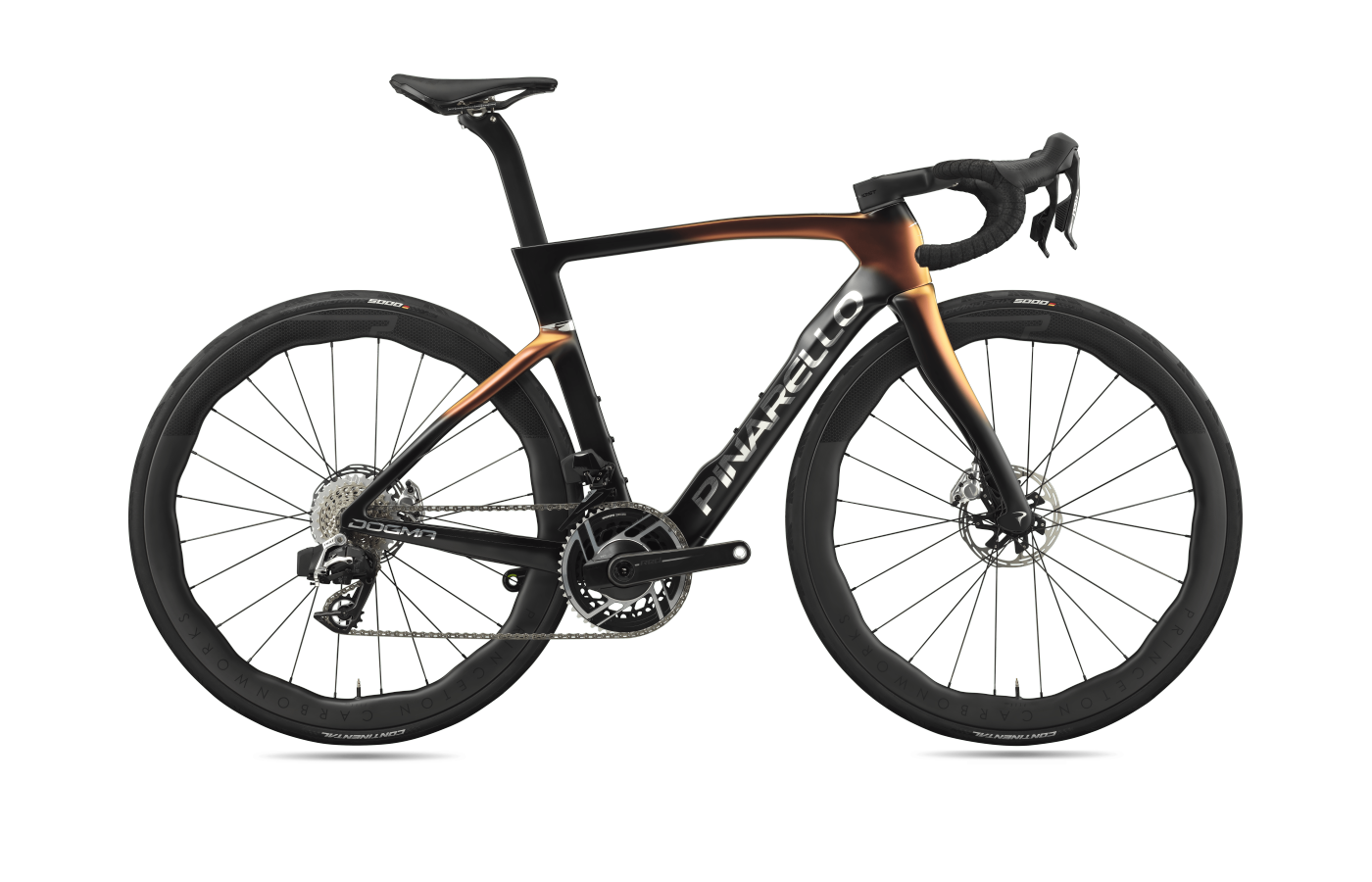
Dogma F
The Italian alternative if you want pro-pedigree and visual drama. Pinarello's Onda fork curve and asymmetric chainstays give the Dogma F a louder personality than the Colnago, with similar Tour-winning credentials.
Compare →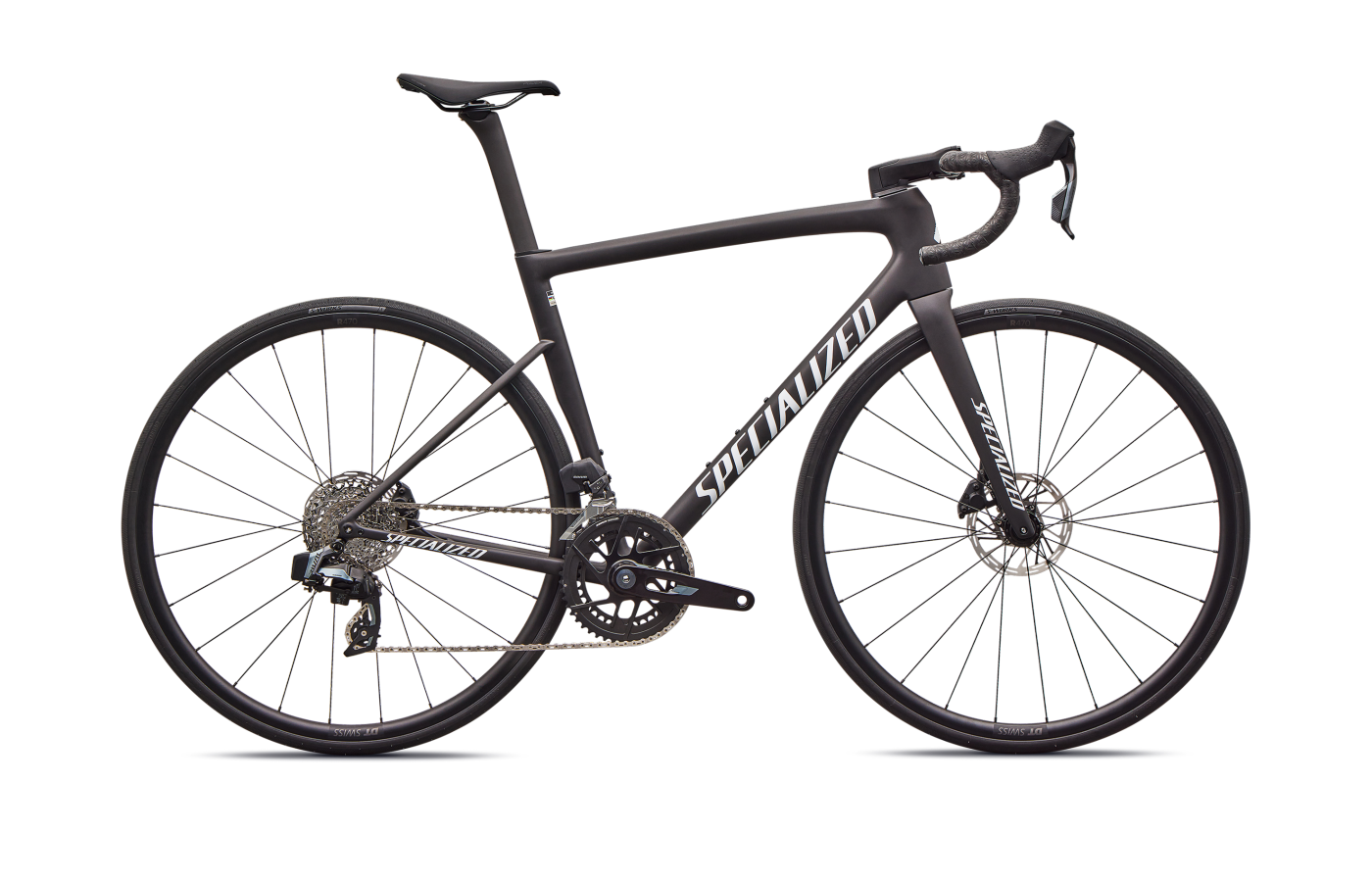
Tarmac
The do-everything reference. Lighter than the Aeroad, stiffer than most, and the bike that forced both Canyon and Colnago to keep weight competitive. The pick if you want one bike that climbs, sprints, and handles.
Compare →