Aeroad
vsEndurace
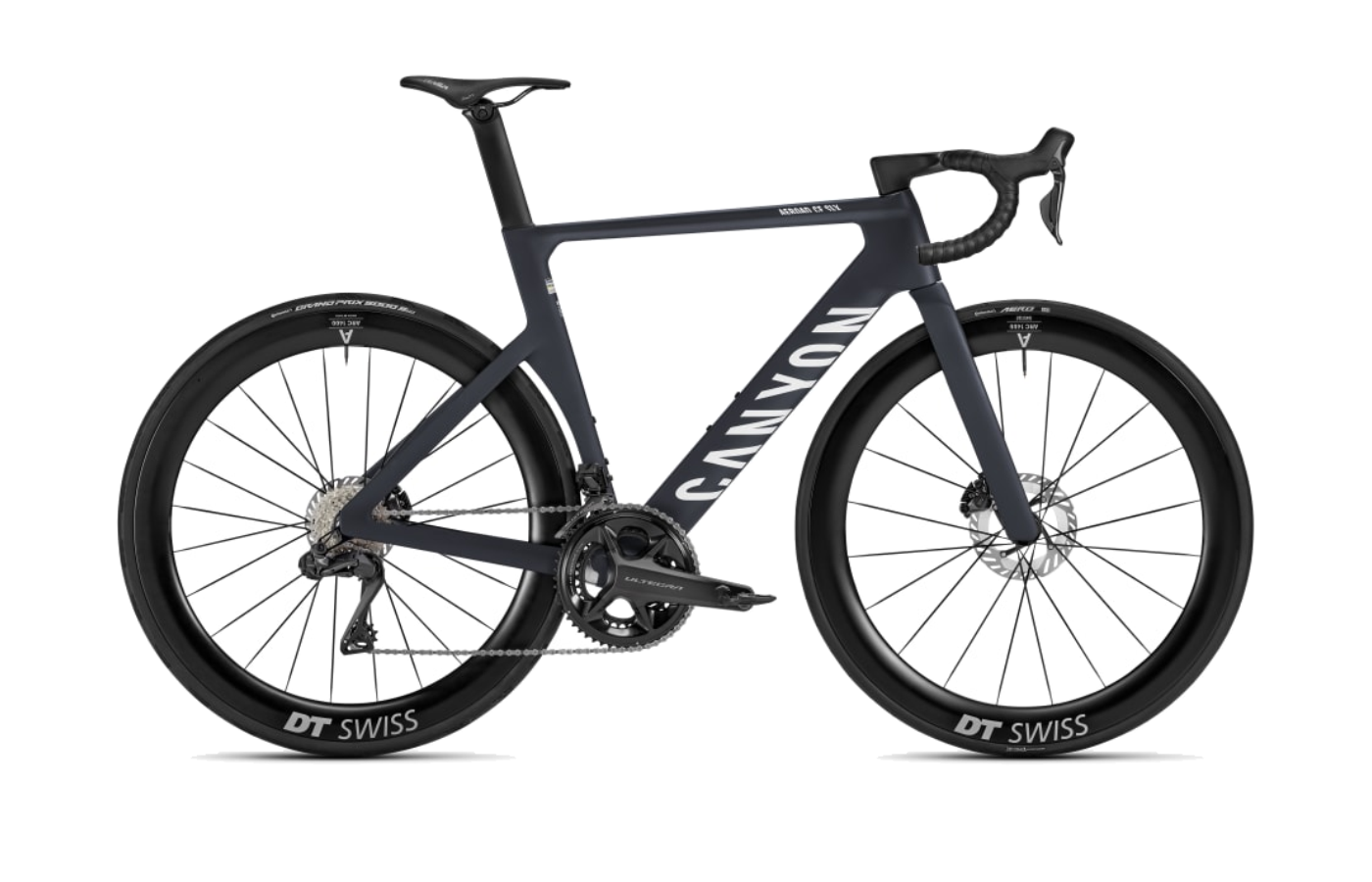
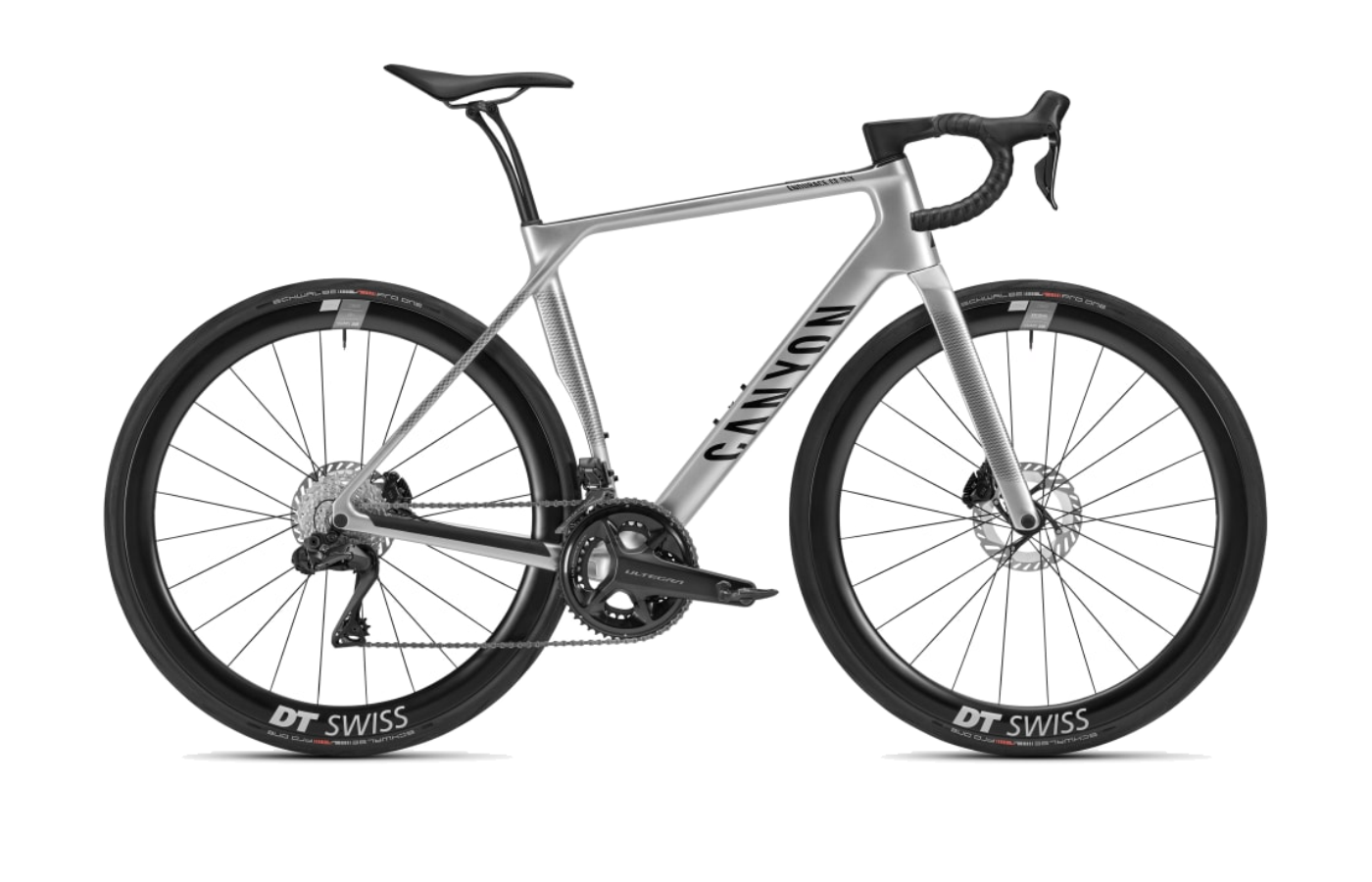
Same brand, two completely different jobs.
The Aeroad is Canyon's WorldTour aero weapon. The Endurace is the all-day, all-road carbon mile-eater that ships with internal storage and a leaf-spring seatpost.
Aeroad
- Genuine WorldTour pedigree — ridden to Tour stage wins by Jasper Philipsen and the Alpecin-Deceuninck squad on Gen 4.
- Best-in-class direct-to-consumer pricing — top-tier Dura-Ace Di2 build at $7,799, well below comparable Specialized or Trek flagships.
- Adjustable Pace Bar cockpit with 50 mm width and 20 mm height tweak in seconds, plus optional aero drops claimed at 14 watts.
- Stock 25 mm front tire is widely criticized as harsh; budget for an immediate swap.
- Stem length is fixed at order — changing it later means a hose re-bleed.
Endurace
- Wider 35 mm tire clearance with stock 32s — handles chip-seal, bad pavement, and the occasional dirt detour.
- S15 VCLS leaf-spring seatpost delivers up to ~20 mm of vertical flex, doing more for comfort than any tire upgrade can.
- Built-in LOAD top tube storage for multi-tool, plug kit, and CO2 — no saddle bag needed for self-supported days.
- Heavier than its predecessor — Cycling News measured the CFR at 7.3 kg, the cost of new aero tubing and storage.
- More upright stack means a larger frontal area; you'll feel it sustaining 35+ km/h into wind.
Editor’s analysis
This isn't a fight between two race bikes — it's the choice between a bike built to go fast and a bike built to keep going.
The Canyon Aeroad and Canyon Endurace share a paint shop, a cockpit standard, and very little else. The Aeroad is what Canyon hands its WorldTour pros — Mathieu van der Poel's Tour stage winner, refined for Gen 4 with a stiffer rear end, sealed bearings, and a single T25 bolt standard the home mechanic actually appreciates. The Endurace is the bike Escape Collective compared to a Honda Accord: not exciting on paper, but exceptionally good at the job most riders actually do.
On numbers, the gap is enormous. The Aeroad starts at $5,099, the Endurace at $1,499 — same brand, $3,600 of headroom. The Aeroad clears 32 mm tires; the Endurace clears 35 mm and ships with 32s by default. In a size medium, the Endurace stacks 30 mm taller (590 vs 560) and reaches 15 mm shorter (378 vs 393) than the Aeroad. That's not a tweak — that's a different bike for a different rider.
The Aeroad's geometry is purebred race: 73.25-degree head tube on a Medium, 988 mm wheelbase, 410 mm chainstays. Reviewers call it "unstoppable" on flats and praise the Pace Bar cockpit's 50 mm width and 20 mm height adjustment. It's not a climber's bike — but at roughly 7.0 kg in CFR trim, it's not a barge either. The complaint that surfaces in nearly every review is the stock 25 mm front tire, which several testers swap out for a 28 immediately.
The Endurace's claim is comfort without sluggishness. The S15 VCLS leaf-spring seatpost gives ~20 mm of vertical flex, the LOAD top tube hatch hides tools, and the geometry stays sharp enough that Cyclist called the handling "racier than you'd expect." The catch in this generation is weight — the new CFR is up to ~7.3 kg as Cycling News tested it, which is what happens when a comfort bike gains aero shaping and integrated storage. If your weekends look more like centuries than crits, that's a fair trade.
Where the builds differ.
Comparing our editor's-pick builds side-by-side. Winners highlighted row-by-row — lower price and weight, and the better-spec component, each mark a point.
Build variants & pricing
Tier-matched at Ultegra Di2 — both bikes' best-value mid-range build, separated by ~$700 and a clear philosophy.
Prices are current US MSRP. The Endurace's range stretches further down (alloy CUES at $1,499) than the Aeroad (cheapest Di2 at $5,099), so an entry-level buyer comparing the two is really only choosing between Endurace builds.
How they fit, how they steer.
Compared at the fit-picked size for a 5'8" rider on each bike — Aeroad S, Endurace XS. Even at one notional size apart the Endurace sits 9 mm taller in stack (548 vs 539) and 12 mm shorter in reach (370 vs 390). That's the philosophical gap right there.
Which size should I buy?
Sizing conventions diverge — the Endurace runs 3XS through 2XL, the Aeroad 2XS through 2XL. Most riders sit between two sizes; pick the longer reach for racing, the shorter for comfort.
→These are starting points. Flexibility, riding style, and preferred position all shift the answer — if you’re between sizes, a professional fit beats a chart.
What the magazines said.
Published reviews from trusted cycling outlets. Click through for the full write-up.
Which one should you buy?
If you want to win the Tuesday-night world championship, get the Aeroad. If you want to enjoy Saturday's century, get the Endurace.
Aeroad
If most of your rides involve a number plate, a paceline, or a strong desire to crush the local KOM, the Aeroad is the platform. WorldTour stiffness, a measurably fast cockpit, and direct-to-consumer pricing that undercuts every flagship in the segment.
Endurace
If your idea of a perfect bike is one that erases bad pavement, swallows your tools, and lets you sit up enough to look around — this is it. The Endurace is the platform that gets ridden the most miles in the real world, and Canyon priced it to match.
Questions buyers actually ask.
Short answers to the things we get emailed about most often.
01Which is faster on flat roads?
The Aeroad, comfortably. Canyon's published wind-tunnel numbers put the Gen 4 Aeroad in the front rank of the WorldTour aero pack, and reviewers consistently note that the bike feels "tangibly fast" once you're above 30 km/h. The optional aero drops are claimed at 14 watts at 45 km/h.
The Endurace borrows aerodynamic cues from its faster siblings, but its taller stack, shorter reach, and 32 mm tires hand back most of those gains. Expect 15–25 watts more drag at race pace.
02Which is more comfortable on long rides?
The Endurace, by a wide margin. The S15 VCLS leaf-spring seatpost gives roughly 20 mm of vertical flex, and the 32 mm stock tires (with room for 35 mm) damp road chatter the Aeroad can't match.
The Aeroad isn't punishing — reviewers report comfortably finishing 100-mile rides on it — but it's described across the board as "stiff pretty much everywhere," and the stock 25 mm front tire on several builds gets called out as harsh. The Endurace was engineered for the days when comfort decides whether you finish.
03What's the maximum tire clearance on each?
Aeroad: 32 mm officially. Stock builds typically run a 25 or 26 mm front and 28 mm rear, optimized for aerodynamics over comfort.
Endurace: 35 mm officially, with the alloy AllRoad build going to 40 mm. Stock CFR/CF SLX builds ship with 32 mm Schwalbe Pro Ones front and rear.
Neither is a gravel bike, but the Endurace will happily handle hardpack dirt and broken chip-seal that would beat you up on the Aeroad.
04How different is the riding position?
Substantially. In a size Medium, the Endurace stacks 30 mm taller (590 vs 560) and reaches 15 mm shorter (378 vs 393) than the Aeroad. That's roughly two thick spacers' worth of difference at the bars, plus a less stretched-out cockpit.
If you currently ride a slammed-stem race bike and like it that way, the Endurace will feel sit-up. If you've been adding spacers for years, the Aeroad will feel like a yoga pose. There's no in-between.
05Are the cockpits interchangeable?
Both bikes use Canyon's CP0048 family of integrated cockpits, but the Aeroad ships with the new Pace Bar variant — 50 mm width adjustment, 20 mm height adjustment, and optional aero drops that bolt on without re-routing hoses. The Endurace uses the same CP0048 platform with width and height adjustment but no aero-drop option.
Neither lets you choose stem length at order. Changing stem length later costs roughly $200–230 plus a hose bleed.
06Which one has on-bike storage?
Only the Endurace. The LOAD top tube hatch hides a neoprene sleeve sized for a multi-tool, plug kit, and CO2 — handy for self-supported rides, though some reviewers note the plastic door rattles and feels cheap relative to the rest of the build.
The Aeroad has no internal storage. Canyon's view is that the aero gain from a smooth top tube outweighs the convenience.
07Can I race the Endurace?
Yes — the CFR is stiff and fast, and Cycling News rated its handling "light and nimble" with "pin-point precision." It's not the wrong bike for a fast group ride, a Gran Fondo, or even a hilly road race.
What it isn't is the right bike for a flat criterium where every watt of drag matters, or a TT-style breakaway. For those, the Aeroad's 30 mm-lower stack and aero tubing will measurably outperform it.
08What warranty do they come with?
Both frames carry Canyon's 6-year frame warranty to the original owner against manufacturing defects, plus a 2-year warranty on components. Canyon also offers a crash-replacement program (typically 30–50% off a new frame) for owners who damage their bike in a crash.
Similar bikes
If your priorities don’t map cleanly onto either of these, one of these adjacent bikes probably fits better.
Domane
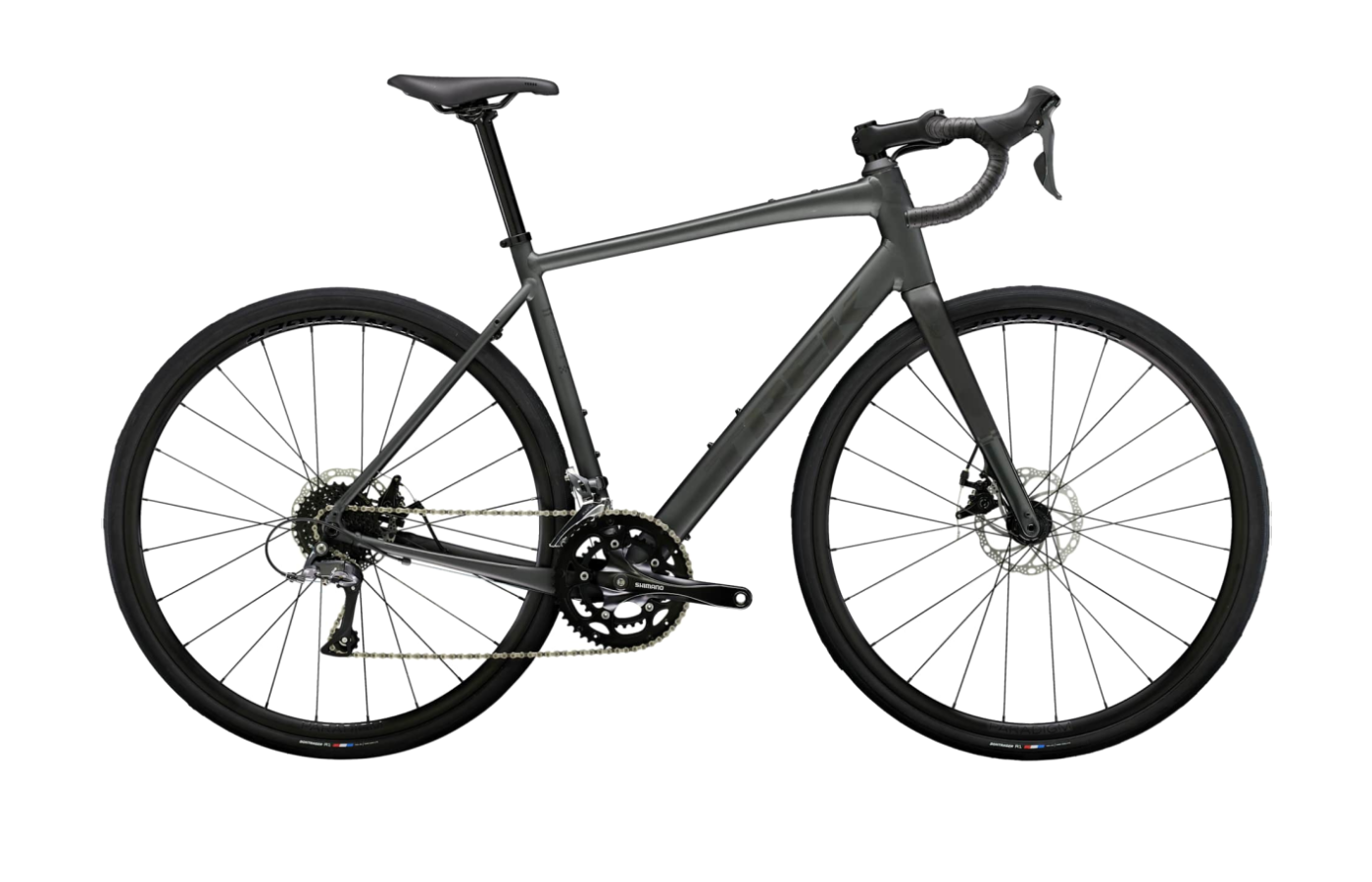
Trek's all-road answer to the Endurace — IsoSpeed decoupler instead of a leaf-spring post, plus down-tube internal storage. Heavier and pricier, but the Trek dealer network is a real-world advantage Canyon can't match.
Compare →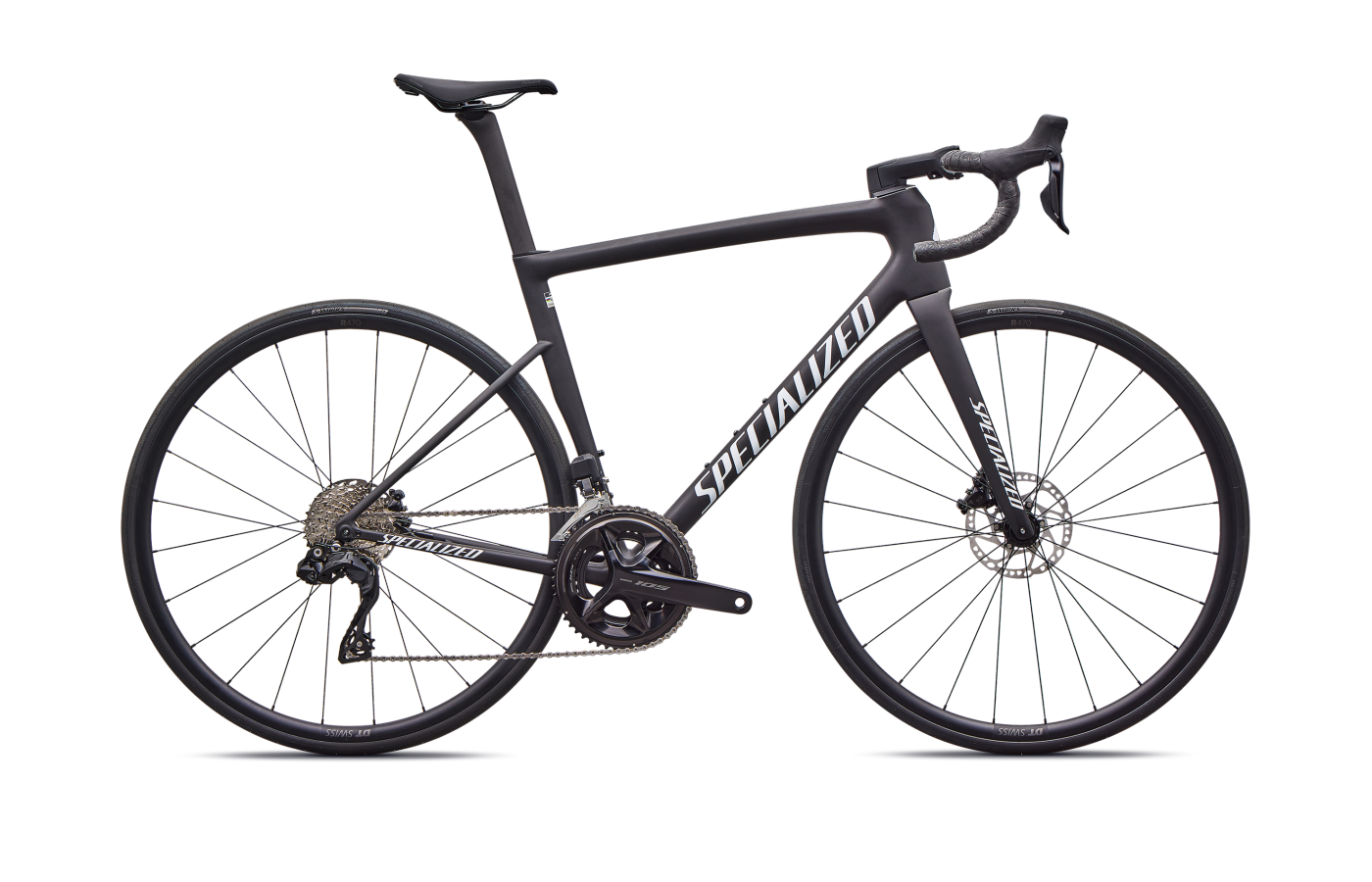
Tarmac
The classic alternative to the Aeroad — Specialized's do-everything race platform that splits the difference between aero and lightweight, with a non-proprietary cockpit that's far easier to fit and service.
Compare →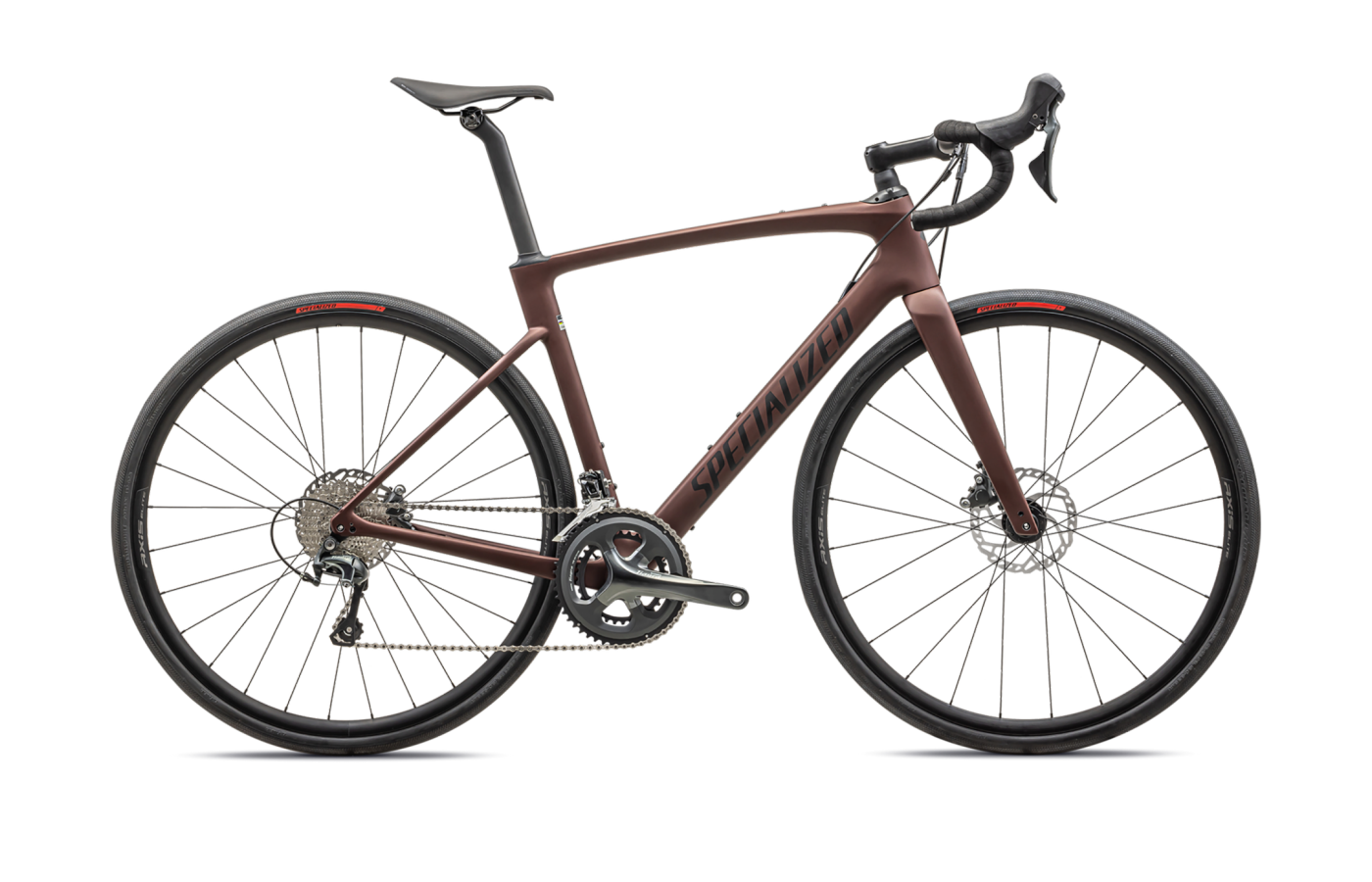
Roubaix
If the Endurace still isn't comfortable enough, the Roubaix's Future Shock front-end suspension actively damps hand and wrist fatigue — the closest thing to a road bike with a fork.
Compare →