Endurace
vsDomane
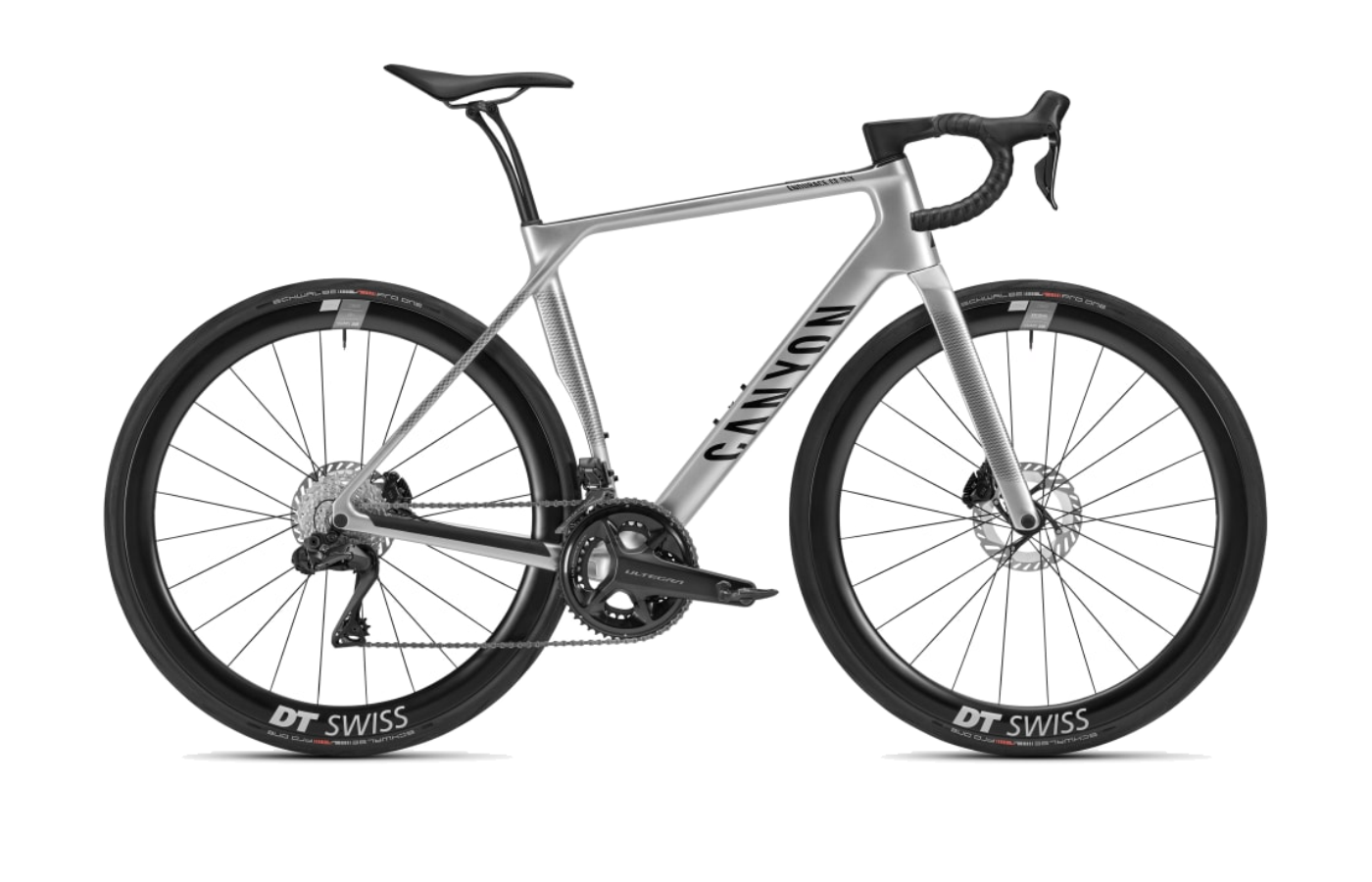
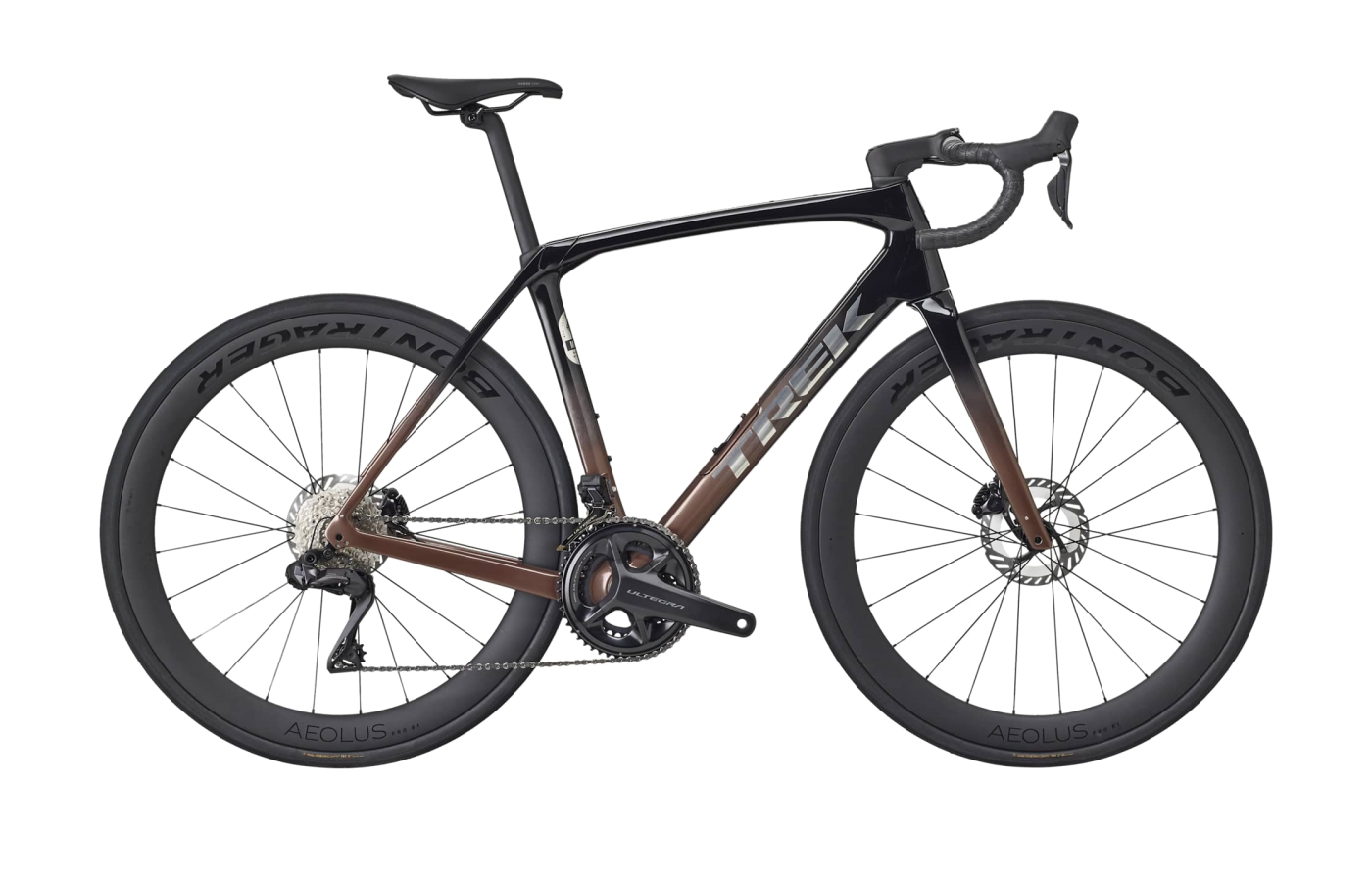
Two endurance icons, two definitions of 'all-road.'
The Endurace borrows aero shapes from Canyon's race bikes; the Domane builds an IsoSpeed decoupler and 38 mm tire room around comfort.
Endurace
- Aggressive value — power meters on every build down to the $2,699 105 trim; CFR flagship undercuts Trek's SLR 9 by ~$2,800.
- Sportier geometry — 73-degree head angle on L+, tight 991 mm wheelbase on XS make it the more eager bike when leaned over.
- Integrated aero cockpit with the width-adjustable CP0018/CP0048 borrowed from the Aeroad race platform.
- No fender mounts — Canyon kept the rear triangle tight at the cost of all-weather practicality.
- 35 mm tire clearance (vs 38 mm on the Domane) caps how rough you can go before swapping bikes.
Domane
- Genuine all-road clearance — 38 mm officially, with reviewers fitting 40+ mm tires for light gravel duty.
- Rear IsoSpeed decoupler delivers what testers describe as 'astonishingly comfortable' damping on broken tarmac.
- Hidden fender mounts and downtube storage — a real one-bike quiver for riders who mix road, gravel, and commuting.
- Stock Bontrager R3 tires and Paradigm wheels are widely panned as heavy and slow — most testers say the bike only 'wakes up' after an upgrade.
- Documented seatpost-creak/slip issue on early Gen 4 frames; Trek has shipped revised wedges (Rev 2 / Rev 4) but parts have been intermittently stocked.
Editor’s analysis
Both want to be the bike you ride on every road in your zip code — but they disagree about which roads count.
On paper the Canyon Endurace and Trek Domane share a category, a target rider, and even a tire size — both ship 32 mm Schwalbes or Bontragers as standard. Pull up the geometry and the philosophies fork. The Endurace runs a steeper 73-degree head angle on the bigger sizes and threads its hoses through an integrated CP0048 cockpit; the Domane sits on a slacker 71.3-degree head with a 80 mm bottom bracket drop and a fixed-tune rear IsoSpeed decoupler.
The Endurace is the racier read of the brief. Canyon's 'Sport geometry' is taller and shorter than the Aeroad, but the rest of the bike — aero tube shapes, 45 mm DT Swiss ERC carbon wheels on most builds, integrated power meters down to the 105 Di2 trim — is borrowed wholesale from the race lineup. Reviewers peg it as 'racier than you'd expect for a bike of this type,' with a tight 991 mm wheelbase on size XS and quick steering once you're leaned over.
The Domane is the more committed all-road tool. Trek pushes tire clearance to 38 mm officially (some testers fit 40+ mm), drops the bottom bracket to a ground-scraping 80 mm, and adds hidden fender mounts plus a downtube storage hatch big enough for a tube, tools, and a jacket. The IsoSpeed rear decoupler is non-adjustable on Gen 4 — Trek tuned it to the softest setting from Gen 3 because that's what most riders picked. The result is a bike Velo calls 'astonishingly comfortable' on broken tarmac.
Put another way: the Canyon Endurace is the endurance bike for people who'd rather race. The Trek Domane is the endurance bike for people who'd rather have one bike for road, light gravel, and the rainy-Tuesday commute.
Where the builds differ.
Comparing our editor's-pick builds side-by-side. Winners highlighted row-by-row — lower price and weight, and the better-spec component, each mark a point.
Build variants & pricing
Both lineups span ~$7.5k of range. Canyon undercuts Trek at every comparable trim; Trek's flagship SLR 9 AXS pushes higher than Canyon's CFR ceiling.
Prices are current US MSRP. Canyon is consumer-direct (no local dealer, no demos); Trek sells through a global dealer network with crash-replacement and fit support included. The price gap is real and partly the cost of that dealer model.
How they fit, how they steer.
Endurace XS sits 2 mm taller in stack (548 vs 546) and 2 mm longer in reach (370 vs 368) than Domane 50, with a slacker 70.8-degree head angle vs 71.1. The Domane's 75 mm BB drop and 420 mm chainstays give it the more planted, all-road feel.
Which size should I buy?
Size recommendations based on stack, reach, and effective top tube. Canyon's range runs 3XS–2XL (8 sizes); Trek covers 47–62 cm (8 sizes), plus a 44 on entry-level AL builds.
→These are starting points. Flexibility, riding style, and preferred position all shift the answer — if you’re between sizes, a professional fit beats a chart.
What the magazines said.
Published reviews from trusted cycling outlets. Click through for the full write-up.
Which one should you buy?
If you want an endurance bike that still rides like a race bike, get the Endurace. If you want one bike for road, light gravel, and rainy commutes, get the Domane.
Endurace
If your endurance riding looks like long Saturday loops on dry tarmac, the occasional sportive, and Strava efforts on the descent home — the Endurace is the more eager partner. The aero cockpit, integrated power meter, and tighter wheelbase reward riders who'd rather be racing.
Domane
If you want one bike for paved fondos, light gravel exploration, and bad-weather commuting, the Domane is the broader tool. IsoSpeed comfort, 38 mm clearance, fender mounts, and downtube storage make it a legitimate one-bike quiver — especially if you ride year-round in mixed conditions.
Questions buyers actually ask.
Short answers to the things we get emailed about most often.
01Which is more comfortable on rough roads?
The Trek Domane, by a clear margin on impact damping. Its rear IsoSpeed decoupler — non-adjustable on Gen 4, tuned to the softest setting from Gen 3 — is described by reviewers as 'astonishingly comfortable,' neutralizing square-edged hits and high-frequency buzz that the Canyon transmits through the seatpost.
The Canyon Endurace counters with its VCLS 2.0 carbon leaf-spring seatpost, which gives roughly 20 mm of compliant travel at the saddle. It works well at the rear, but the integrated CP0048 cockpit is stiff up front, so several testers noted a comfort imbalance — plush sit bones, busy hands. The Domane's longer wheelbase and lower 80 mm BB drop add to the planted feel.
02What's the maximum tire clearance?
Canyon Endurace: 35 mm officially across the carbon range; the alloy AllRoad model goes to 40 mm.
Trek Domane: 38 mm officially, with multiple reviewers fitting 40 mm or even 43 mm tires by hand-measurement.
If you want to mix in actual gravel — chunky surfaces, light singletrack — the Domane has meaningful headroom that the Endurace doesn't. For pure tarmac with the occasional rough patch, both have plenty.
03Which one climbs better?
Probably the Canyon Endurace, mostly on paper. Cycling News measured a CFR Di2 build at 7.3 kg; Trek lists the SLR 7 Ultegra Di2 at 7.99 kg in size 56. That's roughly 700 g of frame-and-build weight, which translates to about 10 seconds on a 30-minute climb for a 70 kg rider.
In the real world, the Domane's bigger handicap is its stock wheels and tires — multiple testers said the bike feels 'sluggish' until you swap the heavy Bontrager Paradigm wheels and R3 rubber. Upgraded, it climbs respectably for an endurance bike. Stock, the Endurace gets out of corners faster.
04Can I add fenders for year-round riding?
Trek Domane: yes, hidden fender mounts are built into the frame and fork — Trek sells matched fenders that integrate cleanly. This is one of the strongest practical arguments for the Domane.
Canyon Endurace: no dedicated mounts on the carbon CFR / CF SLX / CF frames. The alloy AllRoad model is the only Endurace with fender provisions. If year-round riding in wet climates matters, this is a meaningful differentiator.
05How does Canyon's consumer-direct model compare to buying a Trek?
Canyon ships direct to your door — no dealer markup, which is most of why their prices undercut Trek by $1k–$3k at every tier. Trade-offs: no in-person fit session, no local mechanic for the integrated cockpit, and warranty/crash-replacement runs through Canyon's customer service rather than a shop you can walk into.
Trek's dealer network bakes those services into the price. For a first carbon bike, or for anyone who prefers a relationship with a local shop, that's worth real money. For experienced buyers who know their fit and can handle their own wrenching, Canyon's value is hard to argue with.
06Is the IsoSpeed creak/slip issue still a problem?
It's a known issue on early Gen 4 Domane frames. Multiple long-term reviewers reported the seatpost creaking or slipping under load — Velo described one test bike that 'creaked incessantly,' and one rider's seatpost dropped nearly 2 cm mid-ride.
Trek has shipped revised hardware (Revision 2 and Revision 4 wedges) and tells riders to use generous carbon paste. Most testers say the updated wedge resolves it. If buying new, confirm with the dealer that your bike has the latest revision; if buying used, ask the seller directly. Heavier riders (over ~80 kg) reported the issue most often.
07How serviceable are the integrated cockpits?
Both bikes route hoses internally, so neither is truly home-mechanic-friendly.
The Canyon CP0048 (on Endurace CF SLX and CFR builds) has 50 mm of width adjustment and 20 mm of height adjustment built in, but changing stem length means buying a new cockpit (roughly $300–$450). Hose bleeds require a partial disassembly.
The Trek Domane uses a more conventional Trek RCS Pro stem with a separate Bontrager bar on most builds, and routes hoses through the headset. Stem swaps are easier than on the Canyon, but headset bearing service is labor-intensive — Velo flagged the upper headset bearing as 'woefully exposed' to sweat and road spray with no secondary lip seal.
08Which is better for a first 'serious' road bike?
Honest answer: it depends on whether you have a local Trek dealer and whether you've been fit professionally before.
If yes to both, the Canyon Endurace CF 7 Di2 at $3,399 (or even the 105 mechanical at $2,699) is a stunning amount of bike for the money — full Shimano Di2 and a power meter at a price where most rivals ship mechanical and no power.
If no, the Trek Domane SL 5 at $3,799 buys you a dealer relationship, in-person fit, fender mounts, and 38 mm clearance — features that matter more on a first bike than the small spec premium Canyon gets you for the same money.
Similar bikes
If your priorities don’t map cleanly onto either of these, one of these adjacent bikes probably fits better.
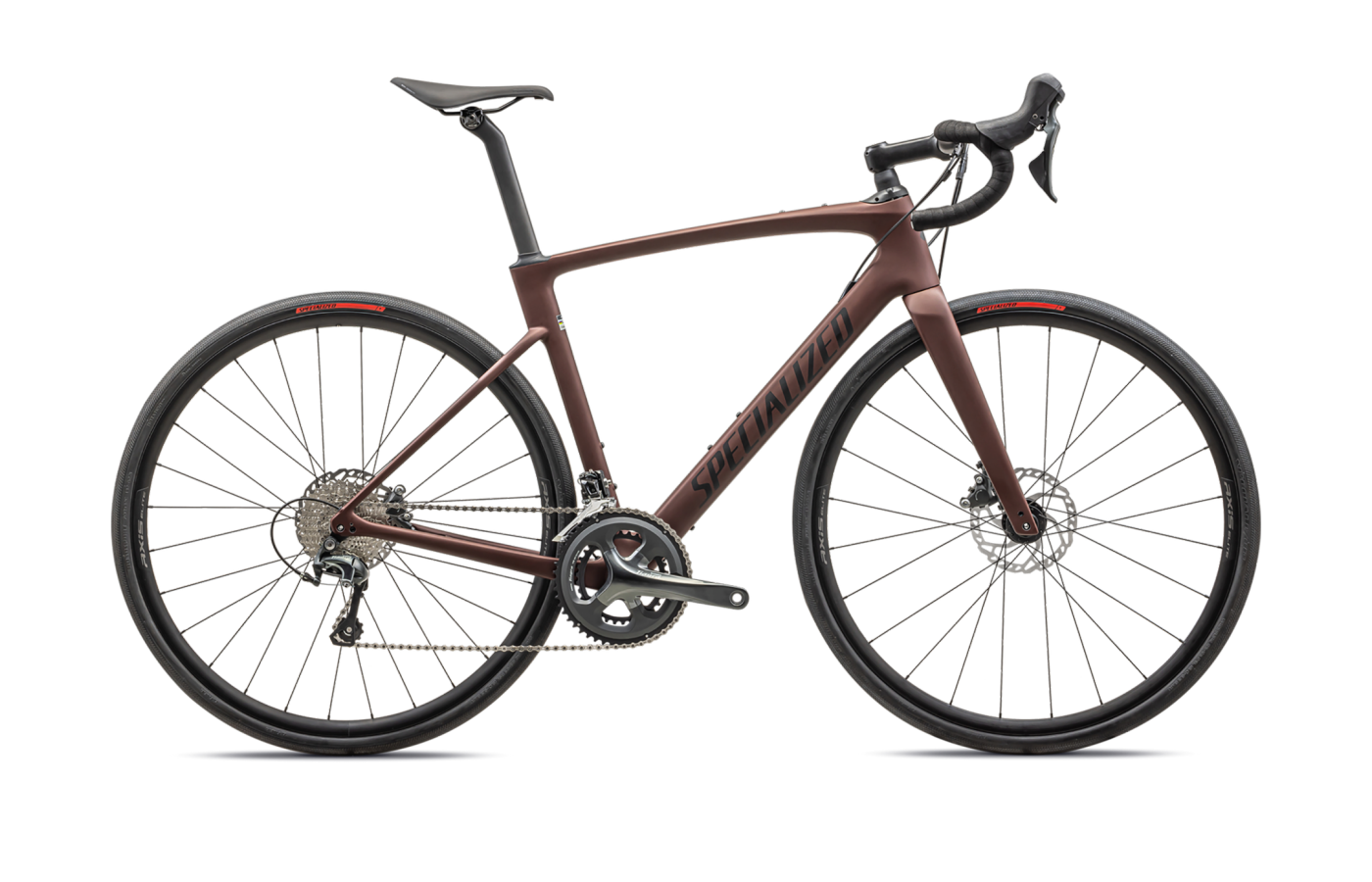
Roubaix
Specialized's answer in the comfort-tech war — Future Shock front suspension instead of a rear decoupler, with similar tire clearance to the Domane. The pick if you want the front end smoothed, not the rear.
Compare →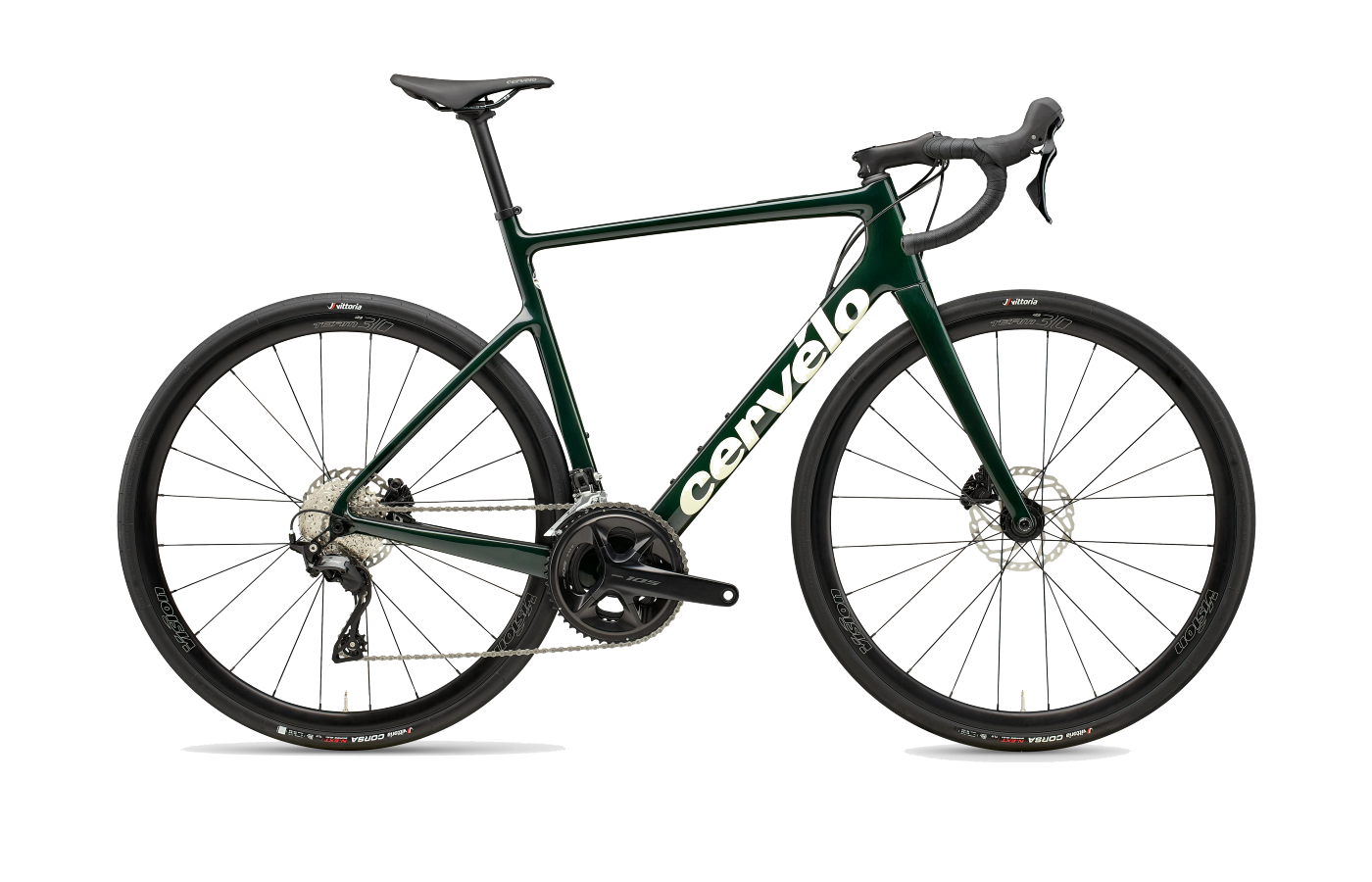
Caledonia
Cervélo's race-leaning take on the endurance brief — closer to the Endurace's spirit than the Domane's, with 34 mm clearance and a faster ride feel. Choose this if 'endurance' means fewer hours in a more aggressive position.
Compare →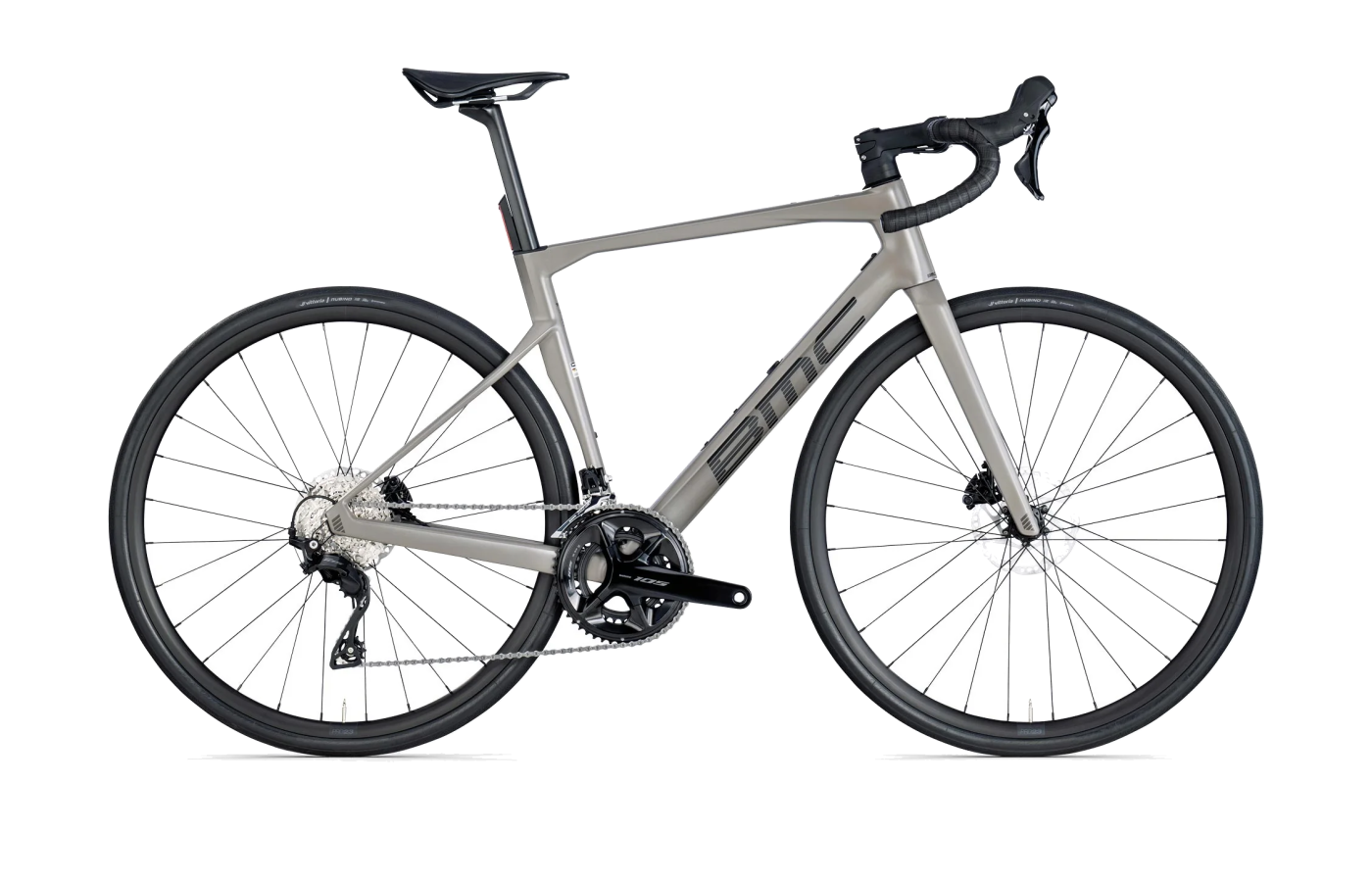
Roadmachine
BMC's clean-integration one-bike-for-everything play — geometry that splits the difference between the upright Domane and the sportier Endurace. The middle path.
Compare →