Grail
vsAspero
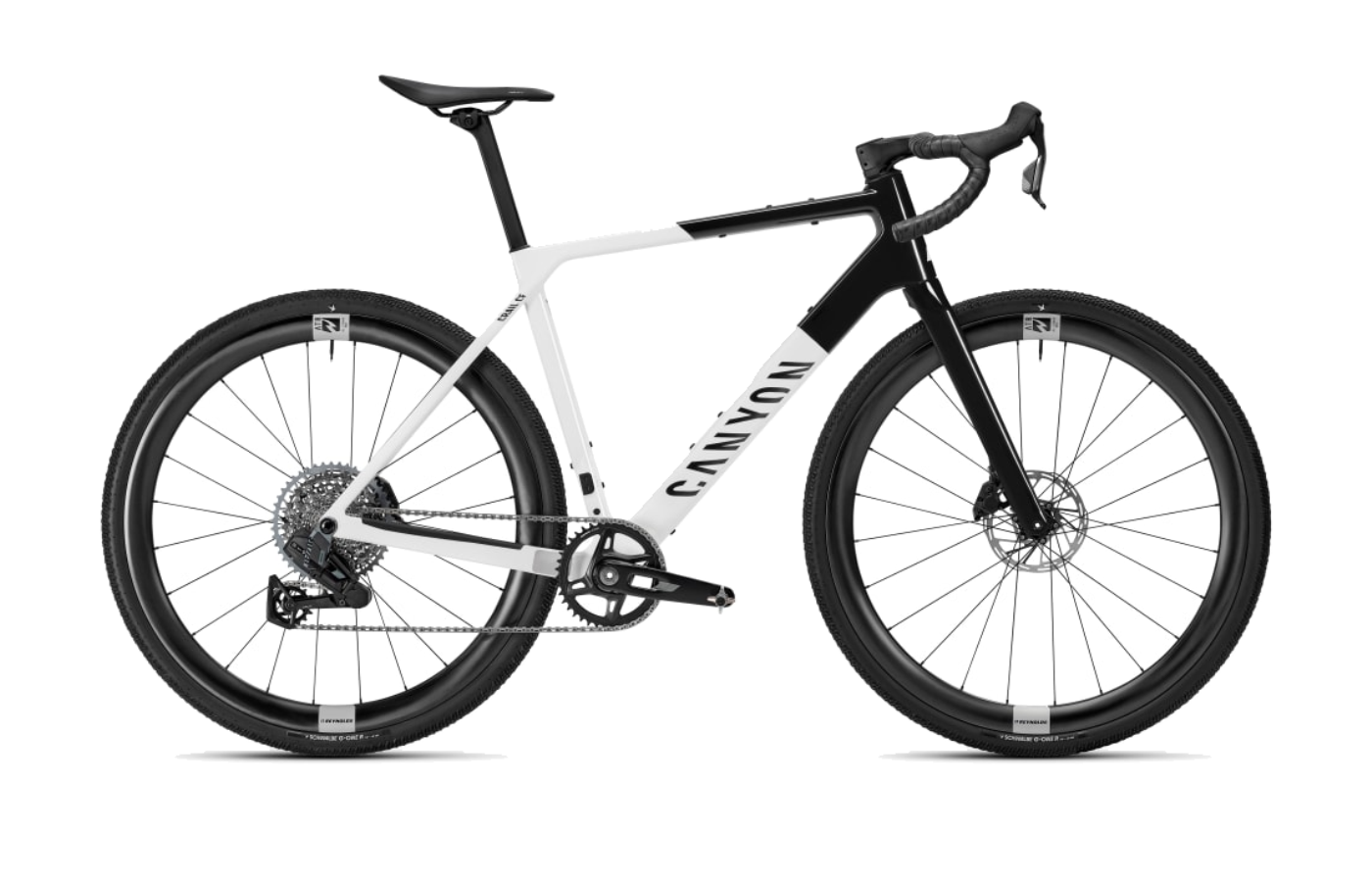
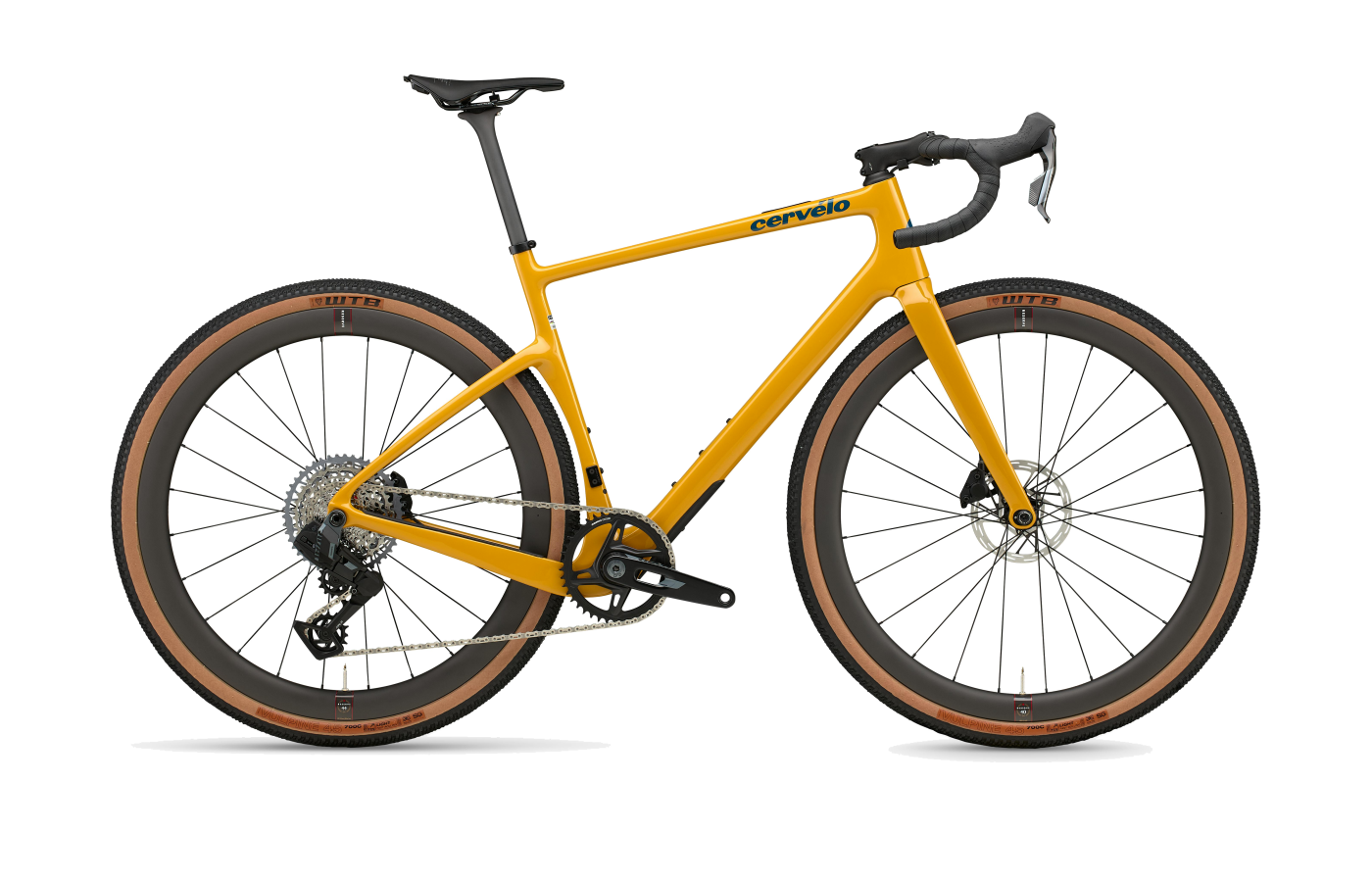
Two race gravel bikes, two very different shapes of fast.
The Canyon Grail is a long, integrated stability monster built for 200-mile days. The Cervélo Aspero is a thoroughbred road bike with gravel tires bolted on.
Grail
- Exceptional high-speed stability — long wheelbase and slack 71° HTA track straight through rattly gravel with the composure of a mini enduro bike.
- Direct-to-consumer value — the range starts at $2,899, roughly $650 below the cheapest Aspero, with carbon frame and electronic shifting as you step up.
- Integrated race toolkit — down-tube storage, Fidlock frame bag, Gear Groove cockpit mounts, and 9.1 W aero saving vs the old Grail at 45 km/h.
- One-piece carbon cockpit makes fit adjustments expensive — aftermarket swaps require a new bar/stem combo.
- 42 mm tire clearance is tight by 2026 race standards; chunky or muddy terrain wants more rubber than the Grail can fit.
Aspero
- Sharper, more playful handling — steeper 72° HTA and short 425 mm chainstays make it eager into corners; the Trail Mixer flip-chip in the fork lets you tune trail for wheel size.
- Home-mechanic friendly — threaded T47 bottom bracket, SRAM UDH, and a standard 27.2 mm round seatpost mean no proprietary headaches.
- Wider tire clearance (45 mm) than the Grail, with Reserve 40|44 GR carbon wheels on the Rival build that reviewers call a class highlight.
- Price floor is $3,550 and climbs fast — no sub-$3k entry point like the Canyon.
- Shorter wheelbase and steeper steering give up some composure on long, rough, high-speed sections vs the Grail.
Editor’s analysis
Both bikes want to win races. One wants to win by outlasting you; the other wants to win by out-cornering you.
The Canyon Grail (Gen 2) and Cervélo Aspero are the two poles of gravel-race design in 2026. Both run 42 to 45 mm tire clearance, both lean road-bike in drivetrain choices, both have Unbound pedigree under pro riders. But put their geometry charts side by side and the philosophies snap into focus.
The Canyon Grail is the stability argument. A 71-degree head tube (on our fit-picked XS), a 1,024 mm wheelbase, a one-piece CP0045 Double Drop cockpit, integrated down-tube storage on the SLX frames, and a claimed 9.1 watts saved at 45 km/h vs the old Grail — all of it pointed at letting you hold a tuck for hours on straight, rattly gravel without getting beaten up by the steering. Reviewers at BikeRadar and Road.cc praise its "calm, confident and stable handling" and "snappy yet stable" ride; the trade is a firm D-shaped Comfortpost that bucks harder when the surface turns genuinely rough.
The Cervélo Aspero picks the opposite lane. A 72-degree head angle on the size 54, short 425 mm chainstays, a standard 27.2 mm round seatpost, threaded T47 bottom bracket, and semi-integrated cable routing — nothing proprietary you can't service at your LBS. It rides, per BikeRadar and Velo, like "a road bike with a thyroid problem": quick, nimble, eager to dive into corners. Cervélo reduced front-end stiffness by 10% over the first-gen Aspero to smooth the ride, and it worked. The Aspero's fit is also lower and longer than the Grail's — a 555 mm stack at size 54 vs the Grail XS's 556 mm, but with 3 mm more reach and a sharper head angle.
Put crudely: the Grail is the bike for the racer who thinks of gravel as attrition. The Aspero is the bike for the roadie who thinks of gravel as a faster group ride. Canyon's direct-to-consumer pricing lets you get into the Grail at $2,899 — a thousand below where the Cervélo Aspero range even starts. The Aspero's answer is easier long-term ownership, a threaded BB, UDH, and a seatpost you can replace at any bike shop.
Where the builds differ.
Comparing our editor's-pick builds side-by-side. Winners highlighted row-by-row — lower price and weight, and the better-spec component, each mark a point.
Build variants & pricing
Both ranges span roughly $3.2k of spread. Canyon starts $650 below Cervélo and includes electronic shifting on more builds; Cervélo's SRAM range tops out one tier lower (no Force build on the Aspero).
Prices are current US MSRP. The editor's-pick comparison is built around SRAM Rival XPLR on both sides — the cleanest apples-to-apples drivetrain pair the two platforms share. If you want higher-tier SRAM, only the Canyon offers a Force build; Cervélo's ceiling on the SRAM side is Rival.
How they fit, how they steer.
At our fit-picked sizes, stack is nearly identical (556 mm vs 555 mm) but the Aspero 54 has 3 mm more reach and a full degree sharper head angle — 72° vs 71°. Chainstays match at 425 mm; the Grail's wheelbase runs longer across the range in service of stability.
Which size should I buy?
Size recommendations based on stack, reach, and effective top tube. The Grail's size range runs further at the small end (2XS); the Aspero tops out one size larger (61).
→These are starting points. Flexibility, riding style, and preferred position all shift the answer — if you’re between sizes, a professional fit beats a chart.
What the magazines said.
Published reviews from trusted cycling outlets. Click through for the full write-up.
Which one should you buy?
If you race long, rough events and want the bike to hold a line for you, get the Grail. If you grew up on the road and want that feel on dirt, get the Aspero.
Grail
If your calendar includes Unbound, SBT GRVL, or any multi-hour fast-gravel event, the Grail's long wheelbase, slack front end, and integrated storage are purpose-built for exactly that. You give up some comfort on rocky trails and some fit flexibility at the cockpit — but you get a bike that genuinely reduces mental fatigue when you're eight hours in.
Aspero
If most of your miles are tarmac and you want one bike that can do fast gravel group rides, crit-style handling on dirt, and winter base miles, the Aspero is a road bike you're allowed to take off-road. The T47 BB, UDH, and round seatpost mean you can service it anywhere.
Questions buyers actually ask.
Short answers to the things we get emailed about most often.
01Which is faster at gravel-race speeds?
On smooth, fast gravel the two are close enough that rider and tire choice matter more than the frame. Canyon claims a 9.1 W saving at 45 km/h over the first-gen Grail, attributed to new tube shapes borrowed from the Ultimate road bike and the integrated Double Drop cockpit. Cervélo claims 3–4.2 W saved over the first-gen Aspero.
The Grail's longer wheelbase and integrated cockpit give it the edge on long, straight, rough sections — less rider input, less fatigue. The Aspero's quicker steering rewards riders who want to carry speed through winding, mixed-terrain courses.
02How much tire can each bike fit?
Canyon Grail: 42 mm, officially. Reviewers have reported unofficially fitting 45 mm, but Canyon's published max is 42 mm and the 42 mm ceiling is a repeated point of criticism in reviews for a modern race-gravel bike.
Cervélo Aspero: 45 mm with 700c wheels (47–48 mm with 650b). That's 3 mm more than the Grail, which in practice means comfortable margin for a true 45 mm tire in wet or muddy conditions.
Neither is a bikepacking rig — for chunky, rocky terrain, look at the Canyon Grizl or Santa Cruz Stigmata instead.
03Why is there no SRAM Force build on the Aspero?
Cervélo's SRAM range on the Aspero tops out at Rival XPLR AXS at $5,800. The highest-tier Aspero is the Shimano GRX RX825 Di2 at $7,050 — that's the apples-to-apples pairing against the Canyon Grail CF SLX 8 Di2 at $5,599.
If SRAM Force or Red is a must-have, the Aspero isn't for you; Cervélo pushes Force/Red buyers toward the Aspero 5, which is a separate, lighter frame. Canyon, by contrast, offers Force XPLR on the top-end CF SLX at $6,099.
04Is the Grail's integrated cockpit a dealbreaker for fit?
It depends on how far you are from the middle of the fit bell curve. Reviewers at Escape Collective and Cyclist flagged that smaller frames ship with 420 mm-wide bars that feel "at odds with the XS frame" for riders with narrower shoulders. The one-piece CP0039/CP0045 means changing stem length or bar width costs roughly $300–450 for a new unit.
The Aspero sidesteps this entirely: a traditional Cervélo ST36 stem and AB09 carbon bar means swapping stems is a 10-minute job with standard parts.
05Can I use the Grail's downtube storage on the CF SL model?
No — the downtube LOAD storage compartment and the Gear Groove cockpit mounts are only on the CF SLX and CFR frames. The CF SL (used on the $2,899 GRX 12s, $3,299 Rival AXS, and $4,099 Rival XPLR Aero) shares the same aero shaping and geometry but without the internal storage or cockpit accessory interface.
BikeRadar called this "a real shame" — the CF SL is otherwise a strong value, but loses the most distinctive integration features.
06How serviceable is each bike long-term?
The Aspero is the winner here by a clear margin. Threaded T47 bottom bracket (replaces the old press-fit), SRAM UDH derailleur hanger, standard 27.2 mm round seatpost, and semi-integrated cable routing that runs externally under the stem before entering the frame. Velo called it "easier than ever to live with."
The Grail uses a press-fit BB that reviewers noted "did its fair share of creaking," a proprietary D-shaped SP0072 seatpost, the integrated one-piece cockpit, and fully-routed cables through the upper headset cover — the last of which reviewers consistently flagged as complicating headset maintenance.
07What's the weight difference?
Specific claimed frame weights aren't directly published side by side, but on comparable mid-tier builds, the Grail CF SLX 8 Di2 comes in around 19.14 lb (8.68 kg) in size M. Cervélo publishes frame/fork at 1,141 g / 452 g for the Aspero size 56, and tested complete builds land between 8.2 kg (Force-equivalent) and 8.77 kg (Apex AXS).
Neither is a climbing specialist. If outright frame weight is the priority, both brands offer lighter platforms — the Specialized Crux is ~7 kg-class, and Cervélo's own Aspero 5 is about 200 g lighter at the frame.
08Which is the better first 'real' gravel bike?
If this is your first serious carbon gravel bike and you're coming from a road background, the Aspero. The familiar road-like geometry, non-proprietary parts, and easy service path will feel less like entering a locked ecosystem.
If you're coming to the Aspero/Grail decision with a race calendar already booked — Unbound, Mid South, Belgian Waffle Ride — the Grail is more singularly optimized for that use case, and Canyon's DTC pricing puts it within reach at $2,899 for the entry CF SL build.
Similar bikes
If your priorities don’t map cleanly onto either of these, one of these adjacent bikes probably fits better.
Crux
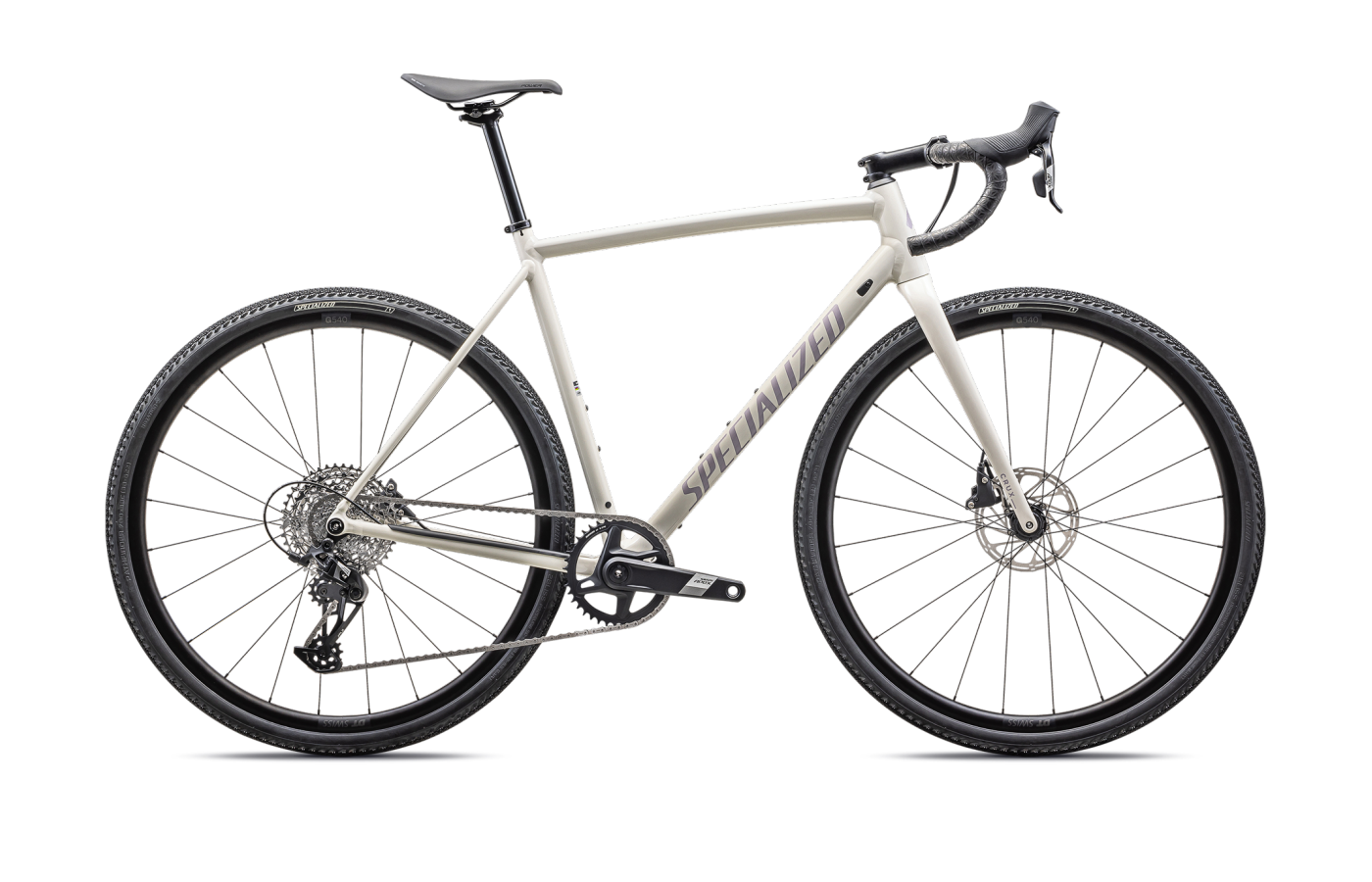
The Specialized Crux goes the opposite direction from both bikes here — a sub-7 kg, Tarmac-derived frame with no integration, no aero pretensions, just a very light climbing-friendly gravel bike. If grams matter more than watts, this is the pick.
Compare →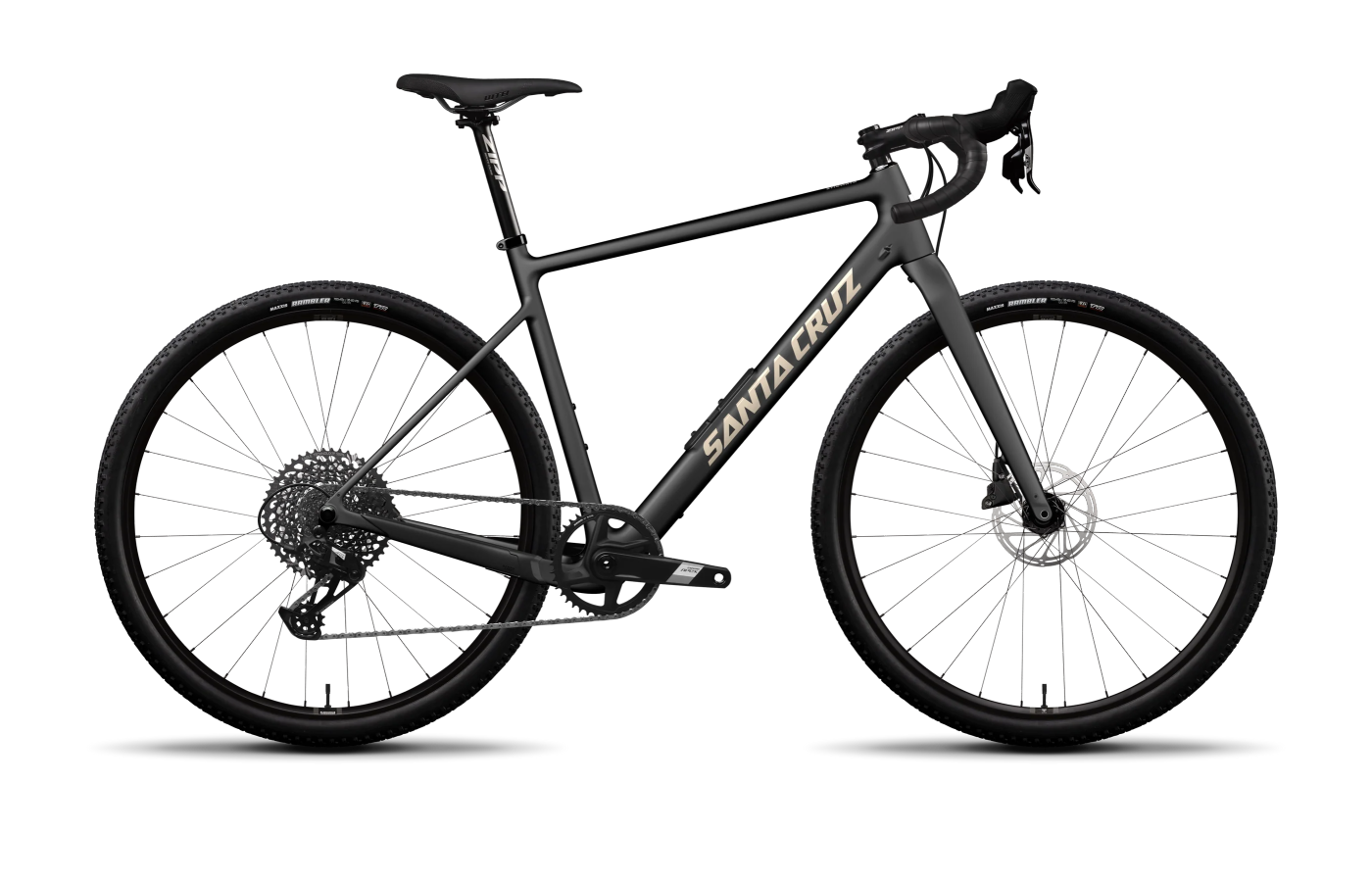
Stigmata
The Santa Cruz Stigmata takes the Grail's stability argument two steps further — progressive mountain-bike-influenced geometry and up to 50 mm tire clearance. Pick this if the Grail's 42 mm ceiling feels limiting and you want a drop-bar bike that's genuinely at home on technical singletrack.
Compare →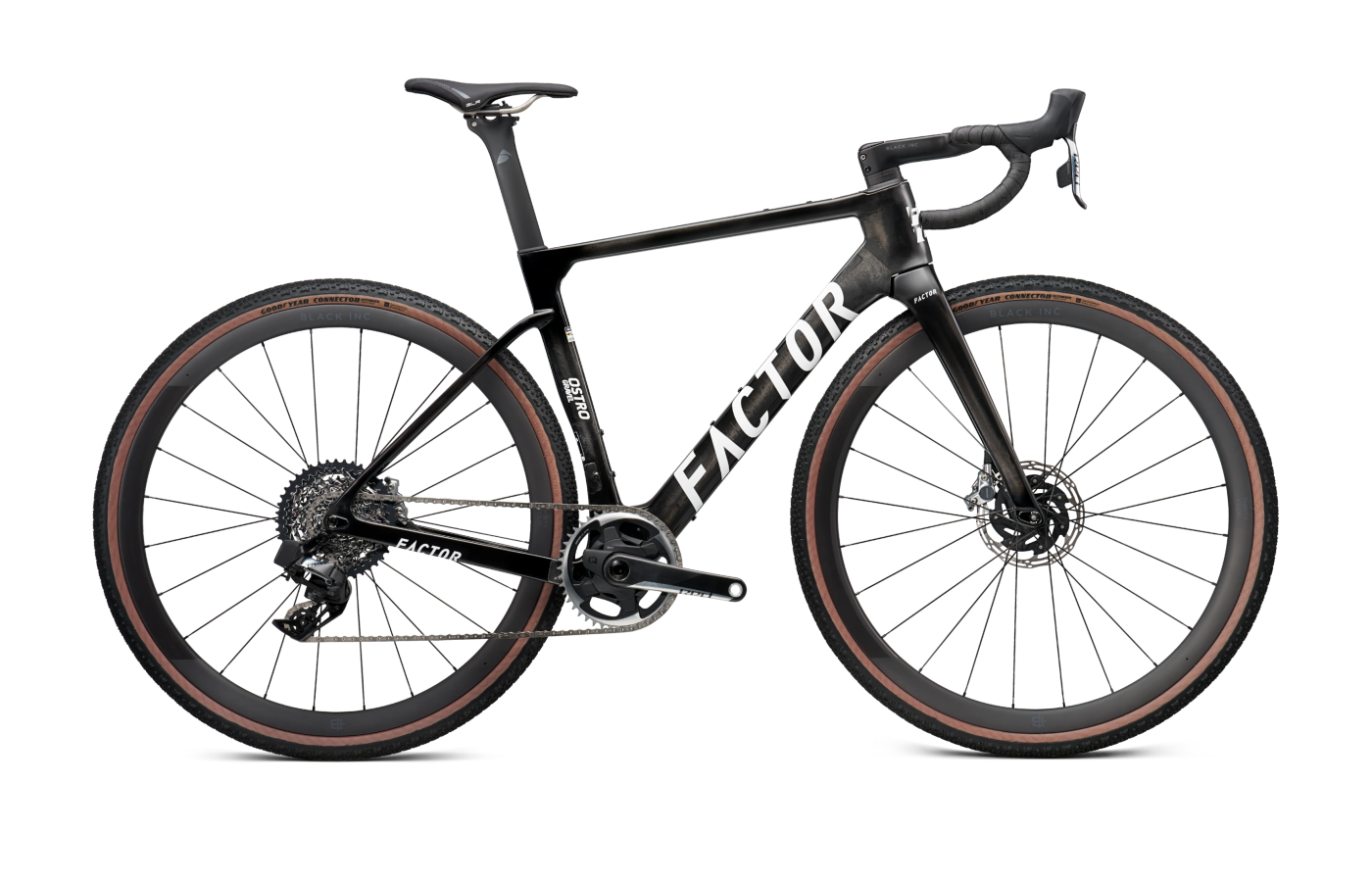
Ostro Gravel
The Factor Ostro Gravel pushes aero integration further than the Aspero while keeping a boutique, dealer-supported buying experience. Think of it as the Aspero's answer to the Grail's DTC value play — at a premium, but without Canyon's proprietary cockpit lock-in.
Compare →