Grail
vsAspero-5
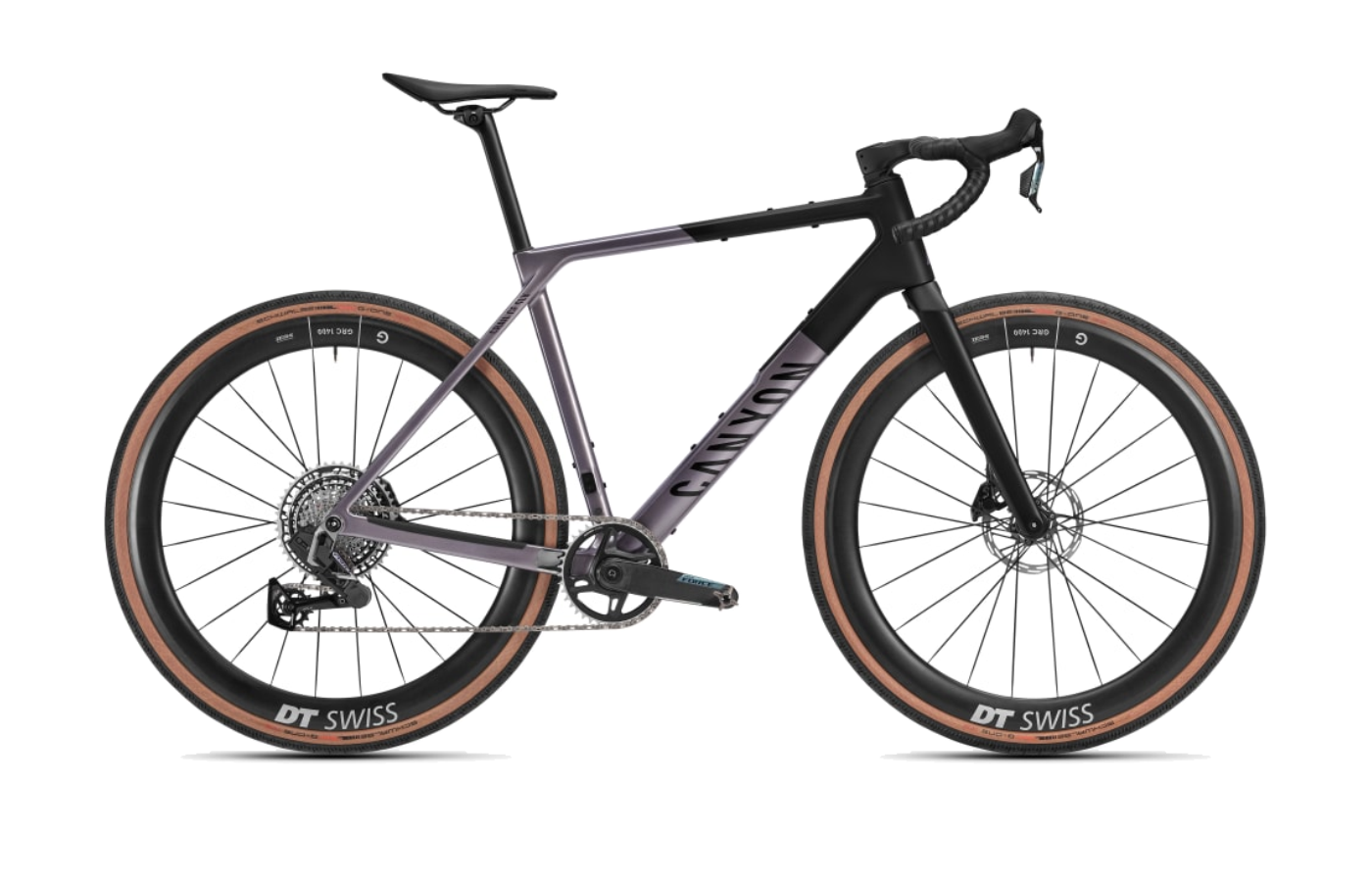
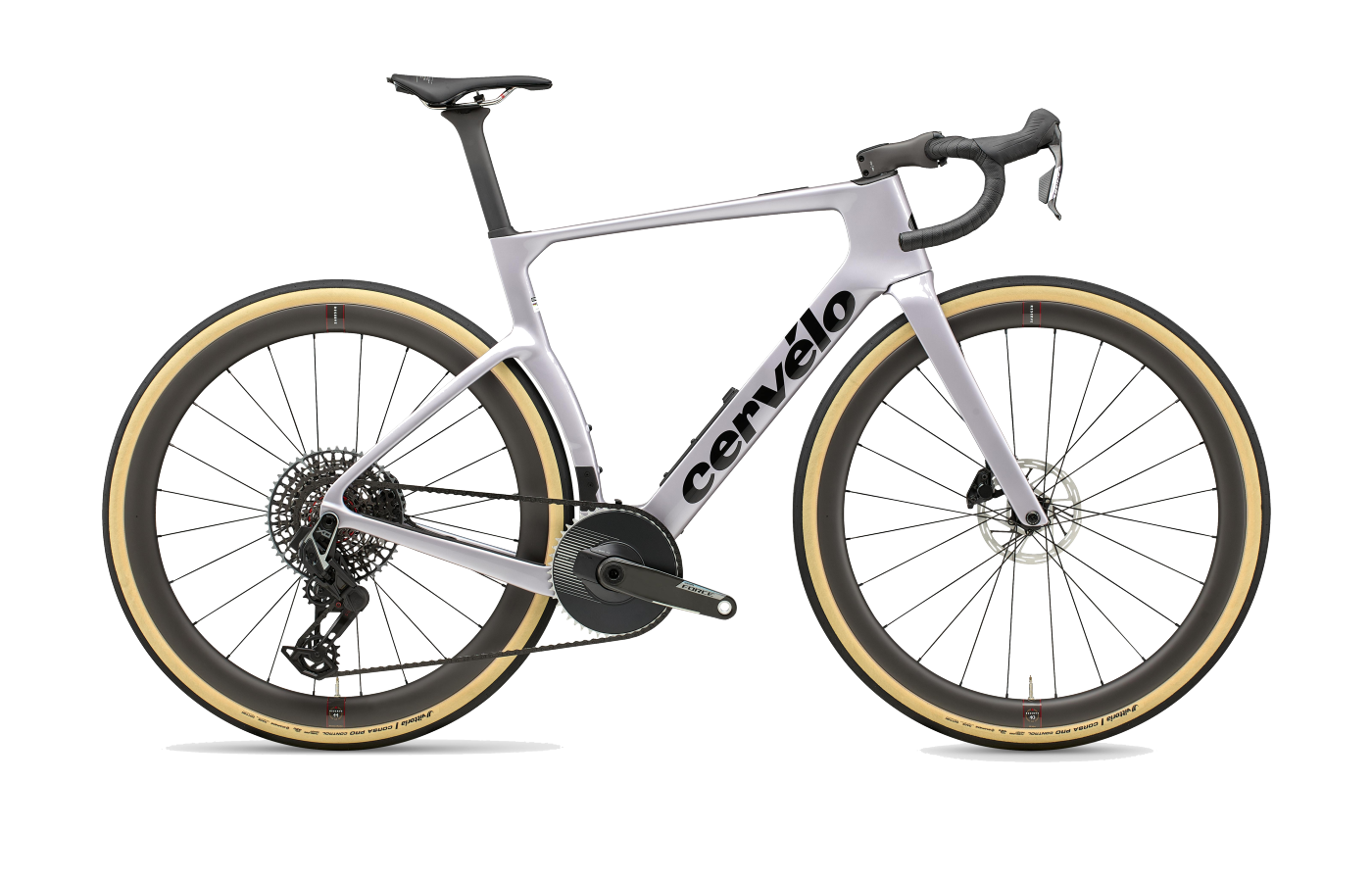
Two race-only gravel bikes, one priced like a road bike.
The Grail is a long, stable Unbound weapon with downtube storage. The Aspero-5 is a road bike with knobs — sharper, faster on hardpack, and nearly twice the price.
Grail
- Massive value — a CF SLX 8 with Force XPLR AXS, Quarq power meter, and DT Swiss GRC 1400 carbon wheels for $6,099. The cheapest Aspero-5 with no power meter is $8,850.
- Calmer at speed — longer wheelbase and consistent 69 mm trail across sizes make the Grail the steadier hand on long, rough race courses.
- Smarter storage — downtube compartment, magnetic Fidlock frame bag, and the 'Gear Groove' mount system are the most thought-out integration in the segment.
- 42 mm tire clearance is the tightest in the segment — less room to add comfort on truly rough courses.
- Proprietary one-piece cockpit limits fit adjustment; reviewers flagged the stock 420 mm bar as 'curiously wide' on XS/S frames.
Aspero-5
- Sharpest handling in gravel race — S5-derived geometry, 422.5 mm chainstays across all sizes, and trail figures borrowed from Cervélo's road bikes make this the most road-like gravel bike on sale.
- Two-piece cockpit — the HB16 bar and ST31 stem swap independently, no hose re-routing, no proprietary clamp. A real fit-customization win at this price.
- Aero leadership — Cervélo's claimed 34 watts faster than the next-fastest gravel bike, with stock 42 mm Vittoria Corsa Pro Control slicks that play to the strength on hardpack.
- Price floor is $8,850 with no power meter — Cervélo simply doesn't sell a sub-$8k Aspero-5.
- Tight 6 mm chainstay clearance with a 42 mm tire means 'mud acts like sandpaper against the frame' (Cycling Magazine).
Editor’s analysis
Both want to win the same races. One does it through stability and storage, the other through aero numbers and a steeper front end.
The Canyon Grail and Cervélo Aspero-5 are both second-generation gravel race bikes, both wireless-only, both running 1x Force AXS in the picks above. But that's where the similarities end. The Grail starts at $2,899 with mechanical GRX. The Aspero-5 starts at $8,850. That's not a typo — Cervélo has chosen to compete only in the upper-upper end of the gravel market, while Canyon's direct-to-consumer pricing puts a carbon, electronic-shifting Grail in reach for half the cost of the cheapest Aspero.
On geometry, the Grail (Gen 2) is the calmer animal. A 71.5-degree head tube angle on most sizes, a 1,080 mm wheelbase on the L, and consistent 425 mm chainstays across the range — Canyon's pitch is high-speed stability for the brutal attrition of 200-mile races like Unbound. Reviewers consistently describe it as 'planted,' 'stable,' and 'point-and-shoot.' The Aspero-5 sits 0.1 degrees steeper at the head tube (71.6) but shaves chainstays to 422.5 mm and runs trail figures lifted directly from Cervélo's S5 road bike. Reviewers describe the handling as 'road-like,' 'sharp,' and 'unsettled' on rough singletrack. Same-segment, opposite character.
Tire clearance tells the same story from a different angle. Canyon Grail: 42 mm. Aspero-5: 45 mm. Both are tight by 2026 gravel standards (the Specialized Crux clears 47 mm; the Diverge clears more). Neither is the bike for the rider chasing 50 mm-and-up adventure rubber. But the Cervélo at least gives you 3 mm more headroom — useful, since reviewers note its tight chainstay clearance turns mud into 'sandpaper against the frame.'
The integration story diverges sharply. The Grail's 'Aero Load System' includes downtube storage, a magnetic Fidlock frame bag, and a one-piece CP0039 cockpit with Canyon's proprietary 'Gear Groove' accessory mount. The Aspero-5 has downtube storage too, but pairs it with a two-piece HB16 bar and ST31 stem — easier to swap, easier to bleed, easier to fit. If you're outside the middle of the bell curve on bar width or stem length, the Cervélo is friendlier. If you want a frame bag that's claimed to make the bike faster, the Canyon is the one.
Where the builds differ.
Comparing our editor's-pick builds side-by-side. Winners highlighted row-by-row — lower price and weight, and the better-spec component, each mark a point.
Build variants & pricing
The Grail spans $2,899 to $6,099 across five builds. The Aspero-5 has three builds, all between $8,850 and $12,650 — there is no entry-level Aspero-5.
Prices are current US MSRP. The Aspero-5 frameset alone retails for $5,500, roughly the price of a complete CF SLX 8 Di2 Grail. Canyon also sells a frameset, but most riders buy complete.
How they fit, how they steer.
Grail XS vs Aspero-5 54 — both fit-picked for a 5'8" rider. The Aspero sits 6 mm lower in stack with 1 mm more reach, runs a 0.6-degree steeper head tube (71.6 vs 71), and chainstays 2.5 mm shorter. The Cervélo is the sharper, more road-like fit; the Canyon is taller and calmer.
Which size should I buy?
Canyon uses alpha sizing (2XS through 2XL); Cervélo uses traditional cm sizing (48 through 61). Both ranges fit roughly the same height envelope; the Aspero-5 stops at 48 cm while the Grail goes one notch smaller with the 2XS.
→These are starting points. Flexibility, riding style, and preferred position all shift the answer — if you’re between sizes, a professional fit beats a chart.
What the magazines said.
Published reviews from trusted cycling outlets. Click through for the full write-up.
Which one should you buy?
If you want the most race bike for the money on courses like Unbound, get the Grail. If you want the sharpest, fastest gravel bike on hardpack and price isn't the question, get the Aspero-5.
Grail
If you race long, rough courses and want every dollar going into the bike — power meter included, downtube storage included, carbon wheels included — this is the obvious pick. The stable geometry rewards long days when concentration fades, and the LOAD storage system is genuinely the best in the segment.
Aspero-5
If most of your racing is on hardpack, your courses are won in the drops at 35+ km/h, and you want a bike that doubles as a fast road bike with a wheel swap, the Aspero-5 is the sharper tool. The two-piece cockpit also makes it the friendlier bike for riders who need to dial in their fit.
Questions buyers actually ask.
Short answers to the things we get emailed about most often.
01Which is faster on hardpack gravel?
The Cervélo Aspero-5, by Cervélo's own numbers — they claim 34 watts faster than the next-fastest gravel bike on the market and 37 watts faster than the previous Aspero. Independent reviewers (BikeRadar, Velo, Flow Mountain Bike) confirm it 'feels legitimately rapid' on smooth or hardpacked surfaces.
Canyon's claim for the Grail is more modest: 9.1 watts saved at 45 km/h compared to the Gen 1 Grail, with another ~1.3–1.5 watts from running the Fidlock frame bag (yes, with the bag attached). Both bikes are clearly aero-focused, but the Aspero-5 is the more aggressive aero design.
02What's the maximum tire clearance?
Canyon Grail: 42 mm officially. Stock builds ship with 40 mm Schwalbe G-One RS Evo or G-One R tires.
Cervélo Aspero-5: 45 mm officially. Stock builds ship with 42 mm Vittoria Corsa Pro Control slicks.
Neither is the bike for chunky 50 mm-plus adventure tires. Reviewers also flag that the Aspero-5's 6 mm chainstay-to-tire gap with the stock 42 mm tire turns muddy rides into 'sandpaper against the frame' — frame protection is recommended if you race in the wet.
03Which has the better drivetrain options?
Both lean SRAM-heavy at the top. The Aspero-5 ships exclusively with 1x: SRAM Red AXS, Force AXS, or Shimano GRX RX825 Di2 — all with a Wolf Tooth or SRAM 48T aero chainring paired with a 10-52T MTB cassette ('mullet' setup). That gives you both a high top-end gear and a low climbing gear in one drivetrain.
The Grail offers more variety: 1x Force XPLR AXS, 2x Shimano GRX Di2, 1x Rival XPLR 13-speed, 1x Rival AXS, and even mechanical GRX 12-speed at the entry level. If you want 2x for a wider range of road-leaning gear steps, the Grail is the only choice between the two.
04Is the integrated cockpit a problem for fit?
Potentially, on the Grail. Canyon ships the CF SLX and CFR builds with a one-piece CP0039 cockpit — bar width and stem length are bonded together. Reviewers, especially smaller riders, called the stock 420 mm bar on XS/S frames 'at odds with the XS frame.' Aftermarket cockpit swaps work because Canyon kept a standard 1 1/8" steerer, but it's an expensive route.
The Aspero-5 uses a two-piece HB16 bar plus ST31 stem. You can change either independently with no hose re-routing. For riders who don't sit perfectly in the middle of the size bell curve, that's a real ownership advantage.
05How is the storage on each bike?
Both have downtube storage compartments. The Grail's LOAD system is more refined — there's an internal tool pouch, a hatch designed to mount a mini-pump, and a magnetically-attached Fidlock frame bag that Canyon claims actually improves aerodynamics by ~1.3–1.5 watts. The Gear Groove on the cockpit accepts proprietary computer mounts, lights, and fork-mounted accessory sleeves.
The Aspero-5's downtube storage is functional but described by Velo as 'the narrowest opening I have tried' — usable for tools, less convenient for fast trailside access. Cervélo offsets this by including small extras (Arundel carbon cages, a top-tube SmartPak, computer mounts) that would otherwise be aftermarket purchases.
06Can I get either with mechanical shifting?
Only the Grail. The entry-level Canyon Grail CF SL 7 Shimano GRX 12s ($2,899) is fully mechanical. Every other build on both bikes is wireless electronic (SRAM AXS or Shimano GRX Di2). If you want mechanical shifting, the budget Grail is the only option in this matchup.
07Which is better for someone with one drop-bar bike?
The Aspero-5 is the more deliberate 'quiver-killer.' Its road-bike geometry, low stack, sharp steering, and 42 mm slick stock tires mean it genuinely doubles as a fast road bike with a wheel swap. Multiple reviewers (Cycling Weekly, Flow, Velo) called it the best all-road bike they've ridden in years.
The Grail is more committed to gravel — its stable, point-and-shoot geometry and 1x SRAM XPLR drivetrains make it less natural on group road rides. If gravel races are your priority and the road bike is secondary, the Grail wins. If you want one bike that does both well, the Aspero-5 is the answer.
08How serviceable are they?
Both run brake hoses through the headset, which complicates headset bearing replacement. The Aspero-5 uses a threaded T47 bottom bracket — durable, no creaks. Cervélo's two-piece cockpit makes hose runs easier than a fully integrated unit.
The Grail uses a press-fit BB; Cycling Weekly noted theirs 'did its fair share of creaking.' The integrated cockpit makes any future bar/stem changes more involved. Canyon ships extra headset seals to mitigate dirt ingress, and reviewers report headset access is 'easy enough' once you know the steps.
Similar bikes
If your priorities don’t map cleanly onto either of these, one of these adjacent bikes probably fits better.
Crux
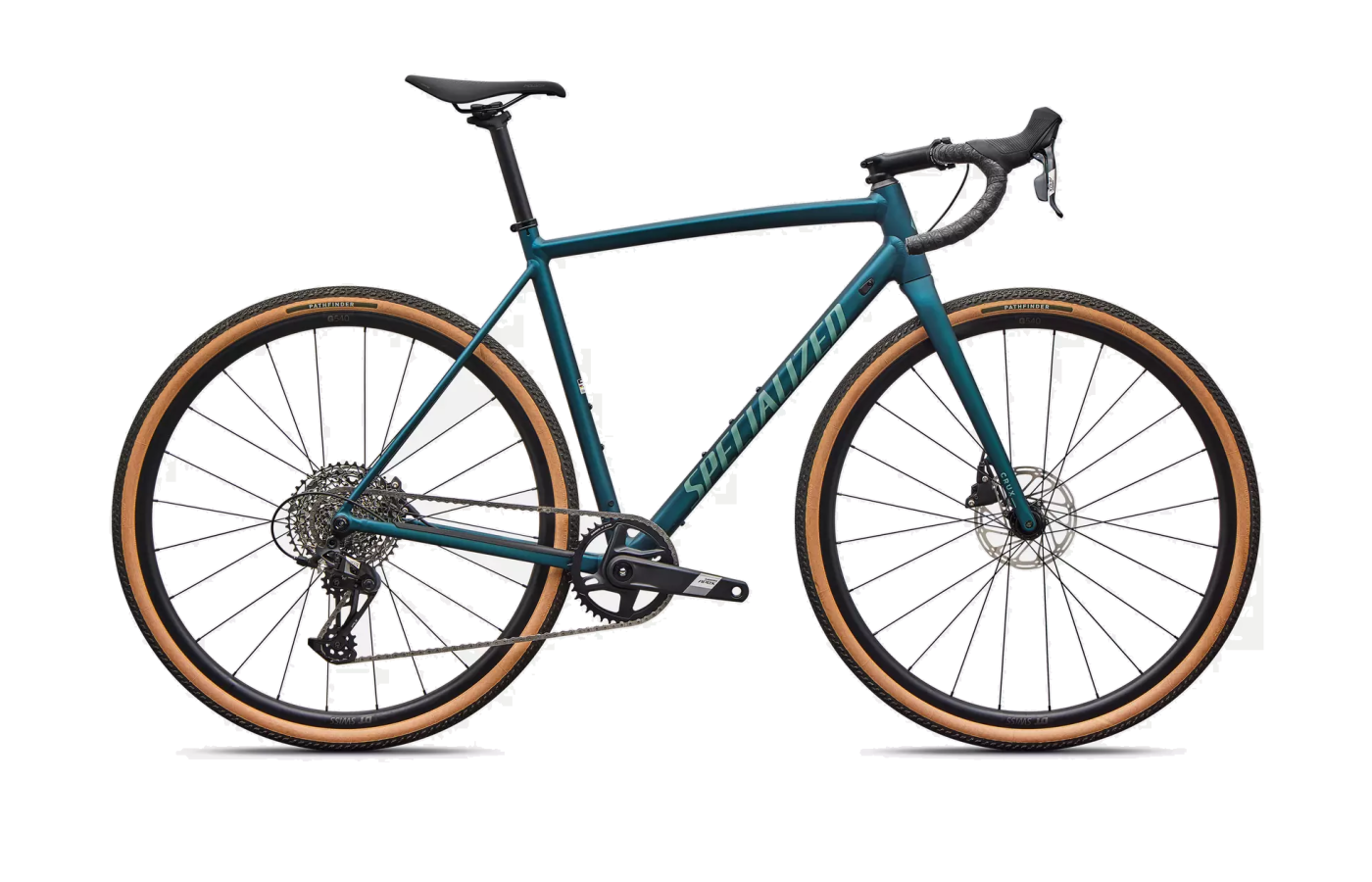
The lightweight gravel race bike for riders who think aero gravel has gone too far. Significantly more tire clearance than either the Grail or Aspero-5, and a more traditional, classical ride feel — Specialized's anti-aero answer.
Compare →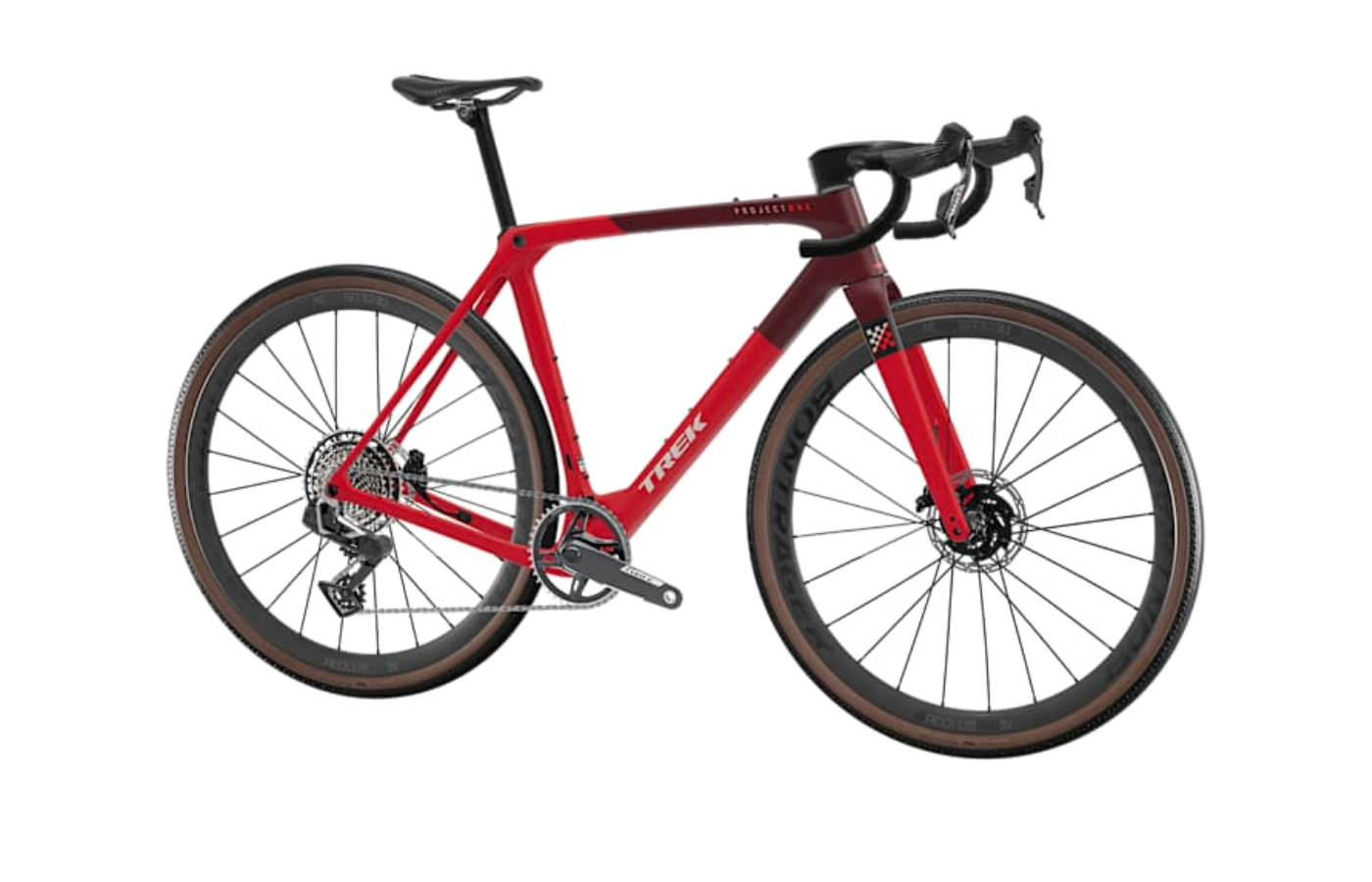
Checkmate
Trek's 2025 aero gravel flagship — the closest direct rival to the Aspero-5 on both price and aerodynamic integration. Worth a look if you want Trek's dealer support instead of Cervélo's premium positioning or Canyon's direct-to-consumer model.
Compare →Grizl
Canyon's adventure-focused gravel platform for riders who like the Grail's value but find it too stiff or the 42 mm tire clearance too restrictive. More compliance, more rubber room, less race focus.
Compare →