Grail
vsCheckmate
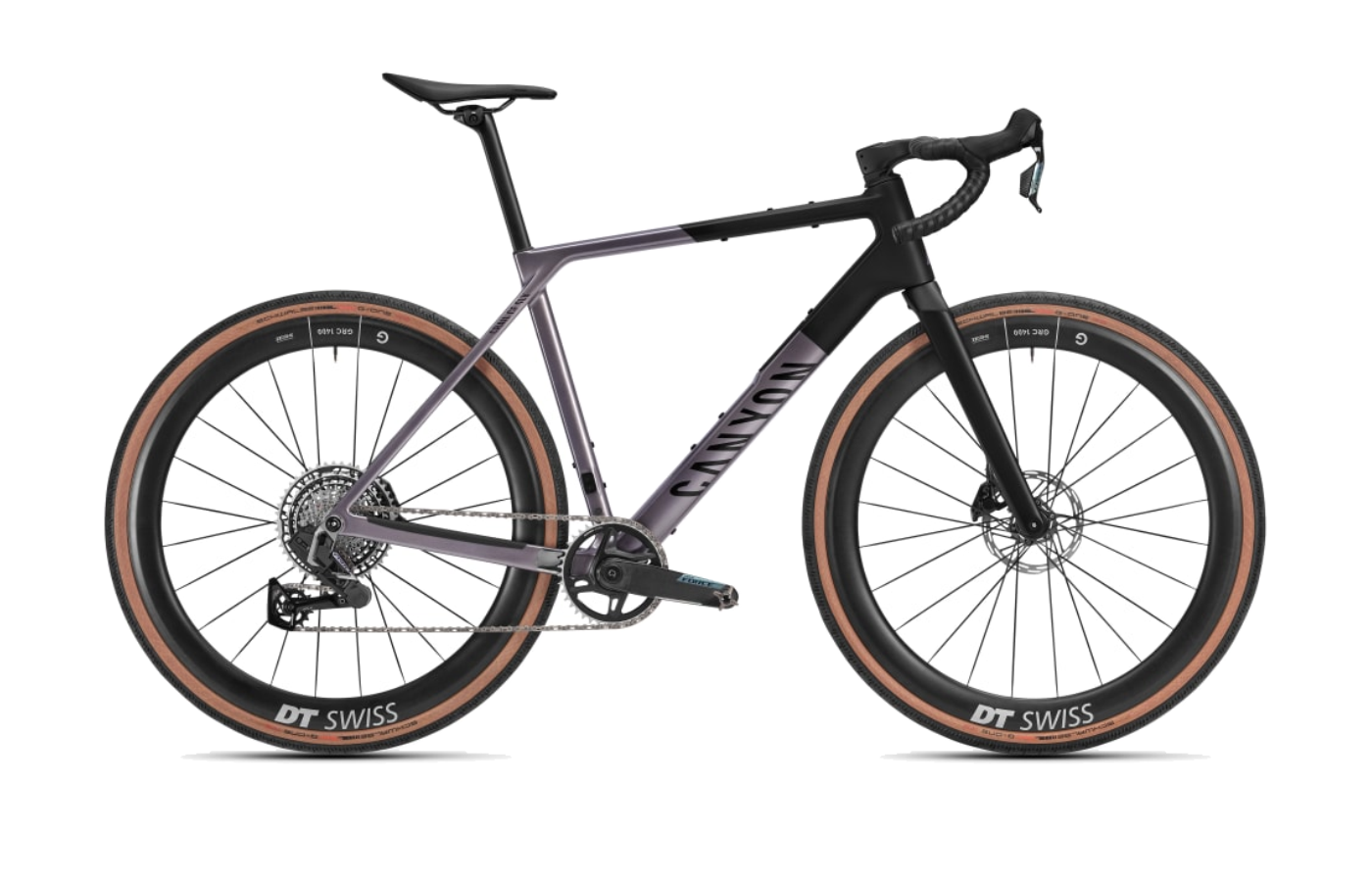
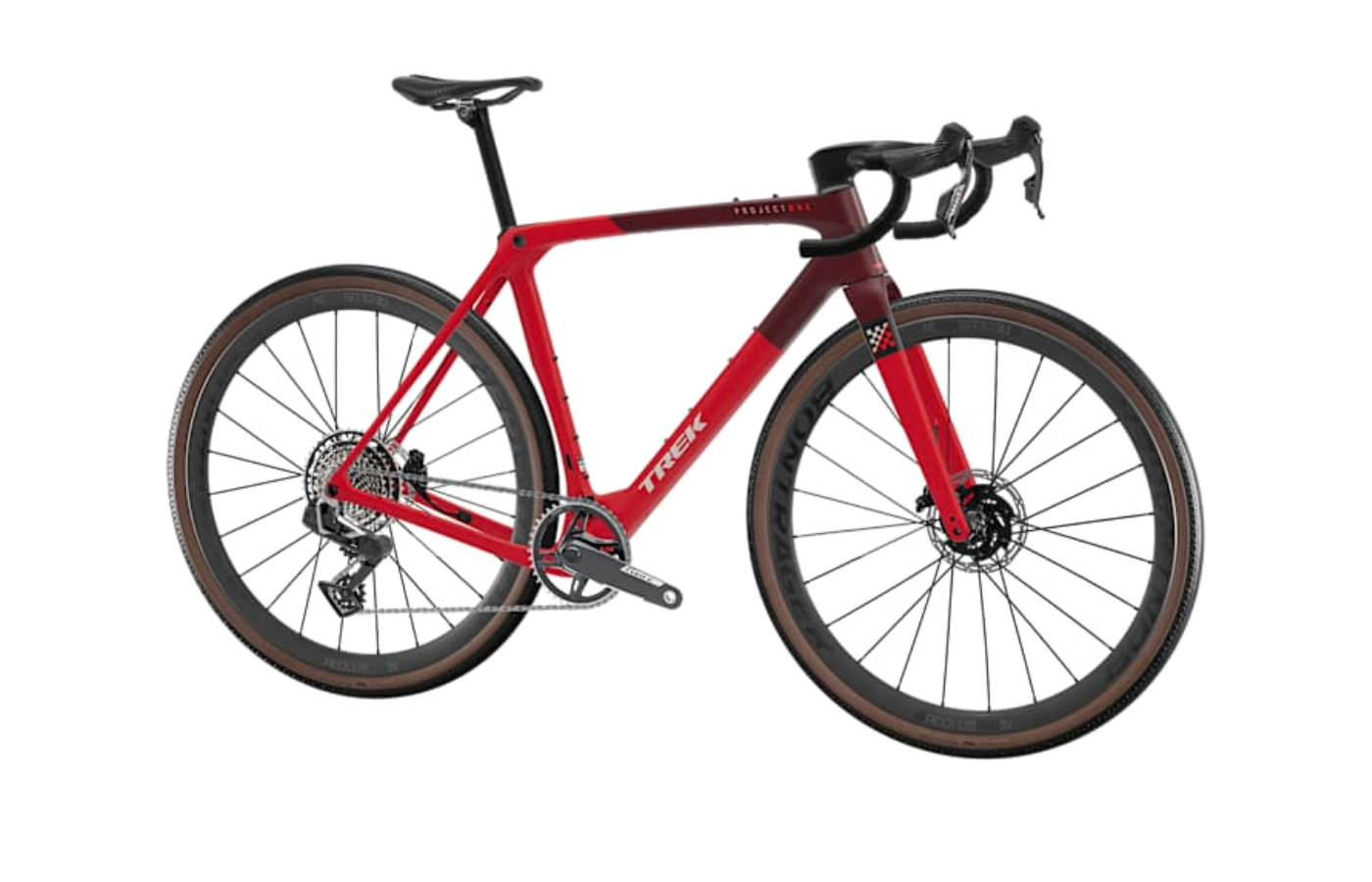
Two race-bred gravel bikes, two pricing universes.
The Canyon Grail is a podium-proven aero gravel platform starting under $3k. The Trek Checkmate is a Madone-flavored flagship that only comes in five-figure builds.
Grail
- Class-leading value — a Force AXS build with carbon DT Swiss GRC 1400 wheels for $6,099, less than the cheapest Checkmate.
- Wide build range from $2,899 to $6,099 — five tiers covering both Shimano GRX and SRAM Rival/Force, mechanical and electronic.
- Integrated storage — LOAD down-tube hatch and Aero Load frame bag (CF SLX/CFR) that Canyon claims actually adds aero gain.
- Tire clearance capped at 42 mm — on the low side for the chunky Unbound-style courses now defining elite gravel.
- Stiff one-piece cockpit and D-shaped seatpost transmit chatter; comfort depends heavily on tire choice.
Checkmate
- Lightest in the segment at 7.55 kg for an ML SLR 9 — roughly a pound and a half under the old Checkpoint SLR.
- IsoSpeed seat-tube decoupler — meaningfully damps rear-end chatter without the bounce of an active suspension.
- Project One customization lets you spec bar width, stem length, and crank length at order — rare at this price.
- Price floor of $8,199 — no mid-tier carbon, no alloy option, no escape hatch for budget-minded racers.
- Front end is stiff; the Aero RSL bar is borrowed from the Madone and reviewers describe it as 'bordering on unforgiving' over potholes.
Editor’s analysis
Both want to win Unbound. One sells you the option at $2,899; the other gates the experience at $8,199 and goes up from there.
The Canyon Grail Gen 2 and the Trek Checkmate landed in 2024 with the same brief — kill the do-it-all gravel bike, build a focused racer. Both replaced softer siblings (Grizl, Checkpoint) and borrowed tube shapes from their road flagships. Both lean on integrated cockpits, deep-section carbon wheels, and 1x SRAM Force or above. On a quick spec-sheet glance, you'd think they were the same bike.
They aren't. The Canyon Grail is built around stability and value — a 71.5° head angle (71° on XS), a 1,080 mm wheelbase on size L, and a five-build range that starts at $2,899 and tops out at $6,099. Canyon's pitch: take direct-to-consumer pricing, give you a Force AXS race build with carbon wheels for what most brands charge for an Ultegra mechanical. The trade is a firm D-shaped seatpost, a stiff one-piece bar, and 42 mm of tire clearance that some reviewers flag as the bare modern minimum.
The Trek Checkmate goes the other direction — it's the Madone with bigger tires. Trek's 800-Series OCLV frame, the Aero RSL one-piece cockpit, and the IsoSpeed decoupler at the seat tube combine for a 7.55 kg ML build that Trek claims is 5 minutes 54 seconds faster than the old Checkpoint SLR over Unbound 200. It also has a remarkably low 80 mm BB drop, T47 threaded BB, and 45 mm tire clearance. The catch: only two builds (Force AXS at $8,199, Red AXS at $11,999), no aluminum, no entry tier.
Put bluntly, this isn't a head-to-head between two equivalent products — it's a referendum on how you want to buy a gravel race bike. The Canyon Grail gets you a podium-grade platform for the cost of the Trek Checkmate's seatpost. The Trek Checkmate gets you a polished, dealer-supported, IsoSpeed-equipped tool that feels closer to a road bike than anything else in the segment.
Where the builds differ.
Comparing our editor's-pick builds side-by-side. Winners highlighted row-by-row — lower price and weight, and the better-spec component, each mark a point.
Build variants & pricing
Canyon offers five tiers from $2,899 to $6,099. Trek offers two, and the cheaper one starts where Canyon's flagship ends.
Editor's picks are tier-matched at SRAM Force XPLR AXS — the practical race build on each platform. The $2,100 price gap between them is real platform pricing, not a spec mismatch: Trek doesn't sell a sub-$8k carbon Checkmate at any tier.
How they fit, how they steer.
Grail XS vs Checkmate M — both fit-picked for a 5'8" rider. Sizing labels differ because Canyon's range runs notably large; the Checkmate M is 4 mm taller in stack, 7 mm longer in reach, half a degree steeper at the head, and sits 5 mm lower at the BB.
Which size should I buy?
Size recommendations from stack, reach, and effective top tube. Canyon's range runs large — most riders will sit a size down from their usual.
→These are starting points. Flexibility, riding style, and preferred position all shift the answer — if you’re between sizes, a professional fit beats a chart.
What the magazines said.
Published reviews from trusted cycling outlets. Click through for the full write-up.
Which one should you buy?
If you want the most race bike per dollar, get the Canyon Grail. If you want the lightest, IsoSpeed-equipped flagship and don't blink at $8k+, get the Trek Checkmate.
Grail
If you're entering your first elite gravel season and refuse to spend $10k for the privilege, the Grail is the answer. The CF SLX 8 AXS gets you carbon wheels, Force XPLR, and a podium-proven frame for under the Checkmate's price floor. Accept the 42 mm tire ceiling and the proprietary cockpit, and the math is hard to argue with.
Checkmate
If you already own a Madone and want a second bike that feels like the same bike with bigger tires, the Checkmate is the cleanest answer in the segment. The IsoSpeed mutes seated chatter, the 7.55 kg ML weight climbs better than anything this aero, and Project One nails the fit. Pay for it, ride it on hardpack, swap to 45 mm tires immediately.
Questions buyers actually ask.
Short answers to the things we get emailed about most often.
01Which is faster on smooth gravel?
Both are aero-optimized race bikes that excel on hardpack, and the differences are small. Trek claims the Checkmate SLR is 5 minutes 54 seconds faster than the old Checkpoint SLR over Unbound 200 at 200 watts — but that's vs the previous generation, not vs the Grail. Canyon claims a 9.1-watt saving at 45 km/h vs the previous Grail.
Neither brand has published head-to-head wind-tunnel numbers against the other. In real-world reviews, both are described as 'glide-along' fast on smooth surfaces. The Checkmate's lower 7.55 kg weight gives it the edge on rolling courses; the Grail's longer wheelbase makes it feel more planted on long open straights.
02Which has more tire clearance?
Trek Checkmate: 45 mm officially. Reviewers confirmed the limit is strict — 50 mm tires and 2.1" mountain bike tires both rubbed the frame in testing.
Canyon Grail: 42 mm officially. Some reviewers reported fitting 45 mm unofficially, but Canyon doesn't endorse it.
For most US gravel courses (champagne gravel, hardpack, mixed surface) either is fine. For chunky Unbound-style terrain where pros are increasingly running 47–50 mm tires, the Checkmate has the edge by 3 mm — though both bikes are arguably under-tired for the most technical modern gravel races.
03Which climbs better?
The Trek Checkmate, on weight alone. The SLR 9 AXS at 7.55 kg (size ML, with sealant) is roughly 600–700 g lighter than the Canyon Grail CF SLX 8 Di2 (19.14 lb / 8.68 kg, size M). On a 30-minute climb that's worth ~10 seconds for a 70 kg rider.
Reviewers also described the Checkmate as 'whisks its way up hills' and 'lively when engaging with steeper sections.' The Grail isn't a poor climber — its stiff bottom bracket gets praise for out-of-saddle efforts — but it's heavier across every comparable build, and the gap shows on sustained climbs.
04What's the difference in geometry at my size?
For a default 5'8" (173 cm) rider, the fit algorithm recommends Canyon Grail XS and Trek Checkmate M. The size labels are different but both are the right fit.
At those sizes:
- Stack: Grail 556 mm, Checkmate 560 mm — basically identical.
- Reach: Grail 385 mm, Checkmate 392 mm — Checkmate is 7 mm longer.
- Head angle: Grail 71°, Checkmate 71.5° — Checkmate is half a degree steeper.
- BB drop: Grail 75 mm, Checkmate 80 mm — Checkmate sits 5 mm lower.
- Wheelbase: essentially identical (1,024 vs 1,022 mm).
The Checkmate's lower BB is its defining geometry choice — reviewers describe it as 'centered and planted' at speed but warn about pedal strikes on rocky terrain.
05Can I get a non-electronic build?
Canyon: yes. The Grail CF SL 7 Shimano GRX 12s ($2,899) is a 2x mechanical build — the only mechanical option in the range, but it exists.
Trek: no. Both Checkmate builds are SRAM Force XPLR AXS or Red XPLR AXS — wireless electronic only, 1x only, no Shimano option at any tier.
06How serviceable are the integrated cockpits?
Both cockpits are one-piece carbon with internally routed brake hoses — adjusting bar width or stem length means buying a new cockpit on either bike.
The Grail's CP0039 uses a standard 1 1/8" steerer, which Canyon advertises as a feature: you can swap to an aftermarket two-piece bar/stem if the integrated cockpit doesn't fit. Reviewers note this is 'an expensive route' but at least possible.
The Checkmate's Aero RSL is borrowed from the Madone Gen 8. Trek's mitigation is Project One, which lets you specify bar width (37–41 cm), drop width, and stem length (70–110 mm) at order — meaning most riders never need to swap. Reviewers also reported the plastic aesthetic cap on the stem is fragile.
07Which has better integrated storage?
Canyon Grail (CF SLX/CFR only): an internal LOAD down-tube hatch with clips for a multi-tool and mini-pump, plus a magnetic Fidlock Aero Load frame bag that Canyon claims adds 1.3–1.5 watts of aero benefit at speed. Note: the CF SL builds (the cheaper three) don't get the down-tube storage.
Trek Checkmate: none. Trek deliberately removed the internal down-tube storage that the Checkpoint has, citing racer feedback that external bags are faster to access mid-crisis. The Checkmate does have integrated frame-bag mounts, but the bag is sold separately.
For multi-hour unsupported races, the Grail (in CF SLX trim) is the more self-contained tool.
08Is one easier to live with day-to-day?
The Trek Checkmate has the more service-friendly bones: a T47 threaded bottom bracket (vs Canyon's press-fit BB86, which reviewers reported 'did its fair share of creaking'), SRAM UDH for derailleur compatibility, and US dealer support for warranty and fit work.
The Canyon Grail is direct-to-consumer — no dealer, no in-person fit, no walk-in service. You save thousands on the purchase but you're on your own (or on your local shop's aftermarket service rates) for everything that follows. It also uses Canyon-specific accessories (computer mount, frame bag, fork sleeves) that some reviewers reported are hard to source.
Similar bikes
If your priorities don’t map cleanly onto either of these, one of these adjacent bikes probably fits better.
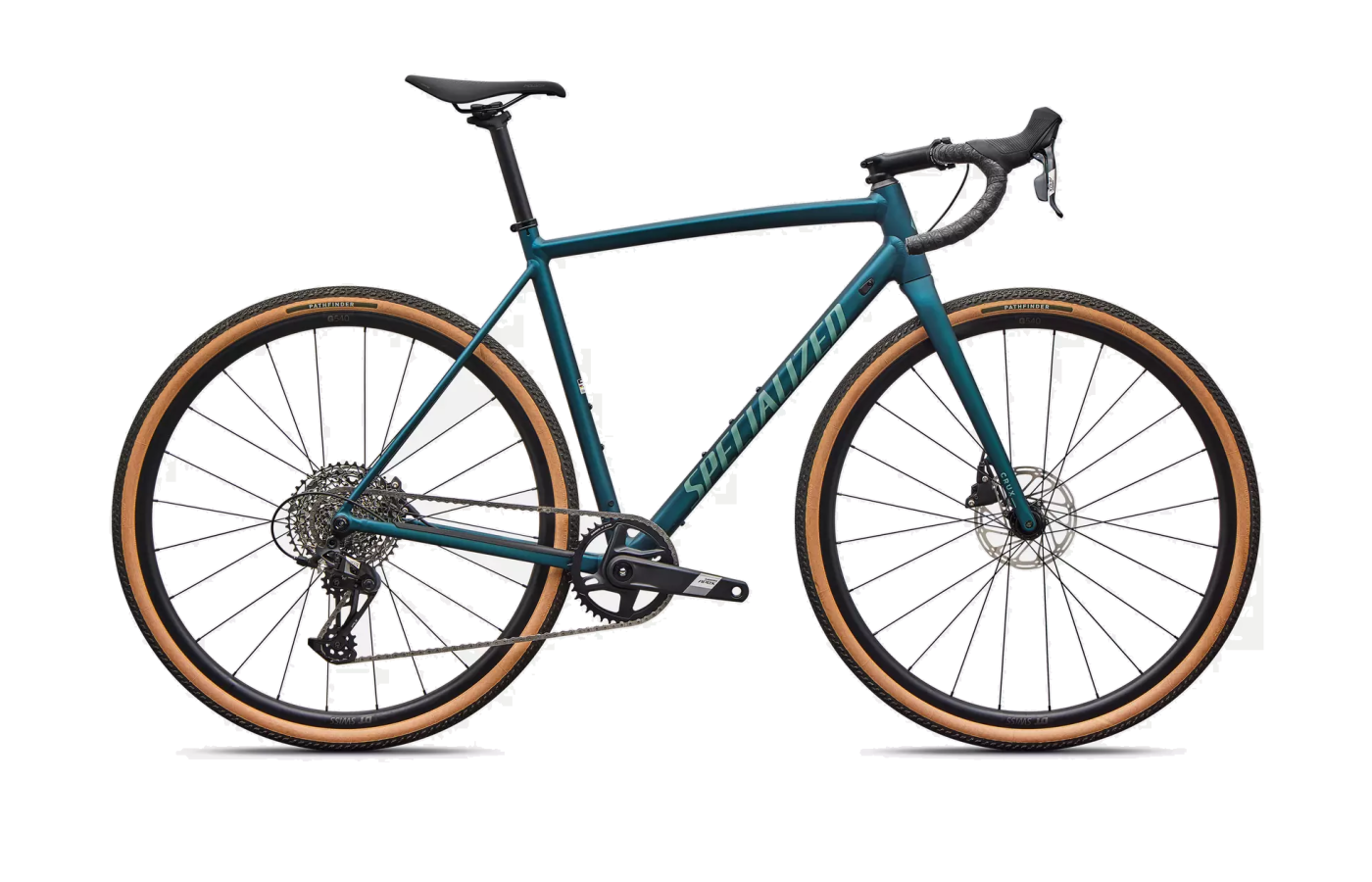
Crux
The lightweight contrarian — Specialized's S-Works Crux is the world's lightest gravel frame and skips integrated aero entirely. Best if you race in the mountains or just hate one-piece cockpits.
Compare →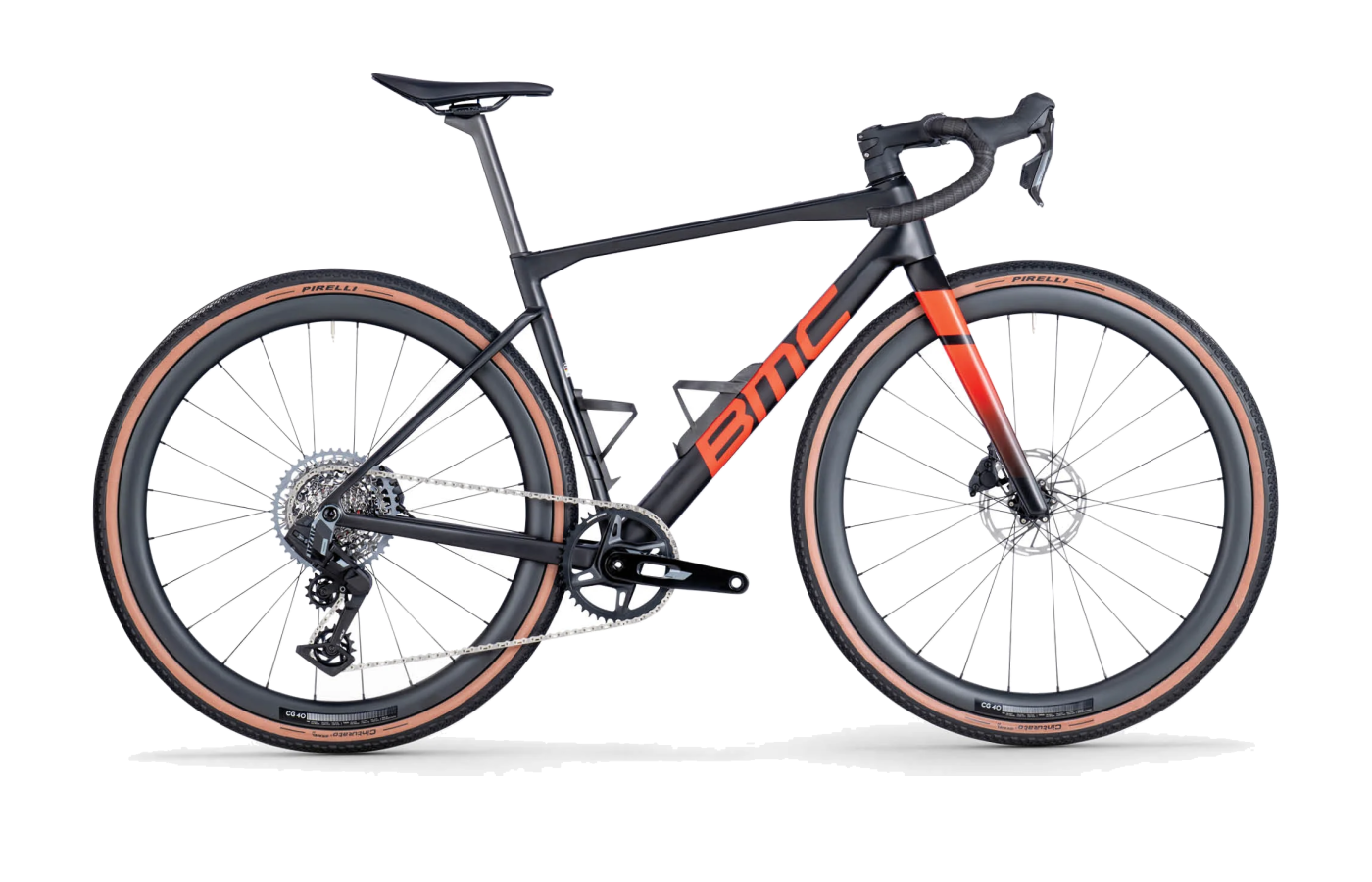
Kaius
BMC takes the road-racer-on-gravel philosophy even further than the Checkmate — narrower bars, more aggressive aero geometry, no IsoSpeed equivalent. A purer aero tool, less day-long comfort.
Compare →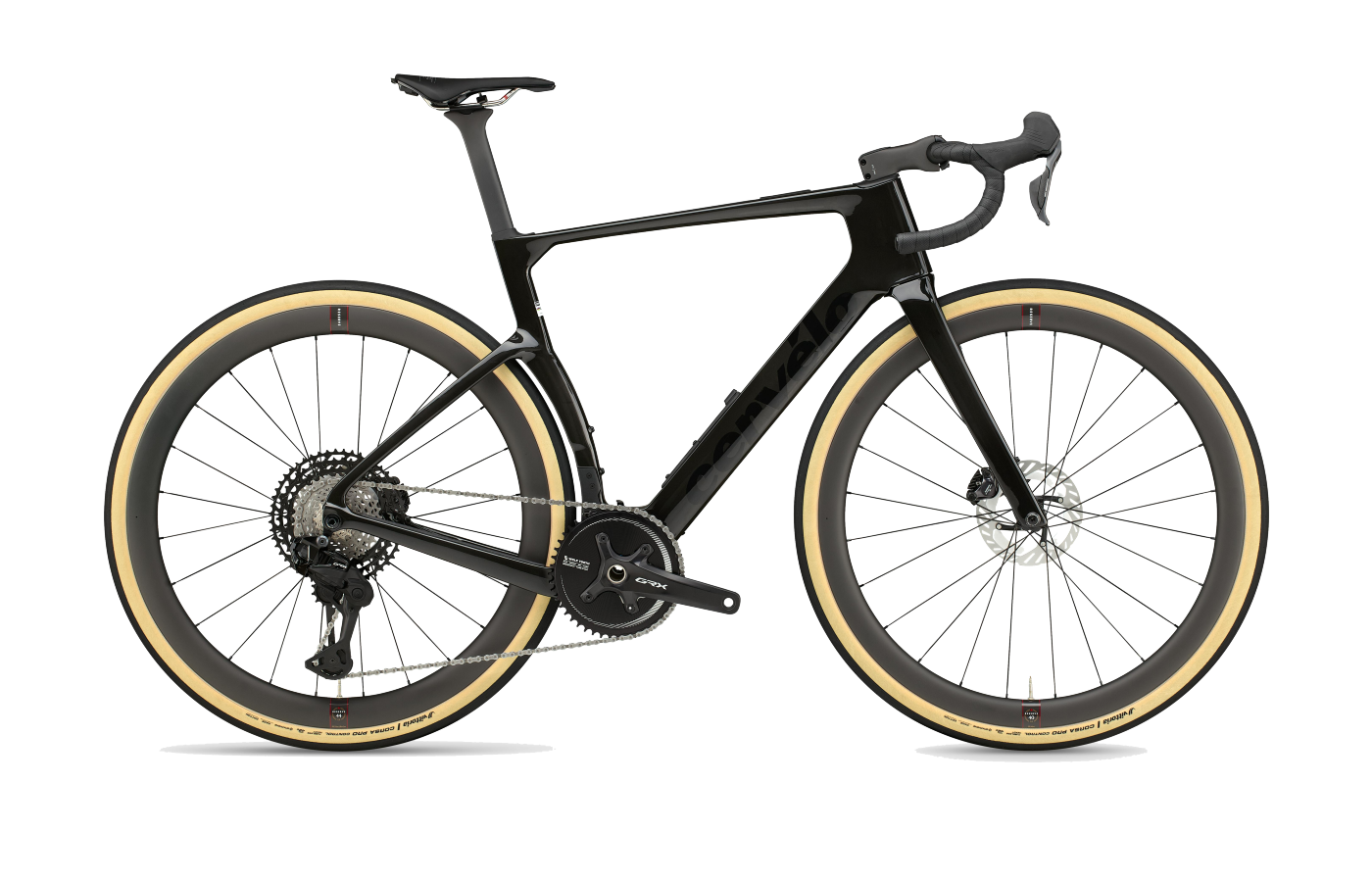
Aspero-5
Cervélo's Aspero-5 is the original race-day gravel weapon — sharp handling, integrated cockpit, and a focus on power transfer that puts it in direct competition with the Checkmate, often at a lower price.
Compare →