Grail
vsCheckpoint
Two gravel bikes pulling in opposite directions.
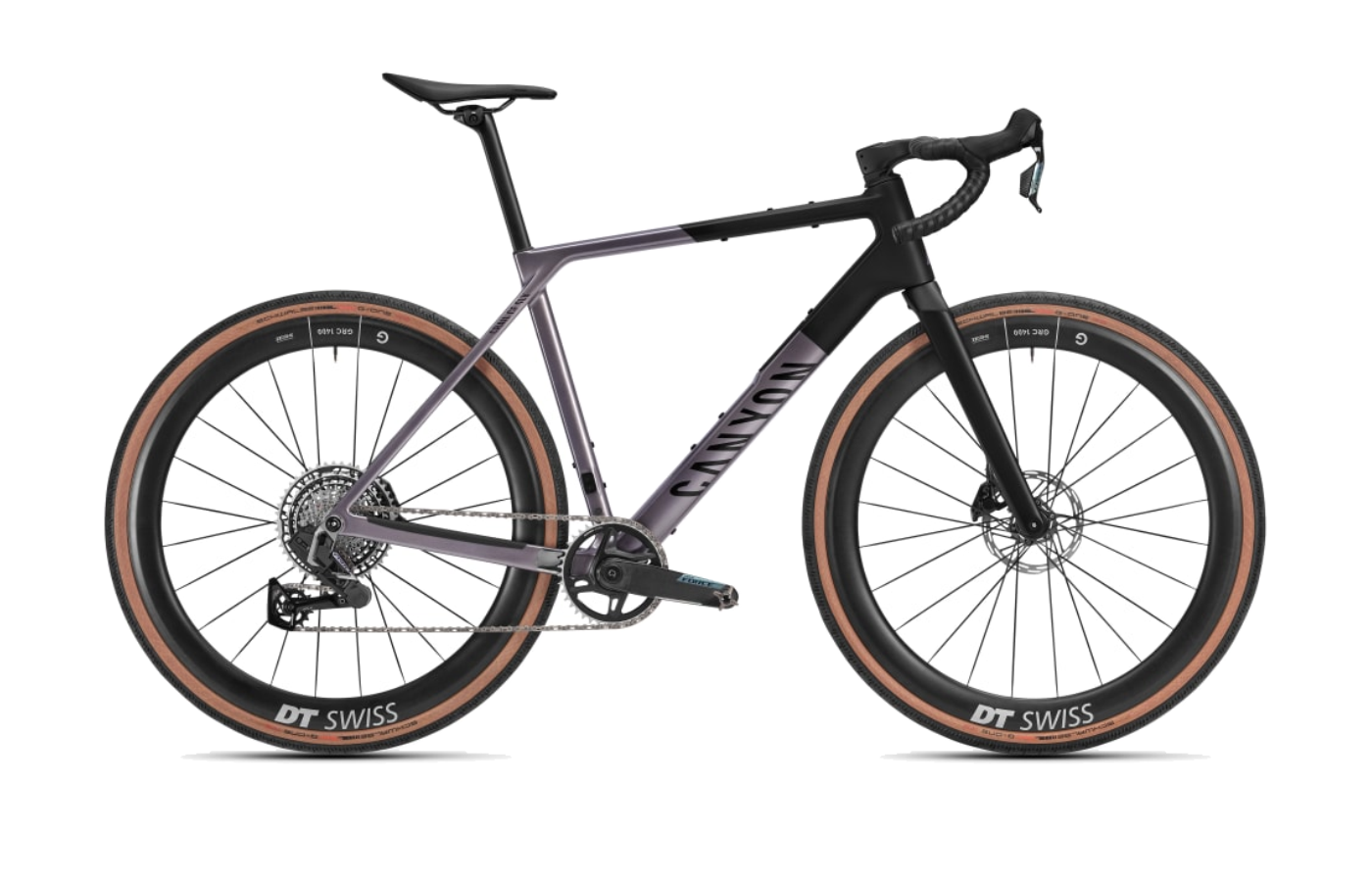
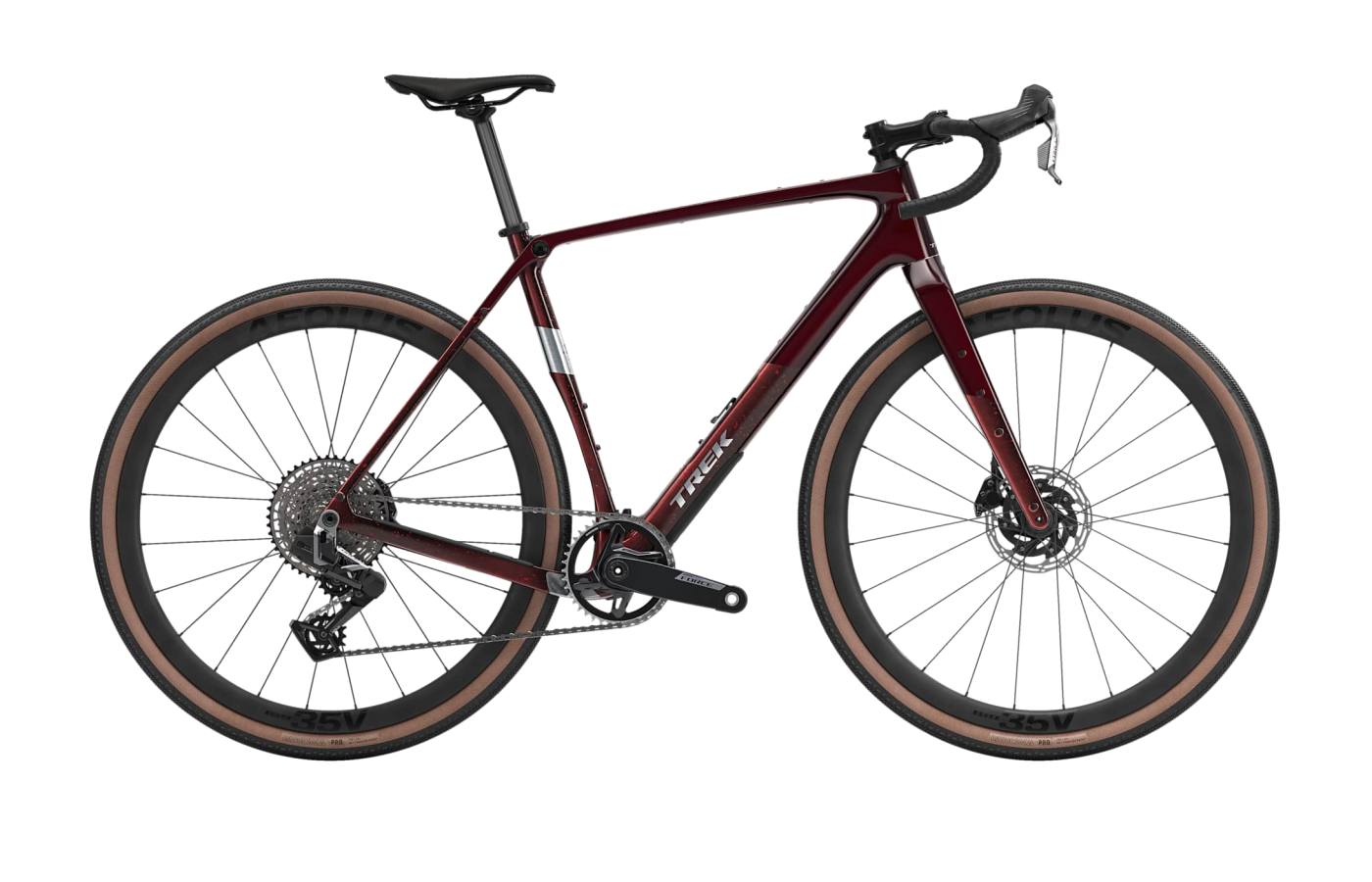
The Canyon Grail traded its weird hoverbar for a singular focus on race speed. The Trek Checkpoint traded its racy edge for tire room, IsoSpeed, and bag mounts.
Grail
- Race-tuned aero — Canyon claims 9.1 W saved at 45 km/h vs. Gen 1, with the integrated cockpit and frame-bag system contributing measurably.
- Direct power transfer — reviewers universally describe the bottom bracket and front end as "explosively fast" and "not a watt wasted."
- Direct-to-consumer pricing — a Force AXS XPLR carbon build for $6,099 undercuts comparable big-brand spec lists by $1,500–$2,500.
- 42 mm tire ceiling rules out wider rubber for rough terrain or extra cushioning.
- Integrated CP0039 cockpit is fixed width per frame size; swapping is expensive and requires aftermarket parts.
Checkpoint
- 50 mm tire clearance — a full 8 mm more than the Grail, opening doors to chunky terrain, lower pressures, and bigger contact patches.
- IsoSpeed decoupler — rear-only flex element that takes the sting out of high-frequency vibration without bobbing or sapping power.
- Adventure-ready integration — front and rear rack mounts, fender mounts, integrated frame-bag attachments, internal downtube storage, T47 BB, UDH.
- $400 more for the equivalent Force AXS carbon build, with no DTC pricing to lean on.
- SL 7 weighs ~9.3 kg vs. the Grail's quoted ~8.2 kg at the same trim — noticeably less zippy on long climbs.
Editor’s analysis
Same category, opposite philosophies — one bike was redesigned to win Unbound, the other was redesigned to finish it with you in good shape.
The Gen 2 Canyon Grail and Gen 3 Trek Checkpoint look superficially similar — both carbon gravel platforms with internal storage, integrated mounts, and Force-AXS-friendly trim. Spend a minute on the geometry and the spec lists, though, and the two brands' bets diverge sharply. Canyon doubled down on speed; Trek doubled down on comfort and capability.
Canyon stripped the polarizing double-decker bar off the Grail, borrowed truncated airfoil shapes from its Ultimate road bike, and claimed a 9.1-watt drag savings at 45 km/h. The frame is stiff to a fault — reviewers across Bicycling, Rouleur, and BikeRadar agree the new D-shaped seatpost transmits more shock than the old VCLS leaf-spring it replaced. Tire clearance is capped at 42 mm, the integrated CP0039 cockpit limits fit changes, and there is no fender or rack provision worth mentioning. It's a focused tool.
The Trek goes the other direction. The Gen 3 Checkpoint inherits the racing badge from the new Checkmate and instead leans into Gravel Endurance geometry — taller stack, shorter reach, 50 mm tire clearance, IsoSpeed at the seat cluster, full bag and rack integration, and a non-proprietary 27.2 mm seatpost you can swap or shim like any normal bike. Reviewers consistently describe it as a "chameleon" — one tester at GearJunkie called it "all the gravel bike most people actually need."
Put another way: the Canyon Grail is the bike for the rider who wants to race their gravel bike. The Trek Checkpoint is the bike for the rider who wants to ride their gravel bike everywhere. Neither answer is wrong, but they aren't the same question.
Where the builds differ.
Comparing our editor's-pick builds side-by-side. Winners highlighted row-by-row — lower price and weight, and the better-spec component, each mark a point.
Build variants & pricing
Both lineups span roughly $4k of range, but Canyon is carbon-only while Trek covers $1,599 alloy through $6,499 carbon.
Prices are current US MSRP. Canyon does not offer an aluminum Grail — if you want a sub-$2,500 Checkpoint-equivalent, the ALR 5 ($2,299) has no direct rival in the Grail range.
How they fit, how they steer.
Fit-picked at Grail XS vs. Checkpoint S — different size labels, near-identical fit. Stack matches at 556 mm, reach within 1 mm (385 vs. 386). The Trek runs a half-degree steeper head angle (71.4° vs. 71°) and 5 mm longer chainstays (430 vs. 425), which trade a little quickness for a more planted feel.
Which size should I buy?
Size recommendations based on stack, reach, and effective top tube. Canyon's 7-size range goes smaller (down to 2XS); Trek covers XS through XL with an extra ML in the middle.
→These are starting points. Flexibility, riding style, and preferred position all shift the answer — if you’re between sizes, a professional fit beats a chart.
What the magazines said.
Published reviews from trusted cycling outlets. Click through for the full write-up.
Which one should you buy?
If you're chasing a result on Saturday, get the Grail. If you're chasing the horizon, get the Checkpoint.
Grail
If your gravel calendar has start lines on it and you spend most of your time on hardpack and rolling fire roads, the Grail's stiffness, aero shaping, and tight 1,024 mm wheelbase will reward every watt. Just be honest that you're buying a focused race bike, not a tourer.
Checkpoint
If your gravel rides include singletrack detours, overnight bikepacking, dirt-road centuries, and the occasional commute, the Checkpoint's 50 mm tire room, IsoSpeed compliance, and full mount package are hard to beat. It's the bike that can be three different bikes depending on what you bolt to it.
Questions buyers actually ask.
Short answers to the things we get emailed about most often.
01Which is faster on smooth gravel?
The Canyon Grail, by a meaningful margin. Canyon claims a 9.1-watt saving at 45 km/h over the previous Grail, attributable to the new aero tube shapes and the integrated Double Drop cockpit replacing the old Hoverbar. On smooth, fast surfaces — champagne gravel, hardpack fire roads, the kind of course Mathieu van der Poel won the World Gravel title on — that translates into real time gaps over a 100-km event.
At social-ride pace below ~25 km/h, the aero advantage shrinks to something you'll never feel.
02Which is more comfortable on long rides?
The Trek Checkpoint, clearly. Two things drive it: the IsoSpeed decoupler at the seat cluster, which reviewers across Off-road.cc, GearJunkie, and Velo describe as a "calming" filter on high-frequency vibration, and the 50 mm tire clearance that lets you drop pressure for a bigger contact patch.
The Grail isn't uncomfortable, but it is consistently described as "firm" — the new D-shaped seatpost is stiffer than the VCLS leaf-spring it replaced, and the integrated bar transmits hand vibration. On a four-hour-plus ride over rough terrain, the Checkpoint will leave you fresher.
03What's the maximum tire clearance?
Canyon Grail: 42 mm officially. Some reviewers (per YouTube) report 45 mm fits unofficially, but Canyon won't warranty it.
Trek Checkpoint: 50 mm officially, 700c. That's an 8 mm gap, which is the difference between a fast race tire and a 47–50 mm bigger-volume tire that smooths out chunk and rocky doubletrack. If you ride mixed terrain or want to run a single bike for gravel and light trail, the extra clearance matters.
04Can I bikepack on either?
Trek, easily. The Checkpoint has front and rear rack mounts, fender mounts, integrated frame-bag attachment points, internal downtube storage, and Trek's own line of Adventure Bags designed to integrate with the frame. It's purpose-built for loaded riding.
Canyon, technically yes but reluctantly. The Grail has the integrated downtube storage, top tube mounts, and the Fidlock Aero Load frame bag, but no rack mounts and limited cargo provision beyond what Canyon sells you. It's set up for self-supported racing (one frame bag, tools, food), not for week-long touring.
05How does the integration compare?
The Grail is more aggressively integrated, for better and worse. The CP0039/CP0045 one-piece cockpit is fast and clean, but bar width is locked to frame size (e.g. 420 mm on XS/S), and swapping it requires buying a Canyon aftermarket cockpit (~$300+). The integrated downtube storage and Gear Groove accessory rail are CFR/SLX-only — the cheaper CF SL builds get the aero frame but not those features.
The Checkpoint is much more serviceable. Standard 27.2 mm seatpost, two-piece bar/stem from Bontrager, T47 threaded bottom bracket, UDH dropout. Fit changes are routine and any shop can work on it.
06Carbon or aluminum — does it matter here?
Only on the Trek side, because Canyon doesn't sell an aluminum Grail.
The Checkpoint ALR 5 ($2,299) keeps the same Gravel Endurance geometry, 50 mm tire clearance, UDH, T47 BB, and bag/rack mounts as the carbon SL — it just loses IsoSpeed and the internal storage. Reviewers (notably Velo) called it one of the best sub-$2,500 gravel bikes available. If your budget tops out under $3k, the ALR is the Checkpoint to look at; the Grail starts at $2,899 for a carbon CF SL with GRX.
07Which is better for taller or shorter riders?
Canyon offers a wider size range (2XS through 2XL) and the smallest sizes use a bespoke 71° head angle and 72 mm trail (vs. 69 mm on larger frames) to prevent toe overlap on the smallest bikes. That's a real win for sub-160 cm riders.
Trek runs XS through XL with an extra ML in the middle of the range, and ships a frame-size-specific bar width (40 cm on XS/S up to 46 cm on XL). Both fit conventions are reasonable; the Canyon's broader range and the Trek's swap-friendly cockpit are the two biggest fit-related differentiators.
08What about long-term ownership and warranty?
Trek offers a lifetime frame warranty on all OCLV carbon and a strong US dealer network — when something goes wrong, you walk into a shop. Reviewers note the headset-routed cables can run up cable-replacement labor on mechanical builds (the ALR 3/4 with CUES), but the Force AXS SL builds are wireless, which sidesteps that.
Canyon also warranties its frames, but service is mail-order. Reviewers (notably Escape Collective) have reported quality-control issues on bikes arriving from the box — misaligned brakes, warped rotors — that would be a 10-minute fix at a local shop but become a multi-day RMA when you're on your own. Both bikes are well-made; the support models are very different.
Similar bikes
If your priorities don’t map cleanly onto either of these, one of these adjacent bikes probably fits better.
Grizl
Canyon's adventure-oriented sibling to the Grail — same DTC value, but with 50 mm tire clearance, more relaxed geometry, and dropper/suspension-fork compatibility. The Grail you buy if 42 mm isn't enough.
Compare →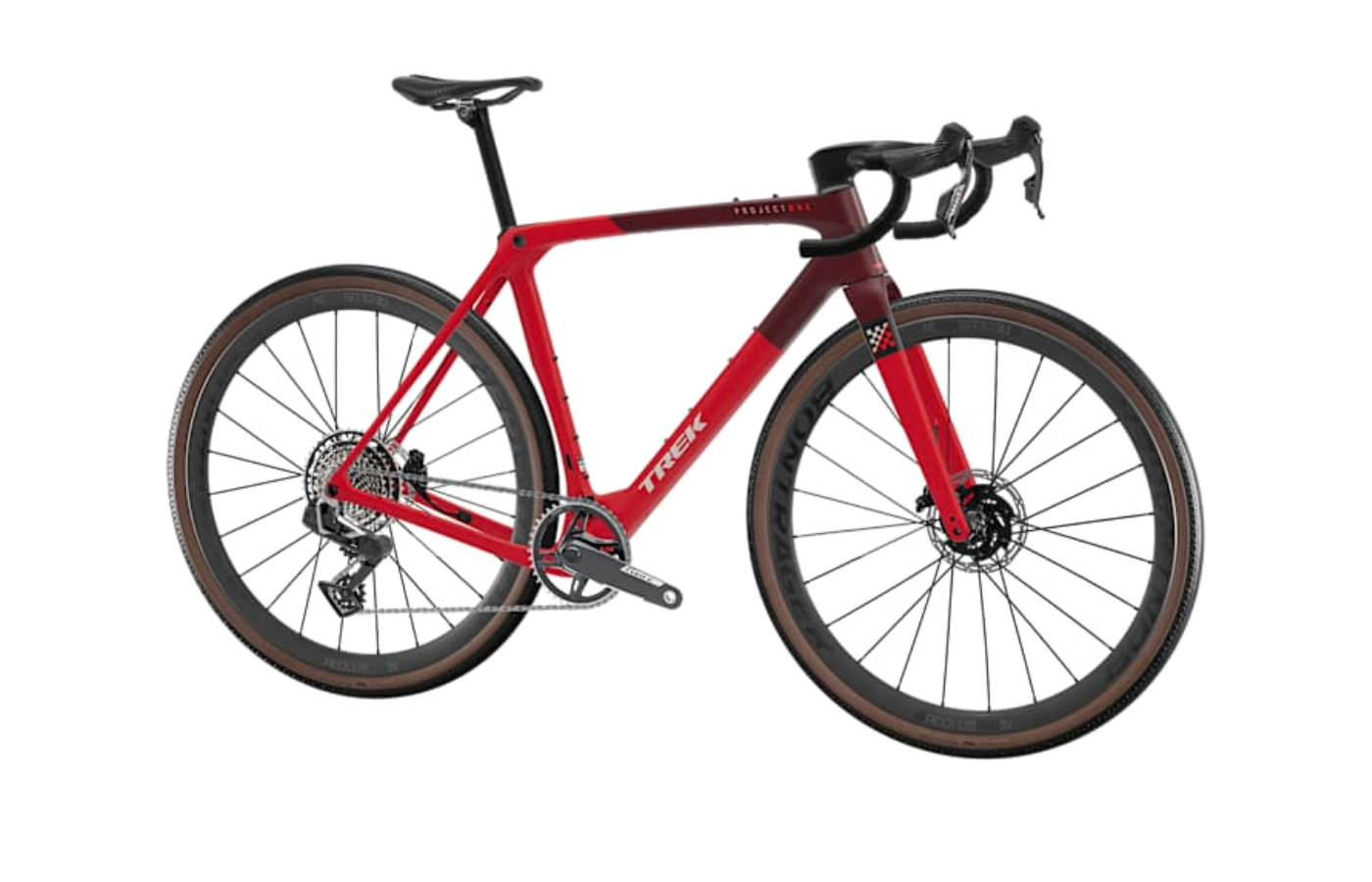
Checkmate
Trek's actual gravel race bike — what the Checkpoint used to be before Gen 3. Lighter, slacker, and more aero than the Checkpoint, with the dealer-support advantage Canyon can't match.
Compare →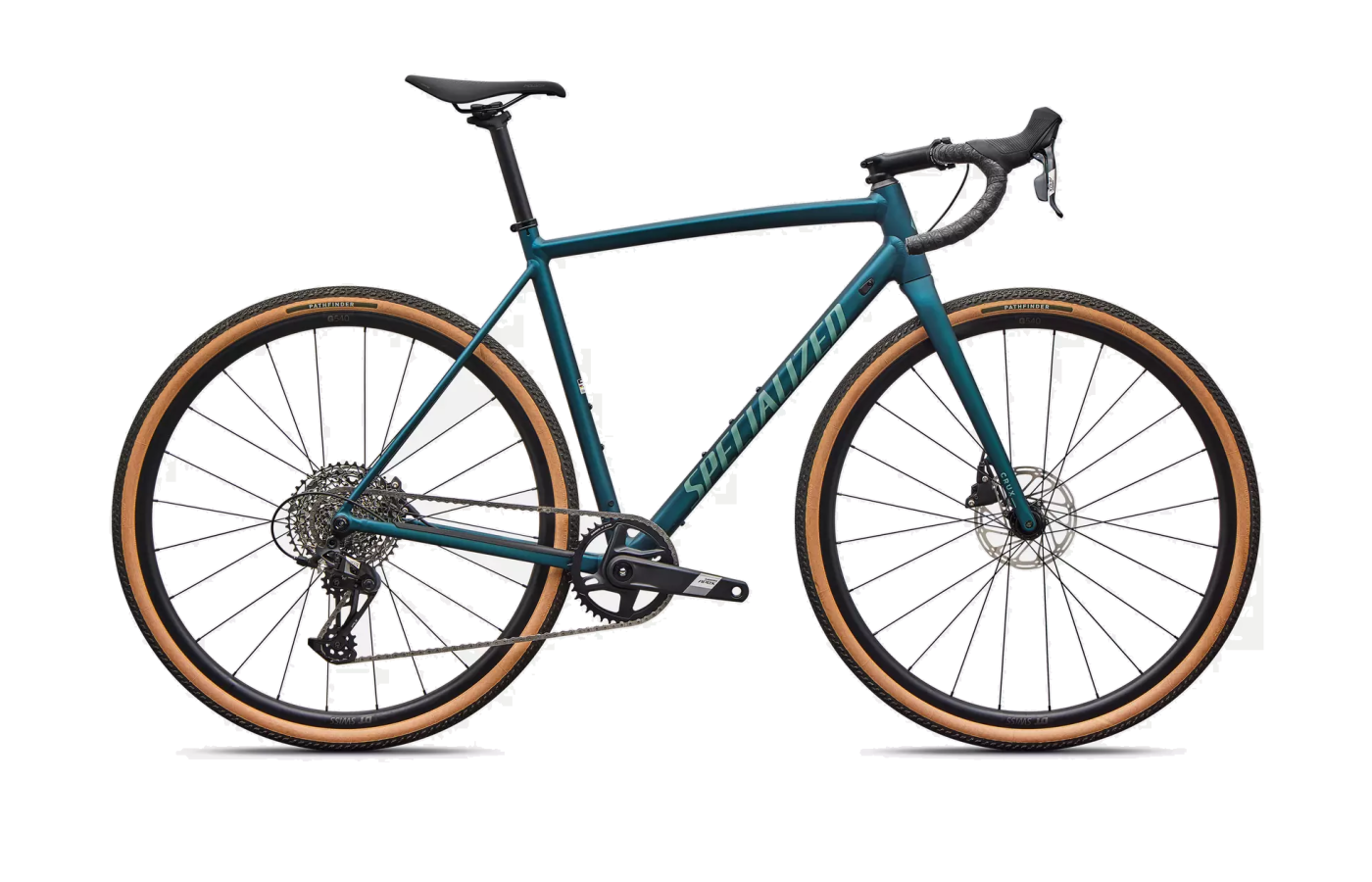
Crux
The minimalist option — Specialized's lightest gravel platform, no integration, no down tube hatches, just a quick carbon frame for the rider who hates proprietary parts.
Compare →