Neuron
vsRift Zone
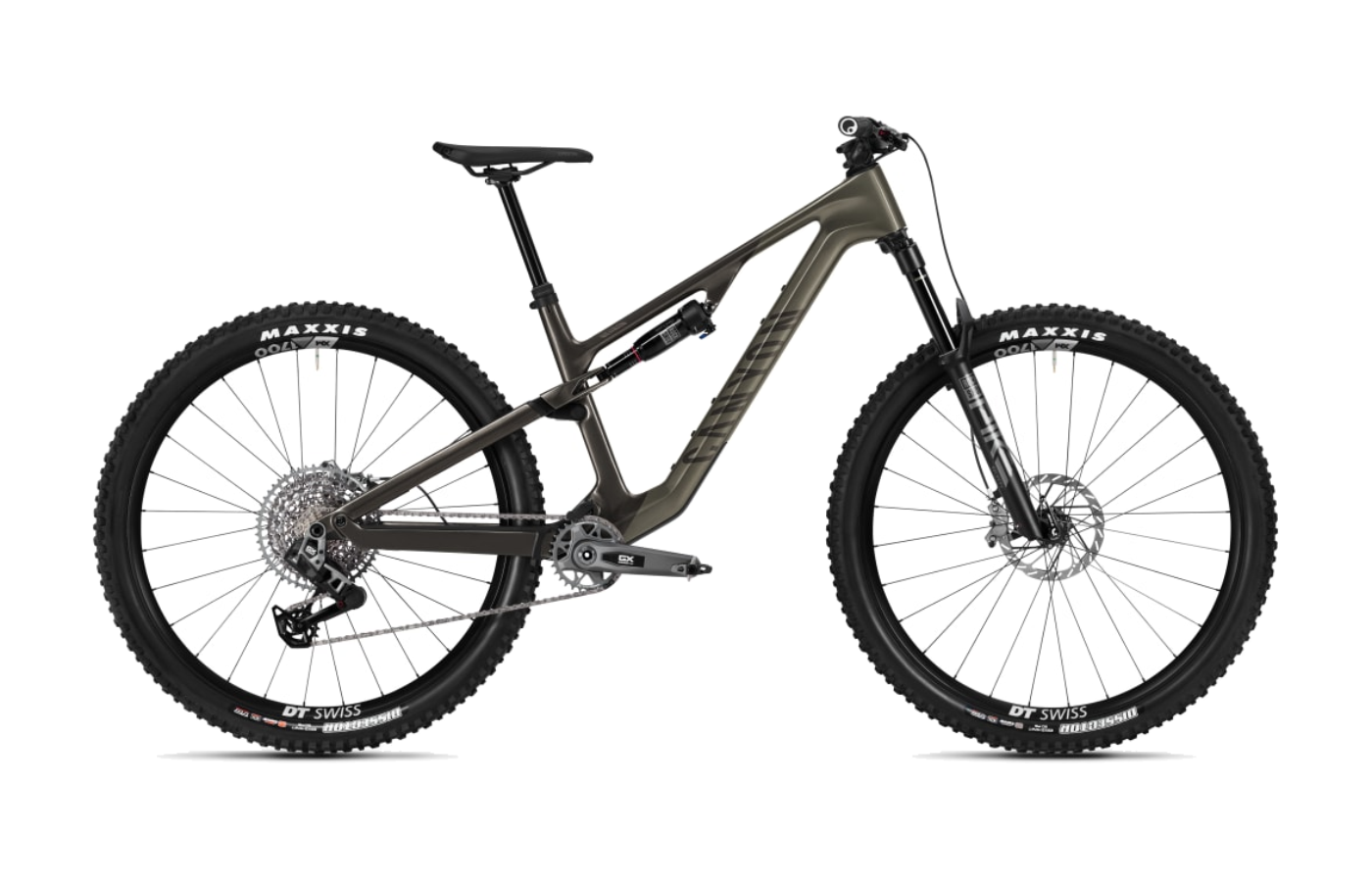
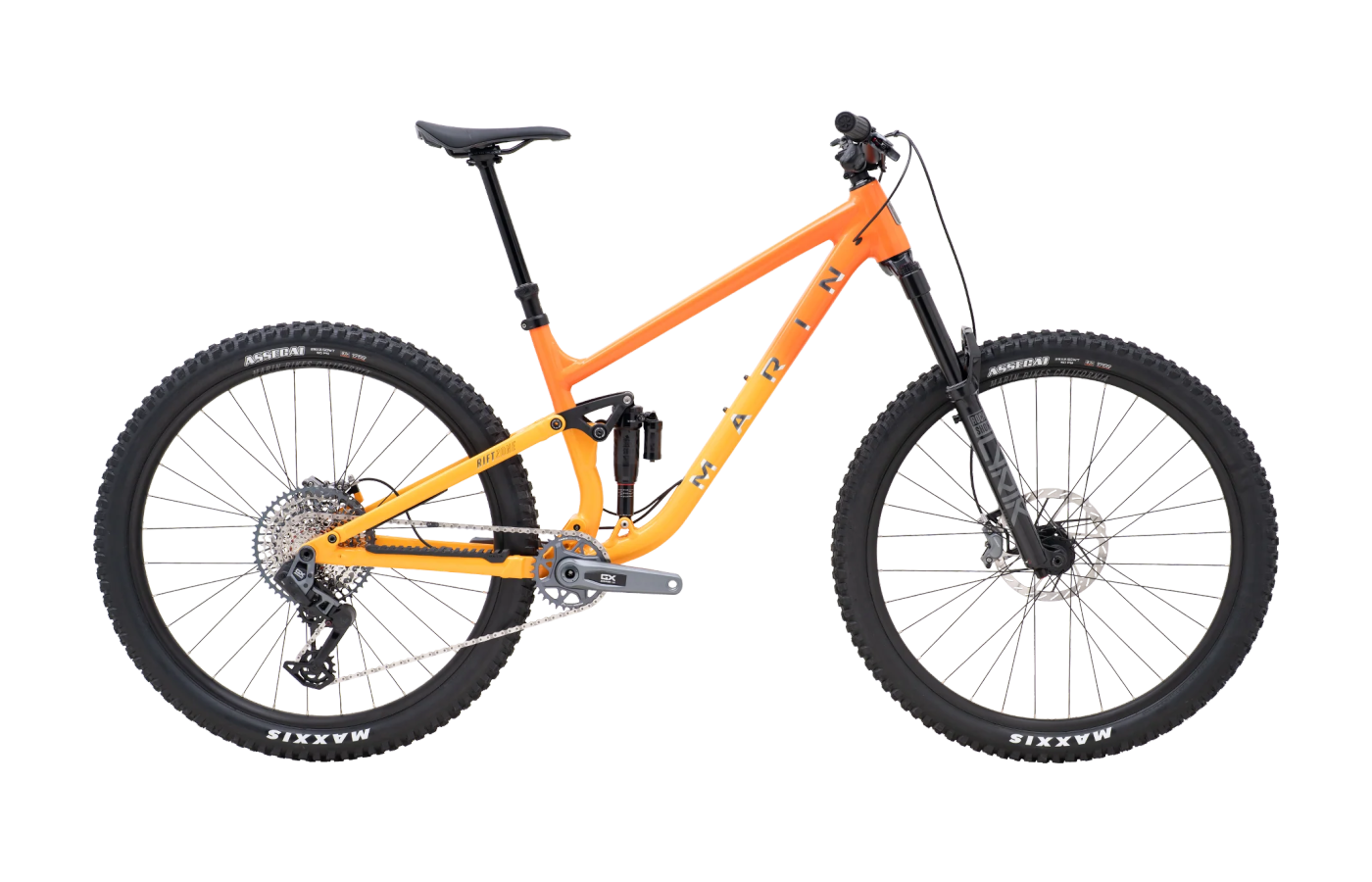
Same travel, opposite personalities.
The Canyon Neuron is the light, fast trail bike for long days. The Marin Rift Zone is the burly mini-enduro that wants the descent.
Neuron
- Light and efficient — claimed 12.86 kg on the CF 9 SL and a steep 76-degree seat angle make it a genuine all-day climber.
- Polished build kits — Fox suspension, DT Swiss wheels, and SRAM Code RSC brakes appear on mid-tier builds reviewers call 'exceptional value for the money.'
- Carbon and alloy options — the lineup runs $1,699 to $4,399, with a real mid-carbon SLX build at $3,199.
- Stiff carbon and firm Schwalbe rubber make it chattery on truly rough terrain.
- 66-degree head angle gets out-paced by the Marin when the trail steepens.
Rift Zone
- Punches above its travel — a 65.1-degree head angle, 150 mm Lyrik fork, and Maxxis Assegais make it ride like a 150 mm enduro bike.
- Genuinely playful — uniform 430 mm chainstays and a low BB make it easy to manual, jump, and flick around.
- Tough alloy frame with UDH, threaded BB, and ISCG05 — an explicit 'project bike' platform you can upgrade for years.
- Roughly 15.7 kg on the XR — heavy and 'sluggish' on long climbs.
- Aggressive stock tires and no carbon option mean weight is permanent, not a build choice.
Editor’s analysis
Two 130 mm trail bikes, identical on paper — and almost nothing alike on the trail.
The Canyon Neuron and the Marin Rift Zone both run 130 mm rear / 140 mm front travel, both target the everyday trail rider, both lean on direct-to-consumer pricing to undercut the big names. Stop reading at the spec sheet and you'd call them rivals. Spend a day on each and you realize they're solving completely different problems.
The Canyon Neuron is the lightweight all-rounder — a 12.86 kg (CF 9 SL, claimed) carbon trail bike with a 66-degree head angle, peppy MultiTrac-rivaling 'Triple Phase' suspension, and a ride character reviewers consistently call 'fast and efficient.' It climbs without protest, covers ground all day, and on flowing singletrack feels alive in a way most longer-travel bikes don't. The trade-off: stiff carbon, fast-rolling Schwalbe rubber, and a Fox 34 fork mean it gets chattery and 'bullied' on rocky, fast descents.
The Marin Rift Zone goes the other way — hard. Slack 65.1-degree head angle, short 430 mm chainstays across all sizes, a 150 mm Lyrik fork on the editor's-pick build, and Maxxis Assegai rubber on both ends. Reviewers from Pinkbike to BikeRadar describe it as a 'mini-enduro rig' that 'delivers a descending feel well in excess of its numbers.' The penalty is roughly 15.7-15.8 kg of bike on the climbs, plus tires that feel like anchors on flat ground.
Put another way: the Canyon Neuron is the bike you buy if the climb is part of the ride. The Marin Rift Zone is the bike you buy if the climb is the price of admission to the descent.
Where the builds differ.
Comparing our editor's-pick builds side-by-side. Winners highlighted row-by-row — lower price and weight, and the better-spec component, each mark a point.
Build variants & pricing
Both lineups span roughly $1.7k to $4.7k. The Neuron offers a real mid-carbon build; the Rift Zone is alloy across the entire range.
Prices are current US MSRP. The Marin Rift Zone is alloy-only — there is no carbon option at any price. If carbon matters to you, the Neuron CF 8 SLX ($3,199) is the cheapest way into a carbon trail bike here.
How they fit, how they steer.
Both at size M — the fit-picked size for a 5'8" rider on each bike. Reach is nearly identical (455 mm Neuron, 460 mm Rift Zone), but the Marin runs a full degree slacker up front (65.1 vs 66) and 10 mm shorter at the chainstays (430 vs 440) — slacker, more playful, more stable when steep.
Which size should I buy?
Sizes are picked from stack, reach, and effective top tube. Both ranges overlap closely; the Neuron extends one size smaller (XS) than the Rift Zone.
→These are starting points. Flexibility, riding style, and preferred position all shift the answer — if you’re between sizes, a professional fit beats a chart.
What the magazines said.
Published reviews from trusted cycling outlets. Click through for the full write-up.
Which one should you buy?
If you want one bike for long all-day rides that still descends well, get the Neuron. If you want a mini-enduro that lives for the descent, get the Rift Zone.
Neuron
If your weekends mean big loops, point-to-points, or backcountry rides where the climb is half the fun, the Neuron is the lighter, livelier choice. It pedals like an XC bike and descends well enough for almost anything that isn't a bike park.
Rift Zone
If you measure rides by the descent, treat every root as a launch ramp, and don't mind grinding the climb to earn it, the Rift Zone is the rowdier tool. It rides like a 150 mm bike with a 130 mm shock and shrugs off abuse.
Questions buyers actually ask.
Short answers to the things we get emailed about most often.
01Which climbs better?
The Canyon Neuron, by a wide margin. The Neuron CF 9 SL has been measured at 12.86 kg (Flow), while the Marin Rift Zone XR weighs roughly 15.7-15.8 kg (Pinkbike, Singletracks) — that's nearly 3 kg of difference at the test-bike level. The Neuron also runs faster-rolling Schwalbe Nobby Nic / Wicked Will tires versus the Rift Zone's draggy Maxxis Assegais.
Both bikes have a steep effective seat tube angle (76 on the Canyon, 76.5 on the Marin), so the climbing position is similarly upright. The difference is felt in the legs, not the cockpit.
02Which descends better?
The Marin Rift Zone — it's not close. The Rift Zone runs a slacker 65.1-degree head angle versus the Neuron's 66, ships with a 150 mm Lyrik Select+ fork on the XR builds (versus 140 mm on the Neuron), and has aggressive Maxxis Assegai tires front and rear. Reviewers consistently describe it as feeling like a 150 mm enduro bike despite the 130 mm rear travel.
The Neuron descends well — but Pinkbike noted it 'can sometimes get bullied by the trail' through fast, rough chunk where the Marin would simply plow.
03Is carbon worth it for this kind of bike?
It depends on what you ride. The Neuron's carbon CF frame saves about 200 g over the alloy version and stiffens the chassis — great for climbing efficiency, but several reviewers (Flow, BikeRadar) explicitly preferred the alloy Neuron 6 for its slight chassis flex over rough terrain.
The Marin sidesteps the question entirely by going alloy-only across the entire range. At this travel and price band, carbon's biggest practical win is weight, and the Rift Zone's character isn't built around being light.
04What's the brake spec like?
Canyon Neuron: SRAM Code RSC 4-piston brakes appear on the CF 8 builds — powerful and consistently praised in reviews.
Marin Rift Zone: Mixed. The XR and XR AXS get Shimano MT420 or SRAM Code Bronze 4-piston brakes — solid and powerful. But the entry-level Rift Zone 1 and 2 ship with Shimano MT200 2-piston brakes that nearly every reviewer flags as 'under-powered' for the bike's descending capability. If you're buying a base Marin, budget for a brake upgrade.
05How serviceable are they?
The Marin is the friendlier bike to wrench on. It uses conventional internal cable routing with brazed-in ports, a threaded BSA bottom bracket, UDH derailleur hanger, and ISCG05 chainguide tabs — all standard, all easy.
The Canyon's carbon frames route the brake hose and dropper cable through the headset bearings — a cleaner look that home mechanics and shops alike call frustrating to service. The alloy Neuron uses conventional routing. Both share UDH, threaded BB, and bolt-on frame protection.
06Can I run a longer-travel fork?
Canyon: the frame is officially strength-tested for up to a 150 mm fork (a 10 mm bump from stock), giving you a small amount of room to push it slacker without voiding warranty.
Marin: the XR builds already ship with a 150 mm Lyrik. The frame's intent is clearly to handle that travel, so swapping a 160 mm fork in is mechanically possible, though you're then outside the design envelope.
07Which is better value?
Both are exceptional value, but they win at different price points. The Marin Rift Zone XR ($3,699) gets you a fully-sorted, enduro-capable trail bike with a Lyrik, Float X, and 4-piston brakes for under $4k.
The Canyon Neuron CF 8 SLX ($3,199) gets you a carbon trail bike with Fox 34 Performance, Float DPS, and SLX for $500 less — there's nothing comparable in the Marin range. Below $2,500, the Marin Rift Zone 2 ($2,399) trades the Canyon Neuron 6's polish for a slacker, more capable descending platform.
08Are these direct-to-consumer only?
Canyon sells direct-to-consumer worldwide — no local dealer, bike ships in a box, and you do final assembly at home or pay a shop.
Marin is sold through a mix of traditional dealers and direct-to-consumer partners (Bikes Online in Australia, for example), so availability and post-sale support vary by region. In the US, most Rift Zones are bought through dealers, which makes warranty and tune-up logistics more familiar.
Similar bikes
If your priorities don’t map cleanly onto either of these, one of these adjacent bikes probably fits better.
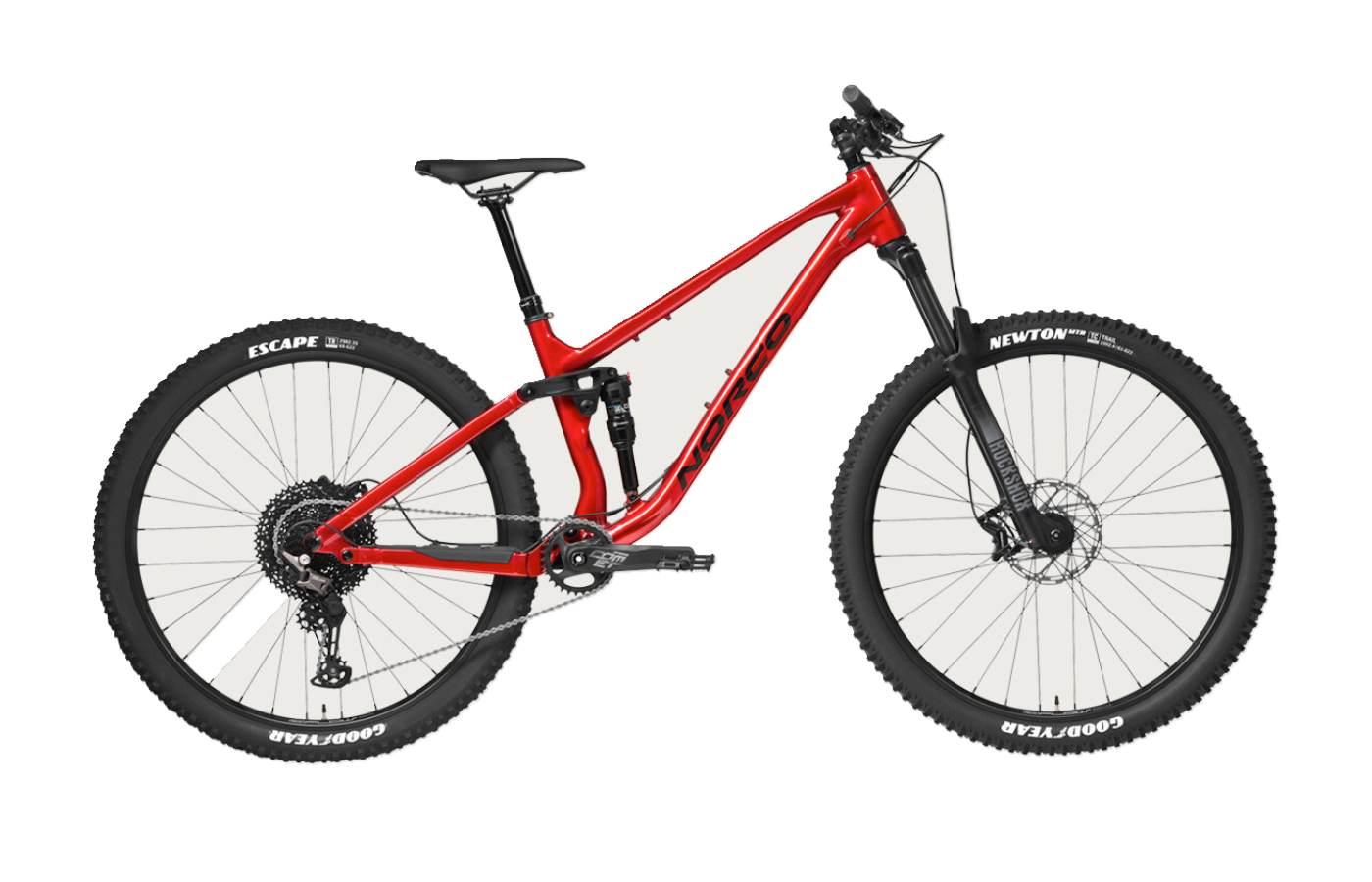
Fluid FS
The closest cousin to the Marin in spirit — a tough alloy trail bike with aggressive geometry and Norco's Ride-Aligned size-specific fit. Slightly more polished than the Rift Zone, slightly less rowdy.
Compare →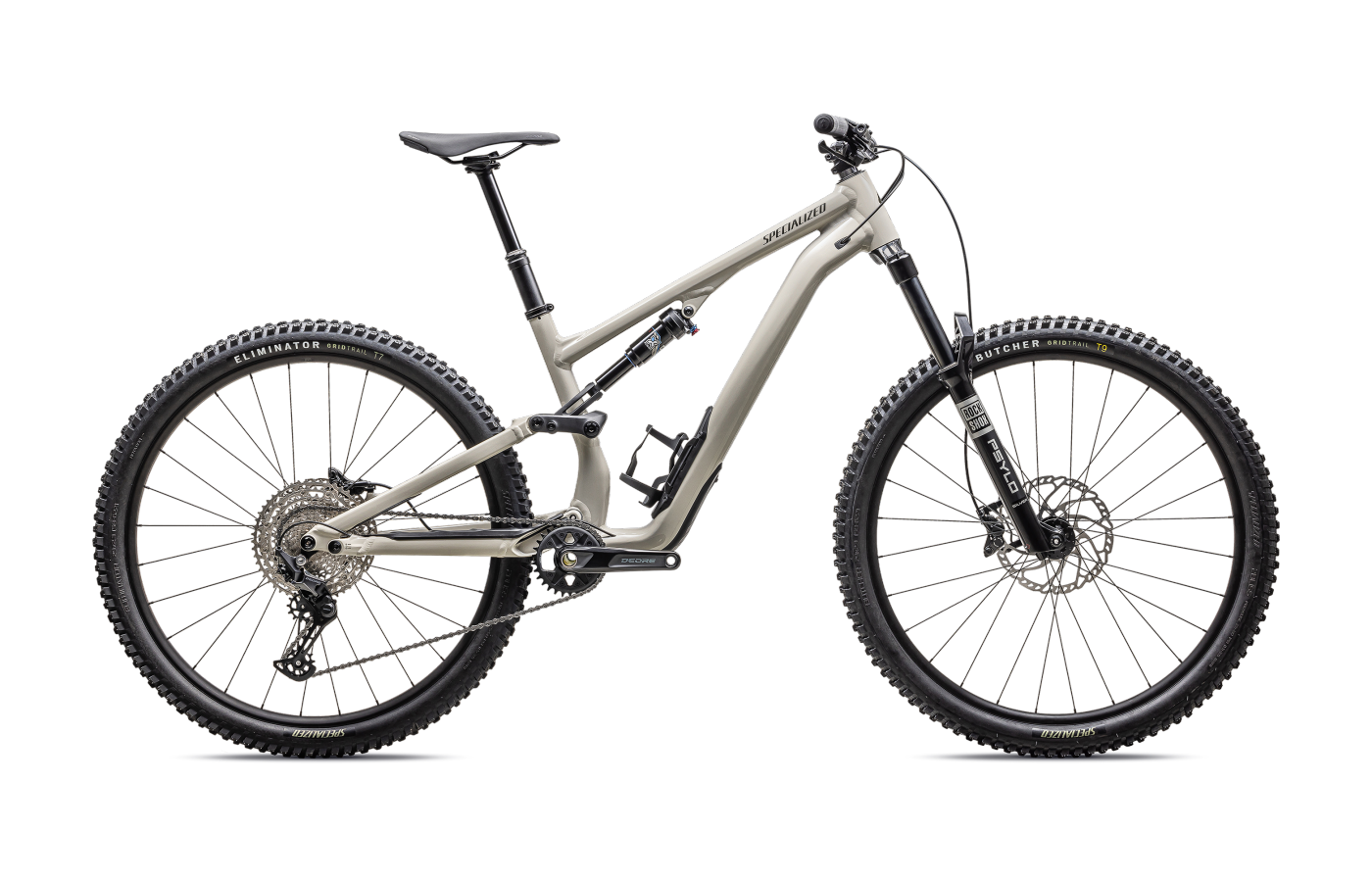
Stumpjumper
The benchmark do-it-all trail bike — lighter and more refined than the Marin, more capable than the Neuron on aggressive terrain. The catch: a Specialized price tag for comparable spec.
Compare →
Izzo
Direct-to-consumer like the Canyon, but pushed even further toward the light, fast, XC-leaning end of the trail spectrum. The Neuron's natural rival if efficiency is your top priority.
Compare →