Neuron
vsHugene
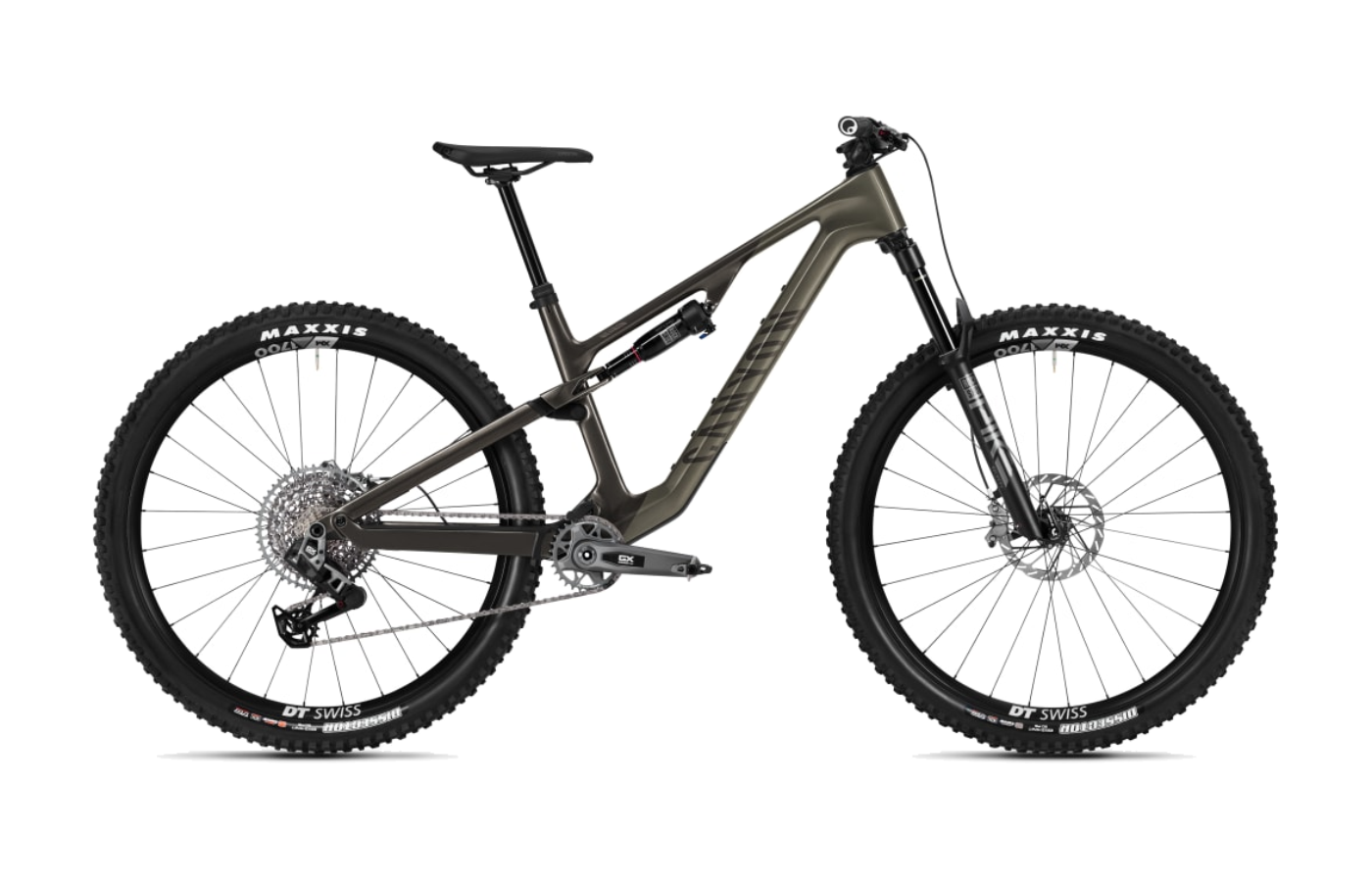
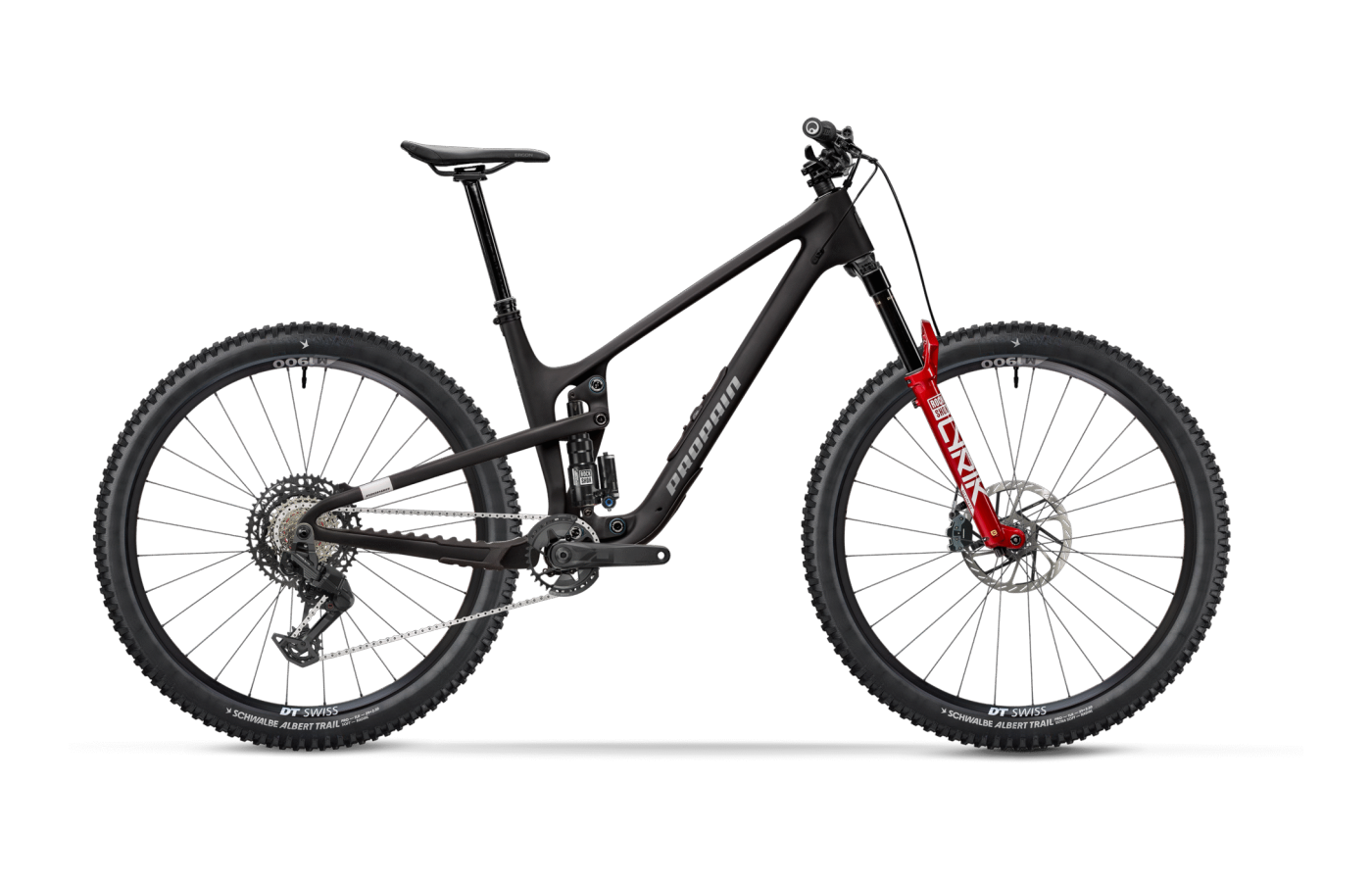
Same travel, opposite personalities.
The Neuron is the all-day mile-eater of the trail category. The Hugene 3 is a 130mm bike spec'd and angled like a mini-enduro.
Neuron
- Lighter on the climb — claimed 12.86 kg on the carbon SL, noticeably livelier on sustained ascents than the Hugene.
- Cheaper way in with an alloy build at $1,699 and a carbon CF 8 at $3,199 — the Hugene's floor is $3,999.
- Versatile geometry — 66° head angle and tall 626 mm stack make it a comfortable all-day rig, not a one-trick pony.
- Stock Schwalbe Addix SpeedGrip tires and FIT4 fork damper get chattery on rocky, off-camber terrain.
- Less capable than the Hugene when the trail turns properly aggressive — reviewers consistently flag its limit point.
Hugene
- Punches above 130 mm — NSMB found it swallowed chunder like bikes with 10–15 mm more travel, thanks to the progressive PRO10 kinematic.
- Slacker, longer, more stable — 64.8° head angle and 1226 mm wheelbase on size M give it real high-speed composure.
- Carbon-only frame as standard with downtube storage, threaded BB, UDH, and a stainless-bearing pivot setup tuned for durability.
- Test bikes often weigh 15 kg+ — the burly suspension and sticky tires blunt its 'short-travel efficiency' pitch.
- No alloy option; entry price is $3,999, and reviewers note the stock Marzocchi shock often needs swapping for full travel.
Editor’s analysis
Both run 130 mm rear, 140 mm front. That's about where the similarities end — one wants to cover ground, the other wants to send it.
On paper the Canyon Neuron and Propain Hugene 3 look like the same bike: 130/140 mm of travel, 29" wheels, carbon trail platform, mid-$3k–$5k price band, both direct-to-consumer. Spend a single descent on each and the philosophies pull apart immediately.
The Neuron is built around efficiency and easy miles. A 66-degree head angle, a roomy 626 mm stack on size M, claimed weights in the 12.8 kg range on the carbon SL — Flow Mountain Bike called it 'peppy and enthusiastic,' MBR called it 'hyper-fast.' Spec choices reinforce the brief: Schwalbe Nobby Nic / Wicked Will fast-rolling tires, fast-rolling DT Swiss XM 1700 wheels, and (on top builds) the SRAM GX AXS Transmission. It's the bike that punishes itself less on the climb than on the descent.
The Hugene 3 picks the opposite fight. A 64.8-degree head angle (1.2 degrees slacker than the Neuron), a 77.5-degree seat angle, a 23 mm longer wheelbase on size M, and on the Signature Spec 2 a RockShox Lyrik Ultimate fork — a chassis usually paired with 160 mm of travel. NSMB called it a bike that 'punches above its weight' and 'swallows high-speed chunder as well as many bikes with 10–15 mm more travel.' The trade is real: test bikes have come in around 15 kg, and Pinkbike found the rear suspension 'not particularly forgiving' on truly chunky terrain.
Put another way: the Neuron is what you buy when you want one bike for everything from XC loops to your local trail center, and your idea of fun involves seeing how much ground you can cover. The Hugene 3 is what you buy when you already own a hardtail or an enduro bike and want a third one that pumps and pops every feature on the way down.
Where the builds differ.
Comparing our editor's-pick builds side-by-side. Winners highlighted row-by-row — lower price and weight, and the better-spec component, each mark a point.
Build variants & pricing
Canyon spans alloy at $1,699 up to carbon GX AXS at $4,399. Propain is carbon-only and runs $3,999–$5,299 in the US.
Prices are current US MSRP. Propain's configurator lets you swap suspension, drivetrain, brakes, and wheels at order time — many reviewers recommend the RockShox Super Deluxe Ultimate shock upgrade. Canyon's builds are fixed.
How they fit, how they steer.
Both at size M — the fit-picked size for a 5'8" rider. The Hugene sits 5 mm lower at the front, 1.2° slacker at the head tube, and stretches the wheelbase 23 mm longer with 5 mm longer chainstays.
Which size should I buy?
Size recommendations based on stack, reach, and effective top tube. The Neuron offers an extra size at the small end (XS), the Hugene starts at S.
→These are starting points. Flexibility, riding style, and preferred position all shift the answer — if you’re between sizes, a professional fit beats a chart.
What the magazines said.
Published reviews from trusted cycling outlets. Click through for the full write-up.
Which one should you buy?
If you want one trail bike that climbs efficiently and disappears under you on long days, get the Neuron. If your idea of fun is pumping berms and launching every kicker, get the Hugene 3.
Neuron
If most of your riding is rolling singletrack, fire-road connectors, and the occasional rowdier descent — the Neuron is the quieter, lighter, more efficient choice. Reviewers consistently flag it as a class-leading all-rounder for the money.
Hugene
If your trails are full of berms, jumps, and built features and you want a bike that pumps, pops, and stays composed when the speed picks up — the Hugene 3 is the more aggressive tool. Just expect a heavier bike that earns its keep going down, not up.
Questions buyers actually ask.
Short answers to the things we get emailed about most often.
01Which one climbs better?
The Canyon Neuron, in most conditions. The carbon CF 9 SL has been measured at 12.86 kg (Flow Mountain Bike), while Hugene test bikes consistently land around 15 kg in the gravity-leaning specs reviewers tend to receive. That's roughly 2 kg of system weight on a 75 kg rider — meaningful on long sustained climbs.
The Hugene fights back with a steeper 77.5° seat angle versus the Neuron's 76° and very high anti-squat from the PRO10 layout, which makes it feel snappy under power. But Pinkbike noted a 'juddery' feel on bumpy seated climbs, and NSMB flagged some pedal feedback in tight, techy sections.
02Which descends better?
The Propain Hugene 3 in genuinely steep or fast terrain. It's 1.2° slacker at the head tube (64.8° vs 66°), 23 mm longer in wheelbase on size M, and ships with a RockShox Lyrik Ultimate on the Signature Spec 2 — a fork normally paired with 160 mm bikes. NSMB said it 'holds a line at speed beautifully' and swallows high-speed chunder beyond what the 130 mm rear travel suggests.
The Neuron isn't slow downhill, but reviewers consistently flag a limit point. Pinkbike's Henry Quinney noted it 'can sometimes get bullied by the trail' in rough, aggressive terrain, and the FIT4 fork damper on top builds is a known weak link.
03Are they actually the same travel?
Yes — both run 130 mm rear and 140 mm front. The geometry and component spec around that travel are what separates them.
The Neuron pairs the travel with a 66° head angle, fast-rolling Schwalbe tires, and a Pike Select+ or FOX 34 Performance fork. The Hugene 3 pairs the same travel with a 64.8° head angle, a Lyrik Ultimate fork (on the top US build), and durable DT Swiss M 1900 wheels. Same numbers, very different bikes.
04How much does the Propain configurator matter?
On the US Signature Spec builds, less than you'd think — Propain ships these as fixed packages at $3,999 and $5,299. To get the full configurator (alternate shocks, drivetrains, brakes, colors), you typically order a Custom build, which is where reviewers' tested specs come from.
If you go custom, the most-cited upgrade is swapping the stock Marzocchi Bomber shock for a RockShox Super Deluxe Ultimate — NSMB called it 'worth every penny' for full travel access and small-bump sensitivity. The Signature Spec 2 already ships with a Super Deluxe Ultimate Lin XL, so that upgrade is moot if you pick that build.
05What's the maximum tire clearance?
Both ship with 2.4" tires as stock and have clearance for that without issue. Neither manufacturer publishes a hard maximum past stock spec.
The Hugene's slacker, more enduro-leaning chassis suggests headroom for a 2.5" or 2.6" front; the Neuron's tighter rear triangle is more conservative. If you plan to run wider rubber, check current Canyon and Propain documentation before buying.
06Which has the better warranty?
Both brands offer a 6-year frame warranty to the original owner against manufacturing defects, plus crash-replacement programs. Canyon has a more established North American service network; Propain ships from Germany and routes warranty claims back through their direct channel, which can mean longer turnaround on parts.
07Can I service these myself?
Mostly yes. Both use threaded bottom brackets (no press-fit), UDH derailleur hangers, and standard suspension hardware. The Hugene's PRO10 pivot system uses stainless steel bearings with secondary 'Dirtshield' seals — well-regarded for longevity in wet conditions.
The Neuron's higher carbon trims use internal headset cable routing, which makes hose bleeds and bar swaps a noticeably bigger job — many reviewers flagged it as a maintenance downside. The alloy Neuron and the Propain both keep cables out of the headset.
08Which holds value better used?
Both depreciate faster than equivalent shop-brand bikes — the direct-to-consumer pricing means the secondhand discount has to be steeper to motivate a buyer who could just order new. Canyon has higher used-market liquidity in North America simply because there are more Neurons out there.
Propain's lower production volume can cut both ways: less competition on the used market when one comes up, but fewer buyers actively searching.
Similar bikes
If your priorities don’t map cleanly onto either of these, one of these adjacent bikes probably fits better.
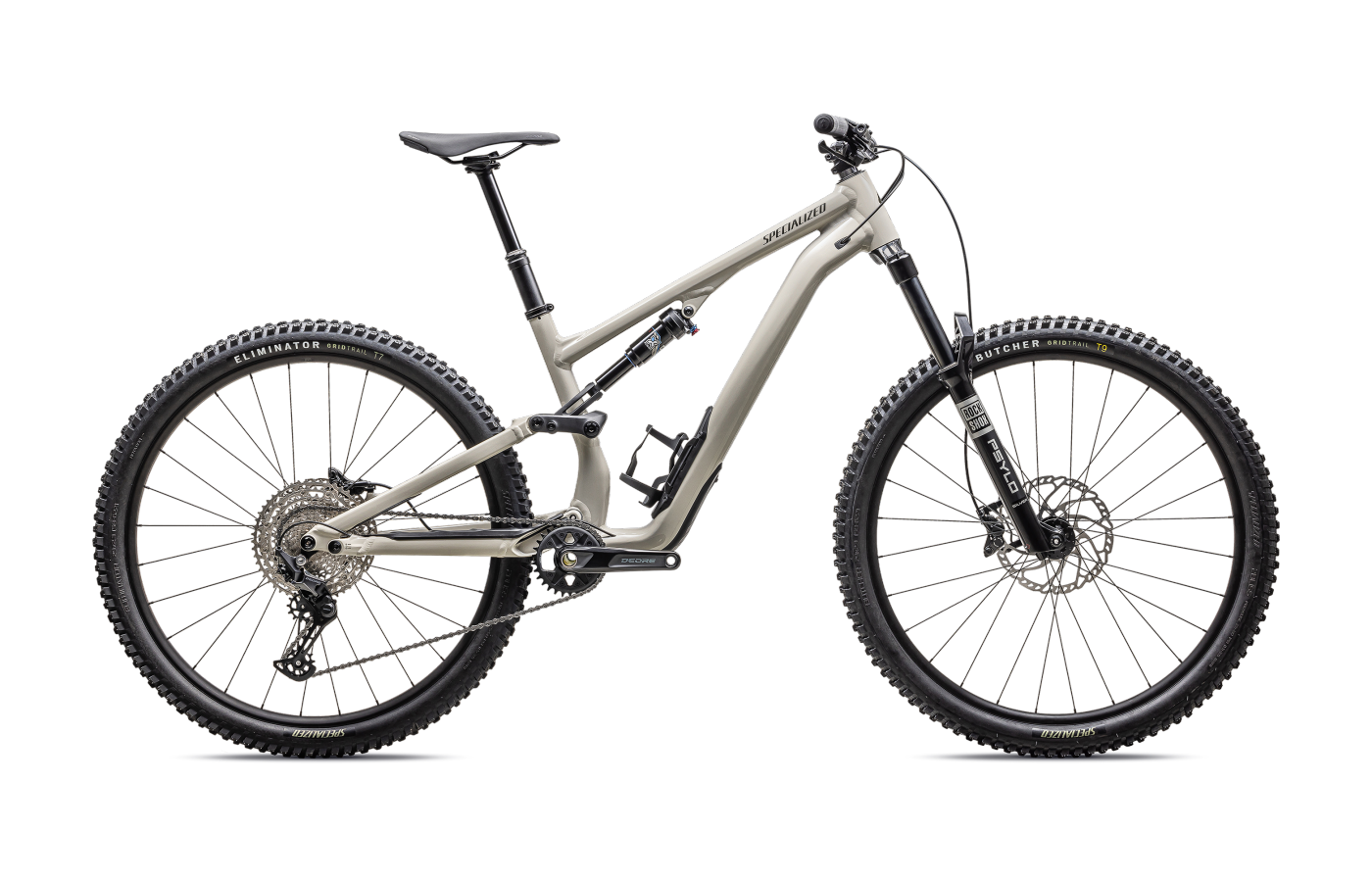
Stumpjumper
The Specialized Stumpjumper is the obvious shop-brand alternative — more compliant carbon layup than the Neuron and broader spec range than the Hugene, but you'll pay a real premium for a comparable build.
Compare →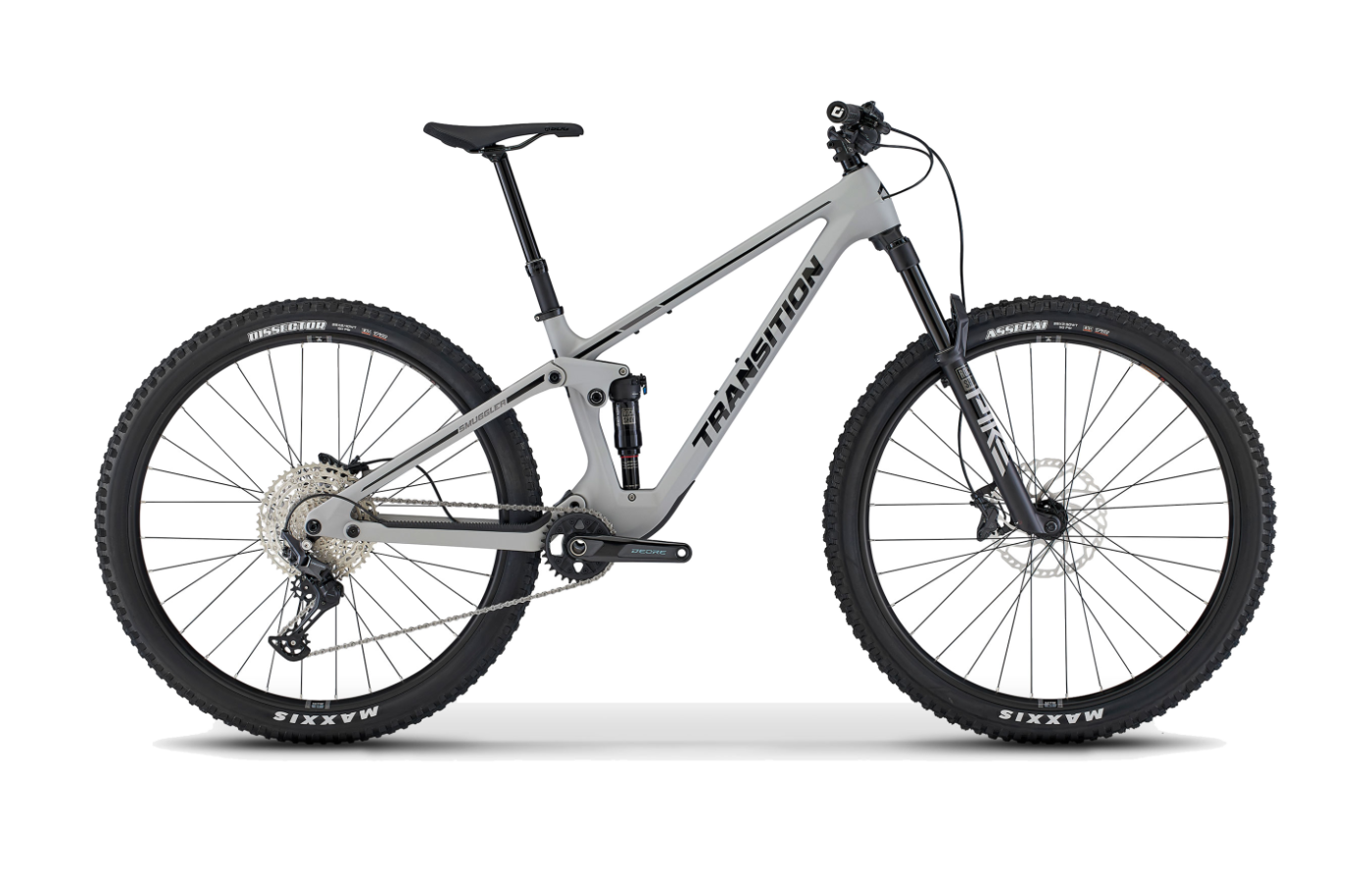
Smuggler
The Transition Smuggler hits a similar 'short-travel ripper' brief as the Hugene but with a more tractable suspension feel on chunky climbs. NSMB calls it one of the all-time great punch-above-its-weight trail bikes.
Compare →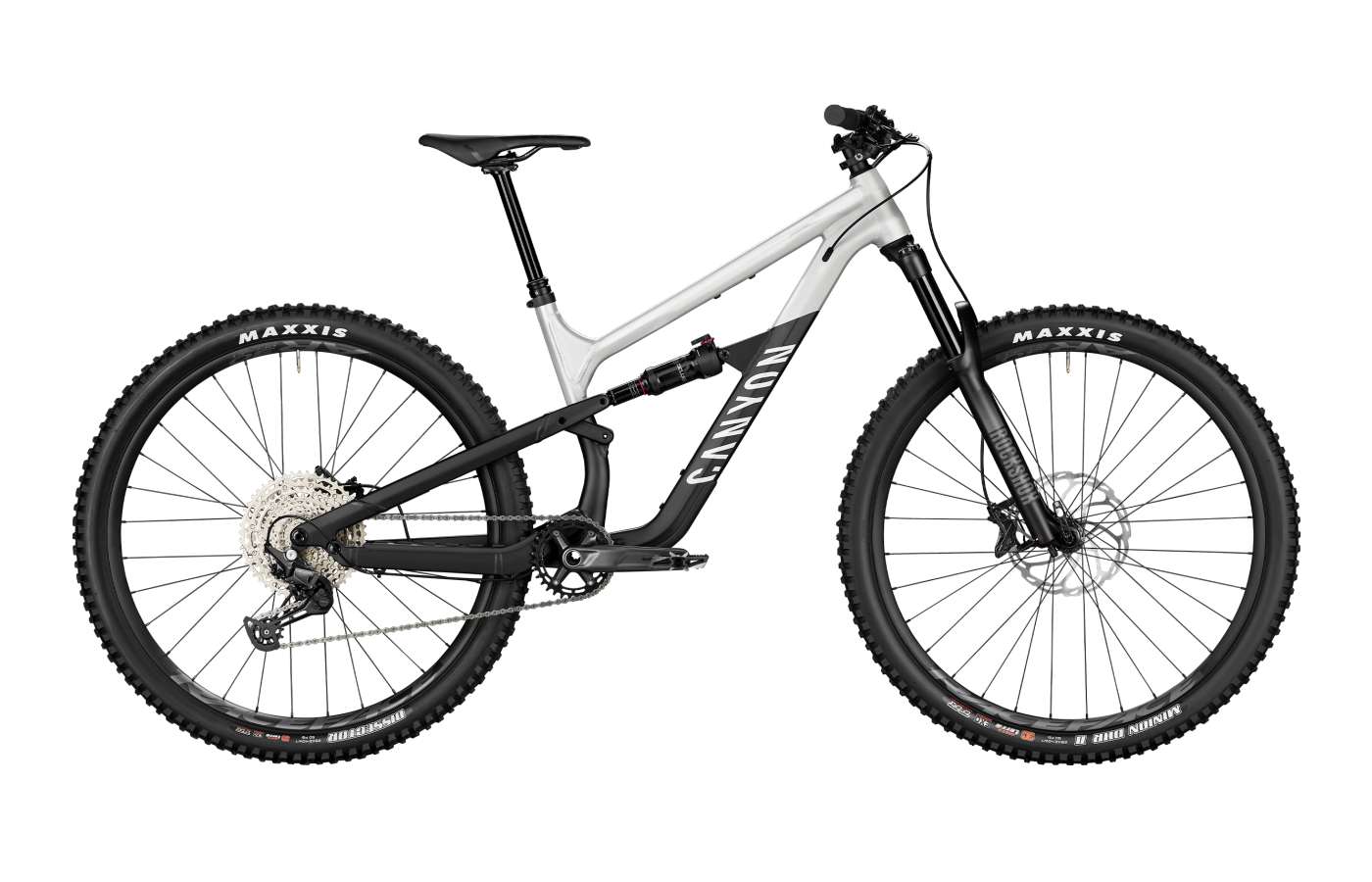
Spectral 125
If the Neuron feels too tame and you want to stay with Canyon, the Spectral 125 is the shrunken enduro bike — same brand DNA, much more aggressive geometry, and a closer match to the Hugene's intent.
Compare →