Sender
vsTues
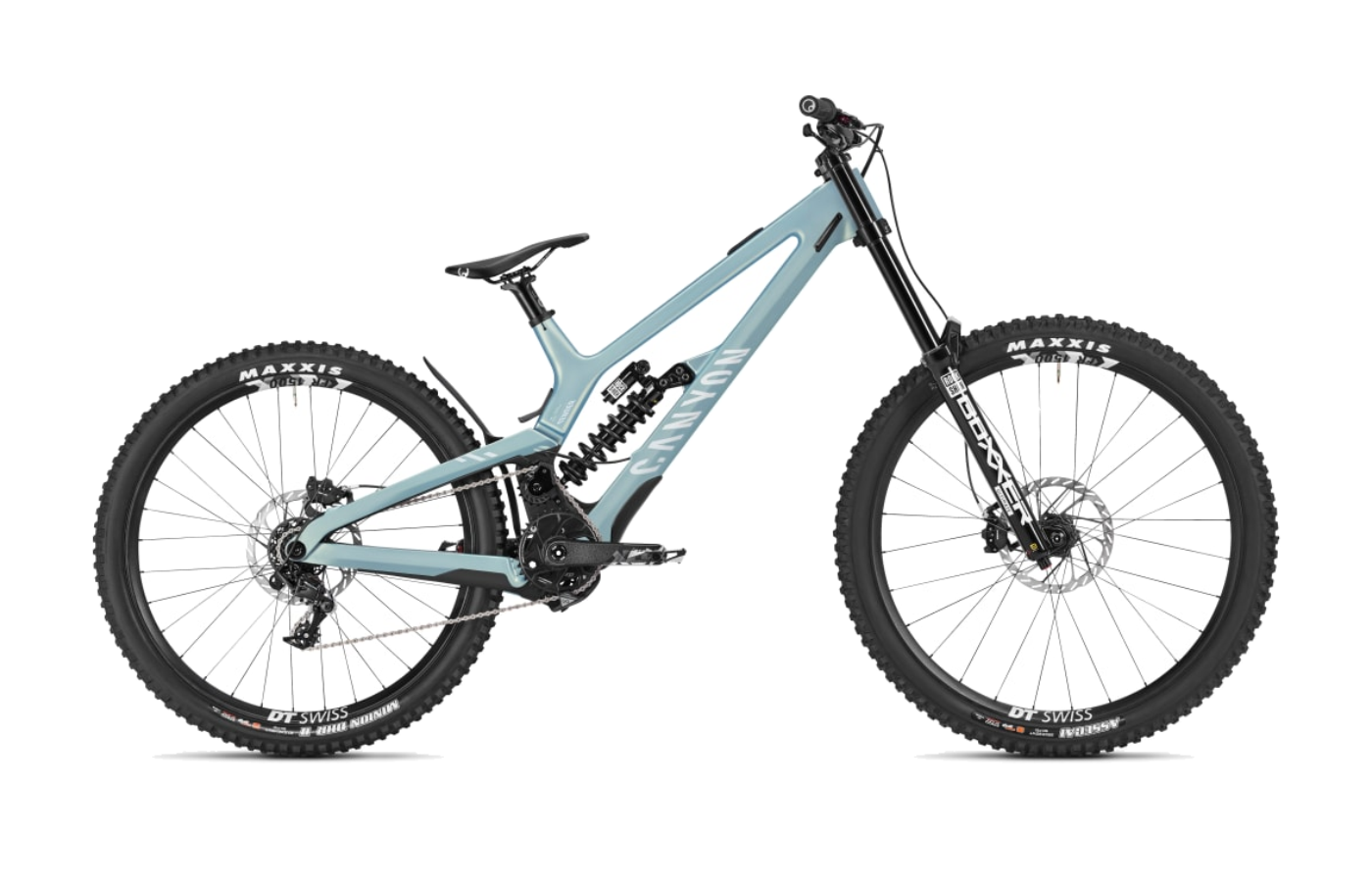
Two downhill philosophies, one price bracket.
The Sender is a high-pivot race sled built to win World Cups. The Tues is a four-bar park weapon that happens to win them too.
Sender
- High-pivot composure — the 17.5 mm rearward axle path eats square-edged hits other DH bikes hang up on.
- Brake-late chassis — 124–130% anti-rise keeps the rear active and the geometry flat under heavy braking.
- Massive adjustability — ±8 mm reach via headset cups, 5 mm BB drop, dual progression mount, removable K.I.S.
- Heaviest analogue DH bike in Enduro MTB's six-bike test field at 18.4 kg in size L.
- Demands an active, committed rider; feels 'underutilized' and clunky when ridden passively or slow.
Tues
- Lighter and livelier — 16.1 kg in size L makes it one of the lightest carbon DH bikes on the market.
- Flip Link versatility — tool-free swap between 29" and mullet rear wheels, no extra parts needed.
- Cheaper entry point — Core 2 at $4,299 makes it the most accessible carbon DH bike in this conversation.
- Noisy through the feet on high-frequency chatter; pedal feedback without an idler or O-chain.
- Hangs up more in square-edged tech than high-pivot rivals like the Sender.
Editor’s analysis
This is a fight between two DTC giants who looked at the same problem — going fast downhill — and built completely different bikes.
Both bikes run 200 mm of travel, both come in mullet, both sell direct, both have podium pedigree this season. From there they diverge fast. The Canyon Sender is a high-pivot single-pivot with an idler pulley, a 17.5 mm rearward axle path, 124–130% anti-rise, and 18.4 kg in size L. The YT Tues is a Horst-link four-bar at 16.1 kg in the same size — over 2 kg lighter — with no idler and a more traditional axle path. One bike was engineered to erase the worst of a World Cup track. The other was engineered to feel alive everywhere else.
The Sender is the heavier, more specialized tool. Its high-pivot rearward path lets the rear wheel get out of the way of square-edged hits — reviewers called it a 'freight train' through chunder, with 'mind-boggling stability' at speed. Anti-rise that high keeps the chassis flat under heavy braking, which is why Troy Brosnan can brake later on it. The cost is real: it's 'underutilized' and even feels like 'fighting the bike' when ridden passively, and the high anti-rise can cost you front-wheel pressure mid-corner if you're not adapted to it. Climbing it, in Enduro MTB's words, requires 'a shuttle, a lift, or a serious need for self-loathing.'
The Tues is the one you grab when you want to ride it everywhere, not just race it. Reviewers describe it as 'sharp,' 'lively,' and feeling more like a long-travel enduro bike than a DH sled — easier to wring its neck on jump lines, easier to pump for speed, easier to manhandle into a tight corner. The trade is honest: it's 'noisy through the feet' on high-frequency chatter, hangs up more on square-edged hits, and doesn't have the Sender's freight-train composure when the track gets truly horrible. BikeRadar gave it 4.5/5 and called it 'monstrously wide' in performance band.
Put another way: the Canyon Sender is the bike you buy if you race, full stop, and the rougher the track the better. The YT Tues is the bike you buy if you race occasionally but mostly want to do A-Line laps until the lift closes.
Where the builds differ.
Comparing our editor's-pick builds side-by-side. Winners highlighted row-by-row — lower price and weight, and the better-spec component, each mark a point.
Build variants & pricing
The Sender is one-build-only in the US; the Tues spans three carbon builds from $4,299 to $6,899.
Prices are current US MSRP. Canyon only sells the top-tier $7,799 CFR Team in the US — European buyers also get a sub-$5k CFR build that the US market doesn't see. If you want a sub-$5k carbon DH bike with a warranty, the Tues Core 2 is your only option here.
How they fit, how they steer.
Both at size M — the fit-picked size for a 5'8" rider. The Tues sits 10 mm taller in stack (640 vs 630) with a 22 mm shorter reach (446 vs 468) and a slightly slacker 63.2° HTA vs the Sender's 63°. Same 200 mm of travel front and rear; the Sender adds a high-pivot rearward axle path the Tues doesn't have.
Which size should I buy?
Size recommendations based on stack, reach, and effective top tube. The Sender runs four sizes (S–XL); the Tues offers M and S in the data here, with full range S–XXL on YT's site.
→These are starting points. Flexibility, riding style, and preferred position all shift the answer — if you’re between sizes, a professional fit beats a chart.
What the magazines said.
Published reviews from trusted cycling outlets. Click through for the full write-up.
Which one should you buy?
If you race the gnarliest tracks in your region, get the Sender. If you race occasionally and lap the bike park weekly, get the Tues.
Sender
If your weekends mean timing tape and the rougher the track the faster you want to go, this is the bike. The high-pivot suspension and anti-rise figures pay off precisely where races are won — on steep, blown-out, square-edged terrain. Less rewarding everywhere else.
Tues
If your downhill bike spends most of its life on chairlifts, jump lines, and the occasional regional race, the Tues is the more useful tool. Lighter, livelier, cheaper to get into, and it'll still hold a podium pace when you point it at one.
Questions buyers actually ask.
Short answers to the things we get emailed about most often.
01Which is faster on a World Cup-style track?
The Canyon Sender, at the upper limit of what a track can throw at it. Reviewers consistently describe its high-pivot suspension as a 'freight train' through chunder, with 'mind-boggling stability' on rough, blown-out terrain. Troy Brosnan took the prototype to a World Cup victory and the production bike has two podium finishes this season.
The Tues is also a proven race bike — Vali Höll has won on it — but it's a 'sharper' tool that demands more rider input as the track gets truly horrible. On smoother, jump-heavy tracks like Leogang, that gap closes.
02Which is better for the bike park?
The YT Tues, by a clear margin. It's over 2 kg lighter (16.1 kg vs 18.4 kg in size L), 'easier to wring its neck' on jump lines like A-Line and Dirt Merchant, and the Flip Link lets you swap between 29" and mullet without buying extra parts.
The Sender is described by multiple reviewers as feeling 'underutilized' or 'ka-chunking around' at park speeds. It's not unfun, just overbuilt for the job.
03What's the deal with the Sender's high pivot?
The Sender uses an MX-Link high-pivot single-pivot layout with an idler pulley. The rear axle moves 17.5 mm rearward through the first part of the travel (and continues moving back, less aggressively, deeper in), letting the wheel get out of the way of square-edged impacts instead of slamming into them.
The trade is complexity (more bearings, an idler pulley to maintain) and weight. The YT Tues sticks with a traditional Horst-link four-bar — fewer parts, less maintenance, but no rearward axle path.
04How adjustable are these frames?
Both are heavily adjustable. The Canyon Sender offers ±8 mm reach via swappable headset cups, a 5 mm bottom bracket height adjustment (taking the HTA from 63° to 62.7°), and a 180° rotatable upper shock mount that switches between linear (32.7%) and progressive (37%) suspension rates. The K.I.S. steering stabilizer is integrated but easily removable.
The YT Tues has three flip chips: one at the seatstay for tool-free 27.5"/29" rear-wheel swaps, one at the lower shock mount for HTA (63.5° ↔ 63.2°) and BB height (5 mm), and a ±5 mm chainstay length adjustment.
05What's the weight difference?
Canyon Sender CFR Team: 18.4 kg in size L (Enduro MTB's measured weight — the heaviest analogue DH bike in their six-bike test).
YT Tues Core 4: 16.1 kg in size L (also Enduro MTB-measured, same test field; one of the lightest in the segment).
That's a 2.3 kg gap — significant for a bike you may need to manhandle off jumps, push back up between runs, or carry to the lift.
06Can I get either one for under $5k?
Only the Tues. The Tues Core 2 CF lists at $4,299 — full carbon frame, basic spec, but a real DH bike with a warranty. The Tues Core 3 CF at $5,499 adds Öhlins suspension and a SRAM GX DH drivetrain.
The Sender is sold in the US in only one configuration: the $7,799 CFR Team. European buyers can also get a sub-€5k CFR build with Fox Performance and SRAM GX DH, but that build doesn't reach the US market.
07How is the maintenance and serviceability?
The Tues is simpler. The four-bar V4L layout has fewer pivots than the Sender, no idler pulley to maintain, and the flip chips are tool-friendly.
The Sender has more bolts, bearings and moving parts, but Canyon engineered around it: pivot hardware is accessible from the non-drive side, every bolt threads into a replaceable aluminum insert (no stripped carbon threads), and Canyon ships a full-length Allen key for the deep lower shock mount. Reviewers called the design 'manageable' for a high-pivot platform — but it's still more work than the Tues.
08Which one should I buy if I'm not a racer?
The Tues, almost certainly. Multiple Sender reviewers explicitly noted the bike feels 'underutilized,' 'demands direction, pressure and an active riding style,' and rewards a level of speed and commitment most riders never reach. If you're not regularly racing or pushing World Cup-grade tracks, the Tues delivers more of its capability more of the time — and saves you $900 to $3,500 depending on the build.
Similar bikes
If your priorities don’t map cleanly onto either of these, one of these adjacent bikes probably fits better.
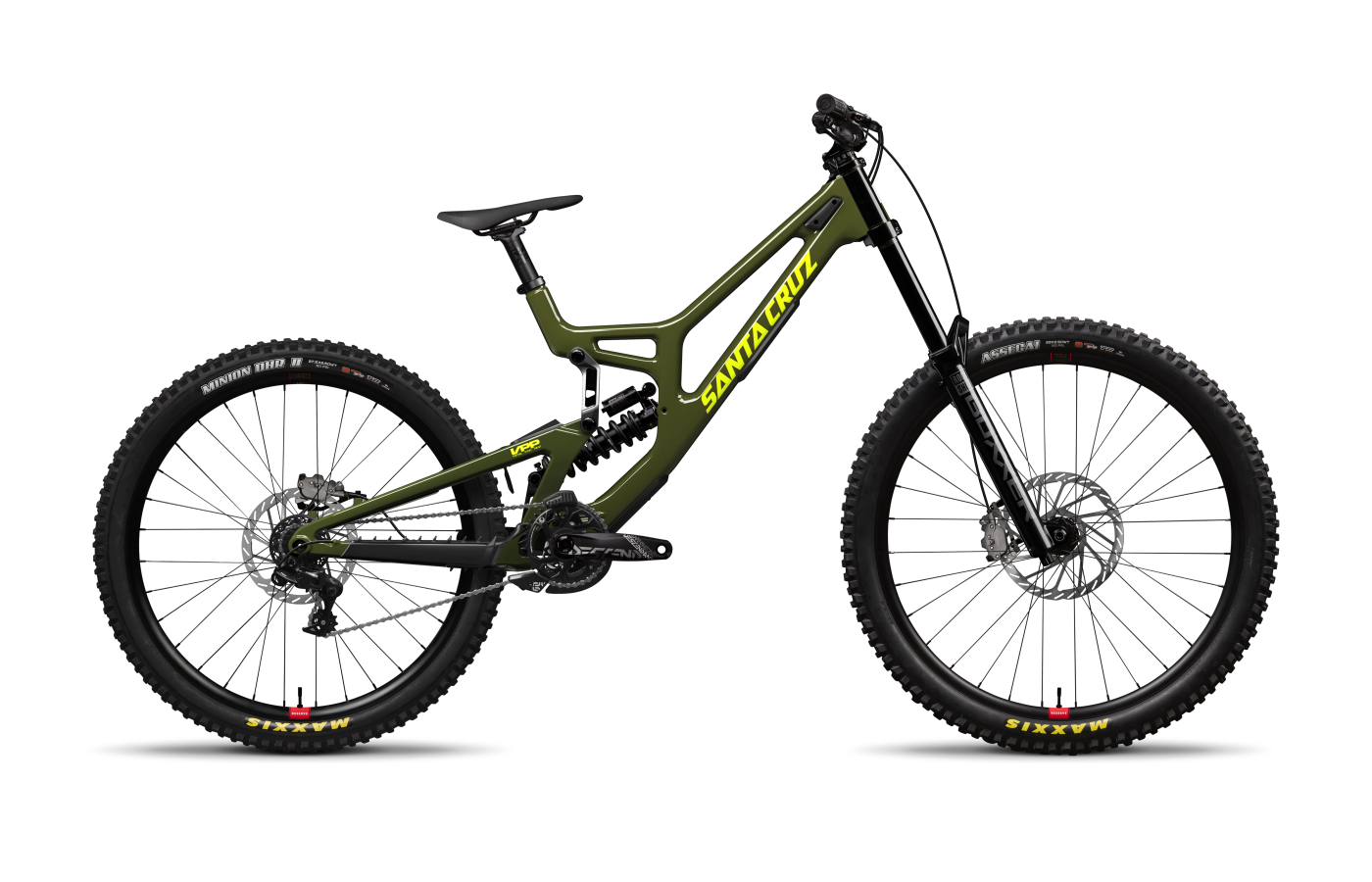
V10
The four-bar pedigree pick — refined, polished, and the bike many of these competitors are still measured against. If you want the Tues's playful character with more brand history and a dealer network, the V10 is the safe call.
Compare →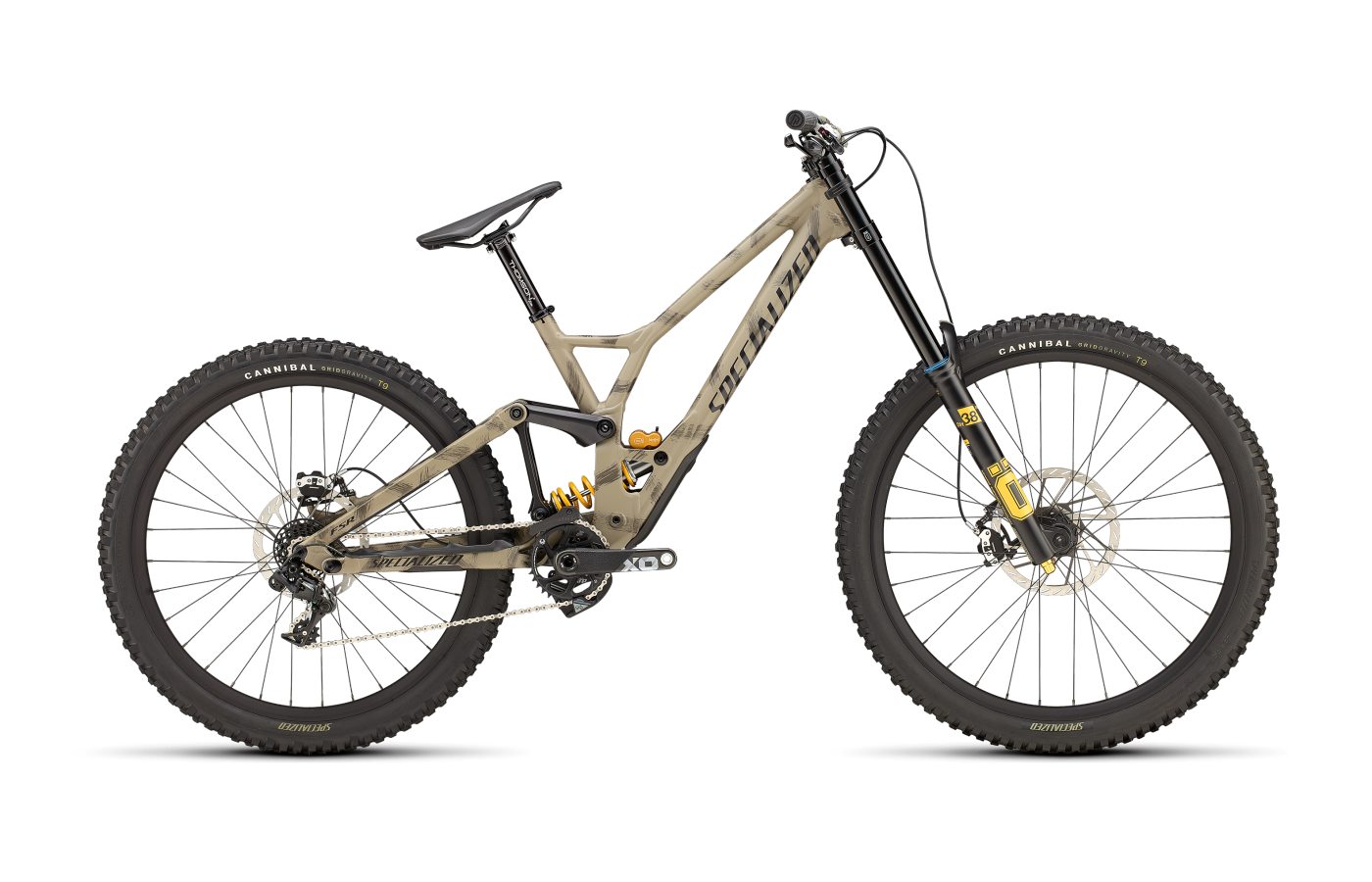
Demo
The closest geometric and conceptual rival to the Sender — a high-pivot DH platform with a long World Cup track record and Specialized's dealer support behind it. More expensive, but a known quantity.
Compare →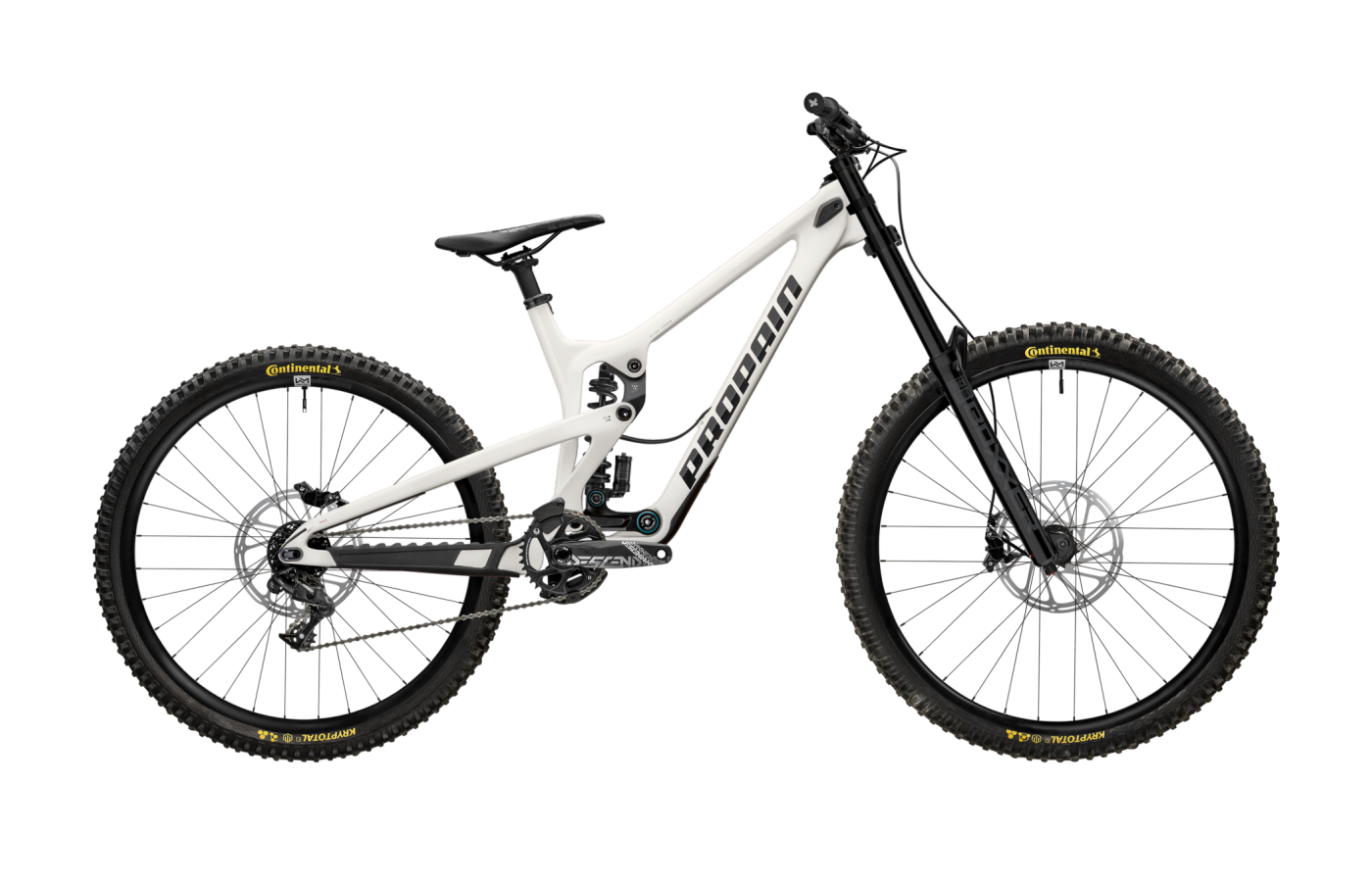
Rage
The other DTC option — Propain's customizer lets you spec almost any combination, often at prices below even the Tues. Less brand cachet than Canyon or YT, but the configurator is unmatched.
Compare →