Spectral 125
vsOptic
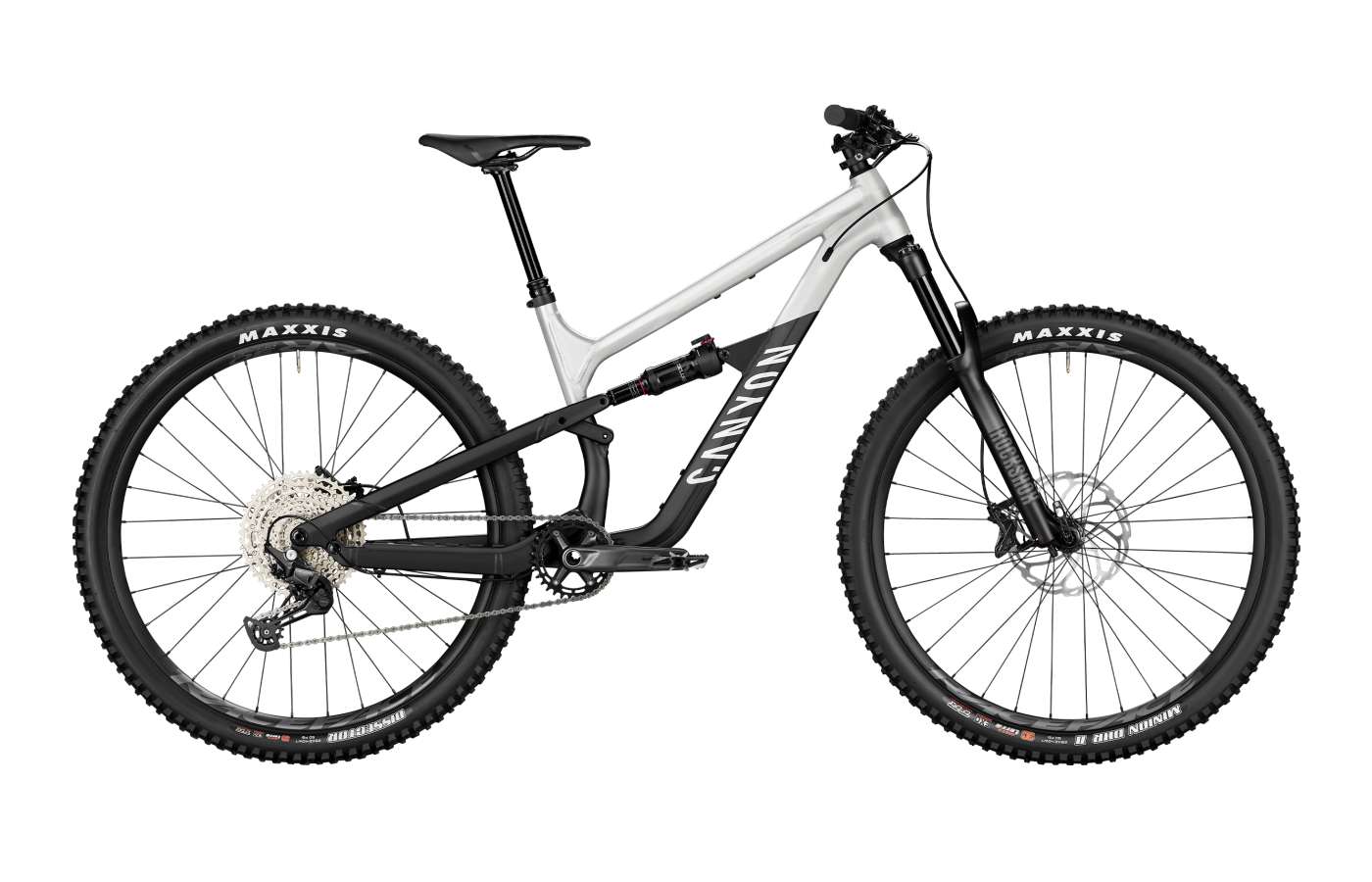
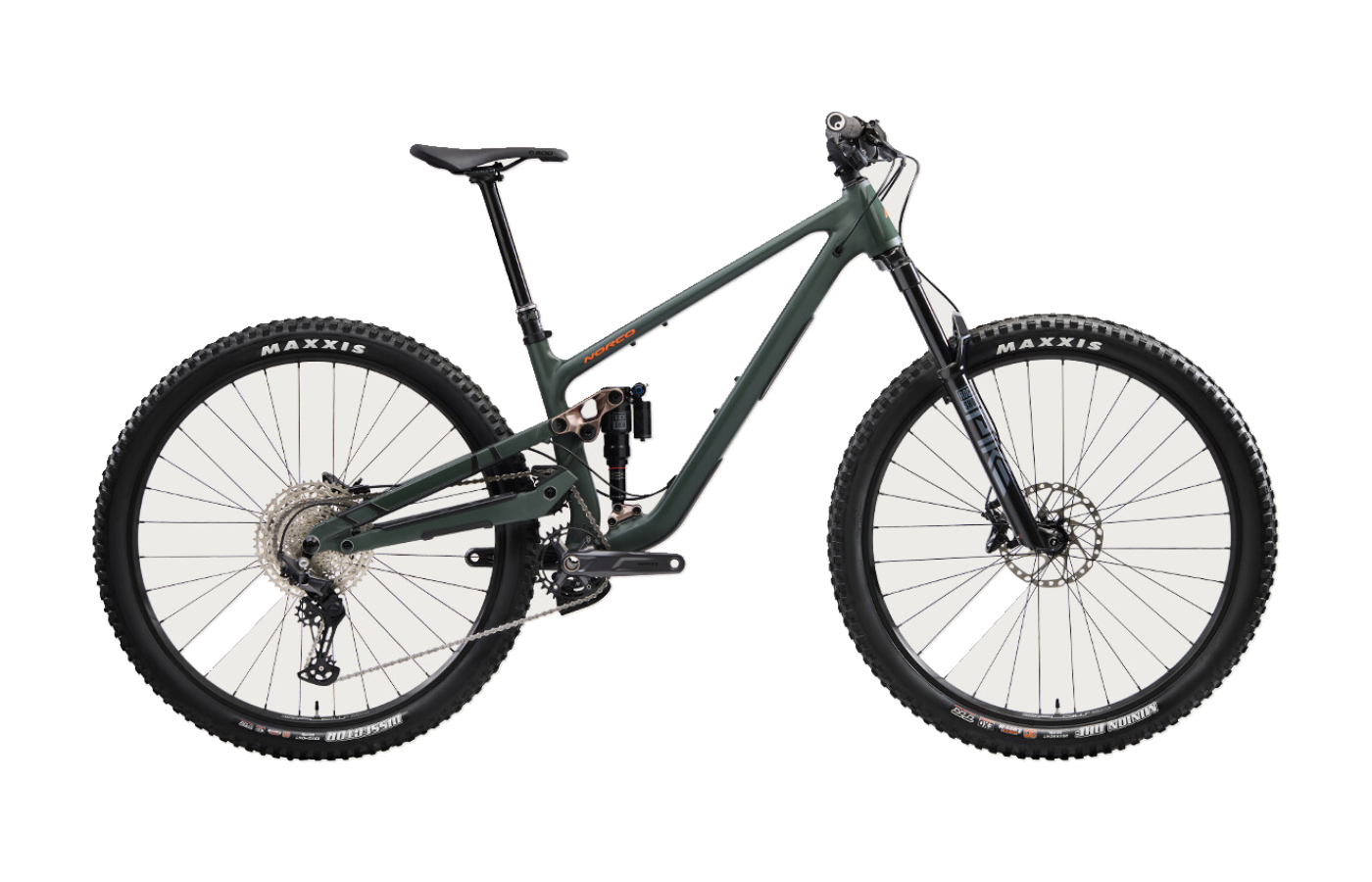
Two short-travel hooligans, two suspension philosophies.
The Spectral 125 is a stiff, poppy four-bar that demands an active rider. The Optic is a high-pivot bump-eater that rides bigger than its travel.
Spectral 125
- Aggressive 64-degree head angle — a full degree slacker than the Optic, putting it among the slackest 125 mm bikes built.
- Poppy, supportive suspension with high anti-squat — pumps trail features into forward speed, climbs without a lockout.
- Direct-to-consumer pricing — the AL 5 lands at $2,099, the cheapest way into Category-4-rated trail geometry.
- Stiff carbon-or-alloy chassis transmits chatter — reviewers describe long descents as 'wrist/ankle unfriendly.'
- Single static 437 mm chainstay across all sizes can feel short for taller riders compared to Norco's proportional approach.
Optic
- Rides bigger than 125 mm — the high-pivot rearward axle path slices square-edge hits, making chunky terrain feel composed.
- Size-specific chainstays (421–437 mm) and progressive seat angles keep balance consistent across all five sizes.
- Excellent technical climber — rear wheel stays active under power and tractors over ledges without hanging up.
- Idler pulley adds drivetrain noise and drag, especially in dry or dirty conditions — needs frequent lubrication.
- Roughly 14.7–17.2 kg across the range — heavier than most short-travel rivals, with the high-pivot adding ~300 g to the frame.
Editor’s analysis
Same 125 mm of rear travel, same 140 mm fork — and almost nothing else in common. One bike pings off the trail. The other slices through it.
The Canyon Spectral 125 and Norco Optic both pitch themselves as mini-enduros: short-travel platforms with the geometry and intent of bikes a full travel category bigger. Both run a 140 mm fork over 125 mm of rear travel, both ride 29" wheels, and both ship in carbon and alloy. From there the philosophies fork hard.
Canyon takes the simple, stiff route — a four-bar Horst Link with high anti-squat and a Triple Phase tune that ramps progressively. The result is a 64-degree head angle, a 437 mm static chainstay, and a chassis that pumps and pops better than almost anything else with this little travel. It's also unrelenting on rough terrain. Reviewers describe a bike that 'passes vibrations directly to the rider' and demands an A-game; the reward is a bike that turns flat trails into a playground.
The Norco Optic does the opposite. Its high-pivot VPSHP layout uses an idler pulley to manage chain growth so the rear axle can travel rearward — out of the way of square-edged hits. The geometry is calmer: a 65-degree head angle, size-specific chainstays from 421 to 437 mm, and a wheelbase that grows under compression. The Optic feels stable and unflappable through chunder where the Spectral skips and pings; the trade is a slightly floaty cornering feel and an idler that needs lubrication to stay quiet.
Put another way: the Spectral 125 is what you ride when you want every rock to be a launchpad. The Optic is what you ride when you want to stop noticing the rocks at all. There's no overlap in the kind of fast each one rewards.
Where the builds differ.
Comparing our editor's-pick builds side-by-side. Winners highlighted row-by-row — lower price and weight, and the better-spec component, each mark a point.
Build variants & pricing
Canyon offers the Spectral 125 as a single $2,099 alloy build. Norco's Optic spans six builds from $3,399 (A2 alloy) to $6,799 (C1 carbon).
The Spectral 125 catalog has narrowed to one alloy build with Shimano Deore — there's no carbon or higher-tier option currently listed. We've matched it against the Norco Optic A2 (alloy, Shimano Deore, $3,399), the closest like-for-like build on the Norco side. Riders who want carbon or SRAM Transmission must look at the Norco's higher trims; Canyon doesn't currently sell that build of the Spectral 125.
How they fit, how they steer.
Compared at the closest fit-picked sizes: the Spectral 125 in M (460 mm reach, 622 mm stack, 64-degree head angle) and the Optic in its mid-size S3 (472.5 mm reach, 626 mm stack, 65-degree head angle). The Optic is roomier and a degree steeper up front; the Spectral is more compact and slacker — that's the geometry summary of the whole comparison.
Which size should I buy?
Canyon labels with S/M/L/XL; Norco uses size-numbered sizing (S1–S5) with proportional chainstays that grow from 421 to 437 mm as the frame scales.
→These are starting points. Flexibility, riding style, and preferred position all shift the answer — if you’re between sizes, a professional fit beats a chart.
What the magazines said.
Published reviews from trusted cycling outlets. Click through for the full write-up.
Which one should you buy?
If you ride flow, jump lines, and natural features you want to pump and pop, get the Spectral 125. If you ride chunder, square-edged rocks, and steep technical climbs, get the Optic.
Spectral 125
If your trails are flowy, machine-built, or rich with natural features to launch — and you're an active, assertive rider — the Spectral 125 turns small terrain into big terrain. It's the cheapest way into modern Category-4 trail geometry, and the four-bar chassis is genuinely bombproof. Just expect a firm, demanding ride that asks more of you on long, rough descents.
Optic
If your local terrain is rocky, root-strewn, and rough — Sedona, the PNW, the East Coast — the Optic's high-pivot is a measurable upgrade in composure. It also climbs technical chunk better than almost anything in its travel class. Accept the weight, the idler maintenance, and the price tag of admission.
Questions buyers actually ask.
Short answers to the things we get emailed about most often.
01Why do they have the same travel but feel so different?
Suspension layout. The Spectral 125 runs a four-bar Horst Link with high anti-squat and a progressive, ramp-heavy tune — it stays high in its travel and pops off features.
The Optic runs a high-pivot single-pivot with an idler, so the rear axle moves rearward as the suspension compresses. That rearward path lets the wheel get out of the way of square-edged hits, making 125 mm feel like 150+ mm on rough terrain.
Same travel number, completely different rear-end behavior.
02Which one climbs better?
It depends on the climb. On smooth fire roads, the Spectral 125 is the crisper pedaler — high anti-squat keeps the shock from wallowing, and you almost never need the lockout.
On rough, technical, root-and-rock climbs, the Optic wins. The high-pivot lets the rear wheel tractor over ledges without hanging up, and most reviewers report idler drag is minimal when the drivetrain is clean.
For a typical ride that mixes both, they're closer than the suspension difference suggests.
03How heavy is the idler in practice — drag, noise, maintenance?
Reviewer experience varies. Most testers (Theradavist, MBA, MBR) describe the Optic's idler as the smoothest and quietest they've ridden — minimal drag, easy to live with.
A minority (Bike Perfect, Singletracks) report a noticeable squeak that develops in dry or dusty conditions and needs frequent lubrication. OutdoorGearLab had repeated chain drops off the idler in rough terrain.
If you ride dusty trails and don't lube weekly, expect a more vocal drivetrain than a conventional layout.
04What's the geometry difference between these two?
Canyon Spectral 125 (M): 460 mm reach, 622 mm stack, 64-degree head angle, 437 mm chainstay, 76.5-degree seat angle.
Norco Optic (S3, mid-size): 472.5 mm reach, 626 mm stack, 65-degree head angle, 429 mm chainstay (29er), 77-degree seat angle.
The Spectral is slacker up front and more compact. The Optic is roomier and a touch steeper, with proportional chainstays that grow with size to keep balance consistent across the range.
05Do they fit the same tires?
Both ship with 29 x 2.4 / 2.5 in Maxxis Minion DHF/DHR II/Dissector combos in EXO casing. The Norco lists tire clearance up to roughly 61 mm.
Reviewers on both bikes recommend upgrading to EXO+ or DoubleDown casings for aggressive riding — the stock EXO casings are widely flagged as 'under-gunned' for the bikes' descending capabilities, with pinch flats common in chunky terrain.
06Can I run a mixed-wheel (mullet) setup?
Norco Optic: Yes — the Optic ships in MX trim on the C2 MX build, and there's an aftermarket Missing Link Kit ($135) that converts any Optic between full 29er and mixed-wheel without compromising geometry or kinematics.
Canyon Spectral 125: No — there's no factory mullet option, and the geometry isn't designed around it. Stay with 29" front and rear.
07Which is the better value?
On budget alone, the Spectral 125 — at $2,099 for the AL 5, it's less than many bare carbon frames cost, and it ships with a Category-4-rated frame and Shimano Deore drivetrain.
On price-per-feature, it's closer. The Optic A2 at $3,399 brings a 5-size proportional-geometry frame, mullet-conversion option, and the high-pivot platform you can't get anywhere else at this travel.
If you want the cheapest capable trail bike, the Spectral. If you want the high-pivot tech, the Optic — and there's no shortcut to it.
08Are these bikes appropriate for bike parks and lift access?
Both frames are built to stout strength ratings (Canyon Category 4, Norco's UDH/Eagle Transmission-compatible carbon and alloy). Neither is a true park bike — 125 mm is the limiting factor more than the chassis is.
Reviewers ride both in occasional bike park duty: the Spectral 125 thrives on flow and jump lines but gets overwhelmed on long, rough DH runs; the Optic absorbs more rough terrain but is heavy enough that the climbs back up start to drag.
For regular park use, look at longer-travel options — the Norco Sight or full-travel Canyon Spectral, both listed below.
Similar bikes
If your priorities don’t map cleanly onto either of these, one of these adjacent bikes probably fits better.
Spectral
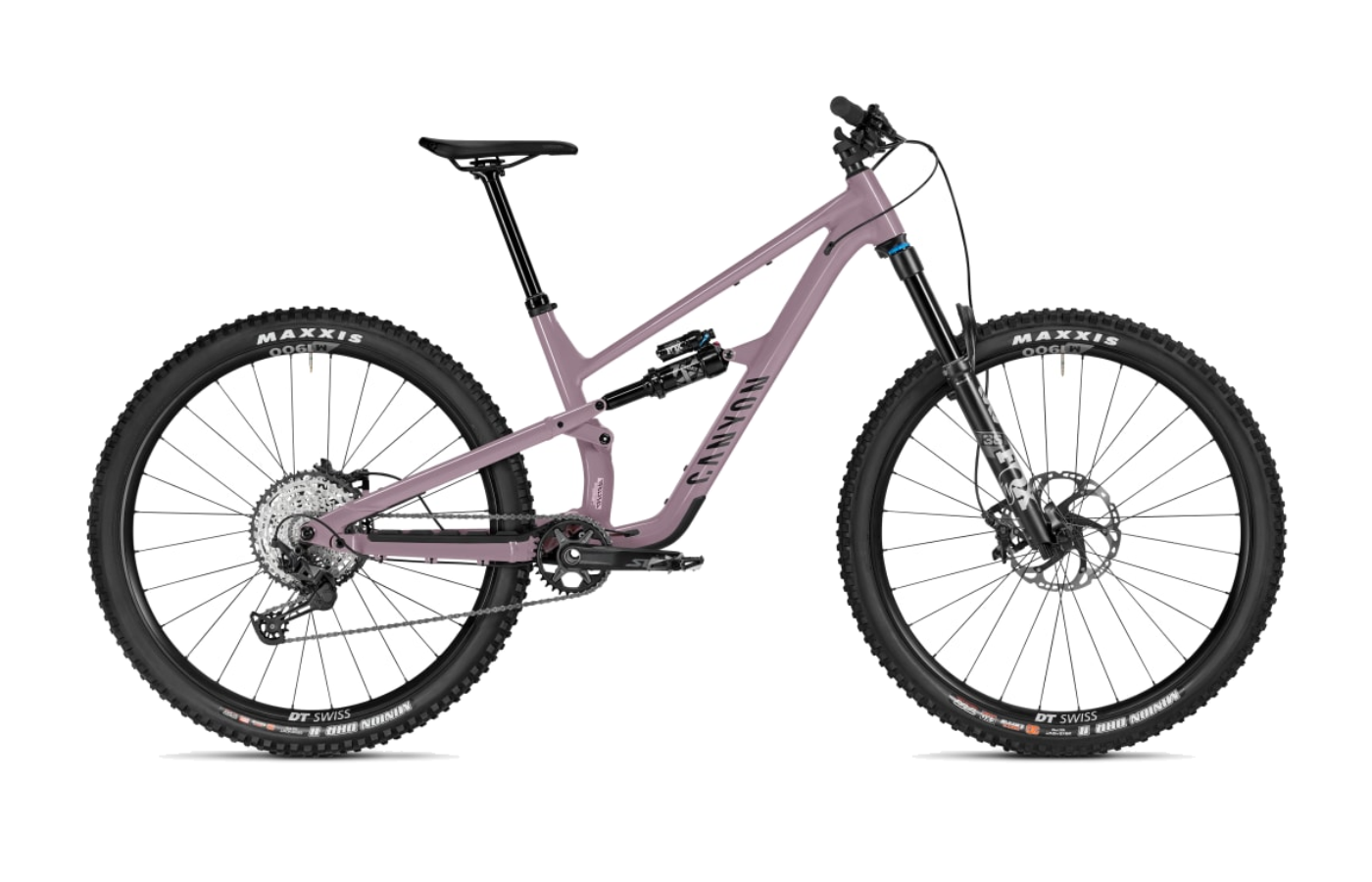
The full-travel 150 mm Canyon Spectral. If you love the 125's stiff, aggressive geometry but find the ride too unrelenting on long descents, the bigger sibling adds compliance for roughly the same weight.
Compare →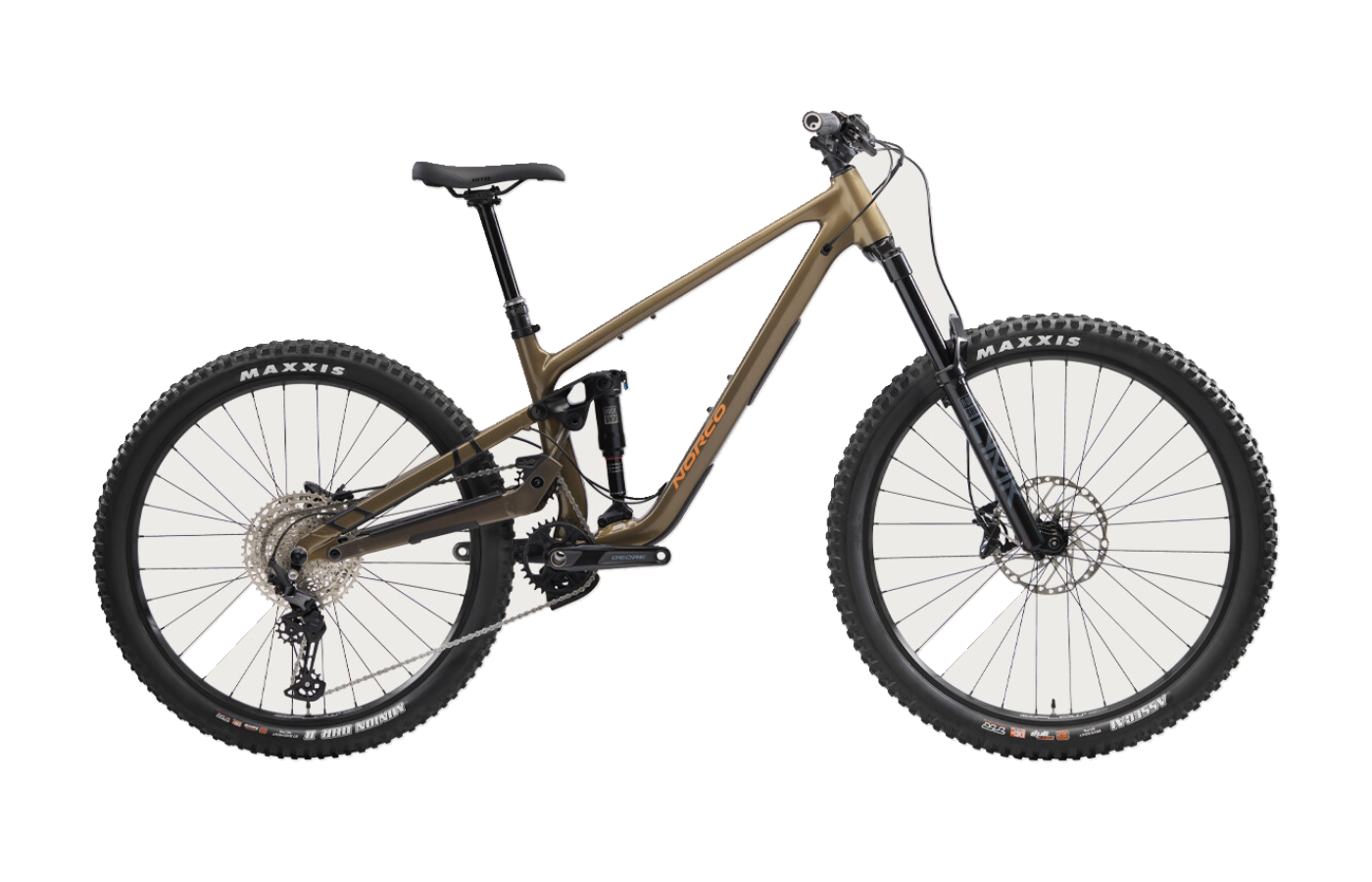
Sight
Norco's longer-travel Sight — same Ride Aligned philosophy and high-pivot DNA, with 150 mm of rear travel for terrain that bottoms out the Optic's 125 mm.
Compare →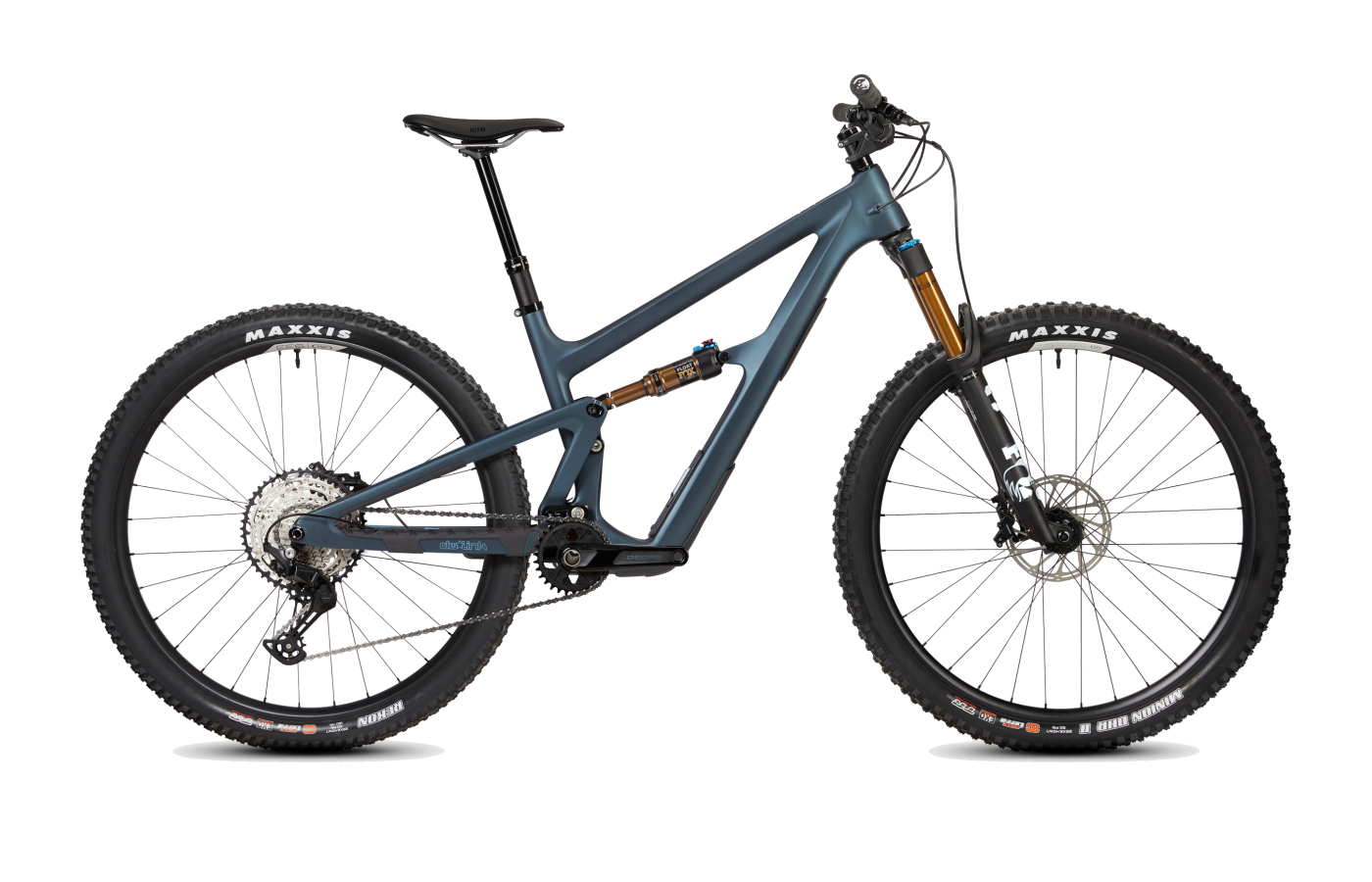
Ripley
The Ibis Ripley. A short-travel bike that prioritizes light-footed efficiency and all-day climbing comfort over mini-enduro rowdiness — the choice if neither the Spectral's stiffness nor the Optic's weight appeals.
Compare →