Spectral
vs5010
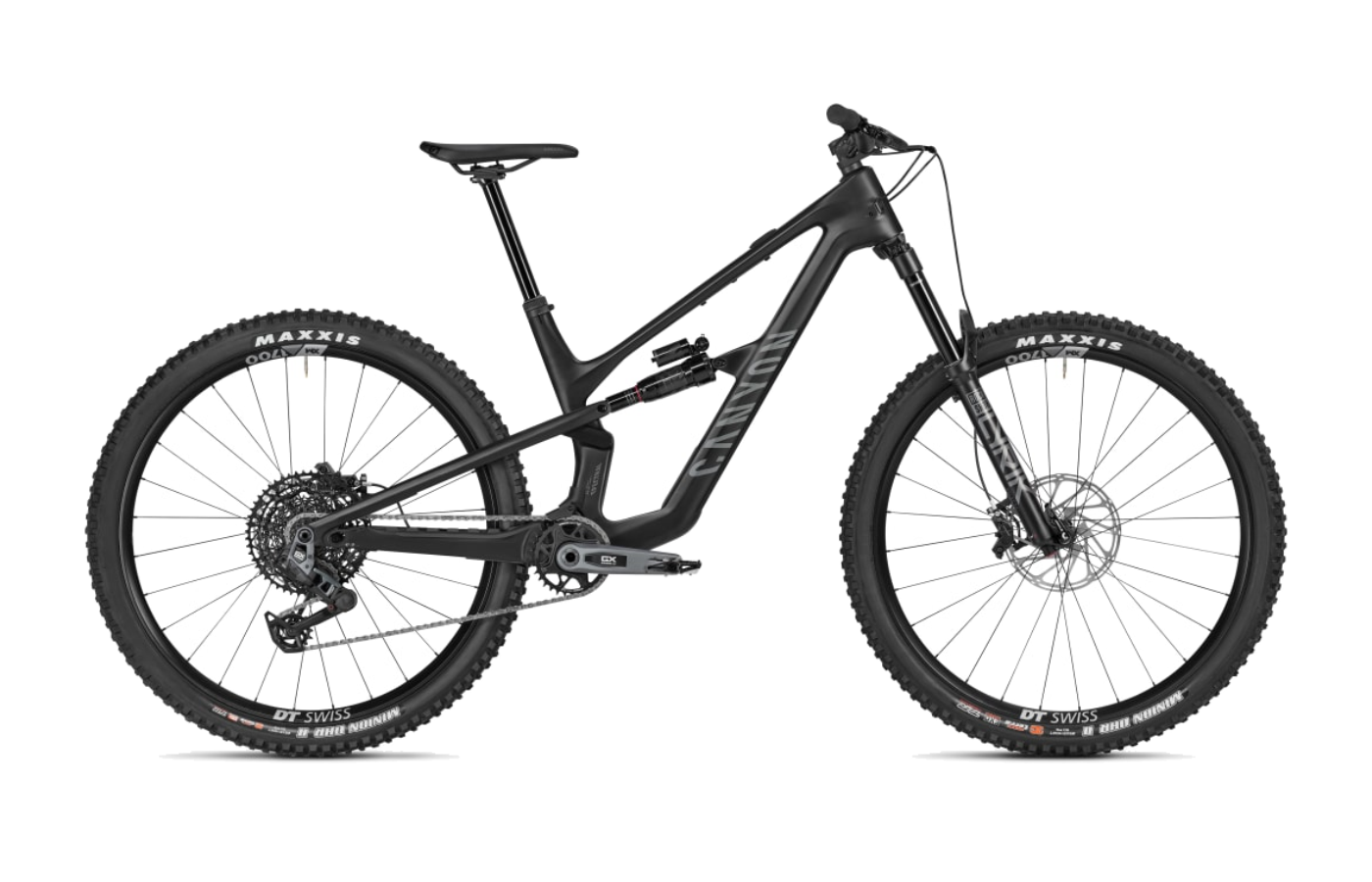
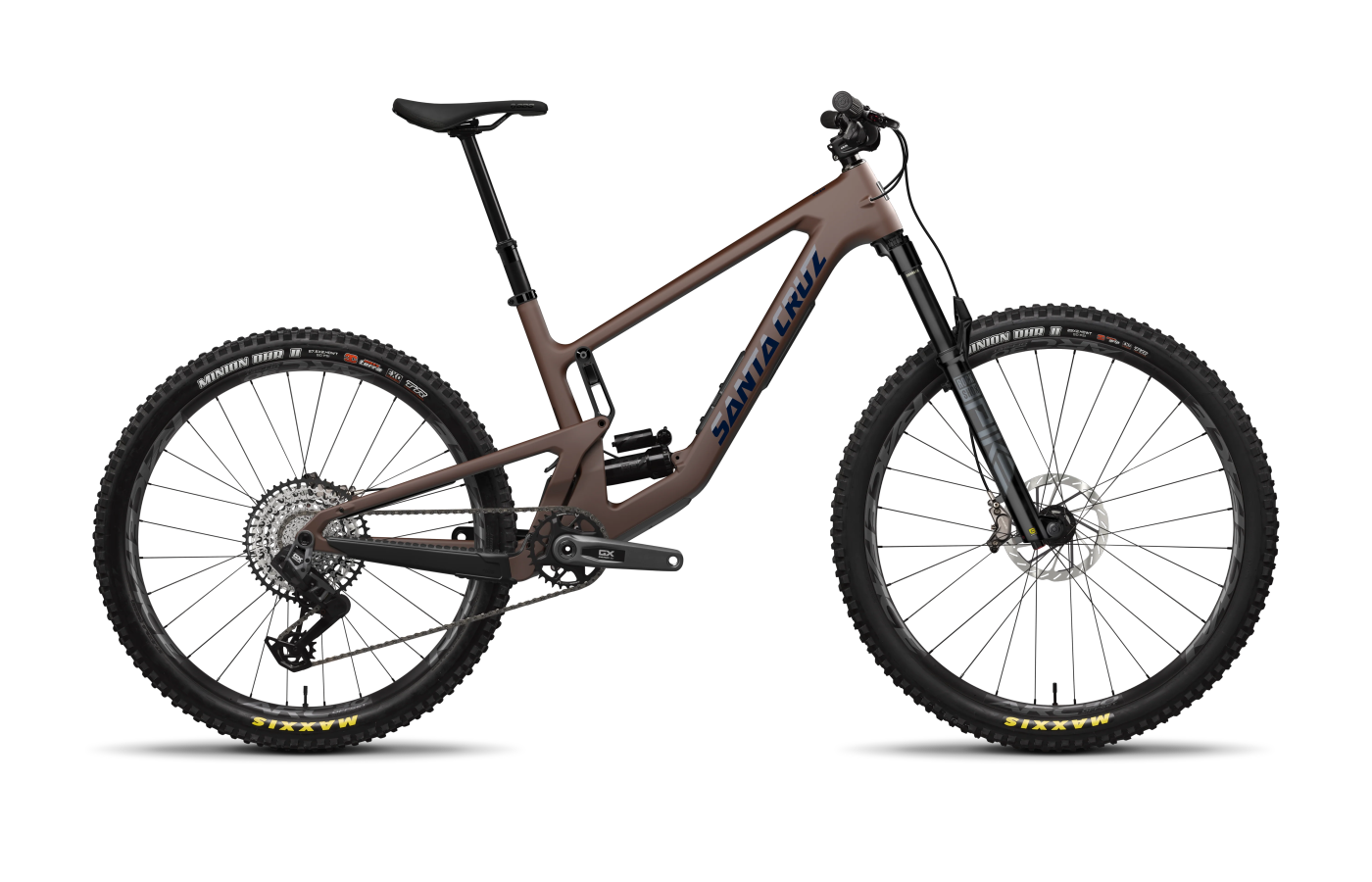
Two trail bikes, two definitions of fun.
The Canyon Spectral is the long, stable do-everything bike at direct-to-consumer pricing. The Santa Cruz 5010 is a mullet-wheeled corner-slasher built for play.
Spectral
- More travel for the money — 150/140 mm front/rear at $3,099 entry undercuts the 5010's $4,799 starting price by $1,700.
- Long, stable geometry — 500 mm reach and 64° head angle on a Large make it 'unphased by speed' on chunky descents.
- Wheel-size flexibility — frame flip-chip lets you run full 29 or mullet without changing the geometry character.
- K.I.S. steering stabilizer is divisive — many testers find it adds lethargy on tight, fast turns.
- Stock G5 grips are near-universally panned as too hard and slippery; plan to swap them.
5010
- Mullet handling magic — the 27.5" rear gives the 5010 a 'corner-destroyer' character no full 29er can match.
- Size-specific chainstays — 428 mm on XS up to 442 mm on XXL keeps the rider centered regardless of frame size.
- Lifetime warranty + Glovebox — frame and pivot bearings are covered for life, and the in-frame storage is the segment's best-executed.
- Premium pricing — entry-level R is $4,799; equivalent X0 AXS Trans build runs $2,500 more than the Canyon's.
- Stock SRAM G2 brakes and EXO-casing tires are routinely flagged as under-spec'd for the bike's intentions.
Editor’s analysis
Same trail category, opposite playbooks — plant-and-plow stability on one side, flick-and-drift agility on the other.
On paper, the Canyon Spectral and Santa Cruz 5010 look similar: mid-travel carbon trail bikes, both happy at home on a wide range of singletrack. But spend any time on the geometry numbers and the philosophies split immediately. The Spectral runs 150 mm front / 140 mm rear on dual 29s with a 64-degree head angle and a Large reach of 500 mm. The 5010 is a true mullet — 29 front, 27.5 rear — with 140/130 mm of travel, a 65.2-degree head angle, and a far more conservative 479 mm reach on the Large.
The Canyon Spectral plays the over-achiever card. It's longer, slacker, has 10 mm more travel everywhere, and ships across the board with the K.I.S. steering stabilizer — a polarizing self-centering spring that quiets the front end on chunder. Direct-to-consumer pricing means you get an X0 AXS Transmission build for $5,799, where Santa Cruz's nearest equivalent is $2,500 more. Reviewers consistently call it 'unphased by speed' and a 'mini-enduro bike' that punches above its travel.
The Santa Cruz 5010 picks the opposite lane and sharpens it. The 27.5-inch rear wheel has less rotational inertia and shorter chainstays (433 mm on a Medium), making it eager to manual, drift, and snap out of berms. Reviewers call it a 'corner destroyer' and a 'jib machine that finally grew up.' VPP suspension was retuned with ~16% less anti-squat for traction over snap, so it climbs technical pitches well but feels a touch soggy on smooth fire-road grinds. The chassis is famously stout, the Glovebox storage is the segment's nicest, and you pay for both.
Put another way: the Canyon Spectral is the bike you buy when one trail bike has to do everything from local enduro races to all-day epics. The Santa Cruz 5010 is the bike you buy when you already own a longer-travel rig and want a second bike whose only job is to make every roller, side-hit, and berm into a party.
Where the builds differ.
Comparing our editor's-pick builds side-by-side. Winners highlighted row-by-row — lower price and weight, and the better-spec component, each mark a point.
Build variants & pricing
Canyon's lineup runs $3,099–$5,799; Santa Cruz spans $4,799–$9,349. The Spectral starts cheaper and tops out lower; the 5010 only plays in the upper builds.
Prices are current US MSRP. Both editor's picks are GX AXS Transmission builds with RockShox Select+ suspension — the closest tier-matched pairing across the two lineups, with a $2,050 price gap that reflects the direct-to-consumer vs. dealer model more than any spec delta.
How they fit, how they steer.
Spectral S vs 5010 medium — the fit-picked sizes for a 5'8" rider on each bike. The Spectral runs 1.2° slacker (64° vs 65.2°), 16 mm more reach, and 13 mm more stack at this size; the 5010 sits lower with shorter 433 mm chainstays for snappier cornering.
Which size should I buy?
Size recommendations based on stack, reach, and effective top tube. Canyon offers 5 sizes (XS–XL); Santa Cruz offers 6 (XS–XXL) with size-specific chainstays.
→These are starting points. Flexibility, riding style, and preferred position all shift the answer — if you’re between sizes, a professional fit beats a chart.
What the magazines said.
Published reviews from trusted cycling outlets. Click through for the full write-up.
Which one should you buy?
If you want one trail bike for everything from enduro stages to all-day epics, get the Canyon Spectral. If you want a playful corner-and-jump specialist with lifetime backing, get the Santa Cruz 5010.
Spectral
If your local trails mix high-speed chunder with long climbs, and you want one bike for enduro Sundays plus all-day epics — the Spectral's long-and-slack geometry, 150/140 mm of travel, and direct-to-consumer pricing are hard to beat. Plan a grip swap.
5010
If you treat the trail like a skatepark — manual every roller, drift every loose berm, pop off every side-hit — the 5010's mullet geometry and poppy VPP rear end are tailored for you. The lifetime frame and pivot warranty makes it a keeper.
Questions buyers actually ask.
Short answers to the things we get emailed about most often.
01Which is more capable on rough, fast descents?
The Canyon Spectral, by a measurable margin. It has 10 mm more rear travel (140 vs 130 mm) and 10 mm more fork (150 vs 140 mm), a 1.2-degree slacker head tube angle (64° vs 65.2°), and a longer wheelbase at every size. Reviewers across Off.road.cc, Flow Mountain Bike, and Theradavist describe it as 'unphased by speed' and a 'mini-enduro bike.'
The 5010 can hold its own on enduro-level terrain — BikeRadar called it 'a tiny bit bigger than the numbers suggest' — but multiple testers note the 130 mm rear and 140 mm Pike feel 'under-gunned' on consequential chunder. It rewards line choice over plowing.
02Which is more playful and easier to corner?
The Santa Cruz 5010. The 27.5-inch rear wheel has noticeably less rotational inertia than a 29er, the chainstays are shorter (433 mm on a Medium vs 437 mm on the Spectral S), and the bottom bracket sits lower at 334 mm. Reviewers across BikeRadar, Bebikes, and Theradavist describe it as a 'corner destroyer' that's 'drift-happy' and 'easy to snap into berms.'
The Spectral's longer reach, slacker head angle, and full 29er setup make it more deliberate in tight turns — and the K.I.S. stabilizer can add 'a hint of lethargy' on flowy, twisty trails per Off.road.cc, BikeRadar, and Pinkbike.
03What is K.I.S. and should I care?
K.I.S. (Keep It Stable) is Canyon's spring-loaded steering stabilizer that self-centers the front wheel. It ships standard on every Spectral CF model. The pitch: it calms the front end on chunky descents and stops wheel-flop on steep climbs.
Reviewer takes are split. Off.road.cc, Bike Perfect, and Theradavist credit it with saving front-wheel washouts in loose terrain. Pinkbike, Singletrackworld, and Jeff Kendall-Weed found it disconcerting in tight corners and complained of rattling. Canyon ships a blanking plate so you can remove it entirely. The 5010 has no equivalent system.
04How does the mullet setup compare to dual 29?
The 5010 is mullet-only — 29" front, 27.5" rear — and the geometry is built around it.
The Spectral ships as a full 29er but the frame's flip-chip officially supports mullet conversion without altering core geometry, so you can pick your character. Reviewers (Theradavist, BikePerfect) say the mullet Spectral becomes 'even more exuberant' with shorter 429 mm chainstays.
If the playful, easy-to-snap rear-wheel feel of a smaller wheel is the whole point for you, the 5010 is the purer expression. If you want both options under one frame, the Spectral covers it.
05How serviceable is the in-frame storage?
Canyon's LOAD System: a downtube door with purpose-built pouches. Reviewers (Off.road.cc, Bike Perfect) note the latch can be 'a bit fiddly' and the opening is on the smaller side, but it fits tools, a tube, and a packable layer.
Santa Cruz's Glovebox is widely regarded as the segment's best-executed in-frame storage, shipping with quality 'Tool Wallet' and 'Tube Purse' sleeves. One caveat: testers (Enduro MTB) note the neoprene pouches can get damp in heavy rain — pull them before washing. Both frames also include a sag window cut into the shock area on the 5010, simplifying VPP setup.
06Which is better for technical climbing?
Both climb well, with different characters. The Spectral has a 76.5° effective seat tube angle and reduced anti-squat that reviewers (NSMB, Theloamwolf) call a 'traction monster' on rooty technical pitches; Off.road.cc named it a 'rocket ship both up and down a hill.'
The 5010 has a slightly steeper 77.4° effective seat angle on Medium, and Santa Cruz also reduced anti-squat by ~16% vs the previous generation for better technical traction. The trade-off: multiple reviewers (NSMB, MBR) note it can feel 'soggy' or 'lethargic' on smooth fire-road grinds. Both reward an active rider; neither is a XC race weapon.
07What's the price gap and what does it actually buy you?
The Spectral's entry-level alloy build is $3,099; the 5010 starts at $4,799 for the carbon R build. Tier-matched (both GX AXS Transmission, both RockShox Select+ suspension), it's $5,099 for the Spectral CF 8 vs $7,149 for the 5010 GX AXS — a $2,050 gap.
What you pay for on the Santa Cruz: a lifetime warranty on frame and pivot bearings, size-specific chainstays and carbon layups, the Glovebox storage system, and a dealer network for service. What you save on the Canyon: ~30% off the equivalent build, in exchange for direct-to-consumer shipping, no local demos, and DIY assembly.
08What warranty and support do they come with?
Canyon offers a 6-year frame warranty to the original owner and direct-to-consumer service through regional support centers. Aftercare is 'good' per GuyKesTV but not equivalent to a local dealer.
Santa Cruz offers a lifetime warranty on the frame and includes free pivot bearing replacements for the life of the bike. Reserve carbon wheels (on RSV builds) carry their own lifetime warranty too. The dealer network is one of the largest in mountain biking. For long-term ownership cost, the 5010's warranty package is hard to beat.
Similar bikes
If your priorities don’t map cleanly onto either of these, one of these adjacent bikes probably fits better.
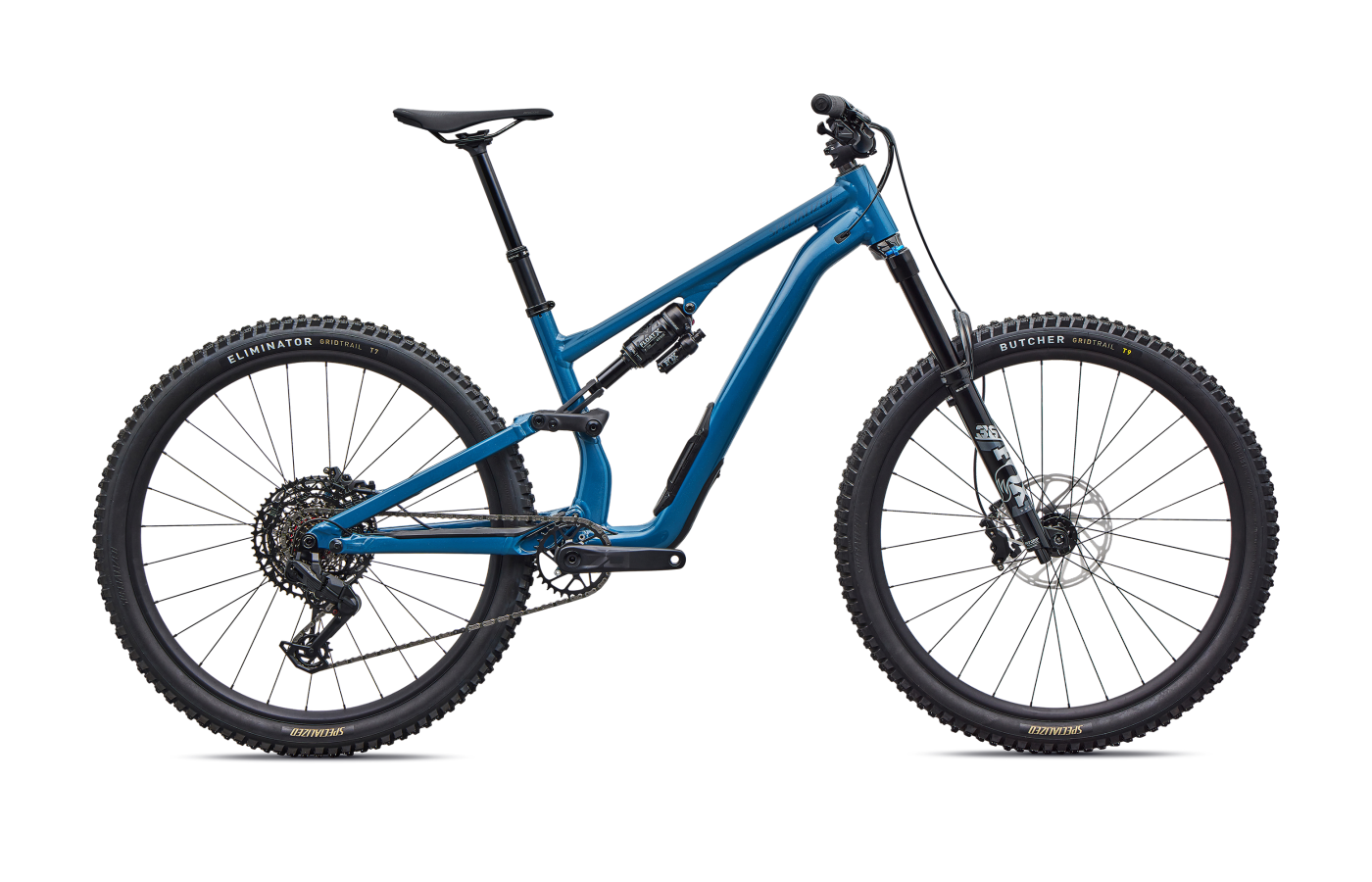
Stumpjumper Evo
The benchmark for adjustable trail-bike geometry — a SWAT-storage carbon frame with flip chips at the headset and shock that swing across head angles, BB heights, and chainstay lengths. Same do-it-all brief as the Spectral, with more setup knobs to dial in.
Compare →Jeffsy
Another direct-to-consumer powerhouse that competes head-on with the Spectral on price and value. Slightly more traditional geometry and a more conventional rear-end feel — no K.I.S., no integrated chassis quirks.
Compare →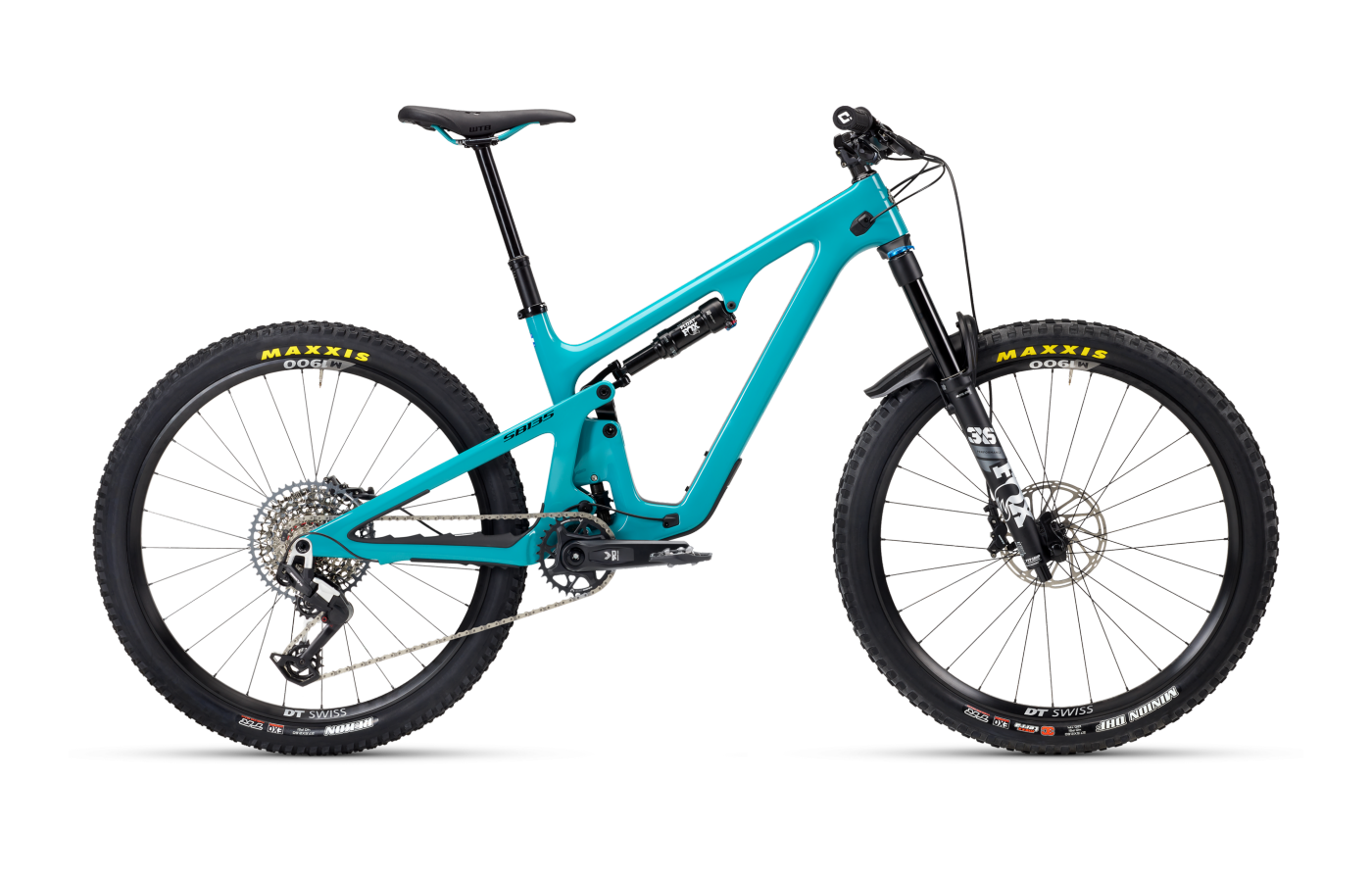
SB135
For the purist who isn't ready to give up matched 27.5-inch wheels, the SB135 is the premium short-travel alternative to the 5010 — Switch Infinity suspension, boutique build, lifetime warranty.
Compare →