Spectral
vsSpectral 125
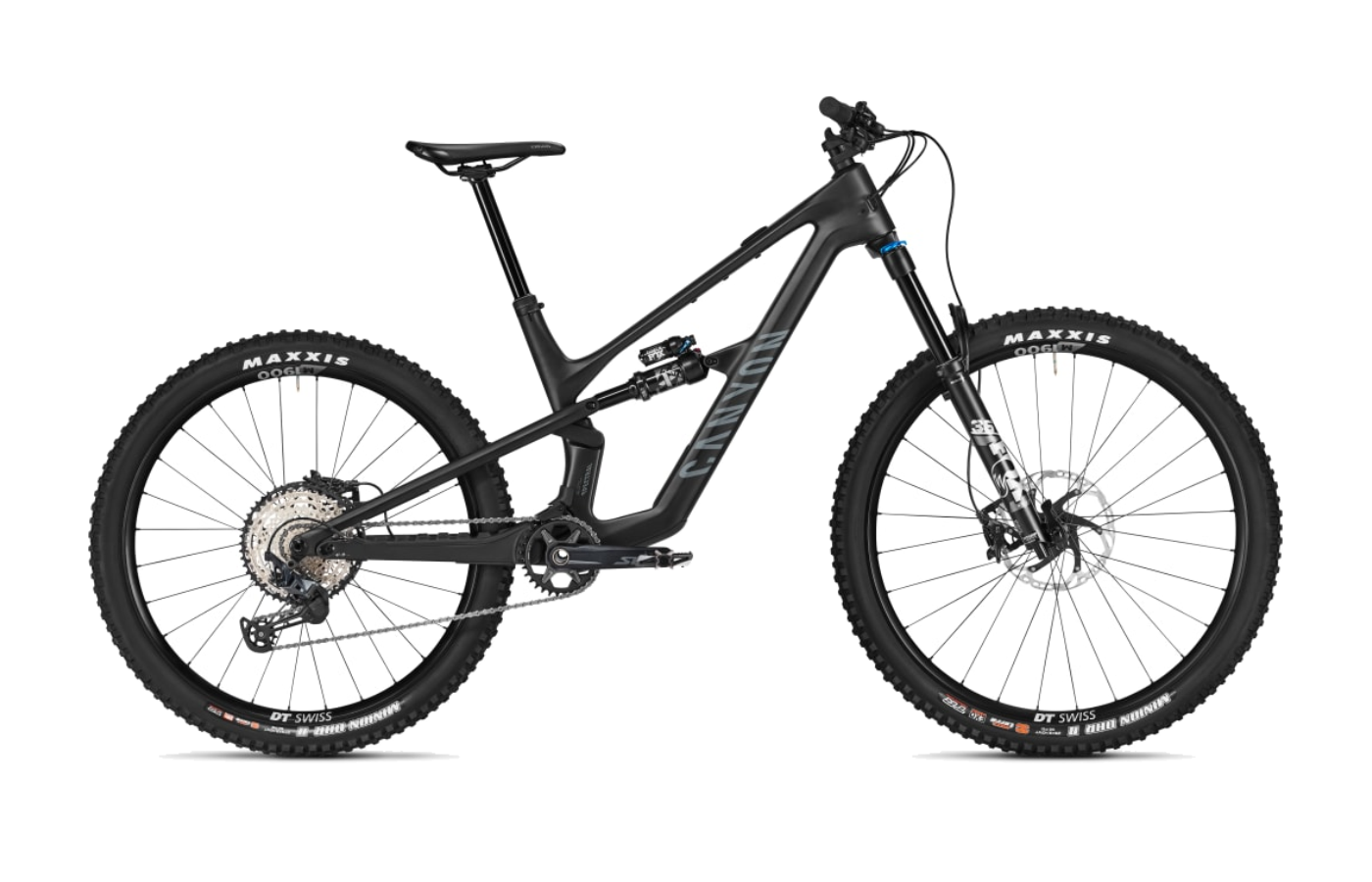
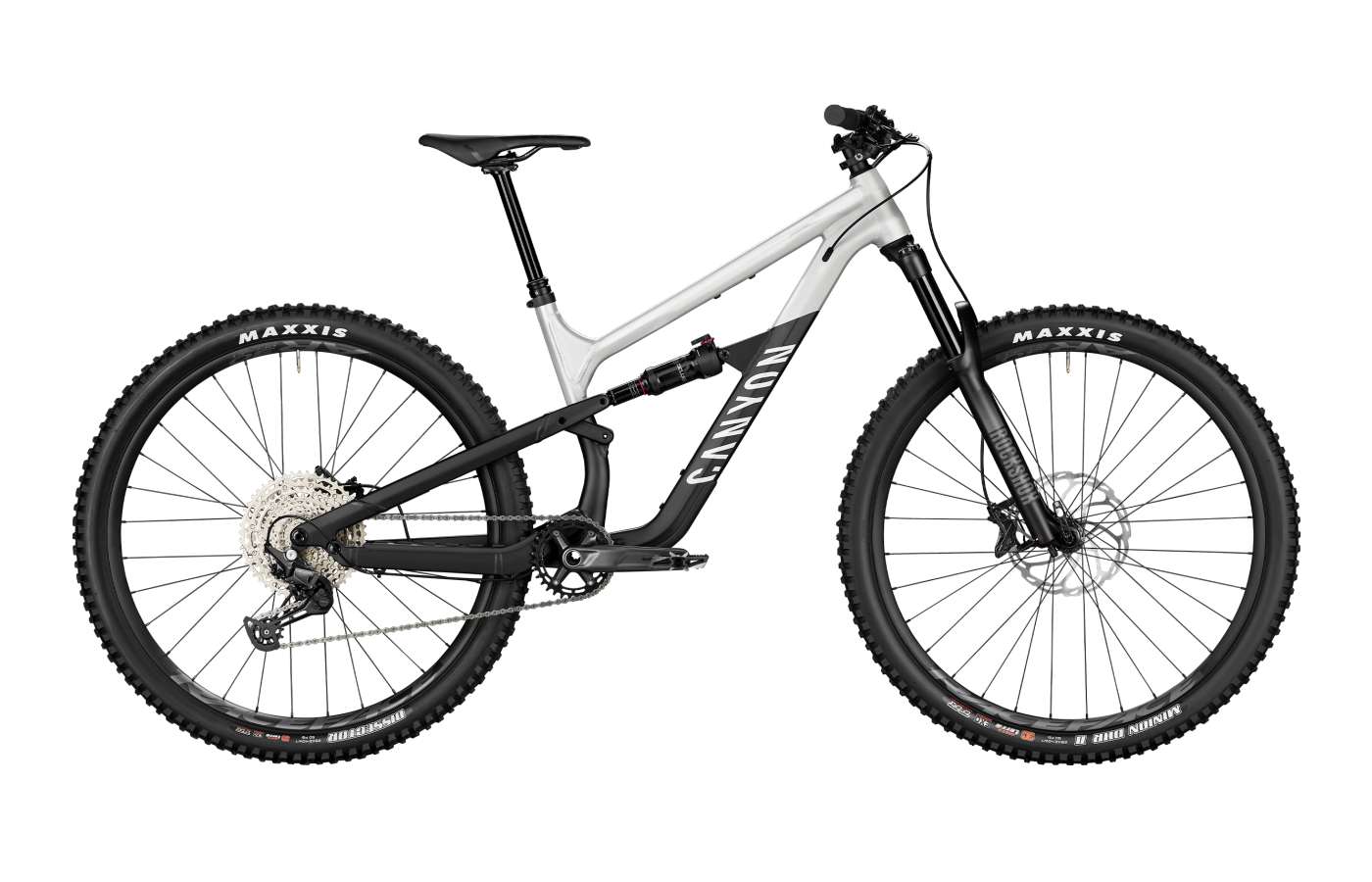
Same family name, two very different bikes.
The 2024 Spectral is the do-everything 140mm trail bike. The Spectral 125 is a stiff, slack short-travel hooligan that treats trails like a skatepark.
Spectral
- Composed, compliant rear end — slimmed chainstays and a more linear kinematic damp chatter that earlier carbon Spectrals broadcast.
- Genuine all-rounder — climbs efficiently, descends confidently, and runs 29er or mullet via flip-chip without geometry compromise.
- Full carbon across every US build — even the entry CF 7 at $3,199 is the same Category 4 carbon frame as the flagship.
- K.I.S. steering stabilizer divides reviewers — many remove it for tight, flowy trails.
- Stock G5 grips are near-universally panned as too hard and slippery; budget a swap.
Spectral 125
- Aggressive, poppy character — enduro geometry on 125 mm of rear travel makes flat trails feel fast and features feel huge.
- Firm, efficient pedaling platform — high anti-squat means most riders never reach for the climb switch.
- Built to Category 4 strength — same enduro-grade rating as the longer-travel Spectral, despite the short-travel label.
- Stiff, unforgiving ride — reviewers describe it as 'wrist-unfriendly' and fatiguing on long days.
- Only sold in the US as a single $2,099 alloy Deore build — no carbon option, no spec upgrades.
Editor’s analysis
This isn't a head-to-head — it's a question of what kind of fun you want from 64 degrees of head angle.
Canyon sells both bikes under the Spectral name, but the design briefs barely overlap. The 2024 Spectral is a ground-up redesign — 140 mm rear, 150 mm fork, full-carbon frame across every US build, slimmed chainstays for compliance, and a kinematic Canyon explicitly tuned to be more linear and lower-anti-squat than its predecessor. The Spectral 125, unchanged since 2022, runs 125 mm rear and a 140 mm fork on enduro-grade geometry, with a tune that's deliberately firm and high-anti-squat.
On the trail, the difference reads exactly like the spec sheet predicts. Reviewers describe the Spectral 2024 as 'melting into the trail like butter on hot toast' — a rear end that tracks the ground and quiets chatter. The Spectral 125 does the opposite: it broadcasts the trail. Multiple reviewers called it 'wrist-unfriendly,' 'unrelenting,' and explicitly 'not a bike I'd want to ride all the time.' That's not a bug — that's the brief. The 125 is sold to riders who think 140 mm rear is too dead.
Both bikes share a 64-degree head angle and 437 mm chainstays, which is part of why the comparison gets confusing. But the Spectral's wheelbase is longer (1251 mm at M vs. 1230 mm), the reach numbers are pushed out (475 mm at M vs. 460 mm), and the frame's compliance is tuned in. The 125's geometry is stable on paper but the firm chassis demands an active rider — line choice and body English do the work that suspension would normally do. On long, fast, chunky descents, the 125's travel runs out and the rider gets bucked; the Spectral keeps tracking.
Climbing is where the 125 actually wins back ground. Higher anti-squat means it pedals firm enough to ignore the climb switch, while the 2024 Spectral's lower anti-squat trades a bit of pedal-bob for traction-monster grip on technical climbs. The catch: the 125 isn't significantly lighter than its bigger sibling — both land in the 14–15 kg range depending on build — so it's not the climbing shortcut the travel number suggests.
Where the builds differ.
Comparing our editor's-pick builds side-by-side. Winners highlighted row-by-row — lower price and weight, and the better-spec component, each mark a point.
Build variants & pricing
The Spectral runs four full-carbon builds from $3,099 to $5,799. The Spectral 125 is sold in the US as a single $2,099 alloy Deore build.
Editor's picks here aren't tier-matched — Canyon doesn't offer a carbon Spectral 125 in the US, so we're comparing the cheapest carbon Spectral (CF 7, Deore SLX, FOX 36 Rhythm) against the only Spectral 125 build sold stateside (AL 5, Deore, RockShox 35 Gold). Read the spec table as a portrait of where each platform's accessible entry point lands, not a like-for-like component duel.
How they fit, how they steer.
Sizing conventions differ — a 173 cm rider fit-picks an S on the Spectral and an M on the Spectral 125, both putting reach in the 450–460 mm range. Same 64-degree head angle, same 437 mm chainstays; the Spectral runs ~9 mm taller stack and a marginally longer wheelbase.
Which size should I buy?
Recommendations based on stack, reach, and effective top tube. The Spectral 125's L (486 mm reach) lines up roughly with the Spectral's M (475 mm) — the 125 sizes long for its labels.
→These are starting points. Flexibility, riding style, and preferred position all shift the answer — if you’re between sizes, a professional fit beats a chart.
What the magazines said.
Published reviews from trusted cycling outlets. Click through for the full write-up.
Which one should you buy?
If you want one trail bike for everything, get the Spectral. If you want a niche second bike that makes mellow trails feel rowdy, get the Spectral 125.
Spectral
If you want a single bike for technical climbs, fast descents, and the occasional bike-park lap — this is the obvious pick. The compliance update and 140 mm of well-tuned travel make it forgiving without going soft, and the entry CF 7 at $3,199 is one of the best carbon trail-bike deals on the market.
Spectral 125
If you already own a longer-travel rig and want something that turns mellow local trails into a playground, the 125 is exactly that tool. It rewards an aggressive, active rider — and at $2,099 for a Category 4 alloy frame, it's an unusually cheap way into a well-built short-travel hooligan.
Questions buyers actually ask.
Short answers to the things we get emailed about most often.
01Why does Canyon sell two trail bikes with the same head angle?
Both run a 64-degree head tube angle, which is unusually slack for a 125 mm bike and standard-aggressive for a 140 mm bike. The geometry is matched on paper; the suspension philosophies are not.
The Spectral 2024 uses a more linear kinematic with reduced anti-squat — the rear tracks the ground and the bike feels calm. The Spectral 125 uses a high-anti-squat, highly progressive tune that's firm under pedaling and pops off features. Same head angle, opposite ride feel.
02Is the Spectral 125 actually lighter than the Spectral?
Not meaningfully. The carbon Spectral 125 reviewed at 13.7 kg; the alloy AL 5 sold in the US is closer to 15.8 kg. The 2024 Spectral CF 9 lands around 14.8 kg.
For American buyers, the only Spectral 125 build (AL 5) is actually heavier than every carbon Spectral. Don't buy the 125 thinking you're getting a climbing bike — that's not what it's for.
03How does the K.I.S. steering stabilizer affect ride feel?
K.I.S. (Keep It Stable) is standard on every 2024 Spectral CF model. It uses springs in the top tube to self-center the steering, with the goal of calming the front end on rough or loose terrain.
Reviews are split. Several testers — Off.road.cc, Bike Perfect — found it useful in steep, chunky conditions and on climbs. Others, including Pinkbike and BikeRadar, found it lethargic in tight, flowy turns and removed it. Canyon ships a blanking plate for exactly this reason; if you don't like it, take it out in 10–20 minutes.
The Spectral 125 has no K.I.S. system.
04What's the rear travel difference actually like on the trail?
Spectral 2024: 140 mm rear, 150 mm fork. Reviewers describe a 'magic carpet' rear end that tracks the ground and provides 'serious grip.'
Spectral 125: 125 mm rear, 140 mm fork. Reviewers describe it as 'wrist/ankle unfriendly,' 'unrelenting' on rough trails, and prone to packing up under successive impacts.
The 15 mm of travel matters less than the kinematic difference: the 2024 frame is tuned for compliance, the 125 is tuned for pop and feedback.
05Can I run a mullet (mixed-wheel) setup on either?
Yes on the Spectral — the carbon frame includes a flip-chip that swaps between full 29er and mixed-wheel setups while preserving the core geometry. Chainstays drop from 437 mm in 29er mode to 429 mm in mullet, which several reviewers preferred for tight cornering.
The Spectral 125 is built around full 29-inch wheels only. No mullet option.
06Which one should a beginner buy?
Almost certainly the Spectral 2024. Reviewers repeatedly note that the 125 is a 'demanding machine' that 'rewards high skill levels' and an aggressive style — its suspension doesn't bail you out of bad line choices the way a longer-travel bike does.
The Spectral, by contrast, has a 'large margin for error' and is described as confidence-inspiring 'for both beginners and advanced riders.' If you're new to aggressive trail riding, the 140 mm rear travel buys you forgiveness the 125 won't.
07Are the stock tires good enough?
Both ship with Maxxis Minion DHR II 2.4 (the AL 5 runs a Maxxis Dissector up front). Reviewers across both platforms repeatedly flagged the lighter EXO casings as 'under-gunned' for aggressive riding.
For either bike, plan to budget for EXO+ or DoubleDown casings if you ride chunky terrain — especially on the Spectral 125, where the firmer suspension puts more impact load through the rim and tire.
08Is the proprietary water bottle situation as annoying as reviews say?
On the Spectral 125, yes — clearance is tight enough that Canyon's 600 ml side-loading bottle is effectively required, and standard cages don't fit cleanly.
The 2024 Spectral is more accommodating but still not generous; some reviewers noted tight clearance there too. Both bikes do offer the upside of internal frame storage in the downtube — Canyon's 'LOAD System' — which carries a tube, tools, and even a packable jacket on the 2024 bike.
Similar bikes
If your priorities don’t map cleanly onto either of these, one of these adjacent bikes probably fits better.
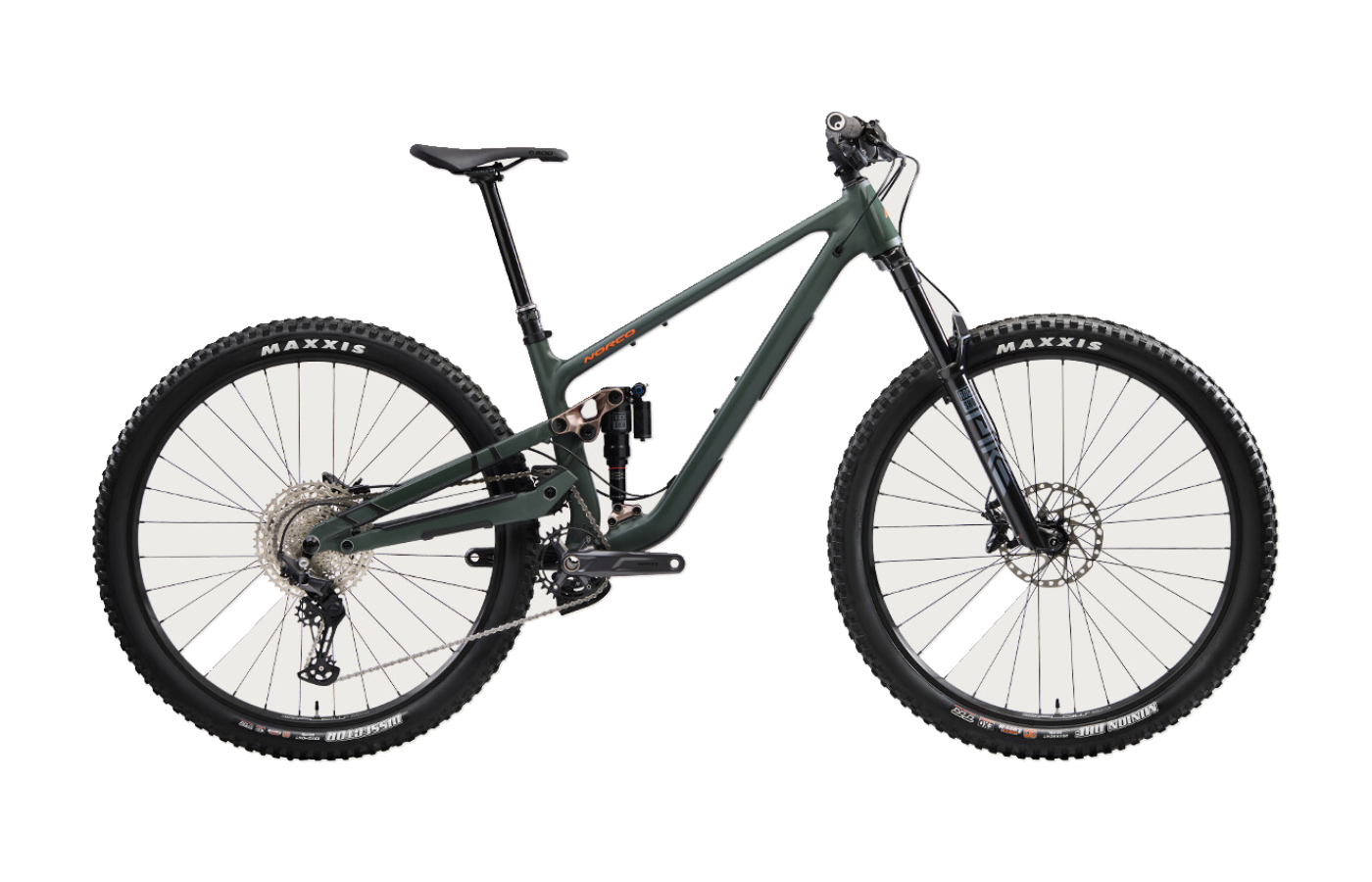
Optic
The closest direct rival to the Spectral 125 — another aggressive short-travel 29er that prizes trail feedback and corner agility over plushness. Pick this if the 125's character appeals but you'd rather buy through a dealer.
Compare →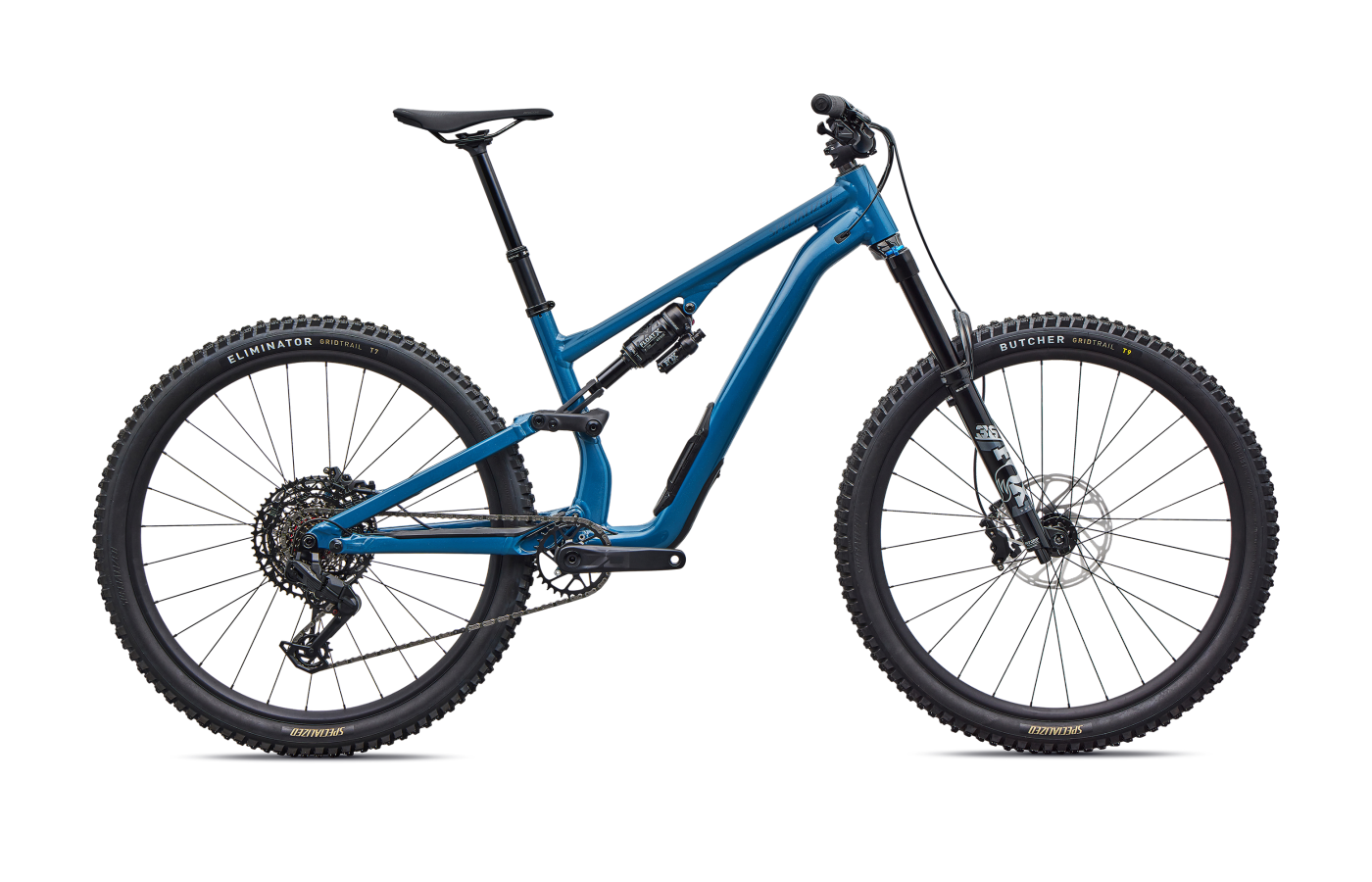
Stumpjumper Evo
Specialized's Stumpjumper Evo plays in the same do-everything trail bracket as the 2024 Spectral — adjustable geometry, 150 mm rear travel, and a more refined dealer-network ownership experience.
Compare →Jeffsy
Canyon's other German direct-to-consumer rival — same value-to-spec ratio as the Spectral, similar aggressive trail manners, slightly different suspension feel and component spec at each price tier.
Compare →