Spectral
vsScout
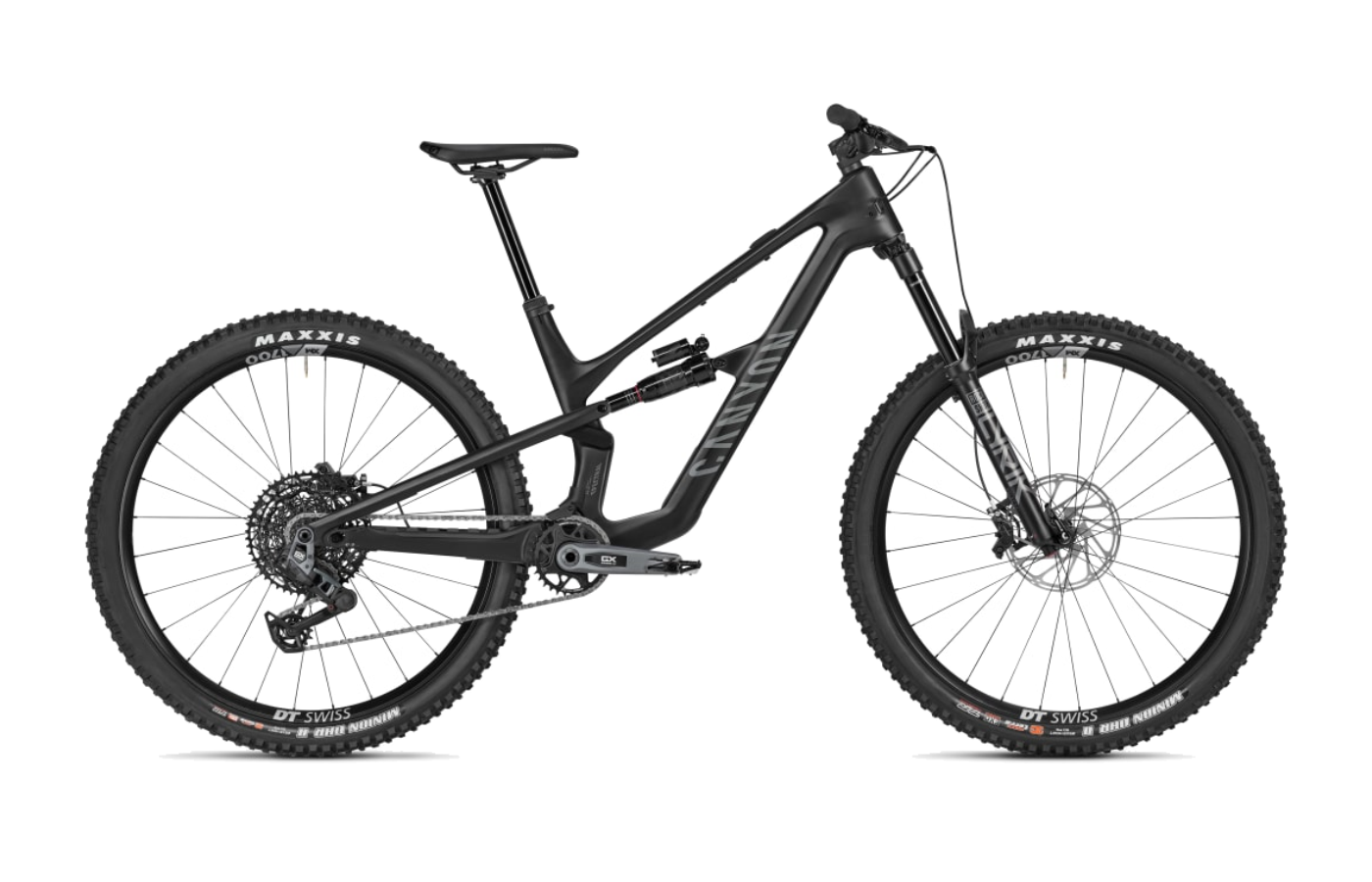
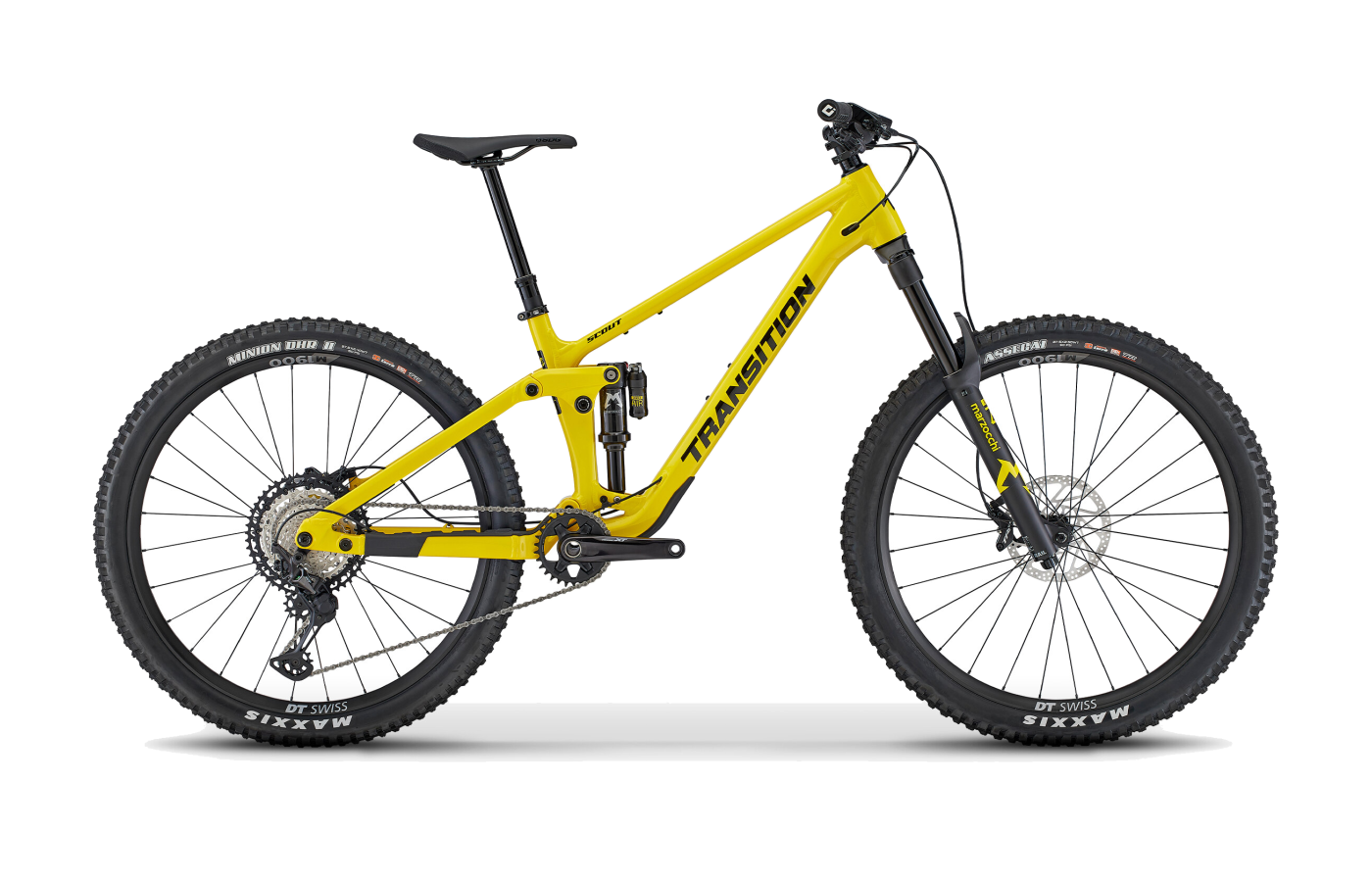
Two trail bikes, two materials, two missions.
The Canyon Spectral is a carbon-framed all-rounder built around 29" wheels and tech you tinker with. The Transition Scout is an alloy 27.5" workhorse tuned for lighter riders to plunge into bike park lines.
Spectral
- Carbon frame from $3,099 — Canyon's direct-to-consumer pricing puts a CF Spectral within reach where rivals still ship alloy.
- Genuine all-rounder geometry — 64° HTA, 76.5° STA, and short 437 mm chainstays make it climb like a trail bike and descend like a longer-travel one.
- Frame features rivals charge extra for — internal downtube storage, mullet flip-chip, removable K.I.S. stabilizer, replaceable pivot inserts.
- G5 grips are near-universally hated by reviewers and the first thing most riders swap.
- K.I.S. stabilizer rattles for some riders and adds steering lethargy on tight, flowy trails — though it's removable.
Scout
- Suspension actually works for light riders — revised rocker links keep the 150 mm Giddy Up platform active under 70–110 lb pilots instead of feeling oversprung.
- Adult-grade components on a small frame — Shimano XT 12-speed, TRP DH-R EVO brakes with adjustable reach, DT Swiss wheels, Maxxis EXO+ tires.
- Alloy frame built for abuse — UDH, Boost, Fidlock mounts, and a robust front triangle designed to survive bike-park learning curves.
- 27.5" wheels and a top size of MD shut out anyone above ~5'8" or anyone wanting a 29er.
- 34 lb on the XS means it's not a climbing tool — it's a gravity-leaning trail bike that needs to be muscled uphill.
Editor’s analysis
On paper they're both 150 mm trail bikes — but pick one up, swing a leg over, and the plot of the bike couldn't be more different.
The Canyon Spectral runs full carbon in every model, 29" wheels stock (with a flip-chip to swap the rear to 27.5" mullet), 150 mm front / 140 mm rear travel, internal downtube storage, and the polarizing K.I.S. steering stabilizer baked into every frame. The Transition Scout is alloy only, dedicated 27.5" front and rear, 150 mm at both ends, no integrated tech, and only sold in sizes XS / SM / MD. They share a head angle (64°) and not much else.
The Spectral is the value play — a carbon CF frame at $3,099 for the alloy entry to $5,799 for the X0 AXS Transmission flagship, with internal storage, replaceable threaded pivot inserts, and double-sealed bearings. Reviewers consistently call it a "rocket ship both up and down" and a "traction monster," lauding the new linear-progressive kinematic and 76.5° seat angle for a comfortable, supple climb. Spec-for-spec, Canyon undercuts most carbon competition by $1,000+, with the catch being the proprietary G5 grips that nearly every review begs you to swap, and the absence of a local shop.
The Transition Scout is doing something else entirely. It's marketed as a "big bike for pint-sized pinners" — Transition tuned the rocker links specifically for lighter rider weights so the Giddy Up suspension actually moves under 70–110 lb pilots, then specced TRP DH-R EVO brakes with adjustable lever reach, sub-565 mm seat tubes, and a top size that tops out at MD (460 mm reach). The XS weighs 34 lb. It's heavy because it's overbuilt — a stout alloy frame designed to survive bike-park sessions without snapping under a teenager learning to case 20-foot gaps.
Put another way: the Spectral is the bike you buy when you want one carbon trail bike to do everything, you're average-to-tall, and you don't mind tinkering with a flip chip and a steering stabilizer to dial it in. The Scout is the bike you buy when you (or your kid) are short, ride parks aggressively, and care more about a frame that won't fold than the gram count on the spec sheet.
Where the builds differ.
Comparing our editor's-pick builds side-by-side. Winners highlighted row-by-row — lower price and weight, and the better-spec component, each mark a point.
Build variants & pricing
Canyon's range spans $3,099 alloy to $5,799 carbon flagship; the Scout is alloy-only and tops out at $4,299.
Prices are current US MSRP. The Scout is only sold in XS / SM / MD — Transition explicitly built it for smaller and lighter riders, so taller adults should look at the Smuggler or another Transition platform. Canyon, conversely, doesn't offer the Spectral in an XS in the US (only CF 7 and CF 8 are stocked stateside).
How they fit, how they steer.
Spectral S vs Scout MD — these are the fit-picked sizes for the same default rider on each platform. The Spectral sits 17 mm taller (621 vs 604 stack) with a 10 mm shorter reach (450 vs 460); the Scout's chainstays are 7 mm shorter and its seat angle is 0.7° steeper, giving it a more centered, snappier feel.
Which size should I buy?
Pick a size based on stack, reach, and effective top tube. The Spectral runs from XS to XL; the Scout caps at MD.
→These are starting points. Flexibility, riding style, and preferred position all shift the answer — if you’re between sizes, a professional fit beats a chart.
What the magazines said.
Published reviews from trusted cycling outlets. Click through for the full write-up.
Which one should you buy?
If you want one carbon trail bike for everything from technical climbs to bike-park laps, get the Spectral. If you're a smaller / lighter rider who lives for park days and progression, get the Scout.
Spectral
If you want a modern carbon trail bike that climbs comfortably, descends well above its travel rating, and gives you geometry knobs (mullet flip, K.I.S. tension, volume spacers) to dial in over time — and you're fine without a local shop — the Spectral is the value benchmark.
Scout
If you (or a fast-progressing teen) are under ~5'8", ride parks and jump lines aggressively, and want a bike with adult-grade brakes and drivetrain on a frame tuned for lighter weights — the Scout is the only mainstream bike doing exactly this.
Questions buyers actually ask.
Short answers to the things we get emailed about most often.
01Which one climbs better?
The Canyon Spectral, comfortably. Its 76.5° effective seat tube angle puts the rider over the pedals, the new linear-progressive kinematic stays active on technical climbs (reviewers call it a "traction monster"), and the carbon frame on the CF builds is meaningfully lighter than the Scout's overbuilt alloy chassis (the Scout XS weighs 34 lb / 15.4 kg; the Scout MD heavier still).
The Scout was tuned for park progression, not Strava KOMs — its weight and slower-rolling Maxxis Assegai/DHR II combo make sustained climbs noticeably more taxing.
02Which is better in the bike park?
The Transition Scout, on balance. It's got 150 mm at both ends (vs. the Spectral's 150/140), a stout alloy frame engineered to survive cased landings, TRP DH-R EVO brakes (DH-derived stoppers, with adjustable lever reach for smaller hands), and 27.5" wheels that are easier to flick through tight berms and over jump faces.
The Spectral is no slouch on park days — reviewers happily sent jumps and drops — but it's playing a more all-around game. If 80% of your riding is lift-served, the Scout is the more honest tool.
03Why does the Scout only come in XS, SM, and MD?
Transition explicitly redesigned the 2025 Scout as a high-performance bike for smaller and lighter riders — younger pinners who've outgrown the Ripcord, plus shorter adults who want a playful 27.5" rig. The frame has updated rocker links specifically tuned so the suspension stays active under 70–110 lb riders, and the seat tubes are short enough to fit modern long-stroke droppers on small frames.
If you're taller than ~5'8", look at the Transition Smuggler or Patrol instead — the Scout's MD tops out at a 460 mm reach and 593 mm effective top tube.
04Can the Spectral run a 27.5" rear wheel?
Yes. The Spectral's chainstay flip-chip lets you swap to a mullet (29" front, 27.5" rear) setup, which shortens the rear center from 437 mm to 429 mm and gives the bike a more "exuberant" feel through tight turns — multiple reviewers preferred it that way. The geometry chip also lets you raise the bottom bracket by 8 mm to reduce pedal strikes in rocky terrain.
The Scout, by contrast, is dedicated 27.5" front and rear — no mullet option, no 29" mode.
05What's the K.I.S. system on the Spectral, and is it worth it?
K.I.S. (Keep It Stable) is a spring-loaded steering stabilizer that lives in the Spectral's top tube and self-centers the front wheel. It's standard on every Spectral CF model. The pitch: more confidence in chunky, off-camber, or low-traction terrain.
Reviewers split. Some (Off.road.cc, Bike Perfect) credit it with saving them from front-wheel washouts on steep, loose lines. Others (Pinkbike, Singletrackworld, Jeff Kendall-Weed) found it adds steering lethargy on tight or flowy trails, and a few reported rattling. Canyon ships the bike with a blanking plate so you can remove the system entirely. As one reviewer put it: "Won't hurt, might help."
06How do the suspension platforms compare?
The Spectral uses Canyon's updated four-bar with a more linear-progressive leverage curve and reduced anti-squat. Reviewers describe it as a "memory foam mattress" — supple off the top, supportive in the mid-stroke, with strong traction on technical climbs and descents. Aggressive riders may need to add volume spacers to firm up bottom-out resistance.
The Scout uses Transition's Giddy Up linkage with revised rocker links for lighter pilots. Reviewers found it works best set up slightly firmer to maximize "pop" in flow trails and parks. The Marzocchi Z1 fork and Bomber Air shock are praised as no-frills, easy to set up, and stout — more workhorse than performance-tunable.
07Carbon vs. alloy — does it matter here?
It changes the bike's character more than its capability. The Spectral CF is a Category-4-rated full-carbon frame with internal storage, integrated armor, and the option to scale into top-end builds. Canyon claims the new frame is stiffer up front and more compliant at the rear than its predecessor.
The Scout is alloy by design — Transition wanted a frame that could survive case-after-case at lift-served parks under aggressive young riders. It's heavier but cheaper to repair and harder to terminally damage. For the Scout's intended buyer, alloy isn't a compromise — it's the point.
08What about service and warranty?
Canyon is direct-to-consumer — no local shop relationship by default, but the Spectral CF carries a 6-year frame warranty to the original owner with regional service centers and a crash-replacement program. Components carry their respective manufacturer warranties.
Transition sells through traditional bike shops, so warranty claims and tune-ups go through your local dealer. The alloy Scout frame carries a lifetime warranty against manufacturing defects to the original owner. Both brands are well-regarded for service responsiveness.
Similar bikes
If your priorities don’t map cleanly onto either of these, one of these adjacent bikes probably fits better.
Stumpjumper
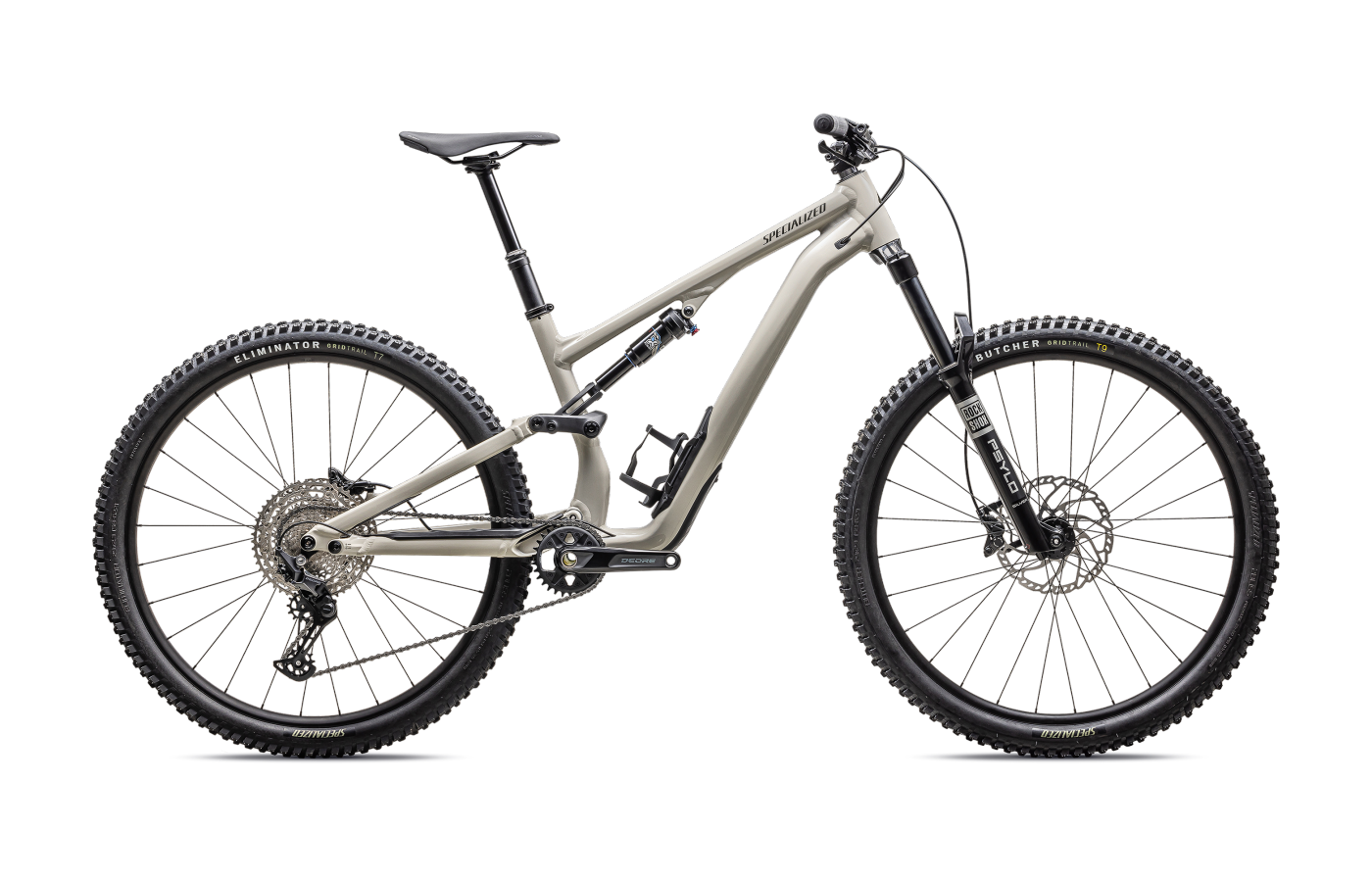
The Specialized Stumpjumper covers similar all-rounder ground to the Spectral but with the full backing of a global dealer network — in-frame storage, refined geometry, and somebody local to call when the shock needs service.
Compare →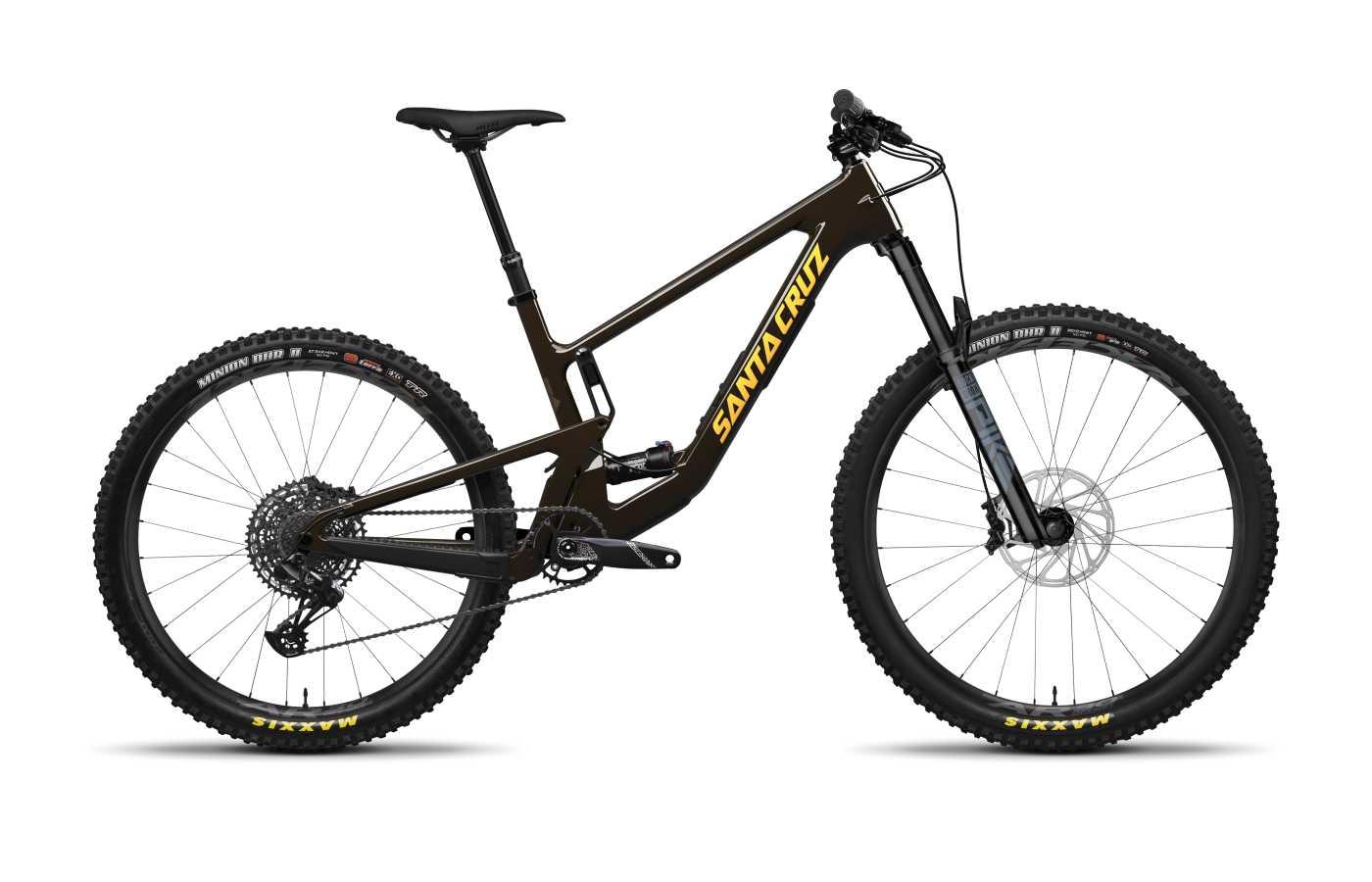
5010
The Santa Cruz 5010 is the carbon, dual-link answer to the Scout's 27.5" mission — same playful wheel size and short rear end, but with VPP suspension and a high-end frame at a much higher price.
Compare →Jeffsy
The YT Jeffsy is the Spectral's most direct value rival — also direct-to-consumer, also carbon, also a 29er trail bike at a similar price, with slightly more conventional geometry that's easier to size.
Compare →