Aspero-5
vsSoloist
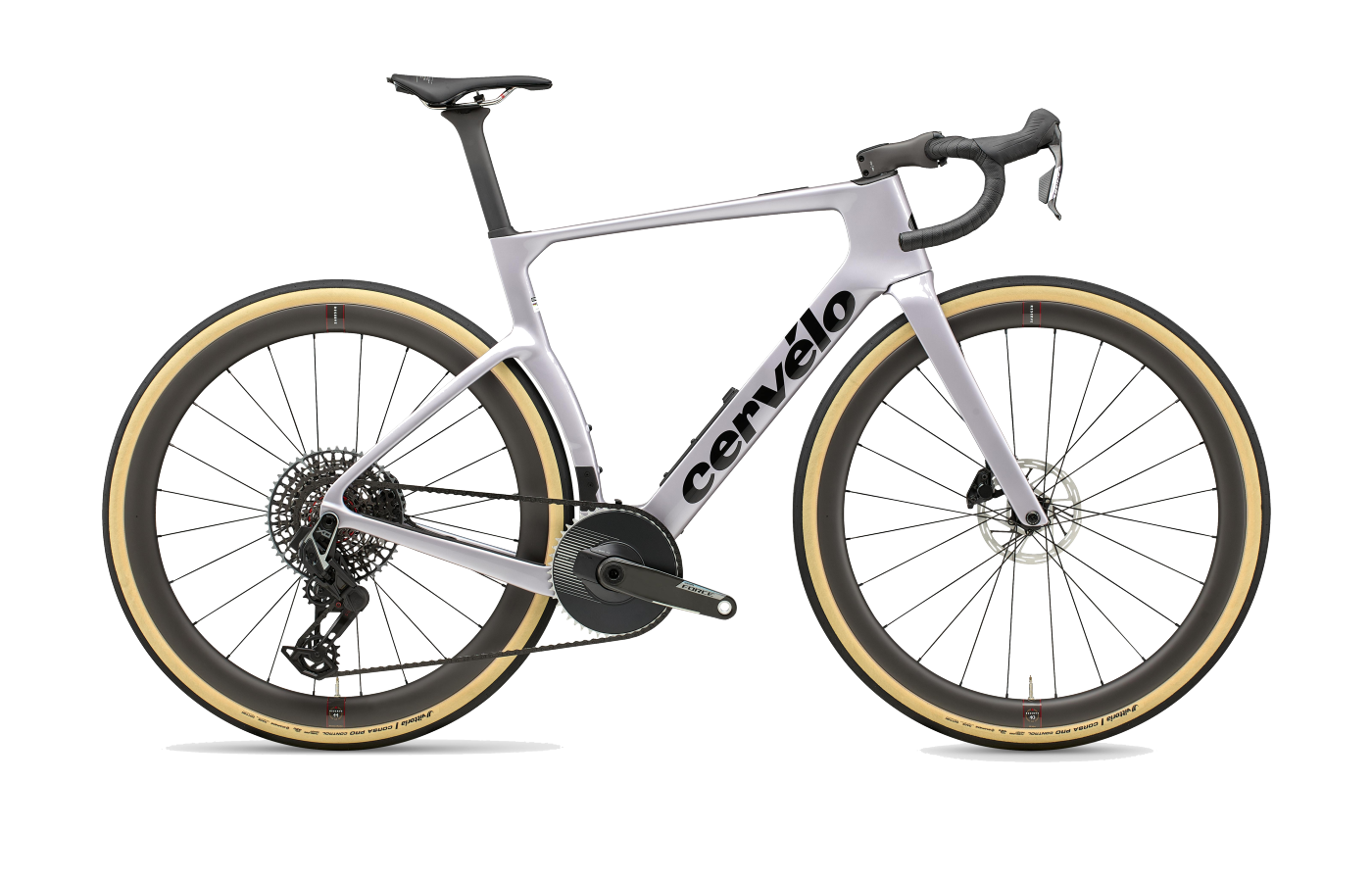
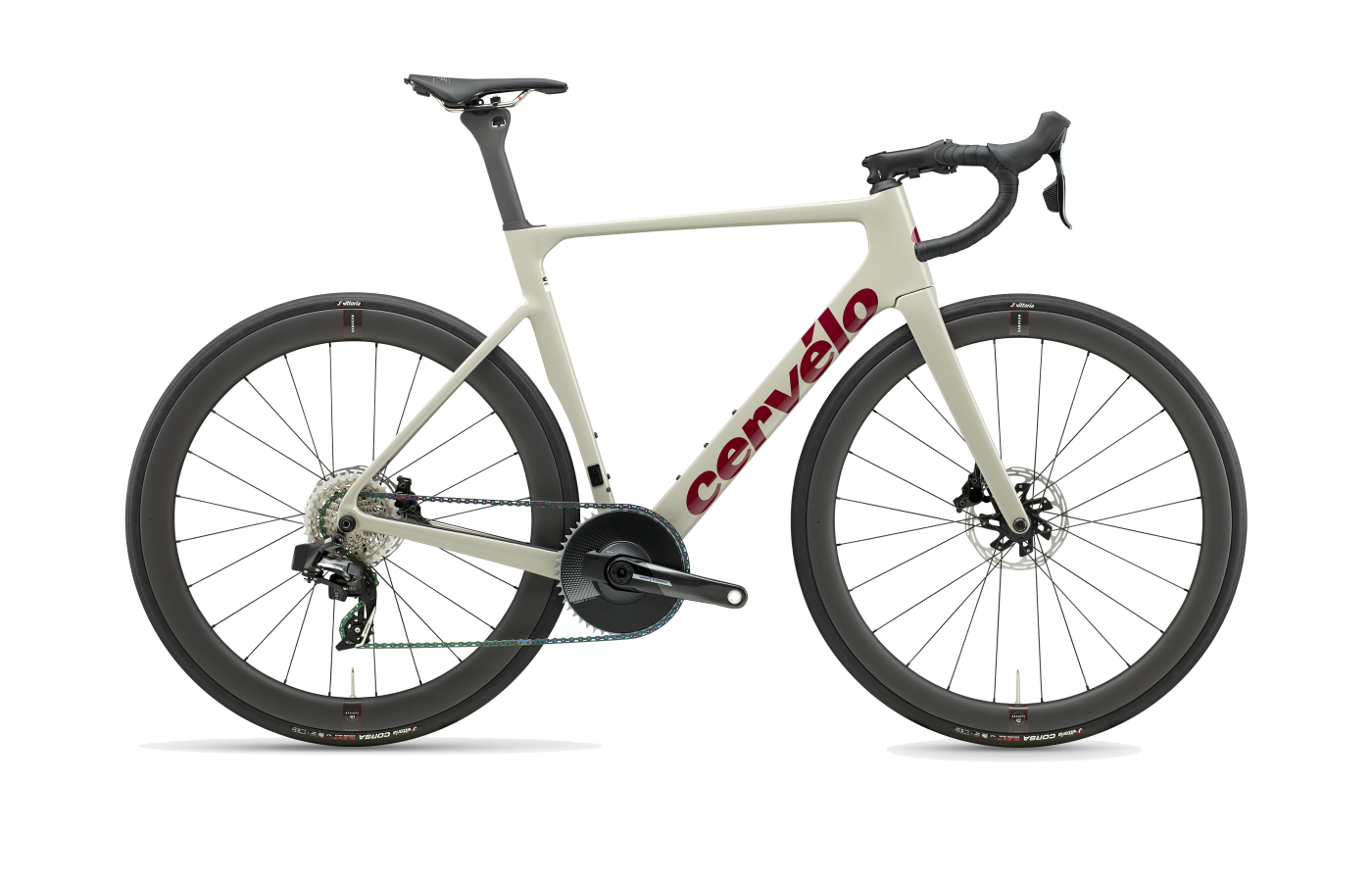
One badge, two aero philosophies.
The Aspero-5 is a road-fast gravel racer with 45 mm clearance. The Soloist is an everyman aero road bike with 34 mm clearance. Same Cervelo DNA, different jobs.
Aspero-5
- Genuinely road-fast on gravel — Cervelo claims 34 W faster than the next-fastest gravel bike, and reviewers confirm it holds 30–40 km/h on hardpack with ease.
- Sharp, road-like handling — 422.5 mm chainstays and S5-derived trail figures give it the quickness of a race road bike on mixed surfaces.
- Race-ready out of the box — downtube storage, Wahoo/Garmin mounts, aero top-tube bag, and a T47 bottom bracket all included.
- 45 mm max tire clearance is tight for muddy or rocky gravel — reviewers warn about frame abrasion and lost traction.
- Stiff, reactive ride jolts on rooty or chunky singletrack; this is not an adventure gravel bike.
Soloist
- Accessible aero at $3,900 — the entry 105 build gets the same WorldTour frameset with a lifetime warranty.
- Mechanic-friendly design — semi-integrated cable routing runs under the stem, so bar swaps don't require a brake bleed.
- Sits between S5 and R5 — roughly 250 g lighter than the S5 and only a bit slower aerodynamically, for thousands less.
- Alloy bar and stem on mid-tier builds is a clear cost-cut versus higher-tier Cervelos.
- Some reviewers report creaks from the T47 BBRight bottom bracket — assembly-dependent, but documented.
Editor’s analysis
Both bikes chase speed with Cervelo's aero playbook — but one points at dirt, the other at tarmac.
Cervelo built the Aspero-5 and Soloist from overlapping design language — deep head tubes, wheel-hugging seat tubes, the same T47 bottom bracket — but the geometry tables diverge exactly where it matters. The Aspero-5 runs a 71.6-degree head angle and 422.5 mm chainstays on the 54 for a planted, long-wheelbase gravel ride (1012 mm). The Soloist tightens the 54 to a 73-degree head angle, 410 mm chainstays, and a 977 mm wheelbase. That's 35 mm of wheelbase difference at the same nominal size — textbook gravel-stability versus road-race snappiness.
The Aspero-5 is the more extreme bike of the two. Cervelo claims 37 watts faster than the previous Aspero and 34 watts faster than the next most aerodynamic gravel bike; it ships with 42 mm Vittoria Corsa Pro Control slicks, tops out at 45 mm tire clearance, and carries the 8.75 kg weight Flow Mountain Bike measured on their tester. Reviewers call it a "quiver killer" for drop-bar bikes when your gravel is hard-packed. When it isn't — roots, rocks, mud — the same reviewers (BikeRadar, Velo) describe it as jarring and unsettled. This is a race bike for Unbound, SBT GRVL, and road days, not for anyone's singletrack.
The Soloist is the more forgiving bike. Reviewers consistently describe it as the middle child between the R5 climber and S5 aero bike — about 250 g heavier than the R5, about 250 g lighter than the S5, and roughly 190 g slower than the S5 aerodynamically. 34 mm clearance means you can run 30 mm tires on the stock Reserve 42TA wheels (which plump up close to 31.5 mm) and get real compliance without upgrading anything. The tradeoff is that reviewers call it "a step below WorldTour-level spec" — the alloy bar/stem on mid-tier builds is the usual complaint.
So: the Aspero-5 is what you buy when gravel racing is the point and the road rides are a bonus. The Soloist is what you buy when road is the point and you're happy to run 32 mm tires for a cafe ride on a fire road. Different bikes, not different flavors of the same bike.
Where the builds differ.
Comparing our editor's-pick builds side-by-side. Winners highlighted row-by-row — lower price and weight, and the better-spec component, each mark a point.
Build variants & pricing
The Aspero-5 starts where the Soloist ends — there's no entry build on the gravel side.
Prices are current US MSRP. The Aspero-5 range is $8,850–$12,650 (three builds, all electronic). The Soloist range is $3,900–$7,600 (six builds, down to mechanical 105). If budget is the constraint, the Soloist is the only choice in this comparison.
How they fit, how they steer.
Both at size 54 — the fit-picked size for a 5'8" rider on each bike. The Aspero-5 sits 10 mm taller in stack (550 vs 540), a degree slacker at the head tube (71.6 vs 73), and 12.5 mm longer at the chainstays (422.5 vs 410). Net result: 35 mm more wheelbase on the gravel bike.
Which size should I buy?
Size recommendations are based on stack, reach, and effective top tube. Both bikes share the same 48/51/54/56/58/61 size labels, but geometry per size differs meaningfully.
→These are starting points. Flexibility, riding style, and preferred position all shift the answer — if you’re between sizes, a professional fit beats a chart.
What the magazines said.
Published reviews from trusted cycling outlets. Click through for the full write-up.
Which one should you buy?
If your weekends are gravel races with road transitions, get the Aspero-5. If they're group rides, crits, and occasional light gravel, get the Soloist.
Aspero-5
For the rider who treats events like SBT GRVL or Unbound as the main course. You want a gravel bike that handles like a road bike, you run slick or fast tread, and you don't need 50 mm clearance or bikepacking mounts. This is a specialized tool, and on its intended terrain it's the fastest there is.
Soloist
For the rider who wants one drop-bar bike for crits, gran fondos, group rides, and the occasional light-gravel sneak. Mechanic-friendly routing, a T47 threaded bottom bracket, and 34 mm clearance mean you can live with it for years without proprietary headaches — and the $3,900 entry point gets you the same frame as the flagship.
Questions buyers actually ask.
Short answers to the things we get emailed about most often.
01These are both Cervelos — why compare them at all?
Because buyers genuinely cross-shop them. The Aspero-5 geometry is explicitly based on the Soloist and S5 road platforms, and reviewers routinely describe it as "all the drop-bar bike you'll ever need" for riders who live on hardpack. If you only have room in the garage for one bike and your rides split between tarmac and dirt, the real question is whether a gravel-biased bike with road DNA (Aspero-5) or a road bike with 34 mm clearance (Soloist) gets you more days of good riding.
02Which is faster on pavement?
The Soloist, on 29 mm slicks, is still faster on pure tarmac — it's a dedicated aero road bike with proper road tires and road geometry. But the Aspero-5 is closer than you'd expect: reviewers from Velo and Cycling Weekly describe it as "one of the very best all-road bikes I've ever ridden" with a road tire swap, thanks to its S5-derived tube shapes.
On gravel, the Aspero-5 wins decisively — Cervelo claims a 34 W gap to the next-fastest gravel bike.
03What's the maximum tire clearance?
Aspero-5: 45 mm — tight for a modern gravel race bike, and reviewers (BikeRadar, Cycling Magazine) warn that the ~6 mm of space at the chainstays can become an abrasion risk in mud.
Soloist: 34 mm — wide for a dedicated aero road bike. Stock builds ship 29 mm Vittoria Corsa N.EXT tires, which plump up closer to 30 mm on the Reserve 42TA wheels.
04What drivetrains do they come with?
The Aspero-5 is electronic-only across its three builds — SRAM Red AXS 1x, SRAM Force AXS 1x (both mullet setups pairing a 48T aero chainring with a SRAM Eagle AXS 10-52T mountain cassette), and Shimano GRX Di2 1x with a Wolf Tooth 48T aero chainring.
The Soloist is more traditional — 2x road drivetrains across the board, running from Shimano 105 mechanical at $3,900 to SRAM Force AXS and Shimano Ultegra Di2 at the top.
05Is the Aspero-5 really a viable road bike?
With a wheel or tire swap, yes — and reviewers kept returning to that pitch. Velo called it "one of the very best all-road bikes I've ever ridden," and Cycling Weekly went so far as to question whether the all-road category still exists. The geometry is explicitly based on the Soloist and S5.
The caveats are weight (around 8.75 kg with stock parts vs. the Soloist's ~7.5 kg in equivalent trim) and 1x gearing, which gives bigger jumps between shifts than the Soloist's 2x setups.
06How do they handle maintenance?
The Soloist is the easier bike to live with. Its semi-integrated cable routing runs under the stem rather than through the headset, so you can swap bars or stems without a brake bleed — reviewers across Velo, Road.cc, and Cyclist flagged this as one of its best features. Threaded T47 bottom bracket.
The Aspero-5 has full internal routing through the headset (standard on modern aero gravel), but Cervelo's choice to keep a two-piece stem and bar (the ST31 + HB16) means hose runs are friendlier than most fully-integrated cockpits. Same T47 threaded BB.
07Why does the Aspero-5 cost so much more?
Two reasons. First, lineup positioning — the Aspero-5 is Cervelo's gravel flagship, aimed at WorldTour-level amateur racers, with no entry-level build planned. The range runs $8,850 to $12,650 across three electronic-only builds.
Second, spec. Every build ships with Reserve carbon wheels, deep aero hydration mounts, downtube storage, and (on the mullet builds) a SRAM XX SL Eagle MTB cassette plus a SRAM power meter. The Soloist keeps costs down with alloy cockpits on most builds and Reserve wheels only on the Rival AXS and above.
08Which has a better warranty?
Both come with a lifetime frame warranty to the original owner against manufacturing defects, and Cervelo offers crash-replacement pricing through authorized dealers. Same terms, same brand — warranty isn't a differentiator here.
Similar bikes
If your priorities don’t map cleanly onto either of these, one of these adjacent bikes probably fits better.
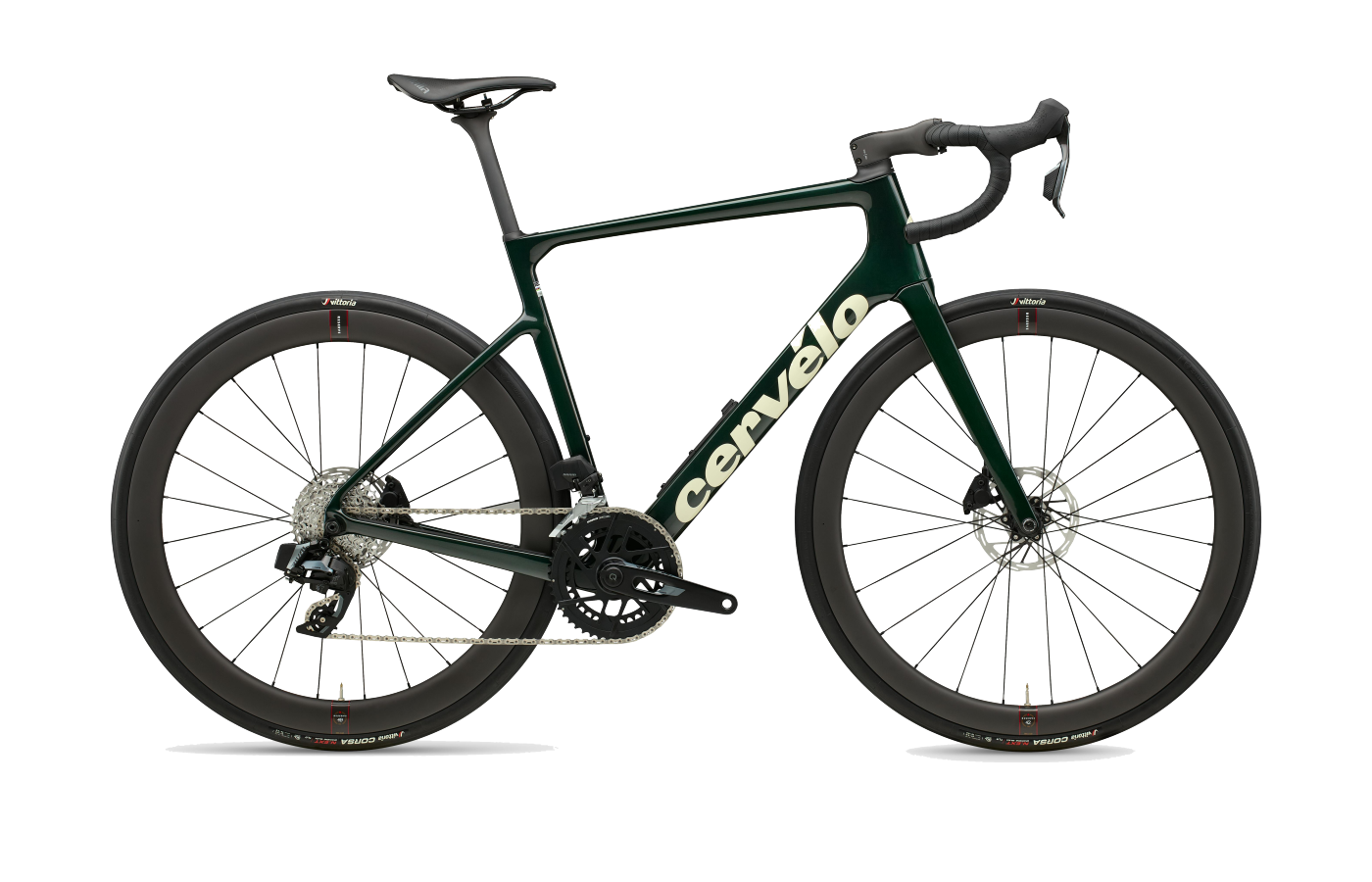
Caledonia-5
The Cervelo sibling that splits the difference — endurance geometry, more compliant layup, and hidden routing, with tire clearance that sits between the Soloist's 34 mm and the Aspero-5's 45 mm. The pick if you want one Cervelo for long, imperfect roads.
Compare →
Grail
Canyon's direct aero-gravel rival to the Aspero-5 — similar tube-shape philosophy and integrated storage, at direct-to-consumer pricing. The catch is the no-demo, no-local-dealer deal; fit before you order.
Compare →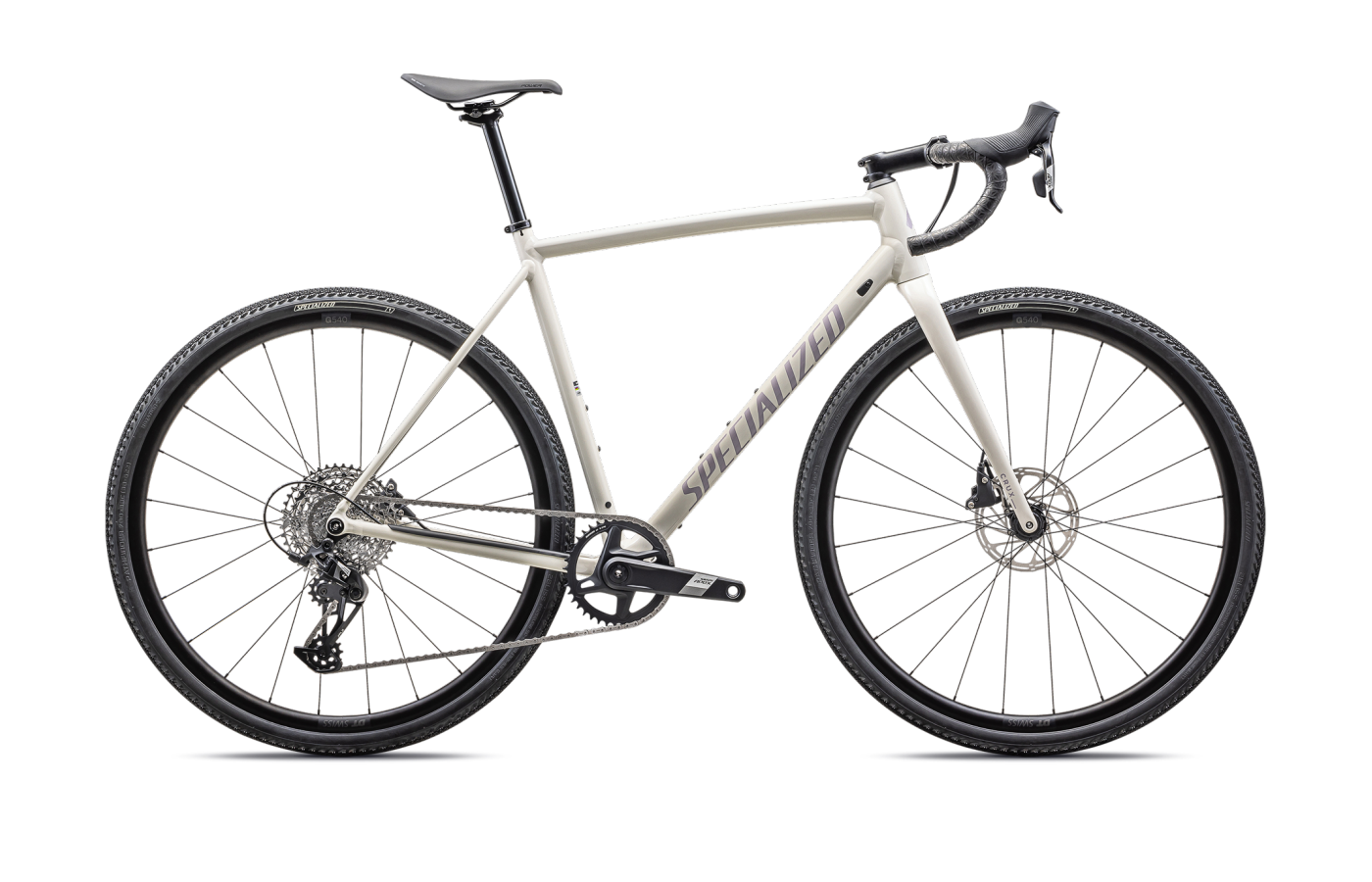
Crux
The anti-Aspero — Specialized's featherweight gravel racer, hovering near 8 kg in Expert trim with 47 mm tire clearance and a traditional cockpit. The pick if you'd rather save grams and gain mud room than chase watts.
Compare →