Aspero
vsCaledonia
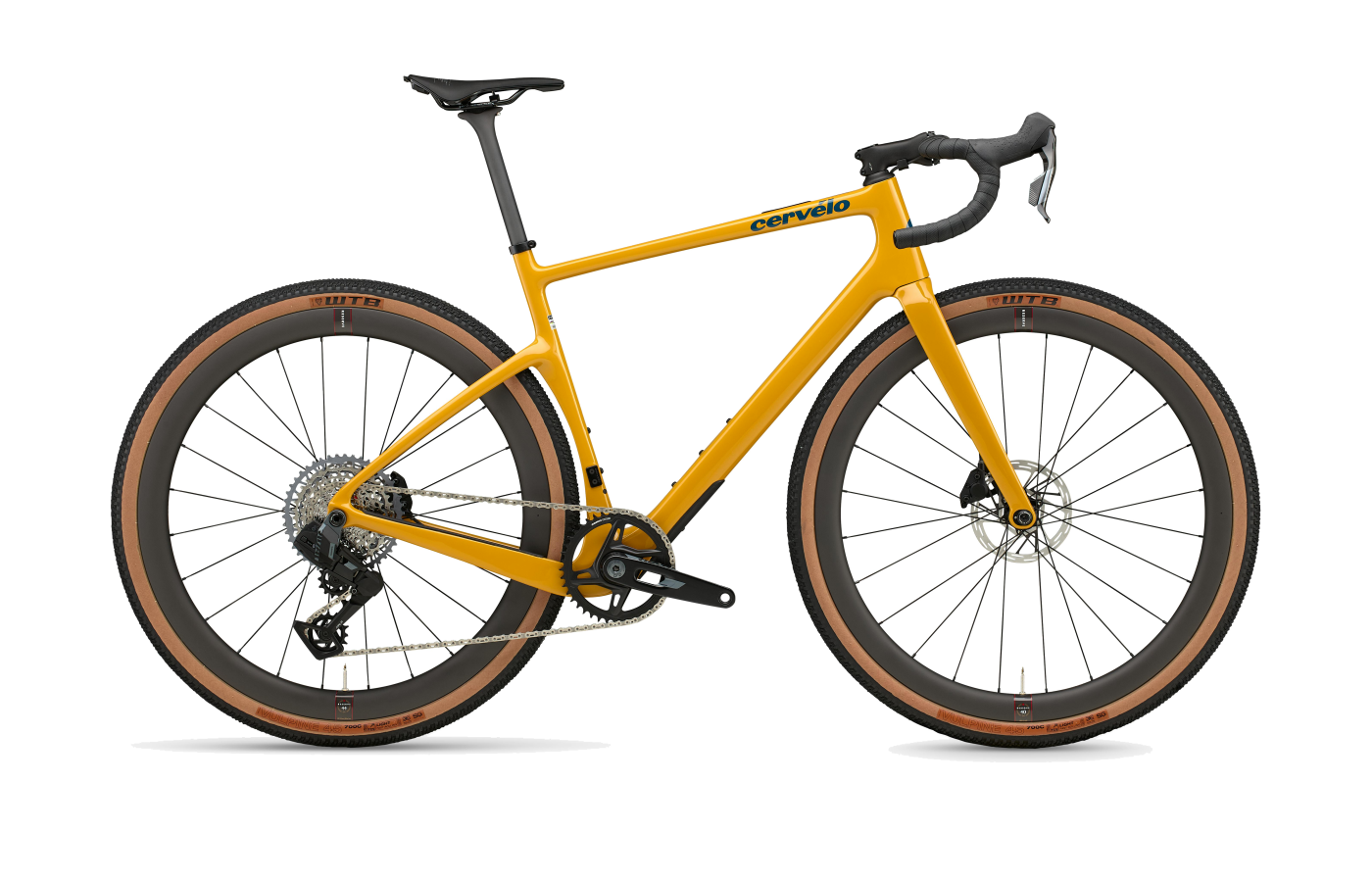
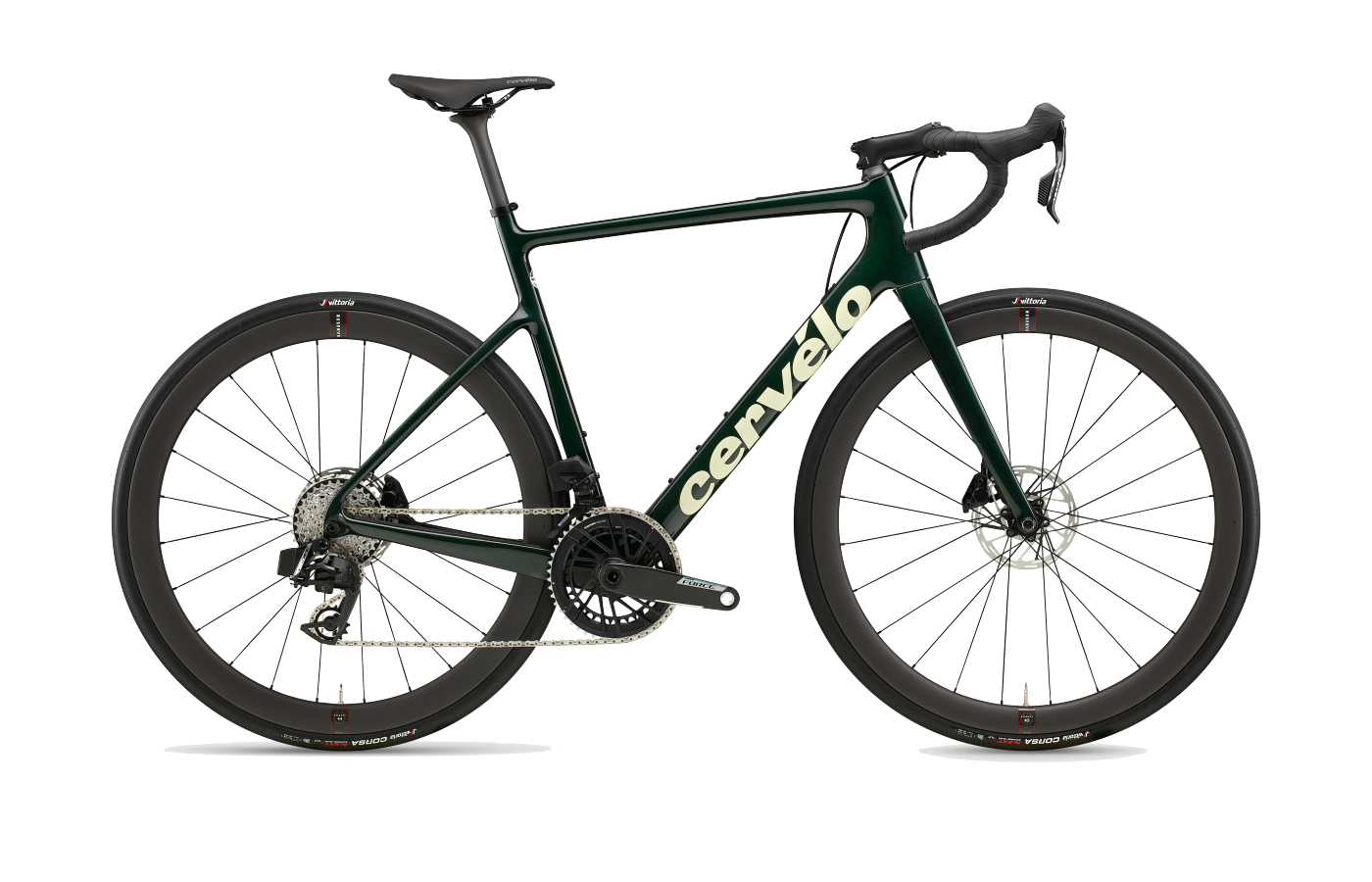
Same brand, same DNA, two different surfaces.
The Cervelo Aspero is the gravel race bike for roadies. The Cervelo Caledonia is the road bike that doesn't flinch on chip-seal.
Aspero
- 45 mm tire clearance — enough rubber for the kind of chunky gravel a road bike won't touch.
- Carbon AB09 bar stock with 16° flare on every build from $4,250 up — rare at this price point.
- Threaded T47a BB + UDH — serviceable, future-proofed, and creak-free. Reviewers consistently flag this.
- No fender mounts — the 'haul ass, not luggage' ethos cuts both ways.
- 72° head angle and short wheelbase reward fast riding but feel twitchy on technical singletrack.
Caledonia
- Fender + 34 mm tire combo — hidden removable mounts make this a four-season do-it-all without looking ugly in summer.
- Confidence-inspiring descender — 60 mm trail, 995 mm wheelbase at size 54, and zero twitchiness above 50 mph.
- Easier-to-service cockpit — external hose routing and a standard seatpost mean stem swaps don't require a hose bleed.
- Alloy seatpost and AB07 alloy bar even on the $6,500 Force AXS build feel undercooked for the price.
- 34 mm clearance limits the bike to light gravel — anything chunkier is the Aspero's territory.
Editor’s analysis
Cervélo built both of these bikes around the same instinct — speed first — and then sent them to two completely different jobs.
Look past the family resemblance and the geometry tells the story. Both bikes hit a 555 mm stack at size 54, but the Cervelo Aspero stretches 10 mm further in reach and adds 10 mm of chainstay (425 vs 415) — exactly what you want when you're carrying speed across loose surfaces and need a bigger contact patch under load. The Cervelo Caledonia keeps the rear end tight for road manners and shorter response times.
The clearance gap is where the philosophies actually split. The Aspero swallows 45 mm rubber; the Caledonia caps out at 34 mm (31 mm with fenders). One is a gravel bike Cervélo had to make rideable on the road. The other is a road bike that begrudgingly tolerates a fire-road detour. Both run the same threaded bottom bracket family (T47/T47a) and both have killed off the press-fit creak that plagued earlier Cervélos.
Component-wise the Aspero has the better stock kit dollar-for-dollar — the AB09 carbon bar with 16° flare and Reserve 40|44 GR wheels with Zipp ZR1 hubs show up as low as the Rival XPLR AXS build at $5,800. The Caledonia keeps an alloy AB07 cockpit and a 27.2 mm alloy seatpost even on the $6,500 Force AXS — a recurring complaint from reviewers who'd rather see carbon at that price.
Said another way: the Cervelo Aspero is what you buy if your weekend rides go off-pavement and you want to actually race them. The Cervelo Caledonia is what you buy if 90% of your miles are tarmac, but you live somewhere with bad winters and worse pavement, and you want one bike that can take fenders and 32 mm tires without complaint.
Where the builds differ.
Comparing our editor's-pick builds side-by-side. Winners highlighted row-by-row — lower price and weight, and the better-spec component, each mark a point.
Build variants & pricing
Six Aspero builds from $3,550 to $7,050; four Caledonia builds from $3,300 to $6,500. Cheapest entry on each side is mechanical Shimano; both ranges top out with electronic shifting.
The Caledonia's lineup tops out at SRAM Force AXS — there's no Red-equivalent build for the standard Caledonia (you'd need to step up to the Caledonia 5). The Aspero offers a flagship GRX RX825 Di2 build at $7,050 if you want top-tier Shimano gravel.
How they fit, how they steer.
Both at size 54 — the fit-picked size for a 5'8" rider on each bike. Stack is identical at 555 mm; the Aspero adds 10 mm of reach and 10 mm of chainstay for stability under load on loose surfaces. Same 72° head angle, same 73.5° seat angle.
Which size should I buy?
Both ranges run from size 48 to 61 with matching stack heights at every size — the difference is in reach, not how upright you sit.
→These are starting points. Flexibility, riding style, and preferred position all shift the answer — if you’re between sizes, a professional fit beats a chart.
What the magazines said.
Published reviews from trusted cycling outlets. Click through for the full write-up.
Which one should you buy?
If most of your favorite rides involve dirt, get the Aspero. If most of them are pavement with the occasional gravel detour, get the Caledonia.
Aspero
If you train for gravel events and want a bike that feels like a road bike on dirt — sharp, low, eager to be pushed — this is the right tool. The 45 mm clearance and Trail Mixer fork keep it honest on rougher surfaces, but the geometry is unapologetically race-first.
Caledonia
If your rides are mostly road but the road is broken — bad chip-seal, cold winters, fender season — this is the bike that handles all of it without complaining. Stable at speed, comfortable for long days, and ready to take fenders and 32 mm tires when conditions demand.
Questions buyers actually ask.
Short answers to the things we get emailed about most often.
01Can the Caledonia handle gravel?
Light gravel, yes — well-graded fire roads, hard-pack, packed dirt with the stock 30–32 mm tires. Reviewers have ridden it on 'gnarly roads or light gravel' and even rail-trails like the Erie Canal Trail without issue.
For anything chunkier — washboard, loose marble, sustained rough sections — you want the Cervelo Aspero's 45 mm clearance and 425 mm chainstays. The Caledonia tops out at 34 mm tires (31 mm with fenders), which is plenty for surface variety but not enough rubber for true off-road use.
02How different is the geometry at the same size?
Closer than you'd guess. At size 54 both bikes share a 555 mm stack, a 72° head angle, and a 73.5° seat tube angle. Where they differ:
- Reach: Aspero 388 mm vs Caledonia 378 mm (+10 mm)
- Chainstay: Aspero 425 mm vs Caledonia 415 mm (+10 mm)
- Trail: Aspero 62 mm vs Caledonia 60 mm
The Aspero's longer rear and slightly more stretched front end give it stability under load on loose surfaces. The Caledonia keeps the rear tight for road handling. Same family, different jobs.
03Which has the better stock spec for the money?
The Aspero, fairly clearly. Even on the $5,800 Rival XPLR AXS build you get Reserve 40|44 GR carbon wheels with Zipp ZR1 hubs and the Cervélo AB09 carbon handlebar with 16° flare — both genuinely premium parts.
The Caledonia, even at the $6,500 Force AXS top spec, sticks with an alloy ST36 stem, alloy AB07 handlebar, and a 27.2 mm alloy seatpost. Reviewers across the board (BikeRadar, Velo, Hiker Biker Omar) flag this as a value miss — Cervélo is clearly steering Caledonia buyers toward upgrading later, or stepping up to the Caledonia 5.
04Are they both creak-prone like older Cervélos?
No. The Aspero uses the threaded T47a bottom bracket borrowed from the Soloist and R5-CX — universally praised by reviewers as more robust and easier to service than press-fit. The Caledonia uses a thread-together press-fit shell, which sounds like a compromise but is not creaking in practice: long-term reviewers report 1,000–2,000 miles with zero noise.
Both platforms also use the SRAM Universal Derailleur Hanger (UDH), which means easy hanger swaps and forward-compatibility with SRAM Transmission drivetrains.
05What about fender compatibility and winter use?
The Caledonia wins this category and it isn't close. Cervélo built the Caledonia with hidden, fully removable fender mounts that take full-length fenders without leaving ugly bosses on the frame when you pull them. Tire clearance with fenders is 31 mm — plenty for winter rubber.
The Aspero has no fender mounts at all. The 'haul ass, not luggage' branding cuts both ways: no rack mounts, no fender provisions. If you want one bike for year-round riding in a wet climate, the Caledonia is the answer.
06Can you race the Caledonia, or is it strictly endurance?
You can race it — and reviewers note that when pushed it 'lights up with all the verve of a race bike.' The frame and bottom-bracket stiffness are not the limiting factor. The honest limit is weight: complete-bike weight runs 8.5–8.9 kg, which is fine for road racing but not class-leading.
For crit-style razor-sharp handling, you'd want the lighter, sharper R5. The Caledonia is built for long, fast, mixed-surface days — not 40-minute kermesses.
07What's the deal with the Aspero's Trail Mixer fork?
It's a flip-chip in the fork dropouts that lets you adjust the trail figure. With 700c x 42 mm tires, trail moves between roughly 62 mm and 68 mm depending on chip orientation.
The primary purpose is keeping the front-end feel consistent when you swap between 700c and 650b wheelsets — without it, switching wheel sizes would change the bike's handling character. Secondary use: race-day quick-steer setup if you want a sharper front end.
08Which is the better one-bike answer if I can only own one?
Depends entirely on your terrain mix.
If your one bike has to do gravel races, mixed-surface group rides, and the occasional pavement century — get the Aspero. The 45 mm clearance and gravel-leaning geometry give it more range than the Caledonia gives up to it on the road.
If your one bike is mostly tarmac with light gravel detours and you live somewhere with real winters — get the Caledonia. Fenders, 34 mm tires, and stable endurance geometry make it the more honest year-round road bike.
Similar bikes
If your priorities don’t map cleanly onto either of these, one of these adjacent bikes probably fits better.
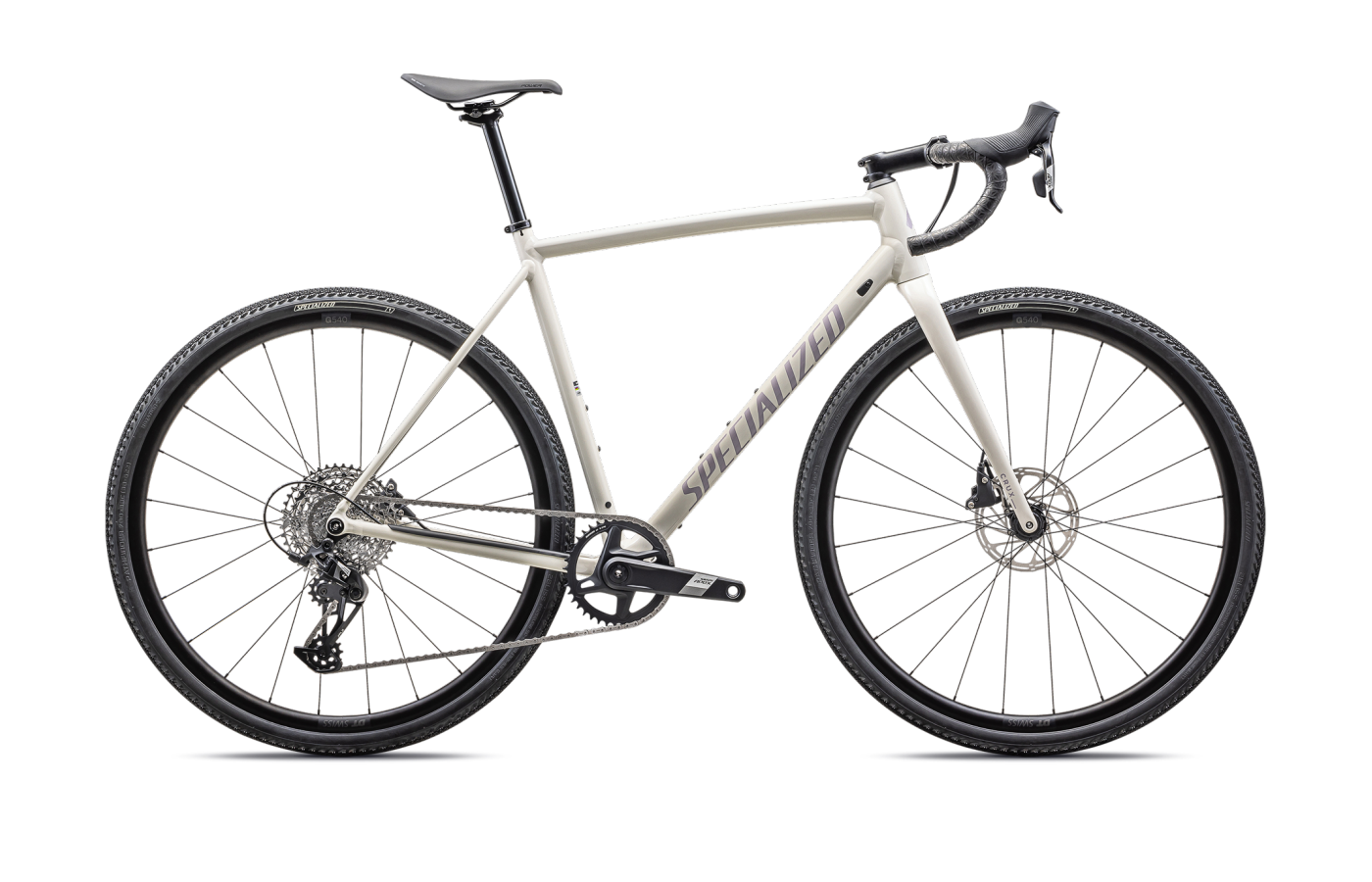
Crux
The Aspero's most direct rival — a lighter frame with even more tire clearance (47 mm), but without the aero tube shapes or the Trail Mixer fork. If you want a pure climber's gravel bike, the Crux is sharper than the Aspero.
Compare →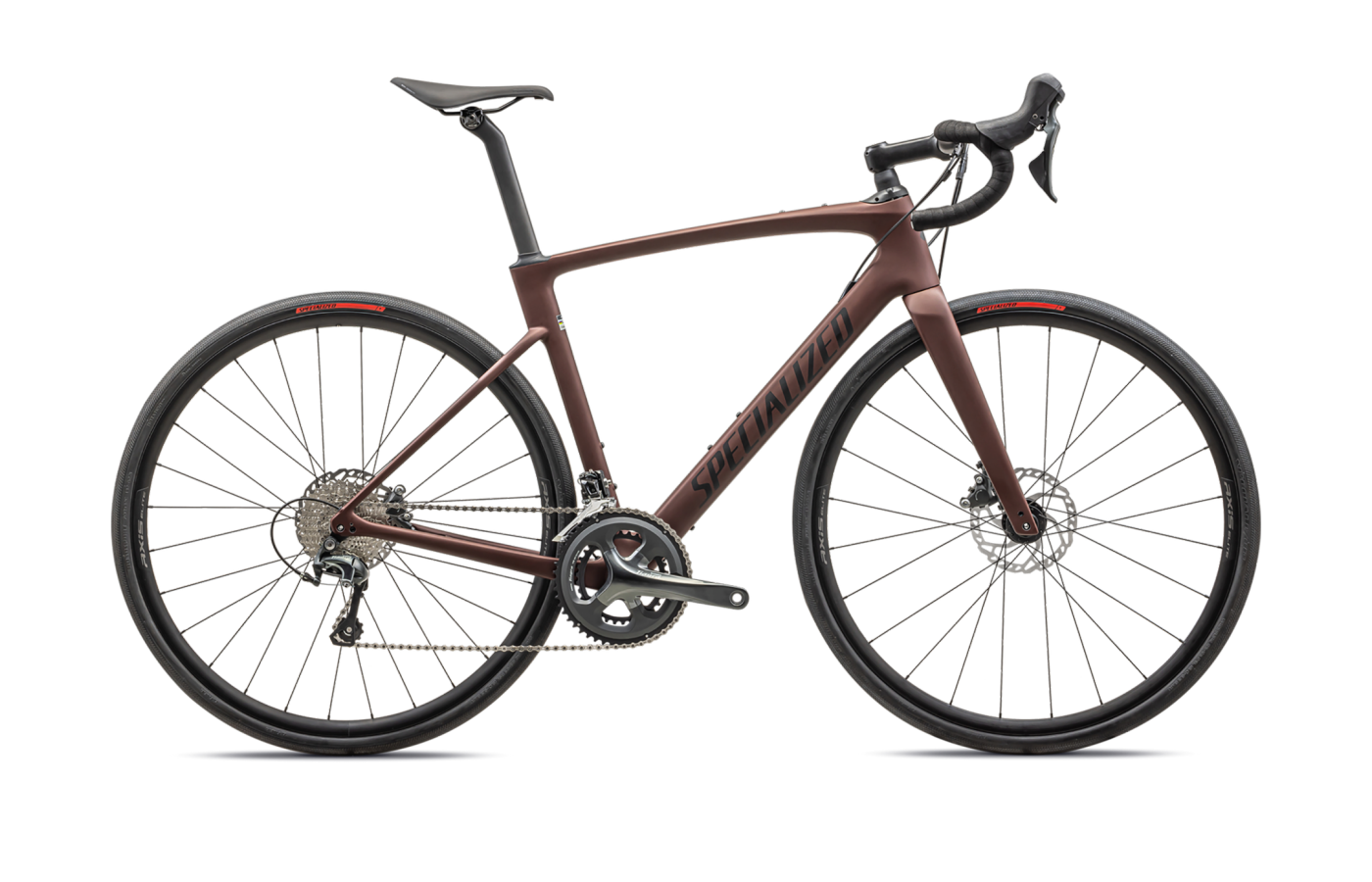
Roubaix
The Caledonia's classic foil — Specialized's FutureShock front-end suspension makes the Roubaix the more comfortable choice on truly rough roads, at the cost of added complexity and weight versus the Caledonia's clean, passive frame.
Compare →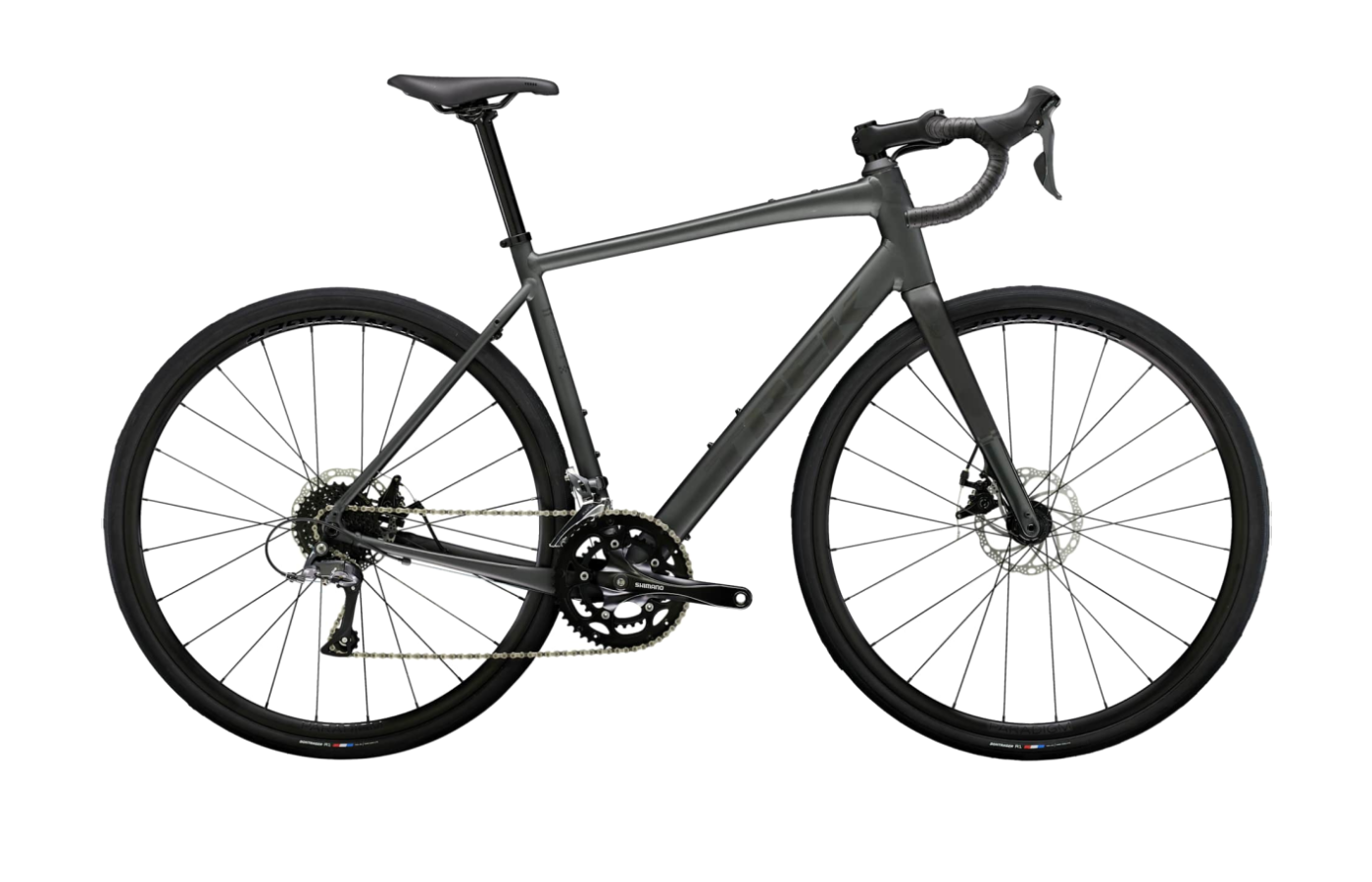
Domane
Trek's endurance flagship leans further toward comfort than the Caledonia — IsoSpeed compliance, integrated frame storage, and a softer ride. Less race-ready, more all-day-tour.
Compare →