Aspero
vsCaledonia-5
Same brand, opposite jobs.
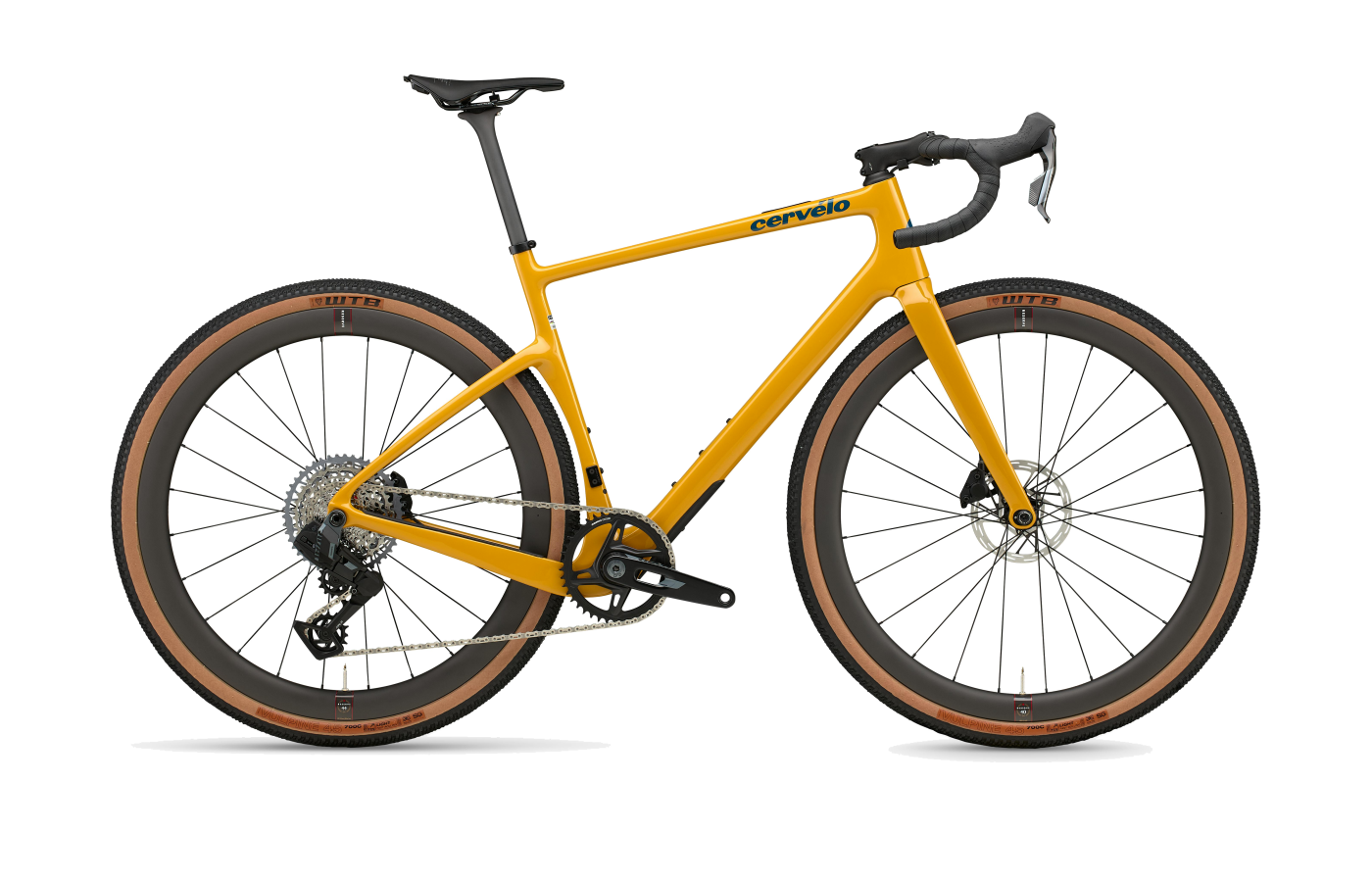
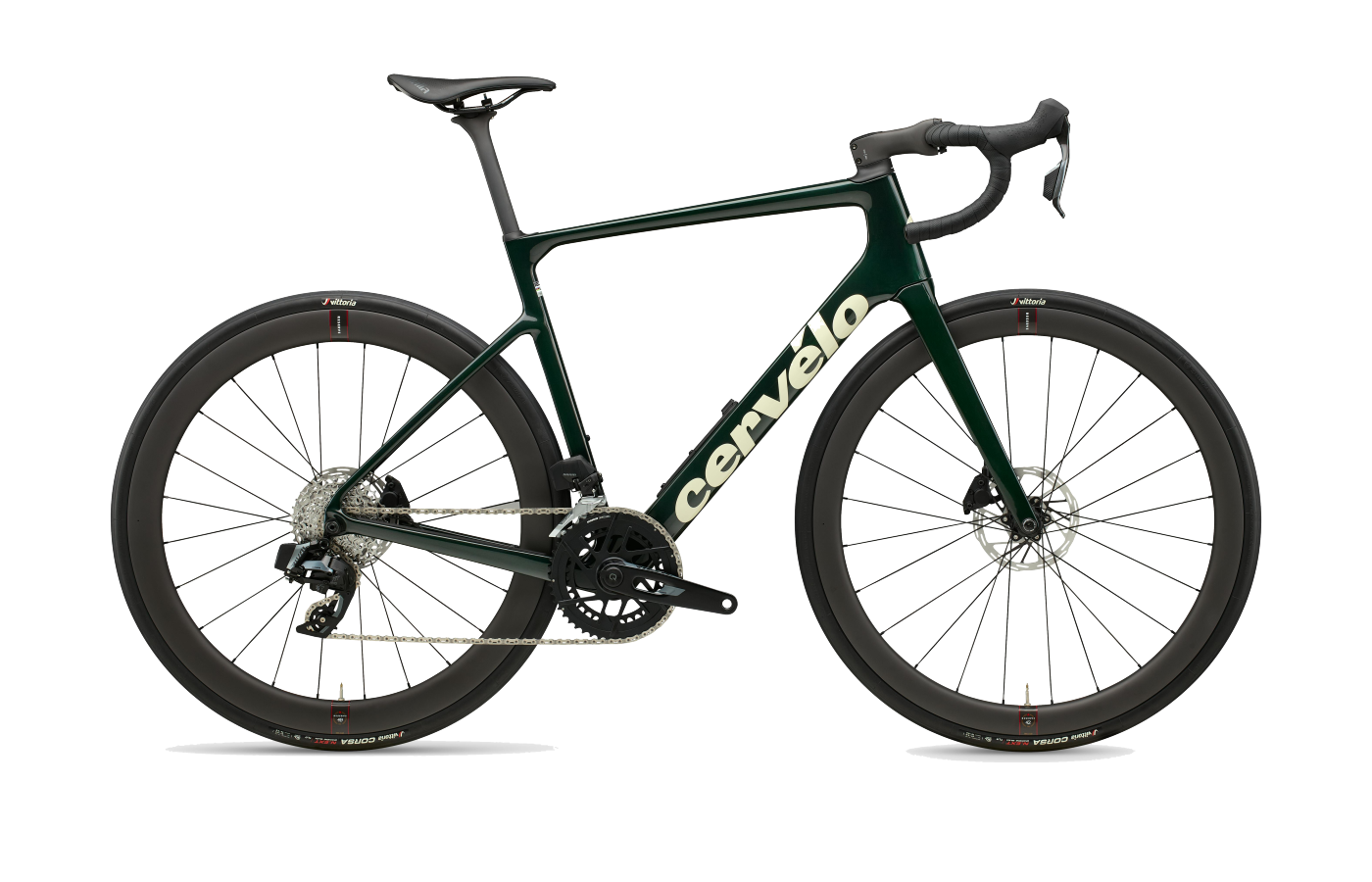
The Aspero is a gravel race bike that thinks it's a road bike. The Caledonia-5 is an endurance road bike that begrudgingly tolerates a dirt detour.
Aspero
- True 45 mm tire clearance — enough rubber for the kind of chunky gravel that puts the Caledonia-5 out of bounds.
- Cheapest entry by far at $3,550 for GRX RX610 — the Caledonia-5 starts at $7,400.
- Standard 27.2 mm round seatpost — dropper-compatible and easy to swap, unlike the Caledonia-5's proprietary D-post.
- Sharp 72-degree head angle and short wheelbase reward roadie habits but feel busy on slow, technical terrain.
- Limited bikepacking provisions — three bottle cages and a top-tube bag, no fender mounts, no extensive accessory rails.
Caledonia-5
- Downtube storage hatch swallows a tube, multi-tool, and CO2 — no saddlebag needed for the long ride.
- Endurance fit without floppy handling — 25 mm more stack at size 54 vs. the S5/R5, but it still tracks like a Cervélo.
- Reserve 42|49 aero wheels on every build — even the Rival AXS spec gets the same wheelset shape as the Red AXS.
- Premium-only lineup — no Apex, GRX, or 105 entry point. Floor is $7,400.
- 36 mm tire clearance is generous for road, but limits true gravel duty — the Aspero opens up nine more millimeters.
Editor’s analysis
Two Cervélos, one set of dropped seatstays — but the question they answer is which surface do you actually ride most?
The Aspero and Caledonia-5 share Cervélo's design DNA — dropped seatstays, BBright bottom bracket, the Reserve wheel ecosystem, a 72-degree head angle in the middle of the size run. Both refuse to wear the adventure label, both ship without rack mounts, both want to go fast. From a hundred feet away, they're cousins.
Up close, the Aspero is the dirt-first machine, but only just. Tire clearance opens to 45 mm, the chainstays are 425 mm — short for the category — and the Trail Mixer flip-chip in the fork lets you tune trail to keep handling consistent across 700c and 650b setups. Reviewers consistently call it "haul ass, not luggage": race geometry, race-bike position, no concession to bikepacking. The 2024 frame deliberately softened the front end (Cervélo claims 10% less stiffness up front) to take the edge off chunky gravel.
The Cervélo Caledonia-5 is the road bike that tolerates pavement cracks. Tire clearance tops out at 36 mm — generous for a road frame, narrow for anything you'd call gravel. The chainstays are 415 mm, 10 mm shorter than the Aspero, and the wheelbase at size 54 is just under a meter. There's a downtube storage hatch, a D-shaped seatpost that flexes for compliance, and the Reserve 42|49 aero wheelset on every build. It's been called Cervélo's "most accomplished all-rounder to date" — but "all" here means smooth tarmac to chip-seal, not gravel to singletrack.
So pick the surface. If your weekend involves a number plate, fire roads, and tires wider than 38 mm, the Aspero is the right tool — and it starts $3,850 cheaper. If your big day is 200 km of mixed pavement with the occasional dirt road shortcut, the Caledonia-5 is faster and smoother where it counts. Trying to make either bike do the other's job is where buyers get burned.
Where the builds differ.
Comparing our editor's-pick builds side-by-side. Winners highlighted row-by-row — lower price and weight, and the better-spec component, each mark a point.
Build variants & pricing
The Aspero spans $3,550–$7,050 across six builds; the Caledonia-5 starts at $7,400 and tops out at $12,750 across five.
Editor's picks are tier-matched at SRAM Rival AXS on both sides — the cleanest apples-to-apples pairing. Note the platforms barely overlap on price: the Aspero's flagship costs $350 less than the Caledonia-5's cheapest build.
How they fit, how they steer.
Both at size 54. Stack is identical at 555 mm and reach is within 10 mm (Aspero 388, Caledonia-5 378), but the Caledonia-5's 10 mm shorter chainstays and 4.2 mm tighter trail give it a livelier road feel — the Aspero is set up to stay calm with a 45 mm tire on dirt.
Which size should I buy?
Stack and reach numbers overlap closely between the two — same six size run, same 555 mm stack at size 54. Pick by intended terrain, not by fit alone.
→These are starting points. Flexibility, riding style, and preferred position all shift the answer — if you’re between sizes, a professional fit beats a chart.
What the magazines said.
Published reviews from trusted cycling outlets. Click through for the full write-up.
Which one should you buy?
If most of your riding leaves the pavement, get the Aspero. If most of it stays on pavement and you want one bike for the long days, get the Caledonia-5.
Aspero
If your calendar has Unbound, BWR, or a local gravel grinder on it, the Aspero is the right call — race position, true 45 mm clearance, and a frame stiff enough to sprint. It also doubles as a credible fast road bike if you swap tires.
Caledonia-5
If you measure rides in hours, ride mostly pavement, and want comfort without slowing down, the Caledonia-5 is the more accomplished bike here. Hidden storage, real aero shaping, and 36 mm clearance to take the edge off broken roads.
Questions buyers actually ask.
Short answers to the things we get emailed about most often.
01Can I do gravel on the Caledonia-5?
Light gravel, yes — singletrack or chunky gravel, no. The Caledonia-5's 36 mm tire clearance is generous for a road bike but narrow for modern gravel. It will handle hard-pack fire roads, dirt path connectors, and chip-seal without complaint, especially on the stock 30 mm Vittoria Corsas.
For the kind of loose, rocky, or muddy gravel that the Aspero is built for, you're past the Caledonia's intended envelope — and you'll feel it through the bars.
02Can I use the Aspero as my road bike?
Yes, with a tire swap. The Aspero's geometry is famously close to Cervélo's R-Series road bike — 72-degree head angle, race-bike reach, aggressive position. Reviewers (BikeRadar, Road.cc) consistently call it the gravel choice for roadies.
Drop a set of 28–32 mm road slicks on the Reserve 40|44 GR wheels and it rides like a competent endurance road bike. You'll give up a bit of weight and aero polish to a dedicated road platform like the Caledonia-5, but the handling is genuinely close.
03Why is the Caledonia-5 so much more expensive?
Two reasons. First, the Caledonia-5 is built only as a top-tier (the "-5" suffix is Cervélo shorthand for flagship-only) — there's no aluminum or lower-carbon Caledonia in this line. The Aspero, by contrast, includes mid-tier carbon builds with mechanical Shimano GRX as low as $3,550.
Second, every Caledonia-5 ships with a power meter (SRAM AXS units include them stock) and the same Reserve 42|49 aero wheelset across the range — even the Rival AXS at $7,400 gets the wheels that come on the Red AXS at $12,750.
04Which is more comfortable on long rides?
On pavement, the Caledonia-5 — the D-shaped seatpost is engineered to flex, the wheelbase is longer at every size, and it ships with 30 mm tires by default. Reviewers describe it as "planted" and "smooth on broken asphalt."
On anything rougher than chip-seal, the Aspero wins, mostly because it can run a 45 mm tire and the Caledonia can't. Tire volume beats frame compliance for absorbing real-world hits. The Aspero's 27.2 mm round seatpost also flexes (and accepts a dropper if you want one).
05How do the geometries actually compare at size 54?
Stack is identical at 555 mm on both. Reach is within 10 mm — Aspero 388 mm, Caledonia-5 378 mm. Head tube angle is the same 72 degrees.
The meaningful differences: the Caledonia-5 has 10 mm shorter chainstays (415 vs. 425 mm) and 4.2 mm less trail (57.8 vs. 62 mm), making it the snappier feeling bike on tarmac. The Aspero's longer rear and more trail are deliberate — they keep the bike calm at speed with a wide tire on loose surfaces.
06Are both compatible with a dropper post?
Only the Aspero. It uses a standard 27.2 mm round seatpost, which is the most common dropper-post diameter in the gravel world.
The Caledonia-5 uses a proprietary D-shaped seatpost — that's how Cervélo gets the seated compliance without sacrificing aero. The tradeoff is no dropper, and replacement posts are Cervélo-only.
07What's the lowest-cost way into each platform?
Aspero: $3,550 for the GRX RX610 build — Shimano mechanical 1x12, alloy Alexrims wheels, but the same frame as the $7,050 RX825 Di2 flagship.
Caledonia-5: $7,400 for the Rival AXS — SRAM electronic with a power meter and Reserve 42|49 carbon wheels. There is no "budget" Caledonia-5 — that pricing floor is the platform.
If budget is the deciding factor, the Aspero is in a different conversation.
08Which has better warranty and serviceability?
Both come with Cervélo's lifetime frame warranty to the original owner against manufacturing defects, and both use the threaded T47 bottom bracket and SRAM UDH derailleur hanger — universally praised in reviews for ease of long-term service.
The Aspero's semi-integrated cable routing (hoses run externally under the stem before entering the frame) is friendlier for home mechanics than the Caledonia-5's fully internal routing through the headset, which makes hose bleeds a longer shop job.
Similar bikes
If your priorities don’t map cleanly onto either of these, one of these adjacent bikes probably fits better.
Crux
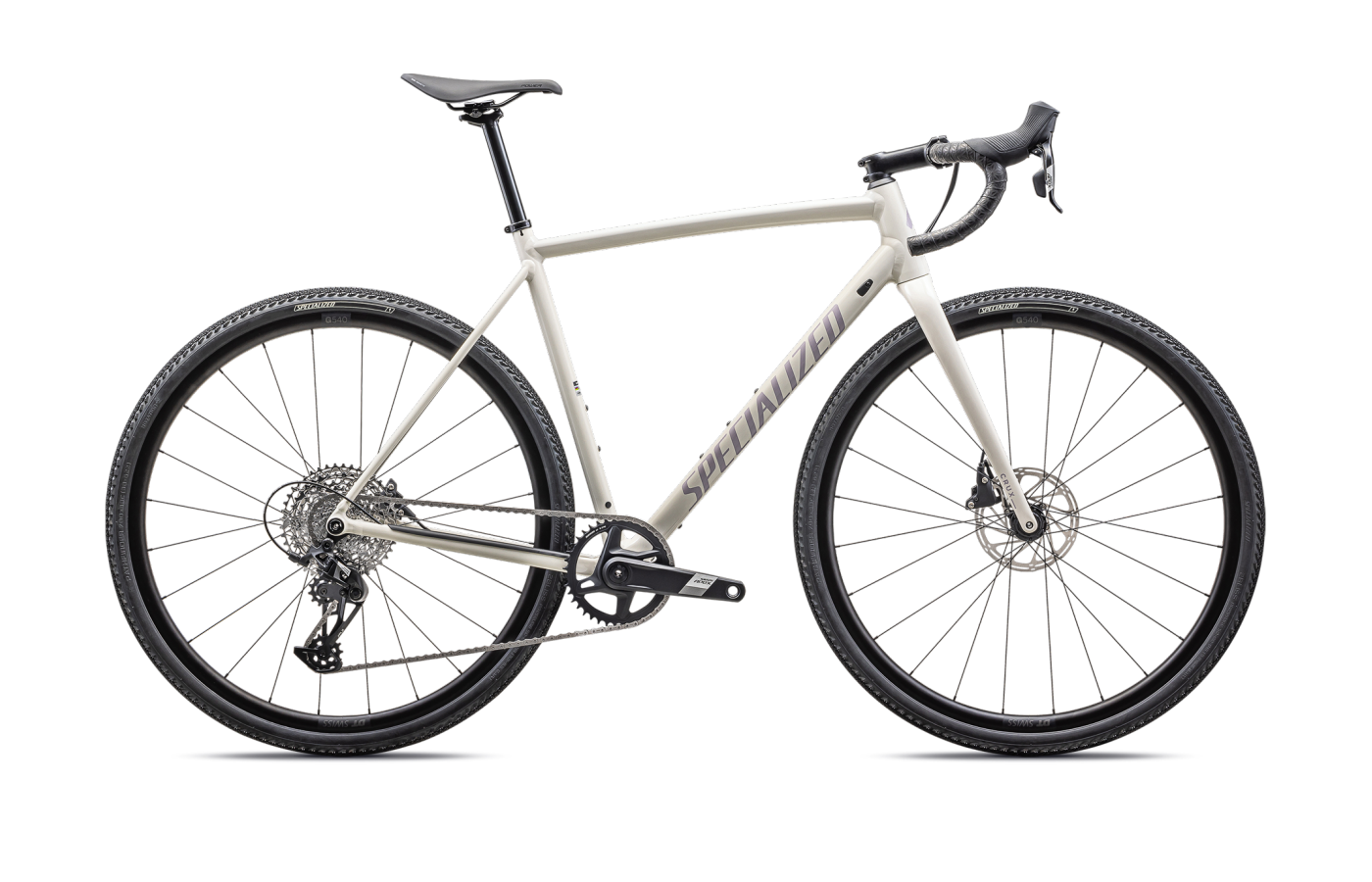
The most direct Aspero rival — Specialized's lightest gravel race bike, equally allergic to extra mounts and built around the same speed-first ethos. If you want the Aspero's character with the Specialized dealer network, this is the cross-shop.
Compare →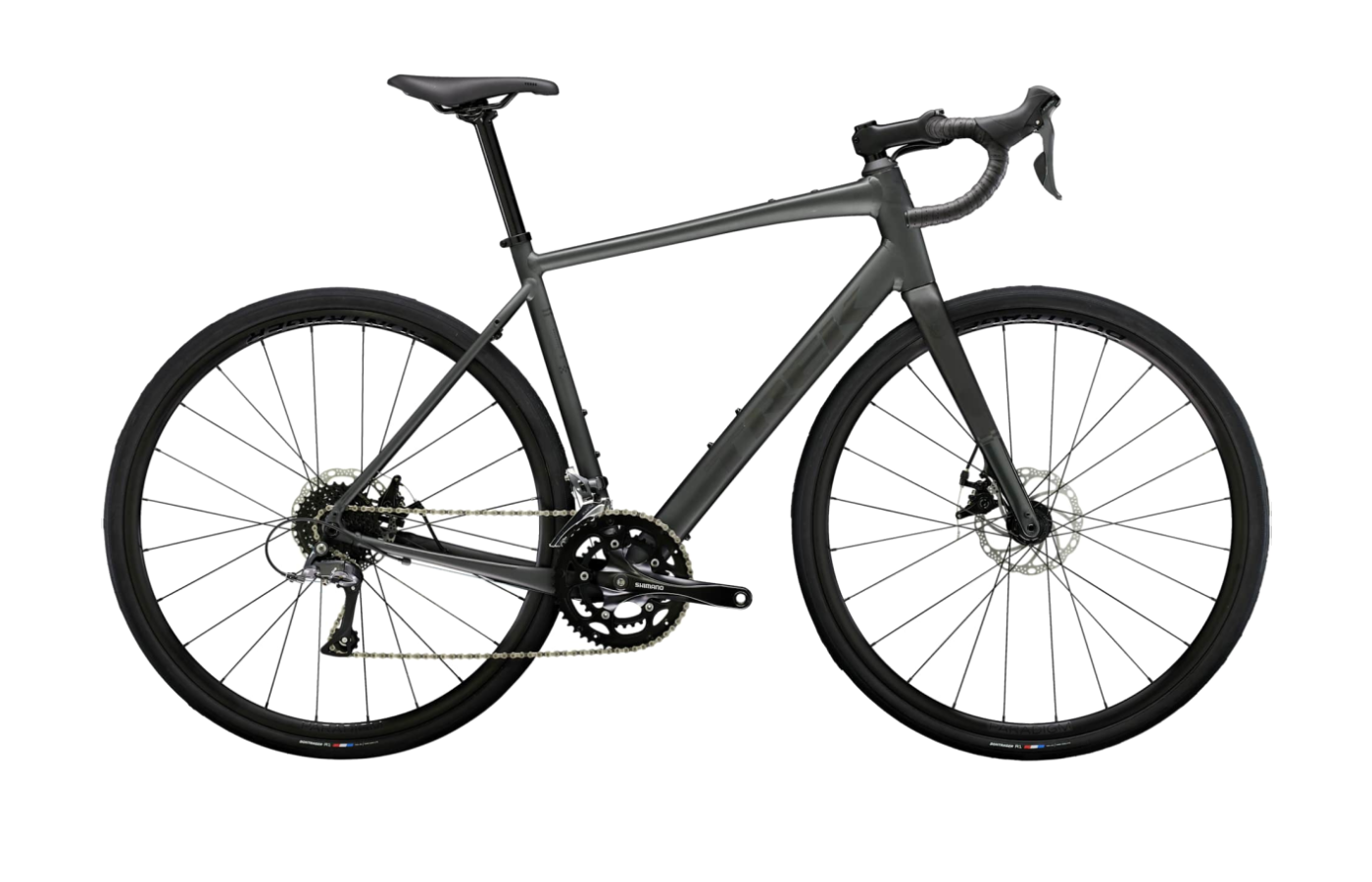
Domane
The Caledonia-5's most direct endurance rival — Trek's IsoSpeed decoupler trades a touch of road feel for noticeably more compliance. Better if your priority is comfort over the 12-hour ride, slightly heavier and less aero than the Cervélo.
Compare →
Grail
Direct-to-consumer pricing on a similarly aero-leaning gravel race platform — typically a few hundred dollars under the Aspero with comparable carbon wheels. Catch is no local dealer support and integrated cockpits that are harder to refit.
Compare →