Aspero
vsOstro Gravel
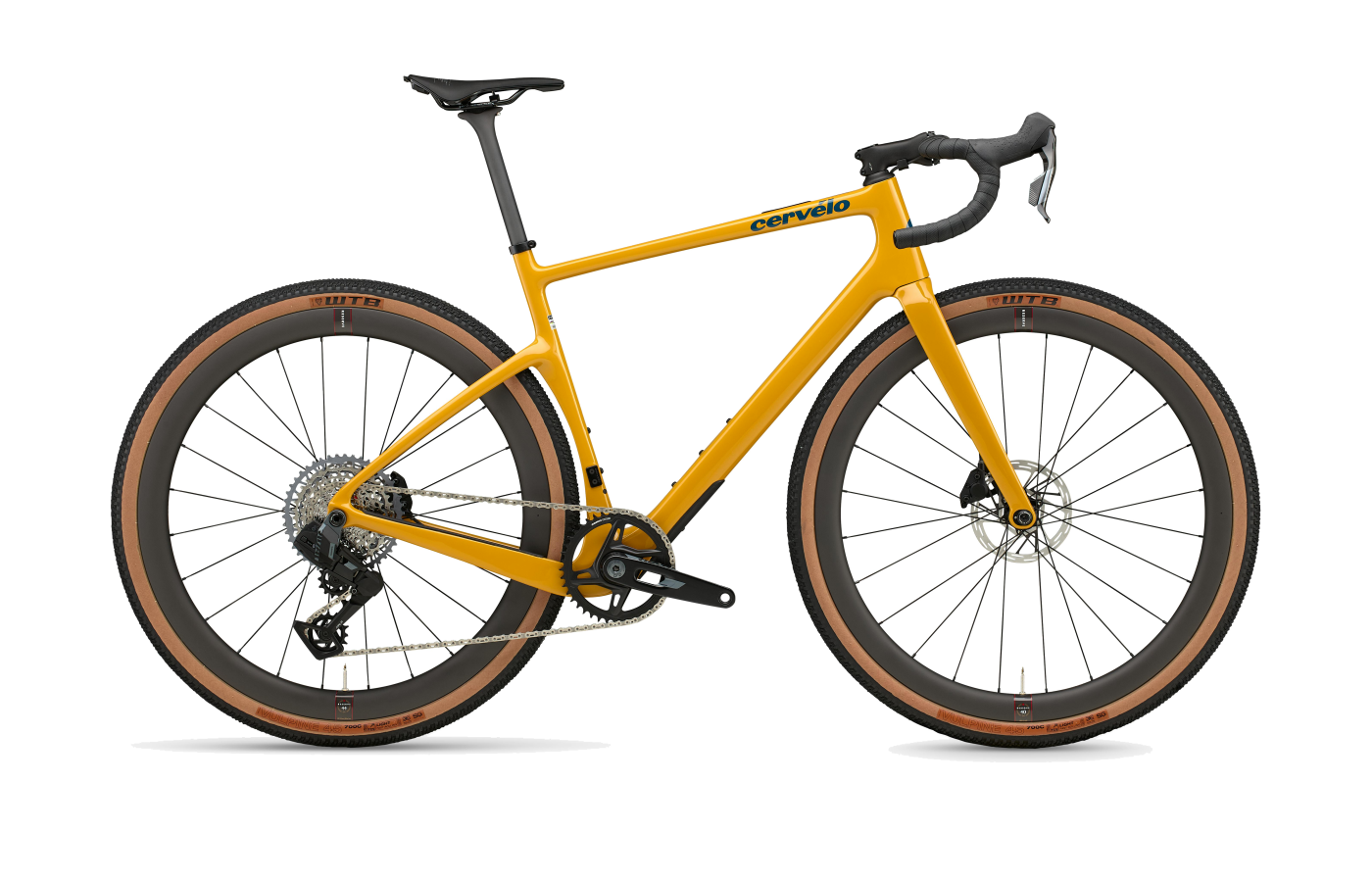
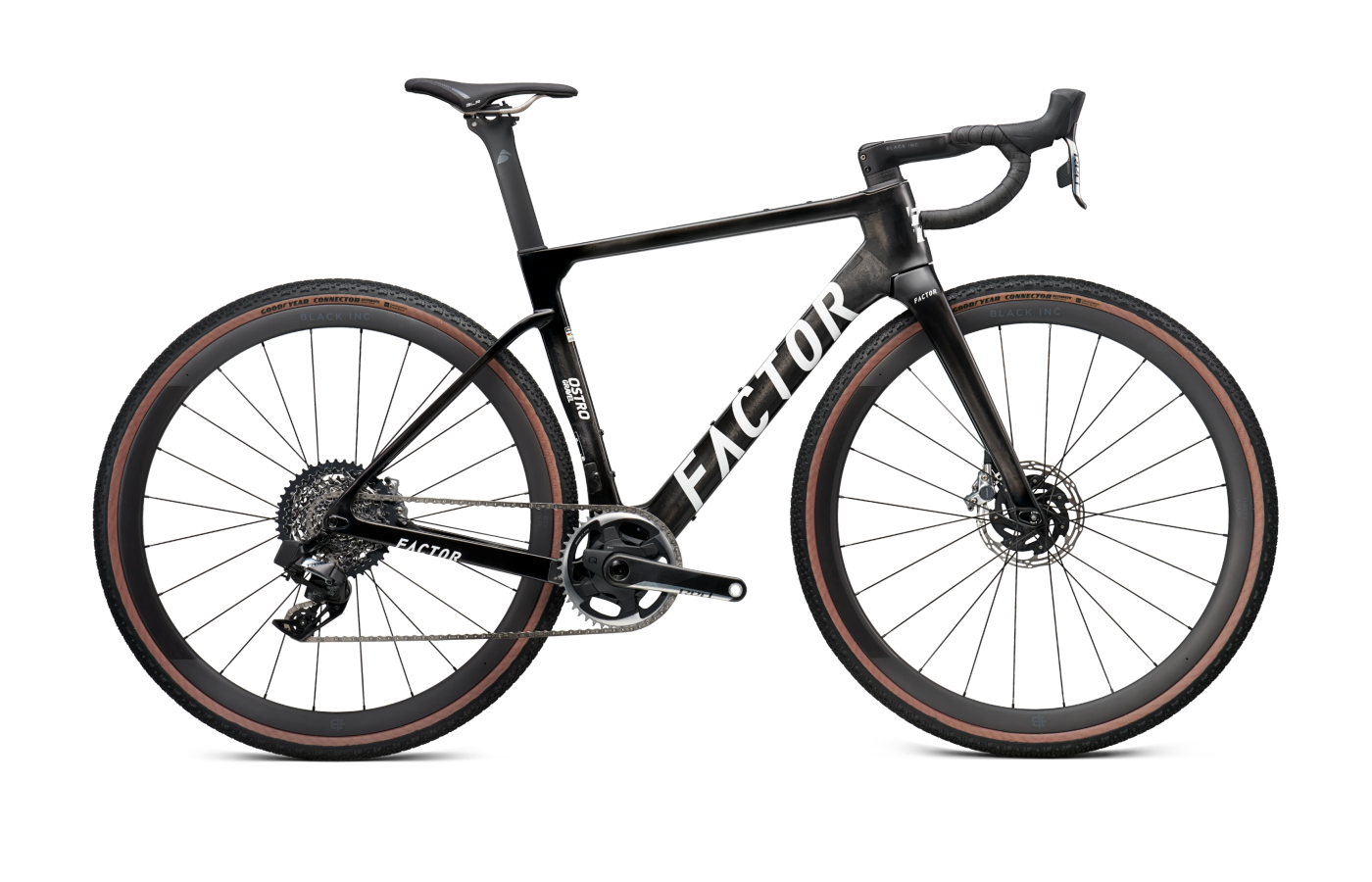
Two race-bred gravel bikes — same goal, opposite priorities.
The Aspero is a fast-but-livable gravel racer with a wide build range. The Ostro Gravel is a no-apologies aero specialist that starts where the Aspero tops out.
Aspero
- Far cheaper entry point — $3,550 for mechanical GRX, with the carbon platform's full geometry and clearance.
- Refined 2024 ride quality — dropped seat stays plus a 10% softer front end take the edge off chunky gravel.
- Standard 27.2 mm round seatpost — dropper-compatible and easy to swap for a more compliant aftermarket post.
- Less aero than the Ostro Gravel — small but real on flat-out efforts.
- 72-degree HTA and short wheelbase get hands-full on slow, technical terrain.
Ostro Gravel
- Aero cockpit saves ~9 watts — Factor's claimed number for the integrated Black Inc HB02 vs. a conventional bar/stem.
- CeramicSpeed bearings throughout — headset, T47a bottom bracket, and Black Inc Thirty Four hubs, with lifetime warranty on the BB and headset.
- Sub-1 kg frame for an aero gravel bike — a painted 54 cm frame weighs 913 g, putting it among the lightest in the aero-gravel field.
- Punishing rear-end stiffness — multiple reviewers cut rides short for discomfort.
- $9,299 floor and electronic-only — no budget builds, no mechanical option.
Editor’s analysis
Both bikes want to win gravel races. Only one of them is willing to be uncomfortable to do it.
The Cervelo Aspero and Factor Ostro Gravel sit in the same race-gravel bracket on paper — both 45 mm tire clearance, both built around aero tube shapes, both UCI-credible enough to show up at Unbound. But pull the prices and the platforms apart and the philosophies are barely talking to each other.
The Cervelo Aspero is the broader, more livable take. The 2024 redesign deliberately softened the front end by 10%, dropped the seat stays, and exposed more of the 27.2 mm round seatpost — Cervelo's stated goal was to keep the racing DNA but stop beating riders up. It also starts at $3,550 with a mechanical GRX build and tops out at $7,050 with GRX Di2 — almost the entire Ostro lineup is more expensive than the most expensive Aspero. Reviewers consistently land on the same line: it's a road-bike geometry brought just far enough off-pavement to be fun on chunky terrain, with a still-quick 72-degree head angle and 425 mm chainstays that keep it lively.
The Factor Ostro Gravel goes the other direction with both feet. It's a pure aero race bike with road-DNA stiffness — the Black Inc HB02 integrated cockpit alone claims 9 watts versus a conventional setup, the proprietary D-shaped aero seatpost is non-negotiable, and CeramicSpeed bearings are stock at the headset, T47a bottom bracket, and hubs. Reviewers don't disagree that it's fast — Cycling News compared the acceleration to being "shot out of a cannon" — but they also agree it's punishing. Multiple reviews mention cutting rides short for discomfort. On smooth, fast gravel it shines. On square-edge bumps and rough singletrack, your body pays.
Put another way: the Aspero is the gravel race bike you can also ride 200 km without hating life. The Ostro Gravel is the bike you race for four hours on a fast course and then put back in the garage.
Where the builds differ.
Comparing our editor's-pick builds side-by-side. Winners highlighted row-by-row — lower price and weight, and the better-spec component, each mark a point.
Build variants & pricing
The Aspero stretches from $3,550 to $7,050 across six builds. The Ostro Gravel runs from $9,299 to $11,399 across four — its cheapest build is more than its rival's most expensive.
We'd usually pick tier-matched groupsets for an apples-to-apples spec table, but Cervélo doesn't sell SRAM Force on the Aspero and Factor doesn't sell Rival on the Ostro Gravel. The Aspero's Rival XPLR AXS ($5,800) is the closest electronic SRAM build; the Ostro Gravel's Force ($9,499) is the cheapest way into the platform. The price gap is the platform talking — not noise to hide.
How they fit, how they steer.
Same fit-picked rider, different size labels — the Aspero's 54 has a 555 mm stack and 388 mm reach; the Ostro's 52 sits 20 mm lower at 535 mm stack with a near-identical 385 mm reach. Both run 62 mm trail and short chainstays (425 vs 420 mm), so steering character is similar — but the Ostro puts you in a noticeably more aggressive position.
Which size should I buy?
Recommendations are derived from stack, reach, and effective top tube. Sizing labels differ across the two brands — the closest match isn't always the closest number.
→These are starting points. Flexibility, riding style, and preferred position all shift the answer — if you’re between sizes, a professional fit beats a chart.
What the magazines said.
Published reviews from trusted cycling outlets. Click through for the full write-up.
Which one should you buy?
If you want a fast gravel bike you can also live with, get the Aspero. If you race fast, smooth gravel and want every watt the platform offers, get the Ostro Gravel.
Aspero
If most of your riding mixes fast group rides, gravel races, and long days where comfort eventually matters, this is the smarter buy. The 2024 frame has the speed of the original without the punishment, the build range goes from accessible to premium, and the round seatpost and threaded BB make it a bike you can actually live with for years.
Ostro Gravel
If your race calendar is fast US-style gravel — Unbound, Steamboat, BWR — and you have the conditioning to absorb a stiff bike, the Ostro Gravel is a weapon. Sub-1 kg frame, 9-watt aero cockpit, CeramicSpeed bearings everywhere — it does one job at the highest possible level. Just be honest that it does only that one job.
Questions buyers actually ask.
Short answers to the things we get emailed about most often.
01Which is more comfortable on rough gravel?
The Cervelo Aspero, by a meaningful margin. The 2024 Aspero was specifically redesigned for compliance — Cervélo claims a 10% reduction in front-end stiffness, dropped seat stays for rear flex, and a more sloped top tube that exposes more of the 27.2 mm carbon seatpost. Reviewers consistently call out a "quiet" ride that cuts high-frequency vibration before it reaches the contact points.
The Factor Ostro Gravel is the opposite philosophy. Its aero-profiled D-shaped seatpost has effectively no flex, and Cycling News notes the rear end is so stiff that on rocky ground it actually compromises power delivery. Multiple reviewers report cutting test rides short for discomfort. Tire volume is your only real lever for comfort on the Ostro.
02What's the maximum tire clearance on each?
Both bikes officially clear 45 mm in 700c. The Aspero also accepts 47–48 mm in 650b via Cervélo's Trail Mixer flip-chip, which adjusts fork offset to keep handling consistent across wheel sizes. The Ostro Gravel is 700c-only.
Neither is going to satisfy you if you're chasing 50 mm-plus tires for chunky singletrack — that's the direction the broader gravel category is moving, and both bikes are starting to look conservative against newer race-gravel platforms.
03How big is the price gap, really?
Large. The Aspero starts at $3,550 with mechanical GRX RX610 and tops out at $7,050 with GRX RX825 Di2. The Ostro Gravel starts at $9,299 with SRAM Force XPLR AXS and tops out at $11,399 with SRAM Red.
That means the cheapest Ostro Gravel costs $2,250 more than the most expensive Aspero. There is no overlap. If your budget caps below $9k, the Ostro Gravel isn't a choice — only the Aspero is.
04Can I run a dropper post on either?
On the Aspero, yes — Cervélo deliberately kept a standard 27.2 mm round seatpost for exactly this reason, and reviewers consistently call it out as a forward-looking choice for riders who venture into more technical terrain.
On the Ostro Gravel, no. Factor uses a proprietary D-shaped aero seatpost that's not dropper-compatible and can't even be swapped for a more compliant aftermarket round post — the latter being a frequent complaint, since it removes the most obvious comfort upgrade.
05Are both compatible with mechanical shifting?
Only the Aspero. Cervélo offers two mechanical Shimano GRX builds — the GRX RX610 ($3,550) and GRX RX820 ($4,250) — alongside its electronic SRAM and Shimano options.
The Ostro Gravel is electronic-only across all four builds. If you want a cable-shift drivetrain, it's Aspero or nothing in this comparison.
06Which is better for long, technical, mixed-surface days?
The Aspero. It's the more livable platform across the board — better compliance, dropper-post-ready, more reasonable price-to-replace, and a 27.2 mm seatpost that lets you swap in a more flexible carbon model if you want even more rear comfort. Reviewers describe it as "distinctly sporty and strikingly versatile," equally at home on tarmac and hard-packed gravel.
The Ostro Gravel is excellent at one thing — fast, smoothish gravel — and demanding at most others. BikeRadar specifically called out singletrack and tech sections as where its "road-bike-like geometry doesn't do you any favours."
07How much aero advantage does the Ostro Gravel actually have?
Factor's headline number is 9 watts saved at the cockpit alone, comparing the integrated Black Inc HB02 to a conventional bar/stem setup. The frame uses truncated aerofoil tubes and a downtube channel for further marginal gains.
Cervélo claims its 2024 Aspero is 4.2 watts faster than the Gen 1 Aspero — a more modest aero update focused on slimmer tube shapes and hidden cable routing. So directionally, yes, the Ostro Gravel has a measurable aero advantage on the flats. Whether it's worth ~$3,500 in extra spend and a much harsher ride is the real question.
08What about long-term serviceability?
Both use threaded T47a bottom brackets — far easier to maintain than press-fit, and a meaningful win on a bike that lives in dirt and water.
The Aspero wins on accessibility everywhere else: a standard 27.2 mm seatpost, semi-integrated cable routing that lets you swap stems without re-bleeding hoses, and a SRAM UDH for easy hanger replacement.
The Ostro Gravel offsets its proprietary cockpit and seatpost with CeramicSpeed SLT bearings at the headset and bottom bracket, both with lifetime warranties, plus CeramicSpeed bearings in the Black Inc hubs. Long-term, the bearings should outlast the rest of the bike — but anything involving the cockpit is a workshop job.
Similar bikes
If your priorities don’t map cleanly onto either of these, one of these adjacent bikes probably fits better.
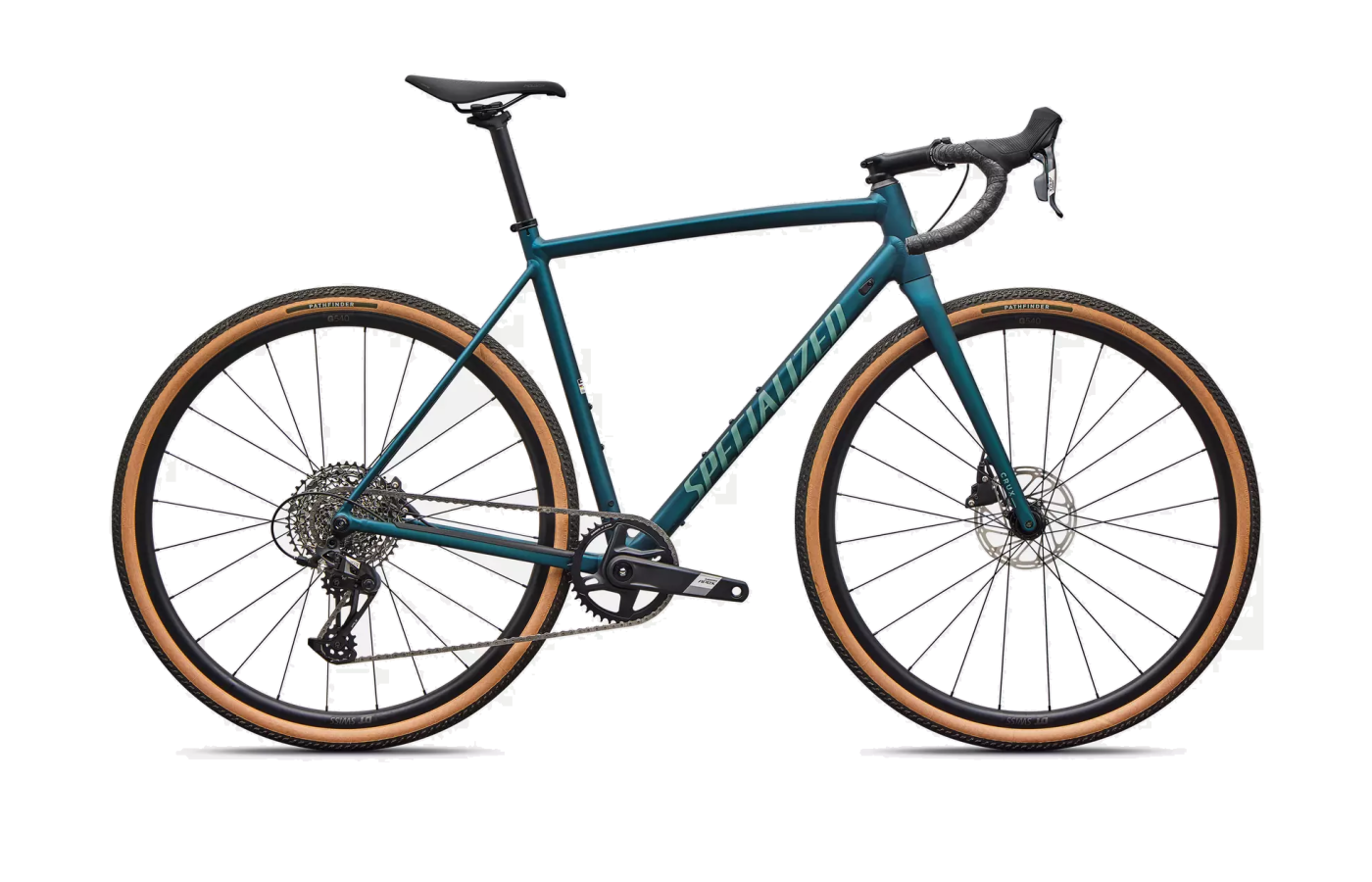
Crux
Specialized's superlight race-gravel platform — closer to the Aspero in ride character but lighter still, and a known climbing weapon. The right shortlist add if you want race speed without committing to a full aero package.
Compare →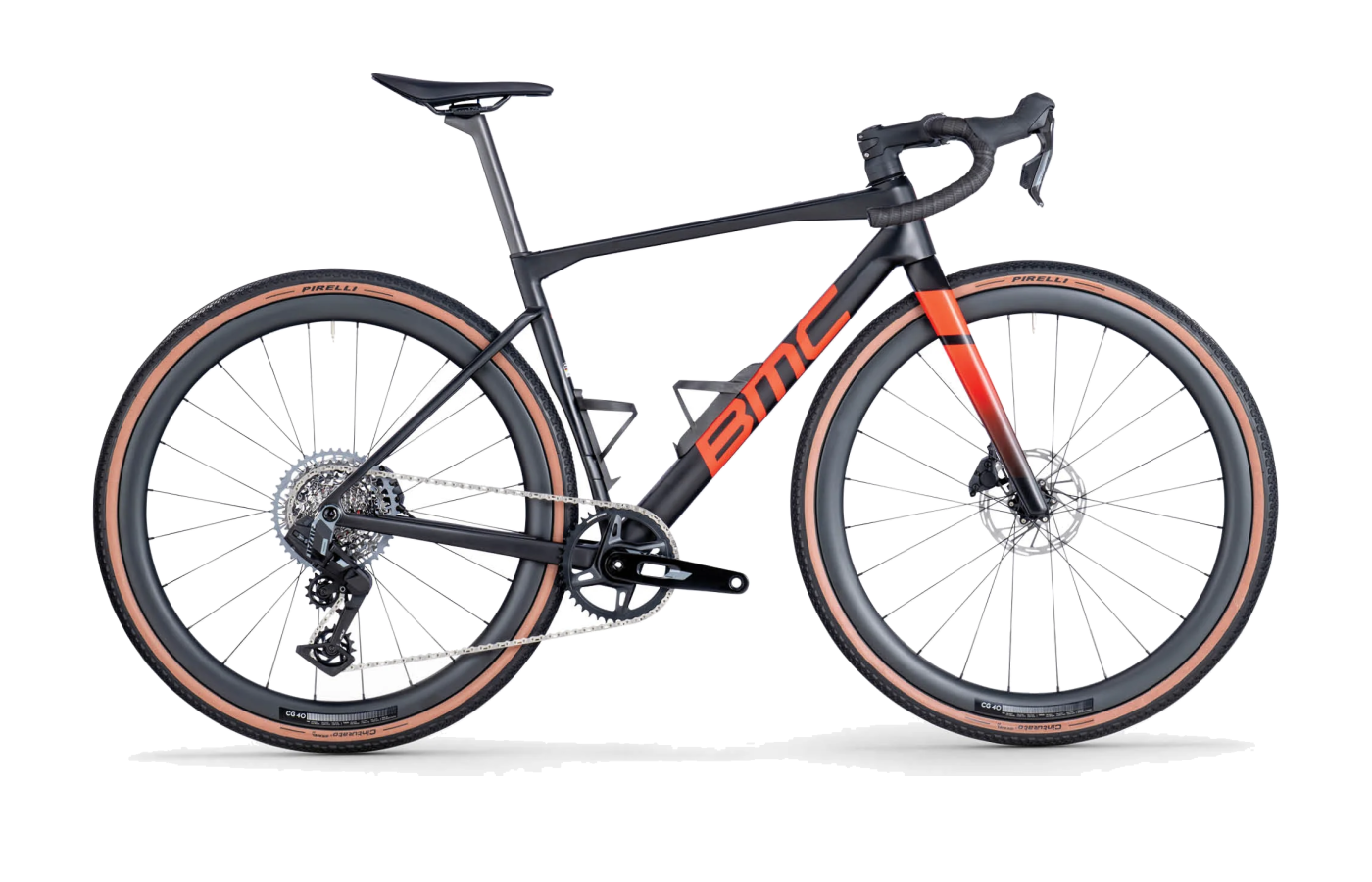
Kaius
BMC Kaius is the closest direct rival to the Ostro Gravel — same aero-first, stiffness-over-comfort philosophy. Often spec'd without a power meter, which makes the Ostro Gravel's all-in pricing look better than the sticker suggests.
Compare →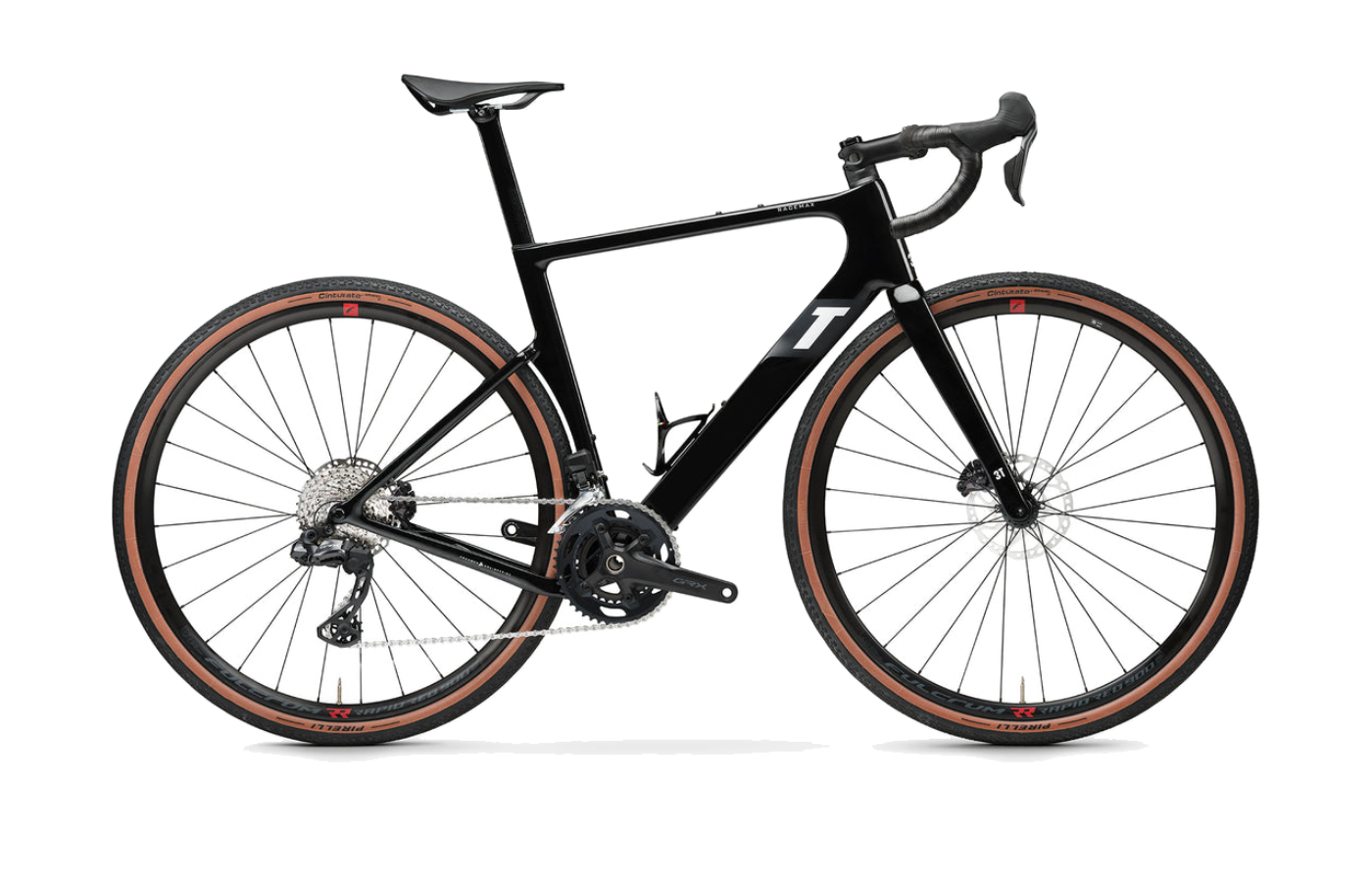
RaceMax
3T RaceMax pioneered the aero-gravel category and offers adjustable geometry via flip-chips — a Trail Mixer on steroids. Worth a look if you like the Ostro Gravel's aero focus but want more setup flexibility.
Compare →