Aspero
vsVault
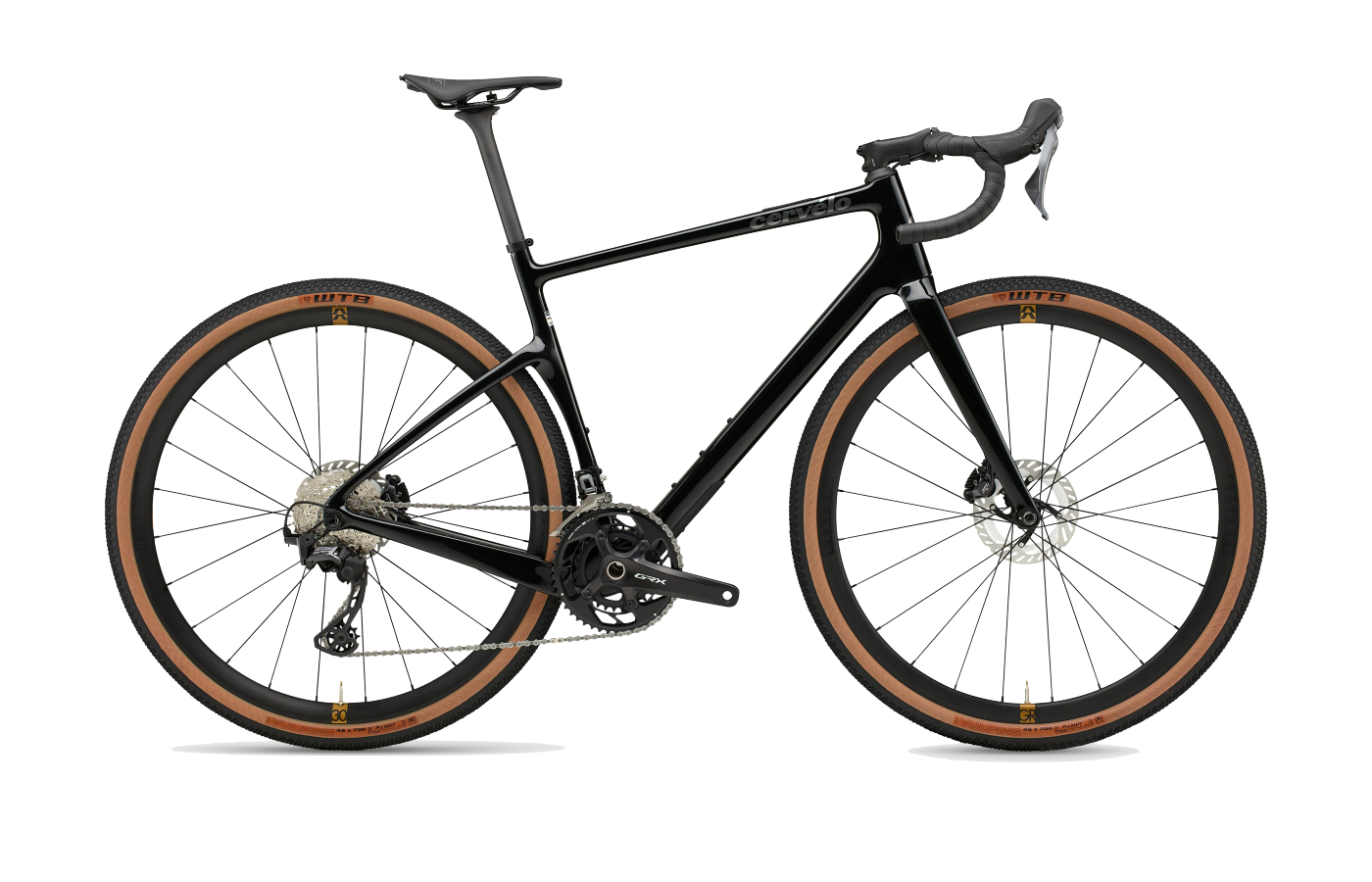
Two gravel bikes, two opposite briefs.
The Cervelo Aspero is a gravel race bike with road-bike DNA. The Pivot Vault is an adventure-first platform built to swallow everything from chip-seal to chunky singletrack.
Aspero
- Race-bike DNA — road-adjacent geometry, 72° HTA, and 425 mm chainstays make it eager on hard-packed gravel and groomed fire roads.
- Premium wheel spec — higher-tier builds ship Reserve 40/44 carbon wheels on Zipp ZR1 hubs that reviewers rate above peer-priced rivals.
- Broad build range from $3,550 GRX mechanical up to $7,050 GRX Di2 — six builds, widest entry point of the pair.
- 45 mm tire clearance trails modern adventure-gravel benchmarks of 50+ mm.
- Minimal mounts and aggressive road-like position punish longer all-day rides.
Vault
- 50 mm tire clearance paired with a suspension-corrected fork and Iso Flex seatpost damper — it rolls over what the Aspero has to steer around.
- Mullet-ready drivetrain — the top build runs Force AXS with X0 Eagle and a 10-52T cassette, gearing no Aspero build can match.
- Adventure-ready fit-out — up to five bottle mounts, fender mounts, in-frame Tool Shed storage, and a 27.2 mm dropper-compatible post.
- Only four builds and no entry-level option below $4,199.
- Slacker geometry and wide tires feel less urgent on tarmac and fast groomed gravel.
Editor’s analysis
One is a road bike that grew bigger tires. The other is a mountain-brand gravel bike that didn't grow a slack front end — and that restraint is exactly the point.
The Cervelo Aspero is unapologetic about what it is. 72-degree head tube angle, 425 mm chainstays, 45 mm max tire clearance, and geometry Cervelo openly admits is only slightly tweaked from its R-Series road bike. The pitch has been 'haul ass, not cargo' since 2019, and the Gen 2 refinement doubles down on it — dropped seat stays and a softer front end smooth the rough edges without changing the character. It's a race bike that happens to take knobbies.
The Pivot Vault reads as the opposite brief. 70.4-degree head tube angle in a Small, 50 mm tire clearance, 420 mm chainstays that stay short across every size, a rubber-isolated 27.2 mm seatpost (Iso Flex), and a suspension-corrected fork built for a 30–40 mm travel suspension fork. Progressive without going full drop-bar-MTB — reviewers keep calling it 'Goldilocks.' Five bottle mounts on larger frames. Fender mounts. In-frame tool storage. It's a bike built to be lived with over eight-hour days, not clocked over a 60-mile race loop.
Drivetrains tell the same story. The Aspero ships in 2x GRX Di2 at the top, with SRAM Rival and Apex XPLR builds below; even the 1x options stay firmly in road-groupset-with-gravel-cassette territory. The Pivot leans mullet on its flagship — SRAM Force AXS shifters driving an X0 Eagle MTB derailleur and a 10-52T cassette. That range is effectively impossible on Cervelo's build sheet, and it maps to riders who are climbing rocky fire roads, not sitting in a fast paceline.
Put another way: the Cervelo Aspero is the bike for a road racer who decided to do gravel. The Pivot Vault is the bike for a rider who wanted an adventure machine, picked a drop bar over flat, and didn't want to give up climbing gears or trail-worthy tire volume. Same category, genuinely different tools.
Where the builds differ.
Comparing our editor's-pick builds side-by-side. Winners highlighted row-by-row — lower price and weight, and the better-spec component, each mark a point.
Build variants & pricing
Both editor's picks run Shimano GRX mechanical for a clean apples-to-apples comparison — the Aspero as a 2x road-style setup, the Vault as a 1x adventure build.
Prices are current US MSRP. The Aspero starts $650 cheaper and extends $1,050 higher at the top; the Vault's lineup is narrower and skews mid-premium. Neither brand offers a frameset-only option at the moment.
How they fit, how they steer.
A size 54 Aspero and a Small Vault both target a 5'8" rider. The Aspero sits 13 mm lower at the stack (555 vs 568) and 2 mm shorter at the reach (388 vs 390) — but the real gap is up front: a 72° head angle and 62 mm trail versus the Vault's 70.4° and 69 mm, a decisive shift from racy to planted.
Which size should I buy?
Size recommendations come from stack, reach, and effective top tube. The Aspero runs a six-size ladder in numeric labels (48–61); the Vault uses six T-shirt sizes (XXS–XL) — compare on the geometry numbers, not the labels.
→These are starting points. Flexibility, riding style, and preferred position all shift the answer — if you’re between sizes, a professional fit beats a chart.
What the magazines said.
Published reviews from trusted cycling outlets. Click through for the full write-up.
Which one should you buy?
If gravel is your race discipline, get the Aspero. If gravel is your all-day adventure discipline, get the Vault.
Aspero
If most of your gravel days end with a result on a sheet — or you simply ride hard-packed fire roads at road speeds — the Aspero's steep geometry, short chainstays, and stiff chassis reward aggression. It's the right pick for the road-bike rider transitioning to gravel without giving up the fast-bike feel.
Vault
If you care about rolling over rocks instead of around them, about fitting five bottles for a 200-mile day, about a platform that can take a dropper post and a suspension fork if you want — the Vault is the more complete tool. Progressive geometry without overshooting into drop-bar-MTB territory.
Questions buyers actually ask.
Short answers to the things we get emailed about most often.
01Which has more tire clearance?
The Pivot Vault, by a meaningful margin. Official clearance is 700c x 50 mm on the Vault versus 45 mm on the Cervelo Aspero. Pivot's frame is also suspension-corrected for a 30–40 mm travel fork, which no Aspero build supports.
On the Aspero, reviewers note that 45 mm leaves limited mud room at the chainstays — Road.cc specifically flagged this clearance as a reason they wouldn't buy one. If you're in chunky or wet conditions regularly, the Vault opens up tire options the Aspero simply can't.
02Which is faster on smooth gravel and tarmac?
The Cervelo Aspero, clearly. Cervelo claims roughly 4.2 W aero savings over the previous Aspero via slimmer tube shapes and hidden cable routing, and reviewers consistently describe it as 'rolls surprisingly fast' on tarmac with the stock 40 mm WTB Vulpines. The 72° head angle and 62 mm trail keep it nimble at speed.
The Vault is no slouch — its sub-1,000 g frame and stiff BB386EVO shell pedal efficiently — but 50 mm tire volume and a slacker front end add drag and numb the steering on smooth paved descents. Grava Adventure Co.'s reviewer called paved high-speed corners the Vault's 'weakness in the armor.'
031x or 2x — what do these ship with?
The Aspero is mostly 1x SRAM AXS (Apex and Rival XPLR), plus two 2x Shimano GRX builds at the top (mechanical RX820 and electronic RX825 Di2). Chainring clearance accepts up to 46T 1x or 52/36T 2x.
The Vault ships 1x only across all four current builds — Shimano GRX 40T, SRAM Apex 40T, Force XPLR 40T, or the flagship Force AXS with an X0 Eagle MTB derailleur and 10-52T cassette. That mullet setup is the Vault's headline gearing story and has no equivalent on the Aspero.
04How much does each weigh?
Cervelo Aspero: Velo measured a 51 cm Rival AXS 1x build at 8.4 kg (18.5 lb); Road.cc measured the Apex XPLR AXS 1 at 8.77 kg. Frame/fork claimed weight is 1,141 g / 452 g in size 56 cm.
Pivot Vault: reviewers measured complete builds at roughly 8.3 kg (18.25–18.36 lb) without pedals. Frame claimed weight is sub-1,000 g.
They're within a few hundred grams in equivalent trim — the Vault's frame is actually lighter on paper, which is impressive given the larger tire clearance.
05Is the Vault's Iso Flex a real suspension system?
No, and Pivot is careful about that framing. Iso Flex is a rubber elastomer sleeve around the 27.2 mm seatpost — it damps vibration and takes the edge off square-edged hits without changing saddle-to-pedal distance. Bike Rumor described it as 'never feels like a suspension seatpost — in a good way.'
It serves with standard Allen wrenches and adds no meaningful weight. Reviewers are split on how much it adds — James Huang at Nminus1bikes called it 'only modestly comfortable' — but the consensus is that it's a subtle, well-executed bit of passive compliance rather than a mechanical suspension element.
06Which is more practical for bikepacking?
The Pivot Vault, easily. It has fender mounts, up to five bottle cage mounts on larger sizes (four on the Small), integrated top tube bag mounts, and the Tool Shed in-frame storage compartment. The 27.2 mm round seatpost accepts a dropper.
The Aspero is deliberately stripped of most of this — Cervelo's 'haul ass, not cargo' ethos means three bottle cages, a top tube bag mount, no fender mounts, and no in-frame storage. It's consistent with its race brief, but it narrows the use case.
07What about serviceability and frame standards?
Both bikes are in good shape here. The Aspero uses a threaded T47a BBright bottom bracket (up from press-fit on Gen 1) and SRAM UDH for easy hanger replacement and future Transmission compatibility. Cable routing is semi-integrated — hoses enter under the stem before hitting the frame — which is easier to service than fully internal setups.
The Vault uses a BB386EVO press-fit shell (a Pivot specialty with a long track record) and UDH. Pivot offers a choice between fully internal routing or a cable port system that lets you service the headset without disconnecting brake lines — a real ownership advantage.
08Who should actually cross-shop these?
Honestly, not many riders will find both on the same short list. If you're drawn to one, the other usually reads wrong.
The overlap lands with the rider who does one all-day event a year (Unbound, SBT GRVL, BWR) but mostly rides local gravel fast. For Unbound-style chunk, the Vault's 50 mm tires and Iso Flex buy fatigue resistance. For SBT GRVL or Belgian Waffle Ride, the Aspero's road-race efficiency pays off more. Where do most of your rides actually live? That's the answer.
Similar bikes
If your priorities don’t map cleanly onto either of these, one of these adjacent bikes probably fits better.
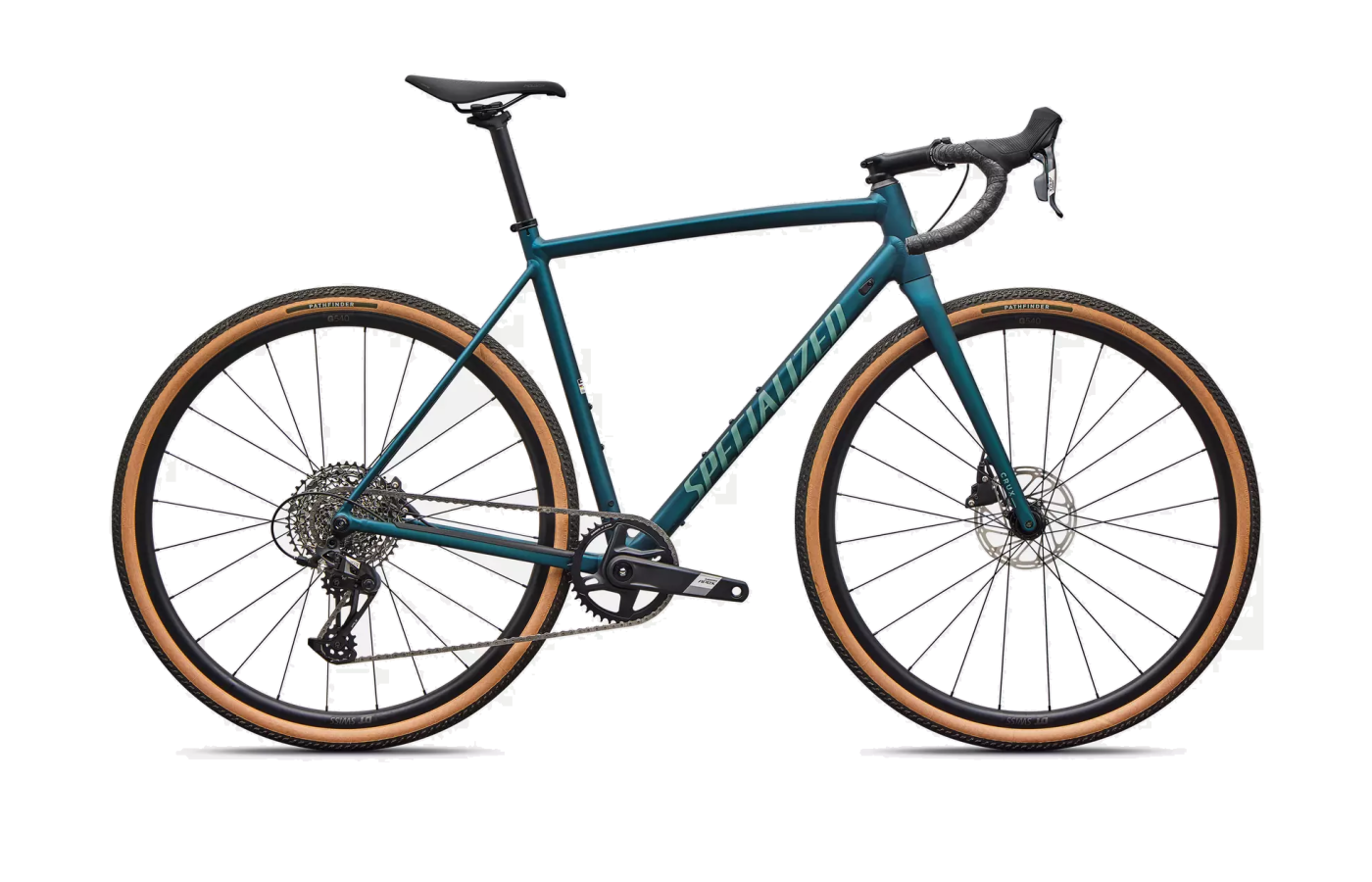
Crux
The Specialized Crux is the lightweight race-gravel benchmark — a sub-800 g frame that outguns the Aspero on weight and climbing response, though it lacks the Vault's adventure features and matches Cervelo's narrower tire clearance.
Compare →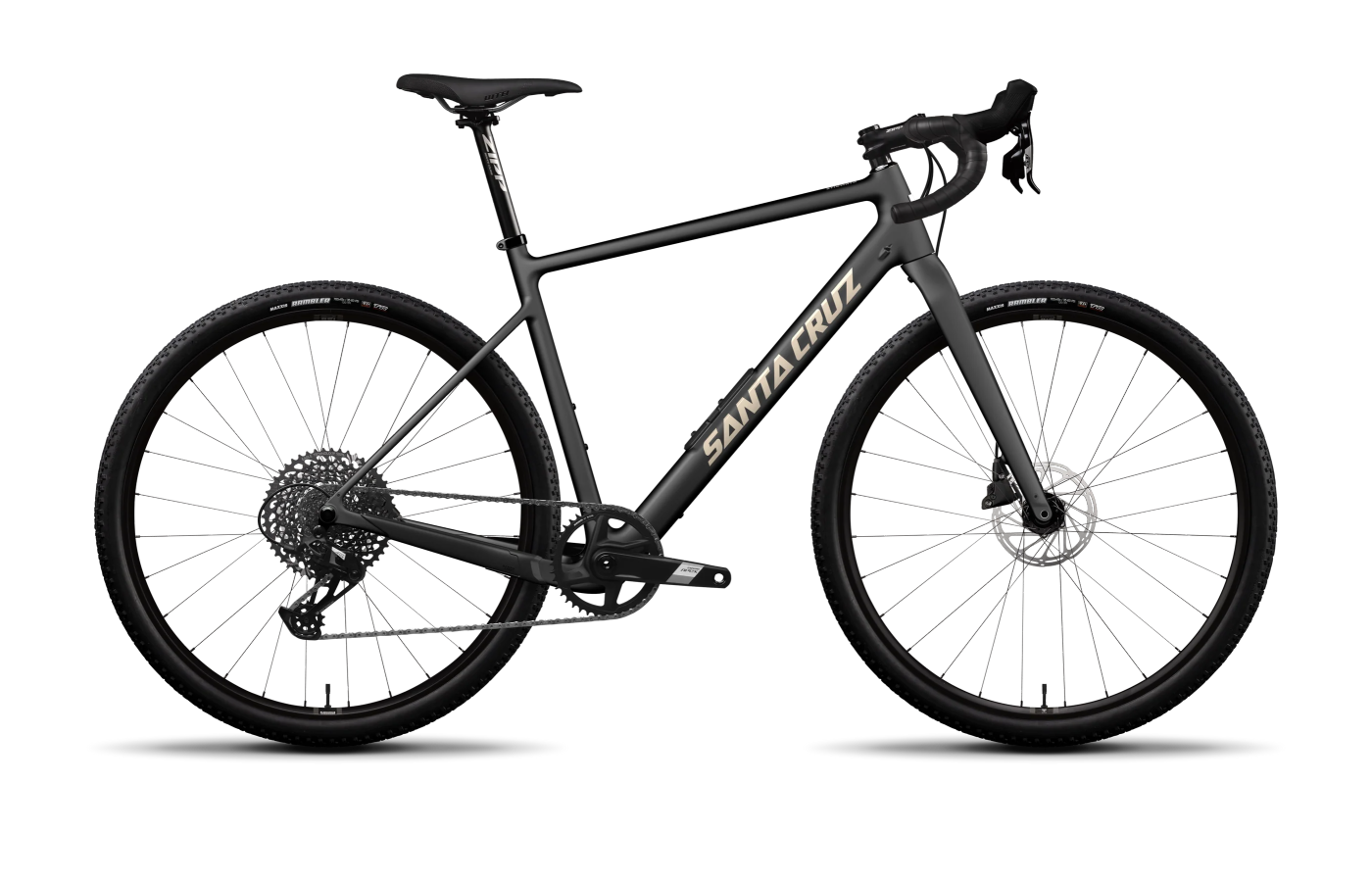
Stigmata
The Santa Cruz Stigmata splits the difference — 50 mm tire clearance and progressive adventure geometry like the Vault, but with more of the off-road enthusiast DNA of the Santa Cruz family. A direct competitor to the Vault's adventure-first pitch.
Compare →Grizl
The Canyon Grizl hits the Vault's adventure brief at a lower price point, with generous tire clearance, extensive mounting options, and Canyon's direct-to-consumer pricing advantage. Less refined than the Vault, but the budget path into the same category.
Compare →