Aspero
vsStigmata
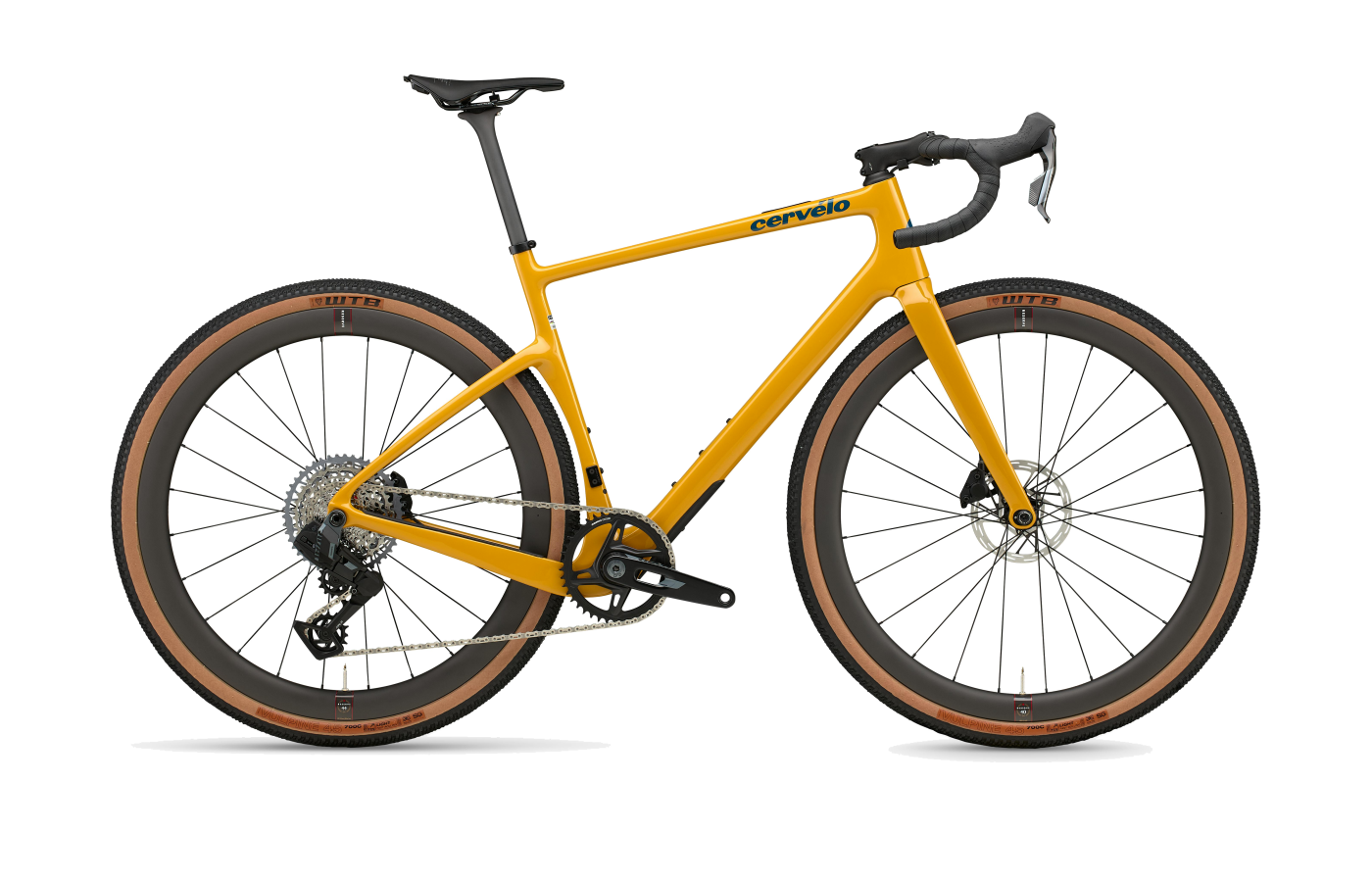
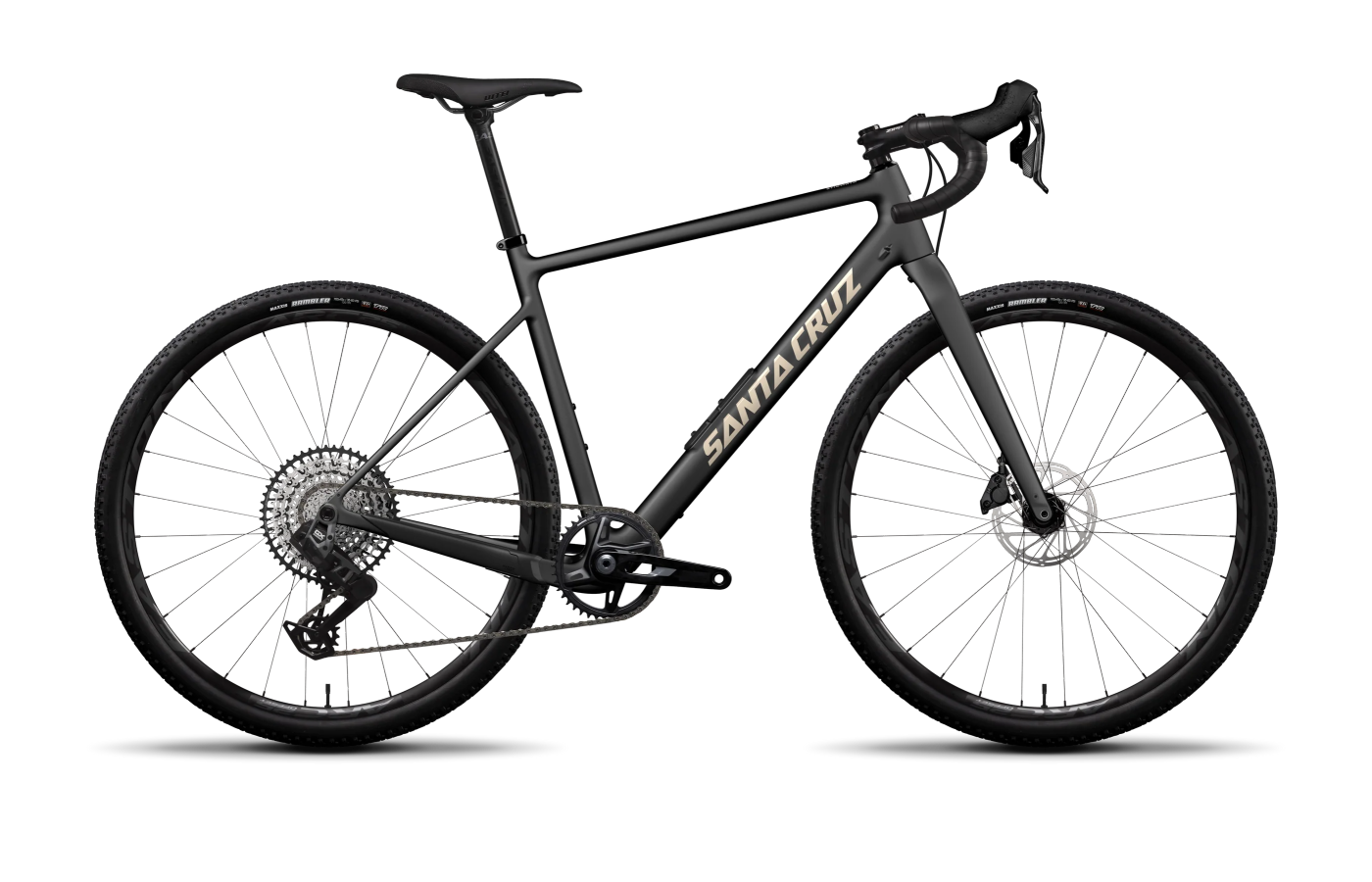
Two gravel races, two timelines.
The Cervelo Aspero is a road racer's gravel bike that treats dirt as a faster surface. The Santa Cruz Stigmata is a mountain bike with drop bars.
Aspero
- Sharper, snappier on hard gravel — short wheelbase, 72-degree HTA, and a stiff bottom bracket reward an active rider on smooth surfaces.
- Premium cockpit at mid-tier prices — the Reserve 40|44 carbon wheels and AB09 carbon bar appear as low as the $5,800 Rival AXS build.
- Lighter and more aero — Cervelo claims 4.2 W faster than the previous Aspero, and complete builds undercut the Stigmata by ~1 kg at equivalent groupsets.
- 45 mm tire clearance is generous but bested by the Stigmata's 50 mm — and reviewers note the Aspero gets nervous on technical singletrack.
- No suspension-correction option — what you see is what you ride.
Stigmata
- Stable in chunk — a 69.5-degree HTA, 87 mm of trail, and a 1,043 mm wheelbase (size SM) keep the bike on line where the Aspero would skitter.
- Suspension-corrected for a 40 mm fork — bolt on a RockShox Rudy without ruining the geometry.
- Built to live with — threaded BSA bottom bracket, UDH, 27.2 mm round seatpost, external cable routing, and a lifetime frame warranty.
- Heavier and 'as aero as a Jeep' — the stock 45 mm Maxxis Rambler tires drag noticeably on tarmac.
- No Shimano option, no cheap entry — the lineup starts at $4,149 for the Apex build.
Editor’s analysis
Both are 'race bikes,' but they're racing on different planets — one wins by carrying speed on hard-packed gravel, the other by holding composure when the rocks start showing up.
On paper, the Cervelo Aspero and Santa Cruz Stigmata sit in the same gravel-race bracket — carbon frames, ~9 kg complete, similar money, both built around a 1x SRAM AXS drivetrain on the popular middle builds. Spend any time with the geometry charts and the philosophies separate immediately.
The Cervelo Aspero is the gravel bike for road racers who don't want to give up their road-racer habits. A 72-degree head tube, a 580 mm stack and 397 mm reach on a 56 — this is essentially a relaxed Cervelo R-series with 45 mm tire clearance bolted on. Cervelo softened the layup for the second generation and added 5 mm to the chainstays, but the personality is unchanged: short wheelbase, sharp front end, an AB09 cockpit lifted from the aero-road playbook. Reviewers consistently put it on smooth fire roads and chip-seal, where it 'maintains speed effortlessly.'
The Santa Cruz Stigmata abandoned its cyclocross past entirely for gen 4. A 69.5-degree head tube — 2.5 degrees slacker than the Cervelo Aspero — paired with a stubby 70 mm stem, a wheelbase 60+ mm longer than the previous Stigmata, 50 mm tire clearance, and a frame engineered for an optional 40 mm RockShox Rudy fork. Santa Cruz dropped frame stiffness ~10 percent on purpose and gained 120 grams in the process. The result is a bike Escape Collective called 'as aero as a Jeep' and meant it as a compliment.
Put another way: the Cervelo Aspero is the bike you buy when most of your 'gravel' is paved with the occasional dirt detour. The Santa Cruz Stigmata is the bike you buy when most of your gravel is closer to MTB singletrack than to a fire road, and you've made peace with going slower on tarmac to get it.
Where the builds differ.
Comparing our editor's-pick builds side-by-side. Winners highlighted row-by-row — lower price and weight, and the better-spec component, each mark a point.
Build variants & pricing
The Cervelo Aspero spans $3,550–$7,050 across six builds; the Santa Cruz Stigmata runs $4,149–$7,549 across five.
Prices are current US MSRP. The Aspero Rival XPLR AXS pick wins on contact points (carbon bar, Reserve 40|44 carbon wheels) for $750 more than the Stigmata Rival 1x AXS, which runs Easton alloy wheels and an alloy bar — a cleaner upgrade path on the Santa Cruz, a finished bike on the Cervelo.
How they fit, how they steer.
The Aspero size 54 and the Stigmata SM are the fit-picked sizes. Reach is comparable (388 mm Aspero vs 390 mm Stigmata), but the Stigmata sits 9 mm taller in stack, 2.5 degrees slacker at the head tube, and 2 mm shorter in chainstays — long, slack, and short out back, classic MTB-derived geometry.
Which size should I buy?
Both ranges cover roughly 5'2" to 6'4". The Stigmata uses MTB-style alpha sizing (XS–XXL); the Aspero sticks to numeric (48–61).
→These are starting points. Flexibility, riding style, and preferred position all shift the answer — if you’re between sizes, a professional fit beats a chart.
What the magazines said.
Published reviews from trusted cycling outlets. Click through for the full write-up.
Which one should you buy?
If your gravel is groomed and you want road-bike speed off-pavement, get the Aspero. If your gravel is closer to singletrack and you'd rather underbike than upbike, get the Stigmata.
Aspero
If you want a bike that feels like a slightly relaxed Cervelo R5 with room for 45 mm tires — fast on tarmac, sharp on smooth gravel, willing to do the occasional fast group road ride — the Aspero is still the benchmark in this category. It's the gravel bike for riders who'd rather tighten their drivetrain than slacken their head angle.
Stigmata
If your idea of a good gravel ride involves dropping into singletrack you'd normally ride a hardtail on — or you want one bike that handles bikepacking, racing, and trail-poaching duty — the Stigmata's progressive geometry, suspension-corrected fork mount, and lifetime warranty make it a buy-it-once choice. Just know you're trading tarmac speed for trail composure.
Questions buyers actually ask.
Short answers to the things we get emailed about most often.
01Which is faster on smooth gravel and pavement?
The Cervelo Aspero, comfortably. It's the lighter bike (~8.6–8.8 kg complete on Rival builds vs ~9.4 kg for the Stigmata Rival), runs deeper, more aero Reserve 40|44 wheels, and sits the rider in a much more aggressive position — 580 mm stack and 397 mm reach on a 56 vs 600 mm and 420 mm on the Stigmata Large.
Cervelo claims a 4.2 W aero saving over the previous Aspero. Santa Cruz makes no aero claims at all — Escape Collective famously called the Stigmata 'as aero as a Jeep.' On a 40 km flat tarmac stretch, expect the Aspero to be measurably ahead at the same effort.
02Which is better on rough or technical terrain?
The Santa Cruz Stigmata, by a wide margin. The 69.5-degree head tube angle is 2.5 degrees slacker than the Aspero's 72-degree HTA, the wheelbase is 60+ mm longer, and Santa Cruz intentionally reduced frame stiffness ~10 percent to improve compliance.
It's also suspension-corrected for a 40 mm RockShox Rudy fork, which transforms it into something close to a short-travel hardtail with drop bars. Reviewers consistently report braking later, descending faster, and feeling 'more capable than they actually are' on the Stigmata — none of that language shows up in Aspero reviews.
03What's the maximum tire clearance?
Cervelo Aspero: 45 mm officially in 700c (47–48 mm in 650b), with about 6 mm of mud clearance. The stock WTB Vulpine is a 40 mm tire — most reviewers recommend going wider immediately to unlock the bike's comfort.
Santa Cruz Stigmata: 50 mm in 700c, the widest in this comparison and one of the widest in the gravel-race category. The stock Maxxis Rambler is a 45 mm. Either bike can clear common gravel rubber — but only the Stigmata clears proper 50 mm 'gravel-plus' tires.
04Can I run a suspension fork on either?
Only the Stigmata is designed for it. Santa Cruz suspension-corrected the frame for a 40 mm-travel fork (430 mm axle-to-crown), and the top RSV Rudy build ships with a RockShox Rudy Ultimate XPLR. You can buy any other Stigmata and bolt on a Rudy without ruining the geometry.
The Aspero is rigid-only. Its all-carbon Aspero fork is integral to the geometry; swapping in a suspension fork would slack the head angle and raise the front end, throwing off the design intent.
05What's the drivetrain situation?
The Cervelo Aspero offers both Shimano (GRX RX610, RX820, RX825 Di2) and SRAM (Apex AXS, Rival XPLR AXS) builds, with 1x and 2x options. If you want a 2x drivetrain for tight gear steps on mixed road/gravel rides, the Aspero is the answer.
The Santa Cruz Stigmata is SRAM-only and 1x-only. The Rival, Force, and Apex builds all run a 'mullet' setup pairing road shifters with an Eagle MTB derailleur and 10–52T cassette — wider range for steep dirt climbs, fewer options for high-cadence tarmac riders.
06How serviceable are they?
Both are easier to live with than the average aero-road bike, and the Stigmata is the friendlier of the two. It uses a standard 68 mm BSA threaded bottom bracket, a 27.2 mm round seatpost (dropper-compatible), a UDH derailleur hanger, and external cable routing — no headset bearings to bleed brakes through.
The Aspero has a threaded T47/T47a bottom bracket (a big upgrade over the previous press-fit) and a UDH, but routes hoses semi-internally under the stem. Cleaner aesthetics, slightly more work for stem swaps. Both are dropper-compatible.
07Which is the better value?
Depends on what you weight. At equivalent SRAM Rival AXS 1x trim, the Aspero is $5,800 with carbon Reserve wheels and an AB09 carbon bar, while the Stigmata is $5,049 with alloy Easton wheels and an alloy bar. The Aspero arrives more 'finished'; the Stigmata leaves more room (and need) for upgrades.
Long-term, the Stigmata's lifetime frame warranty (and lifetime warranty on Reserve wheels where equipped) plus its standardized parts make it a better 'forever bike' bet. The Aspero is the better value if you'd rather not have to buy carbon wheels later.
08Which has the wider build range?
The Cervelo Aspero, by both ends. It starts at $3,550 with a Shimano GRX RX610 mechanical build — a real entry point for riders who don't want to spend $4k+ on a carbon gravel bike — and tops out at $7,050 for the GRX RX825 Di2.
The Stigmata starts at $4,149 (Apex mechanical) and tops out at $7,549 (Force AXS RSV Rudy). Santa Cruz only sells the bike in its top-tier CC carbon, which raises the floor — but also means every Stigmata gets the same frame, where the Aspero 5 (a separate model, not in this comparison) is the top-tier carbon version.
Similar bikes
If your priorities don’t map cleanly onto either of these, one of these adjacent bikes probably fits better.
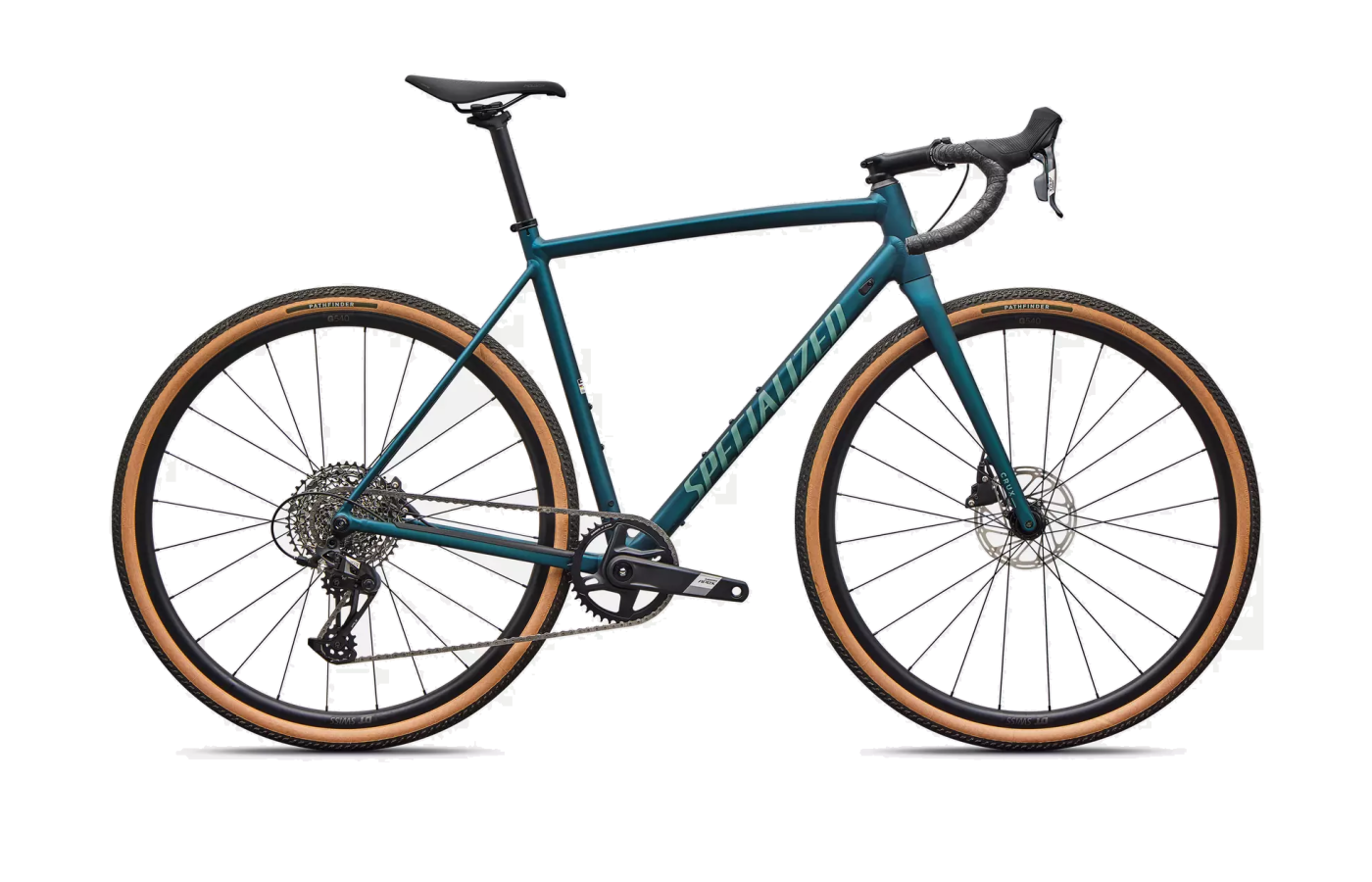
Crux
The Specialized Crux is the lightweight foil to the Aspero — a sub-7 kg gravel race bike that throws aero out the window for pure climbing. If most of your gravel goes uphill, the Crux is hard to beat.
Compare →Szepter
The YT Szepter shares the Stigmata's MTB-inspired, suspension-first philosophy at direct-to-consumer pricing — typically 30–40% less than the Santa Cruz for similar specs. The catch is no dealer network and no demos.
Compare →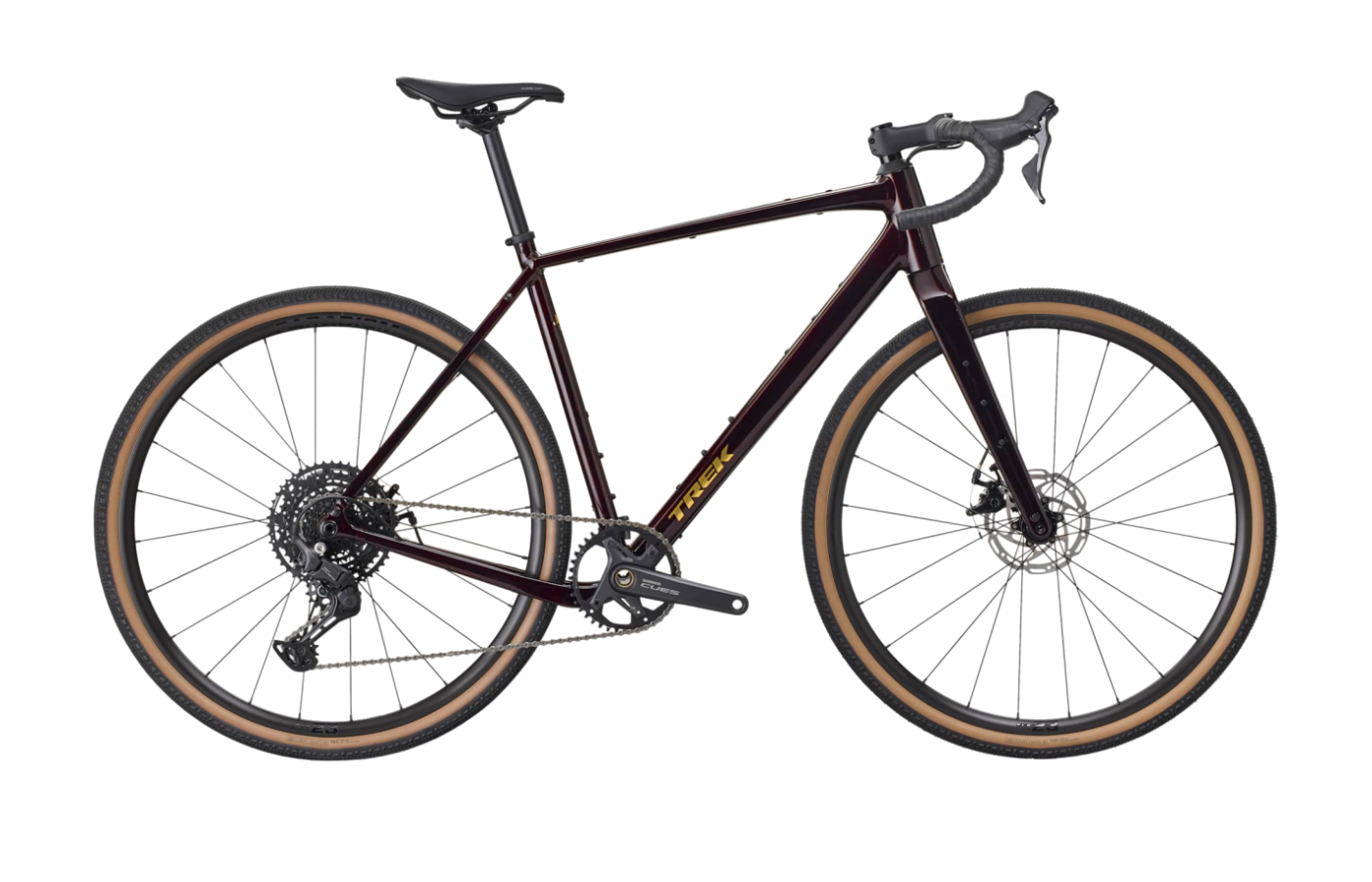
Checkpoint
The Trek Checkpoint splits the difference between these two: the IsoSpeed decoupler softens the rear end without going full MTB-geo, and there are real bikepacking mounts the Aspero refuses to add.
Compare →