Caledonia-5
vsSoloist
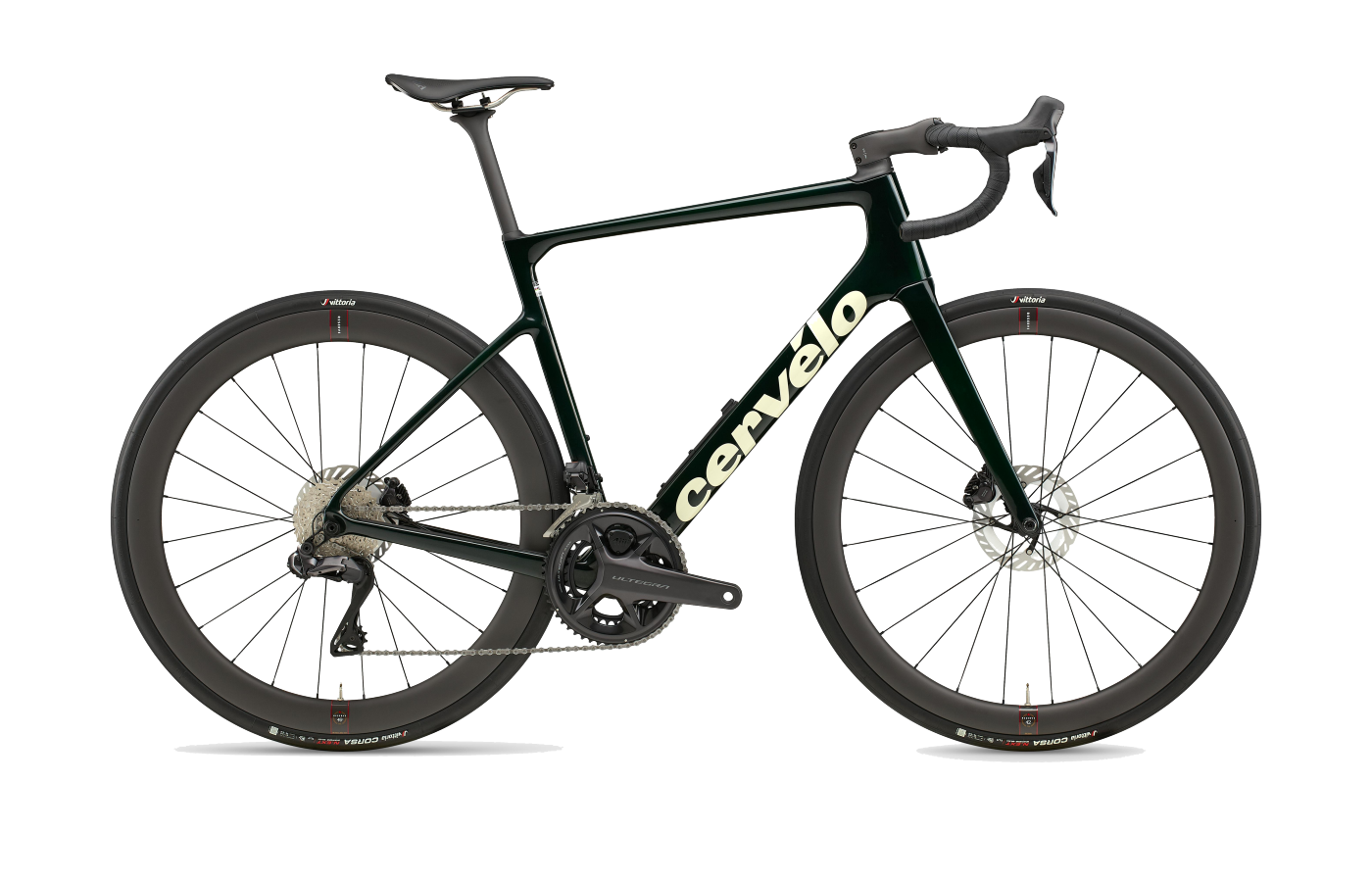
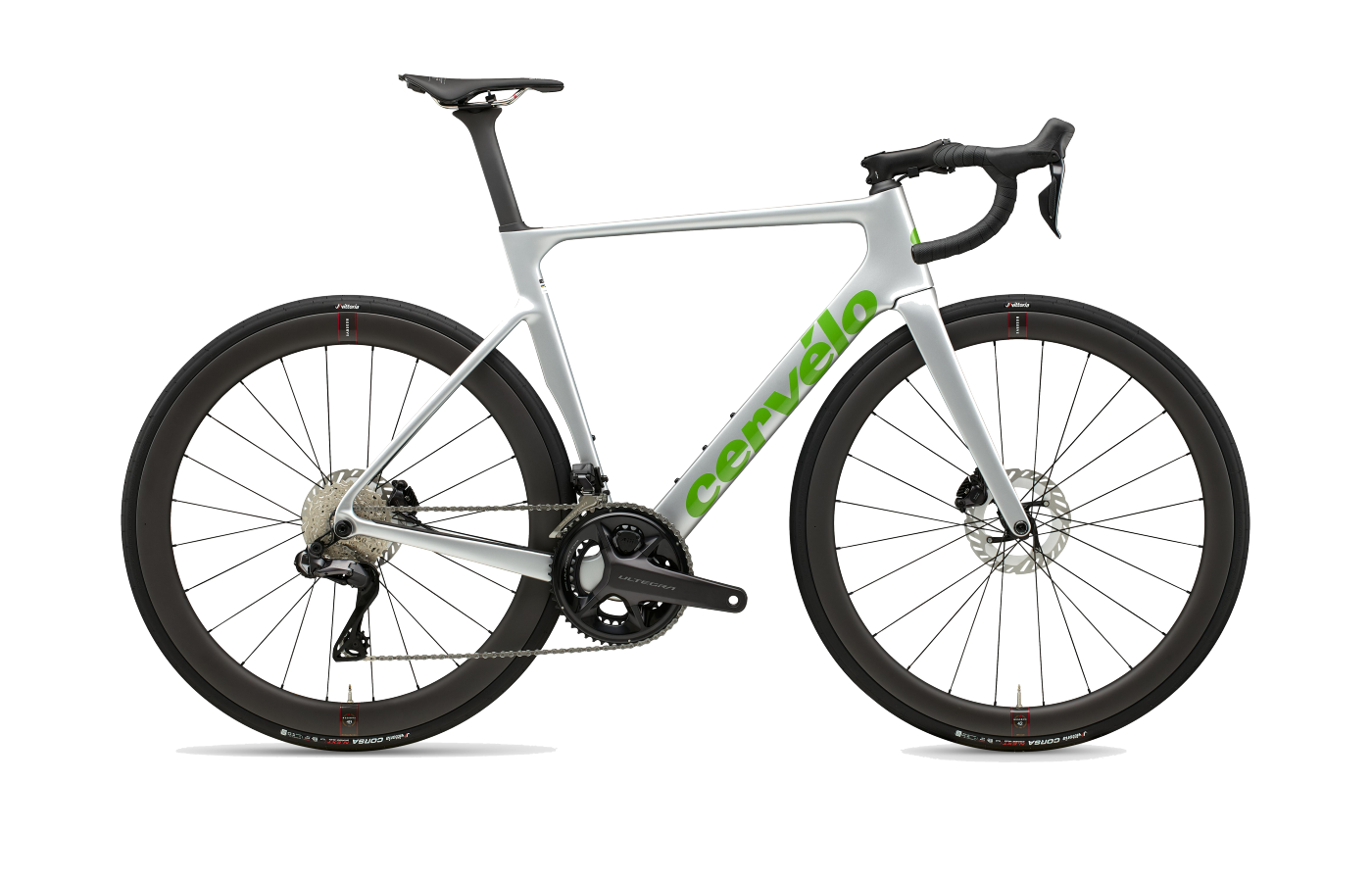
Same brand, opposite missions.
The Caledonia-5 is Cervélo's all-day endurance chassis with 36 mm clearance. The Soloist is its sharp-handling all-rounder built around the S5's aero shapes.
Caledonia-5
- Widest clearance in the segment — officially 36 mm, with room for full-coverage fenders over 34 mm rubber.
- Integrated downtube storage — flip-lock hatch swallows a tube, multi-tool, CO2, and snack.
- Stable at speed and on chip-seal — longer wheelbase and slacker front end shrug off rough pavement.
- Entry price is $7,400 — no sub-$7k door into the platform.
- ST31 fully integrated cockpit means stem swaps require a brake bleed.
Soloist
- Sharp, responsive handling — 73° head angle, 410 mm chainstays, and 977 mm wheelbase reward attacks and tight corners.
- True budget entry — mechanical 105 build at $3,900 puts a WorldTour-quality frame within reach.
- Mechanic-friendly integration — under-stem cable routing lets you swap bar or stem without bleeding brakes.
- Front end runs firm — multiple reviewers flag chatter on broken tarmac.
- Tire clearance caps at 34 mm and there's no in-frame storage.
Editor’s analysis
Two Cervélos that share a logo and almost nothing else — one is built for the sixth hour, the other for the next attack.
Cervélo positions the Caledonia-5 between the R5 climber and the S5 aero rocket, but with the comfort dial cranked. It clears 36 mm tires (a notch wider than most endurance peers), hides a downtube storage compartment for tools and spares, and shapes its tubes for stability over outright slipperiness. The Soloist sits in a different slot entirely: aero tube shapes borrowed from the S5, geometry pulled from the R5, and a deliberately stripped-back integration spec that keeps a home mechanic in the game.
On size 54, the geometry split is unambiguous. The Soloist drops 15 mm of stack (540 vs 555), gains 5 mm of reach (383 vs 378), and steepens the head tube by a full degree (73° vs 72°). It also pulls the wheelbase in by 19 mm (977 vs 996.3) and shortens the chainstays by 5 mm (410 vs 415). Translation: the Cervelo Soloist puts you in a lower, longer tuck on a quicker-handling chassis; the Cervelo Caledonia-5 sits you up on a stable, planted long-wheelbase platform.
The build lineups barely overlap on price. The Cervelo Caledonia-5 starts at $7,400 (Rival AXS) and tops out at $12,750 (Red AXS) — every build runs electronic shifting and the integrated ST31 carbon cockpit. The Cervelo Soloist runs from $3,900 (mechanical 105) to $7,600 (Force AXS 1), an alloy ST36 stem on every build, and the entry tier slots in well below where the Caledonia even begins. If the budget is the constraint, the Caledonia isn't really in the conversation.
Put another way: the Cervelo Caledonia-5 is the bike for riders who measure days in hours, not minutes, and want the wider tires and storage to match. The Cervelo Soloist is the bike for riders who want most of the S5's speed without the proprietary cockpit and the WorldTour-only price tag.
Where the builds differ.
Comparing our editor's-pick builds side-by-side. Winners highlighted row-by-row — lower price and weight, and the better-spec component, each mark a point.
Build variants & pricing
Both lines share Reserve wheels and Vittoria Corsa N.EXT rubber, but the Soloist starts $3,500 lower and the Caledonia tops out $5,150 higher.
Prices are current US MSRP. The Caledonia-5 is Di2/AXS-only; if you want mechanical shifting on a Cervélo road platform, the Soloist 105 is the only ticket.
How they fit, how they steer.
Both at size 54 — the fit-picked size for a 5'8" rider on each. The Soloist sits 15 mm lower with 5 mm more reach, a full degree steeper at the head tube, and 19 mm tighter on wheelbase. Different bikes despite the matching badge.
Which size should I buy?
Size recommendations come from stack, reach, and effective top tube. Both lines run six sizes from 48 to 61, and the labels match across the range.
→These are starting points. Flexibility, riding style, and preferred position all shift the answer — if you’re between sizes, a professional fit beats a chart.
What the magazines said.
Published reviews from trusted cycling outlets. Click through for the full write-up.
Which one should you buy?
If you want all-day comfort, wider tires, and built-in storage, get the Caledonia-5. If you want sharper handling, lower stack, and a much cheaper way in, get the Soloist.
Caledonia-5
If your rides routinely break four hours, your local roads aren't always smooth, and you'd happily run 32–34 mm tires year-round, the Caledonia-5 is the smarter chassis. The taller stack, longer wheelbase, and 36 mm clearance keep you fresh deep into rides where a Soloist would have you riding the brakes.
Soloist
If most of your rides are under three hours, you live in the drops, and you care more about how the bike turns in than how it absorbs the road, the Soloist gives you R5-derived handling on aero S5-shaped tubes — at a price the Caledonia simply doesn't offer.
Questions buyers actually ask.
Short answers to the things we get emailed about most often.
01Which is more comfortable on long rides?
The Caledonia-5, by design. It sits you 15 mm taller in the front, runs a 19 mm longer wheelbase for stability, and clears 36 mm tires versus the Soloist's 34 mm. Cervélo's D-shaped seatpost and dropped seatstays are tuned for compliance, and reviewers consistently describe it as planted and composed even on broken pavement.
The Soloist isn't punishing on a smooth century, but multiple reviewers (Velo, Cyclist Australia/NZ) flagged a firm, chattery front end on rougher surfaces — something the Caledonia handles without complaint.
02Which handles better in tight corners?
The Soloist. Its geometry is borrowed from the R5 climbing bike: a 73° head tube angle, 410 mm chainstays, and a 977 mm wheelbase at size 54 — versus 72°, 415 mm, and 996.3 mm on the Caledonia. That's a meaningful difference in turn-in speed.
Reviewers describe the Soloist as 'accurate and nimble' and praise its ability to 'rail descents.' The Caledonia is the more stable, more predictable platform — better for sweeping descents and crosswinds, less eager in switchbacks.
03What's the maximum tire clearance on each?
Caledonia-5: 36 mm officially, and Cervélo notes there's a hair of additional room. Even with full-coverage fenders fitted, you can still run up to 34 mm.
Soloist: 34 mm officially. Stock builds ship with 28 or 29 mm Vittoria Corsa N.EXT, which measure closer to 30–31 mm on the wide Reserve rims.
Neither is a gravel bike, but the Caledonia is the only one that opens the door to true all-road tires.
04Is one significantly faster on flat roads?
On paper, the Soloist's tube shapes are pulled from the S5 and it's the more aerodynamic of the two — Cervélo's published numbers put the Soloist roughly 126 grams of drag faster than the R5 climbing bike, while sitting 190 grams behind the S5 itself. The Caledonia trades aero polish for stability and clearance.
In practice, at sub-30 km/h endurance pace the gap is small. Above 35 km/h on flat roads, the Soloist's deeper-section tube shapes start to matter.
05Why is the Caledonia-5 so much more expensive?
Two reasons. First, every Caledonia-5 build runs electronic shifting (Rival AXS at the entry tier, Red AXS at the top) — there's no mechanical option to anchor a low price. Second, the Caledonia ships the fully integrated Cervélo ST31 carbon cockpit on every build, while the Soloist runs a simpler ST36 alloy stem.
The result: Caledonia spans $7,400–$12,750, Soloist spans $3,900–$7,600. There's almost no overlap, and a tier-equivalent Ultegra Di2 build costs $1,600 more on the Caledonia.
06How serviceable are the cockpits?
The Soloist's under-stem cable routing is a deliberate compromise: hoses run under the stem and into the headset, so you can swap stems or handlebars without re-bleeding brakes. Reviewers from BikeRadar to Velo single it out as one of the more mechanic-friendly setups in this price range.
The Caledonia-5's ST31 is fully integrated. Stem-length or bar-width changes mean buying a new unit and re-routing — typically a shop job.
07Does the Caledonia-5's downtube storage actually fit anything useful?
Yes, but with limits. The flip-lock hatch and tailored pouches comfortably swallow a multi-tool, spare tube, CO2 cartridge, and a small snack — essentially what would otherwise live in a saddlebag. It will not fit a full pump or a large jacket.
The Soloist has no equivalent feature. If running a clean, bagless cockpit matters to you on long rides, that's a real point for the Caledonia.
08Are they sized the same?
Both lines run six sizes from 48 to 61, with matching numeric labels — but the geometry behind those labels is different. At size 54, the Soloist is 15 mm lower in stack and 5 mm longer in reach than the Caledonia.
If you're cross-shopping between them at the same nominal size, expect the Soloist to feel notably more aggressive — more spacers under the stem may be needed to match a Caledonia-equivalent position.
Similar bikes
If your priorities don’t map cleanly onto either of these, one of these adjacent bikes probably fits better.
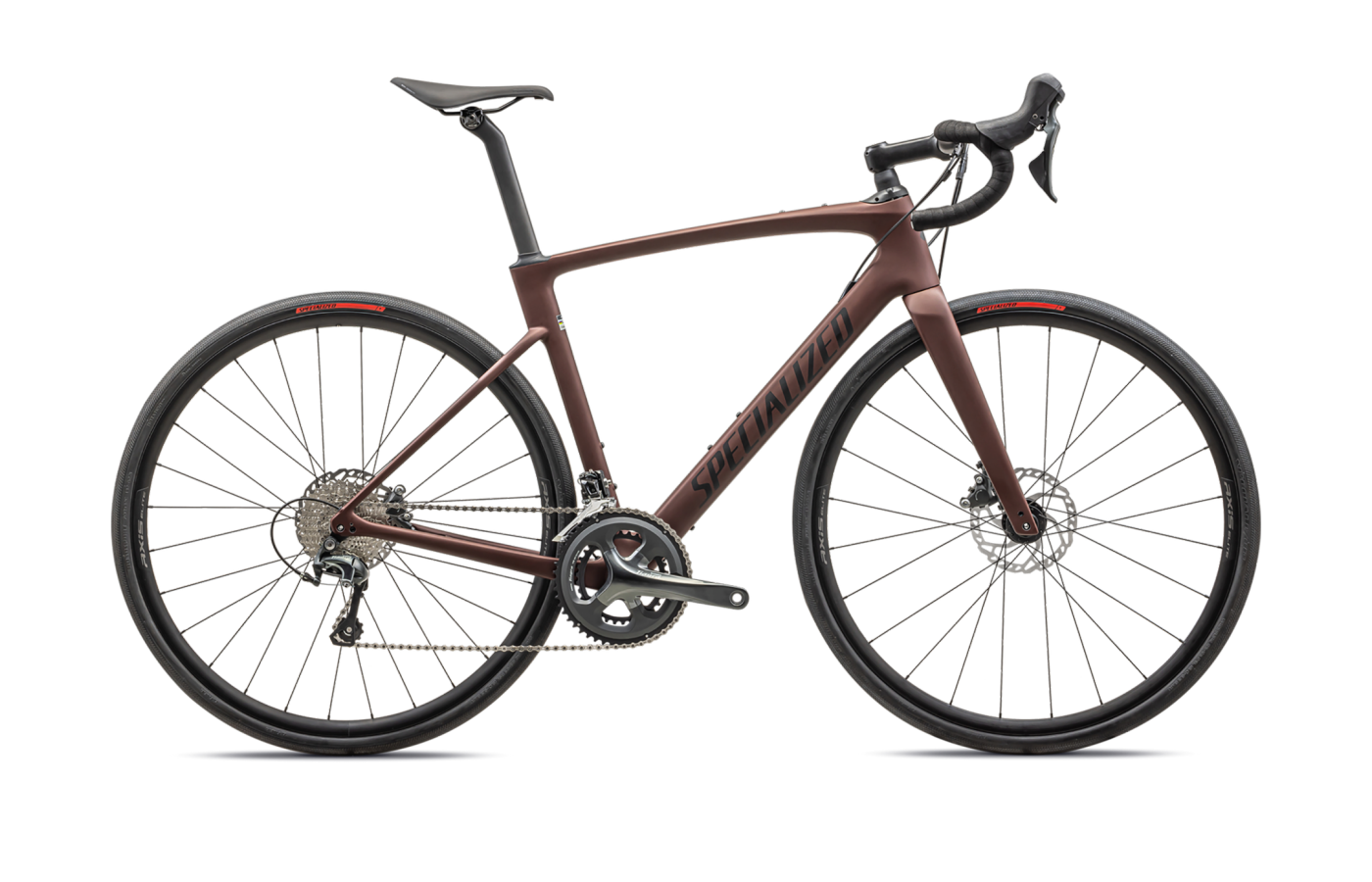
Roubaix
Specialized's endurance benchmark, with Future Shock front suspension that out-comforts even the Caledonia. Worth a look if absorbing road buzz matters more than the 36 mm clearance.
Compare →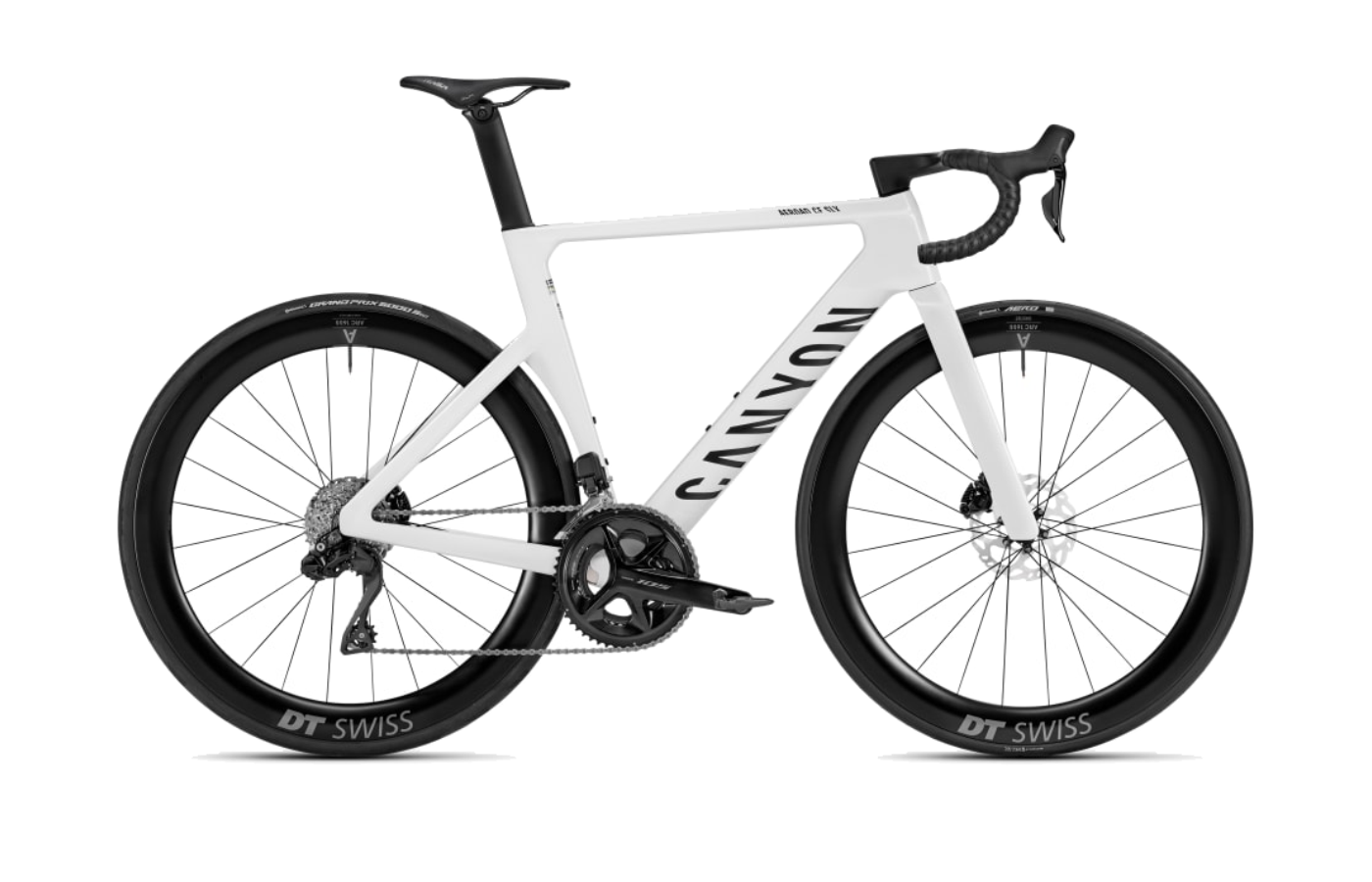
Aeroad
Canyon's flagship aero with deeper tube shapes than the Soloist and direct-to-consumer pricing — closer in mission to Cervélo's S5, but a real cross-shop if the Soloist isn't aggressive enough.
Compare →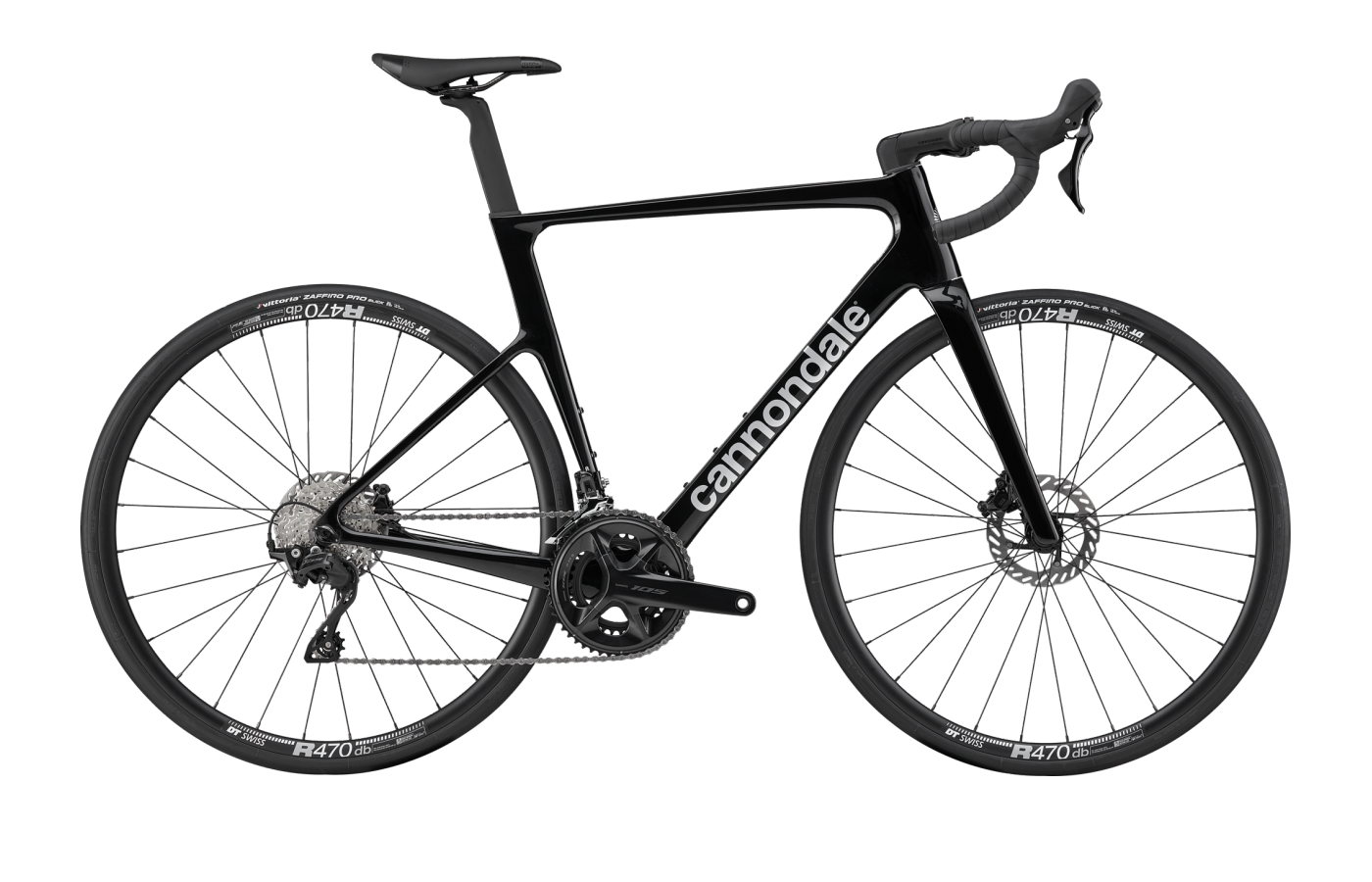
SuperSix EVO
Cannondale's all-rounder splits the same baby — aero shaping plus low weight, with a slightly more compliant ride than the Soloist and broader build options at the lower tiers.
Compare →