Caledonia-5
vsDomane
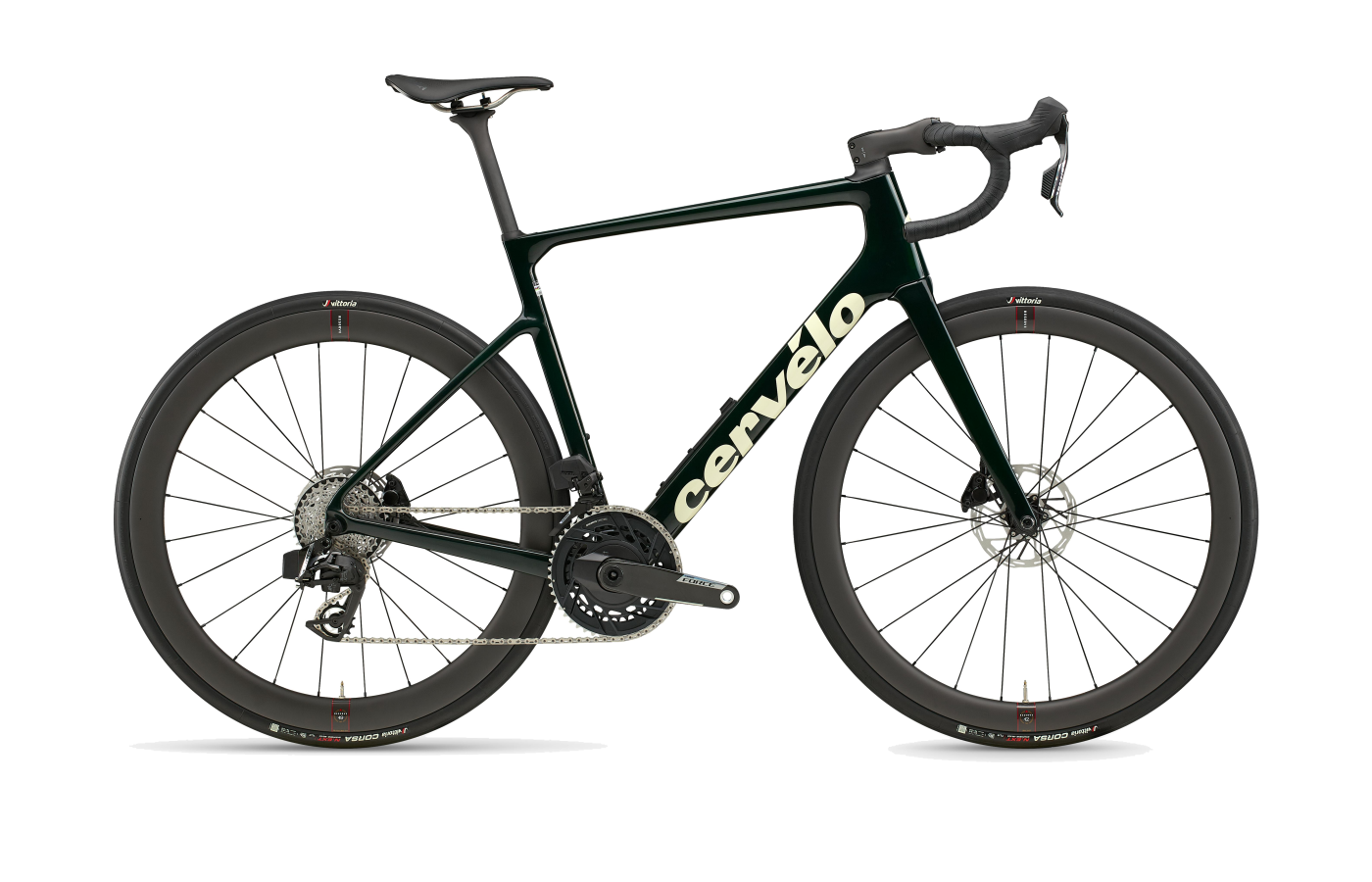
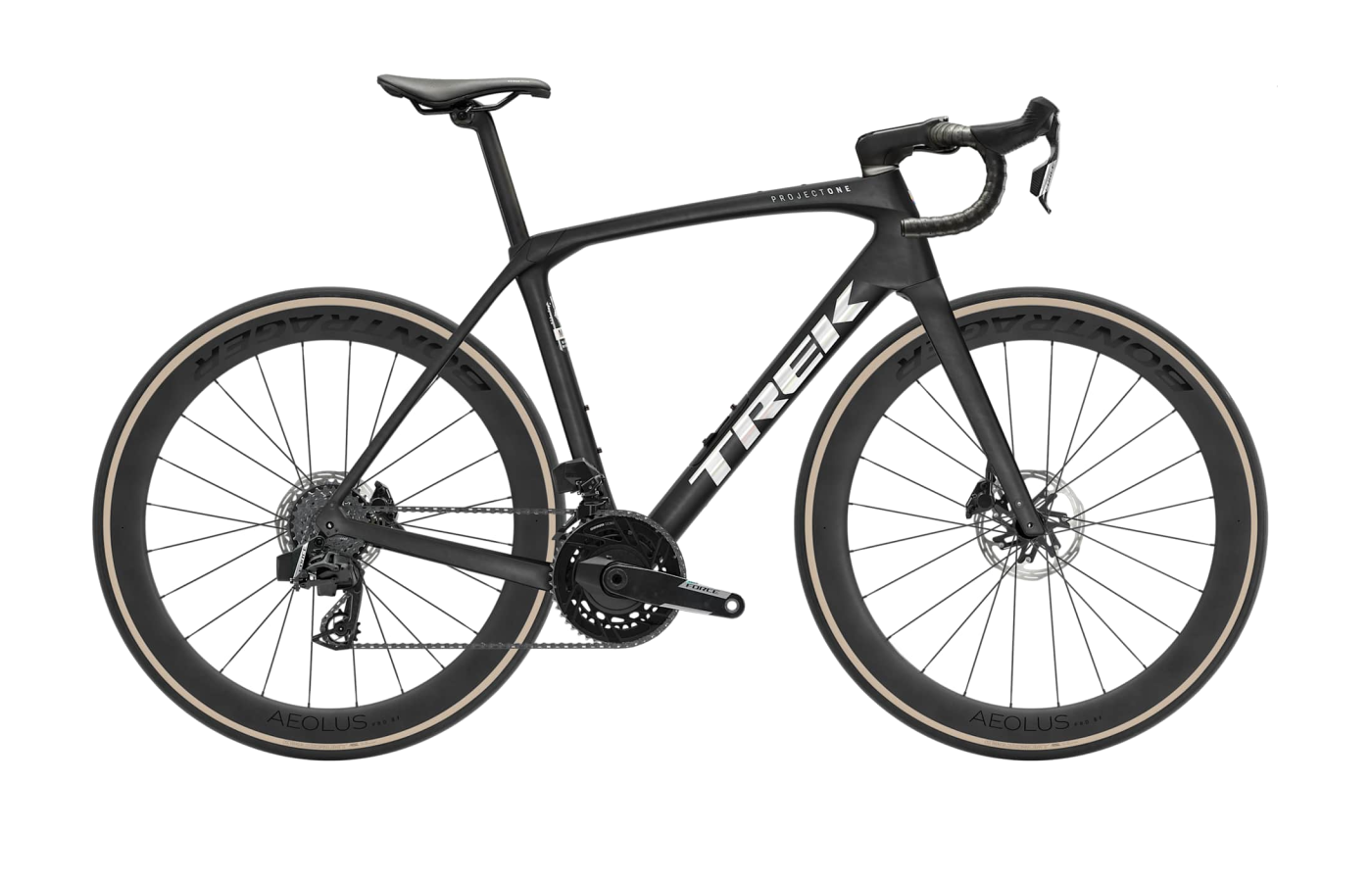
Two takes on fast endurance.
The Caledonia-5 is a de-tuned race bike that happens to fit 36 mm tires. The Domane is an all-day cruiser that hides a decoupler under the seat tube.
Caledonia-5
- Race-bike handling — 415 mm chainstays and a constant 57.8 mm trail keep the front end sharp the way the S5 does.
- Power meter on every build — even the $7,400 Rival AXS ships with one, which is rare at this tier.
- Reserve carbon wheels stock — wider front, deeper rear, on every build down to Rival.
- Price floor is $7,400 — Cervélo doesn't sell an entry-level option here.
- Compliance comes from the layup and tires, not a damper — broken pavement gets through more than the Domane allows.
Domane
- Rear IsoSpeed decoupler — mechanical compliance the Caledonia-5 doesn't try to match; reviewers call it "astonishingly comfortable."
- 38 mm tire clearance — 2 mm more than the Caledonia-5 on paper, with most testers fitting 40 mm in practice.
- Full price ladder — from a $1,199 alloy Claris build up to $12,499 SLR 9 AXS.
- Carbon builds run heavy stock — 8.3 kg on the SLR 7 AXS vs sub-8 kg territory the frame is capable of.
- Long-running seatpost-creak issue at the IsoSpeed wedge; verify your dealer has the Revision 4 hardware.
Editor’s analysis
Both want the same rider — the one logging six-hour days on imperfect roads — but they get there from opposite directions.
On paper these two land in the same endurance bracket. Both are built around 30–32 mm tires, both run wireless-electronic groupsets across the upper half of the lineup, and both are aimed at the rider who's done sucking it up on a pure race bike. Look at the geometry charts and the philosophies separate fast.
The Caledonia-5 is a Cervélo first and an endurance bike second. The chainstays stay locked at a sharp 415 mm across every size, trail is held to a uniform 57.8 mm via three different fork offsets, and the seat angles steepen through the small frames the way they do on the S5. Compliance comes from the carbon layup and the D-shaped seatpost — not a decoupler. The result is a bike that filters road buzz instead of muting it, with handling closer to the R5 than to anything else in the endurance category.
The Domane is the opposite trade. Trek runs a 75–80 mm bottom bracket drop, a 60 mm trail figure, and a non-adjustable rear IsoSpeed decoupler tuned to the softest setting of the previous generation. Stack runs 11 mm taller than the Caledonia-5 at equivalent sizes, reach 10 mm shorter. Tire clearance opens up to 38 mm officially — most testers get 40 mm in. It's a high-speed couch with internal storage and fender mounts, deliberately built for the rider who wants one bike that handles the commute, the Sunday century, and the gravel detour.
Put another way: buy the Caledonia-5 if your endurance bike is your only road bike and you still want to win the town-line sprint. Buy the Domane if your priority is staying fresh at hour five — and you'd rather upgrade the wheels than the frame.
Where the builds differ.
Comparing our editor's-pick builds side-by-side. Winners highlighted row-by-row — lower price and weight, and the better-spec component, each mark a point.
Build variants & pricing
Tier-matched: both editor's picks run SRAM Force AXS at almost identical money ($9,000 vs $8,999).
Prices are current US MSRP. The Caledonia-5 lineup tops out at $12,750 and floors at $7,400; the Domane spans almost ten grand wider, from a $1,199 alloy Claris build to a $12,499 SLR 9 AXS. Every Caledonia-5 ships with a power meter as standard.
How they fit, how they steer.
Fit-picked sizes: 54 on the Caledonia-5, 50 on the Domane. The Cervélo sits 9 mm taller in stack and 10 mm longer in reach — a noticeably racier position. Trail is 2.2 mm tighter (57.8 vs 60), chainstays 5 mm shorter (415 vs 420).
Which size should I buy?
Both ranges overlap broadly between 54 and 58. The Domane extends two sizes smaller (47 cm) and two larger (62 cm) than the Caledonia-5.
→These are starting points. Flexibility, riding style, and preferred position all shift the answer — if you’re between sizes, a professional fit beats a chart.
What the magazines said.
Published reviews from trusted cycling outlets. Click through for the full write-up.
Which one should you buy?
If you want a race bike that survives broken roads, get the Caledonia-5. If you want a long-distance bike that survives anything, get the Domane.
Caledonia-5
If your idea of an endurance bike is a de-tuned S5 — sharp handling, racy fit, room for 30 mm tires and the occasional 36 mm experiment — this is it. The locked-short chainstays and constant trail give it the front-end snap the Domane deliberately gives up.
Domane
If you want one bike that'll do the commute, the gravel shortcut, the Sunday century, and the multi-day credit-card tour, the IsoSpeed decoupler and 38 mm clearance make it the more versatile platform. You'll trade a few grams and some front-end sharpness for genuine all-day comfort.
Questions buyers actually ask.
Short answers to the things we get emailed about most often.
01Which is more comfortable on long rides?
The Domane, by a clear margin. Trek's rear IsoSpeed decoupler is a mechanical pivot that lets the seat tube flex independently of the rest of the frame — reviewers describe it as "astonishingly comfortable," particularly over square-edged hits and high-frequency road buzz.
The Caledonia-5 relies on its carbon layup, a D-shaped seatpost, and tire volume for compliance. It's smooth, but it filters the road rather than muting it. On a six-hour day with rough pavement, most riders will feel less beat up on the Domane.
02What's the maximum tire clearance?
Caledonia-5: 36 mm officially, up from 34 mm on the previous generation. Plenty for chip-seal, packed dirt, and light gravel.
Domane: 38 mm officially. Multiple long-term reviewers have fit 40 mm — even 41 mm — tires without issue.
Neither is a gravel bike. For sustained off-road riding, look at a Cervélo Áspero or a Trek Checkpoint.
03Which handles better in fast corners?
The Caledonia-5. Cervélo holds trail at a constant 57.8 mm across every size by varying fork offset, and the chainstays are locked at 415 mm — about 5 mm shorter than the Domane. The result is a sharper, more eager front end, closer in feel to a pure race bike than to a typical endurance frame.
The Domane is deliberately the opposite. A 60–61 mm trail figure and 1,010 mm wheelbase prioritize high-speed stability and predictability. Reviewers consistently call it "surefooted" and "planted" — exactly the wrong descriptors for a criterium bike, exactly the right ones for a long descent at hour five.
04How do the geometries compare for a 5'8" rider?
On the fit-picked sizes — 54 cm Caledonia-5 vs 50 cm Domane — the Cervélo puts you in a noticeably racier position: stack 555 mm vs 546 mm (the Domane is 9 mm shorter, which sounds backward but reflects Trek's tighter size jumps), reach 378 mm vs 368 mm.
That 10 mm longer reach combined with the racier stack-to-reach ratio means the Caledonia-5 stretches you out more. The Domane keeps you more upright, more compact — closer to a touring fit.
05Are the spec packages really that different?
Yes. Cervélo specs Reserve carbon wheels and a power meter on every Caledonia-5 build, including the entry-level Rival AXS at $7,400. Trek specs alloy Bontrager wheels on everything below the SLR tier and includes a power meter only on the Red AXS-equipped builds.
Tested head-to-head at similar money — the Caledonia-5 Force AXS at $9,000 vs the Domane SLR 7 AXS at $8,999 — the Cervélo arrives lighter and more upgrade-ready out of the box. The Trek arrives more comfortable, with internal storage and fender mounts the Cervélo also has but doesn't trade on as hard.
06Does the Domane really have the seatpost-creak problem?
It did, and the issue is well-documented across multiple long-term reviews — including a Velo test bike that "creaked incessantly" on rough roads. The cause is the IsoSpeed wedge mechanism that holds the seatpost in place.
Trek has issued multiple revisions of the wedge hardware (Revision 2 and Revision 4). Owners running the latest part with a generous coat of carbon paste generally report the issue resolved. If you're buying new, ask the dealer to confirm the bike ships with the current wedge revision. If you're buying used, factor a wedge swap and a careful seatpost re-install into the price.
07Can either take fenders for winter riding?
Both. The Domane has full-coverage fender mounts standard on every model, top to bottom. With fenders fitted, you can still run up to 35 mm tires on the carbon builds.
The Caledonia-5 also has fender mounts, and Cervélo states you can fit 34 mm tires with mudguards in place. Neither bike asks you to choose between commuting and racing — and that's a big part of why they exist.
08Which holds resale value better?
Both depreciate roughly 30–40% over three years on the used market — typical for premium carbon road bikes. Trek's larger dealer network and wider awareness mean Domanes move faster but at slightly tighter margins. Cervélos sell to a smaller pool but tend to hold a marginal price premium when they do sell.
For either, the steepest depreciation is in year one. Buying a one-season-old SLR 7 or Force AXS second-hand is one of the better ways into either platform.
Similar bikes
If your priorities don’t map cleanly onto either of these, one of these adjacent bikes probably fits better.
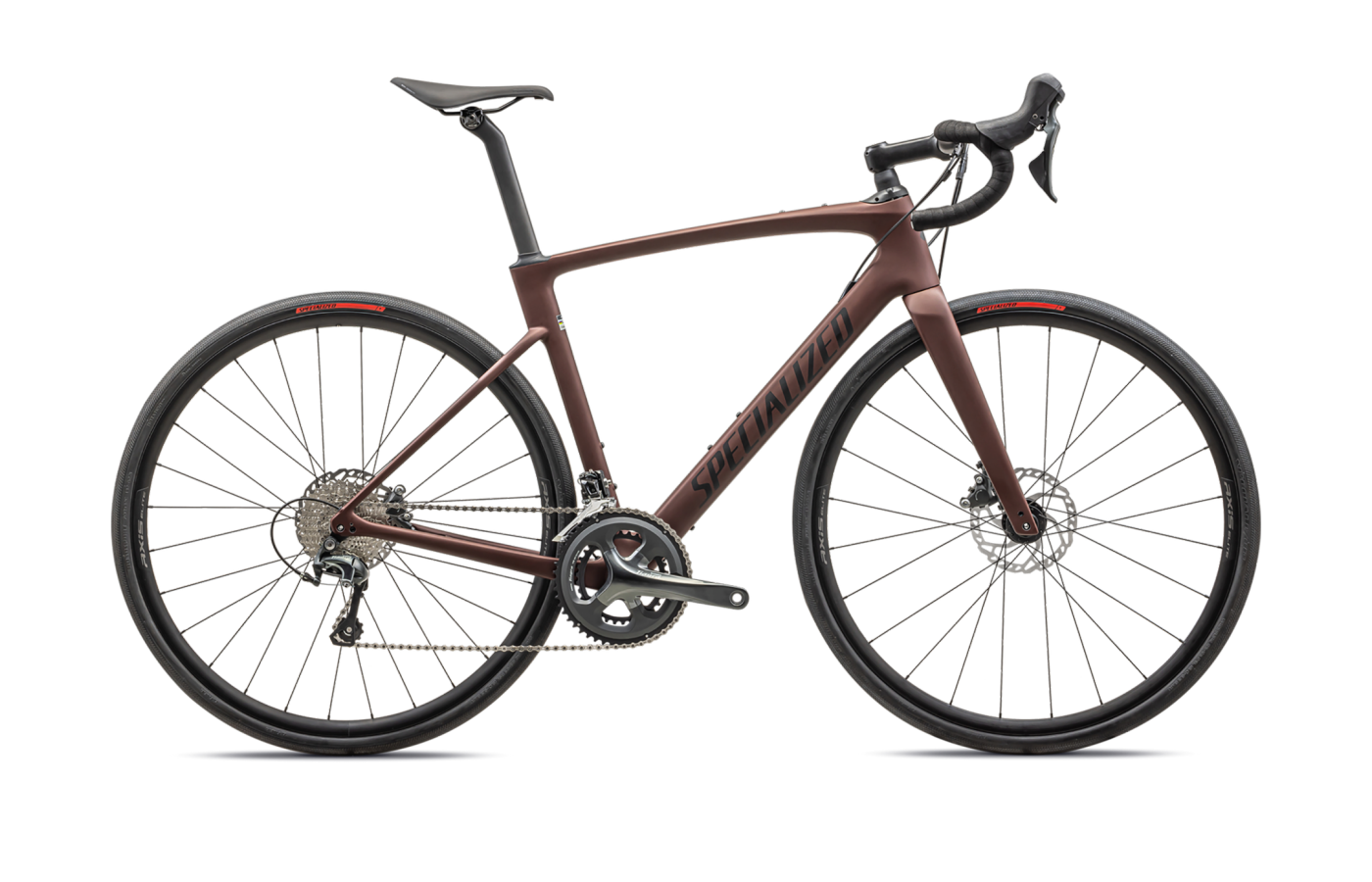
Roubaix
The Domane's most direct rival. Specialized's Future Shock 3.0 puts the suspension at the cockpit instead of the seat tube — different solution, similar mission, with even more tire clearance.
Compare →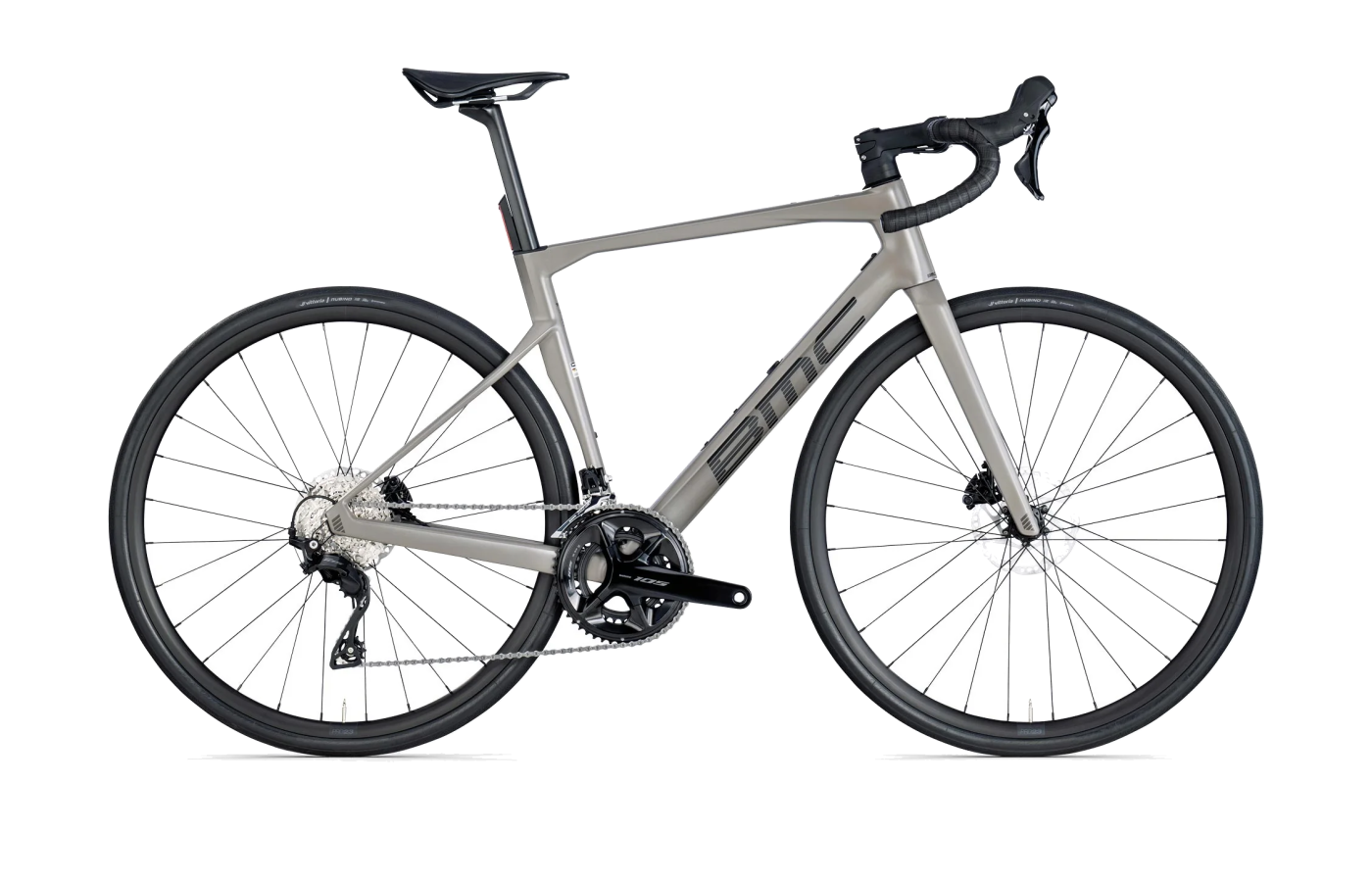
Roadmachine
Like the Caledonia-5, the BMC Roadmachine wants race-bike handling on endurance roads — and pushes the integrated cockpit further. A cleaner aesthetic, similar money.
Compare →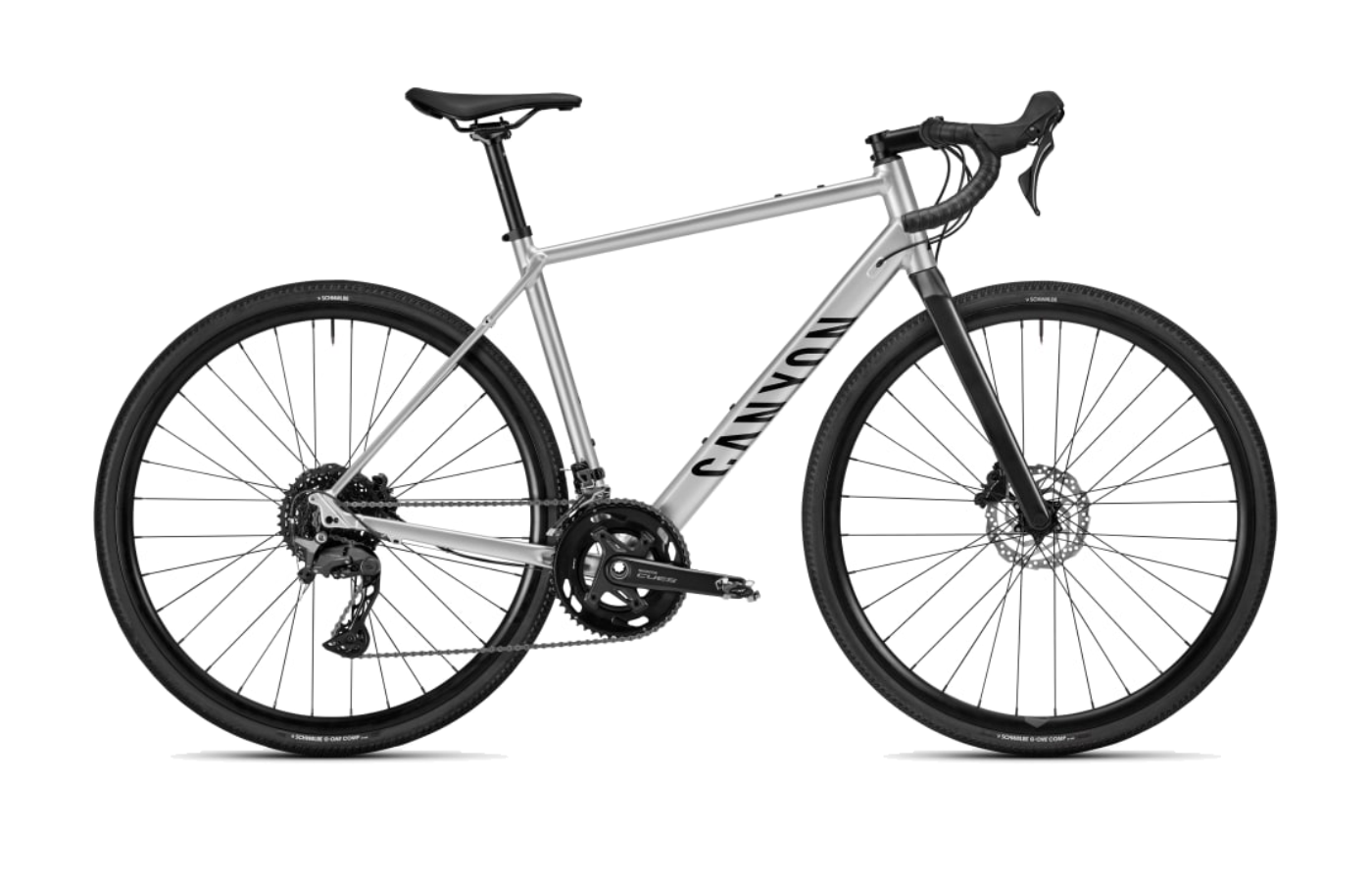
Endurace
Canyon's direct-to-consumer model usually beats both Trek and Cervélo on weight-per-dollar. The catch is no local dealer for warranty, fit, or the seatpost-creak fixes — best if you know your size and you're handy with a torque wrench.
Compare →