Caledonia
vsSoloist
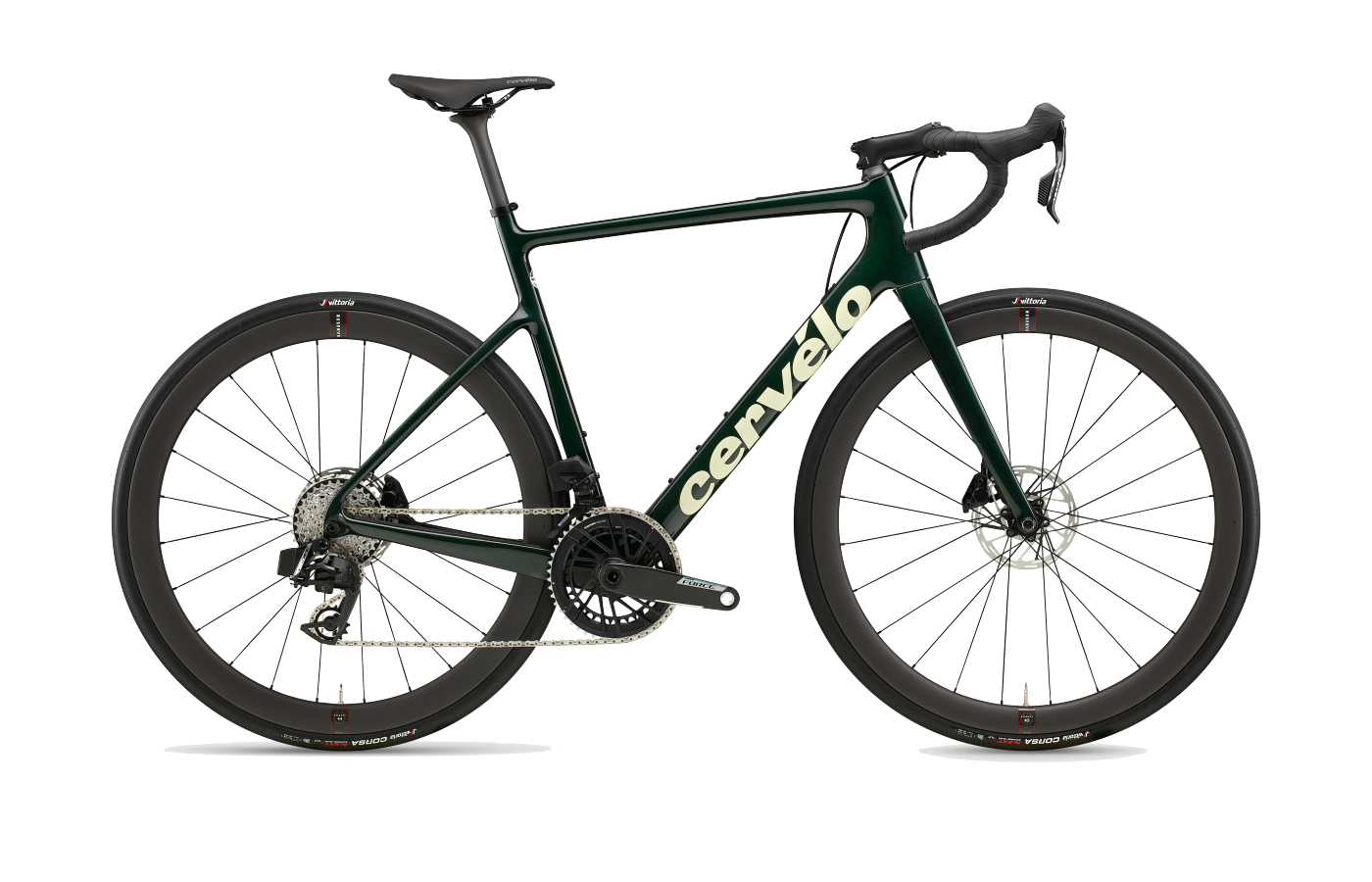
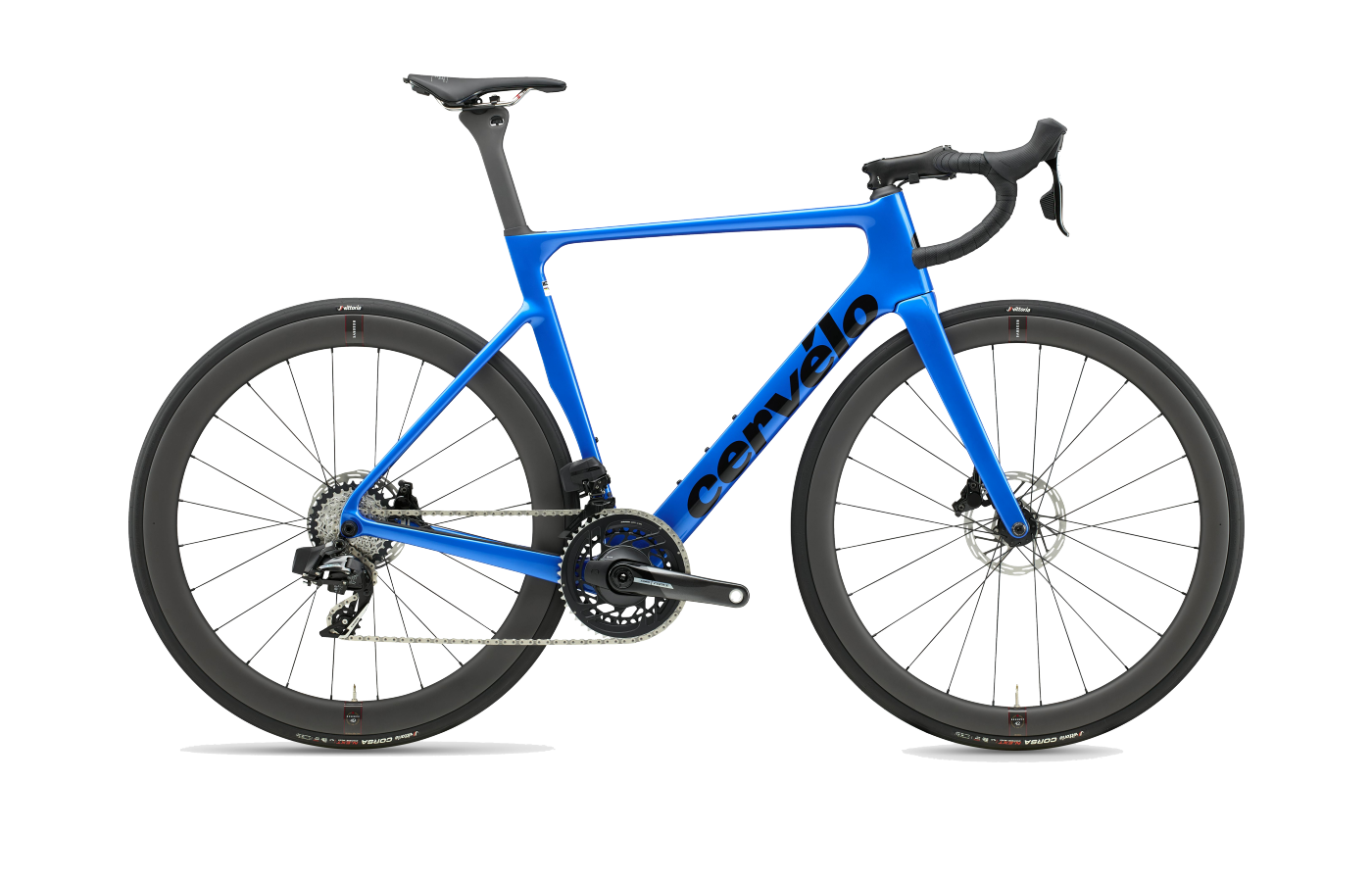
Same brand, same clearance, opposite missions.
The Caledonia is Cervelo's mile-eater built around Paris-Roubaix DNA. The Soloist is the privateer's race bike that splits the difference between S5 and R5.
Caledonia
- Stable, confidence-inspiring handling — 60 mm trail and a 995 mm wheelbase make descents and rough pavement feel calm.
- Genuinely all-season ready with hidden fender mounts, bento-box bosses, and 34 mm clearance for winter or light-gravel use.
- Cheaper entry point — the 105 mechanical build starts at $3,300, $600 below the Soloist 105.
- Stock alloy seatpost and bars draw consistent criticism for harshness — most reviewers suggest a carbon post upgrade.
- Heavier complete-bike weight (around 8.55 kg in the Ultegra Di2 build) blunts the climbing feel.
Soloist
- Race-tuned geometry — R5-derived 73-degree head tube, 57.3 mm trail, and 977 mm wheelbase deliver quick, precise steering.
- Reserve carbon wheels stock on every build above the entry 105 — 'plenty stiff' and a real upgrade most reviewers wouldn't replace.
- Mechanic-friendly modern frame with a T47 threaded BB and semi-integrated cabling that lets you swap stems without bleeding brakes.
- Multiple reviewers call the front end harsh on rough roads — the Caledonia is the smoother bike here.
- No fender mounts and no comfort-oriented build kit — this is a race bike first and an everyday bike second.
Editor’s analysis
Cervelo built both bikes around the same 34 mm tire clearance — but that's where the agreement ends.
On paper, the Cervelo Caledonia and Cervelo Soloist look like cousins: same brand, same maximum tire width, both 2x SRAM Force AXS at the top of the range. Spend any time with the geometry and the meta-reviews and they pull in opposite directions. The Caledonia is Cervelo's all-road endurance machine — slacker head angle, longer wheelbase, fender mounts. The Soloist is a stripped-down race bike that borrows the R5's handling and adds a semi-aero tube set.
The Caledonia's geometry is the giveaway. At size 54, it runs a 72-degree head tube, 60 mm of trail, 415 mm chainstays, and a 995 mm wheelbase. Reviewers from BikeRadar, Velo, and Competitive Cyclist all converge on the same word: confidence-inspiring. One Competitive Cyclist tester hit 62 mph descending without flinching. Pair that with hidden fender mounts, a bento-box boss on the top tube, and a 27.2 mm round seatpost that takes any aftermarket carbon post you want, and you have a bike that's clearly designed to be lived with — winter trainer, century rig, light-gravel detour bike.
The Cervelo Soloist sharpens everything. A 73-degree head tube, 57.3 mm trail, 410 mm chainstays, and a 977 mm wheelbase — 18 mm shorter than the Caledonia at the same size. Stack drops by 15 mm and reach grows by 5 mm, so the rider sits lower and longer. Velo and Cyclist call the front end "firm" or "chattery" on rough pavement, but praise the way the bike "rewards pedal strokes." The Reserve 42/49 TA carbon wheels on the Force AXS build are widely cited as the standout spec — a real race wheelset, not a placeholder.
Put another way: the Caledonia is the bike you buy when you want one road bike that handles everything from a rainy 120-mile day to a fender-mounted commute. The Soloist is the bike you buy when you have a backup endurance bike already and want something that flatters hard pedaling on Tuesday-night worlds.
Where the builds differ.
Comparing our editor's-pick builds side-by-side. Winners highlighted row-by-row — lower price and weight, and the better-spec component, each mark a point.
Build variants & pricing
The Caledonia tops out at $6,500; the Soloist starts where the Caledonia ends and climbs to $7,600. The Force AXS pick on each side keeps drivetrain tier identical.
Both editor's picks run 2x SRAM Force AXS, but the Soloist Force AXS ships with a Force power meter spider as stock — the Caledonia Force AXS does not. Soloist also gets the deeper, lighter Reserve 42/49 TA carbon wheels vs. the Caledonia's shallower Reserve 40/44. The $1,000 price gap reflects those upgrades, not a frame-tier mismatch.
How they fit, how they steer.
Both at size 54 — the fit-picked size for a 5'8" rider on either bike. The Soloist sits 15 mm lower in stack, 5 mm longer in reach, with a head angle 1 degree steeper, 2.7 mm less trail, and an 18 mm shorter wheelbase. Two very different cockpits from the same brand.
Which size should I buy?
Size recommendations based on stack, reach, and effective top tube. Both ranges run 48 to 61 in the same labels; the Caledonia simply sits taller and longer at every size.
→These are starting points. Flexibility, riding style, and preferred position all shift the answer — if you’re between sizes, a professional fit beats a chart.
What the magazines said.
Published reviews from trusted cycling outlets. Click through for the full write-up.
Which one should you buy?
If most of your riding is long, mixed-surface, or weather-exposed, get the Caledonia. If you race or train hard on smooth pavement and want the sharper bike, get the Soloist.
Caledonia
If you want one bike that handles century rides, winter training with fenders, and the occasional gravel detour, the Caledonia is the more honest tool. The geometry is calmer, the seatpost is standard 27.2 mm so you can upgrade it, and the fender mounts are actually invisible when not in use.
Soloist
If you race amateur crits or fast group rides and want a bike that rewards aggression without the price or complexity of an S5, the Soloist is the better fit. The R5-derived handling, threaded BB, and semi-integrated cables hit the sweet spot of fast and serviceable.
Questions buyers actually ask.
Short answers to the things we get emailed about most often.
01Which is faster on smooth pavement?
The Cervelo Soloist, by a clear margin. Cervelo positions the Soloist between the R5 and S5 — roughly 250 g lighter than the S5 and around 126 g of aerodynamic drag improvement over the R5 in their published numbers (per road.cc and Velo's reporting). The Caledonia has some aero tube shaping borrowed from the S-Series but isn't a semi-aero bike — it's an endurance frame.
In practice, the Soloist's stiffer chassis and (in higher builds) deeper Reserve 42/49 TA wheels mean it carries speed on flats and rolling terrain noticeably better. At true endurance pace below 30 km/h, the gap closes.
02Which is more comfortable on rough roads?
The Caledonia, fairly clearly. Its 60 mm trail, 415 mm chainstays, and longer wheelbase all add up to a calmer ride on broken tarmac, and BikeRadar specifically called the road manners "approaching best-in-class" for the segment.
The Soloist is a race bike first — Velo described its front end as "only slightly less chattery than a shopping trolley on cobbles" on rough surfaces, while Cyclist UK called it "firm." Wider tires and lower pressures help, but they don't change the geometry.
03What's the maximum tire clearance on each?
Both are rated for 34 mm tires. That's the same official number, but the bikes use it differently. The Caledonia ships with 30 mm or 32 mm Vittoria Corsa N.EXT tires depending on build, and Cervelo lists 31 mm clearance with full fenders fitted. The Soloist ships with 28 mm or 29 mm Vittoria Corsa N.EXT tires and has no fender mounts.
Neither is a true gravel bike — for anything beyond hard-packed dirt, look at the Cervelo Aspero.
04Does either bike have fender mounts?
Only the Caledonia. It has hidden, fully removable fender mounts that disappear when you take the fenders off — a deliberate design choice that makes it a credible winter or commuting bike without the visual clutter.
The Soloist has no fender mounts. If year-round riding in wet climates is part of your plan, that alone may settle the question.
05How is the cable routing on each?
The Caledonia uses external routing from the bar into the frame — the simplest setup of the two. Reviewers consistently call it easier to work on and easier to travel with.
The Soloist uses Cervelo's "externally integrated" routing, which runs cables under the stem and through the headset rather than into a one-piece cockpit. You can swap the stem or bar without re-bleeding brakes, which is rare at this price point. Neither bike forces you into a proprietary integrated cockpit.
06Which has a better stock build for the money?
The Soloist, mostly because of the wheels. Every Soloist above the entry 105 build ships with Reserve carbon wheels (Reserve 40/44 on the Rival AXS, Reserve 42/49 TA on the Ultegra Di2 and Force AXS builds) — In The Know Cycling called it "the nicest stock wheelset you can get at this price point."
The Caledonia uses Vision Team i23 alloy wheels on its 105, 105 Di2, and Rival AXS builds, and only steps up to Reserve 40/44 carbon at the Force AXS top spec. Multiple reviewers flagged the alloy wheels as the most obvious upgrade target on mid-tier Caledonia builds.
07What about creaking from the bottom bracket?
The Caledonia uses Cervelo's BBRight press-fit shell. Despite the historical reputation of press-fit BBs, long-term Caledonia owners (Competitive Cyclist's Jono after 2,000 miles, Marc M after 1,000+) report zero creaking.
The Soloist uses a T47 threaded BBRight shell — in theory the more reliable design. In practice, Velo and Cyclist UK both reported creaks from the T47 within their test periods, while In The Know Cycling's tester ran his silently for 3,000 miles. Both bikes are reliable in the long run, but neither is immune.
08Can I race on the Caledonia?
Technically yes — the frame is stiff and the geometry isn't slow. But the Caledonia is built around stability and comfort, not aggression. The longer wheelbase and slacker head angle that make it composed at 7 hours of saddle time also make it less eager to change lines mid-corner than a dedicated race bike.
If racing is a meaningful part of why you ride, the Soloist will reward you more — that's literally what it's built for.
Similar bikes
If your priorities don’t map cleanly onto either of these, one of these adjacent bikes probably fits better.
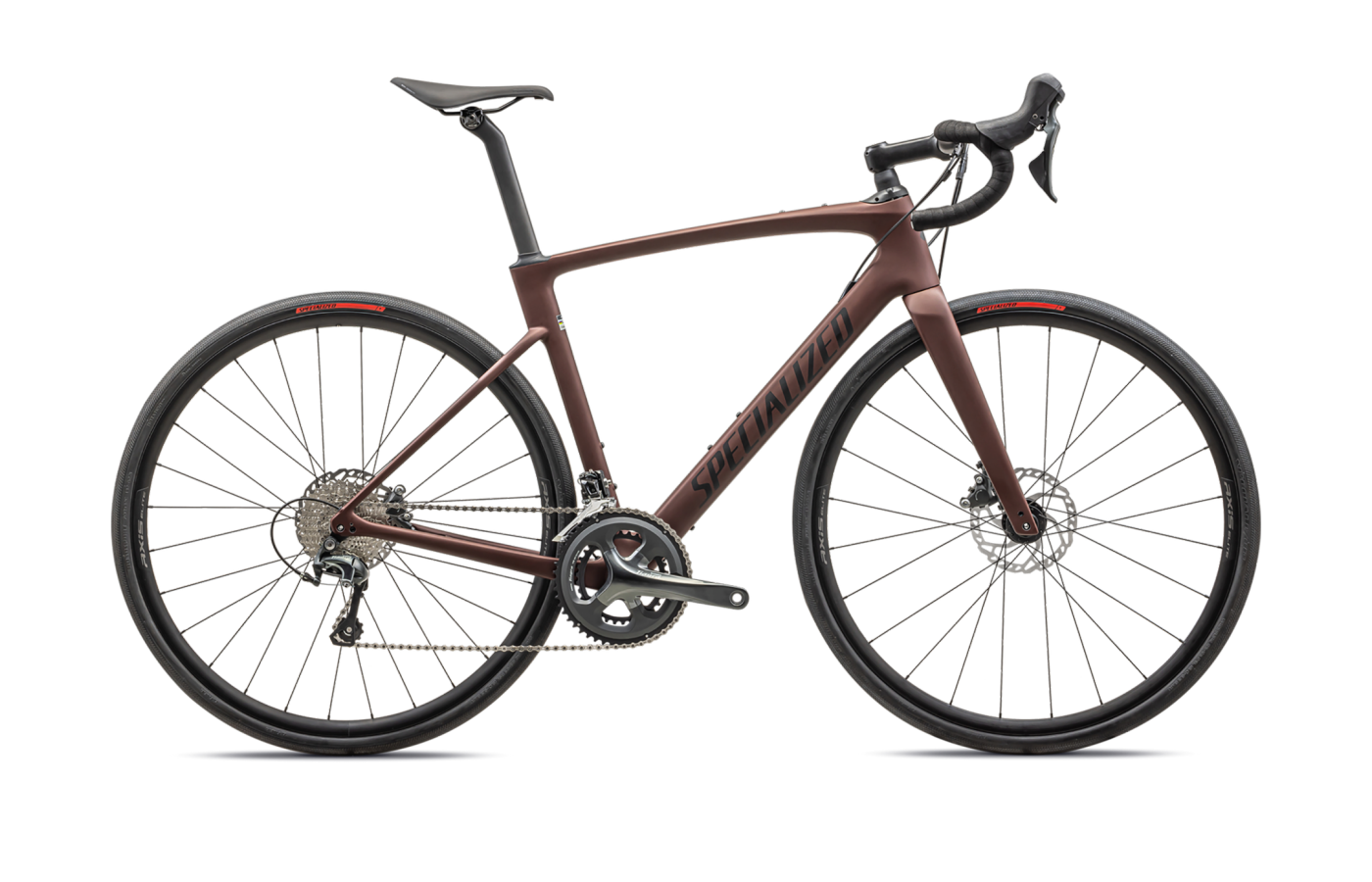
Roubaix
If you like the Caledonia's endurance brief but your roads are genuinely broken, the Roubaix's Future Shock front-end suspension does what tire pressure and frame compliance can't. Trades the Caledonia's clean look for a real comfort advantage.
Compare →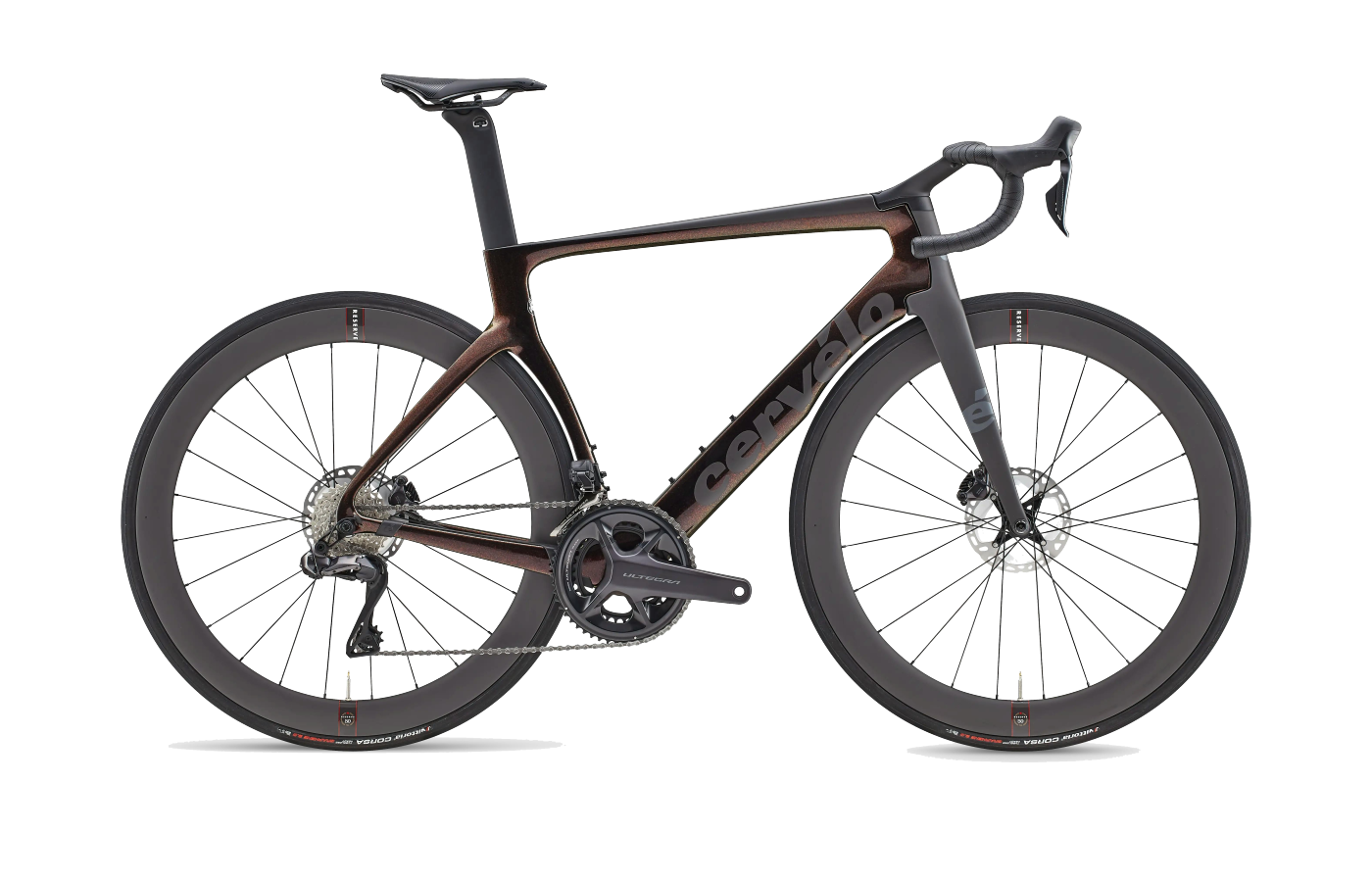
S5
The Soloist's faster, fully-integrated sibling. If you want maximum aero efficiency and don't mind the fully-integrated cockpit and steeper price, the S5 is the no-compromise version of this brief.
Compare →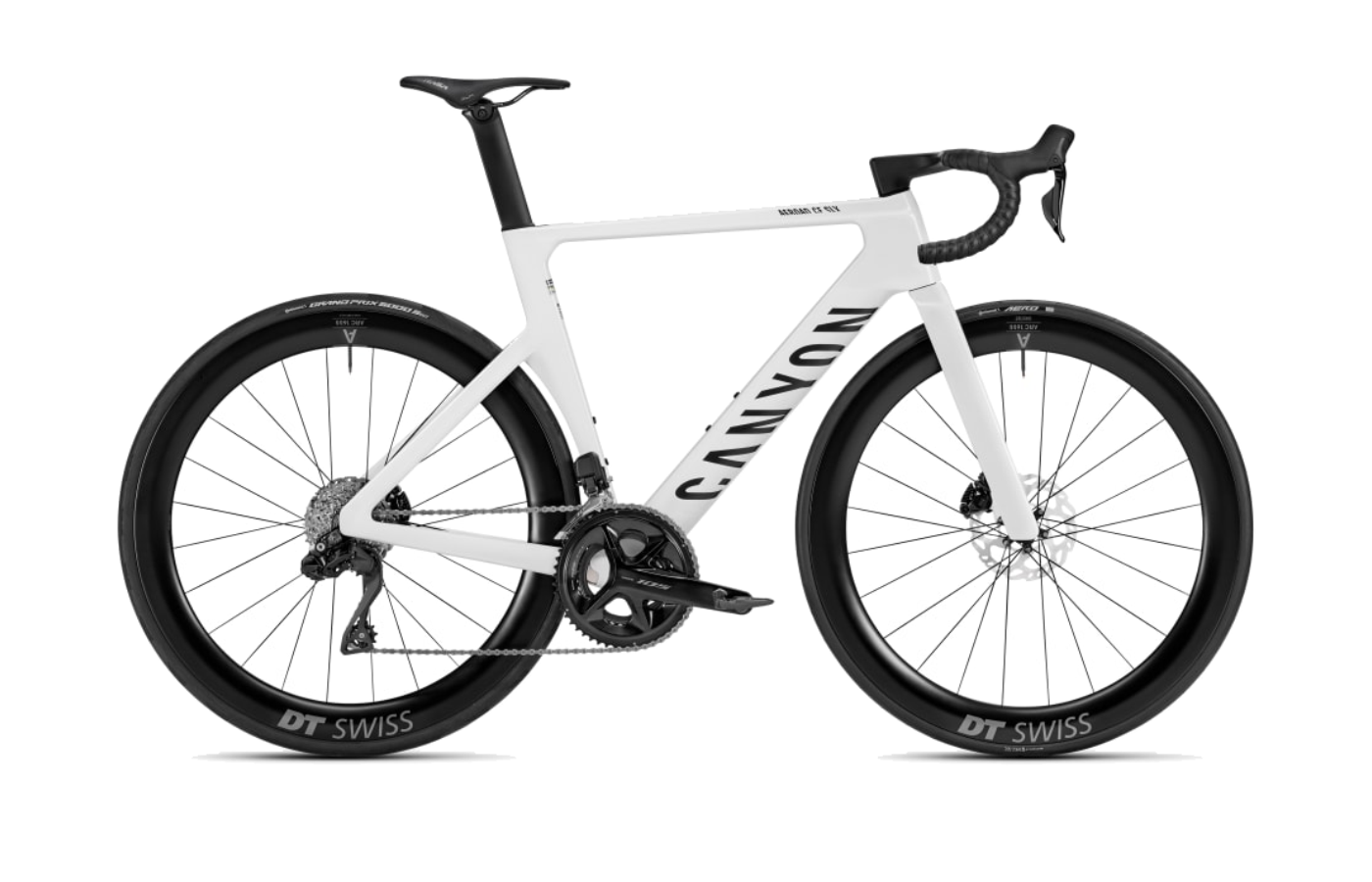
Aeroad
Direct-to-consumer aero competitor that consistently undercuts the Soloist on price for similar build kits. The catch is no local dealer and more proprietary cockpit hardware to navigate.
Compare →