V4Rs
vsY1Rs
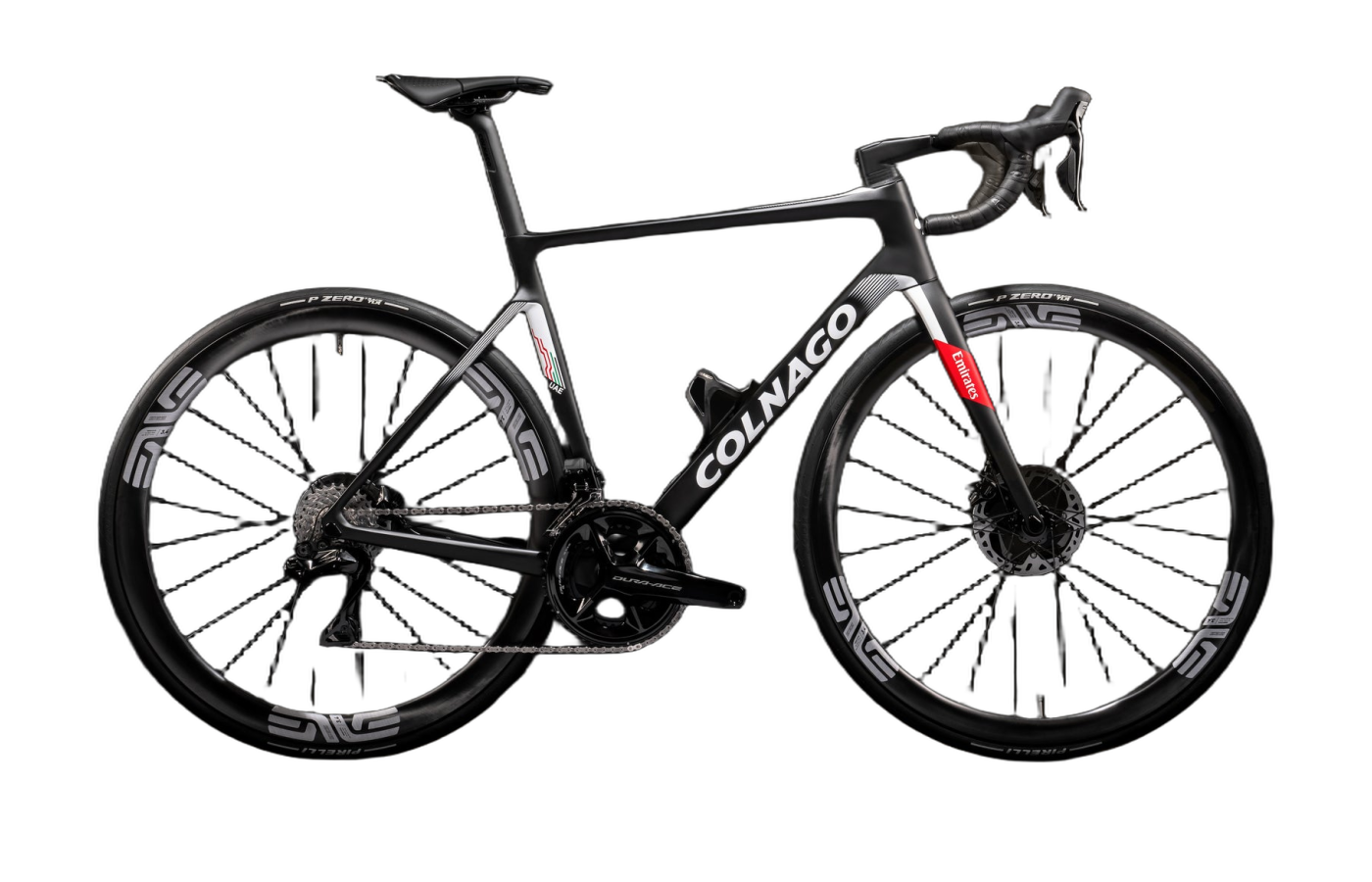
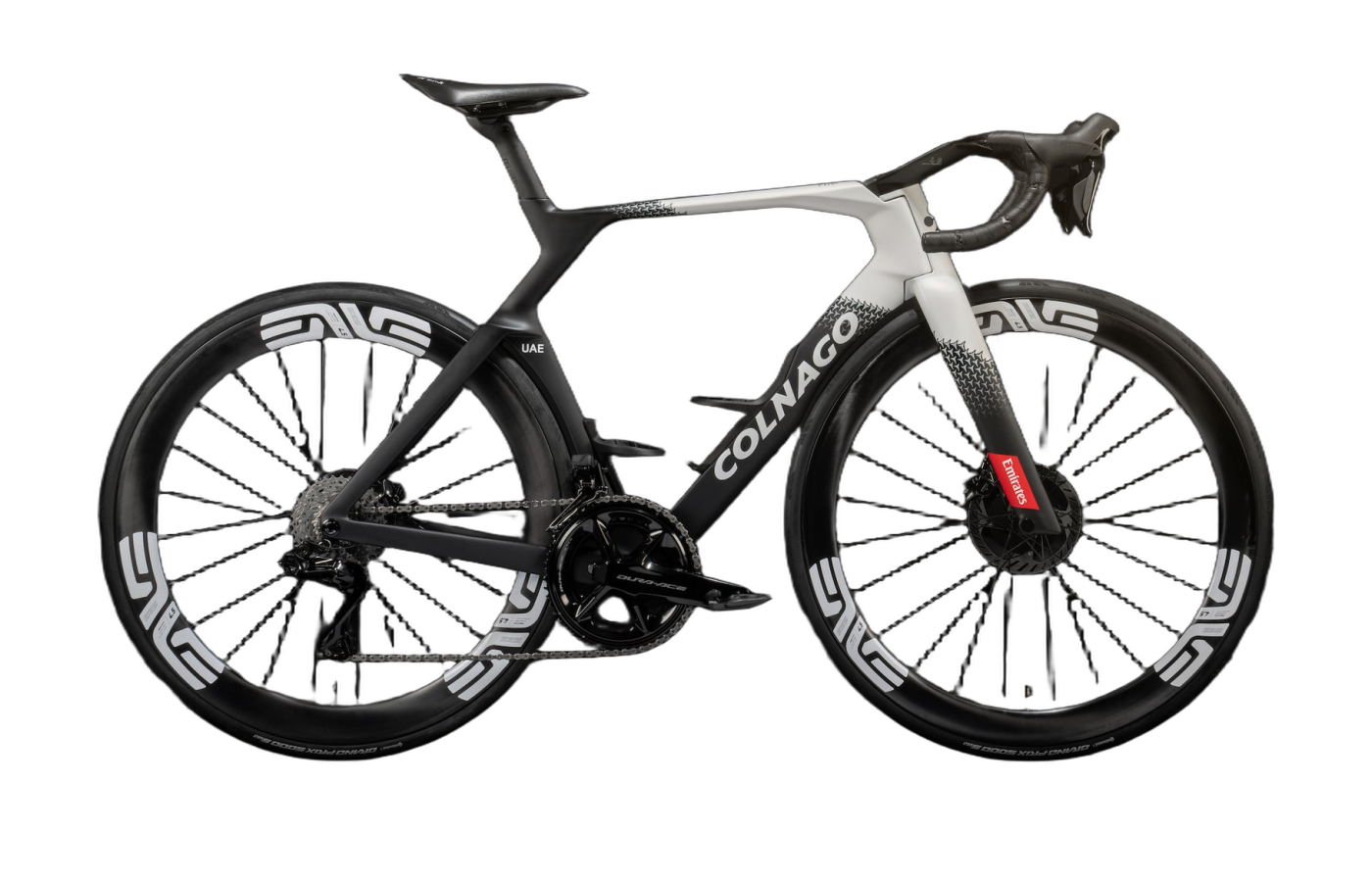
Two Pogačar bikes, two answers to the same question.
The V4Rs is the all-rounder Colnago has spent decades refining. The Y1Rs is the aero skunkworks experiment that broke the mould.
V4Rs
- Half the entry price of the Y1Rs — $7,000 for the Force AXS build vs $16,250 for the cheapest Y1Rs.
- Confidence-inspiring descender — slacker 71.5° head angle at size 485 and a longer wheelbase. BikeRadar called it 'just in a class of its own' on descents.
- The Pogačar climbing bike — stiff, responsive, and the V-series is the model he chooses when the stage profile turns vertical.
- Less aerodynamic than the Y1Rs — Colnago's own data has the Y1Rs 3.5% stiffer in a sprint and meaningfully faster above 40 km/h.
- Aggressive race geometry can feel 'too focused' for amateur riders not pushing pro-level efforts (BikeRadar).
Y1Rs
- Among the fastest aero bikes measured — Cyclingnews wind-tunnel CdA of 0.0786 m², trailing only the Factor O2 prototype and Cervélo S5.
- Sharper front end — 73° HTA at size M and a shorter front centre. Reviewers call it 'better handling than any Colnago' they've ridden.
- Wider 32 mm tire clearance than the V4Rs' 30 mm — the aero bike is the more tire-tolerant of the two.
- Price floor of $16,250 with no mid-tier builds — Colnago openly calls it a 'non-consumer' bike.
- Y-shaped cockpit limits hand positions on the tops; some testers report a stiffness 'disconnect' between front and rear ends under hard sprints.
Editor’s analysis
Both bikes have already won grand tours under the same rider — the question is what kind of stage you imagine winning on yours.
On paper this is two flagships from the same Italian brand at wildly different price points. The V4Rs starts at $7,000 with a Force AXS build and tops out at $12,500 in Super Record trim. The Y1Rs starts at $16,250 — for the cheapest build — and there is no entry below that. Colnago is not pretending the Y1Rs is for you; it is a 'non-consumer' aero bike, in their own framing, built for UAE Team Emirates first and the rest of us a distant second.
The V4Rs is the bike Tadej Pogačar climbs on. It's the more traditionally proportioned monocoque — slightly slacker head angle (71.5° at size 485 vs the Y1Rs' 73° at size M), longer wheelbase, and a ride character that BikeRadar called 'unerringly poised' on descents. Reviewers consistently describe it as stiff, surprisingly comfortable for a pro race bike, and at home on rolling-to-mountainous terrain. It's the bike to choose if you want one Colnago to do everything from criteriums to Alpine gran fondos.
The Y1Rs is the bike Pogačar uses on flat stages. Cyclingnews put it in the wind tunnel and found it among the fastest aero road bikes ever measured — a CdA of 0.0786 m² for the bike alone and the well-known 'sailing effect' at yaw. The bayonet fork, cantilevered seat cluster, and Y-shaped CC.Y1 cockpit are all there to save watts above 40 km/h. The trade-off is real: testers note a slight stiffness disconnect between the front and rear ends, the Y-cockpit limits hand positions on the tops, and on twisty blind descents some reviewers admitted they 'didn't have the balls' to push it.
Put another way: the Colnago V4Rs is the bike you buy when you want a Colnago. The Colnago Y1Rs is the bike you buy when you already own a climbing bike and want a second one specifically for breakaways on flat stages — and you can write the cheque without flinching.
Where the builds differ.
Comparing our editor's-pick builds side-by-side. Winners highlighted row-by-row — lower price and weight, and the better-spec component, each mark a point.
Build variants & pricing
Both editor's-pick builds run Shimano Dura-Ace Di2 — the closest apples-to-apples comparison Colnago's range allows.
The Y1Rs is sold in flagship trim only — there is no Ultegra or Force AXS build, so a tier-matched comparison forces a flagship-vs-flagship pairing. The $5,100 gap between the two Dura-Ace builds is real platform pricing, not asymmetry: the V4Rs offers cheaper paths in (down to $7,000), the Y1Rs does not.
How they fit, how they steer.
Compared at V4Rs size 485 and Y1Rs size M — the fit-picked frames for an average-height rider. Stack is within 1 mm (539 vs 540), but the Y1Rs runs 3 mm more reach and a markedly steeper 73° head tube angle vs 71.5° on the V4Rs. Chainstays are 408 mm on both.
Which size should I buy?
Both ranges cover the same rider heights — the V4Rs uses millimetre-numeric sizing (420–570) while the Y1Rs uses XS/S/M/L lettering. Pick by stack and reach, not by label.
→These are starting points. Flexibility, riding style, and preferred position all shift the answer — if you’re between sizes, a professional fit beats a chart.
What the magazines said.
Published reviews from trusted cycling outlets. Click through for the full write-up.
Which one should you buy?
If you climb often or want one Colnago that does everything, get the V4Rs. If you race flat stages and the price tag doesn't sting, get the Y1Rs.
V4Rs
If you want a Colnago that climbs, descends, and holds a bunch sprint without forcing you to pick a discipline first, the V4Rs is still the answer. It's the bike Pogačar uses when the road tilts up — and the only one in this comparison that comes in below five figures.
Y1Rs
If your terrain is flat or rolling and you spend your rides above 40 km/h, the Y1Rs converts watts into speed better than any Colnago before it. Just understand what you're buying: a wind-tunnel-optimized race weapon that Colnago themselves call a 'non-consumer' bike.
Questions buyers actually ask.
Short answers to the things we get emailed about most often.
01Which is faster on flat roads?
The Colnago Y1Rs, by a measurable margin. Cyclingnews' wind-tunnel testing put the Y1Rs at a CdA of 0.0786 m² for the bike alone, requiring just 64.66 W to overcome at 40 km/h — figures that put it among the fastest aero road bikes they've measured, behind only the Factor prototype and the Cervélo S5. GCN's separate testing showed it consistently about 0.2 km/h faster than the V-series Colnago at a sustained 400 W.
At social-ride speeds below 30 km/h, that aero advantage shrinks to something you'll never feel.
02Which climbs better?
The V4Rs. Both bikes are within striking distance of each other on weight when matched in similar trim — the Y1Rs claims 7.2 kg in size M with Dura-Ace and ENVE 4.5 wheels — but the V4Rs' more conventional tube shapes and reviewer-praised stiffness-to-weight ratio make it the more rewarding climber.
GCN estimated that on a long Alpine climb, a lighter V-series Colnago would beat the Y1Rs by roughly 20 seconds at WorldTour pace — small numbers in absolute terms, but meaningful when you climb often.
03What's the maximum tire clearance?
Colnago V4Rs: 30 mm officially. Some reviewers have noted the frame appears to swallow more, but Colnago's stated clearance is the figure to plan a build around.
Colnago Y1Rs: 32 mm officially — wider than the V4Rs despite being the more aero-focused bike. The Y1Rs is the better choice if you want to run plump 30 mm tubeless tires for rougher European-classics terrain.
04How different is the handling between the two?
Quite different. At the fit-picked sizes, the V4Rs runs a 71.5° head tube angle with a longer wheelbase — testers describe it as 'unerringly poised' and supremely stable on long descents. The Y1Rs steepens that to 73° at size M, with a shorter front-centre measurement, giving what Will Jones at Cyclingnews called 'a darting agility' the V-series doesn't have.
The trade-off: several reviewers noted the Y1Rs feels less composed than the V4Rs on tight, blind, or technical descents, and one tester reported an 'unnerving proto-speed wobble' under hard braking that the V4Rs has never produced.
05Is the Y1Rs really worth more than double the V4Rs entry price?
For most riders, no. Reviewers were nearly unanimous that the Y1Rs is, in Cyclingnews' words, 'as close to pro-only as it is possible to be within the bounds of UCI rules.' The $16,250 floor buys cutting-edge aerodynamics and the same Pogačar pedigree, but at the cost of a stock build that often omits a power meter, ships with mid-range wheels, and demands specialised servicing for the integrated bayonet fork.
If you can write the cheque without thinking about it and you race flat stages, it's a defensible buy. Otherwise the V4Rs gives you 90%+ of the experience for half the money.
06Can you fit aftermarket cockpits on either bike?
Both ship with proprietary integrated cockpits — the CC.01 on the V4Rs and the radical Y-shaped CC.Y1 on the Y1Rs. Neither is designed to accept third-party bars or stems without compromising the front-end aerodynamics and cable routing.
The CC.Y1 is the more polarising of the two: its lack of a centre bridge makes it 16% stiffer (per Colnago's claim) and more aero, but reviewers note the wide centre section limits comfortable hand positions on the tops and can interfere with thigh clearance for some riders out of the saddle.
07What about the Force AXS build of the V4Rs at $7,000?
It exists, but our spec data for that particular build is incomplete in the catalog — we'd recommend checking with Colnago or your dealer for the exact frame, wheel, and cockpit spec before committing. The pricing is real ($7,000) and confirms that the V4Rs is the only one of these two bikes available below five figures, which is a meaningful part of its value story.
If you want the V4Rs experience with a tier of headroom, the Ultegra Di2 build at $8,500 is the most fully-documented mid-tier option and the one most amateur racers will gravitate to.
08Which holds its value better on the used market?
Hard to say definitively — the Y1Rs is too new (2025-launch) to have meaningful used-market depreciation data. Colnago has historically held value well thanks to limited production and a heritage brand premium.
If forced to guess: the V4Rs likely depreciates more linearly, while the Y1Rs may either hold value strongly (because of scarcity and the Pogačar association) or take a sharper hit (because it's so polarising). Buy with that uncertainty in mind.
Similar bikes
If your priorities don’t map cleanly onto either of these, one of these adjacent bikes probably fits better.
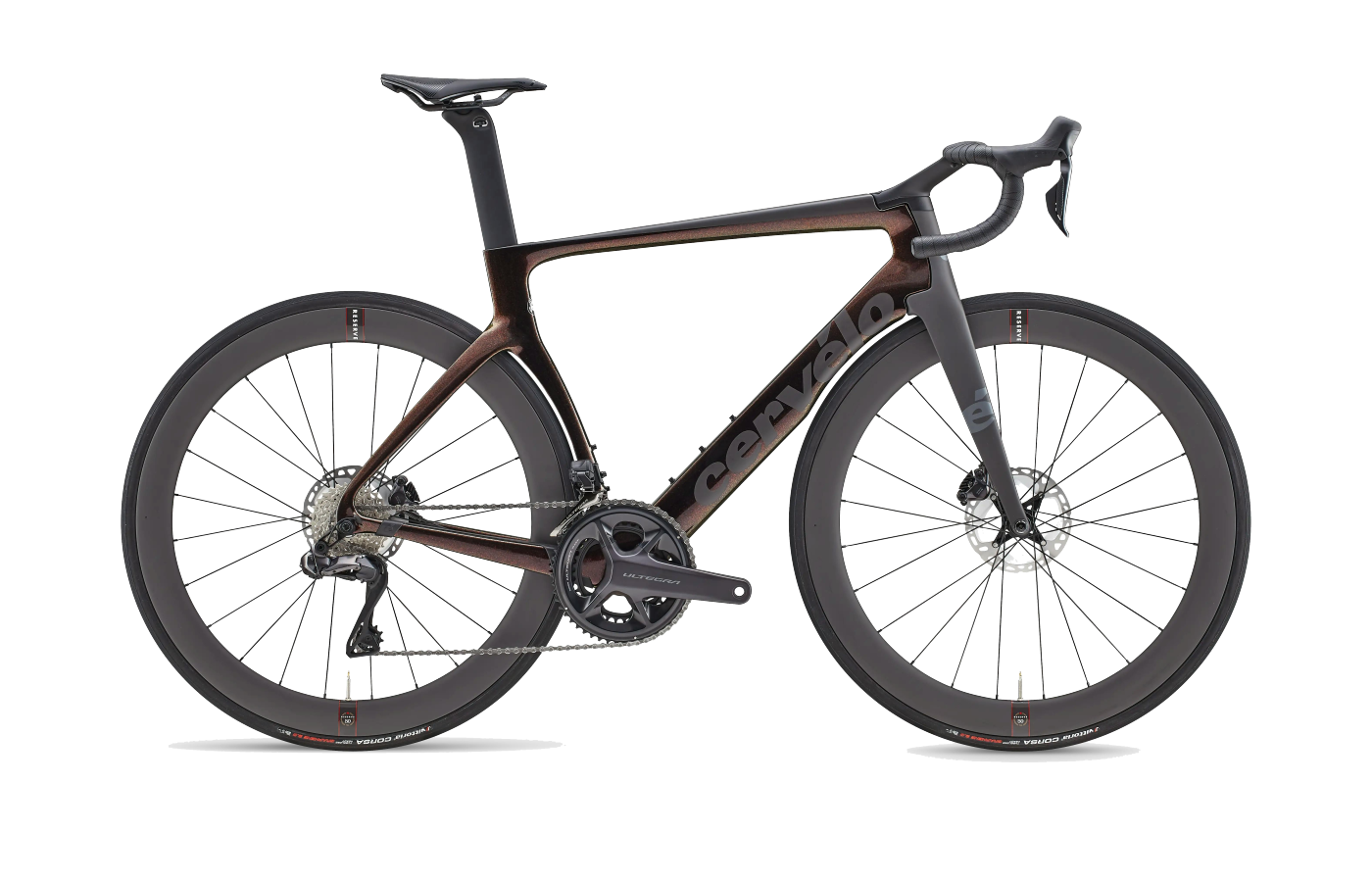
S5
The Y1Rs' direct benchmark and, by Cyclingnews' wind-tunnel data, the only aero road bike that beats it. Most reviewers think the S5 is the stiffer, better-built, and significantly cheaper bike.
Compare →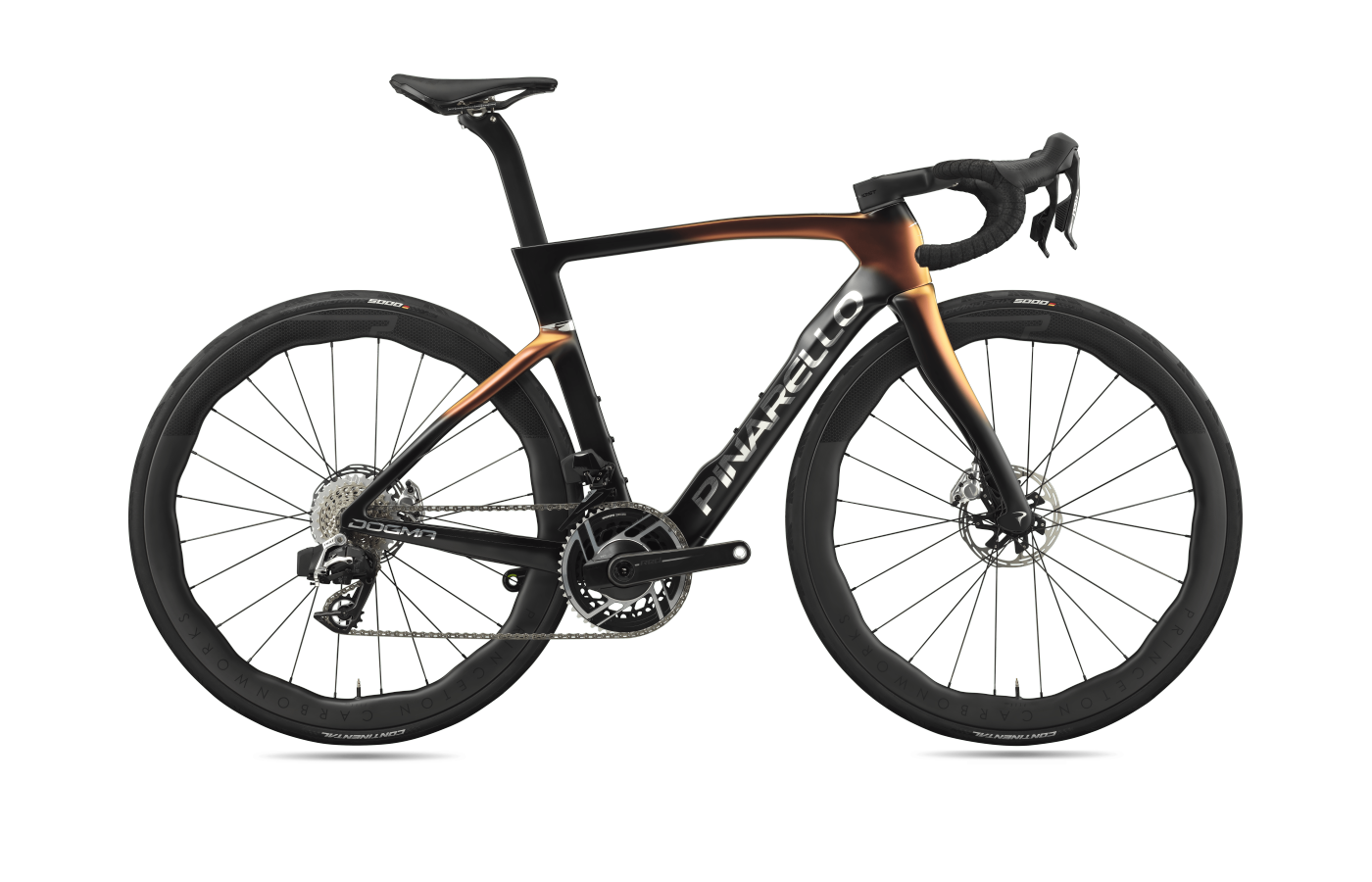
Dogma F
The classic Italian rival to the V4Rs — Ineos Grenadiers' weapon of choice. A single-frame solution that aims to balance aero and weight in one package, with the same prestige tax as the Colnago.
Compare →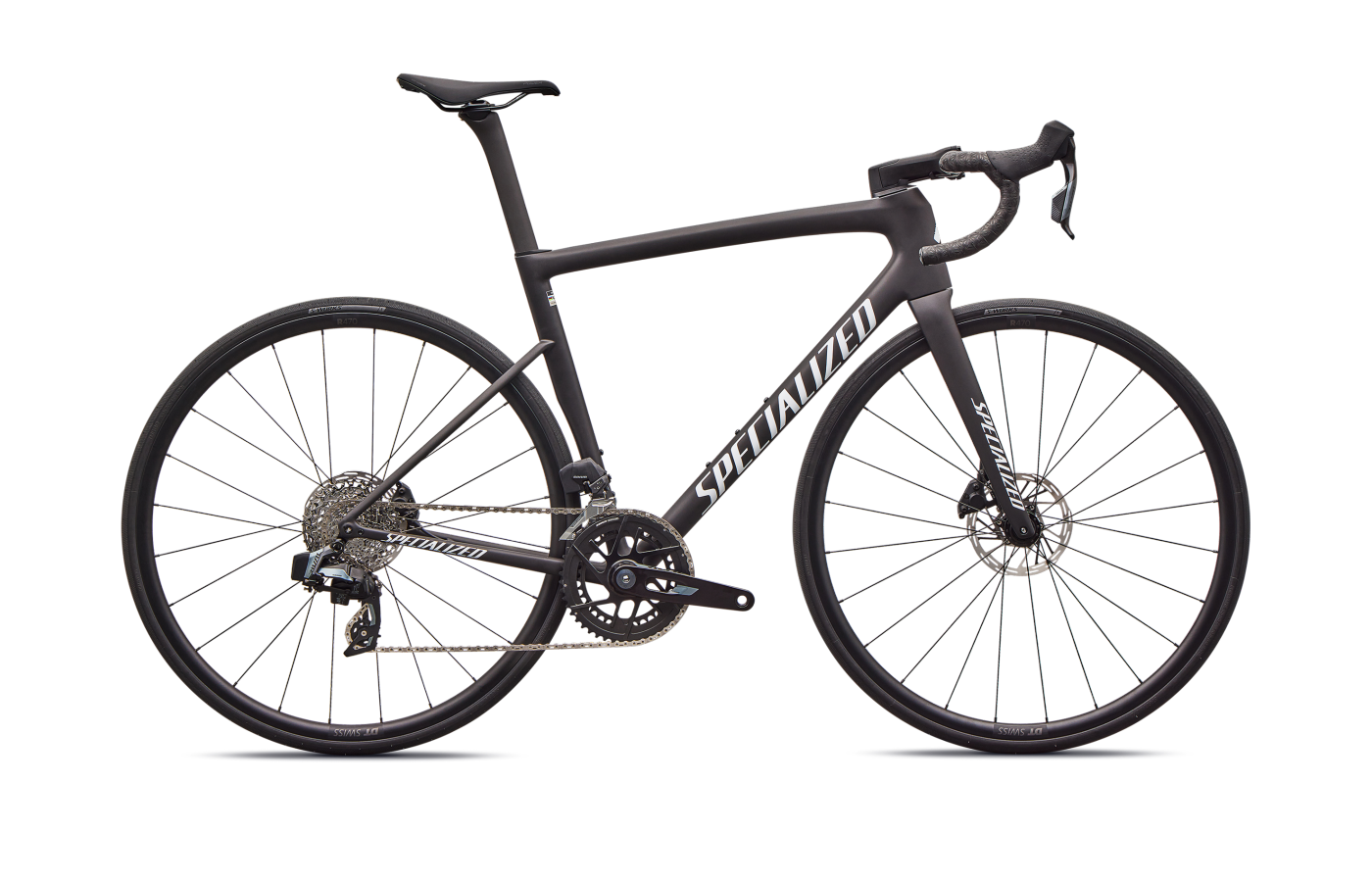
Tarmac
Lighter than both Colnagos and nearly as aero as the Y1Rs at substantially less money. The pragmatist's choice if Italian heritage isn't part of what you're buying.
Compare →