V5Rs
vsY1Rs
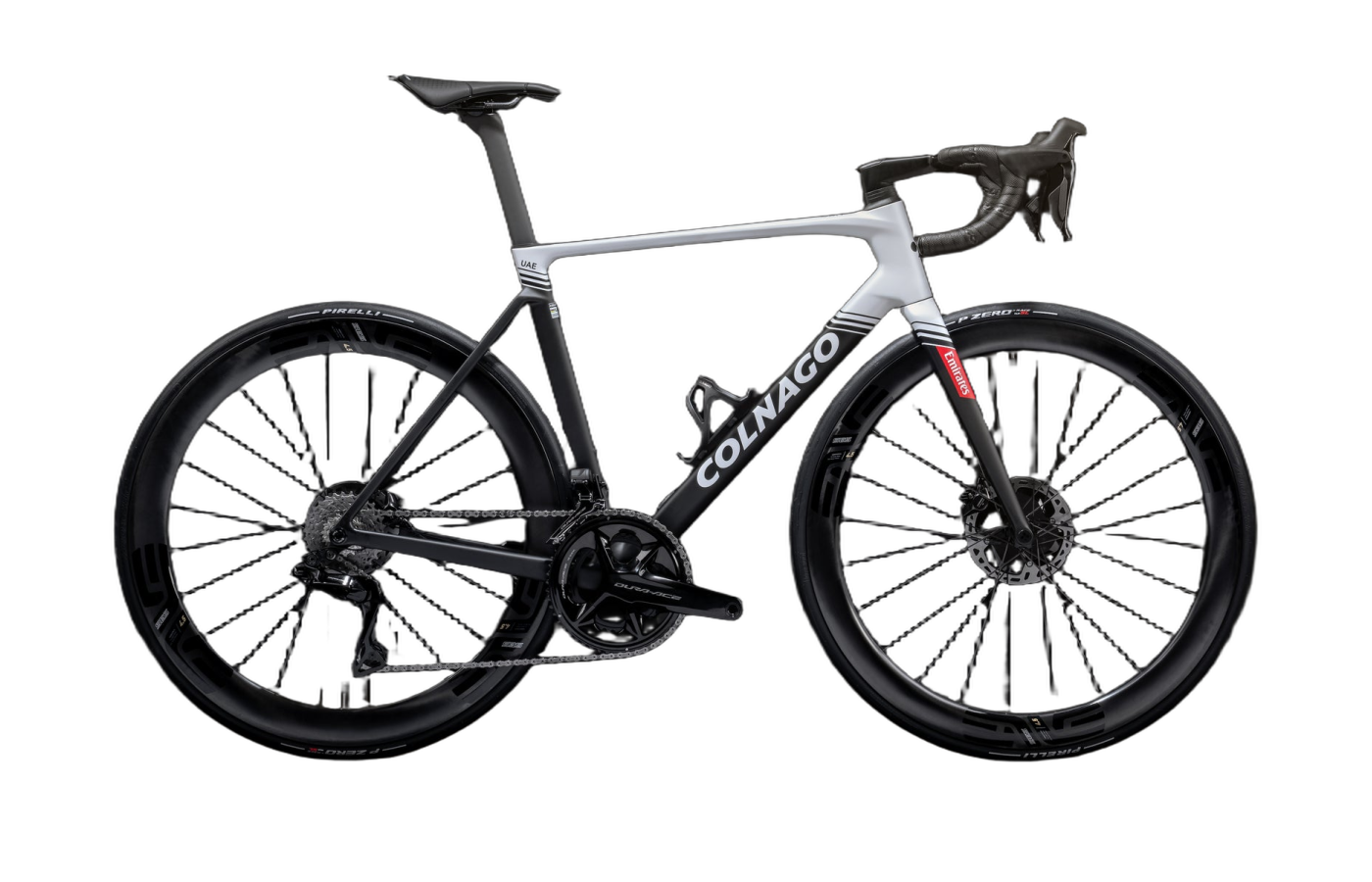
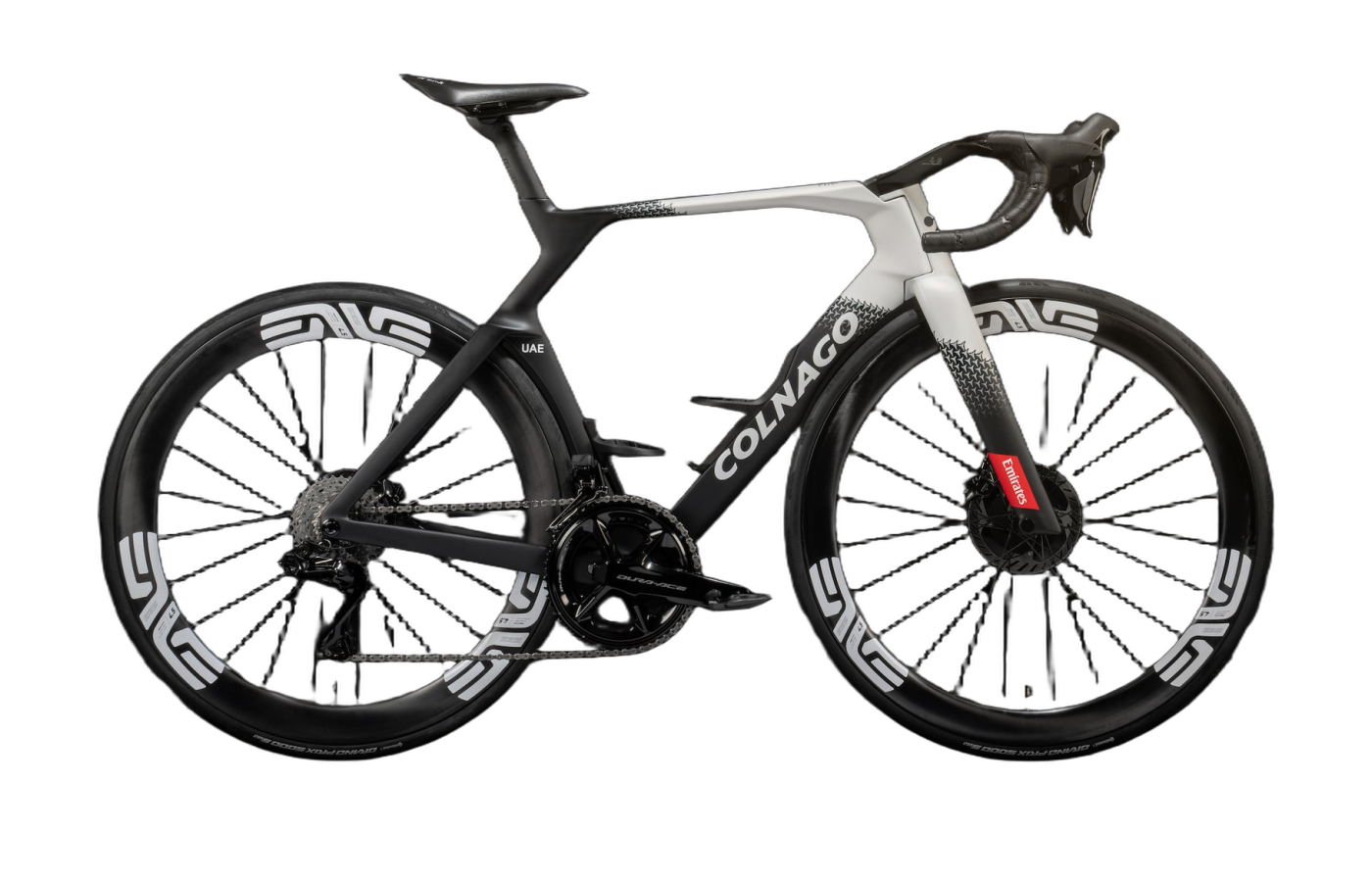
Two Colnago flagships, two very different race briefs.
The V5Rs is the refined all-rounder built for climbs and classics. The Y1Rs is a bayonet-forked aero specialist built for flat-out speed.
V5Rs
- Lightest Colnago ever — 685 g unpainted frame (size 485), around 6.8–6.9 kg built up, genuinely competitive with a Tarmac SL8.
- BSA threaded BB — a real serviceability win over the old T47 standard, friendlier for home mechanics.
- Usable 34 mm clearance (32 mm officially) — versatility for rougher European roads without giving up race geometry.
- Di2 battery lives in the downtube — replacing it means pulling cranks and BB.
- No sub-$11k build option and no stock power meter on any trim.
Y1Rs
- Among the fastest aero road bikes ever wind-tunnel tested — Cyclingnews measured a 0.3363 m^2 rider-plus-bike CdA at 40 kph.
- Sharper, more agile handling than any prior Colnago — steeper HTA, 2.5 mm less trail, and a 10 mm shorter front-center.
- Sailing effect in crosswinds — deep-section shaping that harnesses sidewinds for forward momentum above ~40 kph.
- $16k+ entry price with no power meter and only flagship builds — widely called poor value versus an S5 or Tarmac SL8.
- Notable front-end flex at the bayonet fork; Y-shaped cockpit limits hand positions and can interfere with thighs in the hoods.
Editor’s analysis
Pogačar has two bikes in his garage for a reason — and the reason is terrain, not preference.
Both the V5Rs and the Y1Rs exist to win UCI WorldTour races, but they solve different problems. The V5Rs is the latest in Colnago's all-around V-series lineage — 685 g unpainted frame (size 485), 34 mm of usable tire clearance, and a 9-watt drag reduction over the V4Rs at 50 kph. The Y1Rs is something else entirely: Colnago's first proper aero bike since 2017, built around a bayonet fork and a Y-shaped integrated cockpit, with a Cyclingnews-measured CdA of 0.3363 m^2 that places it among the fastest road bikes ever wind-tunnel tested.
On climbs, the V5Rs is the clear tool. Bicycling put it around 6.8–6.9 kg in a real-world build; the Y1Rs lands closer to 7.2–7.7 kg depending on wheels. GCN estimated the V5Rs would beat the Y1Rs by roughly 20 seconds up Alpe d'Huez at pro-level watts. The V5Rs also has a rock-solid bottom bracket, a BSA-threaded shell (a service win over the old T47), and the kind of 'plug-in-and-go-fast' sensation Bicycling called addictive on false flats. It's the Colnago you buy to go uphill fast.
Above 40 kph on flat or rolling terrain, the Y1Rs takes over. GCN clocked it 0.2 kph faster than the V5Rs at 400 watts in real-world testing, and reviewers consistently describe a sailing effect in crosswinds where the deep aero shaping actually pulls you forward. But the tradeoffs are real: Will Jones at Cyclingnews flagged a disconnect between the stiff rear triangle and a less-reinforced bayonet front end that produced sub-par sprint feel and one 'unnerving proto-speed wobble' under hard braking. The Y-cockpit also limits hand positions and, for some riders, collides with the thighs in the hoods.
Put simply: the V5Rs is the one Colnago most serious amateurs should want. The Y1Rs is closer to a pro-only tool — uncompromising, expensive, and hard to live with unless you're racing flats above 40 kph.
Where the builds differ.
Comparing our editor's-pick builds side-by-side. Winners highlighted row-by-row — lower price and weight, and the better-spec component, each mark a point.
Build variants & pricing
Both platforms are sold only at the top — flagship groupsets, integrated cockpits, no budget trims. The Y1Rs sits roughly $3,000 above the V5Rs across the board.
Prices are current US MSRP. Colnago sells the Y1Rs only in flagship Super Record, Dura-Ace Di2, and Red AXS builds — there is no Ultegra or Force tier available, so the Dura-Ace Di2 trim is the tier-matched comparison against the equivalent V5Rs. Neither bike ships with a stock power meter at any price.
How they fit, how they steer.
V5Rs size 510 vs Y1Rs size M — the fit-picked sizes for a 5'8" rider on each bike. The Y1Rs sits 17 mm lower in stack and 4 mm shorter in reach, with a steeper head tube angle for that more forward, aero-tuck position. Chainstays are identical at 408 mm.
Which size should I buy?
Size recommendations based on stack, reach, and effective top tube. Labels differ (Colnago uses mm on the V5Rs and S/M/L on the Y1Rs) but both refer to the best-fit frame for the same rider.
→These are starting points. Flexibility, riding style, and preferred position all shift the answer — if you’re between sizes, a professional fit beats a chart.
What the magazines said.
Published reviews from trusted cycling outlets. Click through for the full write-up.
Which one should you buy?
If your rides are mountainous, rolling, or mixed, get the V5Rs. If you race flats at 40 kph and up and money is no object, get the Y1Rs.
V5Rs
If you want one pro-pedigree Colnago that climbs with the Tarmac SL8, stays composed on technical descents, and remains serviceable when the Di2 battery eventually dies, the V5Rs is the smart pick. It's the bike Pogačar reaches for when the road goes up.
Y1Rs
If most of your riding is flat or rolling, your average speed starts with a 4, and you want the most aerodynamically extreme production road bike money can buy, the Y1Rs delivers. Just understand you're buying into pro-team maintenance realities and a cockpit that takes adaptation.
Questions buyers actually ask.
Short answers to the things we get emailed about most often.
01Which is faster on flat roads?
The Y1Rs, measurably. GCN's real-world testing at 400 watts put it about 0.2 kph faster than the V5Rs, and their test riders saw peak speeds of 58–59 kph on the Y1Rs versus 57–58 kph on the V5Rs on the same terrain. Cyclingnews' wind-tunnel data backs this up, placing the Y1Rs among the top handful of aero road bikes ever measured.
At club-ride tempos below 30 kph, the gap shrinks to something you'll never feel on the clock.
02Which climbs better?
The V5Rs, and it's not close. In equivalent flagship trim the V5Rs lands around 6.8–6.9 kg, while the Y1Rs measures closer to 7.2 kg with ENVE 4.5s and up to 7.7 kg with deeper aero wheels. GCN estimated the V5Rs would beat the Y1Rs by roughly 20 seconds up Alpe d'Huez at Pogačar-level speeds — small in absolute terms, enormous in pro racing.
The V5Rs also has a stiffer bottom bracket feel for out-of-saddle efforts and an overall lighter, more eager front end when the gradient kicks up.
03What's the maximum tire clearance?
V5Rs: 32 mm official, with multiple reviewers (Bicycling, Westbrookcycles) confirming 34 mm fits without issue. Pogačar typically runs 28 or 30 mm.
Y1Rs: 32 mm official; Will Jones at Cyclingnews wished for more, noting the bike 'would do better with the 30 mm tyre clearance maxed out' on rougher surfaces.
Neither is a gravel bike — but the V5Rs gives you meaningfully more room for wider rubber on chip-seal or rough tarmac.
04Do either come with a power meter?
No. Neither bike includes a stock power meter at any build level, which multiple reviewers (Velo, Bicycling, Cyclingnews) called out as an unforced omission given the price — the Y1Rs in particular runs past $16,000 without one. You'll need to factor in a crank- or pedal-based meter as an added purchase on either platform.
05How serviceable are the integrated cockpits and Di2 batteries?
The V5Rs CC.01 cockpit is a one-piece with internal routing — changing bar or stem length means buying a new unit. The Di2 battery sits in the downtube because the seatpost profile is too narrow to host it, so replacing the battery requires removing the cranks and bottom bracket (Velo, Just Ride Bikes).
The Y1Rs CC.Y1 Y-shaped cockpit is even more integrated and even less friendly. Cyclingnews documented a headset set-screw seized with Loctite that required 'complete disassembly of the bike' and a torch to remove — reportedly a Colnago-recommended procedure. This is not a bike designed for easy home wrenching.
06Which handles better?
Different answers in different conditions.
The V5Rs is praised for 'commit-and-be-rewarded' cornering (Bicycling) and surefooted high-speed descending. It can feel 'measured' at low speeds but never skittish.
The Y1Rs has sharper geometry — half a degree steeper HTA, 2.5 mm less trail, 10 mm shorter front-center — and reviewers describe 'darting agility' on flowy descents. But on blind, twisty roads Will Jones reported an unnerving speed wobble under hard braking, and some of the perceived flex at the bayonet fork shows up as a lack of composure in technical terrain. Confident descenders will prefer the V5Rs.
07Why is the Y1Rs so much more expensive?
Two reasons. First, Colnago only sells the Y1Rs at the absolute top of the range — flagship Dura-Ace, Super Record, or Red AXS, each with high-end integrated wheels. There is no Ultegra or Force tier to drop into. Second, the Y1Rs is a lower-volume, more experimental frame than the V5Rs, and Colnago prices it accordingly.
Reviewers are blunt that this makes the Y1Rs poor value compared to a Cervélo S5 or Specialized S-Works Tarmac SL8, which deliver comparable aero performance with stock power meters for thousands less.
08Can I actually buy one?
Availability is tight on both, but especially the Y1Rs — Cyclingnews described it as 'as close to pro-only as it is possible to be within the bounds of the UCI rules,' with most units going to UAE Team Emirates-affiliated dealers and waiting lists. The V5Rs is more broadly available through Colnago's global dealer network.
Both ship through authorized dealers with NFC/blockchain authentication tags — a genuine anti-counterfeit measure given how often Colnago frames are faked on the secondary market.
Similar bikes
If your priorities don’t map cleanly onto either of these, one of these adjacent bikes probably fits better.
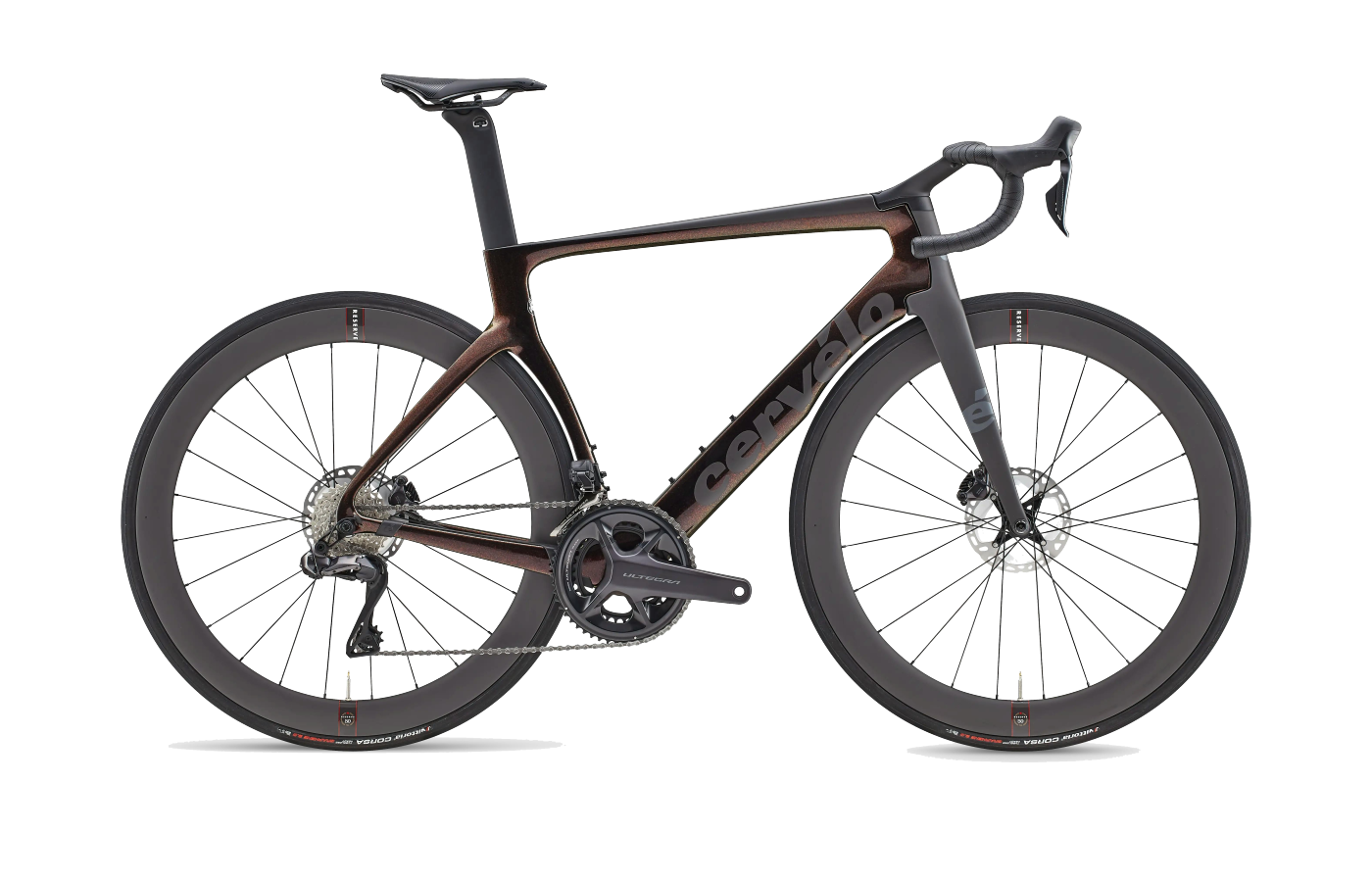
S5
The Cervélo S5 is the Y1Rs's most direct rival — same bayonet-fork, Y-stem aero concept, but with a noticeably stiffer front end, better stock builds, and a five-figure price tag that still undercuts the Colnago by thousands.
Compare →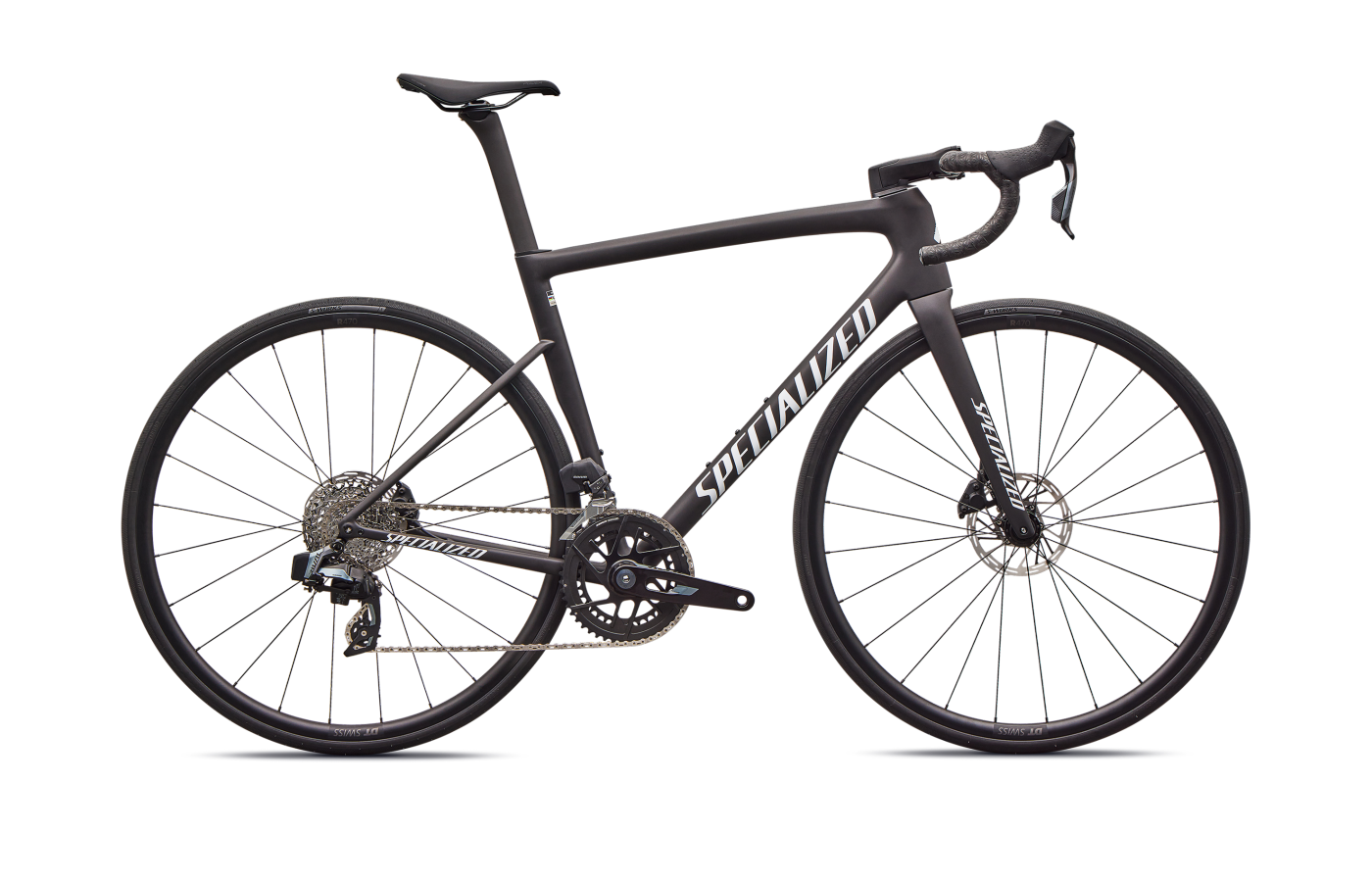
Tarmac
The Specialized Tarmac SL8 is the benchmark all-rounder the V5Rs is openly chasing on weight and aero. Lighter stock builds, standard power meters, and a broader price ladder make it the more pragmatic way into a pro-level race platform.
Compare →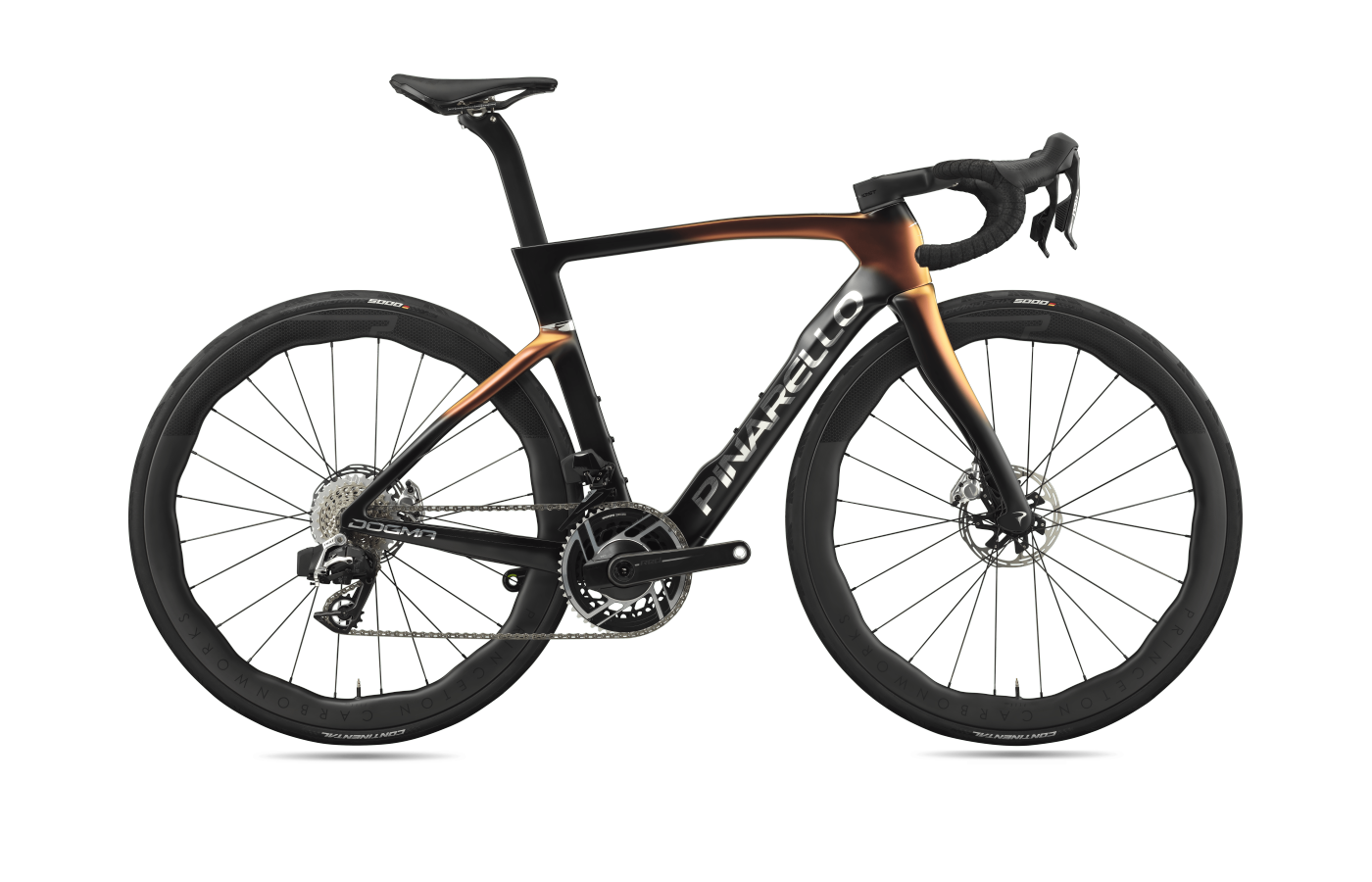
Dogma F
The Pinarello Dogma F is the other Italian superbike in this conversation — less radical than the Y1Rs, more composed through technical descents than either Colnago, and aimed squarely at riders who want pro pedigree without the pro-only maintenance.
Compare →