Troy
vsInstinct
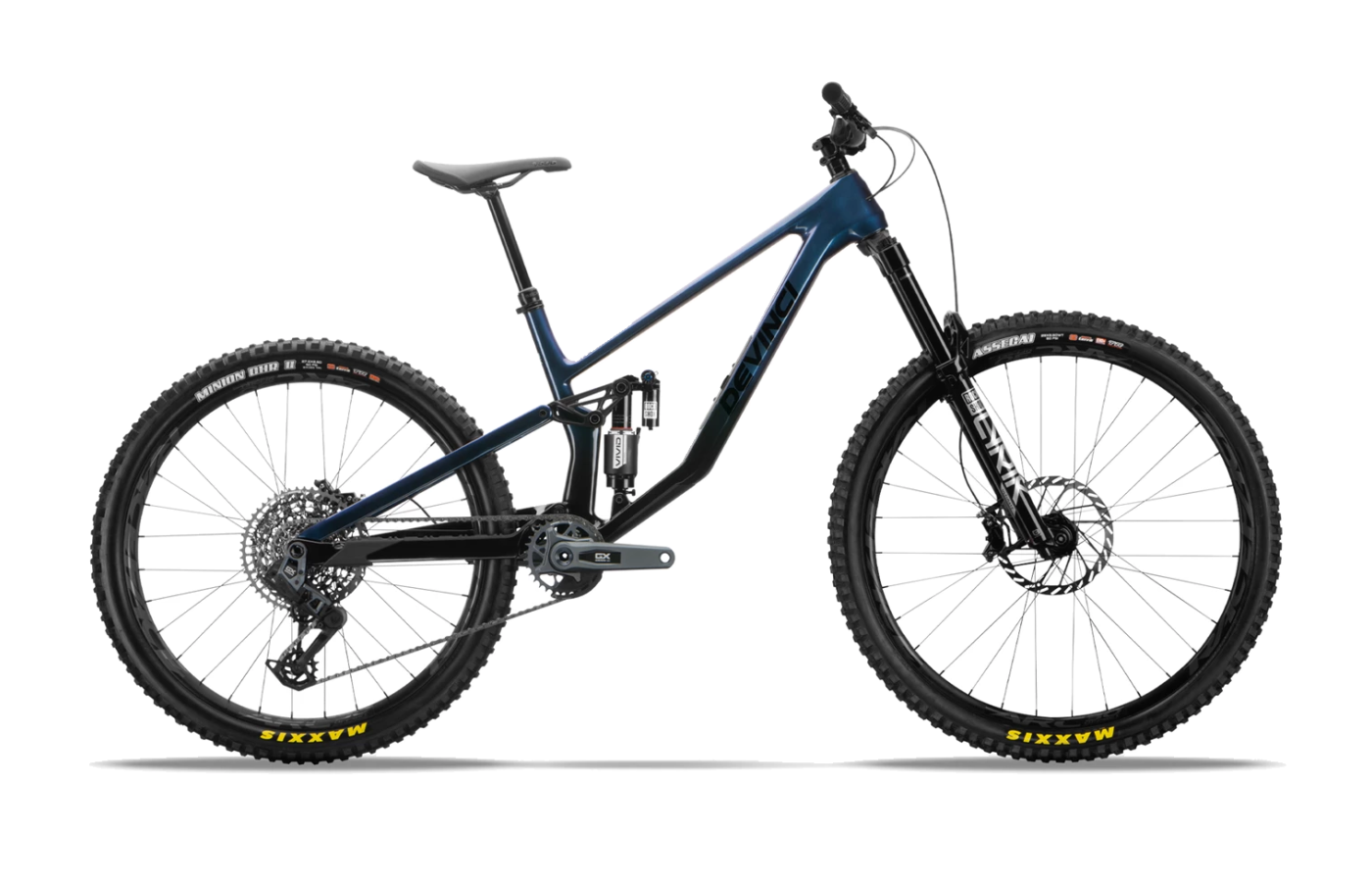
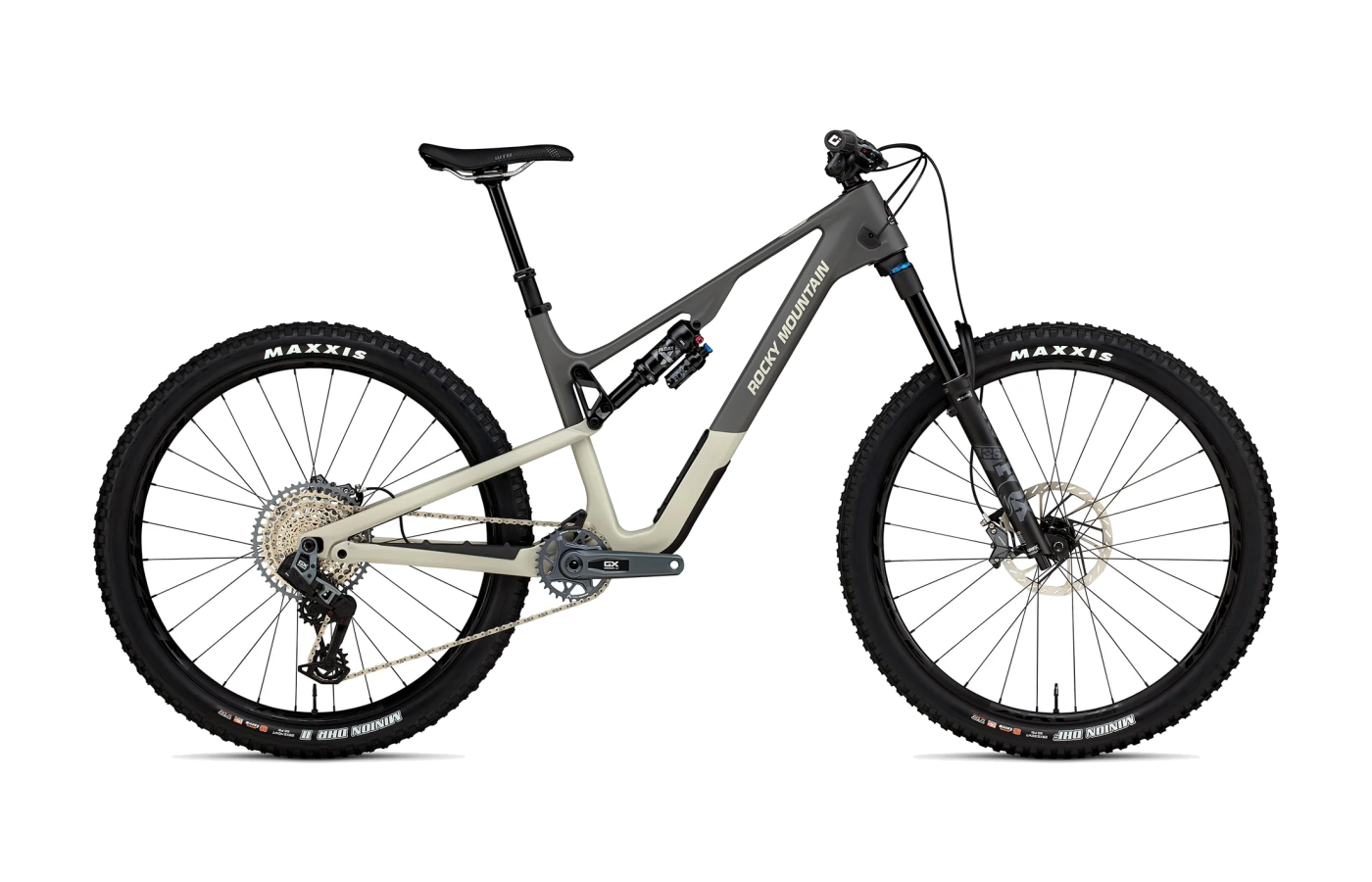
Two Canadian quiver killers, two suspension philosophies.
The Devinci Troy is the planted, do-everything 150/160 mm trail rig. The Rocky Mountain Instinct is a 140/150 mm geometry-adjustable shape-shifter.
Troy
- Planted, composed descender — 150/160 mm and a Split Pivot rear that reviewers call "sure-footed" in chunk.
- Burly parts out of the box — DoubleDown tires, Code Silver brakes with 200 mm rotors, no day-one upgrades needed.
- Made in Canada, lifetime warranty — alloy frames built in Quebec; carbon frames covered for life to the original owner.
- Geometry is largely fixed — no reach adjust, no head-angle chip, just MX vs. 29er.
- Frame voids warranty with a 170 mm fork — Devinci is firm that 160 mm is the ceiling.
Instinct
- Most adjustable trail bike on the market — RIDE-4 chip, flip-chip chainstays, +/- 5 mm reach cups, 48 valid geometry combos.
- Lighter and livelier — Carbon 70 weighs roughly 14.2 kg vs. ~15 kg for the carbon Troy, and it shows on punchy climbs.
- Best-in-class in-frame storage — Penalty Box 2.0 is larger than Devinci's SHED and includes a hidden AirTag mount.
- Stock Fox Float X tune drew "underdamped" critique from Pinkbike on the Carbon 70 — heavier or more aggressive riders may want a re-tune or coil swap.
- Cheaper builds spec EXO Dissector tires that reviewers swap immediately for anything aggressive.
Editor’s analysis
Same country, same target, two very different ways of getting there — one set-and-forget, one tinker-and-tune.
On paper, the Devinci Troy and Rocky Mountain Instinct read like siblings: 29"/MX-capable carbon trail bikes, slack 63.5–64 degree head angles, lifetime warranties, both built in Quebec or BC by brands that have been doing this for decades. Both get called "quiver killer" by every reviewer who throws a leg over them. But spend a weekend cross-shopping the spec sheets and the two bikes diverge fast.
The Devinci Troy is the longer, plusher, more planted of the pair — 150 mm rear, 160 mm fork, a Split Pivot platform that reviewers consistently call "calm and composed" and "sure-footed" once dialed. It runs DoubleDown casing tires stock, SRAM Code Silver brakes with 200 mm rotors on every carbon build, and ships with adult-grade burly parts that don't need an immediate upgrade. The geometry is essentially fixed: pick MX or 29er via a flip chip, set sag, ride. It's the bike for someone who wants a one-shot setup that handles backcountry epics and bike-park laps without a spreadsheet.
The Rocky Mountain Instinct is the lighter, twitchier counterpoint — 140 mm rear, 150 mm fork, a Horst Link platform with a RIDE-4 chip, a chainstay flip chip (437/447 mm), and a +/- 5 mm reach-adjust headset for 48 possible geometry combinations. Reviewers like Jeff Kendall-Weed call it "playful" and "sneaky fast"; Pinkbike, on the same Carbon 70 build we picked, called the stock Fox Float X tune "underdamped" and "undermining" when pushed hard. Both can be true. The Instinct rewards an active rider who'll spend garage time fine-tuning — and demands it from anyone running it on truly rowdy terrain.
Put another way: the Devinci Troy is the trail bike you buy when you want to stop thinking about the trail bike. The Rocky Mountain Instinct is the trail bike you buy when fiddling with reach cups and shock spacers is part of the fun.
Where the builds differ.
Comparing our editor's-pick builds side-by-side. Winners highlighted row-by-row — lower price and weight, and the better-spec component, each mark a point.
Build variants & pricing
The Troy spans $3,199–$7,499 across seven builds; the Instinct spans $3,399–$9,449 across five. Both go from Deore-tier alloy up to flagship carbon.
Editor's picks are tier-matched on SRAM GX Eagle Transmission AXS and a carbon frame. Prices are current US MSRP. The Troy carbon GX AXS commands a ~$2,000 premium over the Instinct Carbon 70 — Devinci pairs it with higher-end Lyrik Ultimate / Vivid Ultimate suspension and DoubleDown tires, where the Instinct uses Fox Performance Elite and EXO+ rubber.
How they fit, how they steer.
The Troy size M sits 23 mm taller in stack (622 vs. 599 mm) with 11 mm more reach (460 vs. 449 mm) and a half-degree slacker head tube (64 vs. 63.5°). The Instinct's longer 440 mm chainstays vs. the Troy's 435 mm pull the rider weight slightly more centered.
Which size should I buy?
Sizes overlap closely in the middle of the range; both bikes recommend the same fit category for an average-height rider but use different naming conventions (M vs. md).
→These are starting points. Flexibility, riding style, and preferred position all shift the answer — if you’re between sizes, a professional fit beats a chart.
What the magazines said.
Published reviews from trusted cycling outlets. Click through for the full write-up.
Which one should you buy?
If you want a planted trail bike that's ready to ride out of the box, get the Troy. If you want to tune your way into your perfect bike, get the Instinct.
Troy
If you'd rather ride than tinker, the Troy is the pick. The longer-travel Split Pivot platform shrugs off rough trails, the spec list needs zero day-one upgrades, and the geometry asks no questions beyond MX or 29er. Built in Canada and warrantied for life.
Instinct
If you actually enjoy spending an hour resetting your chainstay length before a big trip, the Instinct rewards you. With 48 possible geometry combinations, in-frame storage that beats every competitor, and a livelier feel on the climbs, it's the bike that grows with you.
Questions buyers actually ask.
Short answers to the things we get emailed about most often.
01Which is better for rough, fast descents?
The Devinci Troy, in most reviewers' hands. It runs 10 mm more rear travel (150 vs. 140 mm), a 160 mm fork vs. the Instinct's 150 mm, and ships its carbon GX AXS build with the RockShox Vivid Ultimate shock — a piggyback design with hydraulic bottom-out control that handles big, repeated impacts better than the Instinct's Fox Float X.
Pinkbike's Field Test specifically called the stock Float X tune on the Instinct Carbon 70 "underdamped" and "undermining" at speed, while finding the Troy "planted" and "composed" through the same kind of terrain. Heavier or more aggressive riders on the Instinct often end up swapping to a coil shock or sending the Float X for a re-valve.
02Which climbs better?
Closer than you might guess, but the Rocky Mountain Instinct has the edge for most riders. The Carbon 70 weighs roughly 14.2 kg in size MD vs. ~15 kg for a comparable Troy carbon, and the steeper effective seat tube (76.5° on the Instinct in neutral RIDE-4 vs. 77.8° on the Troy size M) is closer than the numbers suggest because the Troy's higher anti-squat keeps the rear end up in the travel.
The Troy reviewers often praise its high-anti-squat "taut" climbing feel — meaning it rides high and pedals well for a 150 mm bike — but the Instinct's lighter chassis and more progressive suspension simply move uphill faster, especially with the climb switch flipped.
03How adjustable is the geometry on each bike?
Devinci Troy: essentially one knob — a flip chip in the lower shock mount that toggles between MX (29" front / 27.5" rear) and full 29er. Head tube angle is fixed at 64°, reach is fixed per size, chainstays are size-specific (435 mm on S/M, 440–445 mm on L/XL). Set it once, ride it.
Rocky Mountain Instinct: the most adjustable trail bike currently on sale. The RIDE-4 linkage chip cycles four geometry/kinematics presets, the rear axle flip chip toggles chainstays between 437 and 447 mm, and a +/- 5 mm reach-adjust headset cup lets you tweak fit. Rocky Mountain claims 48 possible combinations. Caveat: SRAM T-Type drivetrains lock you into the longer 447 mm chainstay setting.
04What about in-frame storage?
Both have it. The Devinci Troy's SHED compartment fits a 500 ml bottle plus essentials and uses a side-entry cage on the storage door — useful but tight. The Rocky Mountain Instinct's Penalty Box 2.0 is larger, has a custom tool wrap, and includes a concealed AirTag/Tile compartment for theft tracking.
If storage is a meaningful part of your decision, the Instinct wins this row clearly.
05Are the editor's-pick builds priced apples-to-apples?
Not quite. We picked the Troy Carbon GX AXS 12s ($7,499) and the Instinct Carbon 70 ($5,499) — both carbon-frame, both running SRAM GX Eagle Transmission AXS, which is the natural one-down-from-flagship pick on each platform. But the Troy commands a roughly $2,000 premium for higher-end suspension (RockShox Lyrik Ultimate / Vivid Ultimate vs. Fox 36 Performance Elite / Float X Performance Elite) and DoubleDown casing tires.
For a closer-priced comparison, the Devinci Carbon Eagle 90 12s at $6,199 brings the gap down to ~$700 but drops to mechanical SRAM Eagle 90.
06Which has better stock tires?
The Troy. Devinci ships its higher-end builds with Maxxis Assegai and Minion DHR II in DoubleDown casing — heavier, but reviewers consistently praise the choice for real-world durability on aggressive trails. Rocky Mountain specs Maxxis Minion DHF / DHR II in EXO+ on the Carbon 70, which is fine for moderate trail use but light for anything truly rocky. Multiple Instinct reviewers swapped tires before the second ride.
07Can I run a 170 mm fork on either bike?
Officially, no on the Troy — Devinci explicitly states the frame is not warranted with a 170 mm fork, and going up will void coverage. The Instinct's documentation is less restrictive but the platform was designed around 150 mm; pushing the fork higher will steepen the seat tube and slack out an already slack head angle in unintended ways.
Both bikes are designed around their stock fork travel — buy a longer-travel platform if you want more fork.
08What warranty do they come with?
Both frames come with a lifetime warranty to the original owner against manufacturing defects, and both brands offer crash-replacement pricing. Devinci builds its alloy frames in Quebec and explicitly notes warranty coverage hinges on respecting the 160 mm fork limit. Rocky Mountain assembles in Canada and offers a strong dealer network for parts and warranty support.
Similar bikes
If your priorities don’t map cleanly onto either of these, one of these adjacent bikes probably fits better.
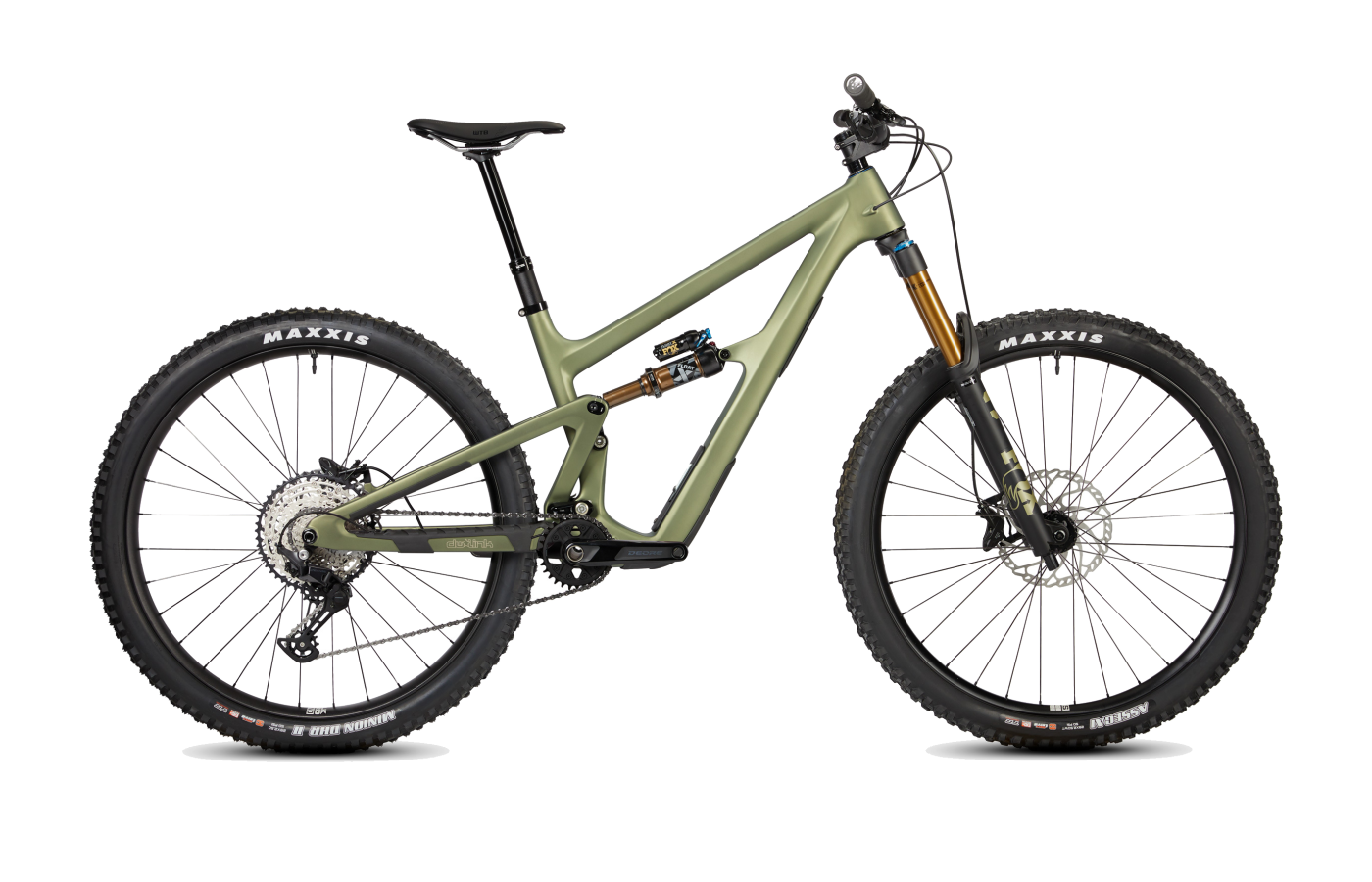
Ripmo
The quintessential 145/160 mm cross-shop. The Ibis Ripmo splits the difference between the Troy's planted feel and the Instinct's playfulness — fewer adjustment knobs than the Instinct, less suspension than the Troy, but a DW-Link platform that climbs and descends without the setup homework.
Compare →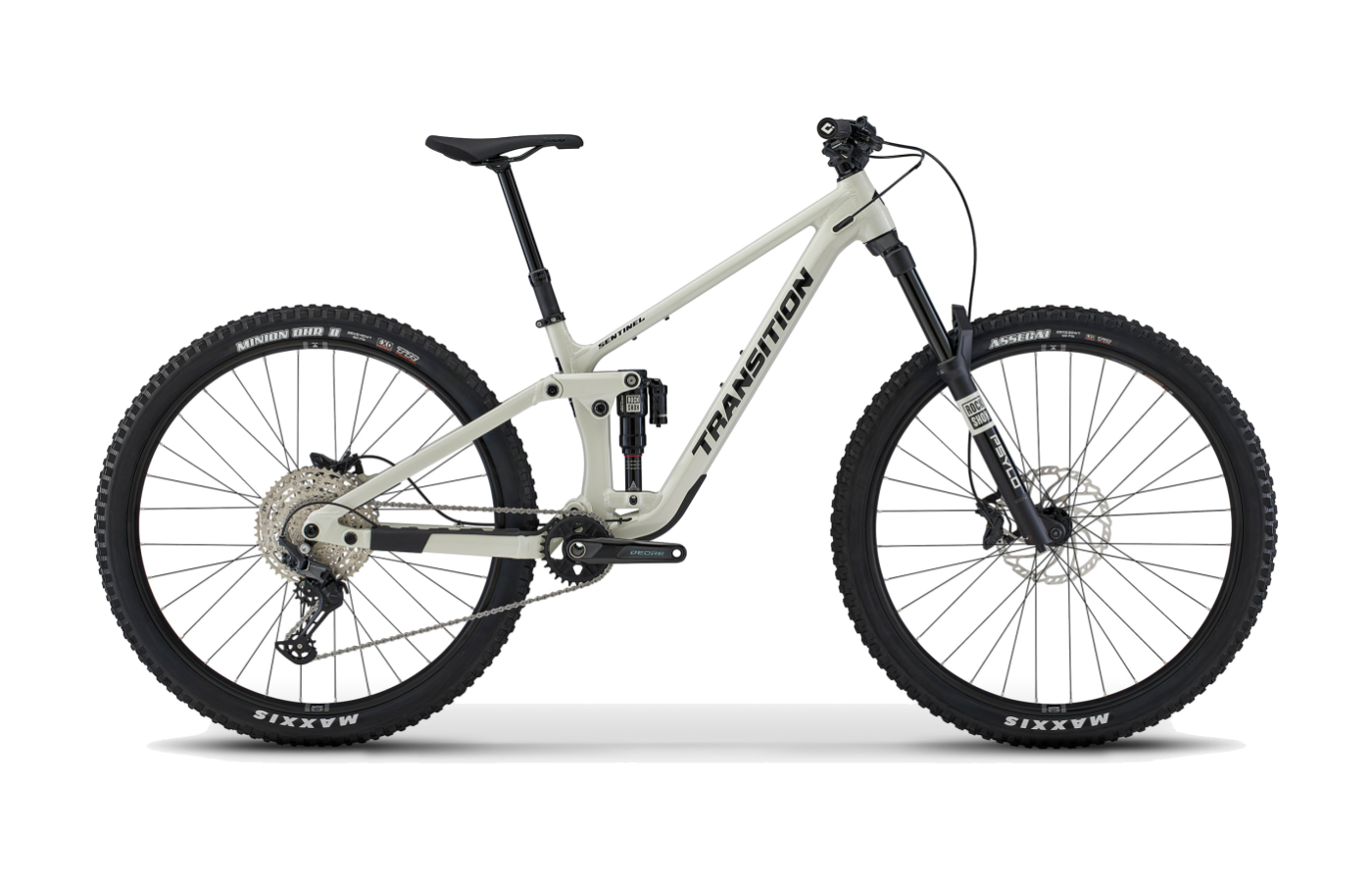
Sentinel
Same 64-degree head angle as the Troy, but a more linear suspension feel that bashes through chunk rather than supporting through it. Worth a look if the Troy's ride-high anti-squat character isn't the feel you're chasing.
Compare →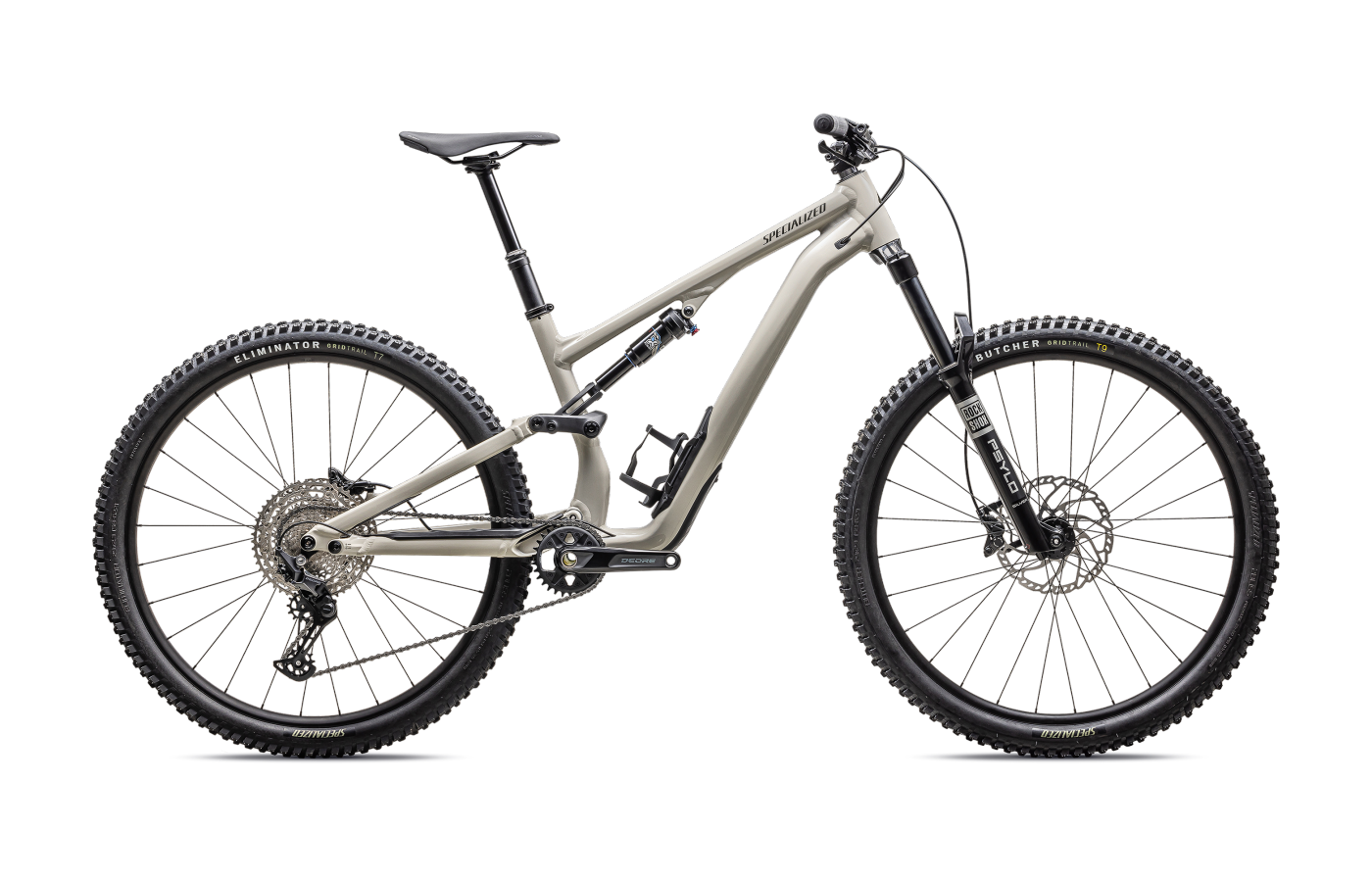
Stumpjumper
Lighter, more traditional trail geometry, and a wider build range that starts well below either of these. Best if you find both the Troy and Instinct overbuilt for your local flow trails.
Compare →