Troy
vsStumpjumper
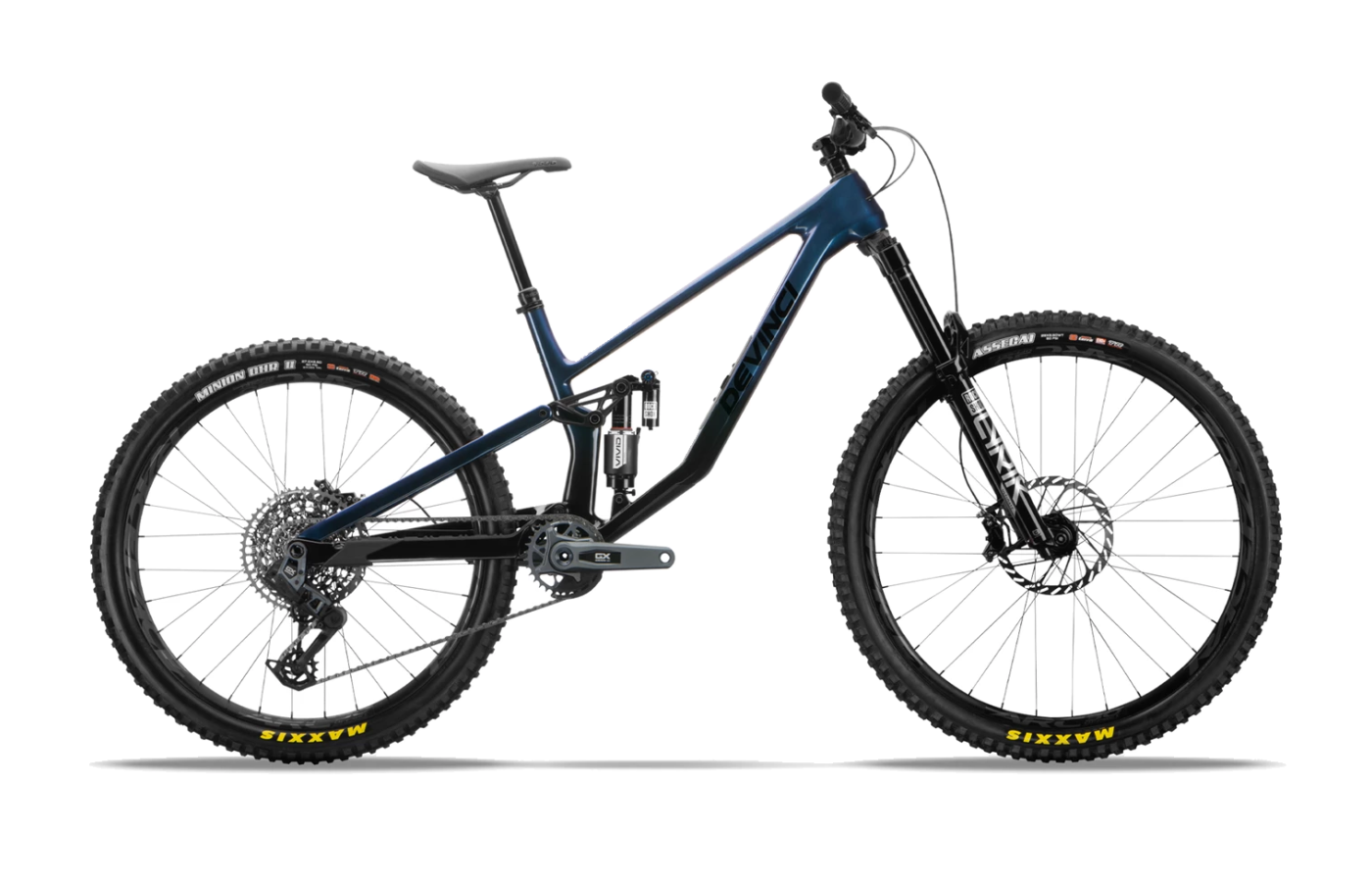
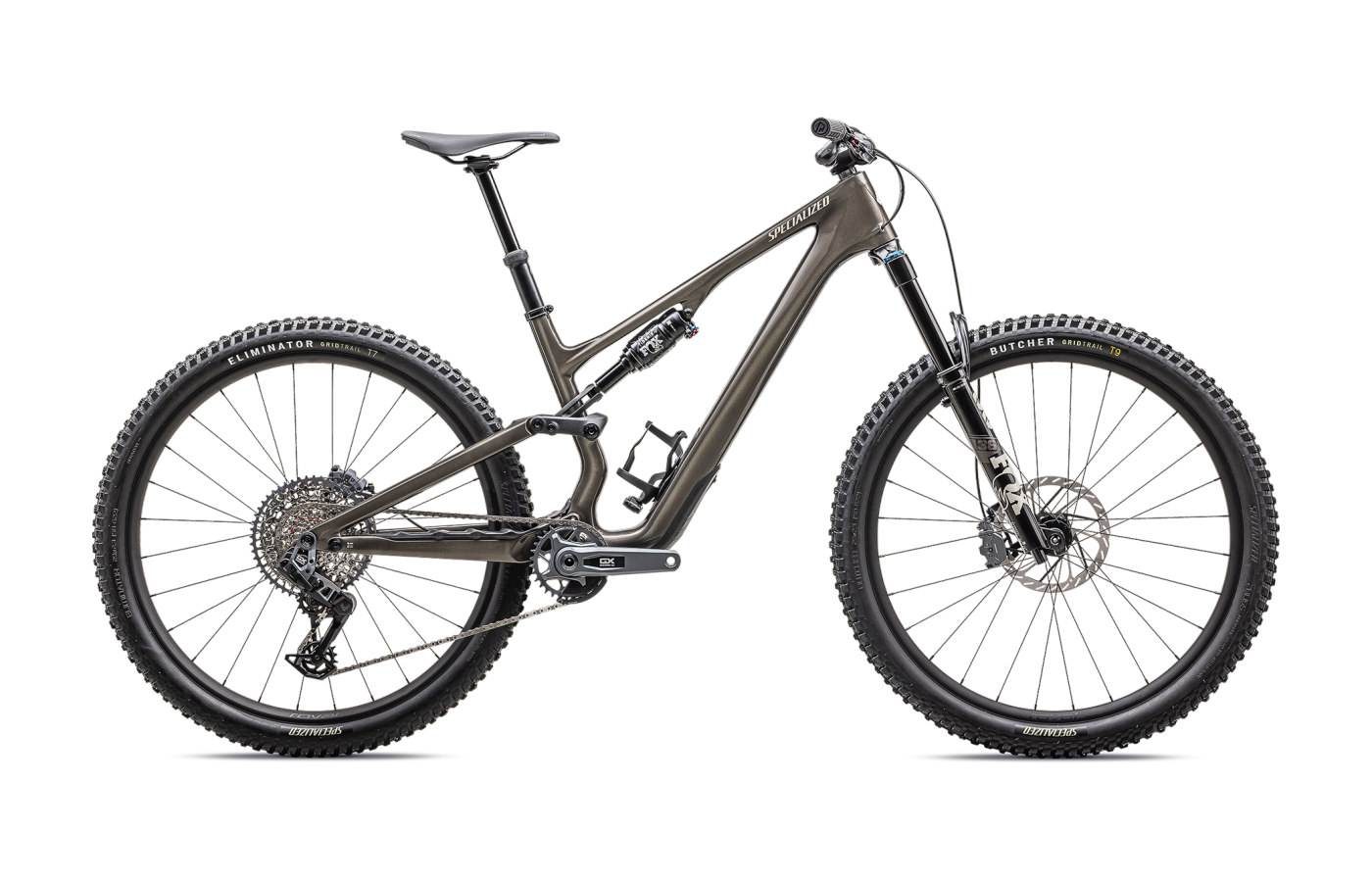
Two trail bikes, two engineering philosophies.
The Devinci Troy is a Canadian-made, mechanically simple bruiser. The Specialized Stumpjumper is a tunable shape-shifter built around a proprietary shock.
Troy
- Carbon-for-cheap pricing — Devinci charges roughly $350 over the equivalent alloy build for the carbon frame, well under the industry's typical $1,000+ premium.
- DoubleDown tires stock on the carbon GX AXS — Maxxis Assegai/Minion DHR II in the burlier casing, ready for rough terrain straight out of the box.
- Standard, serviceable suspension — RockShox Lyrik Ultimate fork and Vivid Ultimate shock, no proprietary internals to chase.
- Less geometry adjustability than the Stumpjumper — one flip chip, no headset-cup angle adjust.
- 150 mm fork is the warranty cap; running a longer 170 mm fork voids coverage.
Stumpjumper
- GENIE shock traction — the dual-chamber air spring is genuinely class-leading for small-bump compliance and bottom-out control on the same setup.
- Three-position headset cup swings the head angle from 63° to 65.5°; the flip chip moves BB height ~7 mm. One bike, six geometries.
- Lifetime pivot bearing replacement on top of the lifetime frame warranty — Specialized covers ongoing wear, not just defects.
- Carbon frames are wireless-only — Shimano mechanical loyalists are pushed onto the heavier alloy chassis.
- Stock alloy wheelsets on lower-tier builds are widely flagged as a weak point relative to the bike's capability.
Editor’s analysis
Both bikes chase the same job — the one trail bike for everything — and arrive there from opposite directions.
On the surface, the Devinci Troy and Specialized Stumpjumper land in the same trail-bike bracket: 64-degree-ish head tubes, 145–150 mm of rear travel, mixed-wheel optional via flip chip, in-frame storage, lifetime frame warranties. Both have been called 'quiver killers' by every reviewer who got near them. But the engineering choices behind those numbers couldn't be more different.
The Devinci Troy plays it straight. A Split Pivot rear end with 150 mm of travel, a 160 mm Lyrik fork, off-the-shelf RockShox shock options, mechanical or AXS — pick your poison. The carbon frame is handcrafted in Canada and carries a lifetime warranty, and Devinci famously charges only ~$350 over the alloy version for the same build kit. It's the bike for the rider who wants the suspension to behave the same way on Tuesday as it did on Saturday, with no proprietary internals to chase down in five years.
The Specialized Stumpjumper goes the other way. Its centerpiece is the Fox GENIE shock, a dual-chamber air spring that runs a huge volume in the first 70% of travel for coil-like grip, then ramps hard via a closed-off air sleeve to prevent bottom-out. You can tune the ramp by adding 'GENIE bands' (up to four) to dial mid-stroke support up or down. Pair that with a flip-chip plus three-position headset cup (63°, 64.5°, 65.5°), and a single bike legitimately spans mile-muncher to bike-park ripper.
The trade is real: Specialized gets the most adaptable, traction-monster trail bike on the market, but you're betting on a proprietary shock and — on every carbon Stumpjumper — a wireless-only drivetrain. Devinci gets a simpler, more universally serviceable platform with less travel adjustability and a heavier alloy lineup. If you love fiddling, the Stumpjumper rewards it. If you'd rather just ride, the Troy is the cleaner answer.
Where the builds differ.
Comparing our editor's-pick builds side-by-side. Winners highlighted row-by-row — lower price and weight, and the better-spec component, each mark a point.
Build variants & pricing
Both lineups span a wide range — the Stumpjumper from $2,999 to $11,999, the Troy from $3,199 to $7,499. Editor's picks here are the GX Transmission carbon builds on each side.
Prices are current US MSRP. The Troy Carbon GX AXS comes in roughly $1,500 above the Stumpjumper 15 Expert despite being the same drivetrain tier — that's largely the suspension upgrade (Lyrik Ultimate / Vivid Ultimate vs. Fox 36 Performance Elite / Float Performance Elite) and DoubleDown-casing tires Devinci ships stock.
How they fit, how they steer.
Troy M vs Stumpjumper S3 — the fit-picked sizes for a 5'8" rider on each bike. The Stumpjumper sits 5 mm taller in stack with 10 mm less reach and a 0.5° steeper head tube, but the wheelbase is 17 mm shorter. The Troy is the longer, slightly more stretched-out cockpit.
Which size should I buy?
The Devinci runs S/M/L/XL; the Stumpjumper uses Specialized's S1–S6 sizing, which is anchored by reach more than seat tube length. Most riders fit cleanly into one size on each.
→These are starting points. Flexibility, riding style, and preferred position all shift the answer — if you’re between sizes, a professional fit beats a chart.
What the magazines said.
Published reviews from trusted cycling outlets. Click through for the full write-up.
Which one should you buy?
If you want a simple, serviceable trail bike with no proprietary anything, get the Troy. If you want one bike that can be tuned into six different bikes, get the Stumpjumper.
Troy
If you want a 150/160 mm trail bike that does everything competently with off-the-shelf suspension, a lifetime warranty on a Canadian-made frame, and a build kit that doesn't make you upgrade tires day one — this is it. The Troy is what you buy when you'd rather ride than fiddle.
Stumpjumper
If you actively enjoy adjusting suspension and geometry to match the day, the Stumpjumper gives you more knobs to turn than anything in its travel class. Three head-angle positions, a flip chip, GENIE bands for the shock, and 145 mm of rear travel that can feel like much more.
Questions buyers actually ask.
Short answers to the things we get emailed about most often.
01Which has more travel?
The Devinci Troy has 150 mm rear / 160 mm front. The Specialized Stumpjumper 15 has 145 mm rear / 150 mm front (160 mm front on the Coil Alloy build). That's a 5 mm rear and 10 mm front advantage for the Troy on paper.
In practice, the gap is smaller than the numbers suggest — the Stumpjumper's GENIE shock is widely reported to feel like more travel than 145 mm thanks to its bottomless ramp-up curve. For most trail riding, neither bike runs out of travel.
02Mixed wheels or full 29er?
Both ship with mixed wheels (29" front / 27.5" rear) on most sizes and offer a full 29er option via a flip chip in the lower shock mount.
On the Troy, MX setup requires the High flip-chip position; full 29" can run High or Low. On the Stumpjumper, sizes S1–S2 are MX-only by design, S3 and up ship MX but can swap to full 29". Pinkbike's Mike Kazimer specifically recommended the full-29" config on the Troy as the better all-rounder for mixed terrain — increased stability and speed-carrying without losing meaningful agility.
03What's the deal with the GENIE shock — is it really that different?
Yes. The Fox GENIE is a dual-chamber air spring co-developed with Specialized. The first ~70% of travel runs a large air volume for a soft, coil-like initial stroke; at 70% a 'GENIE band' closes off the outer chamber, dramatically reducing volume and ramping the spring curve hard.
The practical effect: hyper-sensitive small-bump compliance on top, near-bottomless big-hit support underneath. You can change the feel by adding more bands (up to four total) to firm up mid-stroke. The downside: it's a proprietary shock. Service is mostly compatible with standard Fox internals, but you're tied to Specialized for parts. The Troy's RockShox Vivid Ultimate is fully off-the-shelf in comparison.
04Are the carbon frames wireless-only?
On the Stumpjumper, yes — every carbon build (Comp, Expert, Pro, S-Works) is wireless-only. There's no internal cable routing for a mechanical derailleur. Specialized pushed Shimano-mechanical buyers onto the alloy chassis, which still has cable routing.
The Devinci Troy Carbon is more flexible — Devinci offers both AXS and mechanical (Eagle 90) builds on the carbon frame, so if you want a wireless derailleur on a carbon trail bike with mechanical compatibility, the Troy is the only one of these two that works.
05How adjustable is the geometry on each?
Stumpjumper 15 is the most adjustable trail bike in the segment. A three-position headset cup swings the head angle from 63° to 65.5°. A flip chip moves the bottom bracket ~7 mm. Combined, that's six effective geometry setups in one frame.
Devinci Troy keeps it simpler: one flip chip in the lower shock mount that toggles between High and Low, mainly used for the MX-vs-29" wheel choice. Head angle is fixed at 64°. If you want to swing the bike's character significantly, the Stumpjumper is the tool.
06What's the climbing position like on each?
Devinci Troy (Medium): seat tube angle 77.8°, reach 460 mm, stack 622 mm. Reviewers consistently note the bike rides high in its travel, dynamically steepening the effective seat angle.
Stumpjumper 15 (S3): seat tube angle 77°, reach 450 mm, stack 627 mm. The GENIE shock's supple initial stroke gets some criticism for letting the bike ride a touch low on smoother climbs, though the climb-switch on the shock firms things up effectively.
Net: similar on paper, with the Troy slightly steeper. Both are competent seated climbers; neither is an XC whippet.
07How heavy are the alloy versions?
Both alloy frames are heavy by trail-bike standards. The Devinci Troy Eagle 90 12s alloy weighs ~16.20 kg (35.71 lb) in size M with the GX-tier build. The Specialized Stumpjumper 15 Alloy hits 16.90 kg (37.3 lb) at size S4, and the entry-level Stumpjumper 15 Alloy build comes in at 16.57 kg (36.5 lb).
The Troy is a touch lighter alloy-to-alloy. If weight is a priority, both brands' carbon options shed roughly 2 lb (Devinci specifically calls out 'more than two pounds' off the alloy).
08What warranty do they come with?
Both frames carry a lifetime warranty to the original owner. Specialized goes a step further with lifetime pivot bearing replacement, covering wear-out items most brands don't.
One important caveat on the Troy: Devinci explicitly states the frame is not compatible with 170 mm forks. Running a longer fork voids the warranty. If you were eyeing the Troy as a base for an enduro-fy upgrade path, factor that in — the Stumpjumper's 160 mm Coil build is offered factory-spec from the brand.
Similar bikes
If your priorities don’t map cleanly onto either of these, one of these adjacent bikes probably fits better.

Fuel EX
The most direct rival to the Stumpjumper — Trek's 140/150 mm trail bike with a similar adjustable geometry play (Mino Link flip chip, headset-cup angle adjust). If you want the tunability of the Stumpjumper without the proprietary shock, the Fuel EX is the alternative.
Compare →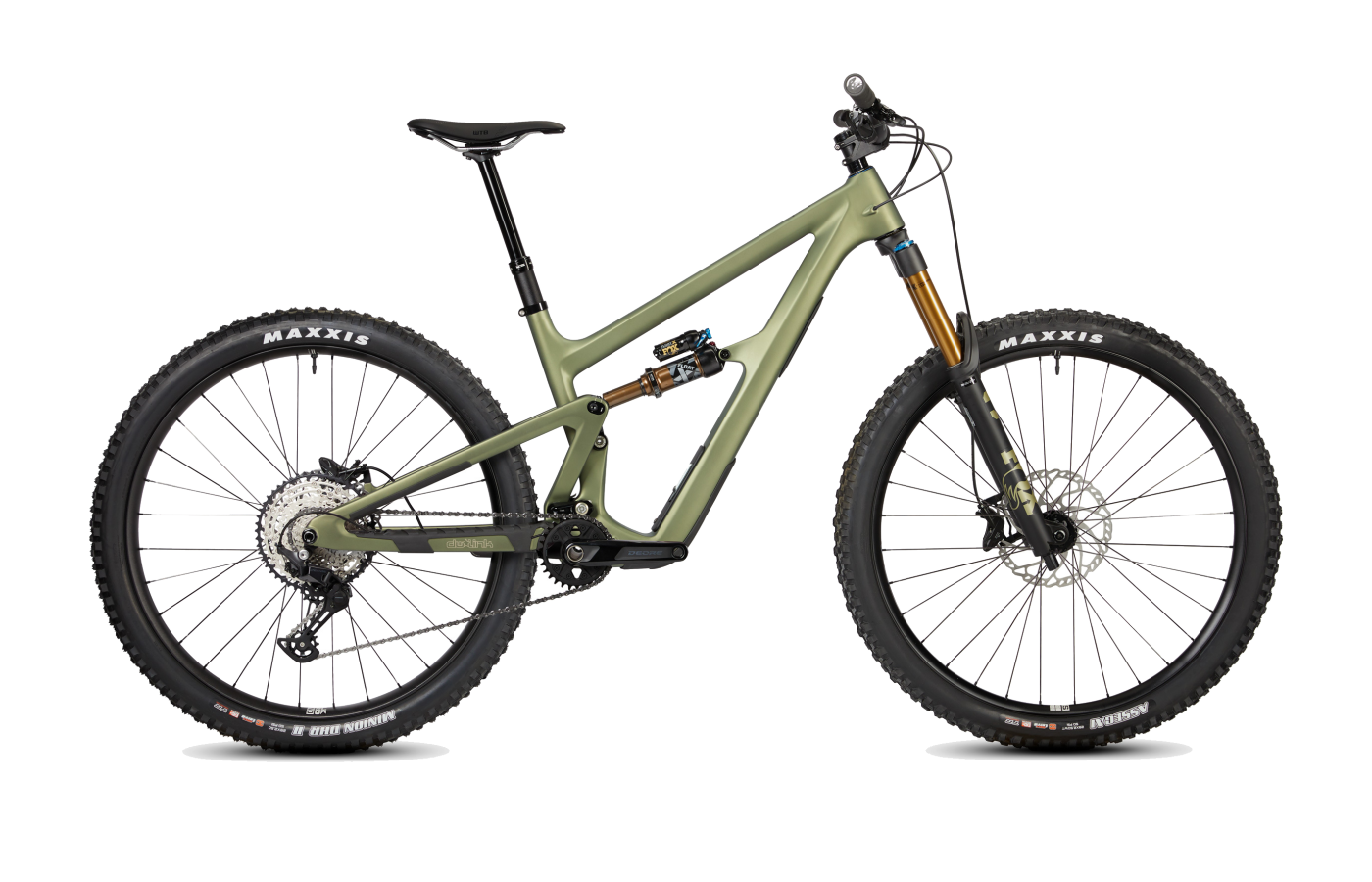
Ripmo
The 150/160 mm benchmark that defined this category before either of these bikes existed. DW-link suspension, dpUSA tuning support, and a more conservative aesthetic — closer to the Troy's mechanical-first ethos than the Stumpjumper's tech-forward one.
Compare →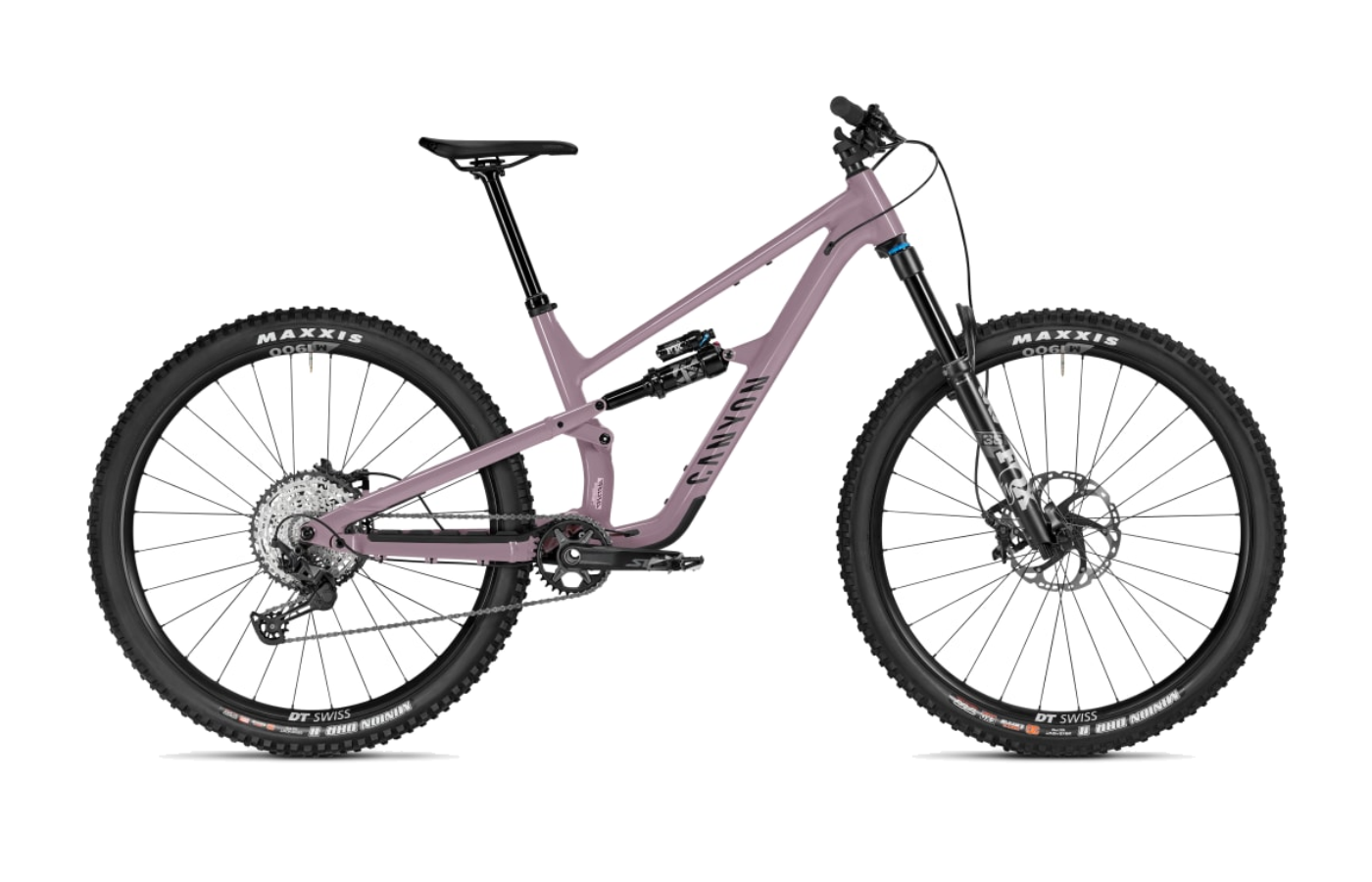
Spectral
Direct-to-consumer pricing on a 150/160 mm aggressive trail platform — the catch is no local dealer and no demos. Best if you already know your fit and don't need to put hands on the bike before buying.
Compare →