Troy
vsFuel EX
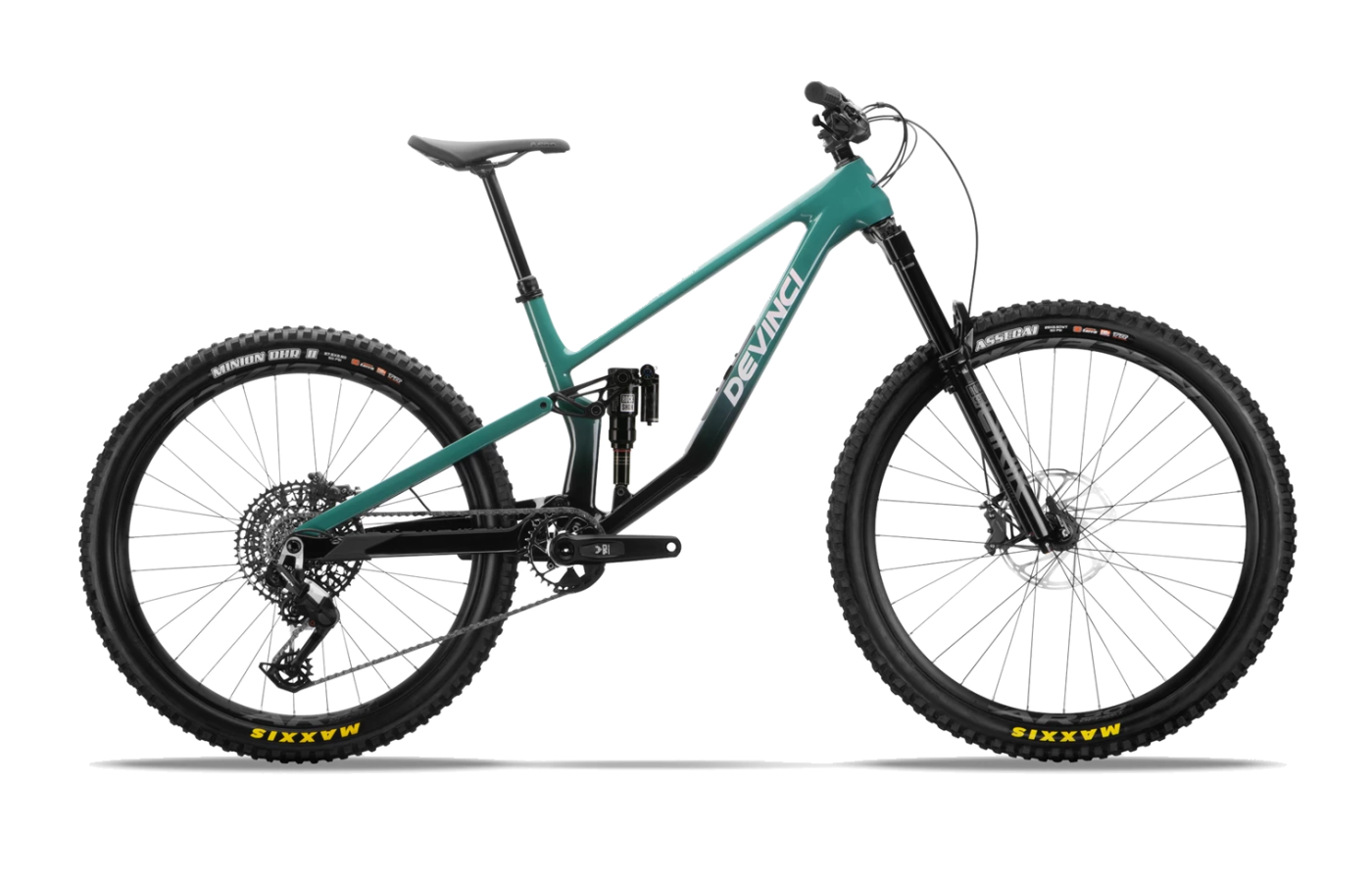
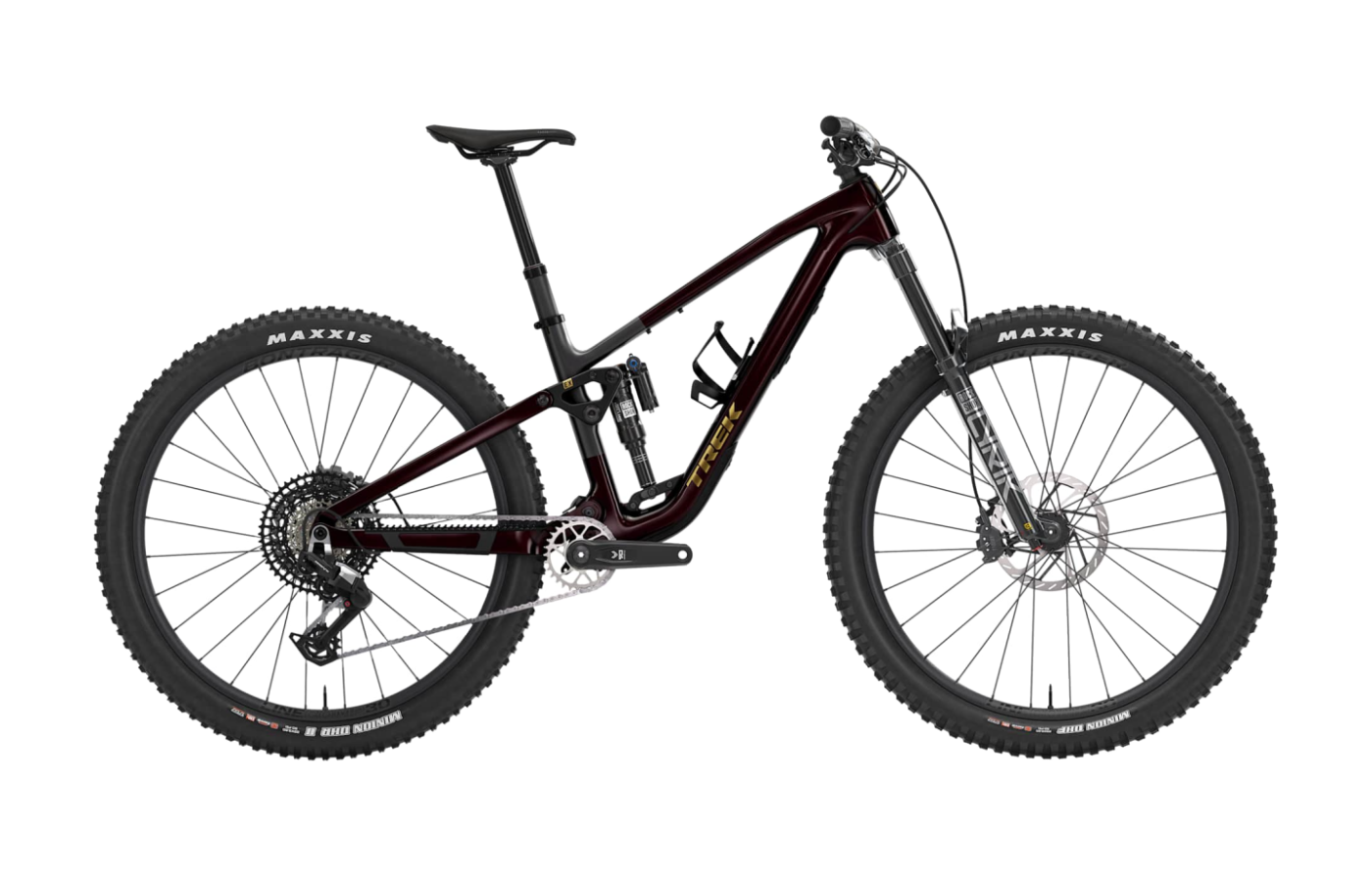
Two 150mm trail bikes, two very different philosophies.
The Devinci Troy is a focused, Canadian-made do-it-all on a refined Split Pivot. The Trek Fuel EX is a heavier, anchored 'platform' that morphs into three bikes.
Troy
- Lighter, livelier carbon build — Carbon Eagle 90 at 14.5 kg vs. Trek's 9.8 Eagle 90 at 15.4 kg. Easier to pop and place.
- DoubleDown casing tires stock — Devinci ships robust Maxxis Assegai/Minion DHR II so you don't immediately re-tire.
- Carbon-vs-aluminum price gap is small — Freehub flagged the carbon frame as one of the best dollar-per-gram-saved deals in the segment.
- Lifetime warranty voids if you run a 170 mm fork — the platform is locked at 160 mm.
- Only 4 frame sizes (S/M/L/XL) — no XXL for very tall riders, no XS.
Fuel EX
- Modular travel & wheelsize — same frame morphs into 145 mm EX, 150 mm MX, or 160 mm LX by swapping links and mounts.
- Anchored, planted feel at speed — reviewers consistently call the Gen 7 'Sherman-tank' stable; ABP keeps the rear active under braking.
- Wider build & price range — 15 builds from $2,299 to $8,499 across two frame generations means a real entry point.
- Heavy — alloy builds approach 17 kg, noticeable when accelerating or lofting the bike.
- Modularity isn't a flip-chip — converting EX→MX→LX requires buying linkages, mounts, and sometimes a fork.
Editor’s analysis
Both run roughly 150 mm of rear travel, a 64-ish-degree head angle, and a $6k carbon-frame mid-build — and they still ride almost nothing alike.
On paper, the Devinci Troy and Trek Fuel EX look like trail-bike twins. 150 mm of rear travel, 160 mm fork on the Troy and a 150 mm fork on the EX, slack head angles, internal storage, UDH, Boost 148, MX-capable. The price ranges even overlap heavily — Devinci spans $3,199 to $7,499, Trek $2,299 to $8,499. But the philosophies behind the two diverge fast.
The Troy is a focused tool. One travel number, one suspension layout (Dave Weagle's Split Pivot), one frame material at a time. Reviewers across Pinkbike, Bike Rumor, Freehub and The Loam Wolf land on the same word: 'quiver killer.' Carbon Troys check in around 14.5 kg in the Eagle 90 build, the Split Pivot is praised for separating braking from acceleration cleanly, and Devinci ships DoubleDown casing tires from the factory because that's how the bike actually gets ridden. It's a bike built by people who decided what it should be and stopped there.
The Trek Fuel EX is the opposite bet. The same frame becomes a 145 mm trail EX, a 150 mm mullet MX, or a 160 mm enduro LX by swapping rocker links and shock mounts. Geometry is aggressive and tall — a 624 mm stack on a Medium, a 72.6-degree actual seat angle that rotates to a much steeper 77-78 degrees effective at climbing saddle height, and a massive 1,225 mm wheelbase on Medium versus the Troy's 1,230 mm despite the Trek's lower travel. The trade-off is mass: alloy EX 8 builds tip the scales at nearly 17 kg, which Flow Mountain Bike and MBR both compare to a 'Sherman tank.'
Put another way: the Devinci Troy is the bike you buy when you want one specialized trail bike that's genuinely good at everything inside its lane. The Trek Fuel EX is the bike you buy when you want a chassis you can grow into — a frame that converts as your terrain or ambitions change, and that, even stock, plows through chunder like a bike with two more inches of travel.
Where the builds differ.
Comparing our editor's-pick builds side-by-side. Winners highlighted row-by-row — lower price and weight, and the better-spec component, each mark a point.
Build variants & pricing
Both span roughly $4k of range. Trek's lineup is wider on both ends — entry at $2,299 (carryover Gen 6) and a flagship at $8,499 — while Devinci tops out at $7,499 and starts at $3,199.
Editor's picks are the carbon Eagle 90 builds on each side — closest match for frame material and drivetrain tier, within $200 of each other. Trek also keeps two Gen 6 carbon builds (140 mm rear) in the lineup at $4,499–$4,799; if you see a 9.8 GX AXS T-Type or 9.8 XT, that's the older platform.
How they fit, how they steer.
Both at size M — the fit-picked size for a 5'8" rider. Reach is identical at 460 mm, but the Trek sits 2 mm taller in stack, has a 0.5° steeper head angle (64.5° vs 64°), and a slacker actual seat tube (72.6° vs 77.8°). Wheelbases are within 5 mm.
Which size should I buy?
Devinci runs S–XL; Trek runs S–XXL. Pick by stack and reach — the Trek's taller stack favors longer-legged riders, the Troy's steeper actual seat angle keeps weight forward on climbs.
→These are starting points. Flexibility, riding style, and preferred position all shift the answer — if you’re between sizes, a professional fit beats a chart.
What the magazines said.
Published reviews from trusted cycling outlets. Click through for the full write-up.
Which one should you buy?
If you want one focused, lighter trail bike with a refined suspension feel out of the box, get the Devinci Troy. If you want a chassis that adapts and a planted, descending-biased ride at any speed, get the Trek Fuel EX.
Troy
If you ride natural, technical terrain and value a refined, predictable suspension feel and a Canadian-made frame, the Troy is the more cohesive package. Stock DoubleDown tires, Code Silver brakes, and the Split Pivot's clean braking-acceleration separation mean you spend less time tweaking and more time riding.
Fuel EX
If you want a frame that grows with you — short-travel trail today, mullet enduro tomorrow — the Fuel EX is unmatched. The trade is weight and modularity-by-purchase, but the stock 145 mm EX setup is already a planted, technical-climbing master that descends like a bigger bike.
Questions buyers actually ask.
Short answers to the things we get emailed about most often.
01Which is lighter?
The Devinci Troy, by a meaningful margin in equivalent builds. The Carbon Eagle 90 Troy is claimed at 14.5 kg (size M), while the Trek 9.8 Eagle 90 Gen 7 — also a carbon frame with the same SRAM Eagle 90 mechanical groupset — is 15.4 kg (size M). That's roughly 900 g in the Troy's favor.
In alloy, the gap widens. The aluminum Troy Eagle 90 sits around 16.2 kg; the Trek 9 Eagle 90 (Gen 7 alloy) is 16.6 kg, and the EX 8 alloy build climbs to roughly 16.9 kg. Reviewers consistently flagged the Trek's mass — MBR called it 'overweight for a trail bike' at near 17 kg.
02Which climbs better?
It depends on the climb. On smooth fire-road grinds, the Devinci Troy — lighter and with a steeper 77.8° effective seat angle on a Medium — gets to the top with less effort.
On technical climbs with rocks and roots, the Trek Fuel EX wins. Reviewers across MBR, Flow, and Singletrack repeatedly called it a 'tech-climbing master,' citing how the ABP suspension stays active for traction, how the steep effective seat angle keeps the front planted, and how the bike's mass actually helps it claw over chunder rather than skip across it. If your climbs are mostly natural and chunky, the Trek is the surprise winner; if they're mostly smooth, the Troy is.
03What's the actual rear travel and how adjustable is it?
Devinci Troy: fixed at 150 mm rear / 160 mm front. There's a high/low flip-chip in the lower shock mount that adjusts geometry slightly between MX and full 29er setups, but travel doesn't change. Devinci also explicitly voids the warranty if you run a 170 mm fork.
Trek Fuel EX (Gen 7): the standard EX is 145 mm rear / 150 mm front, but the same frame is rated for 145–160 mm rear depending on the rocker link and shock mount installed. Swap parts and the bike becomes the 150 mm mullet MX or the 160 mm/170 mm enduro LX. Conversion isn't free — MBR estimated roughly $240 (AUD) for a link plus $56 for a mount, and sometimes a new fork or shock.
0429er or mullet (MX)?
Both ship MX as the headline configuration but support full 29er.
- The Troy Carbon GX AXS comes with a 29" front and 27.5" rear by default; the flip-chip lets you run dual 29ers in either Hi or Lo. Mike Kazimer of Pinkbike actually preferred the 29er setup for an all-rounder feel.
- The standard Fuel EX (the 145 mm trail bike) is a dual 29er. The mullet variant is sold as a separate model — the Fuel MX — which has its own geometry tweaks (slightly slacker HTA, lower BB on the front).
If you want mullet without buying a different bike, the Troy is the simpler choice.
05What's the warranty story?
Both come with a lifetime frame warranty to the original owner. Trek's is partly transferable to a second owner, which Flow Mountain Bike specifically called out as a resale-value win. Devinci's is also lifetime — but with a hard caveat: the Troy's warranty is explicitly voided if you run a 170 mm fork instead of the spec'd 160 mm. If you're the kind of rider who likes to over-fork a trail bike, the Trek is more permissive (and the LX configuration is built for exactly that).
06How are the tires out of the box?
Devinci Troy: Maxxis Assegai 29x2.5 / Minion DHR II 27.5x2.5, both in the heavier DoubleDown casing on the Carbon GX AXS build (EXO+ on the Eagle 90 builds). Reviewers consistently praised this as Devinci 'not skimping out on tires.'
Trek Fuel EX: stock tires depend on build. Higher trims (9.8 and up) get Maxxis Minion DHF/DHR II in EXO+. The mid- and lower-tier Gen 7 builds (8 Gen 7, 5 Gen 7) get Bontrager Brevard or Gunnison tires — Flow Mountain Bike called the Brevard 'the weak link' on the EX 8 and reported sidewall tears even with inserts. Budget for tire upgrades on the lower Trek builds.
07Which has better internal storage?
Both have it. Devinci calls theirs SHED; Trek's is the in-frame downtube compartment. They're broadly comparable — both fit a tube, plug, and tool roll, and both work on every frame size including Smalls.
Trek's Gen 7 door is larger than the Gen 6 and seals more tightly (Canadian Cycling Magazine noted it's now less prone to snagging cables). Devinci's hatch doubles as a side-entry water bottle cage. The carbon Troy gives up a hair of bottle clearance to the alloy version due to sleeker tubing — you'll still fit a 500 ml bottle on every size.
08Which lineup is easier to buy from at a budget?
The Trek, by a wide margin. Trek's lineup spans $2,299 (5 Gen 6) to $8,499 (9.9 X0 AXS) with 15 builds across two frame generations. There's a real entry-level option.
The Devinci Troy starts at $3,199 (Deore 12s) and tops out at $7,499. There are 7 builds total. If your budget is under $3k, the Troy isn't an option — you're shopping the Trek 5 Gen 6 or 5 Gen 7. If your budget is $5–7k, both platforms have you covered and the comparison genuinely is on ride feel, not access.
Similar bikes
If your priorities don’t map cleanly onto either of these, one of these adjacent bikes probably fits better.
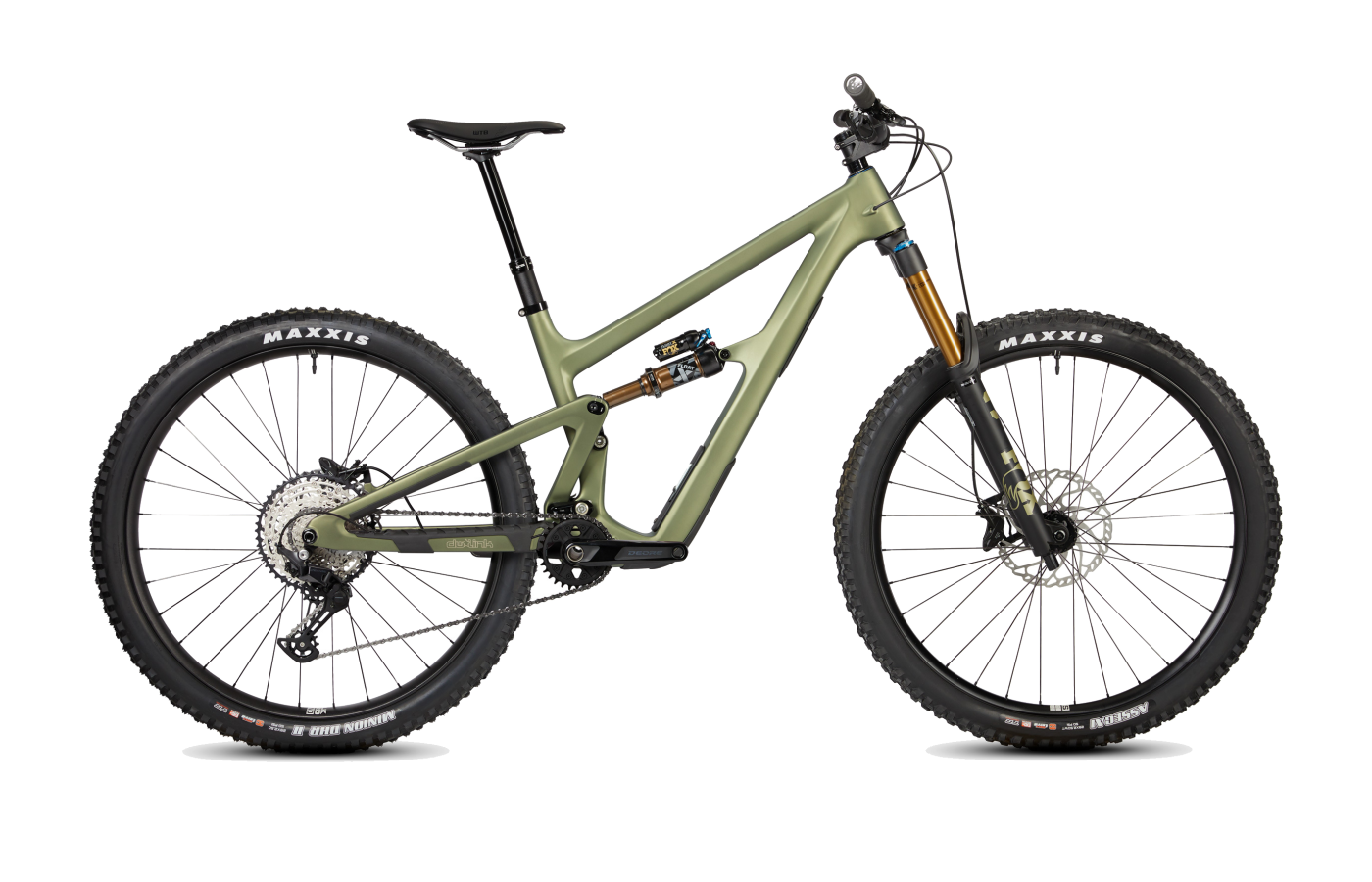
Ripmo
The Ibis Ripmo runs the same 150/160 mm travel bracket as the Troy but pedals noticeably peppier — the DW-link suspension is famously efficient. Pick this one if you climb a lot and don't want a Trek-grade weight penalty.
Compare →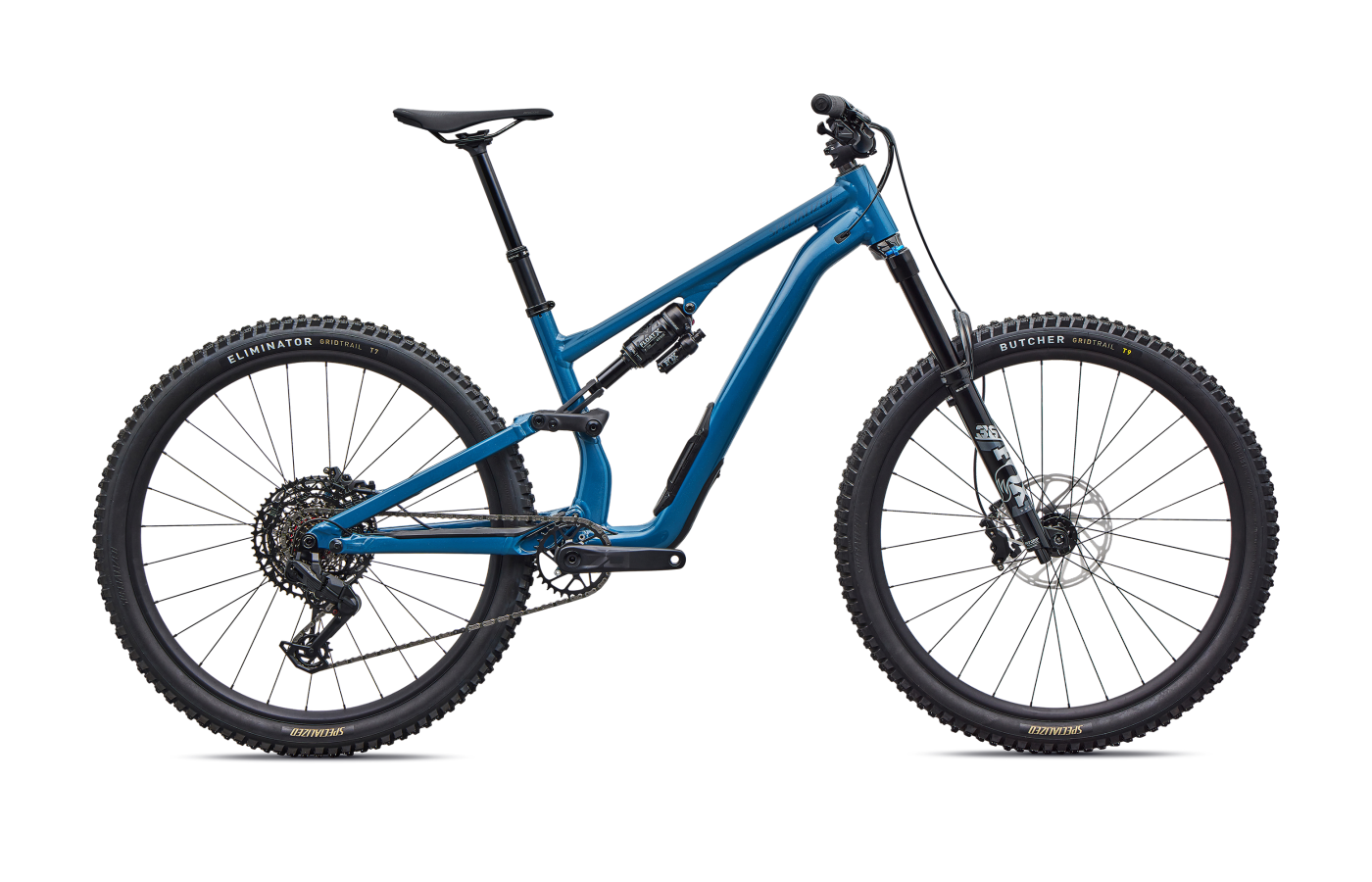
Stumpjumper Evo
The Specialized Stumpjumper Evo matches Trek's modularity and adjustability — flip-chips, headset cups, multiple geometry positions — in a frame that feels lighter and more playful on the trail. The closest cross-shop to the Fuel EX.
Compare →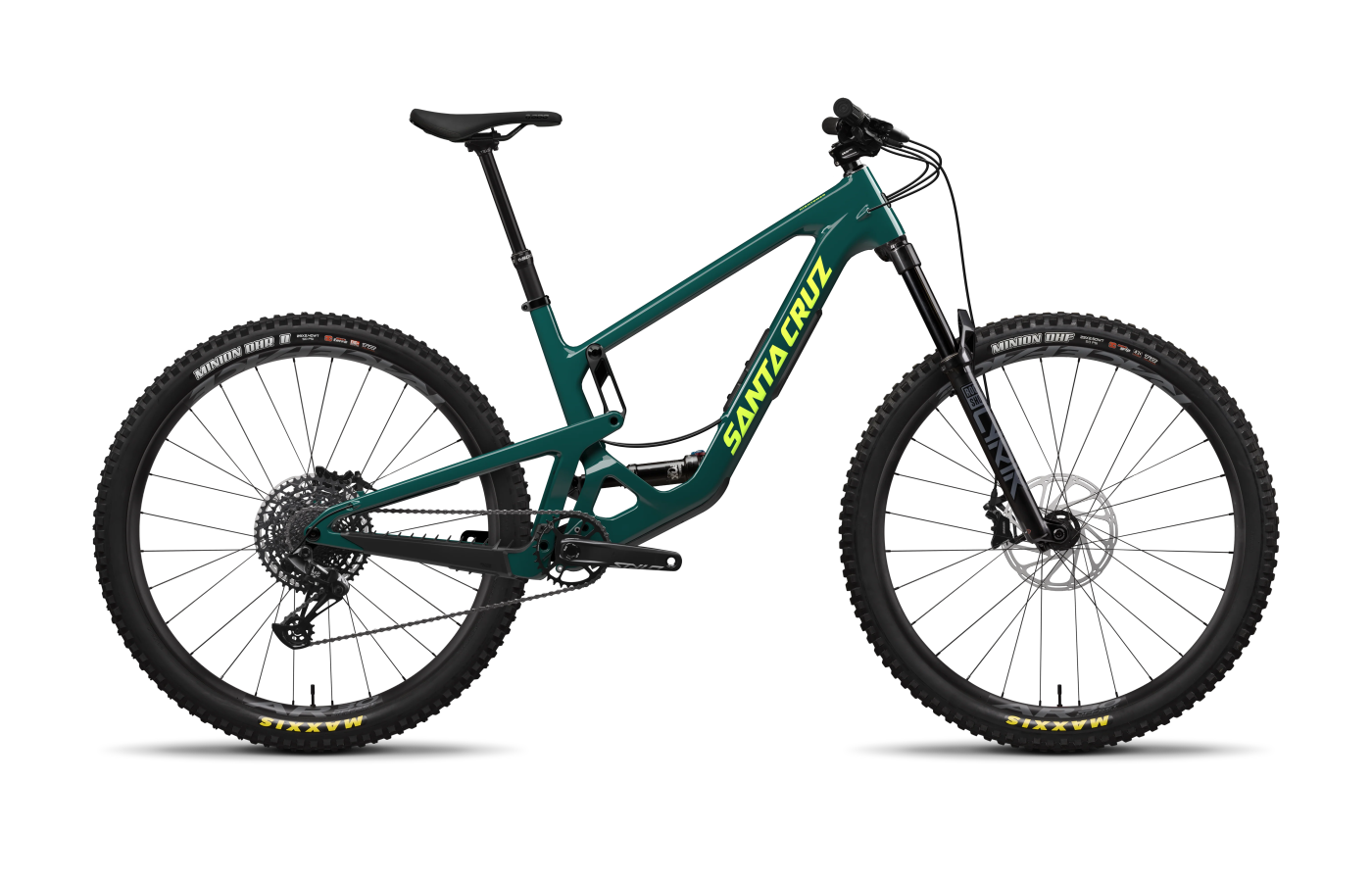
Hightower
The Santa Cruz Hightower offers a similar 145/150 mm travel bracket and premium internal storage, but with a more supportive mid-stroke that rewards riders who like to pump and jump. Closer in character to the Troy than the Trek.
Compare →