Offering
vsHightower
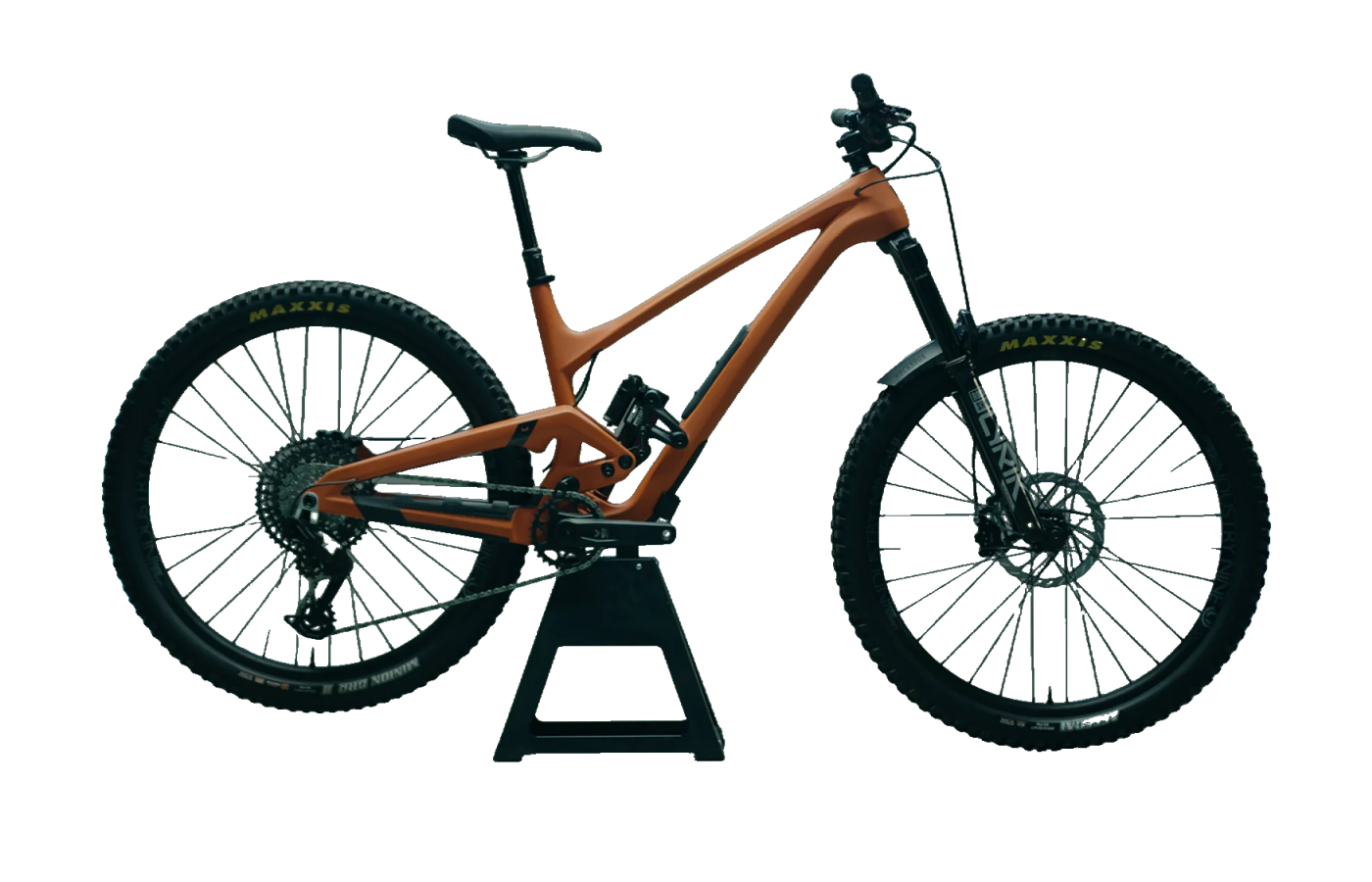
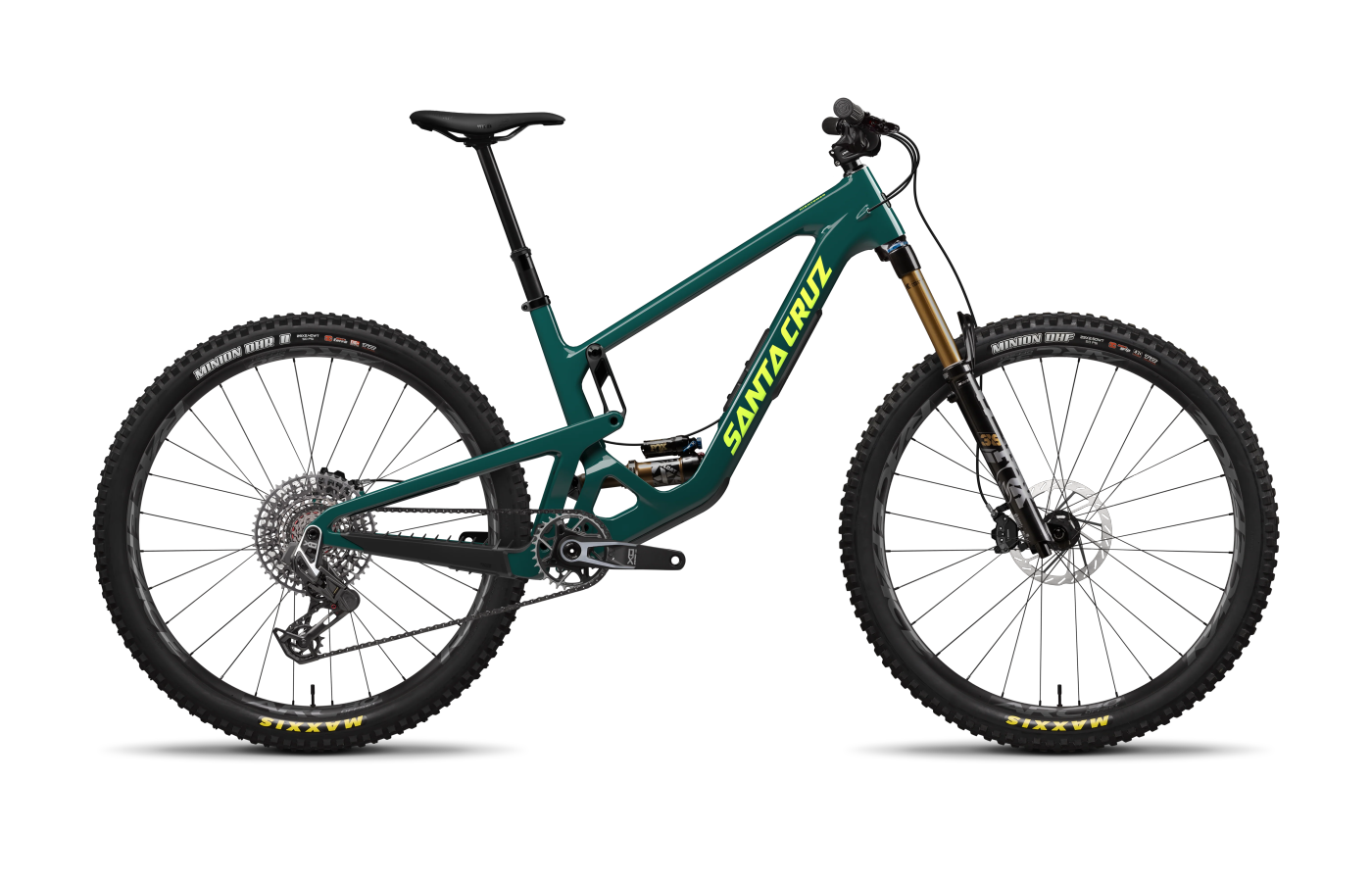
Same travel, opposite personalities.
The Offering is a 151 mm jib machine that wants to leave the ground. The Hightower is a 150 mm mini-enduro that wants to plow through it.
Offering
- Genuinely poppy — the Delta-link's trampoline point makes any feature a launch ramp.
- Steep 79° seat tube puts you well over the cranks for technical climbs.
- Two free fork options — spec a 160 mm Lyrik or 170 mm Zeb at the same price.
- Not a plow bike — defensive riding feels rougher than the Hightower.
- Only three builds and no alloy frame, so the entry point is $6,699.
Hightower
- Class-leading composure at speed — Bebikes says it 'mutes the chatter better than all of the bikes in the category.'
- Wide build range from $4,999 to $11,399 across nine specs and two carbon grades.
- Lifetime warranty on frame, pivot bearings, and Reserve rims — Santa Cruz's long-haul ownership story.
- Long wheelbase and tall stack feel cumbersome in tight low-speed switchbacks.
- EXO casing tires and 180 mm rotors are under-spec for the bike's actual capability.
Editor’s analysis
Both bikes land within 1 mm of travel and 1 mm of reach — and feel nothing alike on trail.
On the spec sheet these two look like twins. 151 mm rear / 160 mm front for the Evil Offering, 150 mm rear / 160 mm front for the Santa Cruz Hightower. Both 29ers, both Carbon, both 64.2 degrees in their slack setting, both with reach inside a millimeter of each other at size Medium. Pick the wrong build pairing and the spec table is almost a wash.
Then you ride them. The Evil Offering V4 is, in Freehub's words, a 'jib machine.' Its Delta-link suspension has a deliberate trampoline point mid-stroke that loads up and launches off any lip — a root, a rock, the back side of a roller. Stiff rear end, poppy ride, and a 'most definitely not a plow bike' character that punishes defensive riders. The 151 mm of travel is there, but Evil tunes the bike to ask you to leave the ground, not to soak up everything between you and it.
The Hightower V4 went the other direction in this generation. Santa Cruz dropped the shock lower and forward, cut anti-squat, and added 5 mm of rear travel to push the bike toward what Bebikes calls 'the descender's MTB.' It's longer (1237 mm wheelbase at Medium vs the Offering's 1230 mm), heavier (14.5–15.5 kg across the line), and the new VPP layout 'mutes the chatter' on rough chunder. Multiple reviewers describe it as a 'mini-enduro' — calm at speed, slightly cumbersome at low-speed switchback pace, and forgiving of the apathetic passenger the Offering punishes.
Put another way: if you ride to find lips and pump every roller, the Evil Offering will out-fun the Hightower on every shared trail. If you ride to point-and-shoot the steepest, rockiest descent on the map, the Santa Cruz Hightower will out-charge the Offering and let you breathe at the bottom.
Where the builds differ.
Comparing our editor's-pick builds side-by-side. Winners highlighted row-by-row — lower price and weight, and the better-spec component, each mark a point.
Build variants & pricing
The Hightower fans across nine builds and $6,400 of range; the Evil Offering offers three builds inside $2,600.
Prices are current US MSRP. Picks are tier-matched at SRAM X0 AXS Transmission with alloy wheels — the Hightower X0 AXS RSV ($9,349) bumps to Reserve carbon, but the alloy X0 AXS keeps the comparison apples-to-apples. The Hightower also offers cheaper R, 70, and S builds with no Evil equivalent.
How they fit, how they steer.
Both at size Medium. Reach is within a millimeter (Offering 459 mm, Hightower 460 mm) and stack within 7 mm (625 vs 632). The Hightower runs 1 mm longer chainstays and a 7 mm longer wheelbase — small numbers, but they line up with the bike's calmer descent character.
Which size should I buy?
Size recommendations are based on stack, reach, and effective top tube. Both ranges overlap closely; the Hightower extends one size larger (XXL) at the top end.
→These are starting points. Flexibility, riding style, and preferred position all shift the answer — if you’re between sizes, a professional fit beats a chart.
What the magazines said.
Published reviews from trusted cycling outlets. Click through for the full write-up.
Which one should you buy?
If you ride to find lips and pump rollers, get the Offering. If you ride to point-and-shoot the rocky stuff, get the Hightower.
Offering
If your idea of a great descent is finding every lip, side hit, and pumpable roller, the Offering rewards the way no plow bike can. Bring an offensive riding style and a willingness to load the suspension — it'll launch off anything.
Hightower
If you want one bike that climbs comfortably and turns rocky, steep descents into a calm event, the Hightower's added travel, longer wheelbase, and active VPP suspension are class-leading. Best ridden hard — defensive riders will still get composure, but the bike comes alive when pinned.
Questions buyers actually ask.
Short answers to the things we get emailed about most often.
01Which is more capable on rough, fast descents?
The Santa Cruz Hightower, by a clear margin. Reviewers across Bebikes, Flow Mountain Bike, and Bike Perfect describe it as 'planted,' 'unphased,' and 'unrivaled in the category' for muting chatter and square-edged hits. The revised VPP layout with reduced anti-squat keeps the rear wheel actively tracking, and the longer 1237 mm wheelbase (Medium) adds high-speed calm.
The Evil Offering has the same 151 mm of travel and the same 64.2° head tube angle in its Low setting, but Freehub explicitly calls out that it's 'most definitely not a plow bike' — it would 'rather jump over than hoverboard through' chunky sections.
02Which is more fun on flow trails and jumps?
The Evil Offering. Its Delta-link suspension has a distinctive trampoline point mid-stroke that loads up and launches off any lip, root, or roller. Freehub described it as 'poppy as all get out' and 'really easy to get into the air' even from small features.
The Hightower can absolutely jump, but reviewers consistently note it's not the most playful bike in its class — Enduro MTB found the suspension 'firm' and 'lacked pop,' and Flow Mountain Bike reported its playfulness 'reduces at slower speeds.'
03How do they climb?
Both climb comfortably thanks to steep seat tube angles — the Offering at roughly 79°, the Hightower at 77.9°–78.2° depending on the flip-chip setting.
Neither is a sprinter. Evil intentionally avoided 'the firmest lockout option from RockShox' to prioritize traction over hardtail-like efficiency, so the Offering's rear end stays active under power. Santa Cruz made the same call with the V4 — Bike-test noted the Hightower 'bobs slightly' when pedaling, a trait 'consciously accepted' for traction.
For pure efficiency on smooth fire roads, both reward the climb switch. For technical, rooty ascents, both shine.
04What's the maximum tire clearance?
Evil Offering V4: 61 mm clearance, comfortably running the stock Maxxis Assegai 29x2.5 / Minion DHR II 29x2.4 setup.
Santa Cruz Hightower V4: 63.5 mm clearance, with the same Maxxis Minion DHF 29x2.5 / DHR II 29x2.4 stock combo.
Both platforms are 29-only — neither offers a mullet (29/27.5) flip chip, and Santa Cruz explicitly chose not to make the Hightower mullet-compatible (the mixed-wheel job goes to the Bronson).
05Which has the better internal storage?
Both have downtube storage. The Hightower's Glovebox is widely praised — it's been refined across multiple Santa Cruz models, has high-quality latches and internal pouches, and reviewers across the board call it one of the best in the industry. Bebikes did note a 'limbo' zone where small unsecured items can slip past the upper shock bolts, but it's a known quirk, not a deal-breaker.
The Offering V4 added downtube storage for the first time this generation. Freehub found the hatch mechanism 'a little tricky' to open — 'feels like you're going to break something if you don't nail the motion' — but it stays secure and doesn't rattle once you learn the technique.
06Which has more build options?
The Santa Cruz Hightower wins this comfortably. Nine builds from $4,999 (R, NX Eagle, Carbon C frame) up to $11,399 (XTR RSV or XX AXS RSV, Carbon CC frame, Reserve carbon wheels). Two carbon grades (C and CC), with the lighter CC restricted to wireless drivetrains.
The Evil Offering offers three builds: Eagle 90 ($6,699), X0 ($7,999), and XX ($9,299). One carbon grade (UD), all SRAM Transmission, all RockShox Ultimate suspension. Less choice, but every build is consistently high-spec — there's no entry-level alloy or mechanical-shifting option.
07Are these bikes coil-shock compatible?
Both, yes. The Hightower V4's leverage curve was specifically designed with coil compatibility in mind — Santa Cruz mentions it as a deliberate change to push the bike's mini-enduro range further.
The Evil Offering V4 ships air-only at all three build levels, but the Delta-link kinematic accepts a coil swap. The 205x60 mm trunnion shock size is shared with several aftermarket coil options.
08What warranty do they come with?
Santa Cruz offers an industry-leading lifetime warranty on the frame, all pivot bearings, and Reserve carbon rims to the original owner. Pivot bearings are user-serviceable with grease ports.
Evil offers a frame warranty against manufacturing defects but does not match Santa Cruz's lifetime bearing replacement program. For long-haul ownership and resale, the Hightower's warranty is one of the strongest in the segment.
Similar bikes
If your priorities don’t map cleanly onto either of these, one of these adjacent bikes probably fits better.
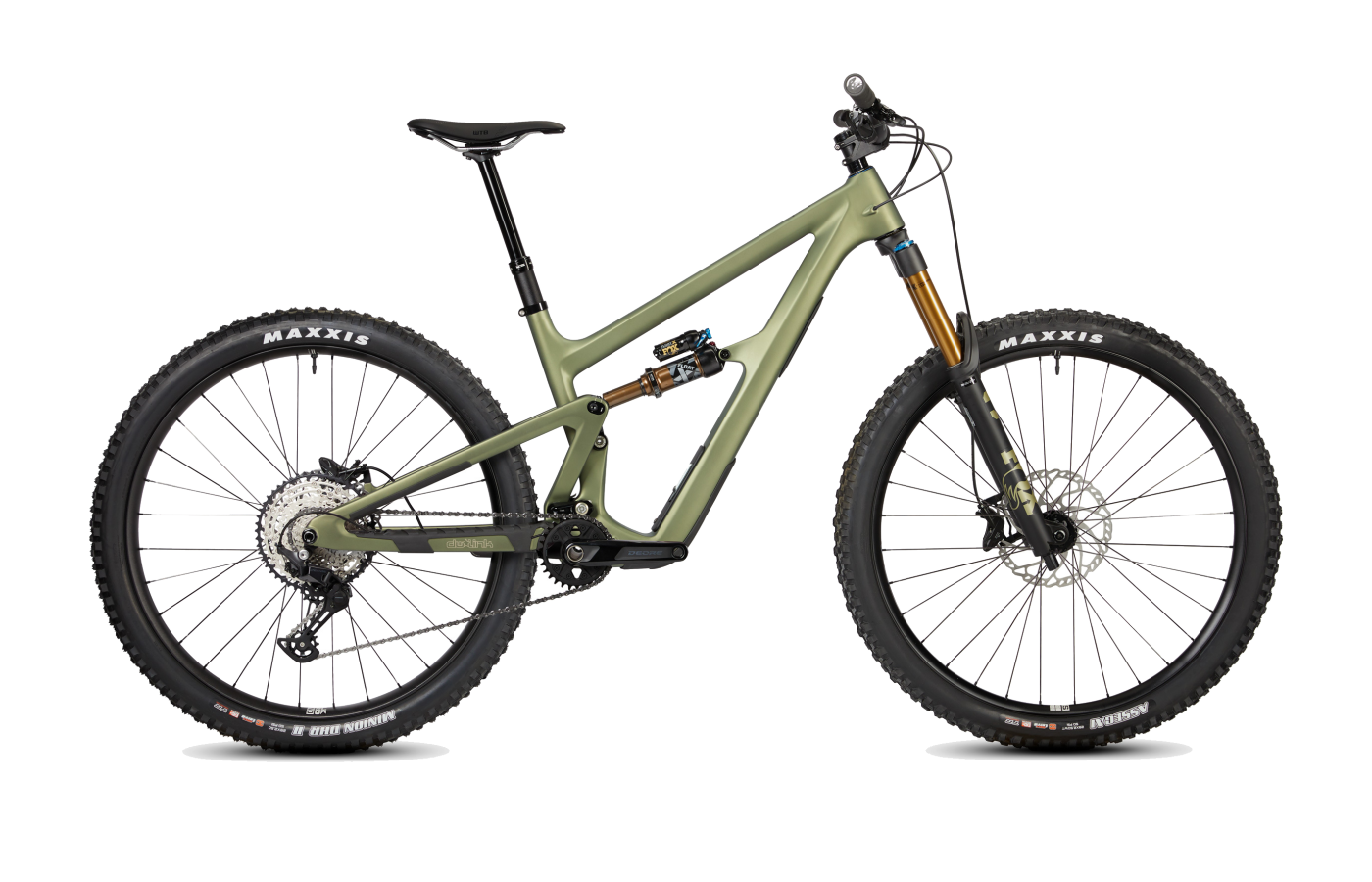
Ripmo
The Ibis Ripmo splits the difference — more snappy and efficient on the climbs than the Hightower, more composed and plow-friendly than the Offering. The reference all-mountain 29er for riders who want one bike to do both jobs.
Compare →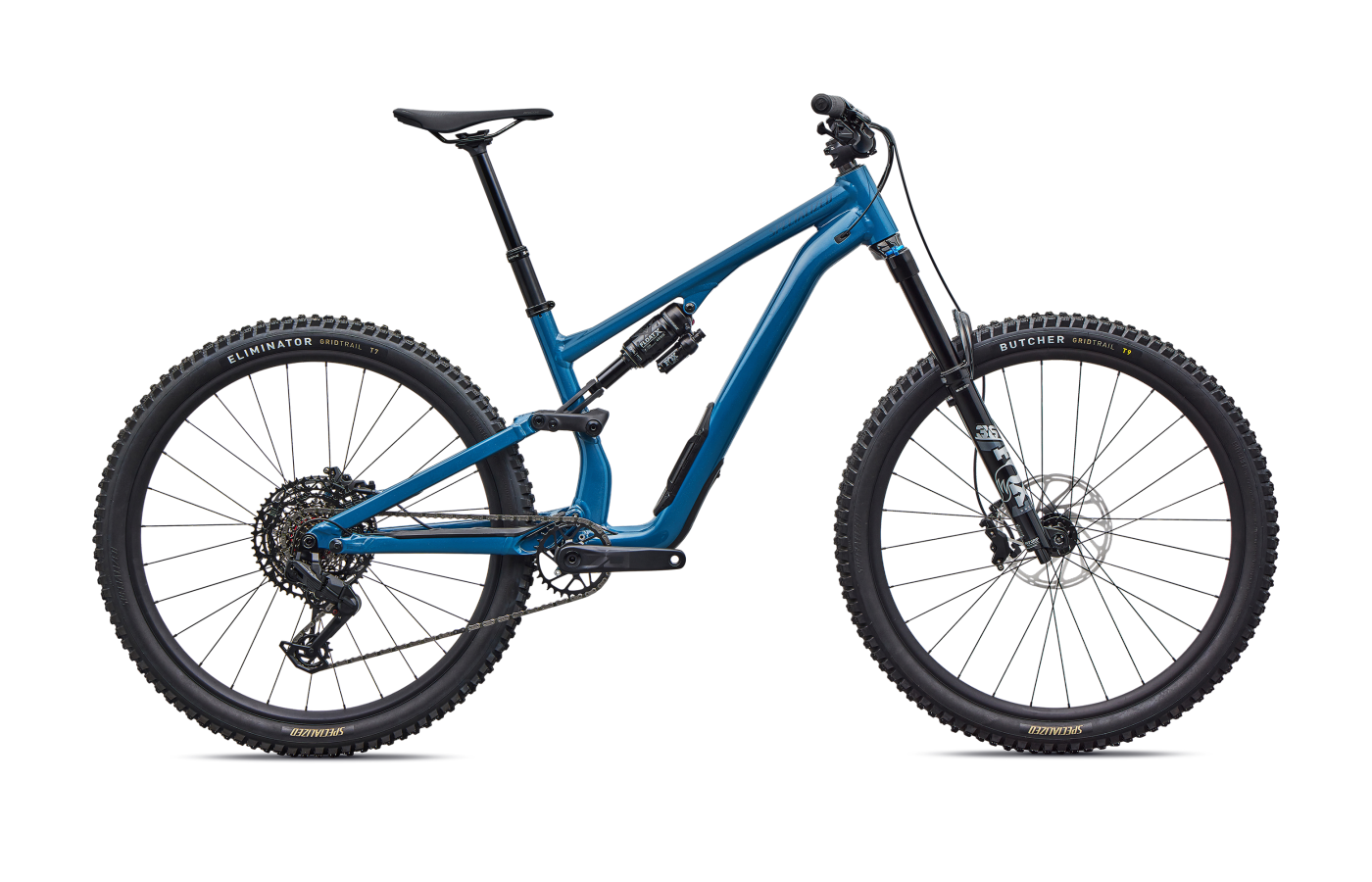
Stumpjumper Evo
The Specialized Stumpjumper Evo offers more geometry adjustability than either bike here — six geo positions via the headset cup and chainstay flip chip. If you want one frame that can mimic both an Offering and a Hightower depending on the setting, this is it.
Compare →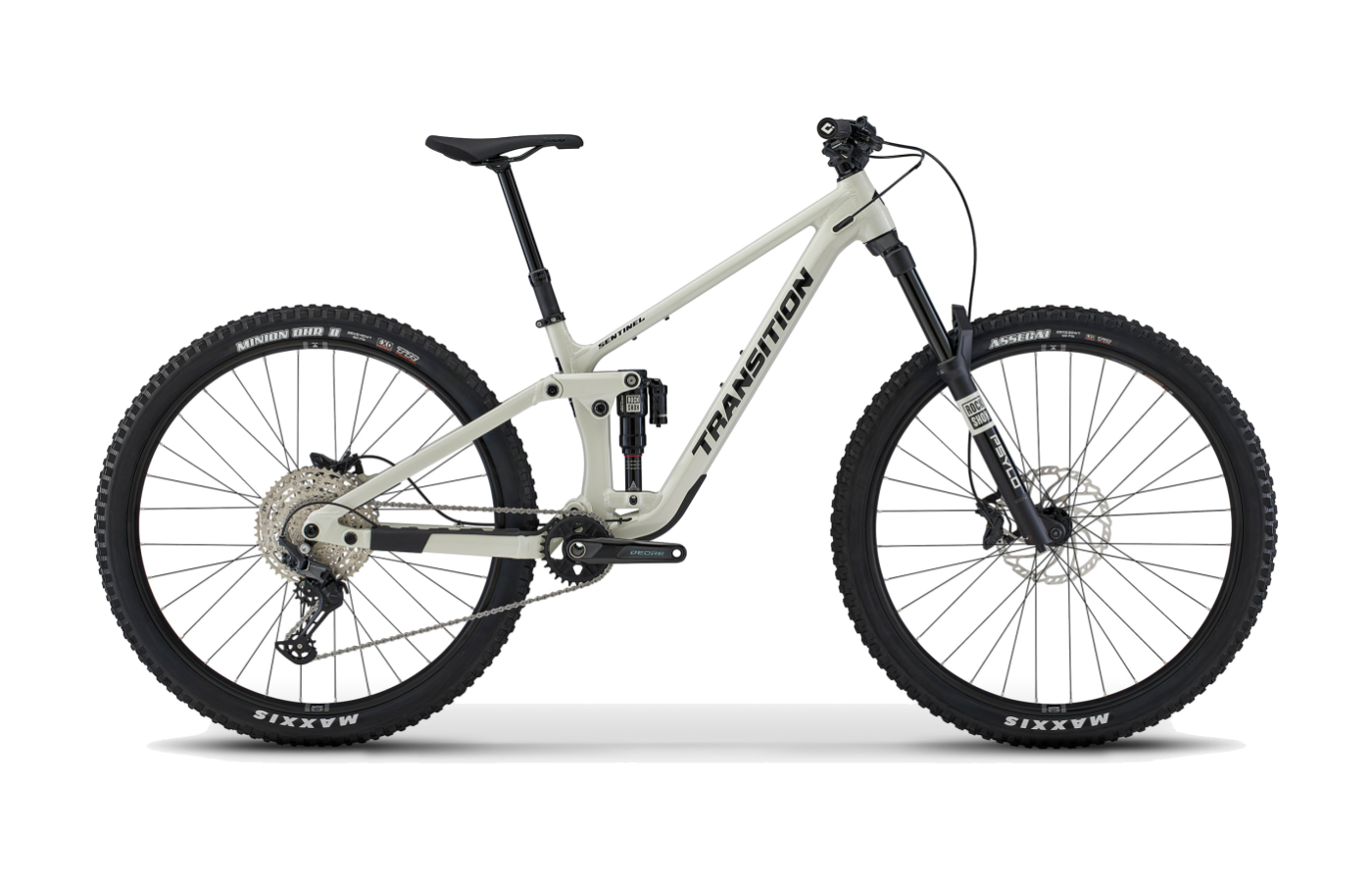
Sentinel
The Transition Sentinel competes head-on with the Hightower's stable, hard-charging character — long, slack, and rewarding when ridden aggressively. Less polished than the Santa Cruz, but often substantially cheaper at equivalent build tiers.
Compare →