DV9
vsRipley
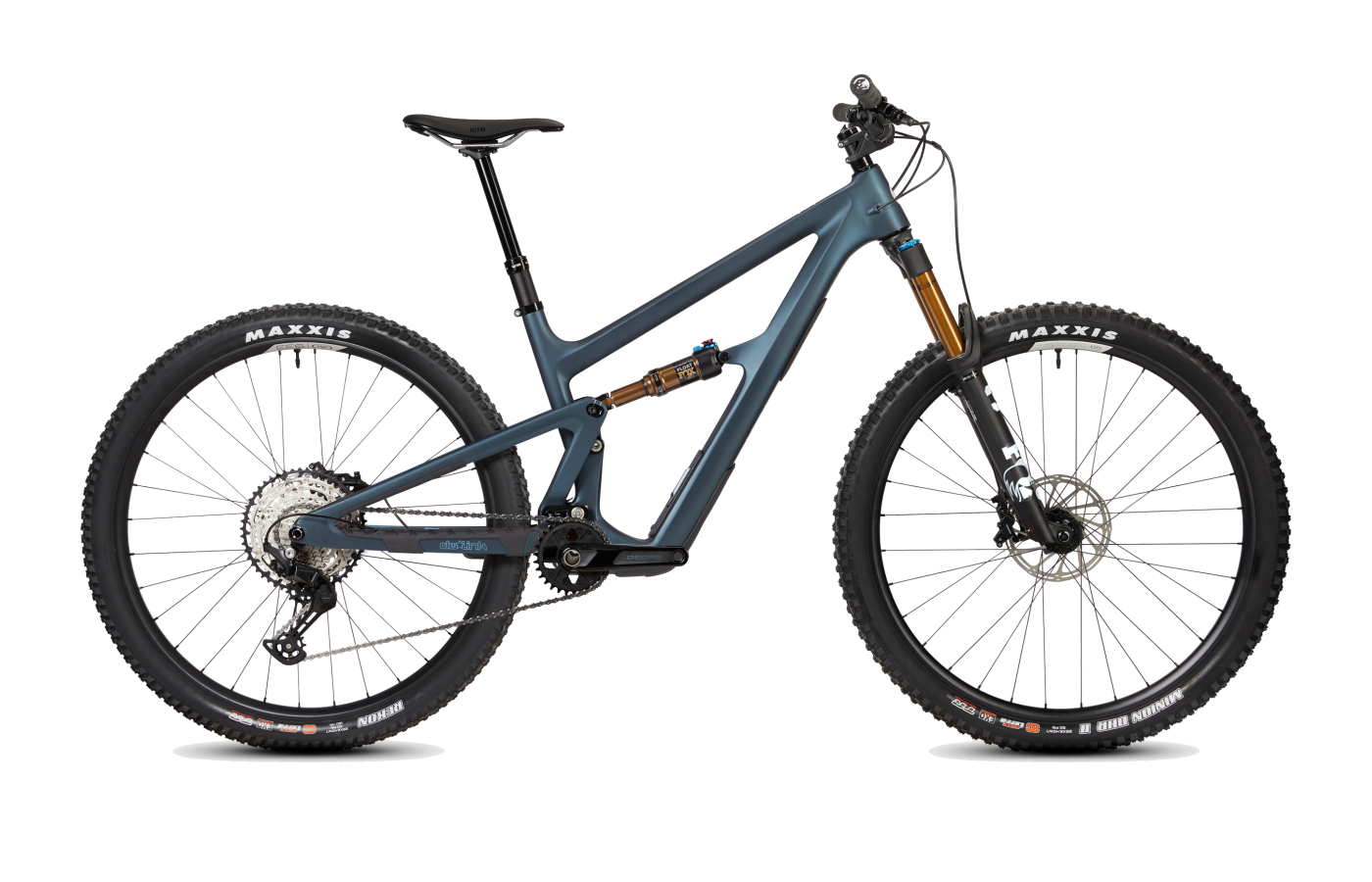
Same brand, two very different answers.
The DV9 is a fast, light carbon hardtail. The Ripley V5 is a 130/140 mm trail bike that wants to do everything.
DV9
- Cheapest way into a carbon hardtail at $2,999 — Fox 34 Step-Cast 120 mm fork included.
- Snappy 425 mm chainstays across every size — playful, easy to manual, fast in tight switchbacks.
- Lifetime frame warranty and a threaded BB — built for long-term ownership and easy service.
- Hardtail — long days on rough terrain are tiring; black-diamond runs demand active riding.
- Stock Maxxis Recon Race tires are XC-grade and get sketchy outside of hero dirt; budget for a tire swap.
Ripley
- 130 mm DW-link rear / 140 mm Fox 34 front — composed on chunder that would punish a hardtail.
- Slacker 64.9° HTA and 1,211 mm wheelbase (MD) — stable at speed without giving up Ripley playfulness.
- STOW internal frame storage + Ripmo-convertible chassis — practical on the trail, future-proof in the garage.
- Starts at $4,999 — $2,000 above the DV9 before you climb the build ladder.
- Heavier (~29–31 lb depending on build/size) and Fox 34 stanchions can flex for bigger, harder-charging riders.
Editor’s analysis
Ibis builds both — and they're not really competing. They're answering different questions about how you want to ride.
The Ibis DV9 and Ibis Ripley share a logo and nothing else. The DV9 is a 120 mm carbon hardtail, single Deore build, $2,999. The Ripley V5 is a full-suspension 130 mm rear / 140 mm front trail bike that starts at $4,999 for the Deore build and tops out near $10k for the XTR. Different chassis, different travel, different missions — picking between them is mostly a question of how rough your trails are and how much you want the bike to do for you.
The DV9 is built around speed and engagement. A 66.5° head tube angle, 425 mm chainstays across all sizes, and a stiff carbon rear end make it snappy in tight terrain and eager to climb — reviewers consistently use words like "glide" and "begs you to pedal harder." The trade is that it's a hardtail with light XC-leaning tires. On flowy singletrack and moderate trails it's a riot. On chunky black-diamond stuff the rider has to actively unweight every rock garden, and it gets sketchy quickly. Most testers swap the stock Recon Race tires immediately.
The Ripley V5 throws out the old "downcountry" framing entirely — Theradavist literally titled their review "Downcountry is Dead." The slacker 64.9° head tube, 130 mm of DW-link rear travel, longer 460 mm reach (MD), and a 1,211 mm wheelbase make it composed at speed and confidence-inspiring on descents that would punish the DV9. The 76.9° seat tube angle keeps it efficient on the way up. It shares its front triangle and swingarm with the Ripmo, so the same chassis can be converted into a 145 mm enduro bike with a fork-shock-linkage swap.
Put another way: the DV9 is for riders who want to feel everything and pedal hard. The Ripley is for riders who want one bike that does climbs, chunky descents, jumps, and the occasional bike-park lap. If your trails are mellow and your priority is efficiency, the price gap (a $2,000 chasm at the entry tier) is hard to ignore. If your trails have rocks, drops, or anything you'd call "rowdy," the Ripley earns every dollar.
Where the builds differ.
Comparing our editor's-pick builds side-by-side. Winners highlighted row-by-row — lower price and weight, and the better-spec component, each mark a point.
Build variants & pricing
The DV9 ships in a single Deore build at $2,999. The Ripley V5 spans five builds from $4,999 (Deore) to $9,999 (XTR Di2).
Editor's picks are the Deore builds on each side — the only DV9 build available, and the tier-matched Ripley equivalent. Apples-to-apples on drivetrain and wheels means the spec table reflects platform differences (suspension, frame, geometry), not component tier.
How they fit, how they steer.
Both at size MD. The Ripley is longer (460 mm reach vs 435 mm), slacker (64.9° vs 66.5° HTA), and runs on a 66 mm longer wheelbase. The DV9 sits taller in the front (622 mm stack vs 619 mm) with much shorter 425 mm chainstays vs 436 mm — that's the playful-vs-planted split in numbers.
Which size should I buy?
Both ranges cover SM through XL; the Ripley adds an XM ("extra medium") between MD and LG, useful for taller riders who find the V5 rides longer than older Ripleys.
→These are starting points. Flexibility, riding style, and preferred position all shift the answer — if you’re between sizes, a professional fit beats a chart.
What the magazines said.
Published reviews from trusted cycling outlets. Click through for the full write-up.
Which one should you buy?
If you want maximum efficiency on smoother trails for the lowest carbon-frame price, get the DV9. If you want one bike for everything from climbs to chunky descents, get the Ripley.
DV9
If your local trails skew flowy and your idea of fun is a fast climb followed by a fast descent, the DV9 is the cheapest carbon ticket in. It rewards smooth riders, climbs above its weight, and the lifetime warranty plus threaded BB make it a long-term keeper.
Ripley
If you want one bike for everything from XC epics to bike-park laps, the Ripley V5 is one of the most complete short-travel trail bikes on the market. It climbs efficiently, descends like a much bigger bike, and the convertible-to-Ripmo chassis means it can grow with you.
Questions buyers actually ask.
Short answers to the things we get emailed about most often.
01Hardtail or full-suspension — which should I actually buy?
Depends on your trails and your tolerance for a beating.
If your local rides are mostly singletrack, fire road, and moderate trail with the occasional rough section, the DV9 is more bike than most people think — light, fast, and engaging. You'll feel every rock, but that's part of the appeal.
If you ride genuinely chunky terrain, do drops or jumps, or just want to go fast on rough descents without thinking about every line, the Ripley V5 will make you faster and less tired. It also opens up terrain the DV9 can't realistically handle.
02How much does the price difference really matter?
It's substantial. The DV9 Deore is $2,999. The Ripley Deore is $4,999 — a $2,000 gap before you climb the build ladder. The Ripley's higher builds (XT, GX Transmission) sit at $7,249, and the XTR is $9,999.
For that money you're getting a Fox Float Factory rear shock, a 140 mm Fox 34 fork, the DW-link suspension platform, a heavier and more capable carbon frame, and the STOW internal storage. Whether that's worth $2,000 depends entirely on whether you'll use the rear travel.
03Is the DV9 capable enough for technical trails?
Yes, with caveats. Reviewers consistently describe it as "surprisingly capable" on black-diamond terrain — the slack-for-a-hardtail 66.5° HTA and 120 mm Fox 34 fork punch above what you'd expect from a pure XC bike.
But it's still a hardtail. It demands a smooth rider who actively unweights through rough sections. Push it past its comfort zone and it gets sketchy — quickly. The stock Maxxis Recon Race tires make this worse; most reviewers swap to grippier rubber (DHR II, Forekaster, Romero) immediately.
04How much suspension travel does the Ripley V5 have?
130 mm rear / 140 mm front — both up 10 mm from the V4. The fork is a Fox 34 across all builds (Factory or SL trim depending on price), and the rear shock is a Fox Float Factory.
That puts it in the modern short-travel-trail bracket — more capable than an XC bike, less travel than an enduro bike like the Ripmo (145/160). The frame itself is shared with the Ripmo, so you can convert it later by swapping the fork, shock, and linkage.
05What's the geometry difference at size MD?
DV9 MD: 435 mm reach, 622 mm stack, 66.5° HTA, 425 mm chainstays, 1,145 mm wheelbase.
Ripley MD: 460 mm reach, 619 mm stack, 64.9° HTA, 436 mm chainstays, 1,211 mm wheelbase.
Translated: the Ripley is 25 mm longer in the cockpit, 1.6° slacker up front, and rides on a wheelbase 66 mm longer. The DV9 is the more upright, more agile bike at low speeds; the Ripley is the more stable, more planted bike at speed. Neither is wrong — they're optimized for different things.
06Can I get a more aggressive build of the DV9?
Not from Ibis. The current V2 lineup is a single Deore-equipped build at $2,999. Frameset is sold separately if you want to spec your own.
That said, the frame officially supports up to 140 mm of fork travel — "overforking" is a documented option that several reviewers mention. Going to a 140 mm fork slackens the head angle and bumps capability for rougher terrain, at some cost to XC liveliness. If you want a more aggressive hardtail out of the box, look at the Yeti ARC instead.
07Tire clearance — what fits?
DV9: Frame officially clears 2.6" tires, but the Fox 34 Step-Cast fork is limited to 2.4". Practically, you're running 2.4" front and rear, with room to go wider in back if you upgrade the fork.
Ripley V5: Roughly 61 mm clearance — more than enough for any 2.4" or 2.5" tire. Stock spec is a Maxxis Minion DHR II up front and a faster-rolling Rekon out back, which most reviewers find well-matched to the bike's character.
08Which has better long-term ownership?
Both are excellent on this front. Ibis offers a lifetime frame warranty on both, both use a threaded bottom bracket (no creaking press-fit), and both are UDH compatible for future drivetrain swaps.
The Ripley adds the STOW internal storage system (rattle-free, water-sealed, with included Cotopaxi bags) and the Ripmo-convertible chassis — meaning if you eventually want a longer-travel bike, you only need to buy a fork, shock, and rocker link, not a new frame. That's a meaningful long-term value lever the DV9 doesn't offer.
Similar bikes
If your priorities don’t map cleanly onto either of these, one of these adjacent bikes probably fits better.
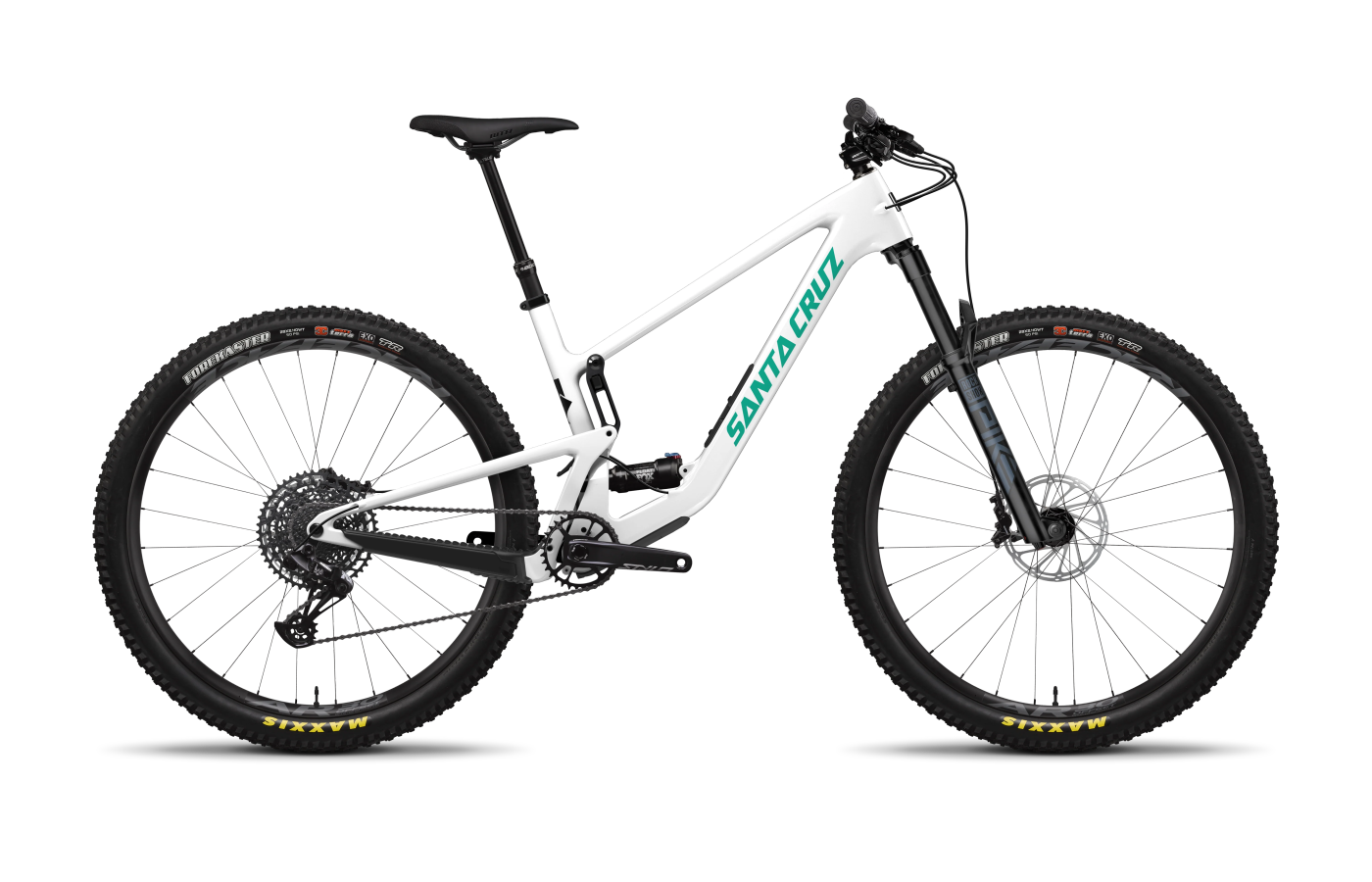
Tallboy
The Tallboy is the most direct cross-shop to the Ripley — short-travel full-suspension, playful character, capable on chunky trails. Santa Cruz's VPP suspension feels different from DW-link, but the mission is the same.
Compare →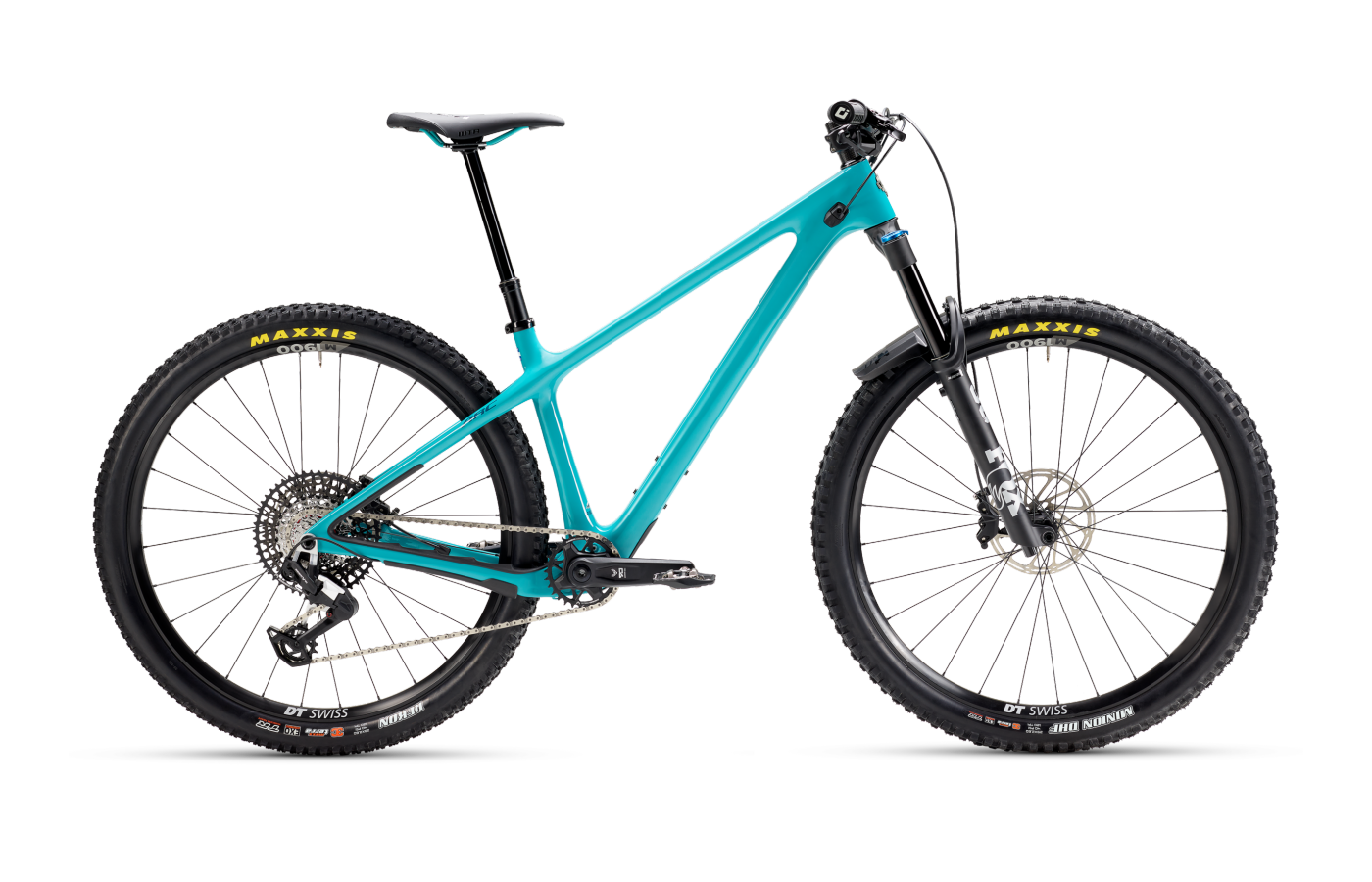
ARC
If you like the DV9's hardtail character but want something rowdier, the Yeti ARC is the obvious move. Same premium carbon construction, but with geometry tuned for more aggressive descending and a slacker front end.
Compare →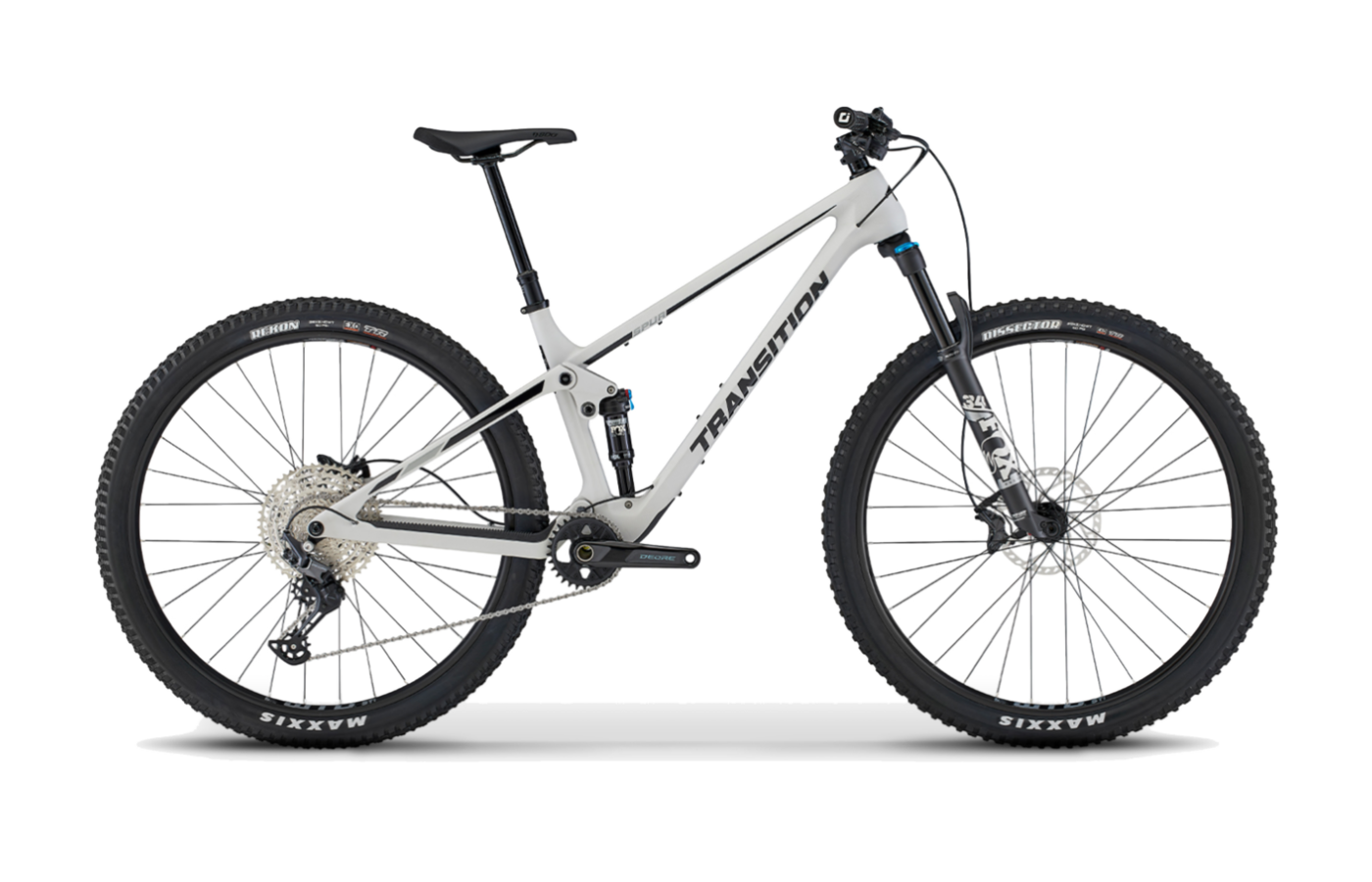
Spur
The Spur splits the difference — a lightweight 120 mm full-suspension trail bike that climbs nearly as well as a hardtail and still descends with composure. A good pick if neither the DV9's roughness nor the Ripley's heft sounds right.
Compare →