HD6
vsNomad
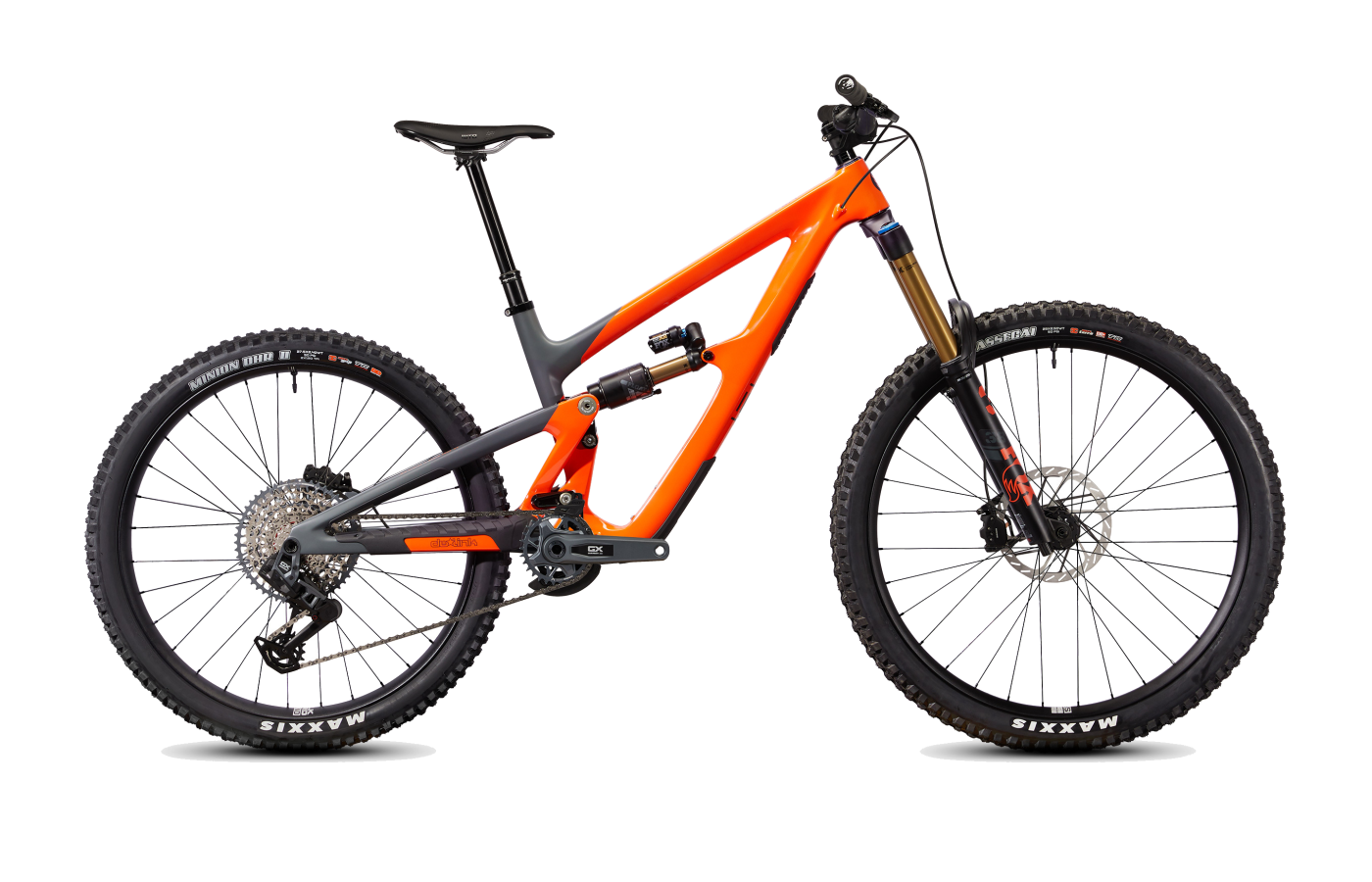
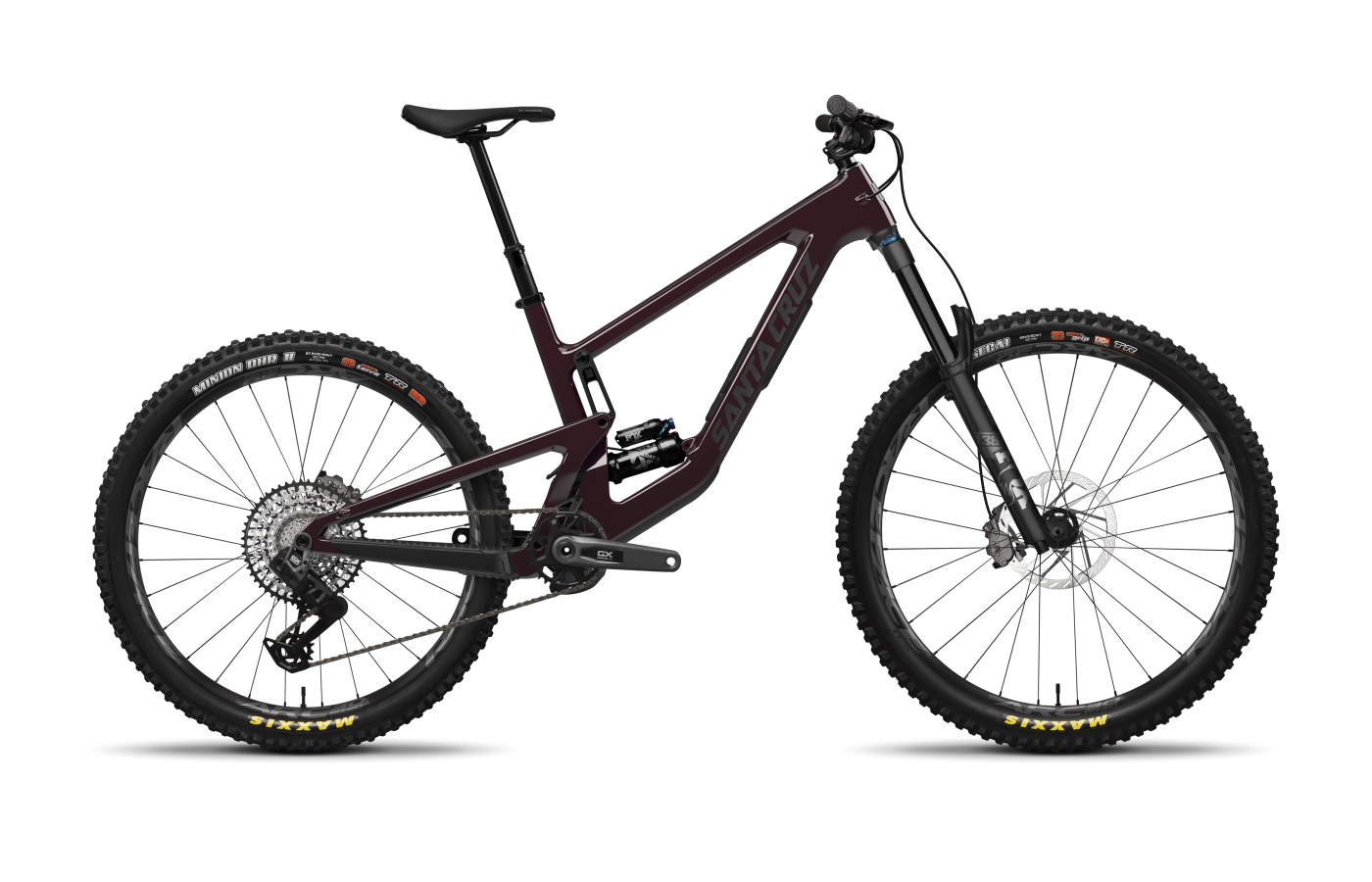
Two mullet enduro bikes, two personalities.
The HD6 is the lively scalpel — short stays, snappy DW-Link, climbs above its weight. The Nomad is the composed bruiser — longer stays, plush VPP, built to feel calm when things get fast.
HD6
- Best-in-class climber for a 165 mm enduro bike — the DW-Link's high anti-squat and the ~33 lb build weight make long pedaling days genuinely doable.
- Lively, snappy handling from the consistent 435 mm chainstays — flicks through tight corners and rewards an active riding style.
- Fox Factory suspension on every build — even the $4,999 Deore ships with a Fox 38 Factory and Float X2 Factory.
- Low 625 mm stack on M can feel dive-y on the steepest descents — many riders run risers or extra spacers.
- Same-length chainstays on every size means taller riders can fight for front-wheel grip on steep climbs.
Nomad
- Composed at speed — the longer 440 mm stays and updated VPP keep the bike planted where the HD6 demands more rider input.
- Glovebox in-frame storage with included tool pouches — a meaningful day-out feature the HD6 doesn't match.
- Steeper 77.4-degree seat angle puts you further forward over the BB for a more comfortable seated climb position.
- Low 343 mm BB causes frequent pedal strikes in chunky climbs — some testers swap to 160 mm cranks.
- Bobs noticeably under standing efforts and feels heavier on the climbs than the HD6.
Editor’s analysis
Same wheel sizes, same head angle within a tenth of a degree — and yet almost everything else is different.
The Ibis HD6 and Santa Cruz Nomad sit in the same bracket on paper: carbon mullet enduro bikes in the $5–10k range, both running 64-degree head tubes, both running 27.5-inch rear wheels behind 29-inch fronts. Look one row deeper and the philosophies split. The HD6 holds 435 mm chainstays across every size with 165 mm of rear travel and a 180 mm fork. The Santa Cruz Nomad runs size-specific stays (440 mm on the m), 170 mm front and rear, and a steeper 77.4-degree seat angle. Same pitch, different swings.
The HD6 is the rarer animal in this category — an enduro bike that climbs like it has 30 mm less travel. Reviewers across NSMB, Pinkbike, and Blister single out the DW-Link suspension as one of the best-pedaling long-travel platforms on the market, and the bike pairs that with weights around 33 lbs and short stays that make it eager to flick through corners. The trade-off is a low 625 mm stack on the M and a stays-don't-grow philosophy that leaves taller riders working harder for front-wheel traction on steep climbs.
The Santa Cruz Nomad picks a different fight. Its updated VPP runs lower anti-squat than the V5 — Santa Cruz traded raw pedaling firmness for traction and a more 'undisturbed' feel under fire. Pair that with size-specific stays, an extra 5 mm of rear travel, and a notably steeper seat angle, and you get a bike Vital described as 'shifter-kart-like' in corners and Pinkbike said feels 'more alive the faster you push it.' It bobs more under standing efforts, runs a low 343 mm BB that pedal-strikes in chunky climbs, and rides closer to 34 lbs in mid builds.
Put another way: the HD6 is the bike you buy when you'll pedal to most of your descents and want every climb to feel earned but possible. The Santa Cruz Nomad is the bike you buy when shuttle days, bike park laps, and steep self-shuttle missions dominate your calendar — and you'd rather the bike absorb the trail than negotiate with it.
Where the builds differ.
Comparing our editor's-pick builds side-by-side. Winners highlighted row-by-row — lower price and weight, and the better-spec component, each mark a point.
Build variants & pricing
Both lineups span ~$5k–$10k with five builds each. Tier-for-tier they overlap closely; the meaningful differences are in suspension spec and wheel grade, not drivetrain.
Editor's picks are the GX Eagle Transmission/AXS builds — within $50 of each other and the natural mid-tier choice on both platforms. Note that every HD6 build, even the $4,999 Deore, ships with Fox Factory dampers; the $7,249 Nomad GX AXS steps down to Fox Performance Elite suspension with the same X2 Factory rear shock only on the X0 AXS and up.
How they fit, how they steer.
Stacks are identical at 625 mm and reach is within 1 mm. The Santa Cruz Nomad is 0.2 degrees slacker up front, runs 5 mm longer chainstays, and sits 1.4 degrees steeper at the seat tube — the more stable, more climb-friendly geometry on paper.
Which size should I buy?
Both ranges overlap closely through the middle of the size run; the HD6 offers an extra step (XM) between M and L that the Nomad doesn't.
→These are starting points. Flexibility, riding style, and preferred position all shift the answer — if you’re between sizes, a professional fit beats a chart.
What the magazines said.
Published reviews from trusted cycling outlets. Click through for the full write-up.
Which one should you buy?
If you'll pedal to most of your descents and want a bike that climbs above its travel class, get the HD6. If shuttle and bike park days dominate, get the Nomad.
HD6
If you ride enduro mostly under your own power — long climbs, big days, the occasional race — the HD6's pedaling efficiency and lively handling will make every ride feel less like work. It's the rare 165 mm bike that doesn't punish you for choosing it on lift-less days.
Nomad
If your riding skews toward steep, fast, and gravity-fed — bike parks, shuttle days, alpine descents — the Nomad's planted feel, longer stays, and Glovebox storage will reward you on every descent. It asks more of you on the climbs but gives more back when pointed down.
Questions buyers actually ask.
Short answers to the things we get emailed about most often.
01Which climbs better?
The Ibis HD6, by a meaningful margin. Reviewers across NSMB, Pinkbike, and Blister consistently call the HD6 one of the best-pedaling enduro bikes they've ridden — credit the DW-Link's high anti-squat numbers and the relatively light ~33 lb weight on a size M. Standing efforts feel snappy, technical climbs don't bog down, and many riders say the climb switch is unnecessary off fire roads.
The Santa Cruz Nomad is no slouch — the steep 77.4-degree seat angle keeps you planted — but Santa Cruz lowered anti-squat compared to the V5 specifically to improve traction at the cost of pedaling firmness. It bobs more out of the saddle, weighs ~34 lbs in mid builds, and the 343 mm bottom bracket pedal-strikes more often in chunky climbs.
02Which descends better?
It depends on what 'better' means. The Santa Cruz Nomad is the more composed, planted descender — the longer 440 mm chainstays (vs. the HD6's 435 mm) and the updated VPP's 'undisturbed' feel under fire let you ride it from a more upright, forgiving stance. Vital and Pinkbike both noted it 'feels more alive the faster you push it.'
The Ibis HD6 is the more agile and corner-snappy bike — short stays, lively DW-Link, easier to flick through tight terrain. The trade-off is that it asks more of the rider on extremely steep, consequential descents; Blister noted it can be 'punishing of lazy technique.' Pick the Nomad if you want the bike to do more of the work; pick the HD6 if you want the bike to reward what you put in.
03How much travel does each have?
Ibis HD6: 165 mm rear / 180 mm front (mullet — 29" front, 27.5" rear).
Santa Cruz Nomad: 170 mm rear / 170 mm front (also mullet).
The Nomad has 5 mm more rear travel and 10 mm less fork travel. In practice the difference is felt less in raw absorption and more in the front-end geometry — the HD6's longer fork sits the front end taller off the line but dives lower as the fork compresses, which contributes to the 'extra low' feeling reviewers report on steep terrain.
04Do they have in-frame storage?
Only the Nomad. Santa Cruz's 'Glovebox' is a downtube hatch with two included neoprene tool pouches; reviewers consistently praise the execution. The hatch isn't fully watertight, so contents can get damp during washes or rain rides.
The HD6 has no in-frame storage — Ibis offers an external 'Pork Chop' top-tube bag instead, plus accessory mounts under the top tube. For riders who run hip packs anyway, it's a non-issue; for riders who like to ride with just a bottle, the Nomad's a clear win.
05What about reliability and warranty?
Both come with lifetime frame warranties for the original owner. Santa Cruz also includes lifetime free bearing replacement — a meaningful long-term value-add cited in nearly every Nomad review. Ibis counters with lifetime replacement on the lower-link bushings (the HD6 uses sealed bushings rather than bearings on the lower link) and a 7-year warranty on Ibis carbon rims against impact damage.
Both use the 2024-revision Fox Float X2 rear shock on their high-end builds, which has resolved much of the X2's earlier reputation for reliability problems. Long-term reviews from NSMB on both bikes report largely trouble-free experiences with the new-generation X2.
06Why is the Nomad's bottom bracket so low?
Santa Cruz spec'd the Nomad with a 343 mm BB height in the Low flip-chip setting (the High setting is slightly taller) to lower the center of gravity for cornering — and reviewers agree it works, with multiple sources calling the Nomad's cornering 'shifter-kart-like.' The trade-off is pedal strikes in chunky climbs and tech terrain, frequent enough that some testers swap to 160 mm cranks to compensate.
The HD6 sits at roughly 345 mm BB with no flip-chip adjustability. Practically similar, but the HD6's higher anti-squat keeps the rear end from squatting as deeply during pedal strokes, so pedal strikes are reported less often.
07Are the editor's-pick builds really comparable?
Yes — both are SRAM GX Eagle AXS T-Type wireless transmissions at nearly identical prices ($7,299 HD6 GX Transmission vs. $7,249 Nomad GX AXS), so the spec table is a fair apples-to-apples comparison.
The one asymmetry worth knowing: the HD6 GX Transmission gets a Fox 38 Factory fork and Float X2 Factory shock, the same flagship-tier suspension that ships on the $9,999 XTR build. The Nomad GX AXS steps down to Fox Performance Elite suspension at this price — to get the Float X2 Factory rear shock on the Nomad, you have to step up to the X0 AXS at $8,699. If suspension spec matters to your buying decision, the HD6 wins this tier on dampers.
08Which is better for a taller rider?
Probably the Nomad, depending on how much weight you put on chainstay length. The HD6 holds 435 mm chainstays across every size — including the L (508 mm reach) and XL (541 mm reach) — which several reviewers flag as a potential rearward weight bias for taller riders, particularly on steep climbs.
The Nomad uses size-specific chainstays that grow with the frame: 440 mm on the m, 443 mm on the l, 446 mm on the xl, 450 mm on the xxl. The intent is to keep weight distribution consistent across sizes, and most reviewers feel it succeeds. If you're 6'1"+ and ride a lot of steep, slow tech, this is a real difference.
Similar bikes
If your priorities don’t map cleanly onto either of these, one of these adjacent bikes probably fits better.
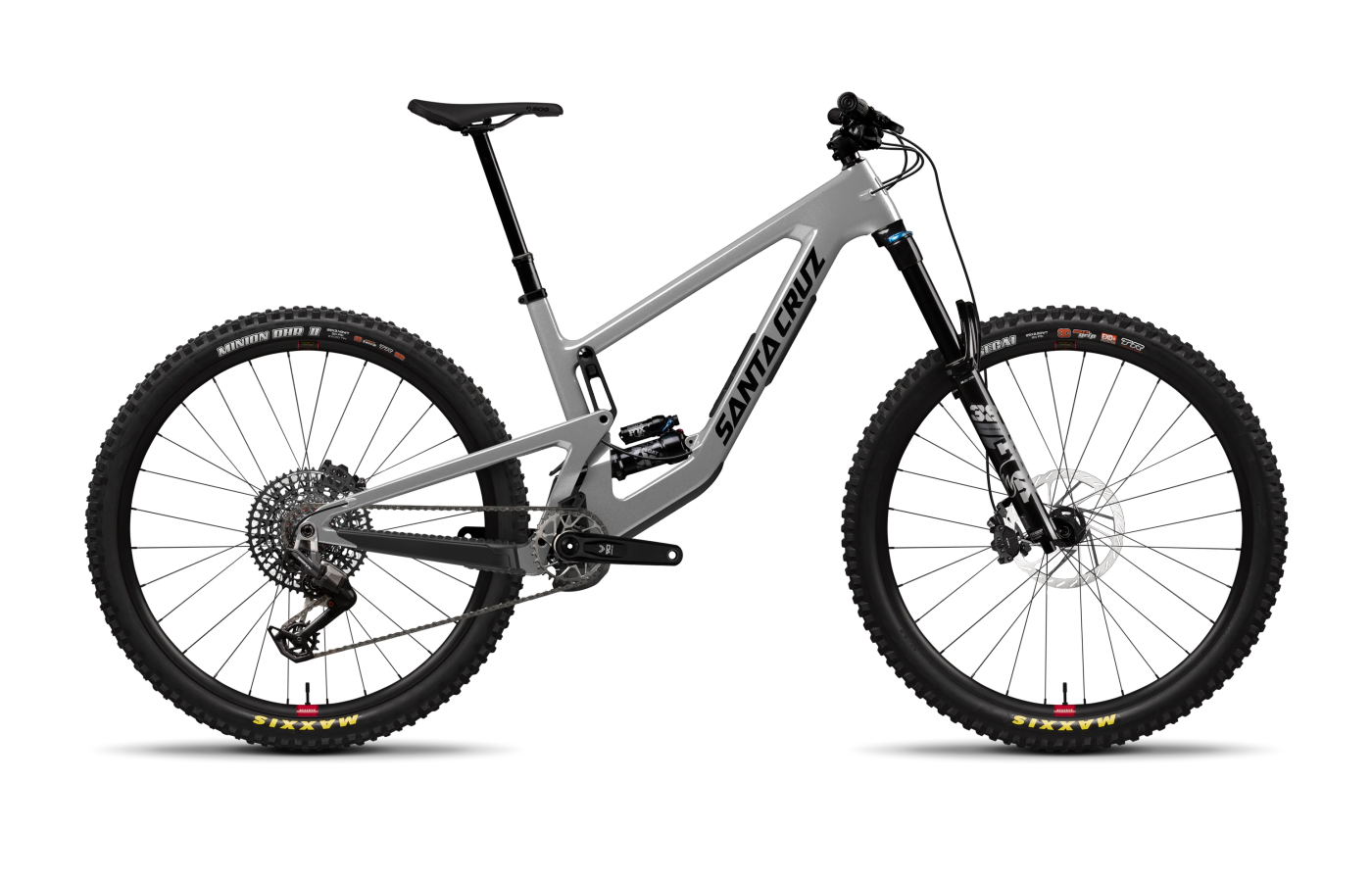
Megatower
The Megatower is the Nomad's full-29er, more race-oriented sibling — same Santa Cruz suspension DNA but firmer, faster, and even more planted at the limit. Pick it if you want a Nomad-like feel without the 27.5" rear wheel.
Compare →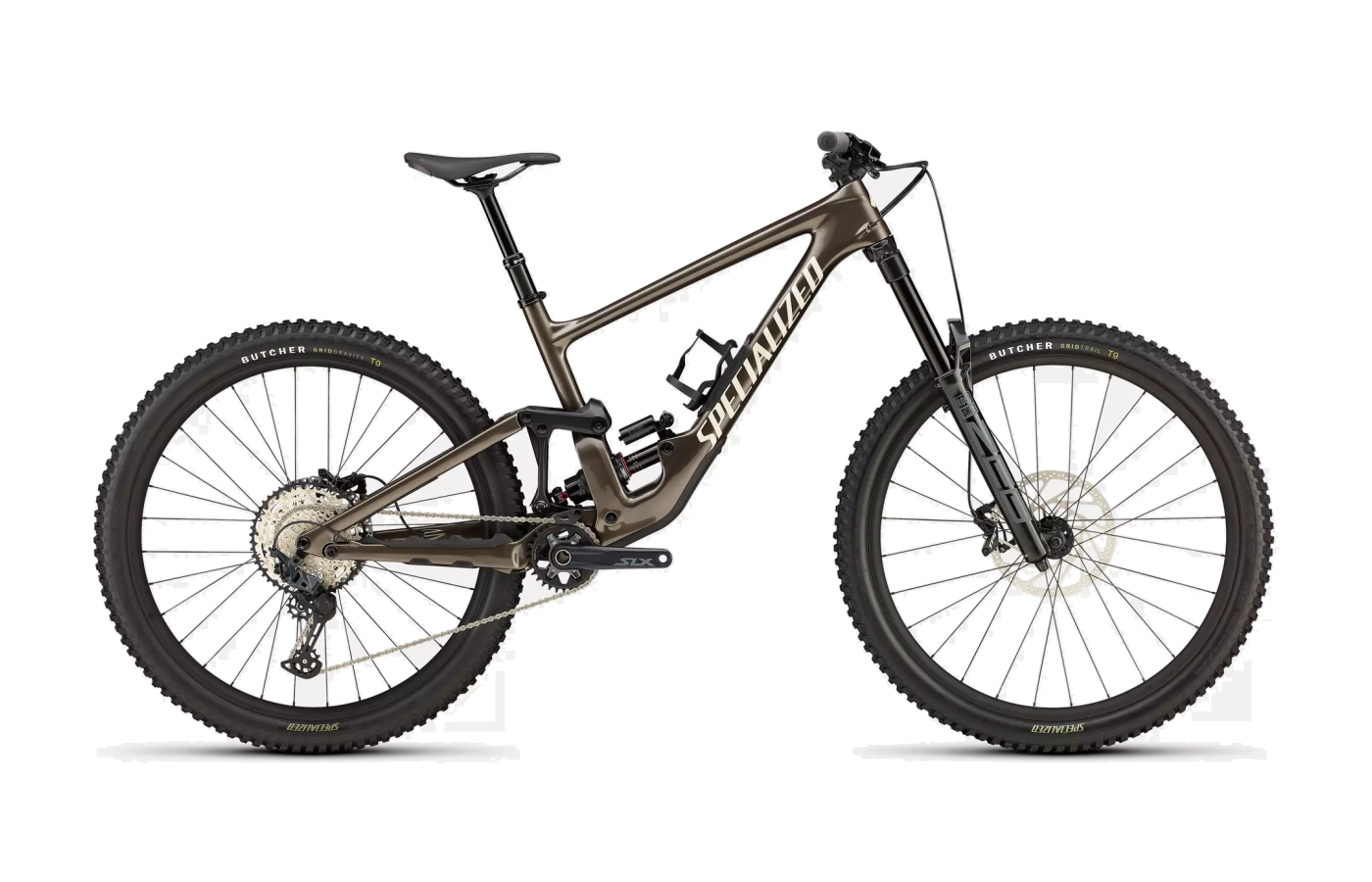
Enduro
Specialized's gravity-leaning enduro benchmark — plush, plow-friendly, and consistently praised for chunky-terrain composure. Closer in character to the Nomad than the HD6, with Specialized's mature dealer-and-warranty network behind it.
Compare →Capra
The direct-to-consumer value play — comparable travel and aggressive geometry at noticeably less money, often with higher-tier components for the same dollars. The trade-off is no local dealer and a less polished overall package.
Compare →