HD6
vsSB165
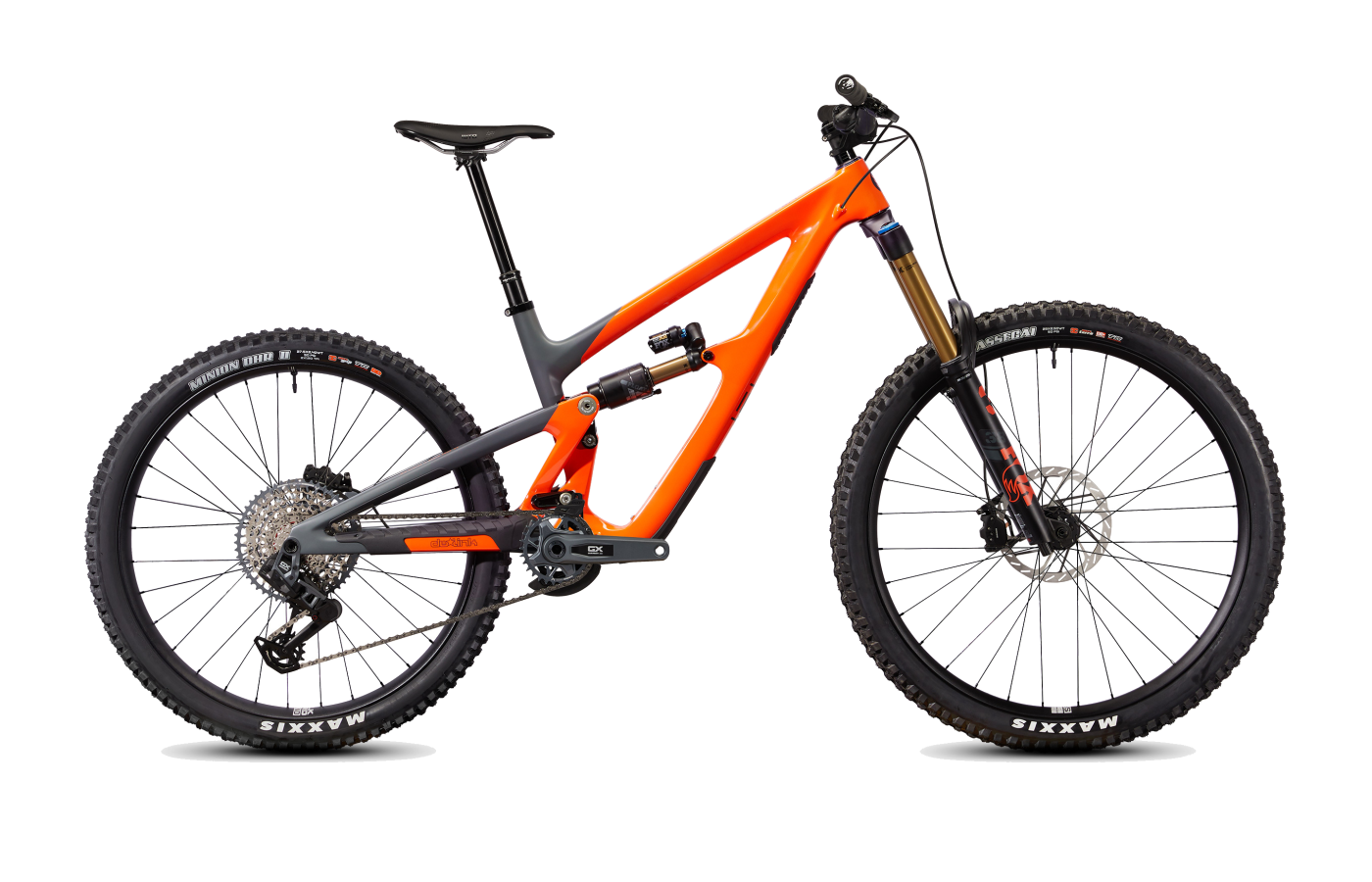
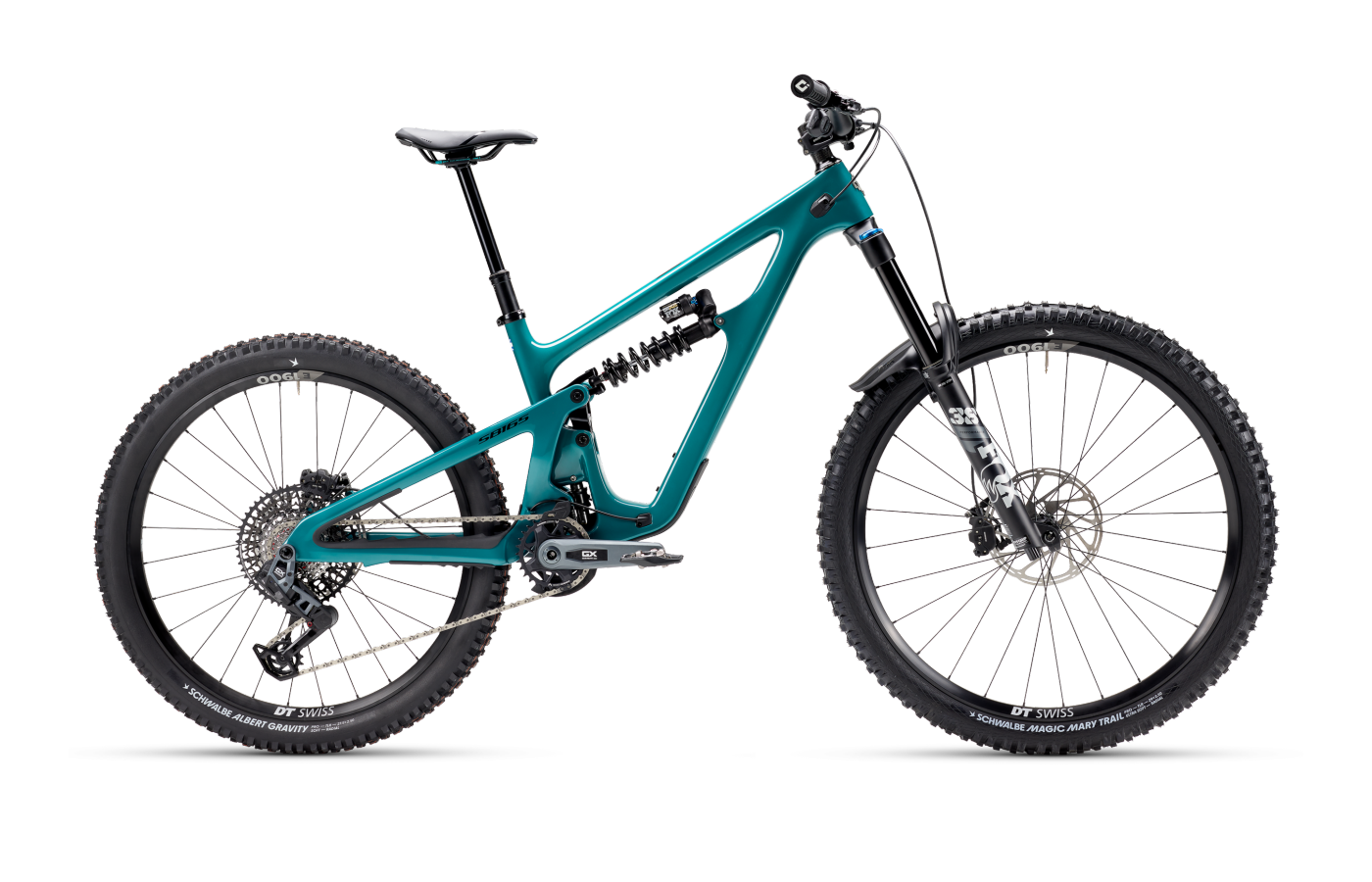
Two mullets, two very different missions.
The Ibis HD6 is a 180/165 enduro racer that climbs like a trail bike. The Yeti SB165 is a coil-sprung freeride bruiser that happens to pedal.
HD6
- Best-in-class climber — DW-Link and air-sprung X2 give it trail-bike efficiency with enduro travel.
- Lively, playful character — fixed 435 mm chainstays and low weight (~33 lb) reward active riding over plowing.
- Fox Factory suspension on every build — even the $4,999 Deore gets the same 38 Factory fork and Float X2 as the $9,999 XTR.
- Fixed 435 mm chainstays can feel rear-biased for taller riders on larger frames.
- Short 91 mm head tube on size M means the front end can feel low on very steep terrain.
SB165
- Coil-sprung out of the box — every build ships with the Fox Factory DHX2, so the gravity character is baked in at every price.
- Security-blanket composure — slacker 63.5-degree HTA and lower 345 mm BB make steep and fast feel effortless.
- Size-specific chainstays (432–439 mm) keep the chassis balanced as reach grows across sizes.
- Low 345 mm BB means pedal strikes in technical terrain — timing matters.
- Stock EXO+ casings are under-specced for the bike's intended use; plan on swapping them.
Editor’s analysis
On paper these look like siblings — both mixed-wheel carbon enduro rigs with 165 mm out back. In practice they're solving opposite problems.
Both the Ibis HD6 and Yeti SB165 run 29/27.5 mullet setups with 165 mm of rear travel and carbon-only frames. Both are priced for buyers who are done apologizing about it — the HD6 starts at $4,999 and tops out at $9,999, the SB165 runs $6,400 to $9,500. And both earned praise this year as bikes that shouldn't climb as well as they do.
But the philosophies diverge almost immediately. The Ibis HD6 is an enduro race bike with a 180 mm Fox 38 up front, an air-sprung Fox Float X2 at the rear, and DW-Link kinematics that reviewers call one of the best-pedaling long-travel platforms ever built — NSMB literally wrote "best pedaling enduro bike I've ridden, ever." It's snappy, light for the category (~33 lb built), and explicitly designed to race. The 64-degree head angle and fixed 435 mm chainstays reward active riders who want to slice corners, not plow them.
The Yeti SB165 is a different animal: 170 mm fork, coil-sprung Fox DHX2 stock across every build, 63.5-degree head angle, 345 mm bottom bracket, and size-specific chainstays from 432 to 439 mm. Yeti explicitly positions it against the SB160 — the SB160 is the race weapon, the SB165 is the freeride bike. Reviewers call it a "mini-DH bike," a "security blanket," a bike that lets you ride tired without consequence. It's not as snappy. It doesn't have to be.
Put another way: the HD6 is the bike you race enduro on and then ride to the coffee shop. The SB165 is the bike you take to Whistler, to Rampage lines, to the steepest thing you know — and it will drag itself back up the climb so you can do it again.
Where the builds differ.
Comparing our editor's-pick builds side-by-side. Winners highlighted row-by-row — lower price and weight, and the better-spec component, each mark a point.
Build variants & pricing
The HD6 has the wider range: five builds from $4,999 to $9,999. The SB165 starts higher at $6,400 and tops out at $9,500 across four builds — all carbon, all SRAM Transmission.
Ibis puts Fox Factory suspension on every HD6; Yeti reserves Factory suspension for its Turq-series T2/T3 builds ($8,500+), with a $600 upgrade path from the Performance-spec fork on the C-series. Prices are current US MSRP.
How they fit, how they steer.
Both at size M for a 5'8" rider. Reach and stack land within 6 mm, but the SB165 sits half a degree slacker up front (63.5 vs 64), 14 mm longer in wheelbase, and runs a steeper 76.9-degree seat tube. The HD6 is the shorter, more upright chassis; the SB165 is longer and more gravity-biased.
Which size should I buy?
Size recommendations based on stack, reach, and effective top tube. Both lineups overlap in the middle; the HD6 offers five sizes (S–XL) to the SB165's four (S–XL).
→These are starting points. Flexibility, riding style, and preferred position all shift the answer — if you’re between sizes, a professional fit beats a chart.
What the magazines said.
Published reviews from trusted cycling outlets. Click through for the full write-up.
Which one should you buy?
If you pedal to every descent and race enduro on weekends, get the HD6. If your idea of a great day is park laps and Rampage lines, get the SB165.
HD6
If you spend your weekends pedaling to the top of steep, technical descents — and you want a bike that climbs efficiently enough to do it twice — the HD6 is the sharper tool. Lighter, snappier, and still composed enough for serious descents.
SB165
If most of your riding is bike park, shuttle laps, or the steepest lines you can find, the coil-sprung SB165 will carry more speed through chunder with less effort from you. It still pedals well enough to earn your turns — but it was built for what happens after that.
Questions buyers actually ask.
Short answers to the things we get emailed about most often.
01Which climbs better?
The Ibis HD6, and it's not especially close. Reviewers routinely call it one of the best-pedaling long-travel bikes ever made — NSMB went as far as "best pedaling enduro bike I've ridden, ever." The DW-Link platform has high anti-squat, minimal bob, and the HD6 GX Transmission build weighs roughly 33 lb against the SB165's ~35 lb.
The SB165 is still a surprisingly good climber for a coil-sprung freeride bike — Switch Infinity holds around 110% anti-squat at sag — but it's carrying extra weight, a coil spring, and slacker geometry up the hill.
02Which descends better?
It depends on what "better" means. On steep, rough, high-speed terrain — bike park lines, natural tech, chunder — the SB165 has more margin. The coil shock's small-bump sensitivity, the 63.5-degree head angle, and the 1,242 mm wheelbase (M) give it a planted, security-blanket feel that testers compare to a mini-DH bike.
The HD6 is more engaging and more agile. It wants an active rider who's leaning it, weighting the front, and popping off features. Reviewers call it a "corner slapper" and a "scalpel," and at 180 mm up front it has more fork travel than the SB165's 170 mm — it just demands more input to use it.
03Coil or air — which matters more?
The SB165 ships with a Fox Factory DHX2 coil on every build; the HD6 runs a Fox Float X2 air shock on every build. The coil gives the SB165 a bottomless, buttery small-bump feel that defines its character — most riders won't want to change it.
The HD6's air shock is a major reason it climbs as well as it does, and the Float X2 is progressive enough that Ibis explicitly says the frame accepts a coil if you want one. In practice: Yeti made the decision for you, Ibis left it open.
04What's the deal with chainstay length?
The HD6 uses a fixed 435 mm chainstay across every size (S–XL). Reviewers disagree about it — smaller riders love the agility, some taller riders on the largest frames feel rear-biased.
The SB165 uses size-specific chainstays: 432 mm (S), 434 mm (M), 437 mm (L), 439 mm (XL). The increments are small, but the chassis stays more balanced as reach grows. If you're riding a large or XL, this is a real difference; on a medium, it barely registers.
05Are the stock tires adequate?
HD6: mostly yes. The stock Maxxis Assegai front / Minion DHR II rear with DoubleDown casing on most builds is a race-ready spec that reviewers praise.
SB165: historically no — the original spec of Maxxis EXO+ casings was widely panned as under-built for the bike's intentions, with reviewers reporting flats within minutes on rocky terrain. Yeti has since moved to Schwalbe Magic Mary Trail Pro / Albert Gravity Pro Radial on current builds, which is sturdier, but riders in sharp terrain should still plan to go to DH casings or add inserts.
06Which has better suspension on the cheaper builds?
The HD6, by a clear margin. Every HD6 — including the $4,999 Deore — ships with a Fox 38 Factory fork and Float X2 Factory shock. Spec the cheapest HD6 and you still get flagship damping.
On the SB165, only the Turq-series T2 ($8,500) and T3 ($9,500) get Fox Factory suspension. The C-series C2 and C3 builds run a Fox Performance 38 (though they keep the Factory DHX2 coil out back). Yeti does offer a $600 Factory upgrade on the C3, which gets you to a similar place.
07Do they have in-frame storage?
No, on both. Neither the HD6 nor the SB165 offers a downtube storage compartment — a spec that's become standard on recent Trek, Specialized, and Santa Cruz enduro platforms. Ibis sells an external "Pork Chop" top-tube bag; Yeti has accessory mounts but no integrated storage. If frame-bag carrying capacity matters to you, this is a real gap on both.
08What warranty do they come with?
Both carry lifetime frame warranties to the original owner. Ibis extends its warranty to cover the lower-link bushings for life and carbon rims (on builds that spec them) against impact for seven years. Both brands offer crash-replacement pricing for damaged frames.
Similar bikes
If your priorities don’t map cleanly onto either of these, one of these adjacent bikes probably fits better.
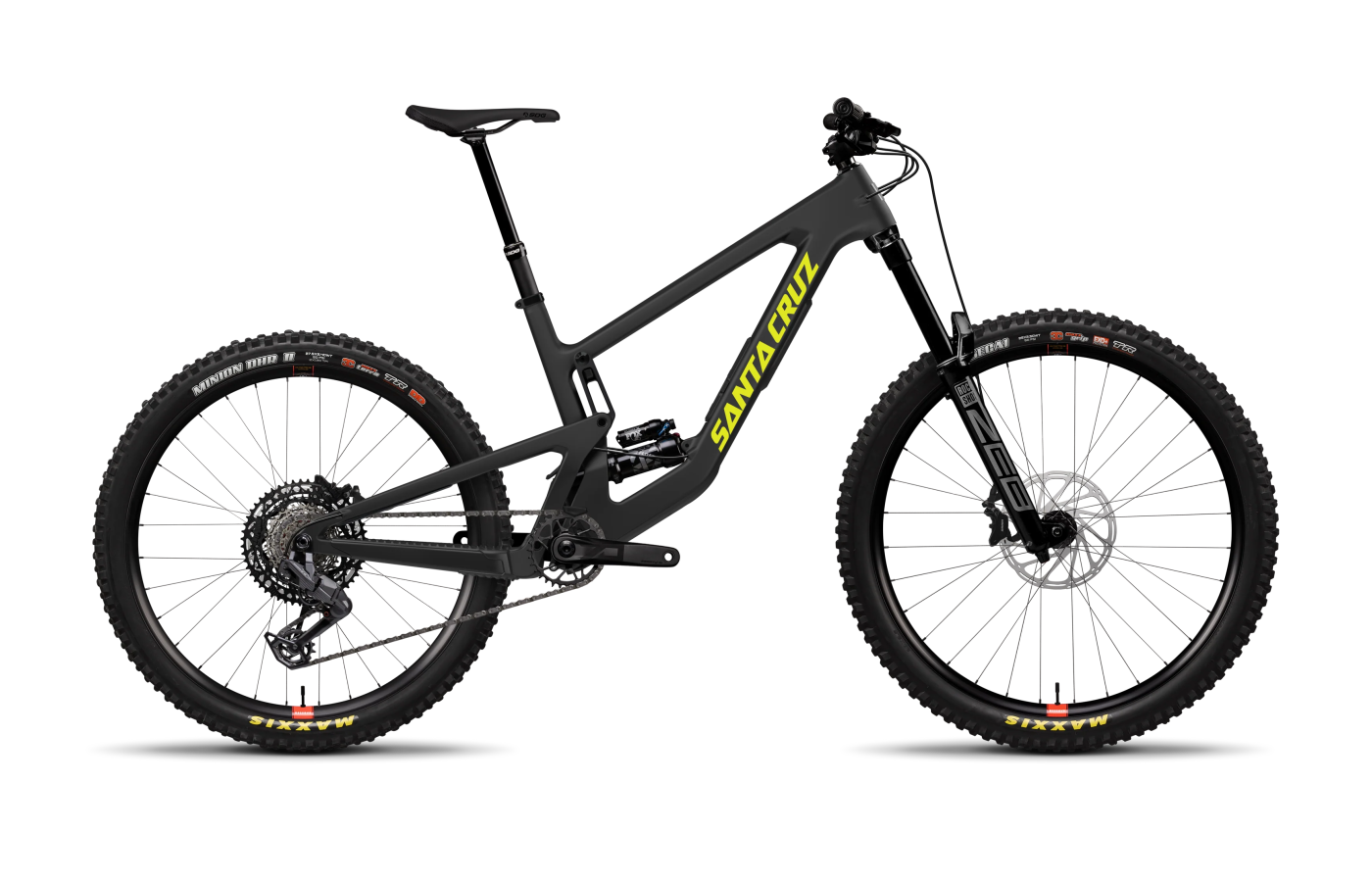
Nomad
Santa Cruz's long-running mixed-wheel enduro flagship — VPP suspension, a well-balanced chassis, and a brand-name premium that's on par with Yeti's. A strong third option if you want neither the HD6's playfulness nor the SB165's gravity lean.
Compare →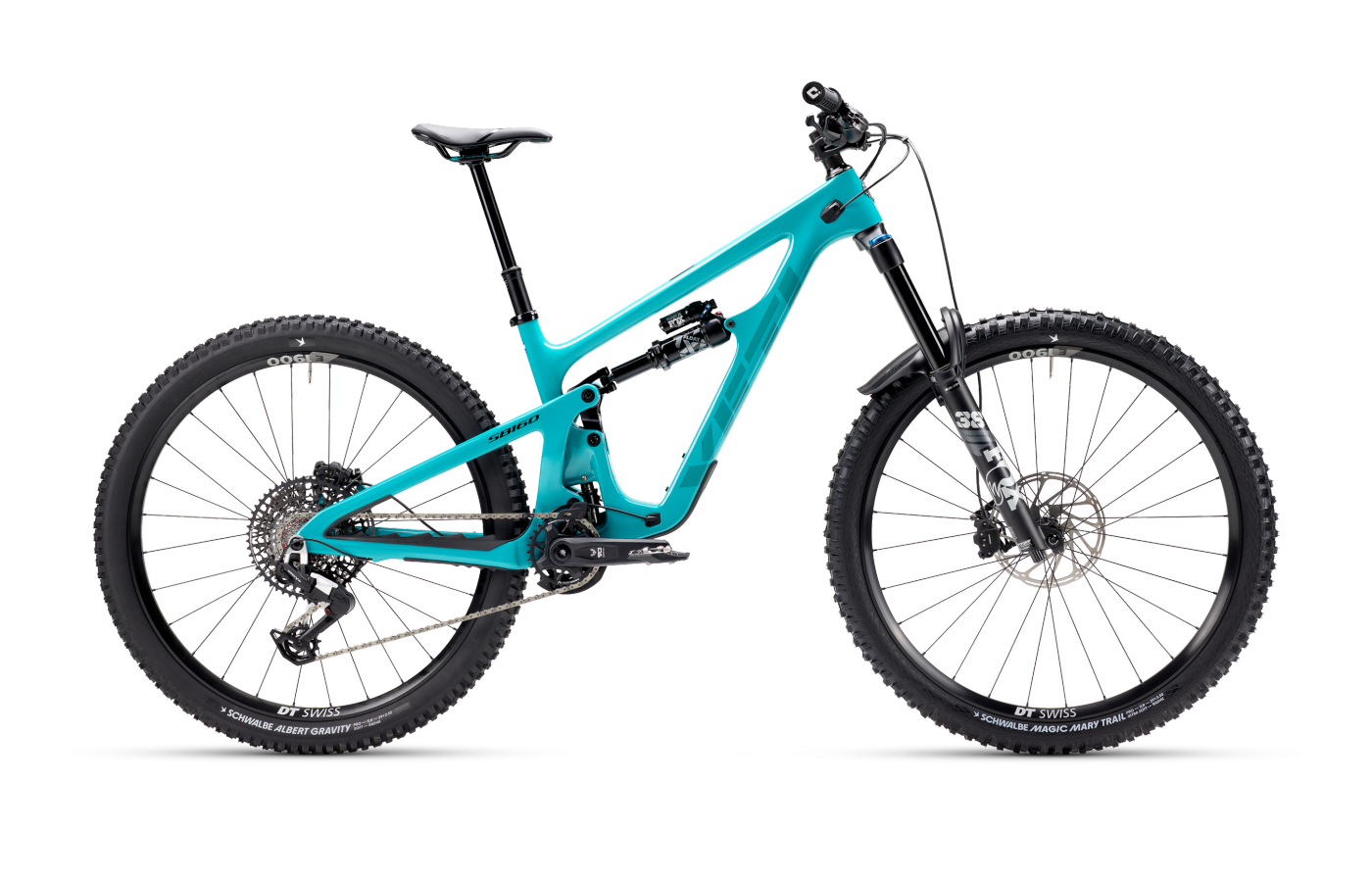
SB160
Yeti's race-bred 29er sibling to the SB165. Sharper, more precise, built for the clock. If you love the Yeti frame language but want to chase race times instead of Rampage lines, this is the one.
Compare →Patrol
Transition's mixed-wheel enduro bike, pitched at the same playful rider the HD6 chases — poppy, jumpy, fun-first. Typically undercuts both Ibis and Yeti on price by $1–2k at a comparable spec.
Compare →