Ripley AF
vsElement
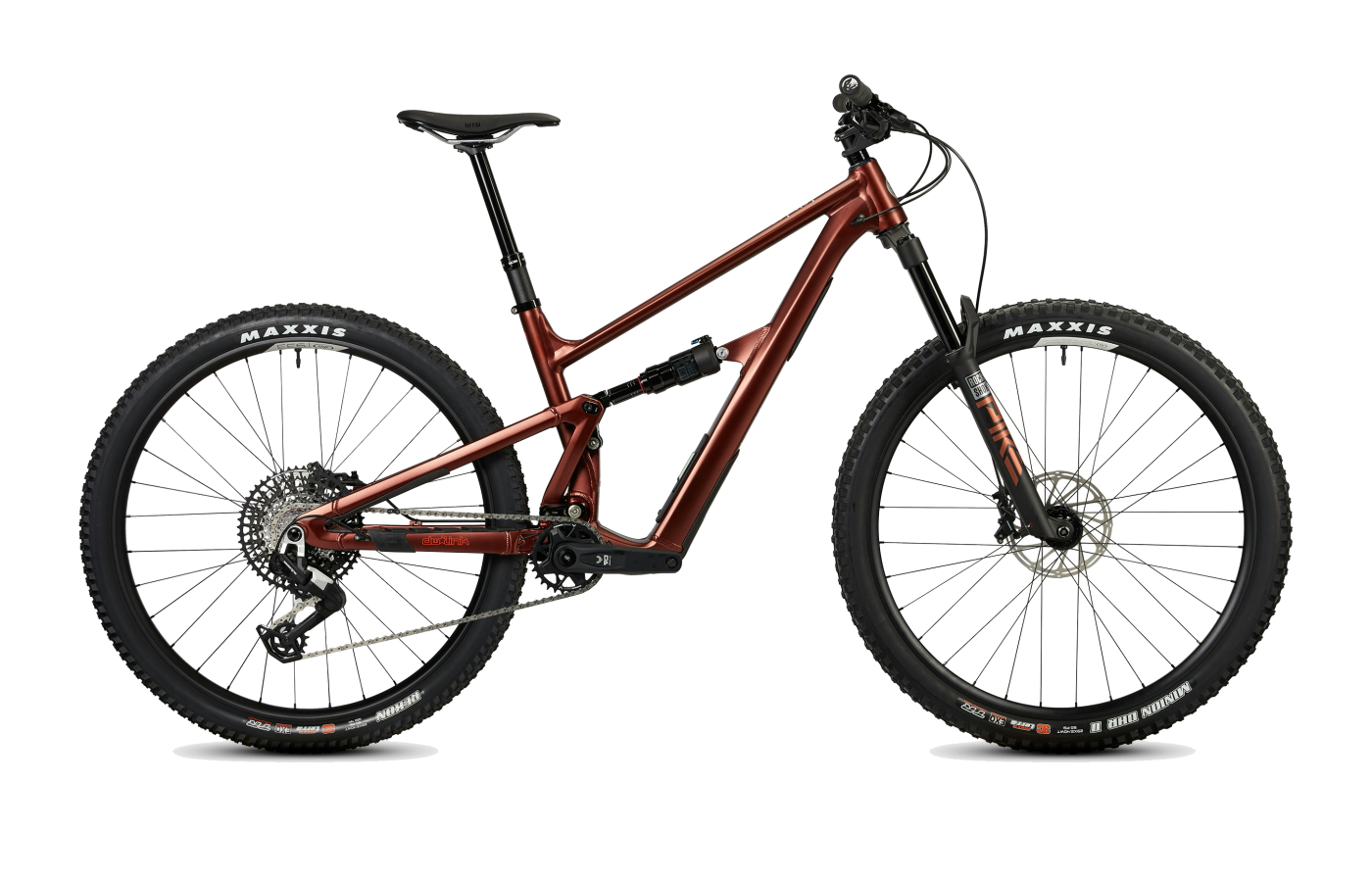
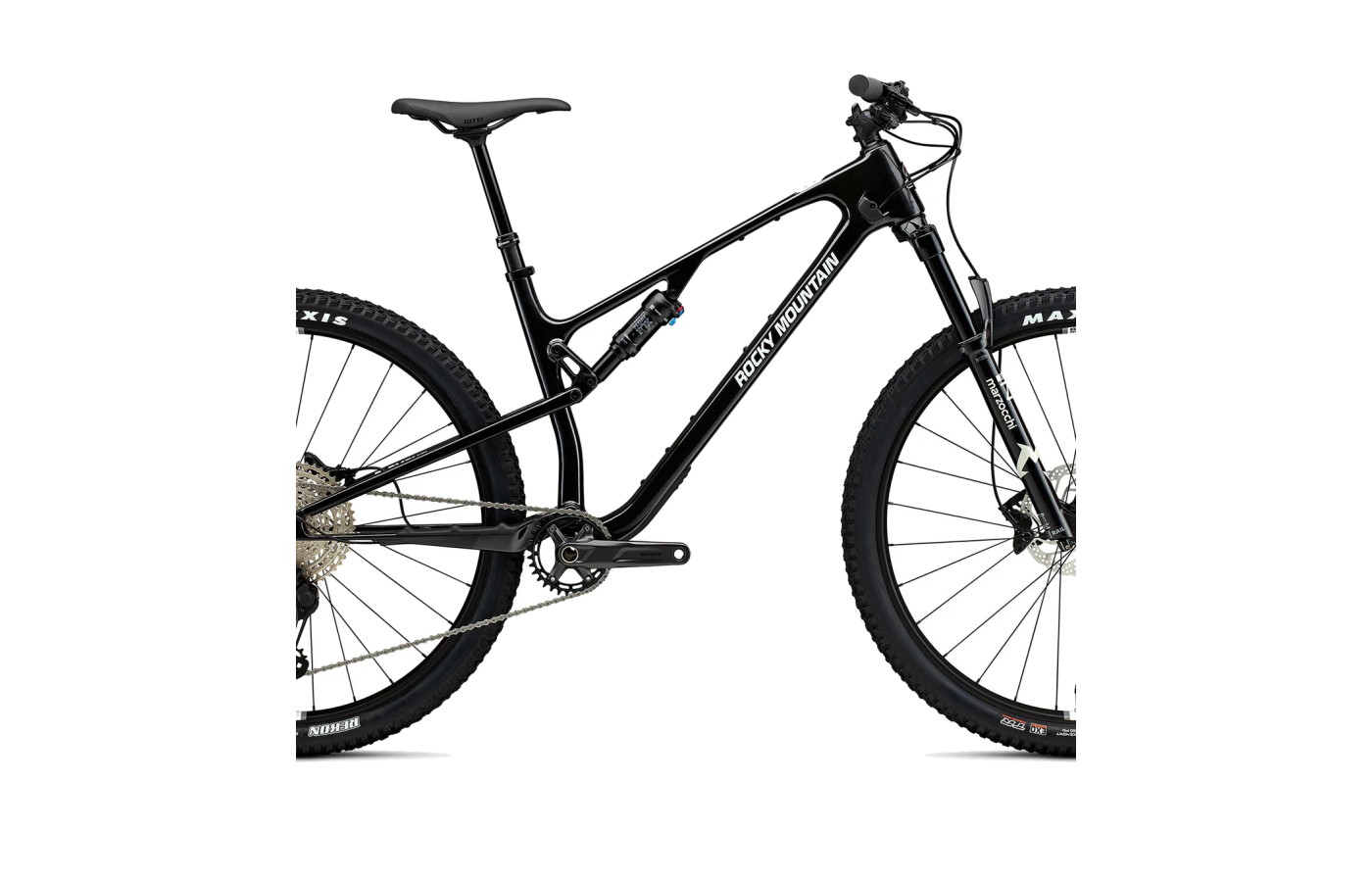
Same travel bracket, opposite philosophies.
The Ripley AF is the alloy trail bike that climbs like carbon. The Element is the carbon downcountry race bike that descends like a trail bike.
Ripley AF
- Alloy frame at carbon ride quality — the launch reviewer who owns the carbon Ripley couldn't tell them apart blindfolded.
- Convertible to a 150 mm Ripmo by swapping the clevis and shock — two bikes from one frame for tinkerers.
- Aggressive trail geometry — 140 mm fork, 64.9 degree HTA, internal frame storage, all at $3,499 to start.
- SRAM G2 brakes with organic pads underwhelm — plan a pad swap or upgrade.
- No carbon option and no geometry adjustment — what you see is what you get.
Element
- RIDE-4 adjustable geometry — flip the chip to slide the head angle across roughly 65.0–65.8 degrees and tune the shock progression.
- Lightweight carbon chassis — flex-stay rear end shaves about 350 g while increasing lateral stiffness.
- Five build tiers from C30 to C99 — including Flight Attendant on the flagship and a frameset option for custom builds.
- Carbon-only — no aluminum entry point, so the floor is $4,499.
- Press-fit bottom bracket and the brand's recent restructuring add long-term ownership friction.
Editor’s analysis
This isn't trail-vs-XC — it's value-with-attitude against premium-with-precision, and the build sheets tell the story before the geometry does.
Both bikes live in the short-travel-fun zone, but the framing is fundamentally different. The Ibis Ripley AF runs 140 mm front and 130 mm rear on an alloy frame that, per the launch reviewer who owns its carbon sibling, is essentially indistinguishable on the trail. Two builds, $3,499 and $3,999, both mechanical drivetrains — that's the whole platform. The Rocky Mountain Element runs 130 mm front and 120 mm rear on a carbon-only chassis that starts at $4,499 and climbs to $9,599 in five trim levels.
The Ripley AF leans into trail-bike DNA. A 64.9 degree head angle (no adjustment), a 76.9 degree seat tube on the MD, and frame modularity that lets you swap the clevis and shock to convert it into a 150 mm Ripmo. It's a bike that wants to be poppy and willing — the launch reviewer's recurring word was 'fast' on flow, with rear suspension that's progressive enough to land drops. The compromise is component spec: SRAM G2 brakes with organic pads draw immediate criticism even from a sympathetic reviewer.
The Element is the opposite kind of clever. A 65 degree head angle out of the box (adjustable through Rocky Mountain's RIDE-4 chip across roughly 65.0–65.8 degrees), a new Smoothlink SL flex-stay rear end that drops about 350 g of frame weight, and a redesigned seat-stay bearing setup specifically engineered to fix the previous generation's reliability complaints. Press-fit BB stays — the one carryover quibble. Above the C30 build, you get electronic shifting standard; the C99 ships with RockShox Flight Attendant.
Put another way: the Ripley AF asks you to bring your own brakes and gives you everything else for $4k. The Element asks you to bring $4.5k just to start, but every dollar above that buys frame technology and electronic refinement that the Ripley AF platform simply doesn't sell.
Where the builds differ.
Comparing our editor's-pick builds side-by-side. Winners highlighted row-by-row — lower price and weight, and the better-spec component, each mark a point.
Build variants & pricing
Two alloy builds on the Ripley AF, both mechanical. Three carbon builds on the Element, escalating to a Flight Attendant flagship.
Prices are current US MSRP. The two platforms barely overlap on price — the Element starts $500 above the Ripley AF's top build and runs to $9,599. If you want carbon, only Rocky Mountain sells it here; if you want sub-$4k, only Ibis does.
How they fit, how they steer.
Ripley AF MD vs Element md — fit-picked for a 5'8" rider on each. Reach is 460 vs 450 mm (Ripley 10 mm longer); HTA is 64.9 vs 65.0 degrees (Ripley a hair slacker, before any RIDE-4 adjustment); chainstays are 436 mm on both. Stack is within 3 mm.
Which size should I buy?
Size recommendations based on stack, reach, and effective top tube. The Ripley AF runs five sizes (SM through XL plus the longer XM); the Element runs four (sm through xl).
→These are starting points. Flexibility, riding style, and preferred position all shift the answer — if you’re between sizes, a professional fit beats a chart.
What the magazines said.
Published reviews from trusted cycling outlets. Click through for the full write-up.
Which one should you buy?
If you want trail-bike attitude on a budget and like to tinker, get the Ripley AF. If you want a precise carbon downcountry weapon with adjustable geometry, get the Element.
Ripley AF
If you want a poppy, willing trail bike with internal storage and the option to convert it into a longer-travel Ripmo down the line, this is the one. Plan to upgrade brake pads early; everything else is dialed for the price.
Element
If you mix XC pace with confident descending and want a stiff, light carbon platform you can fine-tune via the RIDE-4 chip, the Element is the sharper instrument. Stock tires and brakes lean efficient over aggressive — upgrade them if you push hard descents.
Questions buyers actually ask.
Short answers to the things we get emailed about most often.
01Which has more travel?
The Ibis Ripley AF, by 10 mm at both ends. The Ripley AF runs 140 mm up front and 130 mm rear; the Element runs 130 mm front and 120 mm rear (120/120 on the C99 flagship).
That's a meaningful gap on chunky terrain — the Ripley AF positions itself as a true trail bike, while the Element is firmly in the downcountry bracket. On flow trails and smooth singletrack you won't notice it; on bigger drops or rocky descents the Ripley AF has more cushion in reserve.
02Why does the Ripley AF only come in aluminum?
Ibis sells a separate carbon Ripley platform — the AF (Aluminum Frame) is the more affordable parallel line. The launch reviewer, who owns the carbon Ripley, weighed the test bike at 33.7 lb versus 33.6 lb for his carbon — a 0.1 lb difference attributed largely to component choices, not the frame material.
If you want the carbon version, it exists; this comparison is about the AF specifically because it sits at a price point the Element doesn't reach.
03What's the RIDE-4 chip on the Element actually do?
It's a flip chip in the rear suspension link that lets you adjust the head tube angle, seat tube angle, and shock progression across four positions. Reviewers measured the head angle range at roughly 65.0 to 65.8 degrees depending on setting, with corresponding seat-angle and BB-height shifts.
In practice: steeper for snappier climbing on tight switchbacks, slacker for high-speed descending composure. The Ripley AF has a flip chip too, but it's only for swapping between full 29er and mullet (mixed wheel) setups — not geometry tuning.
04Which is more reliable long-term?
Both have caveats. The 2025 Element specifically addressed the previous generation's seat-stay pivot bearing failures by upgrading to reinforced dual-row bearings pressed into bonded alloy sleeves rather than directly into carbon. The flex-stay design also eliminates one pivot point entirely, reducing service load.
The Element's open question is the press-fit bottom bracket, which Bikepacking notes will likely creak eventually, and Rocky Mountain's recent corporate restructuring raises questions about long-term parts and warranty support.
The Ripley AF is straightforward — alloy frame, threaded BB-style serviceability, no electronic components on either build. The launch review flagged a single missing cable port bolt as the only frame issue.
05Can I race XC on the Ripley AF?
You can race anything on anything, but the Ripley AF isn't the right tool. It's 140/130 with trail-bike geometry and around 33.7 lb in the build the launch reviewer tested — heavier and slacker than the XC race brief.
The Element is the XC-leaning option here, especially the C70 or C99 builds. The Carbon 99 builds out around 26 lb (about 11.88 kg per Enduro MTB's test), uses a Flight Attendant electronic suspension system that auto-firms for sprints, and was reviewed as 'punching well above its weight class' in the downcountry bracket.
06What about brakes?
Both bikes ship with brakes that drew criticism. The Ripley AF uses SRAM G2 4-piston brakes with organic pads — the launch reviewer specifically called out a 'lack of confidence' and recommended swapping to metallic pads or upgrading the system entirely.
The Element's higher builds use SRAM Level Stealth 4-piston brakes, which multiple reviewers (Singletracks, MBA, Enduro MTB) flagged for a mushy bite point and brake fade on long descents. The C30 build runs Shimano Deore brakes, which generally fare better in reviews.
Neither is a deal-breaker, but factor a brake or pad upgrade into your budget if you ride steep terrain regularly.
07How does the Element's flex-stay rear end change the ride?
Rocky Mountain replaced a traditional chainstay pivot with engineered carbon flex in the seat stays. Reviewers consistently report two effects: the rear triangle is laterally stiffer (Bikepacking's reviewer noted it 'felt noticeably stiffer when climbing out of the saddle'), and the bike sheds about 350 g of frame weight versus the previous generation.
Under pedaling the flex-stay reportedly stays firm in the first 50–60% of travel, only flexing toward the end of the stroke — meaning power transfer feels direct on climbs while the rear wheel still tracks well in corners and under compression.
08Which is better for bikepacking?
The Element, fairly clearly. It carries two full-size bottle mounts on the downtube on most sizes plus an accessory mount under the top tube — Rocky Mountain explicitly designed it for long-distance use. Bikepacking.com's review treats it as a credible bikepacking platform.
The Ripley AF has internal frame storage (rare at its price point) but doesn't match the Element's external mounting flexibility. For day rides with a hip pack, internal storage is arguably more practical; for multi-day trips with a full kit, the Element's mount layout wins.
Similar bikes
If your priorities don’t map cleanly onto either of these, one of these adjacent bikes probably fits better.
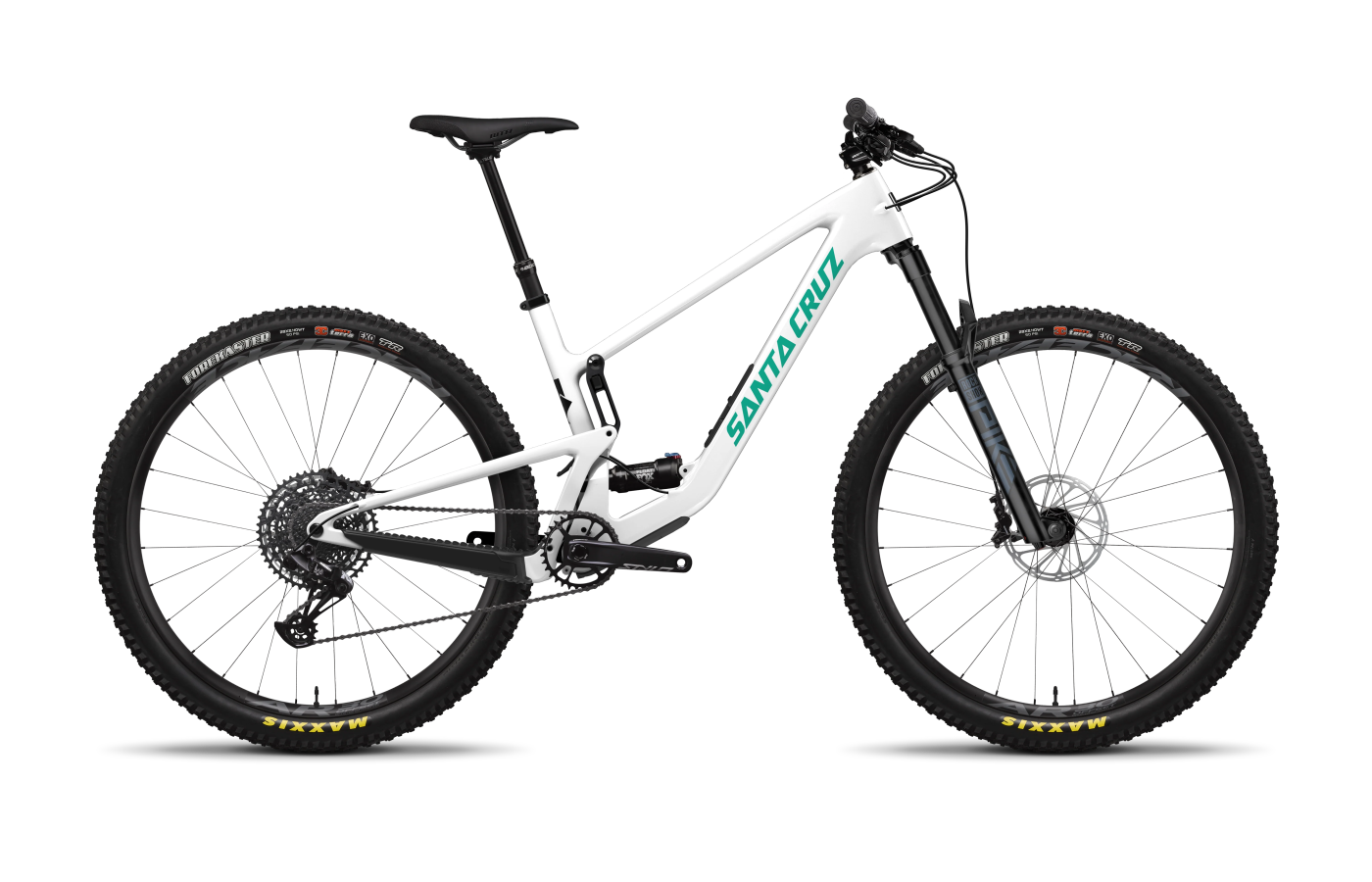
Tallboy
Santa Cruz's downcountry standby — similar travel to the Element, similar climbing-and-descending balance, with VPP suspension and a familiar carbon-or-alloy menu. The proven middle path if neither extreme appeals.
Compare →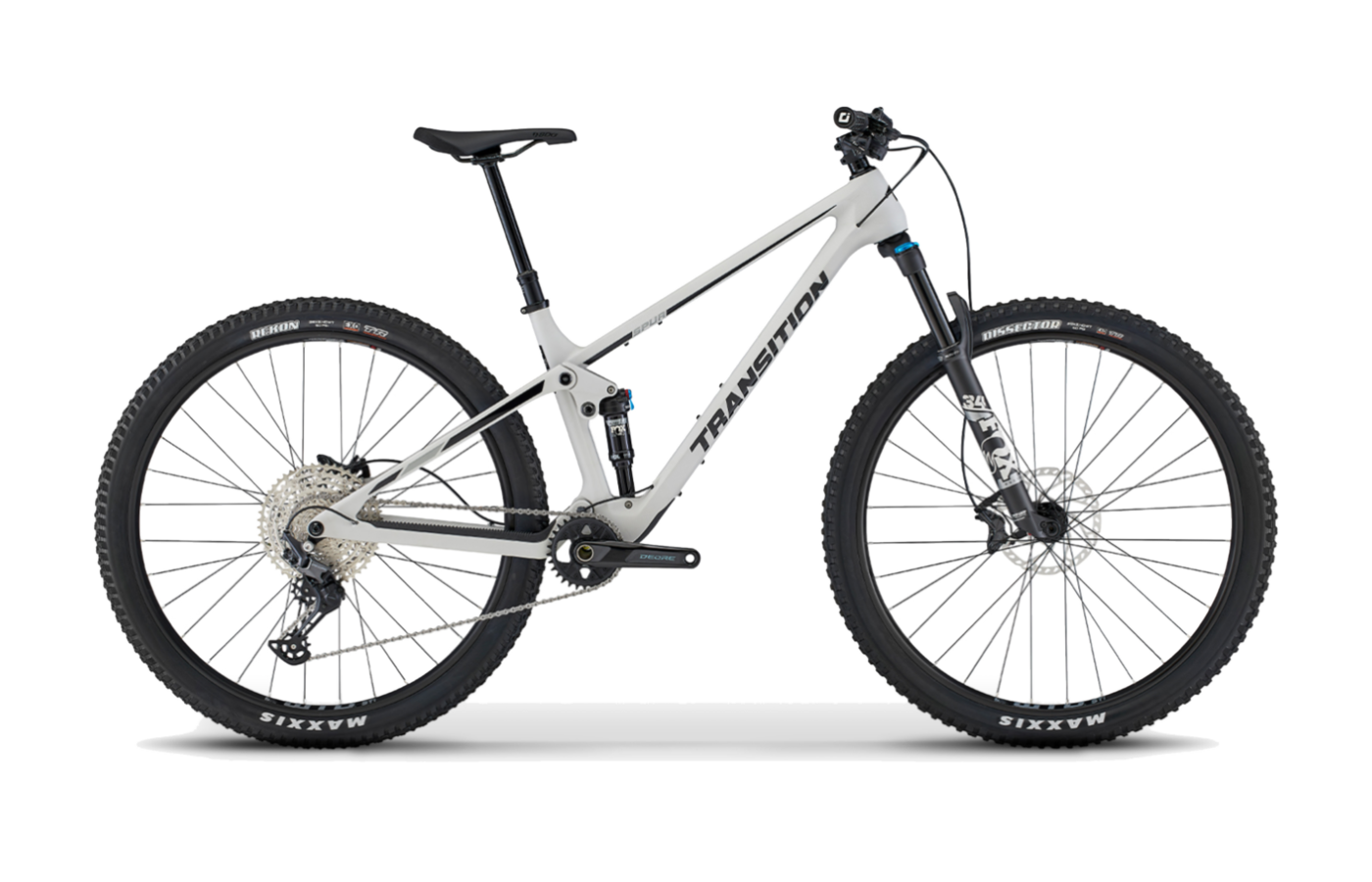
Spur
Lighter, more aggressive than the Element, with a lightweight carbon chassis tuned for riders who want XC efficiency without giving up trail-bike playfulness. Closest direct rival to the Element on character.
Compare →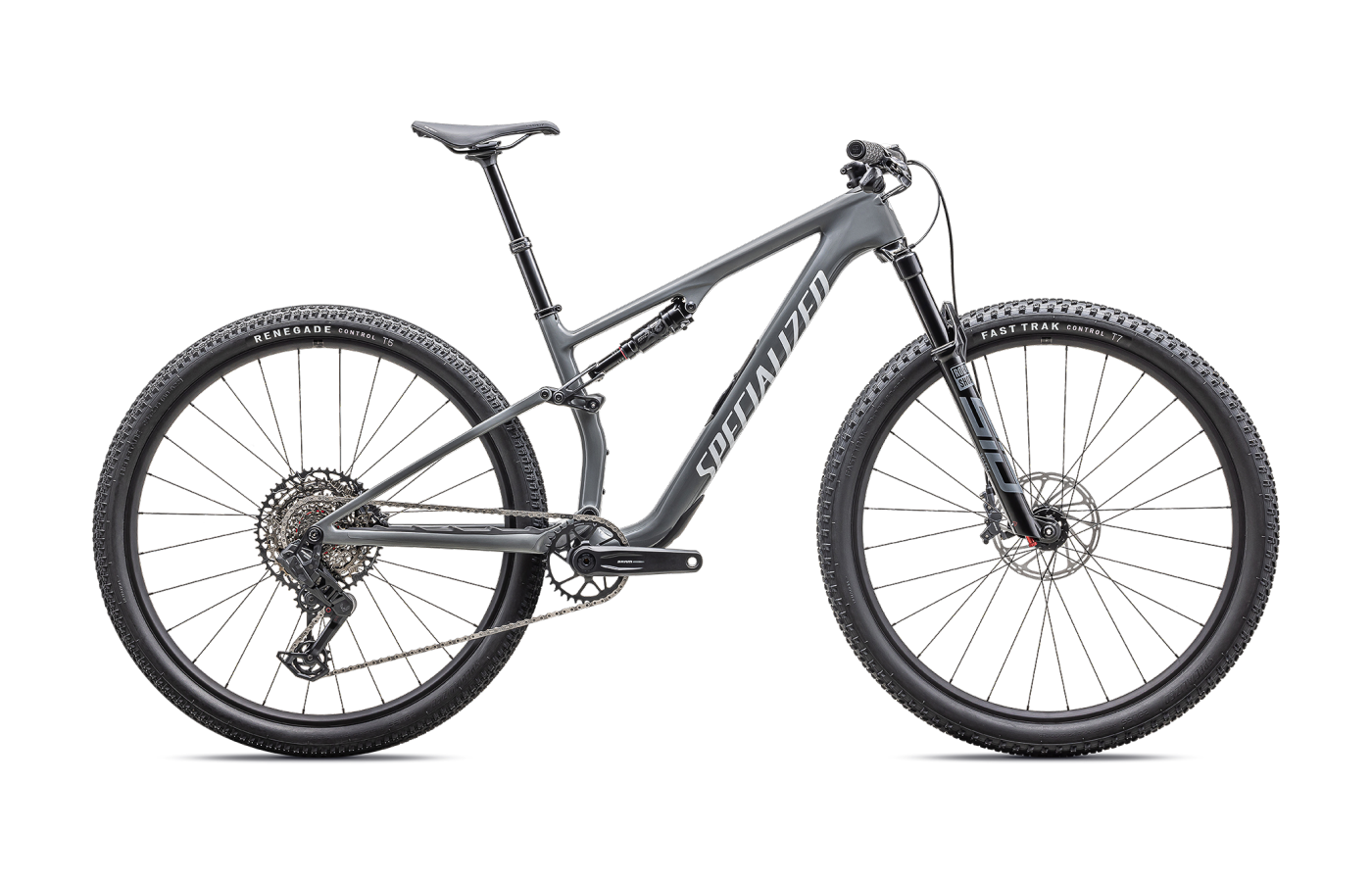
Epic
The Epic EVO is the flex-stay XC bike that wandered toward trail — same shorthand as the Element but with Specialized's broader dealer network and a longer reliability track record on the platform.
Compare →