Ripley AF
vsIzzo
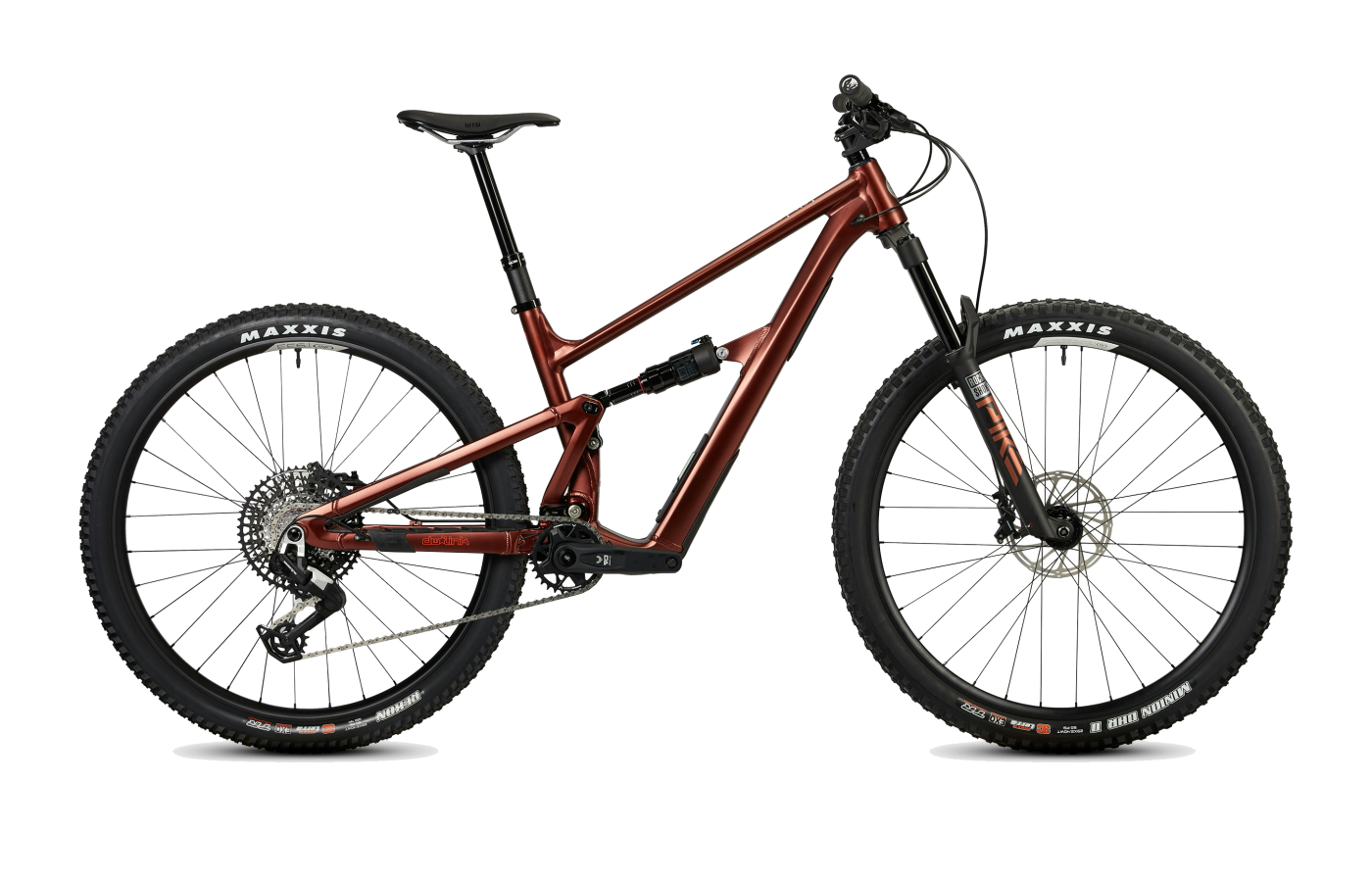
Two short-travel trail bikes, two value plays.
The Ripley AF is the alloy version of a beloved DW-Link platform, with a frame that converts to a 150 mm Ripmo. The Izzo is a carbon front-triangle DTC bike built around pedaling efficiency.
Ripley AF
- DW-Link compliance — testers could not feel the difference between the alloy AF and the carbon Ripley.
- Ripley-to-Ripmo convertible — swap the clevis and shock to run 150 mm rear travel on the same frame.
- Modern, descender-friendly geometry — 64.9° head angle and 460 mm reach (MD) keep it composed when the trail steepens.
- Stock SRAM G2 brakes with organic pads draw consistent criticism — most riders will want a pad swap.
- Only two builds in the lineup, both at the upper end ($3,499 and $3,999) — no sub-$3k entry.
Izzo
- DTC pricing — starts at $2,499 with a carbon front triangle, roughly $1,000 below the Ripley AF entry.
- Pedaling efficiency — 33–37% progression and high anti-squat make it one of the snappier 130 mm bikes you can buy.
- Four-build range — from $2,499 Core 1 (Deore/Marzocchi) up to $4,499 Core 3 (XT/Öhlins), there is a price for most budgets.
- Stock 334 mm bottom bracket is low — pedal strikes are a recurring complaint in rocky terrain.
- Inverted-shock layout creates clearance issues for many shock pumps and traps mud at the lower mount.
Editor’s analysis
Both run 130 mm rear and 140 mm front. From there, the design briefs diverge — plush versatility versus razor-sharp efficiency.
The Ibis Ripley AF and the YT Izzo answer the same question — "what's the best 130 mm trail bike under $4,000?" — with very different bets. The Ibis Ripley AF leans on its DW-Link suspension and a frame that, with a clevis and shock swap, becomes a 150 mm Ripmo. The YT Izzo leans on a carbon front triangle, an inverted shock that frees a full-size bottle, and a kinematic that reviewers measured at 33–37% progressive — taut, urgent, and built to hold speed.
On geometry, the Ibis Ripley AF is the longer, slacker bike. Head angle is 64.9° versus the Izzo's 65.7°, and reach in the fit-picked sizes runs 460 mm (Ripley MD) versus 445 mm (Izzo M). Chainstays are 436 mm versus 432 mm. The Ibis Ripley AF gives up agility for a more planted, descender-friendly stance; the YT Izzo's shorter rear end and steeper front make it the snappier, more pedal-strike-prone machine — its 334 mm bottom bracket is famously low.
Suspension feel splits the same way. Reviewers describe the Ibis Ripley AF's DW-Link as compliant and supple — one tester literally couldn't distinguish it from the carbon Ripley blindfolded. The YT Izzo's high-progression curve gives "reassuringly stiff," jump-happy feedback but can feel "rationed" on root carpets and high-frequency chatter. Pick by terrain: chunky natural trails reward the Ibis Ripley AF; flow trails and twisty singletrack reward the YT Izzo.
Value angles also differ. The Ibis Ripley AF is sold through dealers and starts at $3,499 (Deore) — an alloy frame that punches above its price. The YT Izzo is direct-to-consumer and starts at $2,499 for a carbon-front-triangle Core 1, undercutting the Ibis by about $1,000 at the entry. Where the Ibis Ripley AF wins is the platform-conversion trick: same frame, two travel personalities.
Where the builds differ.
Comparing our editor's-pick builds side-by-side. Winners highlighted row-by-row — lower price and weight, and the better-spec component, each mark a point.
Build variants & pricing
Pricing brackets are different shapes. The Ibis Ripley AF sells two builds in the $3.5k–$4k window. The YT Izzo runs $2,499 to $4,499 across four trims.
Prices are current US MSRP. The Ibis Ripley AF "90" build is paired here with the Izzo Core 2 CF — both mechanical-mid-tier, both RockShox Pike-class fork — to keep the spec table honest. The Izzo Core 4 CF jumps to XT Di2 and Fox Factory at a similar price; the Ibis has no electronic-shifting build.
How they fit, how they steer.
Compared at Ripley MD vs Izzo M. The Ibis runs 3 mm taller stack (619 vs 616), 15 mm longer reach (460 vs 445), 0.8° slacker head angle, and 4 mm longer chainstays — a more planted footprint. The Izzo is the shorter, steeper, snappier bike.
Which size should I buy?
Both lineups span S/M/L plus XL extensions. Stack-and-reach overlap is reasonable in the middle; pick by terrain bias as much as fit.
→These are starting points. Flexibility, riding style, and preferred position all shift the answer — if you’re between sizes, a professional fit beats a chart.
What the magazines said.
Published reviews from trusted cycling outlets. Click through for the full write-up.
Which one should you buy?
If you want a planted, convertible trail bike that climbs and descends with equal poise, get the Ibis Ripley AF. If you want a sharp, efficient, jump-happy trail bike at the lowest possible price, get the YT Izzo.
Ripley AF
If you want one trail bike that climbs efficiently, descends with confidence, and can convert to a 150 mm Ripmo when you want more bike, the Ibis Ripley AF is the smarter long-term buy. The DW-Link suspension feels carbon-grade in alloy clothing.
Izzo
If most of your riding is undulating singletrack, flow trails, and long pedaling days — and the lowest possible price matters — the YT Izzo gives you a carbon-front-triangle bike from $2,499 with a kinematic built to hold speed. Be ready to upgrade tires and pads.
Questions buyers actually ask.
Short answers to the things we get emailed about most often.
01Which bike is better for steep, technical descents?
The Ibis Ripley AF. Its 64.9° head angle (vs the Izzo's 65.7°), 15 mm longer reach in the fit-picked size, and DW-Link rear end give it a more planted, less nervous stance when the trail gets steep and rough.
Reviewers consistently describe the YT Izzo as feeling "out of its depth" on steep, chunky descents — its high-progression curve and shorter wheelbase reward precise line choices over plowing.
02Which bike pedals more efficiently on long climbs?
The YT Izzo, narrowly. Pinkbike measured anti-squat at roughly 100% across all gears, and reviewers across the board call it one of the more efficient short-travel trail bikes on the market — multiple testers named it their favorite climber in the category.
That said, the Ripley AF is no slouch. Reviewers note its DW-Link suspension "climbs just as good as the Carbon version," and the 76.9° effective seat tube angle (MD) keeps you centered for technical pitches. The Izzo's 77° seat angle and lighter overall build edge it out — but not by much.
03Why is the Ripley AF "convertible"?
The Ibis Ripley and Ripmo share the same front triangle. Swap the rocker clevis and shock, and the 130 mm Ripley AF becomes a 150 mm Ripmo AF — same frame, more travel and slacker geometry.
For riders who want both a snappy trail bike and an enduro-capable bike without owning two frames, this is genuinely "two bikes in one." The YT Izzo has no equivalent convertibility.
04How does direct-to-consumer change the YT Izzo experience?
Pricing: the YT Izzo Core 1 starts at $2,499 — about $1,000 below the cheapest Ripley AF (Deore at $3,499) for a carbon-front-triangle bike. That's the upside.
Service: there is no local YT dealer to walk into. You unbox and assemble the bike yourself, and warranty work is shipped back to YT. If you value face-to-face shop support, the Ibis Ripley AF — sold through traditional dealers — is the friendlier path.
05Are the stock brakes a problem on either bike?
On the Ibis Ripley AF, yes — multiple reviewers single out the SRAM G2 4-piston brakes with organic pads as the bike's weakest spec, calling them under-powered and noting that SRAM has discontinued them. A swap to metallic pads or a different brake system is a common first upgrade.
The YT Izzo's brakes draw mixed reviews — the SRAM G2 (on some builds) and Shimano SLX (on the Core 2) work, but testers have noted bite-point fade on long descents. Neither bike is brake-class-leading at this price.
06Which has more tire clearance?
Both clear roughly 2.4" tires comfortably with their stock setups, and our database lists the same 61 mm clearance figure for both. Neither is built for plus-size rubber.
The Ripley AF's flip chip lets you run a mullet (29" front / 27.5" rear) configuration, which the YT Izzo does not offer. If wheel-size flexibility matters, the Ibis is the more adaptable platform.
07What about pedal strikes?
YT Izzo: the 334 mm bottom bracket is famously low — Bike Perfect and BikeRadar both warned of frequent pedal strikes in rocky technical terrain. The trade-off is a planted, integrated cornering feel.
Ibis Ripley AF: the BB sits higher, and the flip chip lets you raise it further if you find yourself catching pedals. The Ripley AF is the safer bet for chunky terrain.
08Which is lighter?
The YT Izzo wins on paper across the range — the entry Core 1 is around 14.9 kg (32.8 lb), the Core 4 CF drops to 13.9 kg (30.6 lb), and the flagship Core 3 CF sits at 14.2 kg (31.3 lb).
The Ibis Ripley AF "90" build was weighed at 33.7 lb by Evans MTB Saga — only 0.1 lb heavier than the same reviewer's carbon Ripley. So the Ibis Ripley AF gives up about 1–3 lb to comparable Izzo builds, which is small in absolute terms but real on long climbs.
Similar bikes
If your priorities don’t map cleanly onto either of these, one of these adjacent bikes probably fits better.
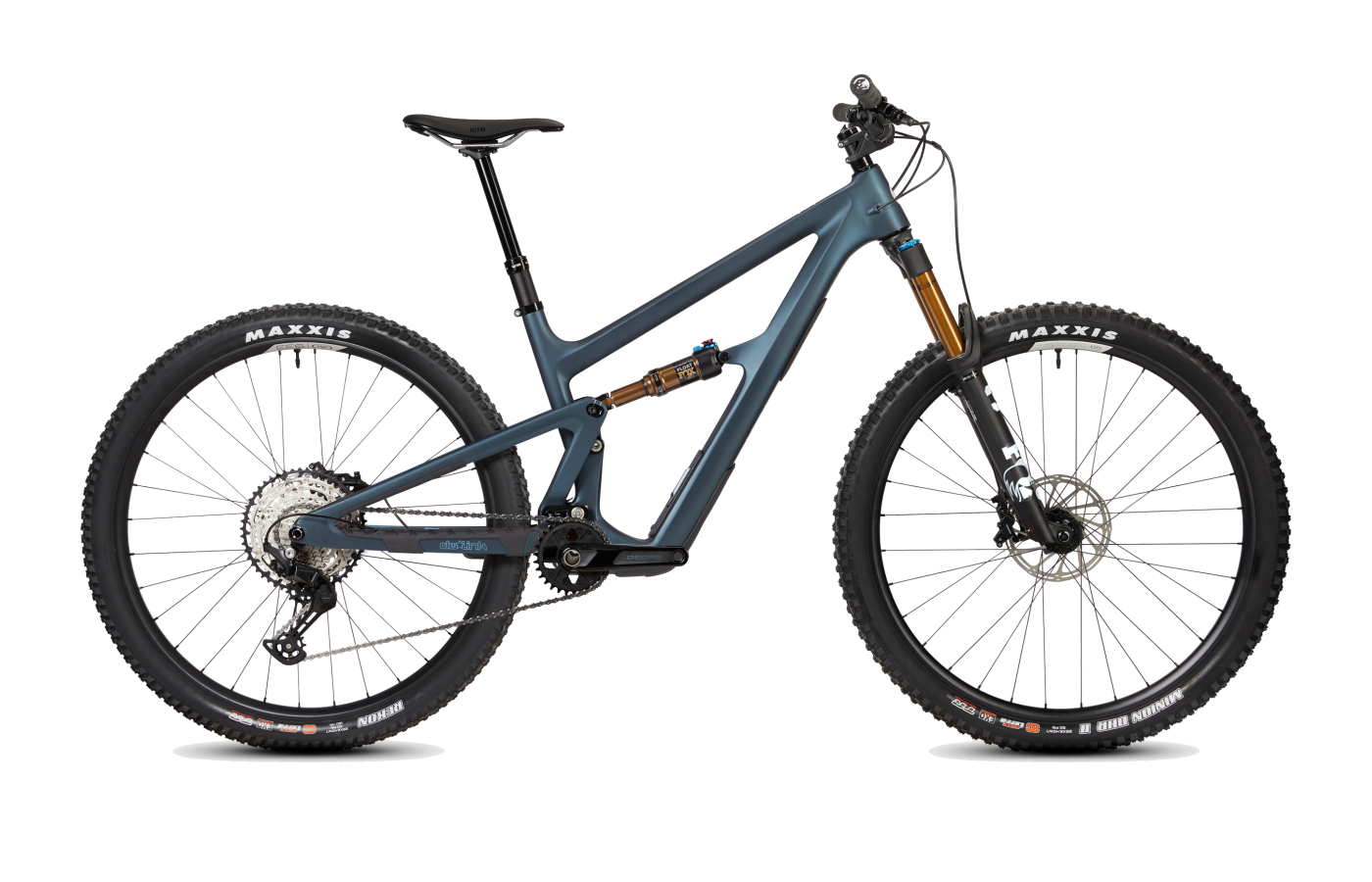
Ripley
The carbon Ibis Ripley — same DW-Link platform, same convertibility to a Ripmo, slightly lighter. Some carbon builds land within a few hundred dollars of the alloy AF; if the budget stretches, it's the obvious upgrade path.
Compare →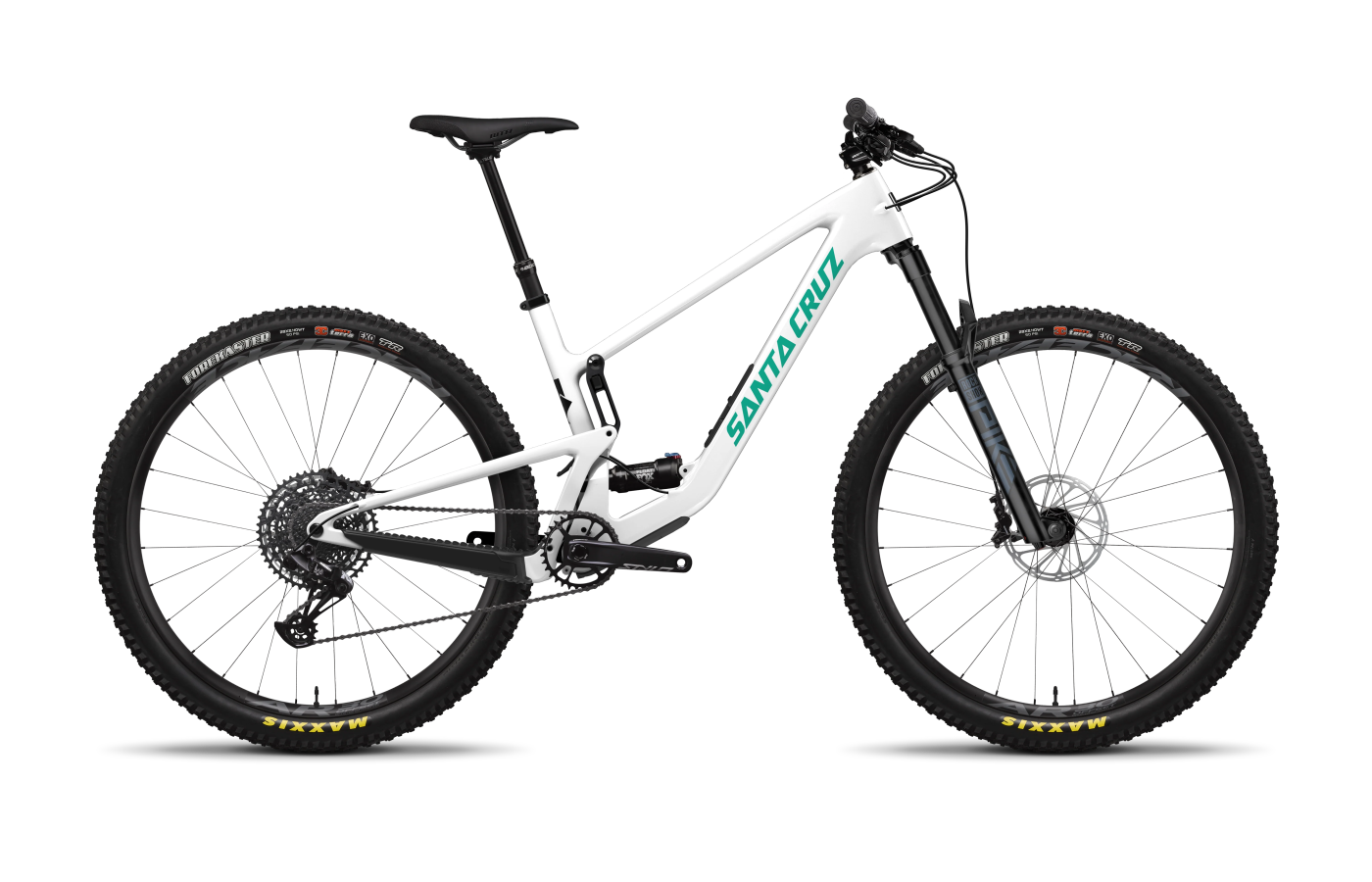
Tallboy
The Santa Cruz Tallboy is the do-everything 29er trail bike for riders who want VPP suspension and the Santa Cruz dealer network. Costs more than either bike here, but punches at the same descending weight class as the Ripley AF.
Compare →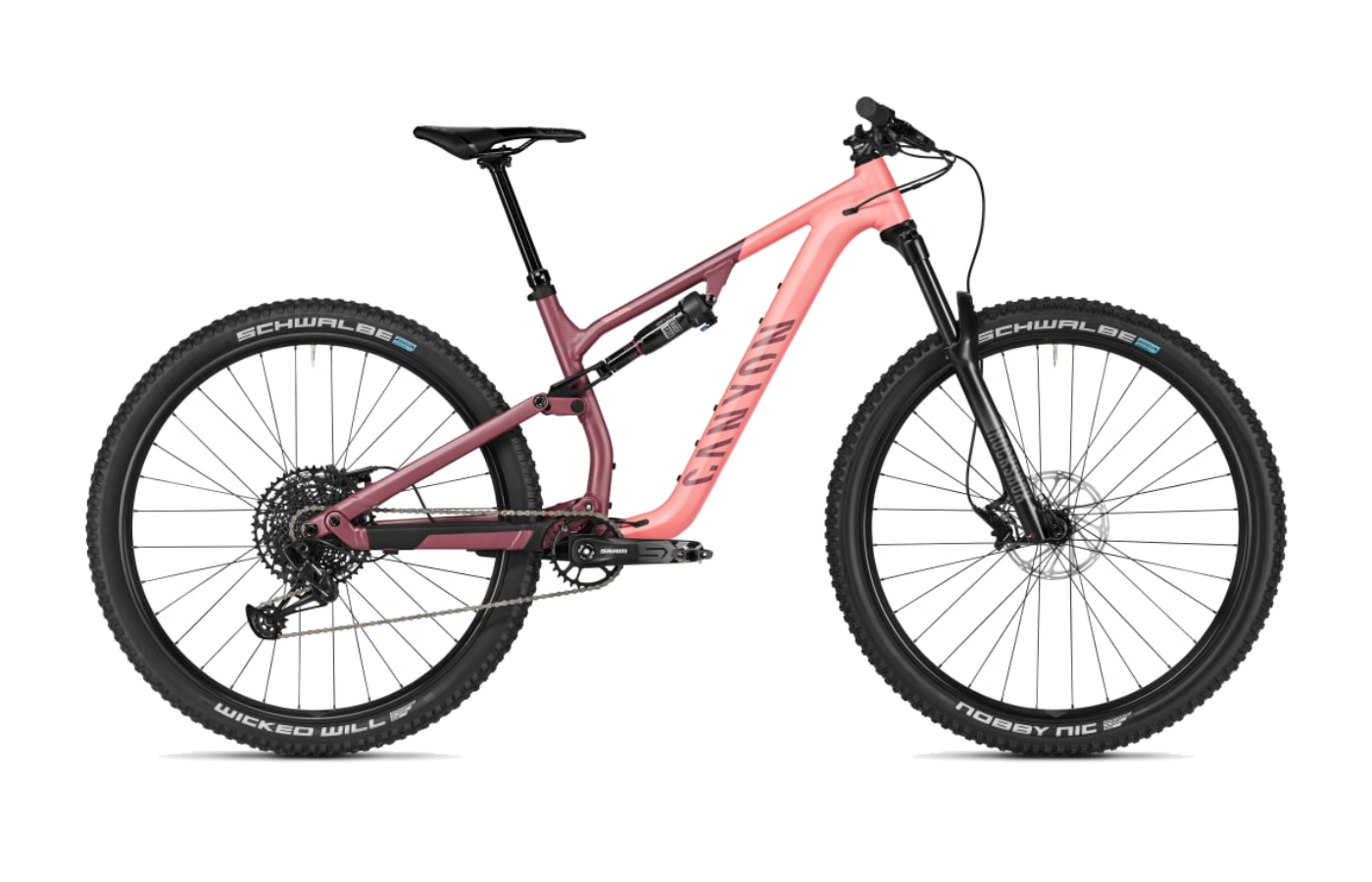
Neuron
Canyon Neuron — the other DTC short-travel trail bike. Aimed squarely at the same buyer as the YT Izzo, with slightly more conservative geometry and a long-day, comfort-first bias.
Compare →