Ripley
vsSB140
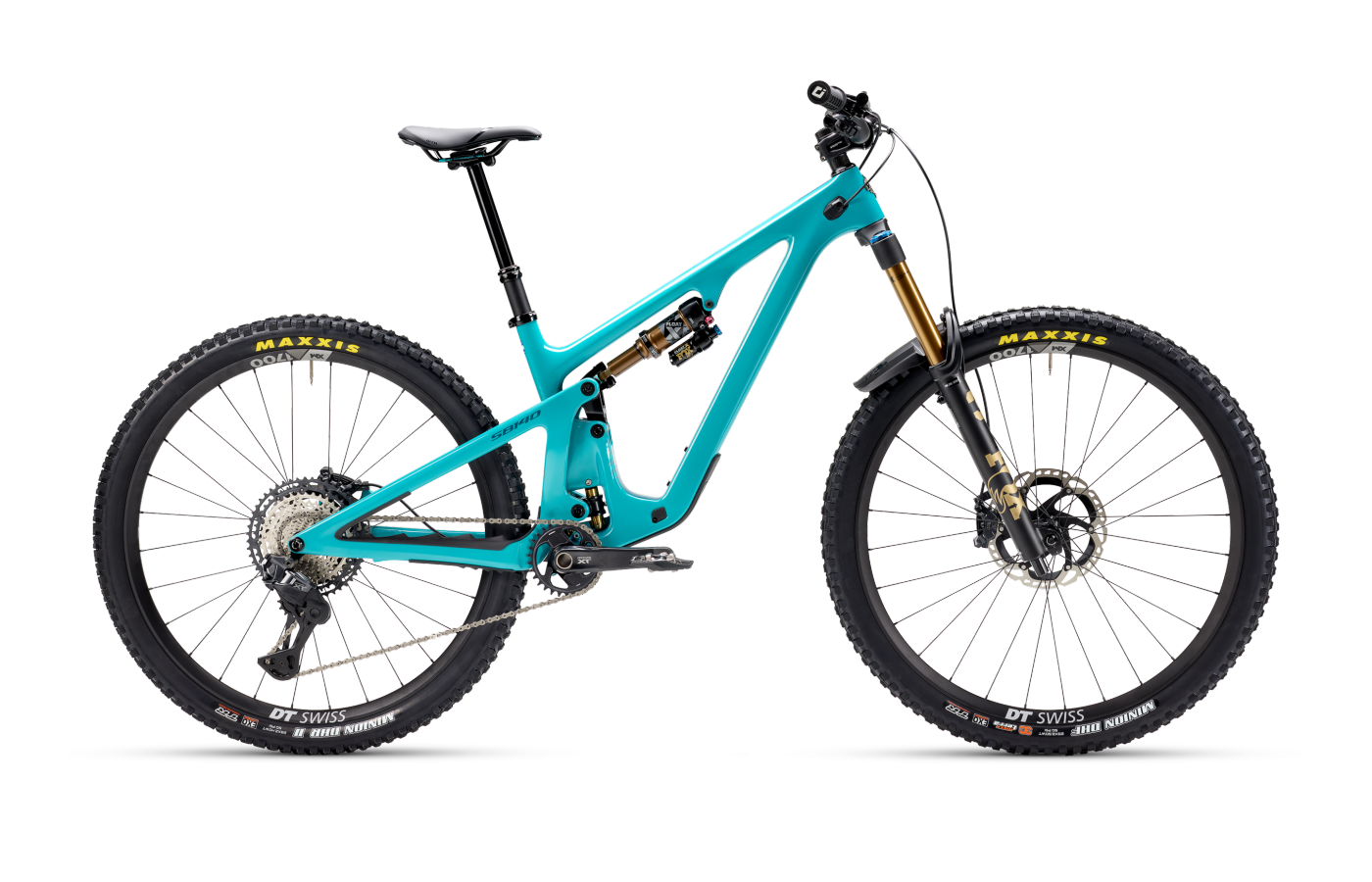
Two short-travel trail bikes, two different missions.
The Ripley V5 is the playful do-it-all climber with downtube storage. The SB140 is the speed-generating scalpel that punches above its travel.
Ripley
- Best-in-class internal storage — the STOW downtube system with Cotopaxi-bag liners is rattle-free, sealed, and easy to use with gloves.
- True Ripmo upgrade path — front triangle and swingarm are shared, so a fork/shock/link swap converts to a 147 mm enduro bike.
- Lower entry price — the $4,999 Deore build is a real carbon Ripley; the SB140 starts $1,200 higher and only goes up.
- Fox 34 SL fork flexes for heavier or more aggressive riders — reviewers wished for a Fox 36 on rougher trails.
- Mixed-wheel flip-chip swap requires removing the rear shock, not a quick trailside change.
SB140
- Switch Infinity climbs and pumps — anti-squat is high enough that most reviewers never use the lockout, even on long fire roads.
- 20 mm more fork travel — the 160 mm Fox 36 is a more capable front end than the Ripley's 140 mm Fox 34 SL.
- Size-specific carbon layups — Yeti tunes Turq stiffness per frame size for consistent ride feel across rider weights.
- No internal frame storage and no flip-chip geometry adjust — features now standard on the Ripmo and Stumpjumper 15.
- Low stock stack height (619.8 mm on a M) — most reviewers swap to a higher-rise bar.
Editor’s analysis
Same trail-bike bracket, very different bikes — one wants to climb everything, the other wants to corner faster than you'd expect.
On paper these two land in the same place: carbon mid-travel 29ers with steep seat tubes, ~65-degree head angles, and price tags that start in the $5k–$6k zone and run past $10k. Both target the same buyer — the rider who wants one bike for varied trail riding. But the suspension specs already telegraph the divergence: the Ibis Ripley runs 130 mm rear / 140 mm fork, the Yeti SB140 runs 140 mm rear / 160 mm fork. That 20 mm of extra fork travel on the SB140 isn't a small thing.
The Ibis Ripley is the lighter, more efficient, more upright bike of the two. The DW-link suspension is widely praised for staying high in its travel under power — reviewers repeatedly call it a "bat out of hell" climber and an "only bike" for big-ride days. The geometry is genuinely modern (64.9° head tube, 76.9° effective seat tube on a medium, 460 mm reach), but the Fox 34 SL fork and 130 mm rear keep it on the trail-not-enduro side of the line. The killer feature is practical, not geometric: the STOW internal downtube storage with custom Cotopaxi bags is the best in-frame storage execution on the market, and the Ripley front triangle and swingarm are shared with the longer-travel Ripmo, so a fork/shock/link swap turns it into a 147 mm enduro bike.
The Yeti SB140 picks a different fight. The Switch Infinity translating-pivot suspension is the headline — reviewers describe it as "surgical," "poppy," and "borderline scary" in how much speed it generates out of corners. Geometry is close to the Ripley on the numbers (65° head tube, 77° seat tube, 459.7 mm reach on a medium), but the 160 mm Fox 36 fork and the higher 342 mm bottom bracket give it a more aggressive, forward-leaning posture. The price of admission is real — the SB140 starts at $6,200 and the Turq-series builds run past $11,000, with no internal storage and a frame design that several reviewers called a "previous generation" in convenience features. Almost every review calls out the "low stack height" and recommends a higher-rise bar.
Put simply: the Ibis Ripley is the bike to buy when you want to ride everywhere and pedal everything. The Yeti SB140 is the bike to buy when you already know what "Switch Infinity" feels like and you want it. The Ripley is more bike for the money, more practical, and more forgiving of casual setup. The SB140 is more refined in feel, more demanding to ride well, and rewards the rider who'll spend the time to dial in compression damping and bar height.
Where the builds differ.
Comparing our editor's-pick builds side-by-side. Winners highlighted row-by-row — lower price and weight, and the better-spec component, each mark a point.
Build variants & pricing
Ripley spans $4,999–$9,999 across five builds; the SB140 runs $6,200–$11,000 across six (split between C-series and lighter Turq carbon).
Prices are current US MSRP. The Yeti has no sub-$6k complete and the Turq carbon frame alone is $4,500. The Ripley's $4,999 Deore is the cheapest way into either platform's carbon frame.
How they fit, how they steer.
Ripley MD vs. SB140 M — fit-picked for a 5'8" rider on each bike. Reach is essentially identical (460 mm vs. 459.7 mm), as is stack (619 mm vs. 619.8 mm) and chainstay length (436 mm vs. 436.9 mm). The Ripley is 0.1° slacker at the head tube; the SB140's 160 mm fork raises the front end at the axle.
Which size should I buy?
Both ranges overlap closely in the middle; the Ripley adds an XM size that splits the gap between M and L.
→These are starting points. Flexibility, riding style, and preferred position all shift the answer — if you’re between sizes, a professional fit beats a chart.
What the magazines said.
Published reviews from trusted cycling outlets. Click through for the full write-up.
Which one should you buy?
If you want one trail bike that climbs everything and stores its own snacks, get the Ripley. If you'll spend the time to dial it in and want the Switch Infinity feel, get the SB140.
Ripley
If you want a single carbon trail bike for everything from XC laps to surprisingly rowdy descents, with practical features (internal storage, threaded BB, easy upgrade path to a Ripmo), the Ripley is the smarter buy. It's lighter, cheaper, and the DW-link climbs as well as anything in the category.
SB140
If you've ridden a Switch Infinity Yeti before and you want that specific feel — poppy, supportive mid-stroke, scalpel-sharp out of corners — the SB140 delivers it better than anything else. Bring an active riding style, a willingness to swap the bar, and a budget that won't flinch at a $7k–$11k price tag.
Questions buyers actually ask.
Short answers to the things we get emailed about most often.
01Which has more suspension travel?
The Yeti SB140 — 140 mm rear and a 160 mm Fox 36 fork. The Ibis Ripley V5 runs 130 mm rear and a 140 mm Fox 34 SL fork. That's 10 mm more rear travel and 20 mm more fork travel on the SB140, plus the larger 36 mm fork stanchions versus the Ripley's 34 mm.
In practice, the SB140 is the more capable descender on rough or fast terrain, while the Ripley is the lighter, more efficient climber. Bigger or more aggressive riders on the Ripley have repeatedly noted flex from the Fox 34 SL on rougher trails.
02Which climbs better?
Both are excellent climbers — that's the headline finding. The Ripley V5's DW-link is universally praised for its anti-squat and "bat out of hell" climbing efficiency, and reviewers note the steep 76.9° seat tube angle (on a medium) keeps the front wheel planted on steep pitches.
The SB140's Switch Infinity is just as good in a different way — the translating pivot moves up early in the travel to maximize anti-squat, and reviewers say they rarely reach for the lockout. The SB140 is slightly heavier but its 77° seat tube and "flexible tank track" rear-wheel traction earned it a 9.0 climbing score from OutdoorGearLab.
03Which has the better suspension platform?
Different philosophies, both elite. The Ripley's DW-link delivers a "plush and progressive" feel with a soft initial stroke, supportive mid-stroke, and good ramp-up. It's predictable and forgiving — easy to set up well.
The SB140's Switch Infinity is more sophisticated and more demanding. Reviewers describe it as "surgical," "poppy," and "borderline scary" in how much speed it generates out of corners — but it has a learning curve, and Awesome MTB found it actually rides better with more compression damping than feels intuitive. Once dialed, the SB140 "punches well above its weight," feeling like a 150–160 mm rear-travel bike.
04How does the geometry compare?
Surprisingly close in the middle of the size range. On a Ripley MD vs. an SB140 M (the fit-picked sizes for a 5'8" rider): reach is 460 mm vs. 459.7 mm, stack is 619 mm vs. 619.8 mm, chainstay is 436 mm vs. 436.9 mm.
The Ripley is 0.1° slacker at the head tube (64.9° vs. 65°) and 0.1° slacker at the seat tube (76.9° vs. 77°). The bigger felt difference is the SB140's longer-travel 160 mm fork, which raises the front axle and gives it a more aggressive descending posture. Both run size-specific chainstays — the Ripley from 436 to 442 mm, the SB140 from 436.9 to 444.5 mm.
05Does the Ripley really convert to a Ripmo?
Yes. The Ripley V5 shares its front triangle and swingarm with the Ripmo — swap the fork (to 160 mm), the shock, and the rocker link, and you have a 147 mm rear-travel enduro bike. Multiple reviewers call this out as a real, supported upgrade path, not a hack.
This is unusual at the price point and gives the Ripley a long-term value angle the SB140 doesn't have — though Yeti's analogous shorter-travel bike, the SB120, is a separate frame, not a swap.
06What about internal frame storage?
Ripley V5: yes — the new STOW system with a quick-release latch, custom Cotopaxi bags (made from fabric scrap), and effective sealing. Reviewers consistently call it the best-executed in-frame storage on the market: rattle-free, easy with gloves, water-resistant.
Yeti SB140: no internal storage. This is a recurring criticism in reviews, with OutdoorGearLab and Enduro MTB calling out the absence as a reason the SB140 frame feels "previous generation" relative to the Ripmo and Stumpjumper 15.
07Why is the SB140 so much more expensive?
Partly the "Yeti tax" — the brand and the Switch Infinity system command a premium. The cheapest SB140 complete is $6,200 (C2 90 Transmission); the cheapest Ripley is $4,999 (Deore). At the top end, the Turq XX AXS Transmission is $11,000 versus $9,999 for the Ripley XTR.
Reviewers are fairly direct that the SB140 is "overpriced and under-spec on paper" — even $10k-plus Turq builds often ship with alloy DT Swiss XM1700 wheels rather than carbon. The justification, per Bike Perfect and MBR, is the frame refinement, suspension tuning, and ride feel, not the spec sheet.
08Which warranty is better?
Both manufacturers offer a lifetime frame warranty to the original purchaser. Yeti also extends this to the Switch Infinity link. Ibis has a track record of quickly addressing initial production quirks (the V5 had an early dropper-housing noise issue that was promptly resolved). Both brands are well-regarded for long-term support, and crash-replacement programs are available from both.
Similar bikes
If your priorities don’t map cleanly onto either of these, one of these adjacent bikes probably fits better.
Ripmo
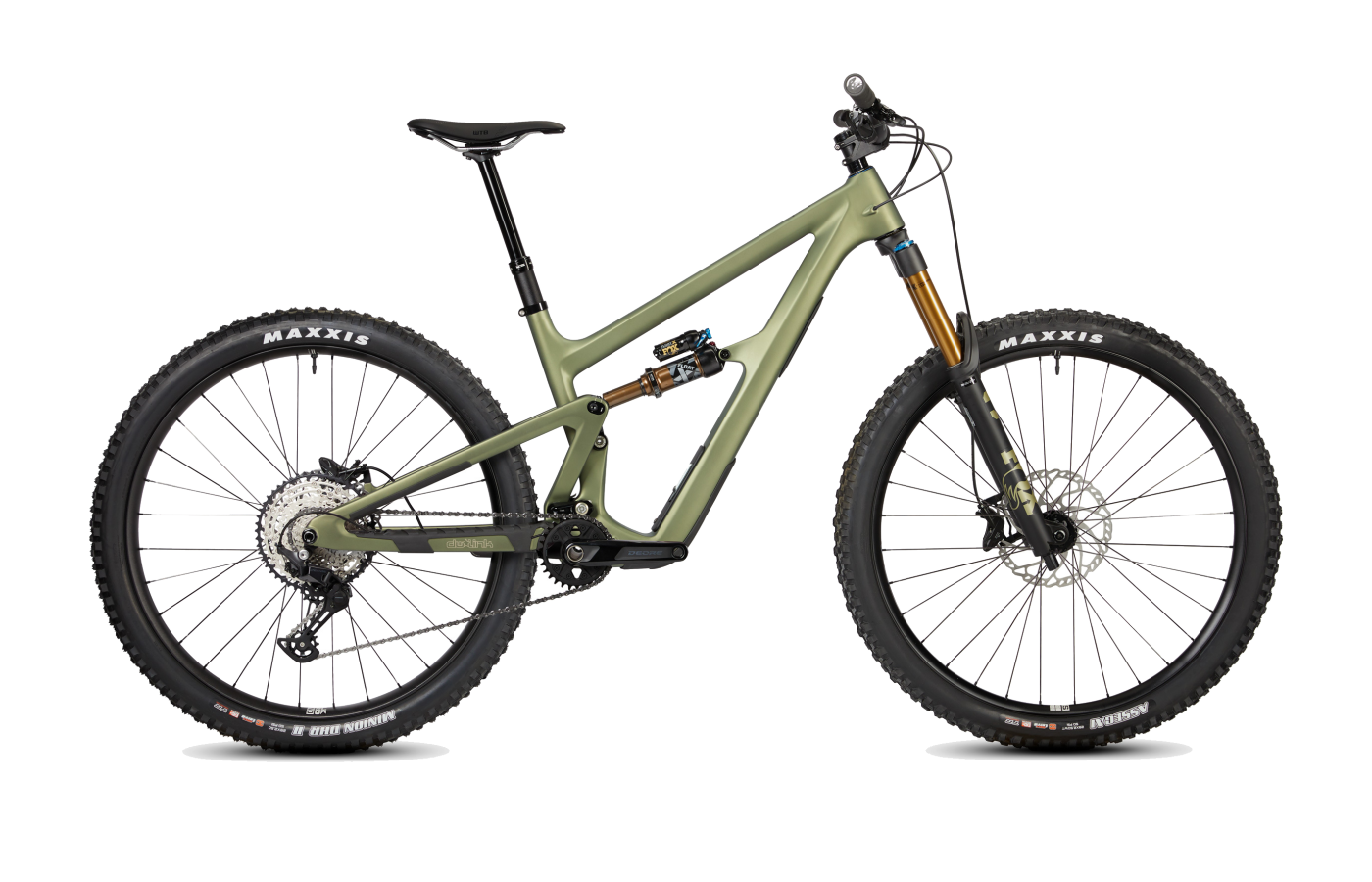
The Ibis Ripmo is the longer-travel sibling of the Ripley V5 — same front triangle and swingarm, but 147 mm rear and 160 mm fork. If you love the Ripley's pedaling but want more bike for the descents, this is the natural step up.
Compare →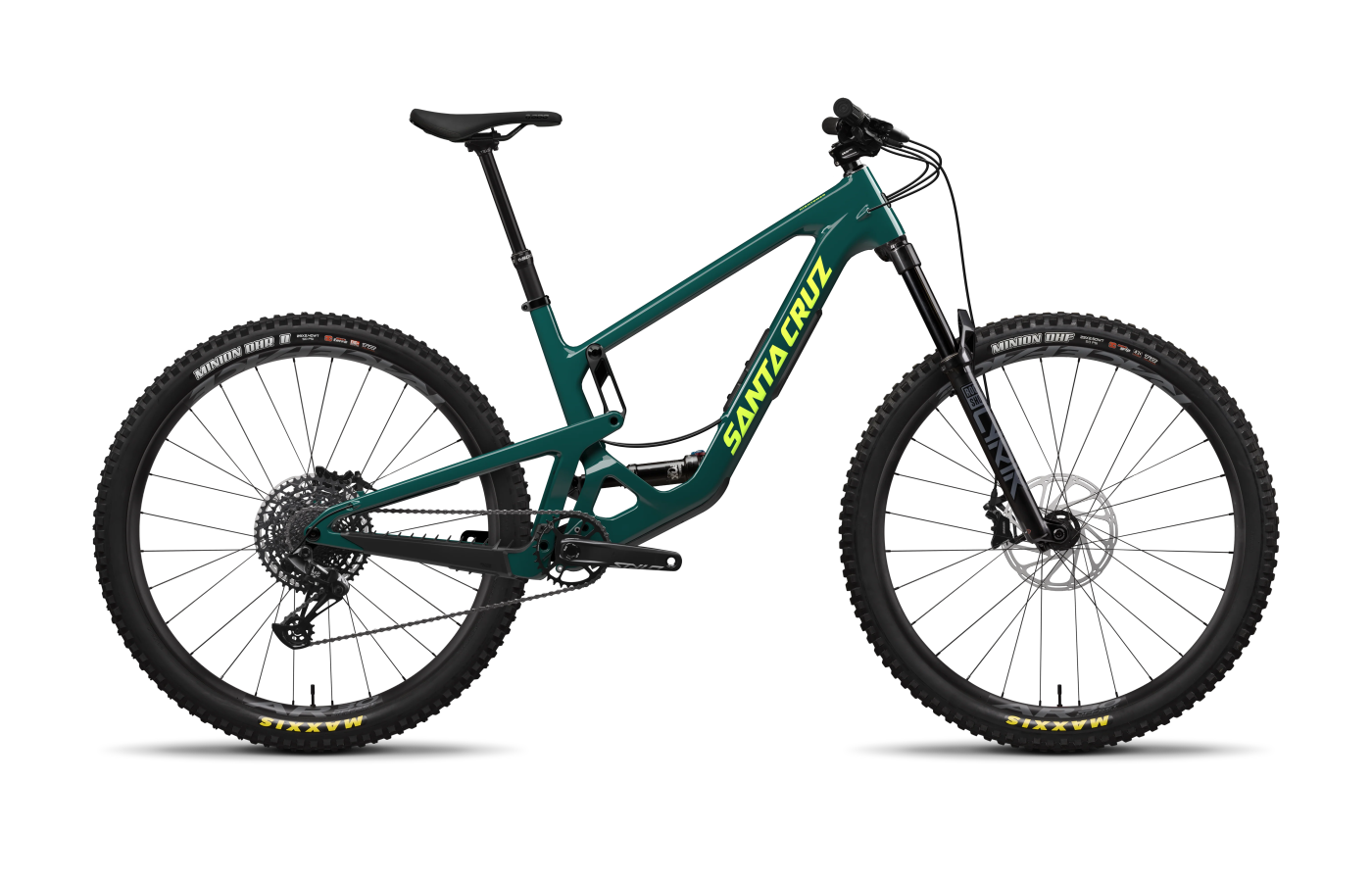
Hightower
The Santa Cruz Hightower is the most direct cross-shop for the SB140 — similar travel, similar aggressive trail brief, with VPP suspension instead of Switch Infinity. Cheaper C-frame option makes it more budget-accessible than the Yeti.
Compare →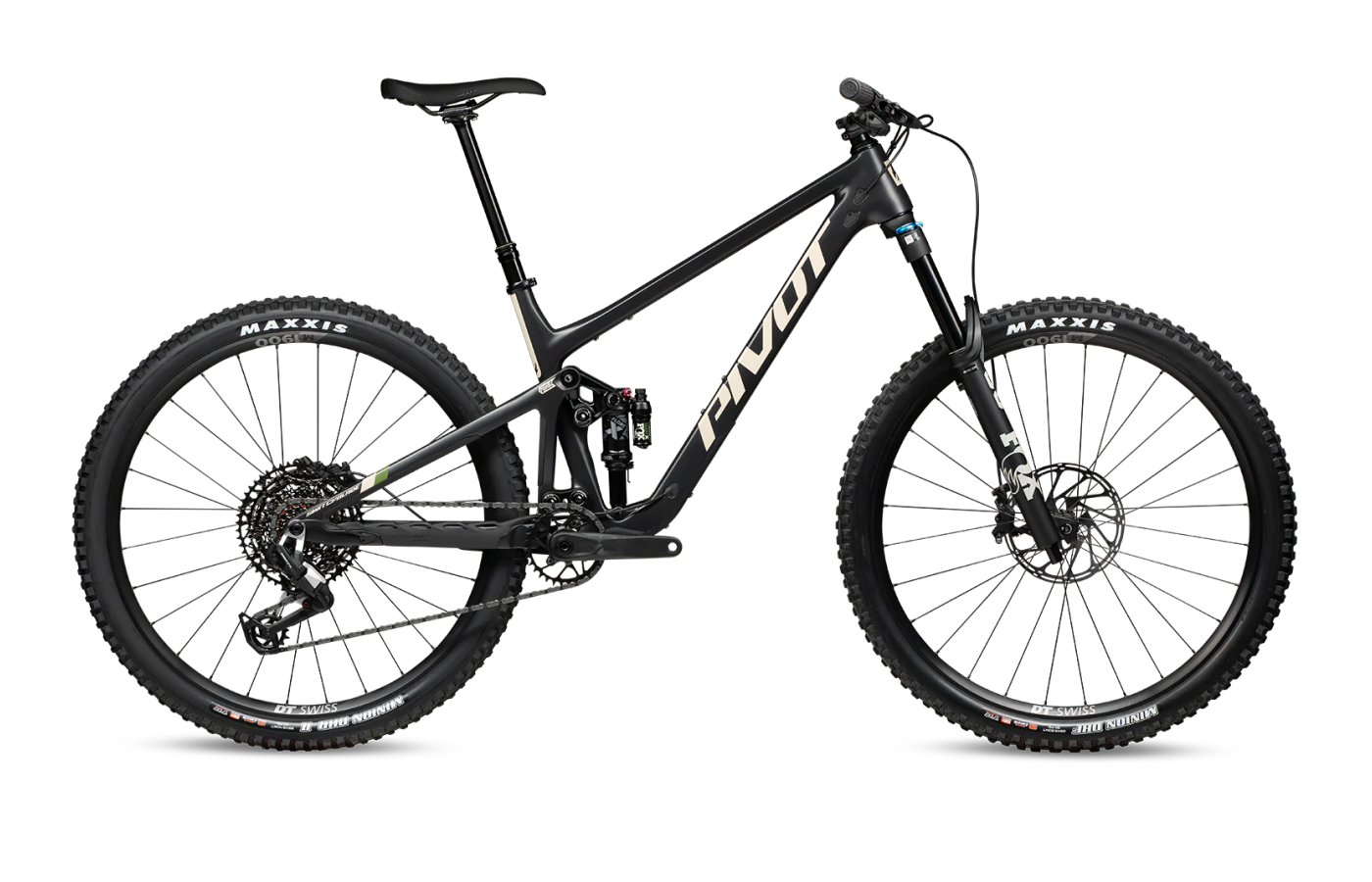
Switchblade
The Pivot Switchblade splits the difference — 142 mm rear and a 160 mm fork on a DW-link platform that rides with the same poppy, efficient character as the Ripley but with more downhill capability. Pivot's build quality is the obsessive kind.
Compare →