Ripmo AF
vsStumpjumper

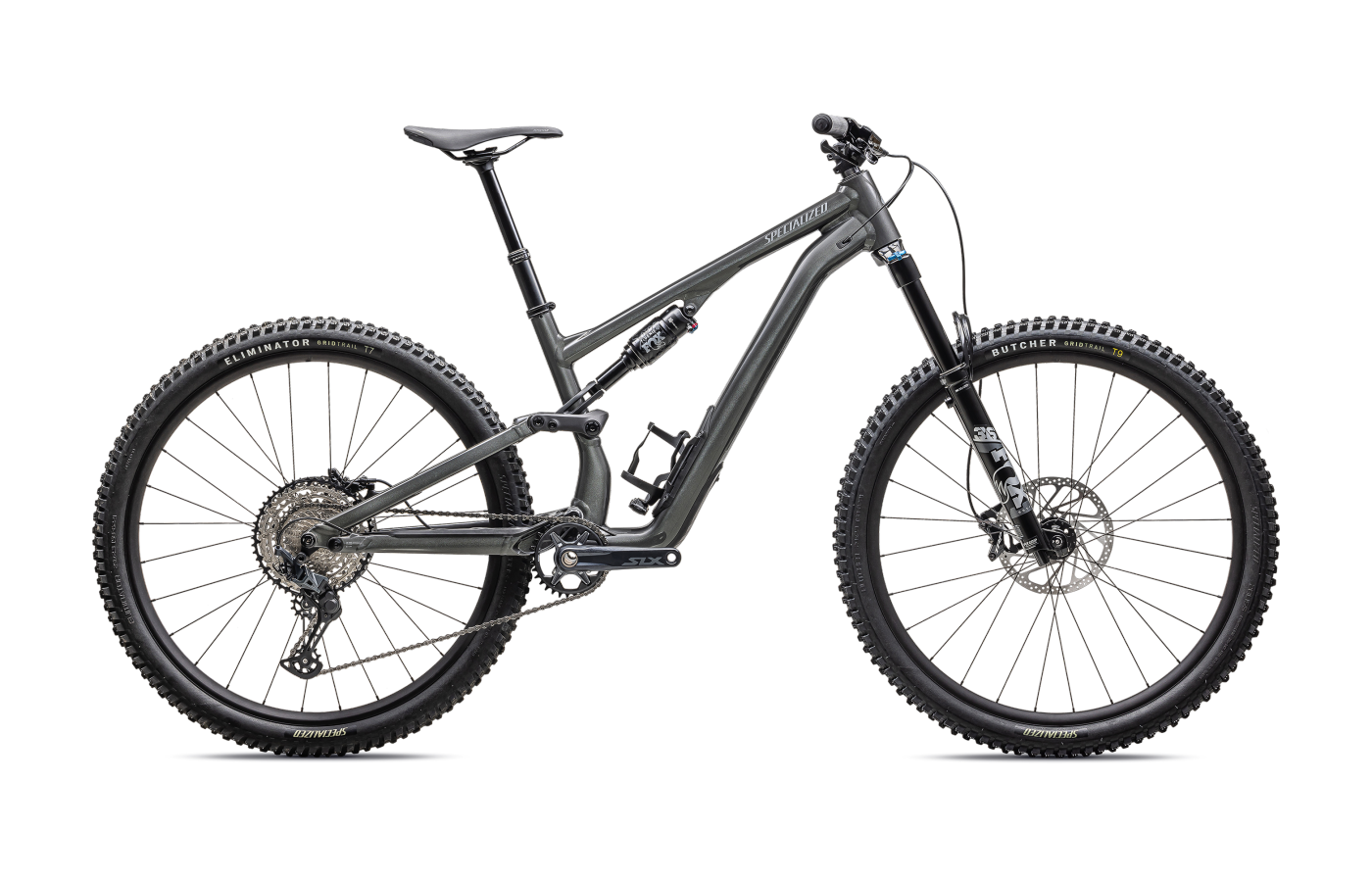
Alloy workhorse vs. gadget-laden shapeshifter.
The Ripmo AF is a DW-Link trail bike cast in aluminum and kept simple. The Stumpjumper 15 is a carbon-or-alloy platform tunable to whatever trail you point it at.
Ripmo AF
- Price-to-performance leader — $3,749 for the Deore build is the cheapest path into a modern 150 mm DW-Link trail bike.
- Traction-heavy DW-Link suspension — sensitive off the top, supportive mid-stroke, glued rear wheel on technical climbs.
- Carbon-level features on an alloy frame — internal SWAT-style storage, flip-chip MX, size-specific kinematics, UDH.
- Only two builds to pick from ($3,749 Deore, $4,299 Eagle 90) — no mid-spec option if neither lands right.
- Heavier alloy frame feels less urgent on smooth rolling climbs — "takes its sweet time" vs. livelier bikes.
Stumpjumper
- Nine builds across $9k of range — from $2,999 alloy Deore up to $11,999 S-Works LTD; something for every budget.
- Three-position adjustable head angle (63° / 64.5° / 65.5°) plus flip chip — genuinely two bikes in one chassis.
- GENIE shock controls bottom-out better than almost anything in class — riders "never hit full travel" on drops or bike-park jumps.
- Carbon models are wireless-only — no mechanical drivetrain option unless you buy alloy.
- Proprietary GENIE shock raises long-term serviceability questions for some buyers.
Editor’s analysis
Same 145–150 mm travel class, same 64.5° head tube, wildly different philosophies on what a modern trail bike should be.
Ibis took the carbon Ripmo V3 platform, changed almost nothing about the geometry, and re-cast it in aluminum. The Ibis Ripmo AF runs 150 mm rear / 160 mm fork, a 64.5° head tube, and 77– 77.5° seat tube angles across its five sizes — identical to the carbon bike. The pitch is blunt: buy the AF for the Deore build at $3,749 and you've spent less than the carbon frame alone would cost. DW-Link suspension, internal frame storage, flip-chip MX compatibility — all of it ships on the alloy frame.
The Specialized Stumpjumper 15 takes the opposite approach. It consolidates the old Stumpjumper and Stumpjumper EVO into one platform that ranges from a $2,999 alloy Deore bike to an $11,999 S-Works LTD, with nine builds in between. Adjustable headset cups move the head tube between 63°, 64.5°, and 65.5°. A flip chip swaps wheel configurations. The proprietary Fox GENIE rear shock uses a dual-chamber air spring — coil-soft for the first 70% of travel, then a hard ramp into the last 30% to resist bottom-out.
On the trail, the divergence shows up clearest in character. Reviewers describe the Ripmo AF as plush, ground-hugging, and a traction monster on technical climbs — but "twitchy at times" in wide-open high-speed rough sections, where the short-ish 1,219 mm (MD) wheelbase and DW-Link's liveliness work against pure plow stability. The Stumpjumper is praised as a chameleon: snappy in the mid setting, plow-like when slacked to 63°, and almost impossible to bottom out regardless.
Put simply: the Ibis Ripmo AF is the bike you buy when you want one great trail bike at a fair alloy price and you're done shopping. The Specialized Stumpjumper 15 is the bike you buy when you want a chassis you can tune — across nine builds, three head angles, two wheel configurations — to wherever your riding goes next.
Where the builds differ.
Comparing our editor's-pick builds side-by-side. Winners highlighted row-by-row — lower price and weight, and the better-spec component, each mark a point.
Build variants & pricing
Ibis offers two alloy builds. Specialized offers nine, spanning alloy Deore up to carbon S-Works LTD.
Prices are current US MSRP. The editor's picks are the two most directly comparable alloy builds — Ripmo AF Deore at $3,749 and Stumpjumper 15 Comp Alloy at $3,999 — both mechanical Shimano, both M5/alloy construction, both within $250.
How they fit, how they steer.
The Ibis MD and Specialized S3 are the fit-picked sizes for a 5'8" rider on each bike. Reach is within 6 mm (456 vs. 450), stack within 5 mm (622 vs. 627), chainstays identical at 435 mm. The Stumpjumper's 77° seat tube sits 0.5° steeper than the Ripmo AF MD.
Which size should I buy?
The Stumpjumper runs a 6-size S-Sizing system (S1–S6) that overlaps the Ripmo AF's traditional SM–XL range at the middle; sizes can be picked by reach rather than height.
→These are starting points. Flexibility, riding style, and preferred position all shift the answer — if you’re between sizes, a professional fit beats a chart.
What the magazines said.
Published reviews from trusted cycling outlets. Click through for the full write-up.
Which one should you buy?
If you want one great alloy trail bike at a fair price and you're done shopping, get the Ripmo AF. If you want a chassis you can tune across trail types and spec levels, get the Stumpjumper 15.
Ripmo AF
If you care about ride quality more than component fiddling, the Ripmo AF is the most bike you can buy for under $4k. DW-Link suspension, internal storage, and a geometry chart lifted straight from the carbon flagship — without the carbon price.
Stumpjumper
If you enjoy dialing a bike in — headset cups, flip chips, GENIE bands in the shock — the Stumpjumper 15 rewards that work. Nine builds, three head angles, and a shock that resists bottom-out better than almost anything in class.
Questions buyers actually ask.
Short answers to the things we get emailed about most often.
01Which is better for technical climbing?
The Ibis Ripmo AF, narrowly. Reviewers consistently praise its DW-Link platform for staying active and glued to the ground without wallowing under power, making it the standout for rooty, rocky ascents where traction matters more than acceleration. Its 77–77.5° seat tube angle keeps weight forward on steep pitches.
The Stumpjumper 15 also climbs technical terrain well — Specialized's claimed 57% increased traction from the GENIE shock isn't marketing fluff — but some reviewers found the active suspension "not the most energetic" on smoother fire roads, and flagged a slightly slacker effective seat angle at tall seat heights.
02Which is faster on fast, flat-out descents?
The Stumpjumper 15, especially in the 63° low headset setting. Reviewers describe the Ripmo AF as "a bit twitchy at times" in wide-open high-speed rough stuff, where the back wheel "snags on rocks and roots." The Stumpjumper's adjustable geometry and longer-wheelbase options (up to 1,322 mm in S6) let you slack it out into plow-bike territory.
At normal trail speeds, both bikes feel composed and similar. The gap opens up when you're pushing into bike-park or enduro terrain.
03How much travel does each bike have?
Ripmo AF: 150 mm rear, 160 mm fork — fixed across all builds.
Stumpjumper 15: 145 mm rear, 150 mm fork on most builds (S1 gets a 140 mm fork; the coil-shock S-Works 15 LTD and 15 Alloy run a 160 mm fork). The carbon frame is officially compatible with up to a 160 mm fork if you want to slacken it out.
04Can I run the Stumpjumper as a mullet (mixed-wheel)?
Yes. The Stumpjumper 15 has a flip chip that lets you switch between full 29" and mixed 29"/27.5" configurations. Sizes S1 and S2 ship MX stock on most builds; S3–S6 ship full 29".
The Ripmo AF also has a flip chip and ships as MX on SM and MD sizes, full 29" on XM, L, and XL. Both bikes let you swap wheel configurations without aftermarket links.
05Is the carbon Stumpjumper worth the extra money over the alloy?
Depends on the build and how much you weigh. The 15 Comp Alloy (our editor's pick, $3,999) is 16.17 kg (35.6 lb); the 15 Comp carbon at $4,999 is 14.87 kg (32.8 lb) — about 1.3 kg / 2.8 lb saved for $1,000.
The carbon frames also get the SWAT 4.0 downtube storage door, which the alloy frames retain but with simpler (cabled) internal routing. If you prioritize weight and wireless shifting, go carbon. If you prioritize value and want mechanical drivetrain options, stay alloy — which is also the only way to get the Stumpjumper closer to Ripmo AF territory on price.
06What tire clearance do they have?
Ripmo AF: 63.5 mm of clearance — generous for the class, handling up to roughly 2.6" tires without drama.
Stumpjumper 15: Ships with 2.3" Butcher/Eliminator tires stock. Reviewers commonly fit 2.4" and 2.5" trail casings, and Specialized lists 29x2.6" as the practical maximum.
Both bikes have enough clearance for mud and modern wide casings. Neither is marketed as a plus-tire platform.
07Which has better internal frame storage?
Both have it, and both are well-executed. Specialized's SWAT 4.0 door is consistently praised as the class benchmark — rattle-free, good weather sealing, easy to operate. Ibis matches the concept with an internal storage door on the alloy frame ("pretty rare on an aluminum bike," per Bikers Edge).
If downtube storage is a deal-breaker, either bike works. The Stumpjumper's version has a longer production history and is the more refined execution.
08What's the warranty on each?
Specialized offers a lifetime frame warranty to the original owner on the Stumpjumper, plus lifetime pivot bearing replacement and a lifetime warranty on Roval wheels — a strong long-term ownership package.
Ibis offers a 7-year frame warranty on the Ripmo AF with a transferable element within that window. Both brands offer crash-replacement pricing.
Similar bikes
If your priorities don’t map cleanly onto either of these, one of these adjacent bikes probably fits better.
Ripmo
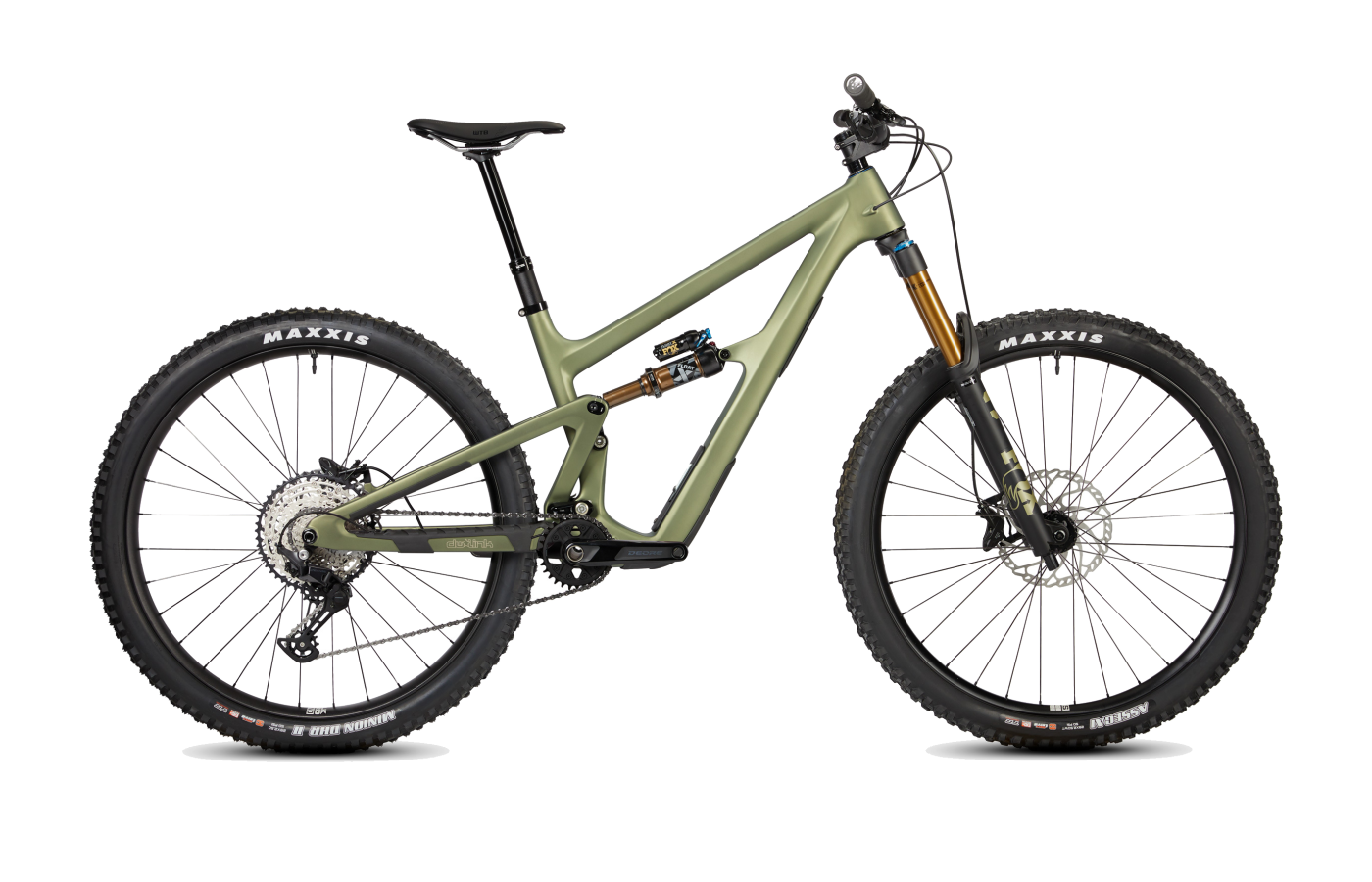
The carbon sibling — same DW-Link kinematics and near-identical geometry, roughly five pounds lighter and noticeably more responsive out of corners. If the Ripmo AF's character clicks but the weight doesn't, step up.
Compare →
Fuel EX
Trek's direct Stumpjumper rival with a planted, slightly heavier-feeling descending character. Similar travel, similar price range, a bit less snappy on the climbs.
Compare →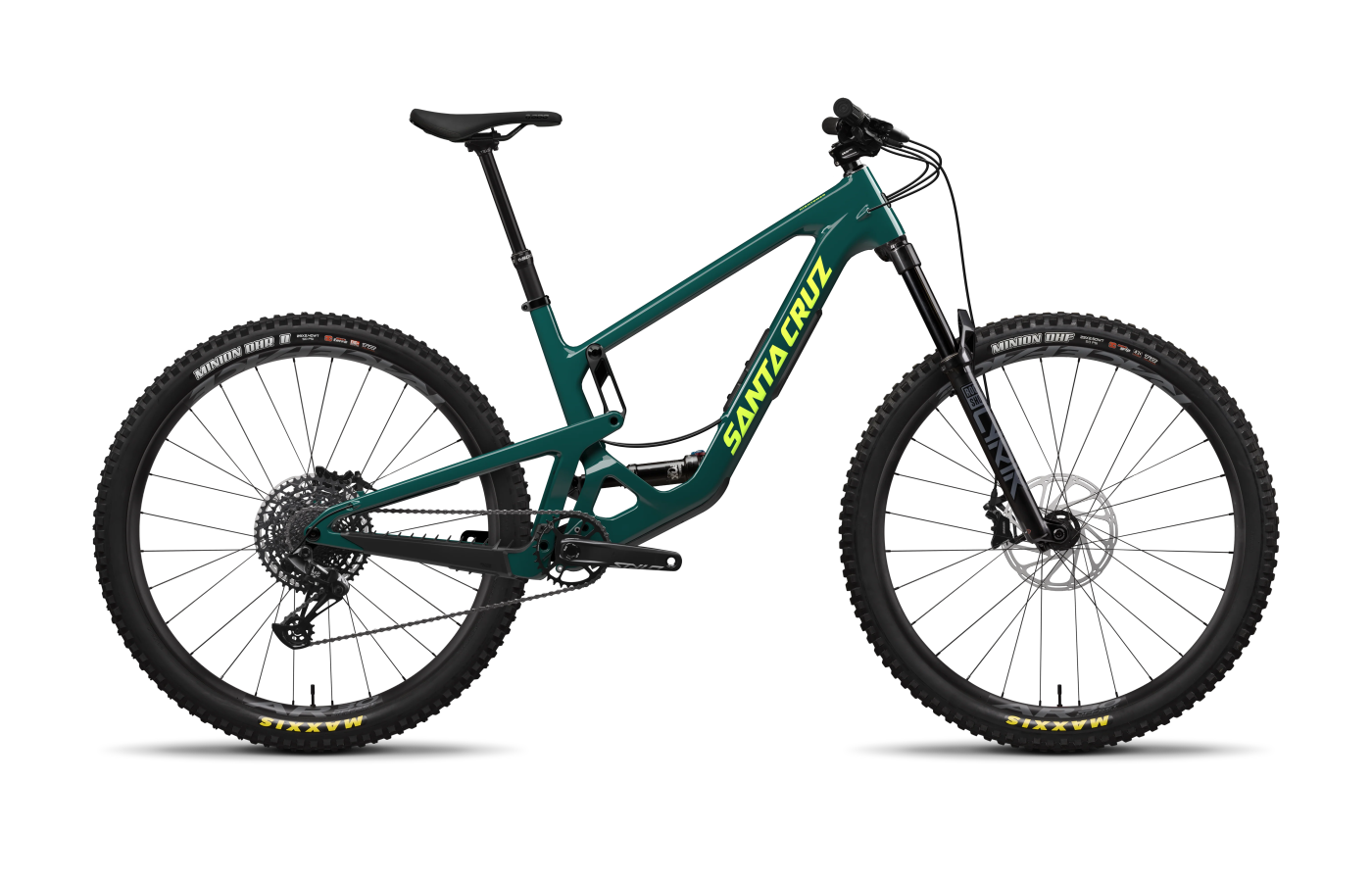
Hightower
Santa Cruz's burlier trail option — more planted and plow-oriented than either bike here. The right pick if you prefer pushing through rough terrain rather than popping over it.
Compare →