Cinder Cone
vsMahuna
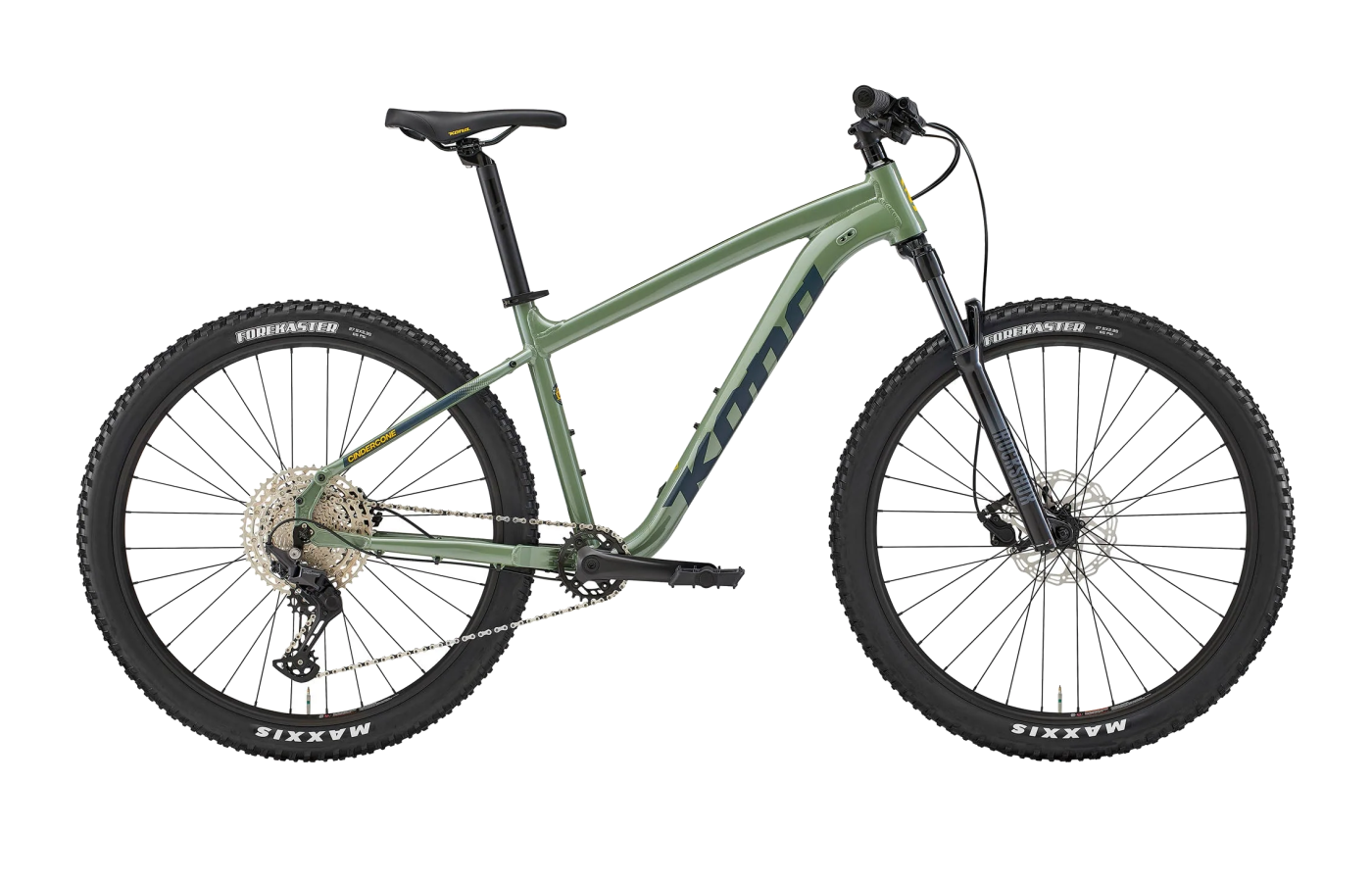
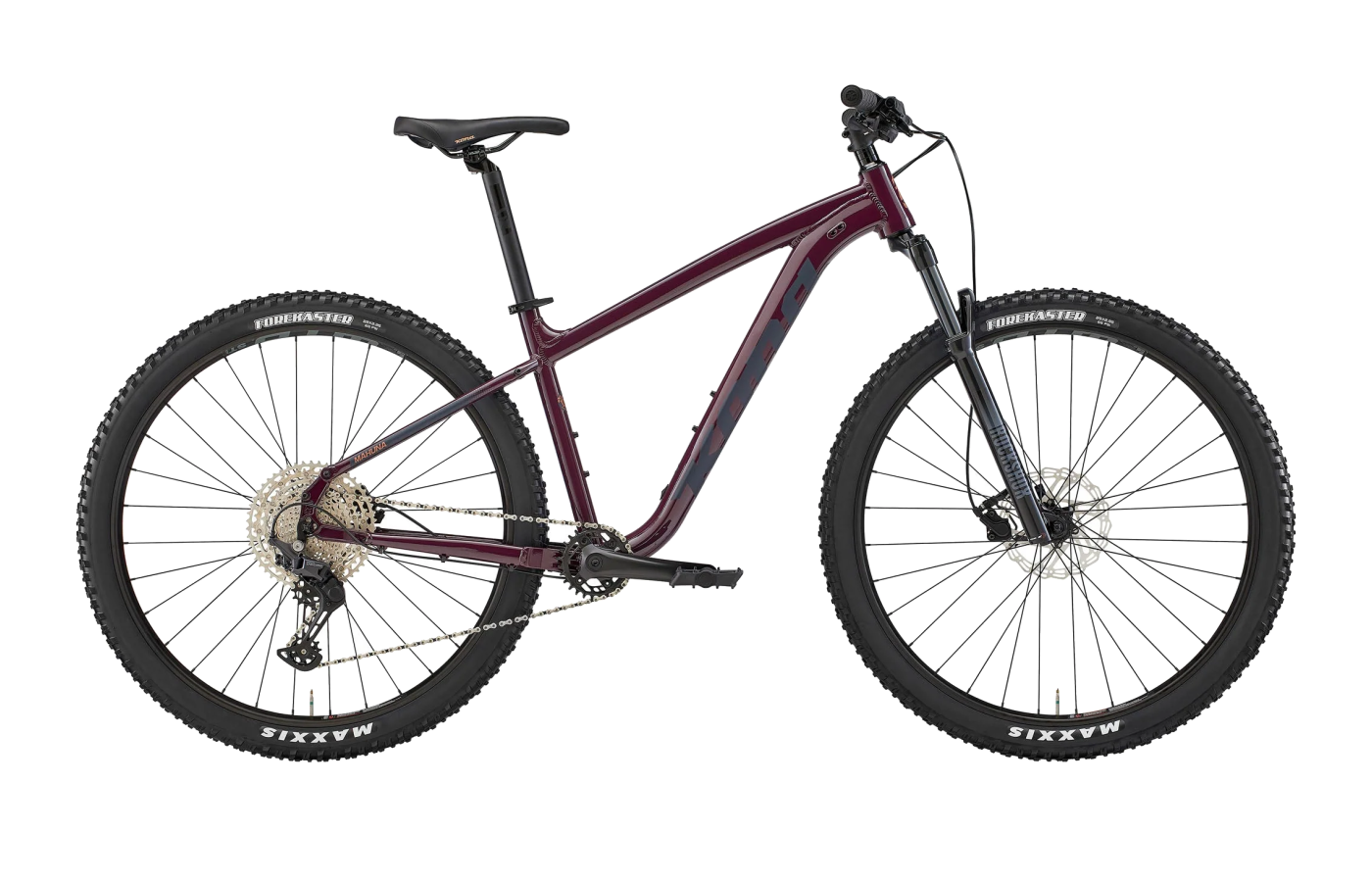
Same frame, same price, different wheels.
Two $899 Kona hardtails built around the same Deore drivetrain and Judy fork. The Cinder Cone is the playful 27.5; the Mahuna is the smooth-rolling 29er.
Cinder Cone
- Playful 27.5 handling — short 435 mm chainstays make the bike eager to lean and flick.
- Strong descender for the price — Bike-test highlights 'harmonious geometry' that inspires confidence on the way down.
- Great learner platform — smaller wheels and lively geometry make it easier to manual, jump, and progress on.
- 27.5 wheels give up rollover and momentum vs the Mahuna's 29ers on rough or fast terrain.
- 100 mm of travel and a QR-axle Judy fork limit how aggressive you can ride before the front end gets nervous.
Mahuna
- Exceptionally smooth frame — reviewers compare the 6061 frame's compliance to a steel hardtail.
- Stable, surefooted geometry — 1164 mm wheelbase on size M and 450 mm chainstays make it composed at speed.
- Faster-rolling 29ers — better momentum and rollover for long XC days and gravel detours.
- Less playful than the 27.5 Cinder Cone — the long rear end trades some agility for stability.
- Same square-taper bottom bracket flexes under hard out-of-saddle efforts; both bikes share this limitation.
Editor’s analysis
This is the rarest kind of head-to-head — one brand, one price, one parts spec, two completely different ride personalities.
The Kona Cinder Cone and Kona Mahuna both land at $899, both run a Shimano Deore 11-speed drivetrain with a 28T ring and 11-51T cassette, and both ride on a 100 mm RockShox Judy Silver TK Solo Air fork. On a parts-list spreadsheet they're nearly indistinguishable. The whole conversation is wheel size and chainstay length — and that's enough to make them feel like different categories of bike.
The Cinder Cone is the 27.5-inch race hardtail. Bike-test calls out its 'playful handling' and notes it's 'strong in the descents'; chainstays sit at 435 mm across every size, which is short for a modern hardtail and explains why it begs to be flicked through corners. Reviewers flag it as the bike a developing rider grows into — confidence-inspiring on descents, easy to manual, easy to throw into a turn. The trade-off is the smaller wheels give up some momentum on flats and roll-over on chunk.
The Mahuna is the 29-inch all-day mile-eater. Bike Perfect calls the frame 'impressively smooth' with a 'cultured feel that could easily be mistaken for a decent steel frame,' and MBR named it Hardtail of the Year 2022 in its category. The 450 mm chainstays — 15 mm longer than the Cinder Cone's — combined with the bigger wheels stretch the wheelbase on size M to 1164 mm vs the Cinder Cone's 1139 mm. That's a more stable, more composed bike that smooths chatter and keeps you fresh on a four-hour ride; the cost is some of the Cinder Cone's flickability.
Put another way: the Cinder Cone is the bike for the rider learning to manual and jump on twisty singletrack. The Mahuna is the bike for the rider doing 30-mile XC loops and the occasional gravel exploration. Same money, same shifting, totally different mission.
Where the builds differ.
Comparing our editor's-pick builds side-by-side. Winners highlighted row-by-row — lower price and weight, and the better-spec component, each mark a point.
Build variants & pricing
Both bikes are sold in a single $899 build — there's no upgrade trim, no premium variant. What you see is what ships.
Prices are current US MSRP. Both builds run the same Shimano Deore 1x11 drivetrain (28T ring, 11-51T cassette) and the same RockShox Judy Silver TK Solo Air 100 mm fork — the differences are wheel size and frame geometry, not parts.
How they fit, how they steer.
Both at size M — the fit-picked size for a 5'8" rider on each bike. Reach and head angle are identical (440 mm, 68°), but the Mahuna sits 12 mm taller in stack and stretches its wheelbase 25 mm longer thanks to bigger wheels and 15 mm longer chainstays.
Which size should I buy?
Size recommendations based on stack, reach, and effective top tube. Both bikes share identical reach numbers across sizes; pick by stack height and standover preference.
→These are starting points. Flexibility, riding style, and preferred position all shift the answer — if you’re between sizes, a professional fit beats a chart.
What the magazines said.
Published reviews from trusted cycling outlets. Click through for the full write-up.
Which one should you buy?
If you want a playful descender and learner platform, get the Cinder Cone. If you want a stable, smooth-rolling XC distance bike, get the Mahuna.
Cinder Cone
If you ride twisty, technical singletrack and you're working on cornering, manuals, and small jumps, the 27.5 wheels and short chainstays will reward you. It's the bike for someone who values agility over outright speed and wants something forgiving to learn on.
Mahuna
If your rides are long, your trails are flowy or rolling, and you'd rather glide over chatter than flick through it, the Mahuna is the smoother and faster-rolling bike. It's also the better pick if you'll mix in gravel or commuting — Bike Perfect highlights the rack and mudguard mounts.
Questions buyers actually ask.
Short answers to the things we get emailed about most often.
01What's actually different between these two bikes?
The frame and the wheels. The Cinder Cone is built around 27.5" wheels with 435 mm chainstays; the Mahuna is built around 29" wheels with 450 mm chainstays. Head angle (68°), seat angle (75°), reach at size M (440 mm), drivetrain (Shimano Deore 1x11), fork (RockShox Judy Silver TK 100 mm), brakes, and price ($899) are identical or near-identical.
That sounds small on paper, but the wheel-size and chainstay-length combo changes how the bike behaves enough that they feel like genuinely different categories on the trail.
02Which is faster on flat, smooth terrain?
The Mahuna, modestly. 29" wheels carry momentum better and roll over small chatter without losing speed; the same Maxxis Forekaster tire is faster on a 29 than a 27.5 simply because it traces a flatter path. Bike Perfect explicitly calls out the 'easy rolling 29er wheels' as a strength.
On smooth fire roads or rolling XC trails, expect a measurable but not dramatic difference — maybe a couple of minutes over a long ride. At slow speeds in tight singletrack, the gap closes.
03Which descends better?
It depends what kind of descent. On twisty, technical singletrack with frequent direction changes, the Cinder Cone's shorter wheelbase and 27.5 wheels make it more responsive — Bike-test calls it 'strong in the descents' and highlights the 'playful handling' from the short chainstays.
On faster, straighter, rougher descents, the Mahuna's bigger wheels and longer wheelbase (1164 mm vs 1139 mm at size M) feel more composed. Both share the same 100 mm Judy fork, which becomes the bottleneck on either bike before the geometry does — reviewers note the QR-axle Judy gets nervous when pushed hard.
04Which fits a shorter rider better?
Neither has a meaningful fit advantage — both share identical reach (415 / 440 / 465 / 500 mm across S / M / L / XL) and identical 68°/75° angles. Pick by stack height and standover preference: the Mahuna sits 12 mm taller in stack across sizes (599→611 mm at M), which gives a more upright cockpit.
For a 5'8" rider, the fit algorithm picks size M on both bikes.
05Are the wheels tubeless ready?
Yes on both. The WTB ST i27 TCS 2.0 rims ship taped from the factory and are explicitly tubeless-ready — you just need valves and sealant. Reviewers across both bikes recommend converting as a high-impact, low-cost upgrade for better grip, lower pressures, and fewer flats.
One catch: both bikes use quick-release axles front and rear, not bolt-through. That's fine for stock use but limits your options if you ever want to upgrade to a higher-end through-axle wheelset.
06What's the biggest weakness on both bikes?
The square-taper bottom bracket and crankset. Reviewers across the Mahuna unanimously call it the 'biggest let down in the spec' — it adds weight and flexes under hard out-of-saddle efforts. The Cinder Cone uses the same general setup. The upside: square-taper BBs are bombproof and dirt cheap to replace ($15-25 for a decent unit).
The fork is a close second. The 100 mm RockShox Judy Silver TK is fine on flowy trails but, as Bike Perfect puts it, 'struggles on tech terrain.' Both bikes are good candidates for a 120 mm through-axle fork upgrade once you outgrow the stock one.
07Which has more upgrade potential?
Both share the same well-regarded 6061 butted aluminum frame across Kona's hardtail line, with internal cable routing (including dropper-post ports), tapered head tube, and rack/mudguard mounts. Either is what reviewers call an 'extremely good upgradable platform.'
The Mahuna's 29er platform tends to attract more aftermarket fork options at 120 mm; the Cinder Cone's 27.5 platform has a slightly narrower fork pool but is otherwise identical for upgrades. Both can take a dropper post, tubeless wheels, better brakes, and a modern crankset over time.
08What warranty comes with each?
Kona offers a frame warranty on both — sources differ on exact terms (Bike-test cites a 25-year frame warranty for the Cinder Cone; Bike Perfect references a limited lifetime warranty for the Mahuna frame), and the actual coverage is to the original owner against manufacturing defects. Either way, frame durability isn't the limiting factor on either bike — these are platforms designed to be ridden hard and upgraded over time.
Similar bikes
If your priorities don’t map cleanly onto either of these, one of these adjacent bikes probably fits better.
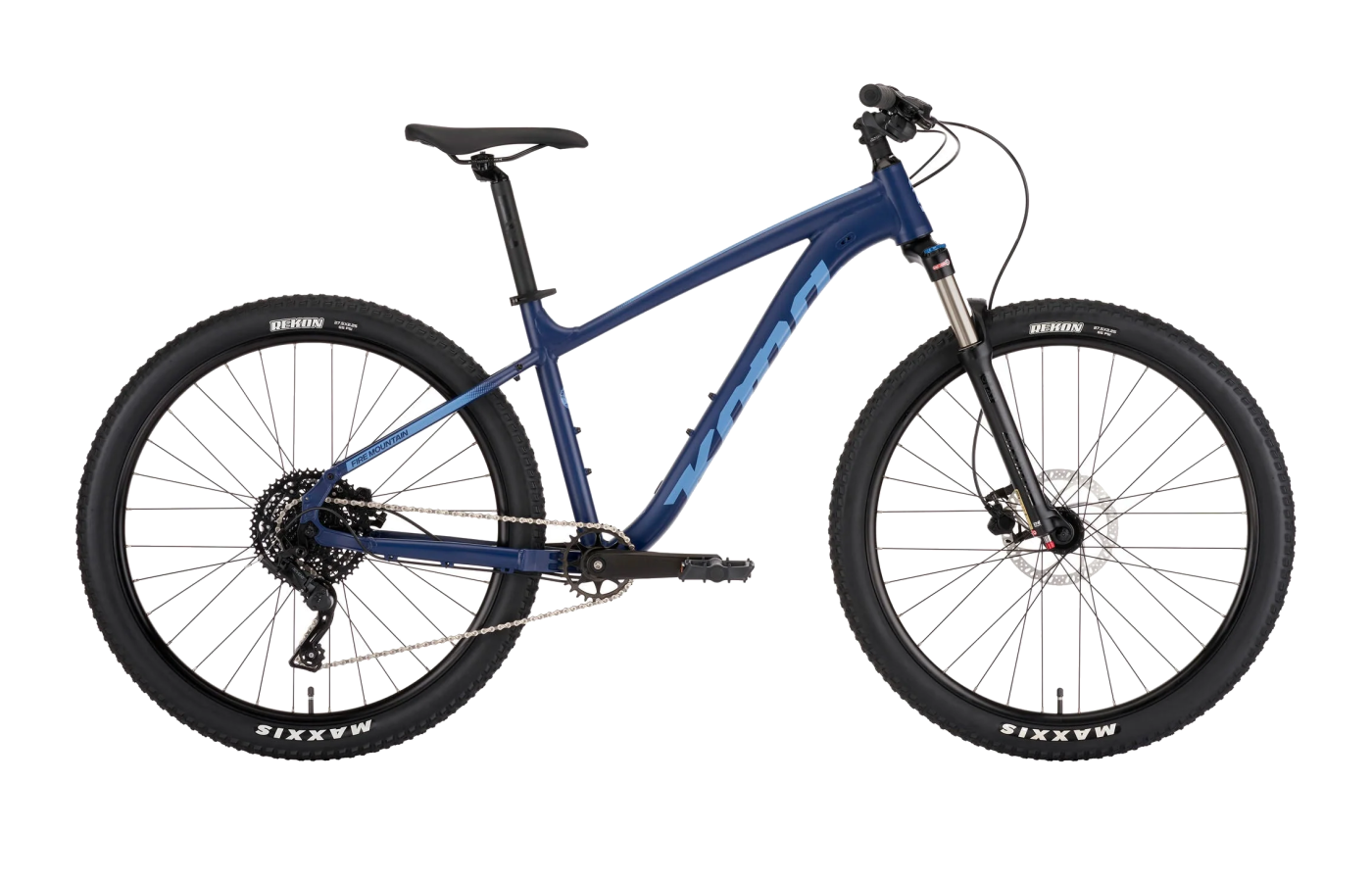
Fire Mountain
If $899 is still a stretch, the Kona Fire Mountain offers a similar Kona hardtail ride character at a lower price point, typically with coil-sprung forks instead of the air Judy. The right pick if budget trumps suspension feel.
Compare →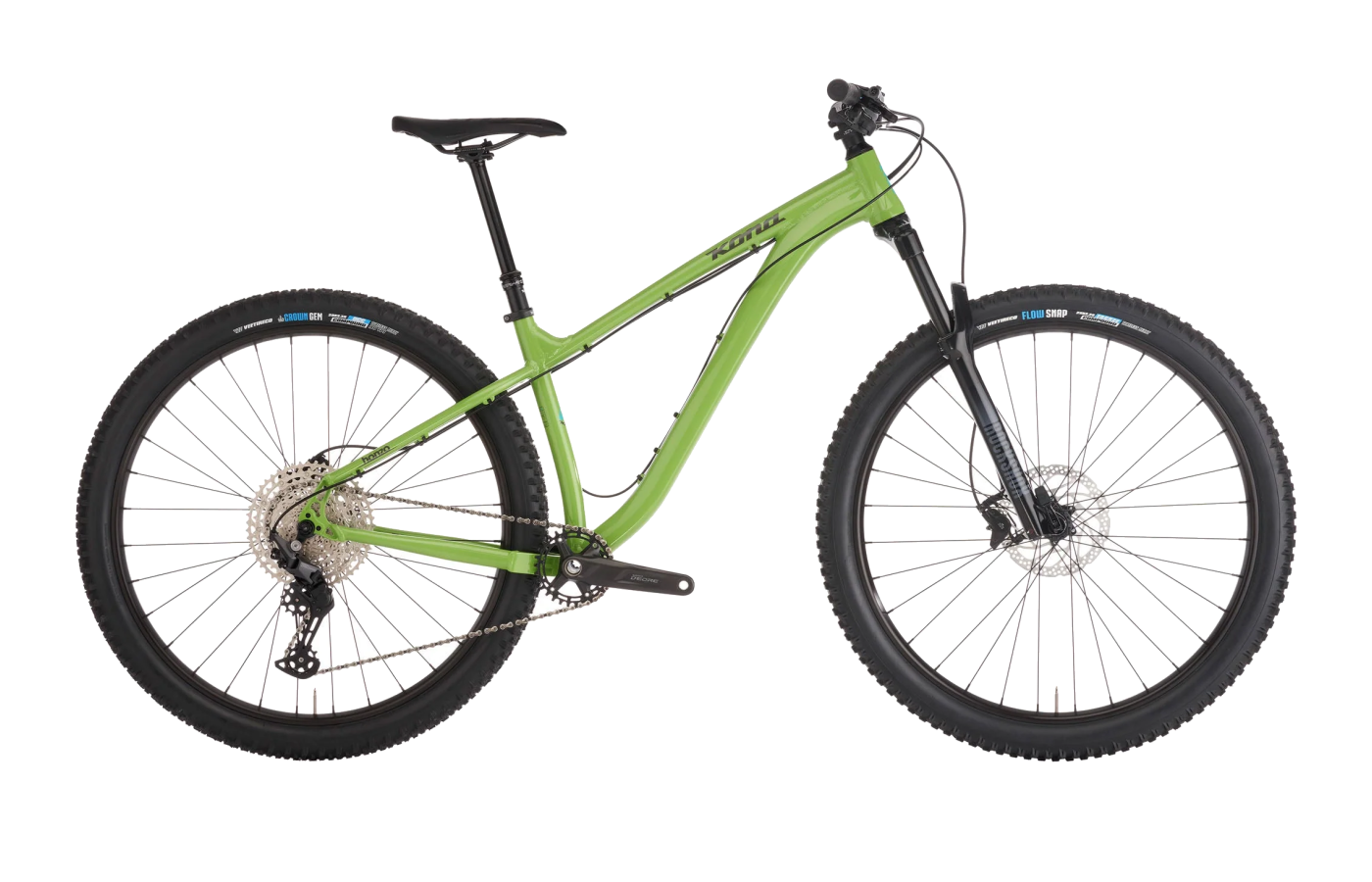
Honzo
If you outgrow the Mahuna's 100 mm Judy and want a real trail hardtail, the Kona Honzo steps up with slacker geometry, longer-travel forks, and through-axles. Built for rowdier terrain than either bike here.
Compare →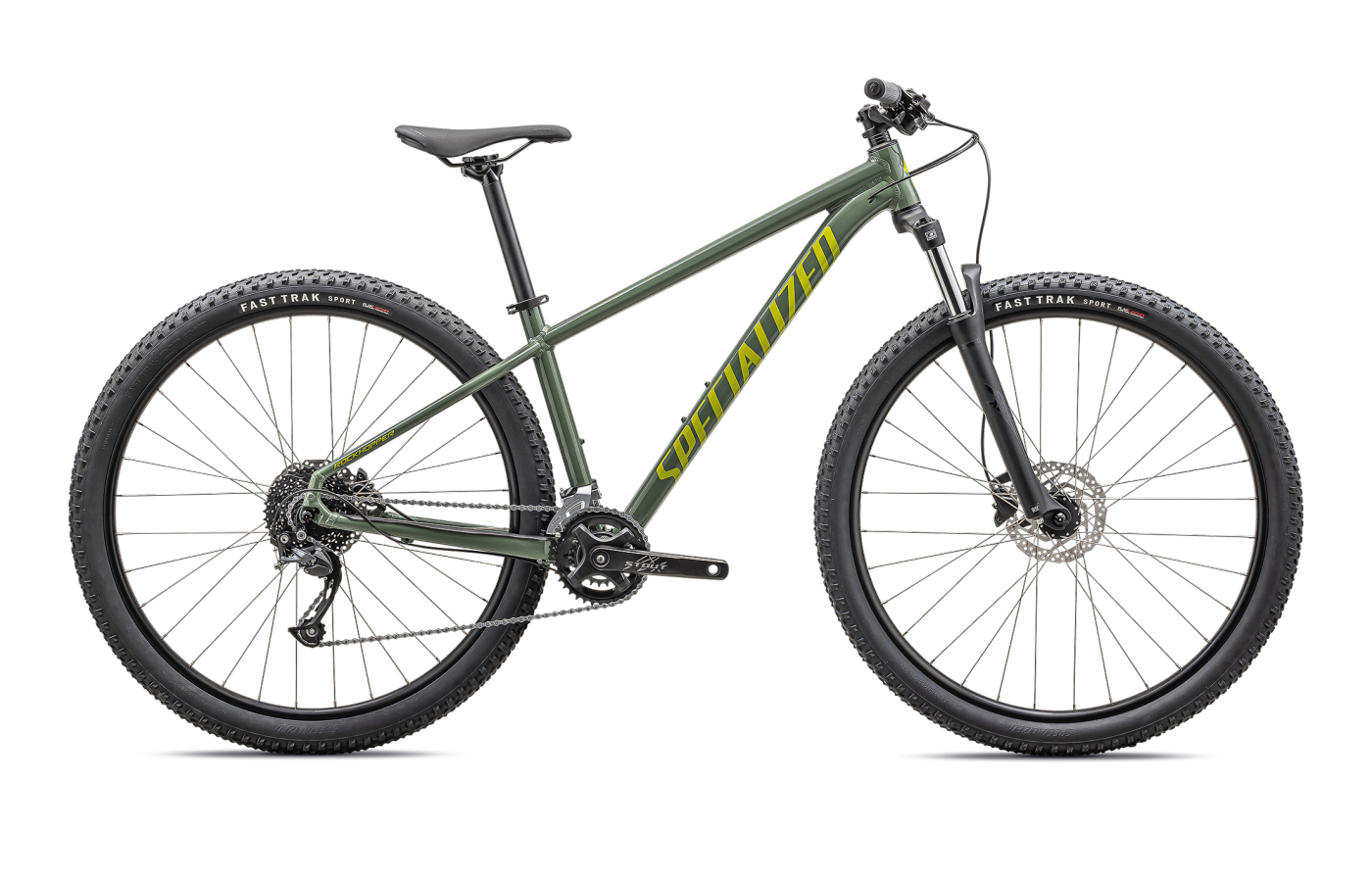
Rockhopper
The Specialized Rockhopper is the obvious cross-shop — a similarly-priced entry hardtail with a wider dealer network and broader build range. Less cult appeal than the Konas, but easier to test ride and service.
Compare →