Cinder Cone
vsRockhopper
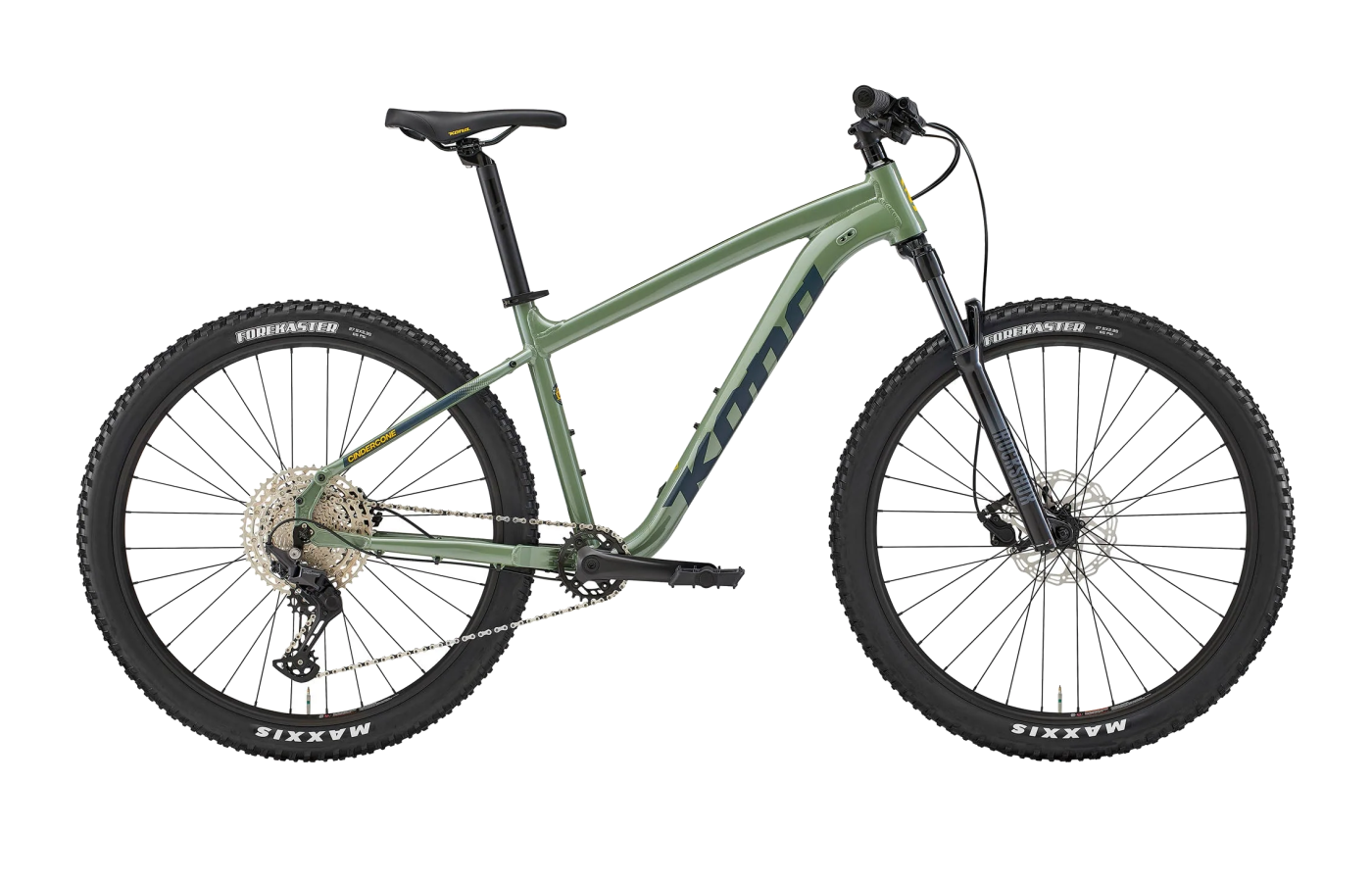
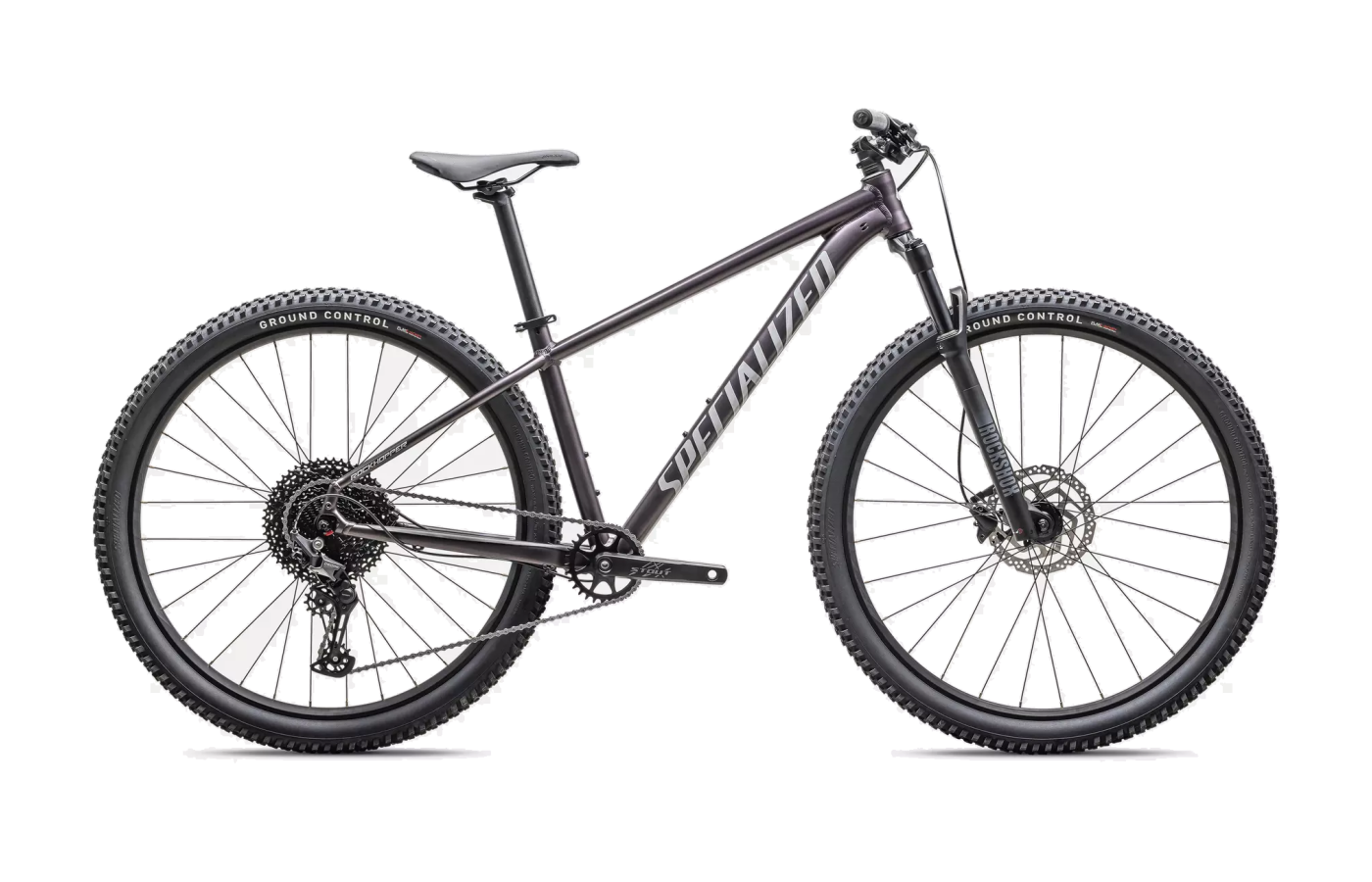
Two budget hardtails, two different ideas of fun.
The Cinder Cone is a playful 27.5" trail-leaner with a 25-year warranty. The Rockhopper is a lightweight 29er built to munch miles.
Cinder Cone
- 25-year frame warranty — exceptional for a $899 alloy hardtail and a real signal of long-term confidence.
- Trail-leaning geometry with a 68-degree HTA and 435 mm chainstays — reviewers consistently call it "strong in the descents."
- Single, focused build — Deore 1x11 plus a Judy air fork at $899, no decision paralysis between trims.
- 27.5" wheels only — no 29er option for taller riders or those who want roll-over.
- Heavier than its rivals at 14.4 kg — not the bike to win XC starts on.
Rockhopper
- Wide build and size range — nine builds from $649 to $1,299, both 27.5" and 29" wheels, sizes XS through XXL.
- Lightweight XC chassis — testers measured the Elite trim at 13 kg, one of the lightest in class.
- Best-in-class brakes — Shimano hydraulic discs across the lineup get universal praise from reviewers.
- Straight 1-1/8" head tube and QR axles cap future fork and wheel upgrades.
- Steeper, shorter front end can feel "nervous" on faster or rougher descents.
Editor’s analysis
Same price bracket, same alloy-hardtail brief — but one is built to make you grin on descents, and the other is built to make you fast on the way up.
On paper the Kona Cinder Cone and Specialized Rockhopper look like obvious cross-shops: aluminum hardtails under $1,300, RockShox Judy air forks, Shimano Deore drivetrains, the kind of bikes a new rider actually buys. Pull the spec sheets apart and the two brands are arguing about what an entry-level hardtail is actually for.
The Cinder Cone picks one wheel size (27.5"), one travel figure (100 mm), one build (Deore 1x11, $899) and points the geometry at trail riding. A 68-degree head tube, 435 mm chainstays, and a 440 mm reach in size M put the rider in a position reviewers describe as "strong in the descents" and "playful" — the bike rewards being thrown around. Kona backs the frame for 25 years, which is a long way to commit to a budget aluminum chassis.
The Rockhopper is the opposite philosophy: nine builds from $649 to $1,299, both 27.5" and 29" wheel sizes, size-specific fork travel from 80 to 100 mm, and a frame that shares DNA with Specialized's race-bred Epic hardtail. Geometry is steeper (68.5-degree HTA, 73.5-degree STA) with a shorter 425 mm reach in L — a more upright XC stance built for efficient seated climbing. Reviewers consistently call it "zippy," "urgent," and "twitchy at speed."
Put another way: the Cinder Cone is a beginner's trail bike that climbs fine. The Rockhopper is a beginner's XC bike that descends fine. The right answer depends on whether you're picking trails by how rough they get or how long they are.
Where the builds differ.
Comparing our editor's-pick builds side-by-side. Winners highlighted row-by-row — lower price and weight, and the better-spec component, each mark a point.
Build variants & pricing
Kona offers a single $899 build. Specialized spans nine trims from $649 to $1,299 across both wheel sizes.
Prices are current US MSRP. The Rockhopper Comp ($999) is the closest spec match to the Cinder Cone — both run an air-sprung RockShox Judy fork and a Shimano Deore drivetrain. Cheaper Rockhopper trims drop to a Suntour coil fork and lower-end Shimano CUES or Altus drivetrains.
How they fit, how they steer.
Compared at the fit-picked sizes: Cinder Cone in M (27.5") and Rockhopper in L (29"). The Kona has a longer 440 mm reach with a slacker 68-degree HTA; the Rockhopper sits higher (616 mm stack), shorter (425 mm reach), and steeper (68.5 HTA, 73.5 STA).
Which size should I buy?
Size labels differ across the two brands' conventions — both ranges land near a 173 cm rider in their respective mid-frames.
→These are starting points. Flexibility, riding style, and preferred position all shift the answer — if you’re between sizes, a professional fit beats a chart.
What the magazines said.
Published reviews from trusted cycling outlets. Click through for the full write-up.
Which one should you buy?
If you want a fun, trail-capable hardtail you'll keep upgrading, get the Cinder Cone. If you want the lightest, fastest XC mile-muncher in this price band, get the Rockhopper.
Cinder Cone
If you're learning to descend, dabbling in jumps and drops, and want a bike whose geometry won't outgrow you the first time you ride a black trail — this is it. The 25-year warranty and dropper-ready internal routing make it a real long-term platform.
Rockhopper
If most of your riding is green and blue singletrack, gravel doubletrack, or commutes — and you care about climbing efficiency more than descending confidence — the Rockhopper is the lighter, faster, more tunable choice. Pick the Comp or Elite to get the air fork.
Questions buyers actually ask.
Short answers to the things we get emailed about most often.
01Which is better for descending?
The Kona Cinder Cone, by a margin reviewers describe consistently. Its 68-degree head tube angle is half a degree slacker than the Rockhopper's 68.5, its 440 mm reach (size M) is 35 mm longer than the Rockhopper's M-29 (405 mm), and its wheelbase is 1139 mm vs. 1105 mm — all of which translate to more stable, less twitchy descending.
Reviewers explicitly call the Cinder Cone "strong in the descents" and note that the "harmonious geometry and grippy tires cause you to smile from top to bottom." The Rockhopper, by contrast, is repeatedly described as feeling "nervous" and requiring "constant micro-corrections" once the trail points down.
02Which climbs better?
The Rockhopper, in most cases. Its higher trims (Elite, Expert) come in around 13 kg — about 1.4 kg lighter than the Cinder Cone's 14.4 kg measured weight. On a sustained climb that's a real, felt difference.
The Cinder Cone counters with a steeper 75-degree seat tube angle (vs. the Rockhopper's 73.5) and short 435 mm chainstays, which put the rider in a more efficient seated pedaling position. So: Rockhopper wins on raw weight; Cinder Cone wins on pedaling ergonomics. For most riders climbing matters less than the kilo and a half.
0327.5" or 29" wheels — which should I get?
The Cinder Cone is 27.5" only, in all sizes. The Rockhopper offers 27.5" in XS–M and 29" in M–XXL (with the M sold in both wheel sizes).
29" wheels roll over obstacles more easily and hold momentum better — generally the right pick for taller riders, longer rides, and rougher terrain. 27.5" wheels accelerate faster and feel more flickable in tight, twisty trails — better for shorter riders, technical terrain, and a more playful feel. If you're 5'10" or taller and ride a lot of doubletrack, the 29er Rockhopper is the easier call.
04How do the suspension forks compare?
Both editor's-pick builds run an air-sprung RockShox Judy with 100 mm of travel — same fork family, same air spring, same TurnKey lockout. That's the apples-to-apples comparison.
Drop down the Rockhopper lineup and you get SR Suntour XCM/XCE coil forks on the Sport and base Rockhopper trims, which reviewers consistently pan as "sticky" and "pogo-stick." If you want an air fork on the Rockhopper, you have to step up to the Comp ($999) or higher. The Cinder Cone gives you the air fork at $899 by default.
05Which has better long-term upgrade potential?
The Cinder Cone, modestly. Both bikes use 9 mm quick-release axles (not modern Boost thru-axles), which limits aftermarket wheel options on either platform.
Where the Rockhopper takes a real hit is the straight 1-1/8" head tube — most modern trail forks use a tapered steerer, so future fork upgrades are sharply limited. Reviewers from Bike Perfect and Off.road.cc both flagged this as a meaningful long-term constraint. The Cinder Cone doesn't carry the same head-tube limitation, and its frame includes internal routing for a stealth dropper post.
06Can I fit a dropper post on either bike?
Yes on both. Both frames have internal cable routing for a stealth dropper post, and reviewers across multiple Cinder Cone long-term tests confirmed easy installation (one rider fit a 125 mm PNW Ridge dropper). The Rockhopper's cable routing exits at the bottom of the downtube and is similarly dropper-ready across the range.
Neither bike ships with a dropper at any trim level — it's the single most worthwhile aftermarket upgrade for either.
07Is the Cinder Cone's 25-year warranty real?
Yes — Kona offers a 25-year limited warranty on the Cinder Cone's aluminum frame to the original owner against manufacturing defects. It's repeatedly highlighted in reviews of the 2023 and 2024 models and is a genuine standout in the sub-$1,000 hardtail bracket.
Specialized's frame warranty on the Rockhopper is more conventional (lifetime to the original owner against manufacturing defects, per their standard policy). Both warranties exclude crash damage and normal wear.
08Which is the better bike for a complete beginner?
Both are designed for new riders, and both work well, but the answer depends on terrain. For someone whose first year of riding will be rail trails, gravel paths, fire roads, or smooth singletrack, the Rockhopper's lighter weight, wider size range, and well-regarded Shimano brakes make it the more forgiving choice — and the $649 base trim gets you into the family cheaply.
For someone who plans to push into actual trail riding, descents, and technical features within their first season, the Cinder Cone's more capable geometry and air-sprung fork at $899 give a longer runway before the bike becomes the limiting factor.
Similar bikes
If your priorities don’t map cleanly onto either of these, one of these adjacent bikes probably fits better.
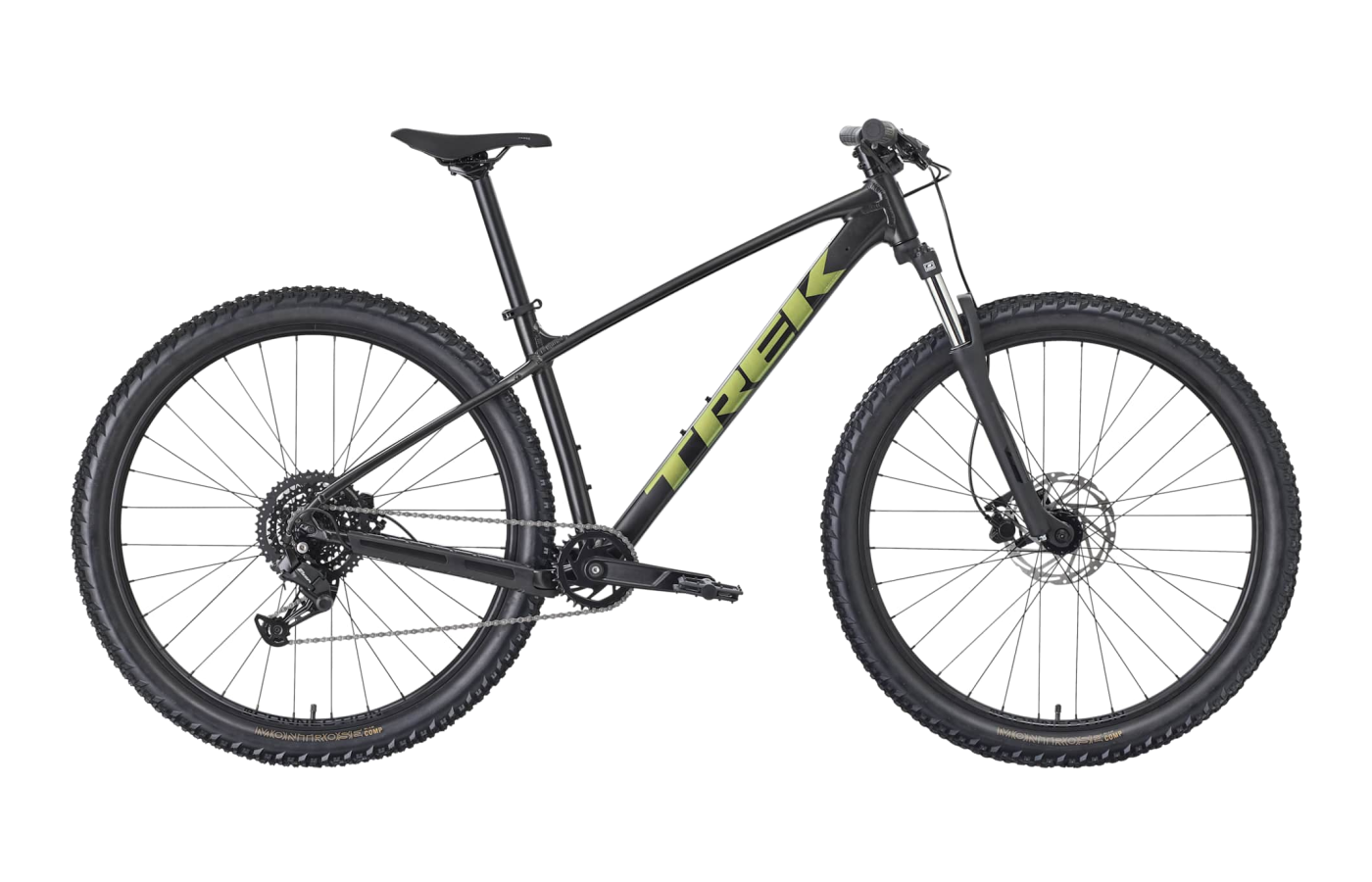
Marlin
The default cross-shop in this bracket — Trek's Marlin spans an even wider build range than the Rockhopper and shows up at almost every dealer in the country. Worth a test ride if you can't decide between these two.
Compare →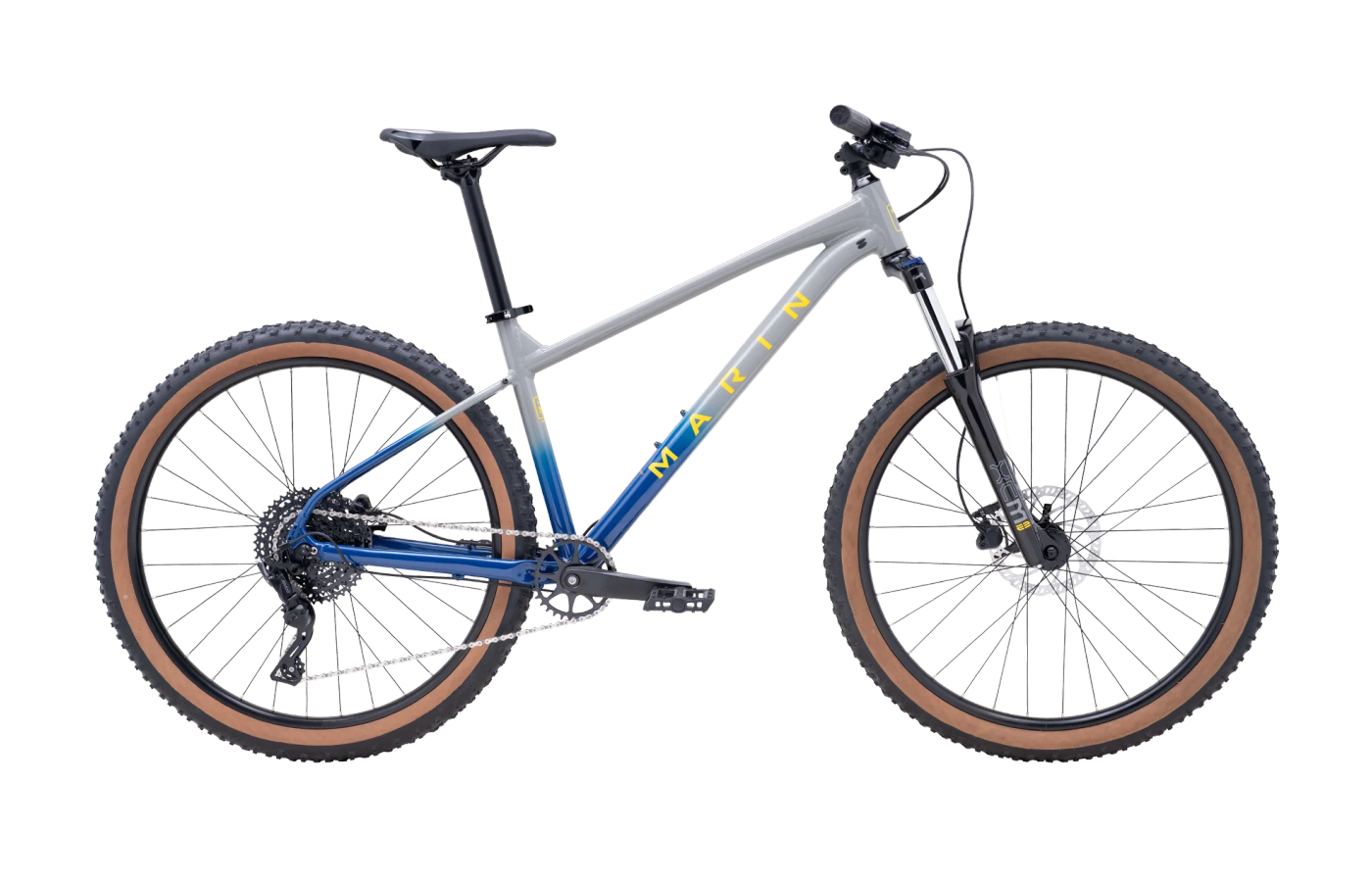
Bobcat Trail
Marin's Bobcat Trail leans further toward trail geometry than the Rockhopper at a similar price — slacker front end, more descending confidence. A natural alternative if the Cinder Cone's spec sheet doesn't quite line up but its riding character does.
Compare →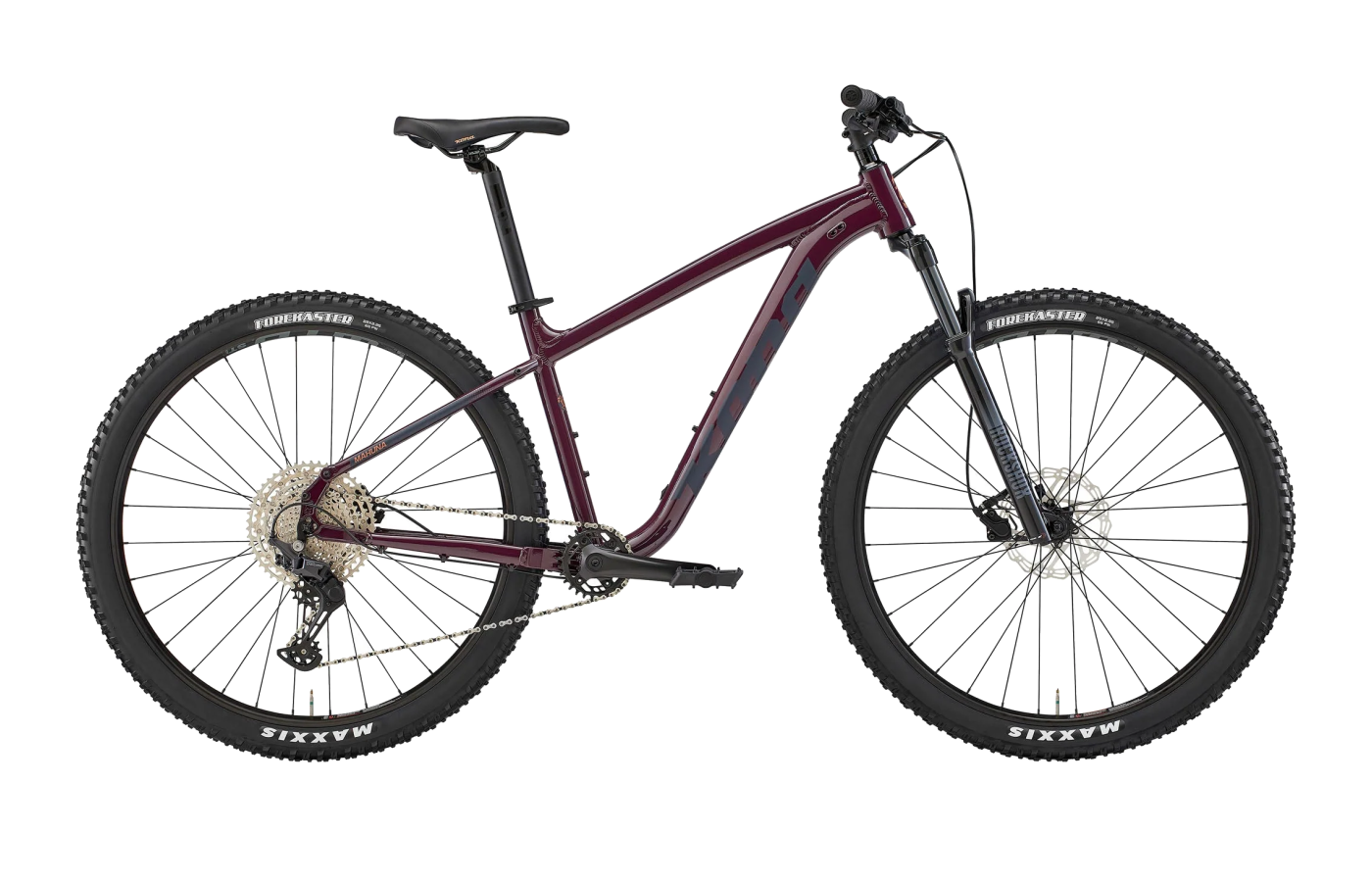
Mahuna
Kona's Mahuna is the next step up in the same family — more travel, more aggressive geometry, more capable on real trails. The natural upgrade target if you like the Cinder Cone but want to skip past it.
Compare →