Honzo
vsMahuna
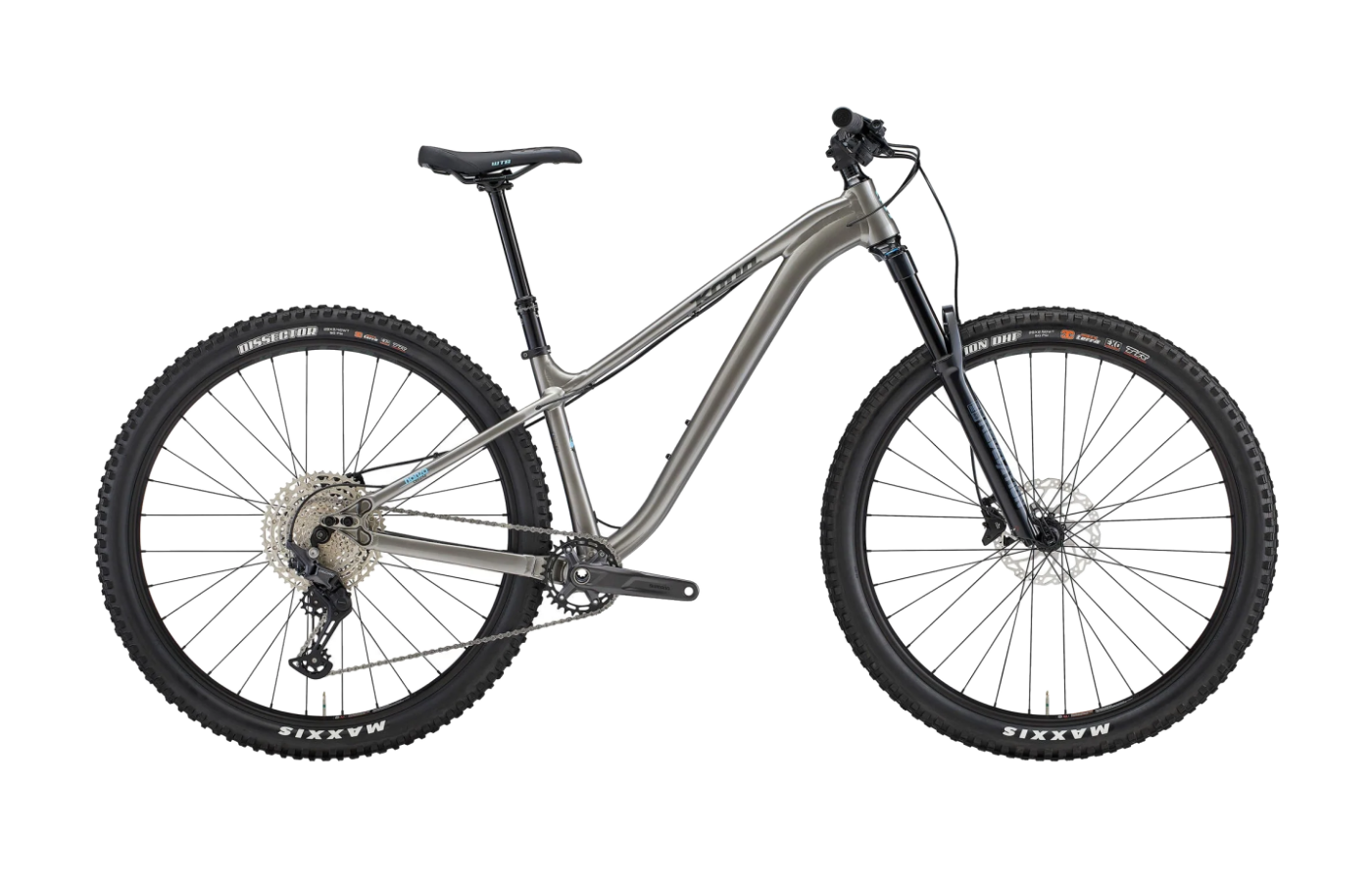
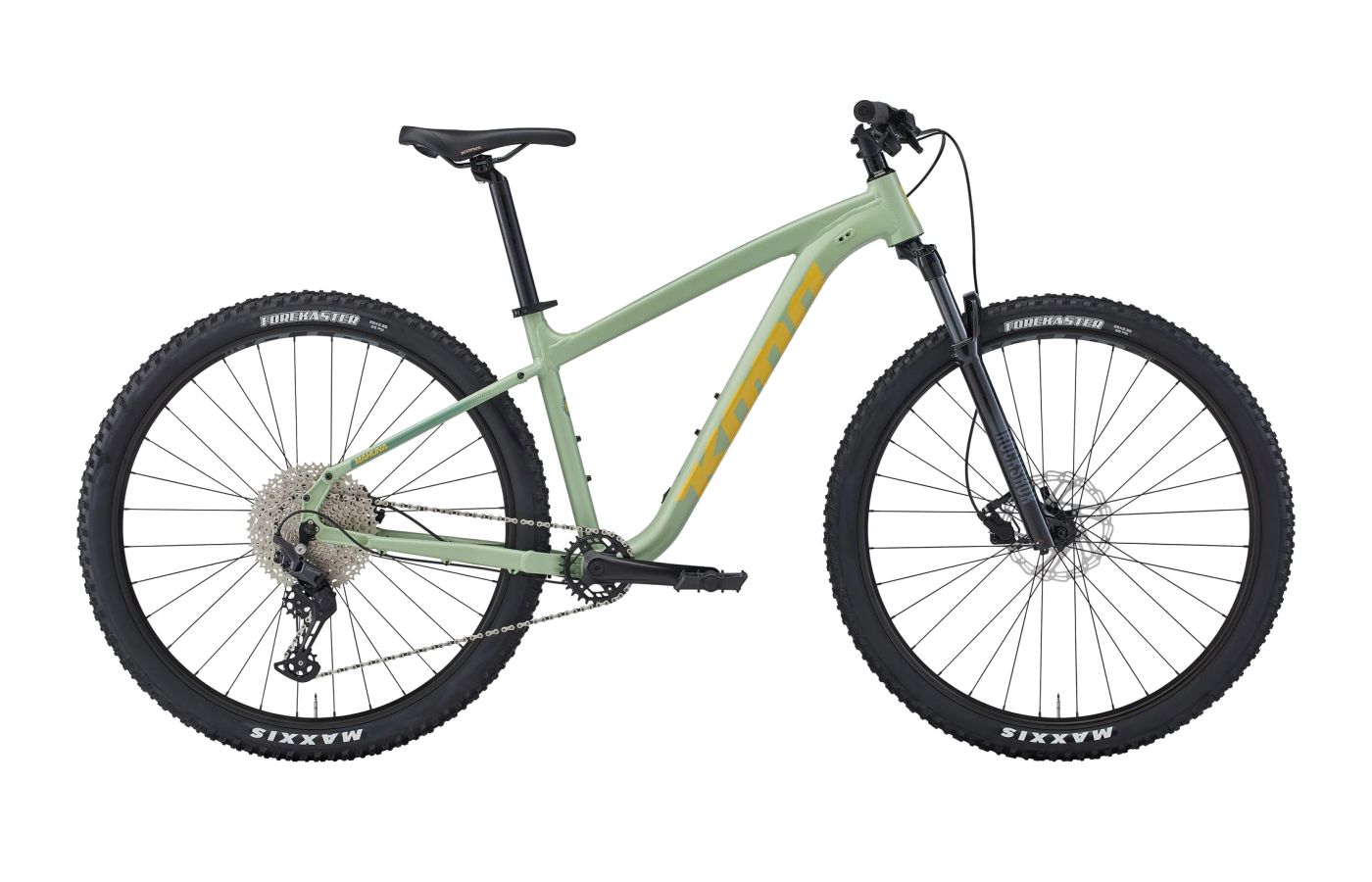
Same brand, same 29er wheels, two different trails.
The Honzo is Kona's aggressive trail hardtail with 130–150 mm of fork. The Mahuna is its XC cousin at nearly half the price.
Honzo
- Aggressive trail geometry — 66.5° HTA and 425 mm chainstays deliver confidence on steep, technical descents.
- Real trail fork — 130–150 mm travel across the range, with the DL's RockShox Revelation earning reviewer praise as an "unobtrusive superstar."
- Dropper and grippy tires standard on every build — Maxxis Minion/Assegai-class rubber, not XC treads.
- Stiff aluminum rear end gets harsh on long, chunky rides — particularly for lighter riders.
- Entry price is nearly 50% higher than the Mahuna — no sub-$1,300 way in.
Mahuna
- Smooth, "cultured" frame — the 450 mm chainstays and 6061 tubing damp chatter in a way reviewers likened to steel.
- Genuinely cheap at $899 — with internal dropper routing, rack/fender mounts, and a lifetime frame warranty.
- Proven XC winner — MBR's 2022 Hardtail of the Year in the sub-£1,000 category on the strength of its balanced geometry.
- 100 mm RockShox Judy fork on QR axles flexes and feels "nervous" when pushed on technical terrain.
- Square-taper Samox crankset is the spec's weakest link — flexy under hard pedaling and an obvious first upgrade.
Editor’s analysis
One is built to get rowdy on chunky singletrack. The other is built to rack up miles on mellow ones — and the $700 gap between them is earned, not arbitrary.
Both the Kona Honzo and Kona Mahuna share a 6061 butted aluminum frame and 29-inch wheels, but the geometry sheet tells the real story. The Honzo runs a 66.5° head angle with 425 mm chainstays across every size; the Mahuna sits at 68° with 450 mm stays. That's 1.5° slacker up front and 25 mm shorter out back on the Honzo — a formula tuned for steep descents and quick direction changes, not cross-country efficiency.
The Honzo commits to trail and light enduro duty. Forks scale from a 130 mm RockShox Recon on the Base up to a 150 mm Marzocchi Bomber Z1 on the ESD trim, and every build ships with a dropper post and 2.4–2.5 in aggressive Maxxis rubber. Reviewers consistently describe it as "zippy," "playful," and surprisingly composed at speed for a hardtail — though they also agree the stiff aluminum rear can "rattle" lighter riders on long, chunky days.
The Kona Mahuna is a different proposition: one spec level, $899, and unapologetically XC. A 100 mm RockShox Judy Silver fork on QR axles, a square-taper Samox crankset, Maxxis Forekaster 2.35 in tires, and a fixed seatpost. MBR named its 2022 version Hardtail of the Year in the sub-£1,000 category, and every reviewer singles out the frame as punching well above its price — smooth, balanced, and the real reason to buy the bike.
So the comparison isn't about which is better. It's about whether you want a bike that climbs efficiently and glides over chatter on a Sunday loop, or a bike that will hang with your full-suspension friends on the gnarly descent and make you earn the climb in exchange.
Where the builds differ.
Comparing our editor's-pick builds side-by-side. Winners highlighted row-by-row — lower price and weight, and the better-spec component, each mark a point.
Build variants & pricing
The Honzo climbs four rungs from a $1,299 Base to a $2,399 chromoly ESD 36SR. The Mahuna offers exactly one spec at $899.
Prices are current US MSRP. The Mahuna doesn't scale — if you want a trail-capable hardtail with a longer-travel fork, a dropper, and better brakes from the factory, the Honzo is the only path. Our DL vs (36SH) pairing is the tightest apples-to-apples the two lineups allow; the $700 gap reflects real spec differences (140 vs 100 mm fork, through-axles, 12- vs 11-speed, dropper vs fixed post).
How they fit, how they steer.
Both at size M. The Honzo has 15 mm more reach (455 vs 440 mm) and 35 mm more stack (646 vs 611 mm) — a taller, longer cockpit built for standing descents. The Mahuna's 68° head angle and 450 mm chainstays make the wheelbase only 12 mm shorter despite the smaller cockpit — a stable XC platform, not a flickable one.
Which size should I buy?
Both bikes offer S/M/L/XL in 29er. Size ranges overlap closely; the Honzo sits taller in stack at every size.
→These are starting points. Flexibility, riding style, and preferred position all shift the answer — if you’re between sizes, a professional fit beats a chart.
What the magazines said.
Published reviews from trusted cycling outlets. Click through for the full write-up.
Which one should you buy?
If you want to ride steeper, rougher trails on a hardtail, get the Honzo. If you want a smooth, efficient bike for XC loops and want to keep your budget under $1,000, get the Mahuna.
Honzo
If your trails involve steep descents, rock gardens, and the occasional jump line — and you want a hardtail that can hang rather than tap out — this is the one. The DL's Revelation fork and Deore 12-speed are the value sweet spot in the lineup; step up to the ESD trims if you want 150 mm of fork and a chromoly frame.
Mahuna
If you ride mostly flow, gravel, and non-technical singletrack, and you want the smoothest-feeling aluminum frame under $1,000, the Mahuna is hard to beat. Accept that the fork and crankset will be your first upgrades, and enjoy the fact that everything else is already dialed.
Questions buyers actually ask.
Short answers to the things we get emailed about most often.
01Which has more suspension travel?
The Kona Honzo, by a wide margin. Honzo forks scale from 130 mm (Base, RockShox Recon) to 140 mm (DL, RockShox Revelation) to 150 mm (ESD/ESD 36SR, Marzocchi Bomber Z1). The Kona Mahuna ships with a single 100 mm RockShox Judy Silver TK across both builds.
Neither bike has rear suspension — both are hardtails.
02Which is better for technical trails?
The Honzo, clearly. Its 66.5° head tube angle, 150 mm-capable fork, dropper post, and 2.4–2.5 in Maxxis Minion/Assegai tires are all tuned for aggressive descending. Reviewers consistently call it "surprisingly composed" and "stable at higher speeds" for a hardtail.
The Mahuna has a steeper 68° head angle and a 100 mm fork on QR axles, which reviewers describe as "nervous" and "twisty" on rough terrain. It's built for XC and gravel, not for rock gardens.
03Which climbs more efficiently?
The Mahuna, on most XC-style climbs. Both bikes share a 75° seat angle and a hardtail's direct power transfer, but the Mahuna is lighter in build (14.3–14.6 kg reported vs the Honzo DL sitting around 14 kg with heavier tires), rolls on faster Maxxis Forekaster 2.35 in tires, and costs you nothing in dropper weight.
The Honzo climbs fine — reviewers call it "zippy" and "fast accelerating" — but its bigger tires and longer-travel fork cost watts on extended sustained climbs.
04Is the Honzo worth $700 more than the Mahuna?
If you ride terrain that regularly involves descents with rocks, roots, drops, or anything you'd take in an aggressive body position — yes. The Honzo DL's 140 mm Revelation fork, dropper post, through-axles, and 12-speed Deore are not upgrades you'd want to tackle aftermarket. Doing so on a Mahuna would cost you well over $700 in parts and labor and still leave you with a lighter-duty frame.
If you ride fire roads, gravel, and non-technical singletrack, no — the Mahuna's frame is genuinely good and the upgrades you'd want (dropper, crankset) are less expensive.
05What sizes do they come in?
Both the Honzo and Mahuna offer S, M, L, and XL frames — all 29-inch wheel sizes. A 173 cm (5'8") rider fits best on a size M on both bikes.
The Honzo's reach in size M is 455 mm; the Mahuna's is 440 mm. If you're between sizes, the Honzo's shorter chainstays make sizing up less penalized; the Mahuna's longer chainstays mean sizing up stretches the wheelbase more quickly.
06Can I turn the Mahuna into an aggressive trail bike with upgrades?
Partially. Reviewers agree the Mahuna's frame can take a longer, sturdier fork — Guy Kesteven specifically said it's "gagging for a 120 mm fork" with through-axles. You could also swap the square-taper crankset and add a dropper post.
But: through-axle forks require a new front wheel (different hub standard), and the frame geometry is fundamentally XC — 68° head angle, 450 mm chainstays. You'll end up with a better XC bike, not a Honzo. If you want Honzo-style geometry from the start, buy a Honzo.
07Do either come with a dropper post?
The Honzo ships with a dropper on every build — a TranzX on the lower trims, longer-travel options on the ESD builds.
The Mahuna does not — it comes with a fixed Kona Thumb seatpost. The frame is routed for internal dropper cabling, so an aftermarket install is straightforward, but plan to spend $150–250 on parts to add one.
08What warranty do they come with?
Both Kona hardtail frames come with a limited lifetime warranty to the original owner against manufacturing defects. Kona's dealer network is widely praised in reviews for responsive warranty and parts support, and crash-replacement pricing is available on request through authorized dealers.
Similar bikes
If your priorities don’t map cleanly onto either of these, one of these adjacent bikes probably fits better.
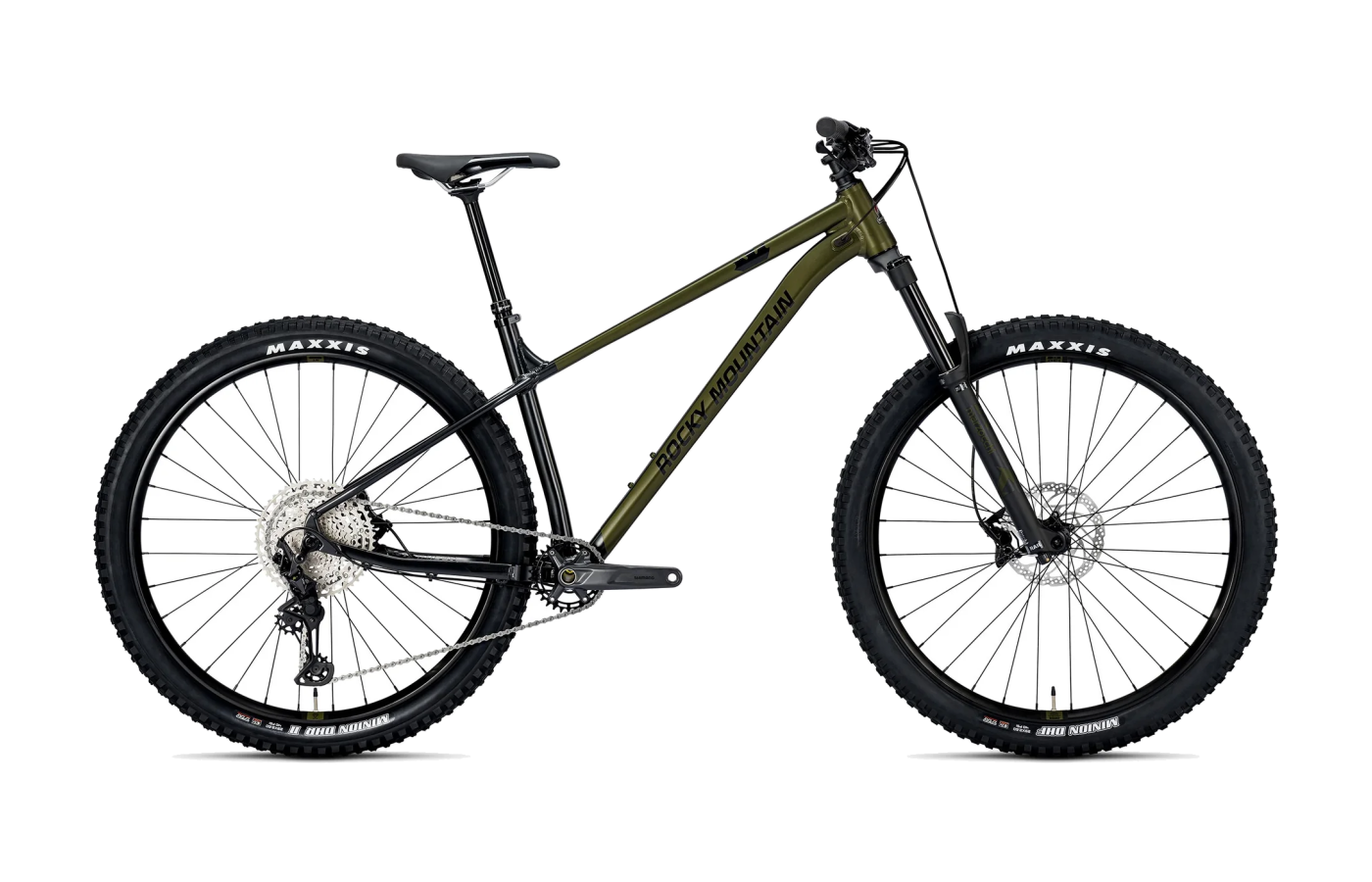
Growler
Rocky Mountain's aggressive aluminum hardtail — similar slack geometry and descending brief to the Honzo, often at a lower entry price. If you like Kona's pitch but want a second option from a similar playbook, start here.
Compare →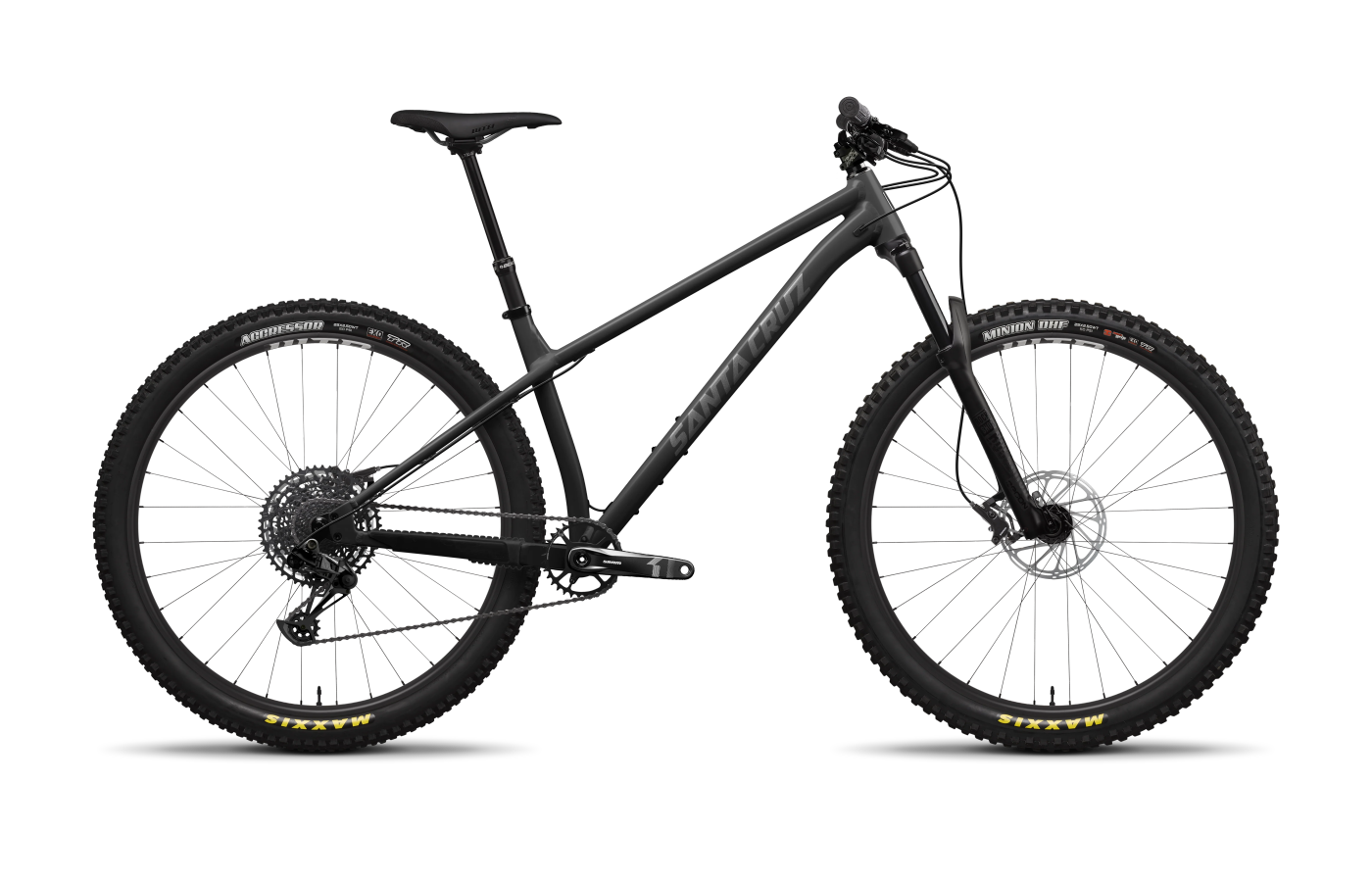
Chameleon
Santa Cruz Chameleon — a versatile trail hardtail that splits the difference between 27.5+ and 29er and offers a carbon frame option with noticeably more compliance than the Honzo's aluminum. Pricier than either Kona, but the softer-riding alternative if stiffness is your concern.
Compare →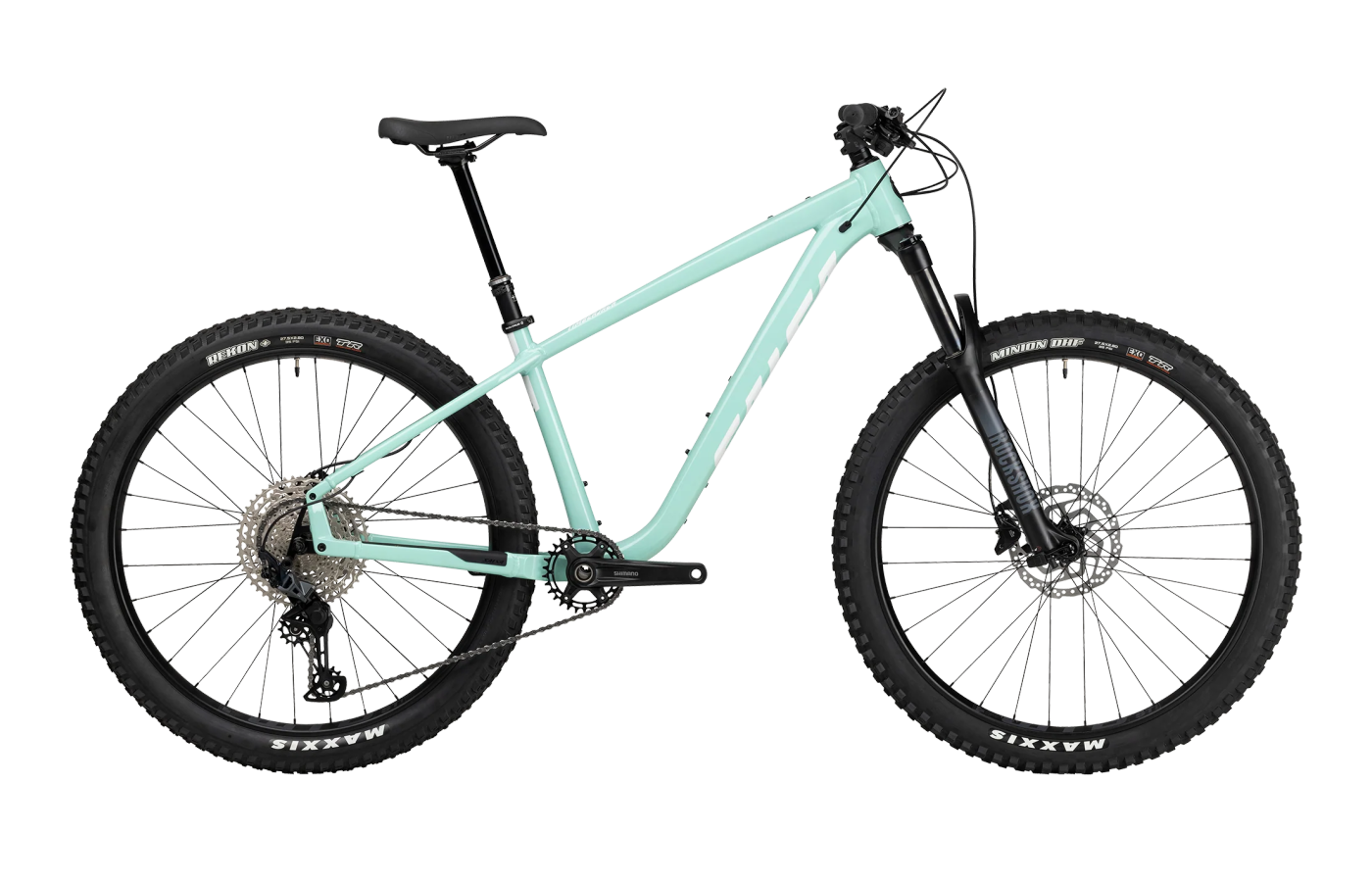
Timberjack
Salsa Timberjack — a mid-aggressive hardtail sitting squarely between the Honzo's rowdiness and the Mahuna's XC leanings. Strong bikepacking credentials thanks to the rack-mount frame and longer geometry.
Compare →