Honzo
vsTimberjack
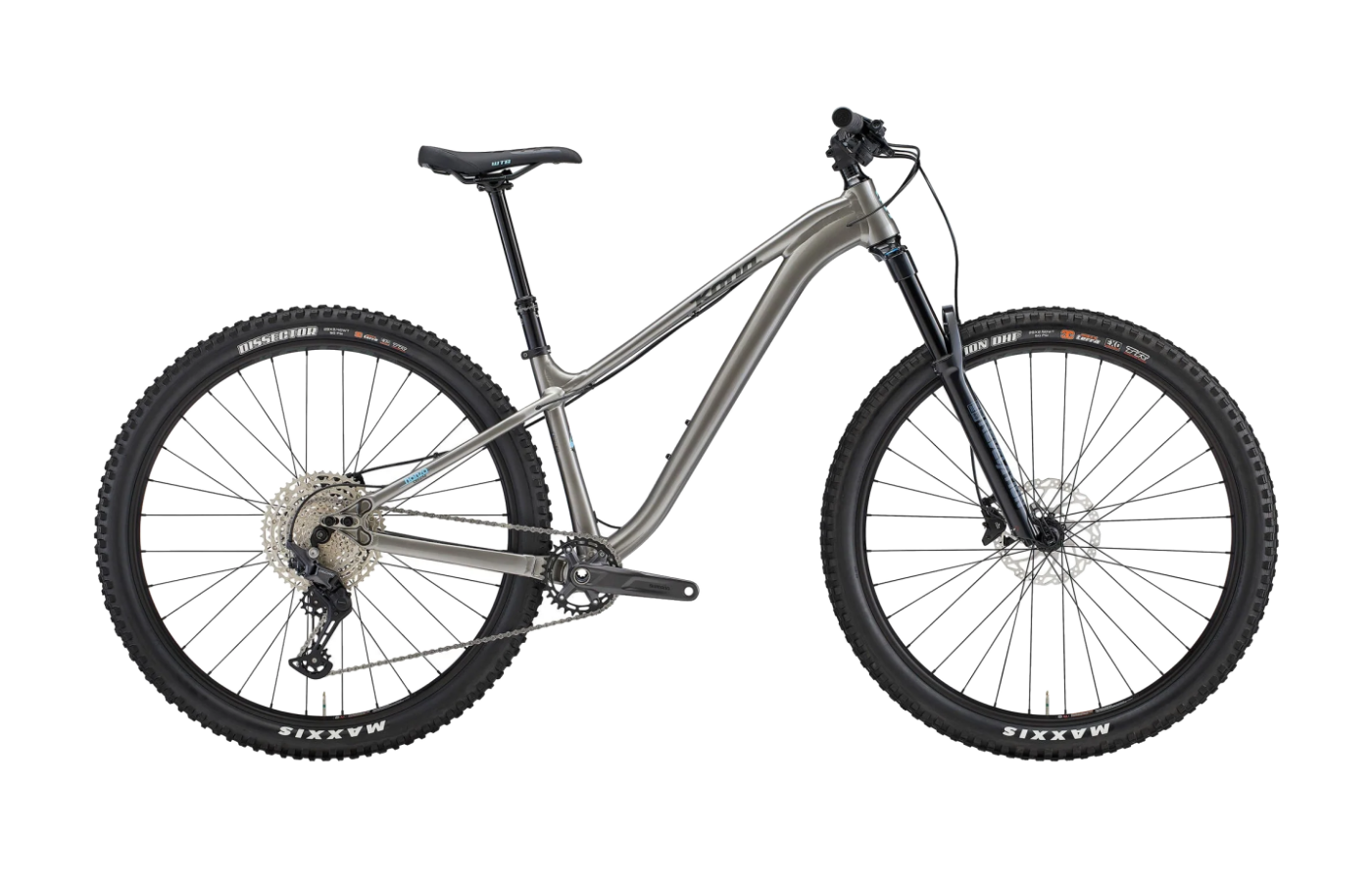
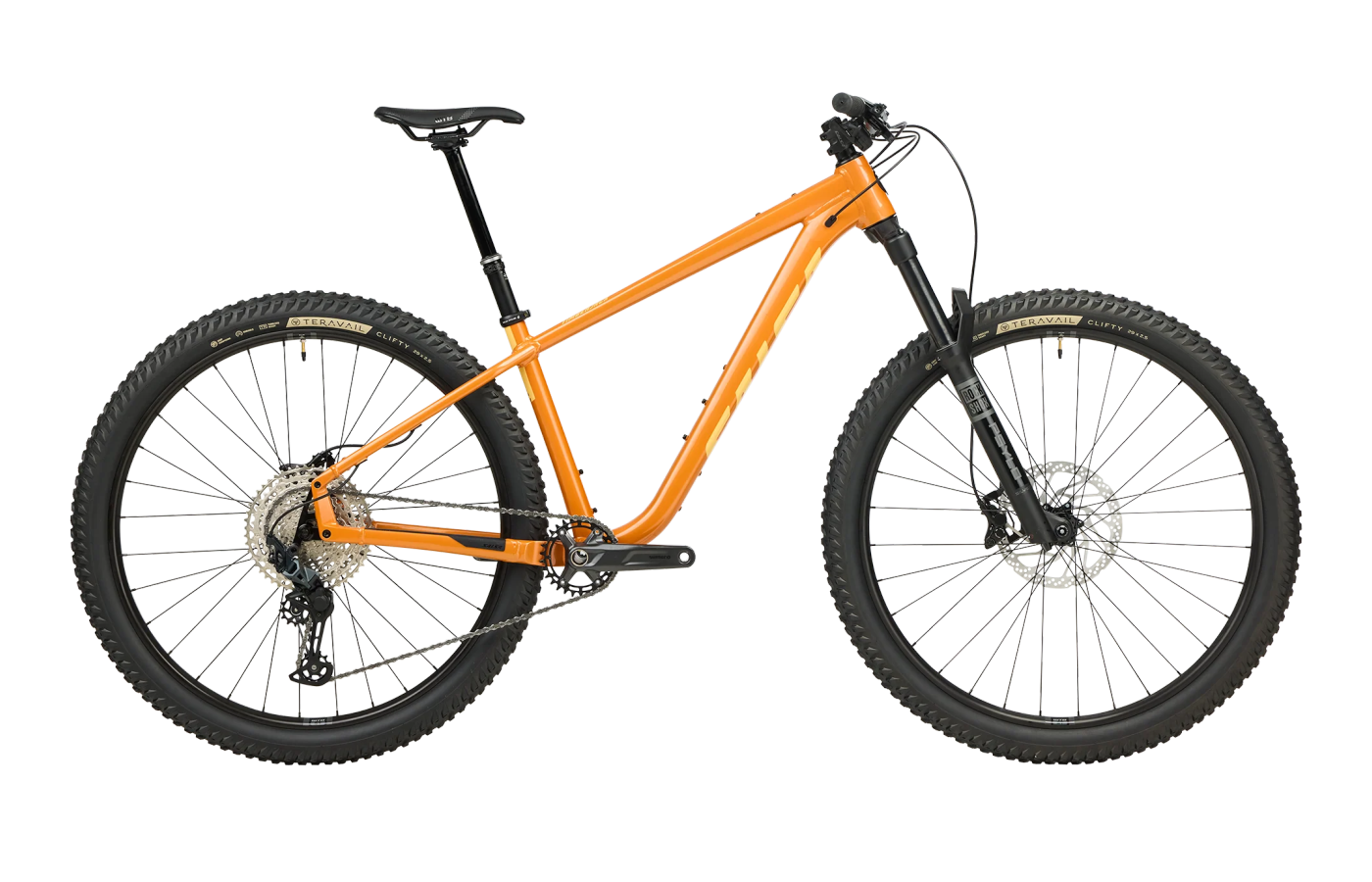
Two aggressive alloy hardtails, two personalities.
The Honzo is the playful ripper — zippy, snappy, built for flow. The Timberjack is the do-it-all — bikepacking mounts, adjustable chainstays, at home on rowdy rides or a three-day tour.
Honzo
- Playful, poppy character — short 425 mm chainstays and a stiff chassis make it the livelier of the two on flow and tight singletrack.
- Burlier build options — the steel ESD and ESD 36SR top the range with 150 mm Marzocchi Z1 forks for riders who want a true trail-abuse rig.
- Cheapest entry point at $1,299 — the Honzo Base is $65 below any Timberjack build.
- Stiff aluminum frame can feel harsh on chunky terrain, especially for riders under ~180 lbs.
- No adjustable chainstays and no bikepacking mount package — this is a trail bike, not a tourer.
Timberjack
- Genuinely do-it-all — three-pack mounts, top tube, under-downtube, and rack bosses make multi-day tours realistic without rigging.
- Adjustable chainstays (420/437 mm via Alternator 2.0 dropouts) let you tune between snappy trail feel and loaded stability.
- Wider tire clearance (71 mm) fits 29x2.6 or 27.5+ tires — the Honzo tops out around 61 mm and is fixed to 29er.
- Stock RockShox 35 forks get overwhelmed by big hits — most reviewers call the fork the first upgrade.
- Less overtly playful than the Honzo; reviewers describe it as "well-mannered" rather than hyperactive.
Editor’s analysis
Both are alloy 29er hardtails with ~66.5° head angles and 130–140 mm forks. The difference isn't the spec sheet — it's what the bike wants to do with you on it.
On paper these two sit right next to each other. Both 6061-class butted aluminum. Both ~66.4–66.5° head tube angles. Both ~75° seat tubes. Both 29-inch wheels, both trail-oriented, both priced between $1,299 and $2,399. Ride them back-to-back and the philosophies pull hard in opposite directions.
The Kona Honzo is the purer trail ripper. Reviewers reach for the same words — "zippy," "snappy," "playful," a "speed demon on tight and twisty singletrack." The 425 mm chainstays are fixed and short; the frame is notably stiff, even harsh for lighter riders on rough terrain. It's a bike that rewards aggressive riding and can feel "lazy and unresponsive" if you ride it passively. A flow-trail weapon that will beat you up in Sedona-grade chunk.
The Salsa Timberjack is the Swiss Army knife. Adjustable Alternator 2.0 dropouts let you run 420 or 437 mm chainstays — short for a "flickable" trail feel, long for bikepacking stability. The frame is stiff too, but the tire clearance is wider (71 mm vs Kona's 61 mm, enough for 29x2.6 or 27.5+), and it comes littered with bosses: three-pack, top tube, under-downtube, rear rack. Reviewers call it "a do-it-all machine" and a "quiver killer." Not quite as overtly playful as the Honzo — one reviewer called it "well-mannered" rather than hyperactive — but it covers more ground.
Put another way: the Honzo is the bike you pick when you want the trail to feel alive under you. The Timberjack is the bike you pick when one hardtail has to cover ripping local singletrack on Saturday and a loaded tour on Sunday.
Where the builds differ.
Comparing our editor's-pick builds side-by-side. Winners highlighted row-by-row — lower price and weight, and the better-spec component, each mark a point.
Build variants & pricing
Both platforms span about $1,000 of range. The Honzo tops out with steel ESD builds; the Timberjack stays aluminum across the lineup but offers 27.5+ and mullet wheel options.
Prices are current US MSRP. The Honzo's top two builds (ESD and ESD 36SR) use a chromoly steel frame — a different ride platform than the alloy DL and Base. The Timberjack uses a single alloy frame across all six builds but swaps between 29er and 27.5+ wheel sizes.
How they fit, how they steer.
Kona M vs Salsa Medium — reach is within 2 mm (455 vs 454 mm), head tube angles within 0.1° (66.5° vs 66.4°). The Honzo sits ~39 mm taller in stack and 5 mm longer in chainstay; the Timberjack has the lower, more aggressive front end.
Which size should I buy?
Size recommendations based on stack, reach, and effective top tube. Both fit ranges overlap heavily; the Timberjack extends one size smaller (X-Small) than the Honzo.
→These are starting points. Flexibility, riding style, and preferred position all shift the answer — if you’re between sizes, a professional fit beats a chart.
What the magazines said.
Published reviews from trusted cycling outlets. Click through for the full write-up.
Which one should you buy?
If you ride mostly flow and want a playful ripper, get the Honzo. If one hardtail has to also load up for bikepacking, get the Timberjack.
Honzo
If your riding is flow trails, tight singletrack, and the occasional sendy line — and you want a bike that feels alive under you — the Honzo wins. Stiffer, snappier, picks up speed more eagerly than the Timberjack. Just be honest about whether your local trails are rough enough to punish you.
Timberjack
If one hardtail has to cover Tuesday-night laps, weekend trail days, and a summer bikepacking trip, the Timberjack is the obvious choice. Adjustable chainstays, enough mounts for a loaded tour, and 27.5+ or 29er compatibility make it the most versatile alloy hardtail in this bracket.
Questions buyers actually ask.
Short answers to the things we get emailed about most often.
01Which one is better for rough, technical trails?
Both are stiff aluminum hardtails — neither is a forgiving ride on sustained rock gardens. But the Kona Honzo ESD and ESD 36SR builds are the more gravity-capable rigs: they use a chromoly steel frame (generally more damped than aluminum) paired with a 150 mm Marzocchi Bomber Z1 fork. The Timberjack tops out at 140 mm (SLX 29 with RockShox Psylo Silver) or 130 mm on most builds.
Comparing the alloy Honzo DL or Base against the Timberjack, they're closer in capability — both run 130–140 mm forks and similarly stiff 6061-class frames. Reviewers called the Timberjack frame "definitely stiffer than the last model," and the Honzo is repeatedly described as "harsh" on chunk.
02Can I bikepack on either of these?
You can bikepack on anything, but the Salsa Timberjack is designed for it. The frame has three-bottle mounts, a top-tube bag mount, under-downtube cargo mounts, and rear rack mounts via a Rack-Lock collar. Salsa also explicitly states that running a 150 mm fork (up from the 130 mm stock) won't void the warranty — a load-friendly design signal.
The Kona Honzo has a more trail-focused mounting package and no equivalent rack provision on the alloy frames. You can still strap bags to it, but it's clearly not the design intent.
03What's the tire clearance on each?
Kona Honzo: 61 mm. That fits roughly a 29x2.4 comfortably (higher builds ship with 29x2.5 front / 2.4 rear). Chainstays are ultra-short at 425 mm and reviewers have specifically flagged rear tire/mud clearance as tight.
Salsa Timberjack: 71.1 mm — meaningfully wider. It's specced with 29x2.6 or 27.5x2.8 tires depending on build, and the frame is designed to take either wheel size on the same platform.
04Which one climbs better?
They're close. Both use ~75° seat tubes that put you over the bottom bracket for efficient power transfer, and both weigh in the low 30s of pounds depending on build. The Honzo has fixed, short 425 mm chainstays that make it feel zippier on accelerations, but the short rear means less weight on the front wheel on steep climbs.
The Timberjack's adjustable Alternator 2.0 dropouts are the climbing trump card: set to 437 mm, the rear end settles and the front wheel stays planted on steep pitches. Pinkbike placed the Timberjack 4th of 4 in a climb test but noted it "scrambled up just as much stuff" as the others — capable, just not the fastest.
05Can I run a longer fork on either?
Timberjack: Salsa explicitly says a 150 mm fork won't void the warranty. Stock range is 130–140 mm; bumping up is a common upgrade.
Honzo: the alloy DL and Base ship with 130–140 mm forks (Recon or Revelation). The steel ESD and ESD 36SR come with 150 mm Marzocchi Z1s from the factory, so the platform clearly tolerates that travel. Kona doesn't publish a max-fork spec as explicitly as Salsa does, but the geometry was designed around the 130–150 mm range.
06Are the brakes any good on the lower builds?
Honest answer: not really. The Honzo Base and DL ship with Shimano MT410 brakes that reviewers consistently call "underpowered," with resin-only rotors that can't be upgraded to sintered pads without also replacing the rotors. It's the single most common first upgrade across long-term Honzo reviews.
The Timberjack's lower builds run similar-tier Shimano MT401 brakes — "a compromise," per Singletrackworld. Move up to the XT 29 or XT Z2 builds and you get 4-piston Shimano MT501/MT420 calipers with better bite. Budget-tier hardtails almost universally compromise on stoppers; plan for an upgrade if your rides are steep.
07Is the steel Honzo ESD worth the extra money over the alloy DL?
Depends on the kind of riding you're doing. The ESD and ESD 36SR are Kona's aggressive-trail builds: chromoly steel frame (more compliant and damped than 6061 alloy), a 150 mm Marzocchi Bomber Z1 fork, and higher-end drivetrain and brake specs (SRAM GX Eagle and 200 mm rotors on the 36SR). Reviewers explicitly noted the alloy Honzo is "not as soft as the Honzo ESD — that bike was more compliant and supple."
If your rides are aggressive and rough, the ESD is the better match. If you're on flow trails and mellower singletrack, the alloy DL is the smarter buy and leaves money for upgrades.
08Which one holds up better for heavier riders?
Both frames are durable aluminum (6061 or 6066-T6) and no reviewer raised frame-lifespan concerns on either. On ride feel, reviewers specifically noted heavier riders (over ~200 lbs) tend to prefer the stiff aluminum Honzo because it feels "less noodley" underneath them — the same stiffness that punishes lighter riders works in favor of bigger ones.
The Timberjack's frame is described in similar terms — stiff, direct, responsive — so the story is comparable. Both will carry you fine; the Honzo's character may actually flatter a heavier, more powerful rider more than a light one.
Similar bikes
If your priorities don’t map cleanly onto either of these, one of these adjacent bikes probably fits better.
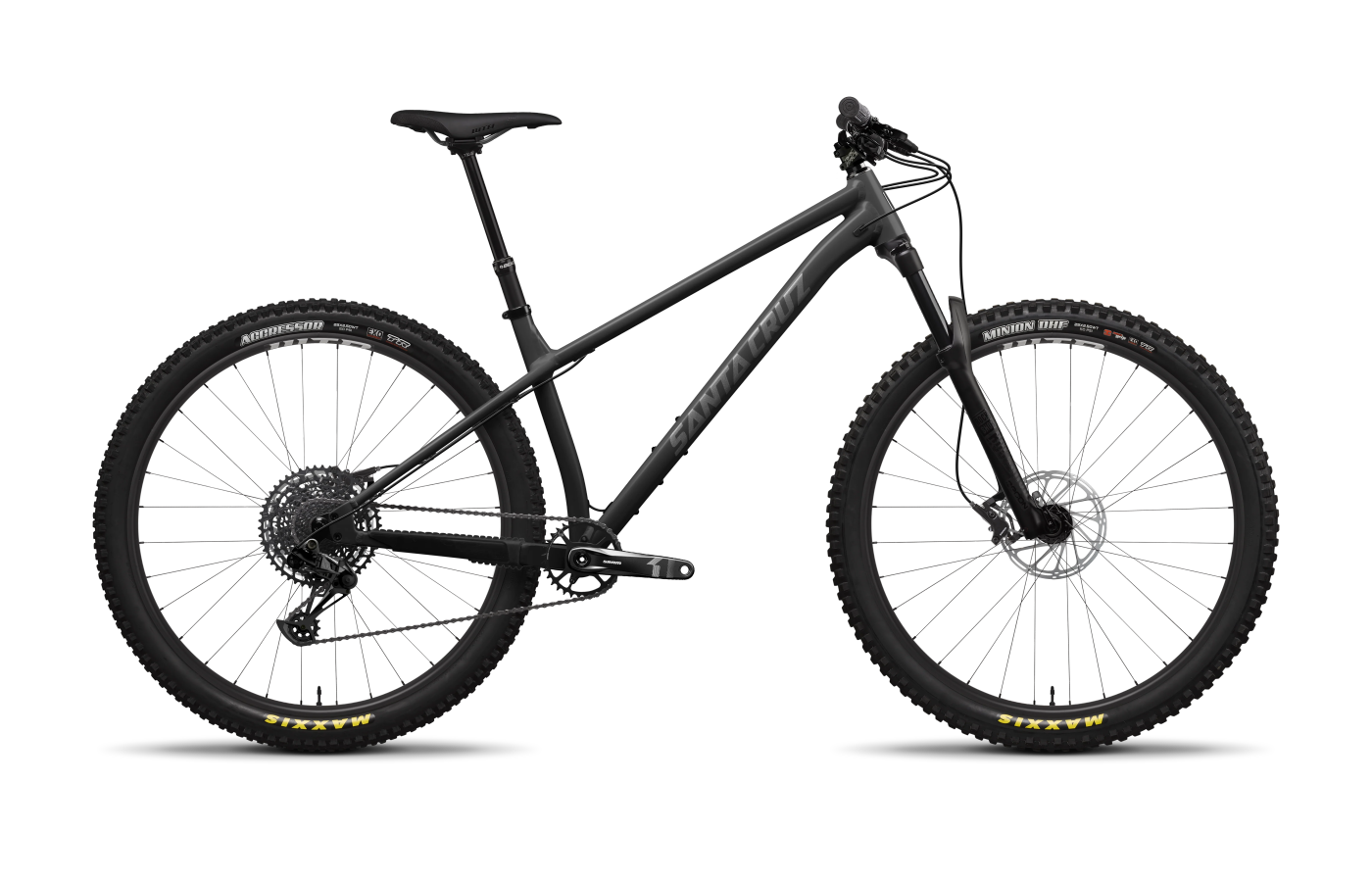
Chameleon
Santa Cruz's take on the versatile alloy hardtail — often cited as more compliant than either of these on rough trails, and built around the same wheel-size flexibility as the Timberjack. A natural third option if frame comfort is the deciding factor.
Compare →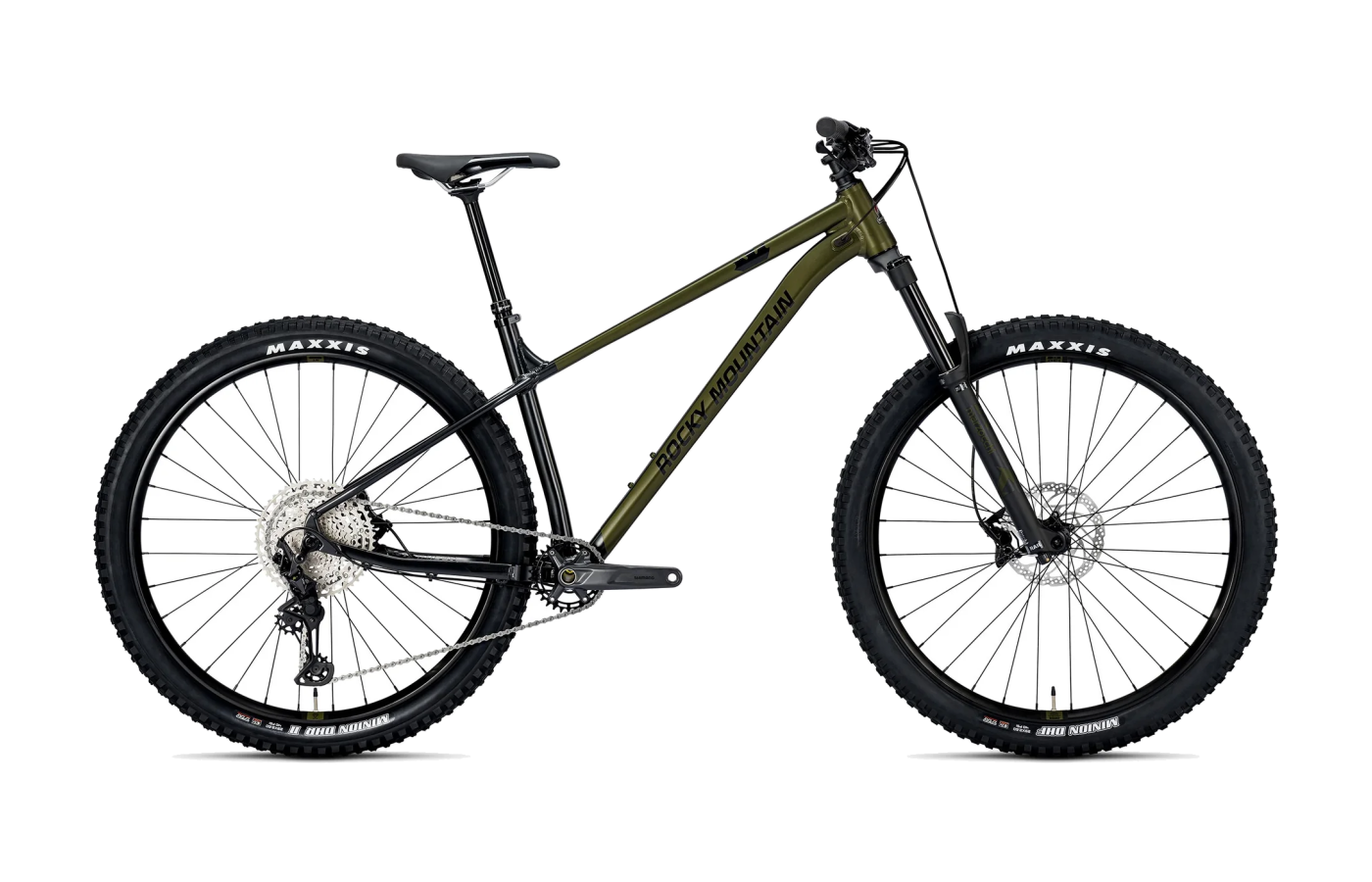
Growler
Rocky Mountain's aggressive-hardtail play — similar trail-shredding intent to the Honzo, often undercutting both on price. Worth a look if you want modern, slack geometry on a tighter budget.
Compare →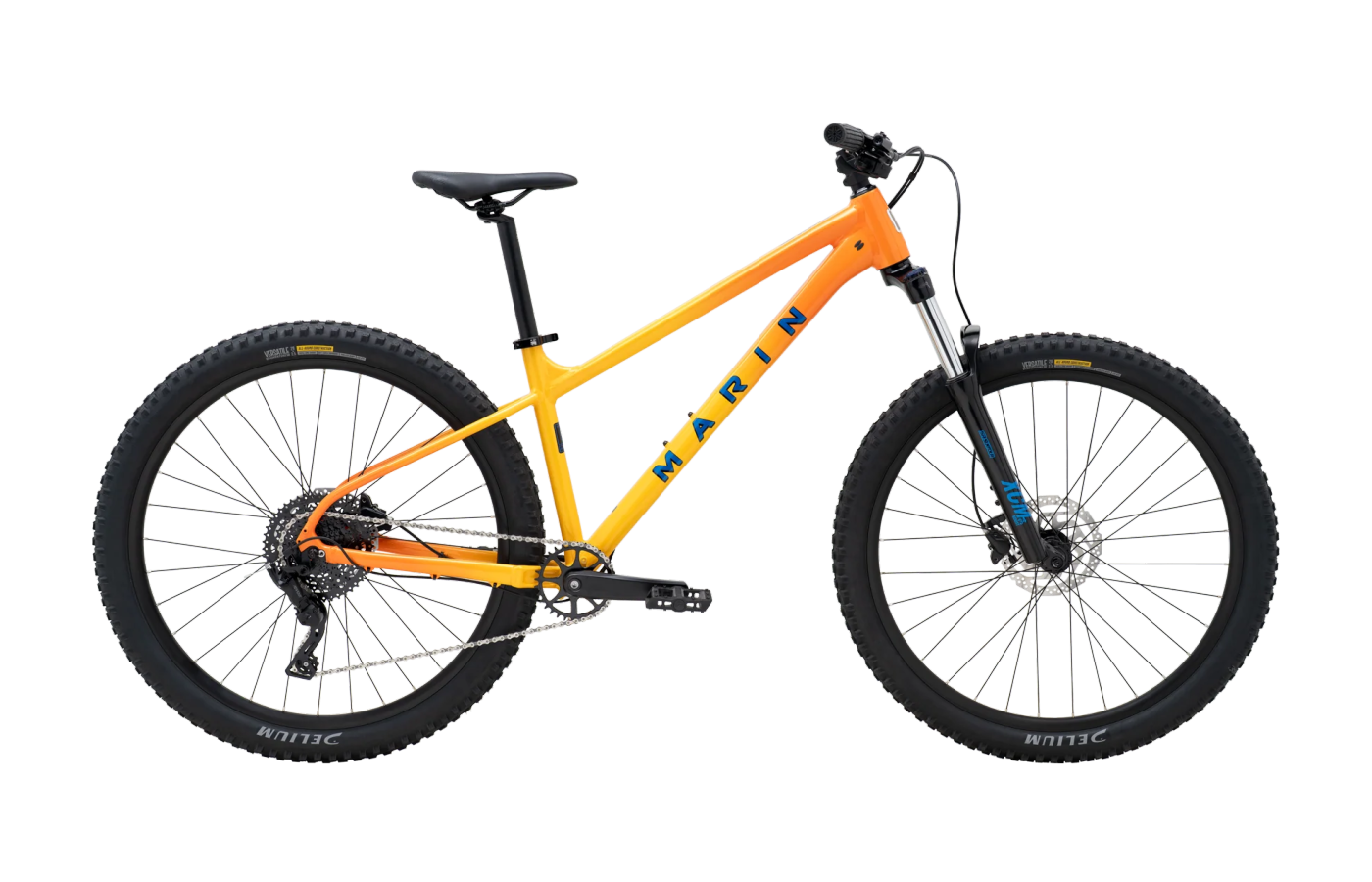
San Quentin
Gravity-oriented budget hardtail built around jumps and aggressive descents. Parallels the burlier Honzo ESD's intent but typically lands well below it in price — the pick if you want a sendy bike without the ESD's price tag.
Compare →