Honzo
vsChameleon
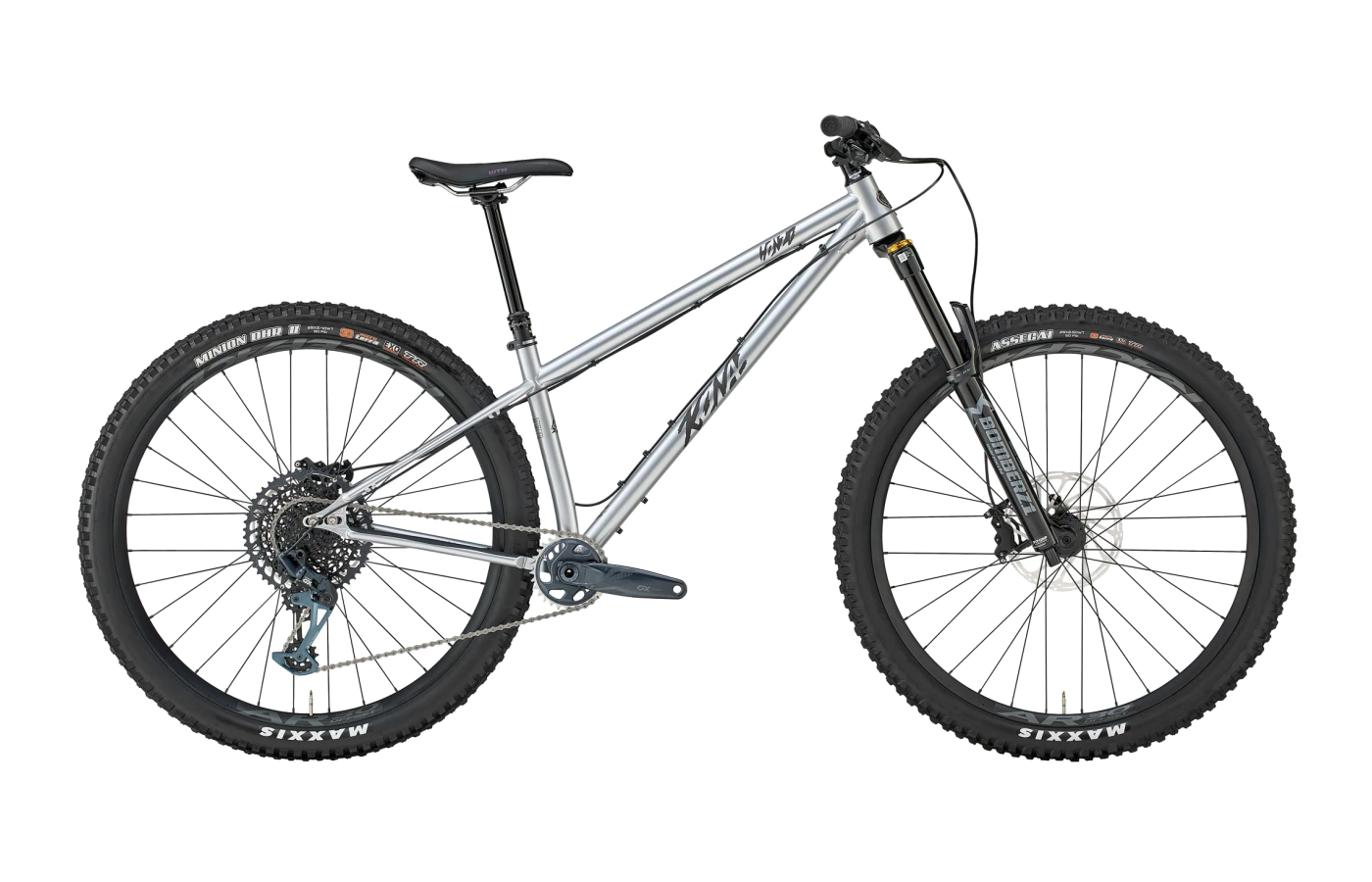
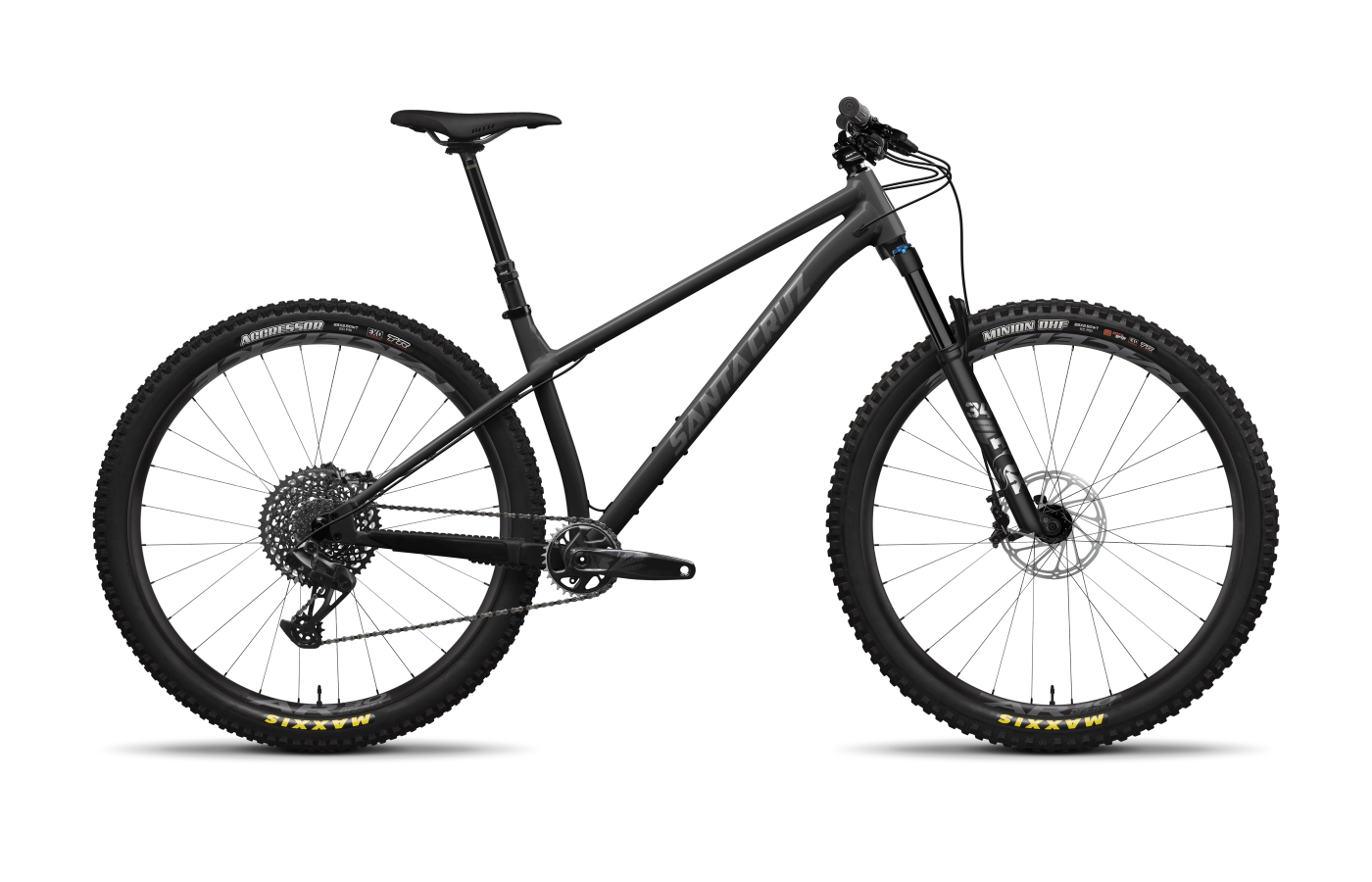
Two aggressive hardtails, two attitudes.
The Honzo is the steel-framed enduro-leaning bruiser. The Chameleon is the do-anything aluminum platform that converts to a mullet, a singlespeed, or a bikepacking rig.
Honzo
- Cheaper entry point — the alloy Base lands at $1,299, the cheapest serious aggressive hardtail in this comparison.
- Steel ESD option with a 150 mm Marzocchi Z1 fork — the only build here that's truly enduro-capable out of the box.
- Snappy 66.5° geometry with a 425 mm rear end — reviewers call it "zippy," "playful," easy to manual.
- Aluminum builds get described as "harsh" and "bouncy" — lighter riders feel the stiffness on long, chunky days.
- No frame adjustability — chainstay length, wheel size, and travel are locked in by build.
Chameleon
- Sliding dropouts give 425–437 mm of chainstay adjustment plus 29er / MX / singlespeed conversion on one frame.
- Slacker 65° head angle and longer wheelbase — reviewers describe it as a "juggernaut descending" for a 130 mm-fork hardtail.
- Lifetime frame and bearing warranty — the "Bike for Life" program turns this into a long-horizon purchase.
- Pricier across the board — the cheapest D build is $2,099, $800 above the Honzo Base.
- Stock SRAM MTH hubs have wide 17° engagement; reviewers flag a high-engagement hub as a near-mandatory upgrade.
Editor’s analysis
Both run 29" wheels, both ride a 425 mm chainstay, both have a hardcore aluminum entry point — but the kind of hardtail you end up on couldn't be more different.
On paper, the Kona Honzo and Santa Cruz Chameleon land in the same aggressive-hardtail bracket — modern slack geometry, 29" wheels, no rear shock, sub-$2,500 entry points. Spend any time with the actual lineups and the platforms split immediately. The Honzo's top builds drop the aluminum frame entirely for chromoly steel and bolt on a 150 mm Marzocchi or RockShox fork; the Chameleon stays aluminum across the board, runs 130 mm of fork travel, and pours its engineering into adjustable sliding dropouts and a UDH-equipped frame designed to morph between configurations.
The Kona Honzo is the more focused tool. The aluminum builds (DL, Base) are the affordable, zippy-but-stiff trail hardtails reviewers describe as "shut up and ride" workhorses with short 425 mm chainstays and a snappy 66.5° head angle. Move up to the steel ESD models and the bike turns into a 150 mm-fork, gravity-leaning enduro hardtail that wants steeper, chunkier terrain. There's no built-in versatility — you pick the build, you pick the bike.
The Santa Cruz Chameleon is the opposite play: one frame, many bikes. The redesigned sliding dropouts give 425–437 mm of chainstay adjustment, the dropouts swap between 29er and mullet, and the same chassis runs singlespeed if you want it to. Geometry is slacker (65° HTA vs the Honzo's 66.5°) and the stack is lower, but reach is 10 mm shorter at the comparable size — it's tuned for a more upright, planted feel that suits both bikepacking loads and double-black descents. Reviewers consistently call out the "Bike for Life" lifetime frame and bearing warranty as a real part of the value.
Put another way: buy the Honzo if you know what you want — either the cheap, snappy aluminum trail bike or the steel enduro hardtail. Buy the Chameleon if you want one frame that adapts to whatever phase of riding you're in, and you're willing to pay the Santa Cruz tax for the warranty and the engineering.
Where the builds differ.
Comparing our editor's-pick builds side-by-side. Winners highlighted row-by-row — lower price and weight, and the better-spec component, each mark a point.
Build variants & pricing
Both top out at GX Eagle, but the spec philosophies diverge — the Honzo's flagship is a 150 mm steel enduro hardtail; the Chameleon's flagship is a 130 mm aluminum trail bike.
Editor's picks are the Honzo ESD 36SR ($2,399) and Chameleon S ($2,999) — both GX Eagle, both top-of-line aluminum/steel builds. The $600 gap is real: the only GX-spec Honzo is the steel ESD, and only the Chameleon S gets the higher-grade Fox 34. The Honzo's full lineup also dips below the Chameleon's price floor by $800 if budget matters.
How they fit, how they steer.
At the fit-picked size, the Chameleon sits 17 mm lower in the stack with 10 mm less reach, runs a 1.5° slacker head angle, and stretches the wheelbase ~8 mm longer. Both share a 425 mm chainstay (the Chameleon adjusts to 437 mm).
Which size should I buy?
Both ranges overlap closely in the middle. The Honzo runs slightly longer reach numbers per size; size labels differ by convention but refer to comparable frames.
→These are starting points. Flexibility, riding style, and preferred position all shift the answer — if you’re between sizes, a professional fit beats a chart.
What the magazines said.
Published reviews from trusted cycling outlets. Click through for the full write-up.
Which one should you buy?
If you want a snappy, affordable trail hardtail or a steel enduro tool, get the Honzo. If you want one frame that converts between configurations and lasts forever, get the Chameleon.
Honzo
If you know exactly what kind of hardtail you want — either a cheap, lively aluminum trail bike for flow and singletrack, or a steel 150 mm enduro hardtail for chunky descents — the Honzo lineup gives you both, and at lower prices than the Chameleon at every tier.
Chameleon
If you want one frame that converts between 29er, mullet, and singlespeed, runs longer or shorter chainstays for different moods, and comes with a lifetime warranty — the Chameleon is the more thoughtful long-term purchase, even if you're paying the Santa Cruz tax up front.
Questions buyers actually ask.
Short answers to the things we get emailed about most often.
01Which is more capable on aggressive descents?
It depends on which build you're comparing. The Kona Honzo ESD 36SR ($2,399) runs a 150 mm Marzocchi Bomber Z1 fork and a steel chromoly frame — it's built for enduro-style hardtail descending and has 20 mm more front travel than any Chameleon.
The Santa Cruz Chameleon S ($2,999) tops out at 130 mm of fork travel but pairs that with a slacker 65° head angle (vs the Honzo's 66.5°) and a longer wheelbase. On smoother fast trails the Chameleon's geometry holds its own; once it gets really chunky and steep, the Honzo ESD's extra travel and steel compliance pull ahead.
02Which has the more versatile frame?
The Chameleon, by a wide margin. The redesigned sliding dropouts give 425–437 mm of chainstay adjustment, swap between 29er and mullet (27.5" rear) wheel configurations, and convert to singlespeed without a tensioner. The frame also includes the SRAM Universal Derailleur Hanger (UDH), a triple-bolt cargo-cage mount under the downtube, and a 73 mm threaded BSA bottom bracket.
The Honzo has none of that adjustability. Each build is locked in — you choose your geometry and travel by picking which model you buy.
03What's the maximum tire clearance?
Kona Honzo: 61 mm (~2.4"). MBR's review specifically called out "poor rear tyre/mud clearance" with the ultra-short 415 mm chainstays on the older alloy frame; current sizes run 425 mm and clear the stock Maxxis 2.5" WT comfortably.
Santa Cruz Chameleon: 71.1 mm (~2.8"). Reviewers consistently recommend running 2.6" tires on the Chameleon, both for clearance and because the high-volume rubber acts as the bike's main rear-end "suspension" — several testers flagged this as essential for taking the edge off the aluminum frame's stiffness.
04How harsh is the ride on each?
Both are aluminum hardtails (until you step up to the steel Honzo ESD), so neither is plush. The consensus from reviewers:
The alloy Honzo is described as "stiff," "bouncy," and harsh in chunky terrain — MTB Party explicitly compared it as "way stiffer than a Chameleon." Lighter riders (under ~180 lb) feel it more; heavier riders find the stiffness welcome.
The Chameleon gets mixed reports — Bike Perfect called it "remarkably forgiving" with "silent smoothness," while Bikepacking.com called it "noticeably harsh." Tire choice and pressure matter a lot; running 2.6" tires (rather than 2.4") makes a meaningful difference.
If compliance is the priority, the steel Honzo ESD is the clear pick of all the builds in this comparison.
05Can I run a singlespeed setup?
Chameleon: yes, by design. The sliding dropouts let you tension a chain without a tensioner — it's one of the bike's headline frame features.
Honzo: no, not on the current aluminum or steel builds. The dropouts are fixed; you'd need a chain tensioner to run singlespeed.
06Which has the better warranty?
The Chameleon, clearly. Santa Cruz's "Bike for Life" program covers the frame for the lifetime of the original owner against manufacturing defects, and includes lifetime bearing replacement. Reviewers consistently cite this as a meaningful part of the bike's value proposition — it offsets some of the "Santa Cruz tax" you pay up front.
Kona's frame warranty is more conventional (limited lifetime on the frame to the original owner against defects) and doesn't include the bearing-replacement program.
07Which is the better bikepacking rig?
The Chameleon. It's specifically designed with a triple-bolt cargo-cage mount on the underside of the downtube, a frame triangle that fits a bottle, and the longer-chainstay (437 mm) setting that adds stability with a loaded rear end. Bikepacking.com noted the frame's harshness "subdued in all the right ways" once loaded with gear.
The Honzo can be set up for bikepacking but isn't designed around it — fewer mounts, no chainstay adjustment, and the alloy builds' stiffness is more punishing on long days.
08Which is easier to find at a dealer?
Both Kona and Santa Cruz run traditional dealer networks (no direct-to-consumer sales), so you'll likely demo before you buy. Santa Cruz's dealer footprint in the US tends to be more concentrated around premium IBD shops; Kona has a broader, more accessible network with stronger international coverage. If you want to test-ride before committing, check stock locally before settling on either.
Similar bikes
If your priorities don’t map cleanly onto either of these, one of these adjacent bikes probably fits better.
San Quentin
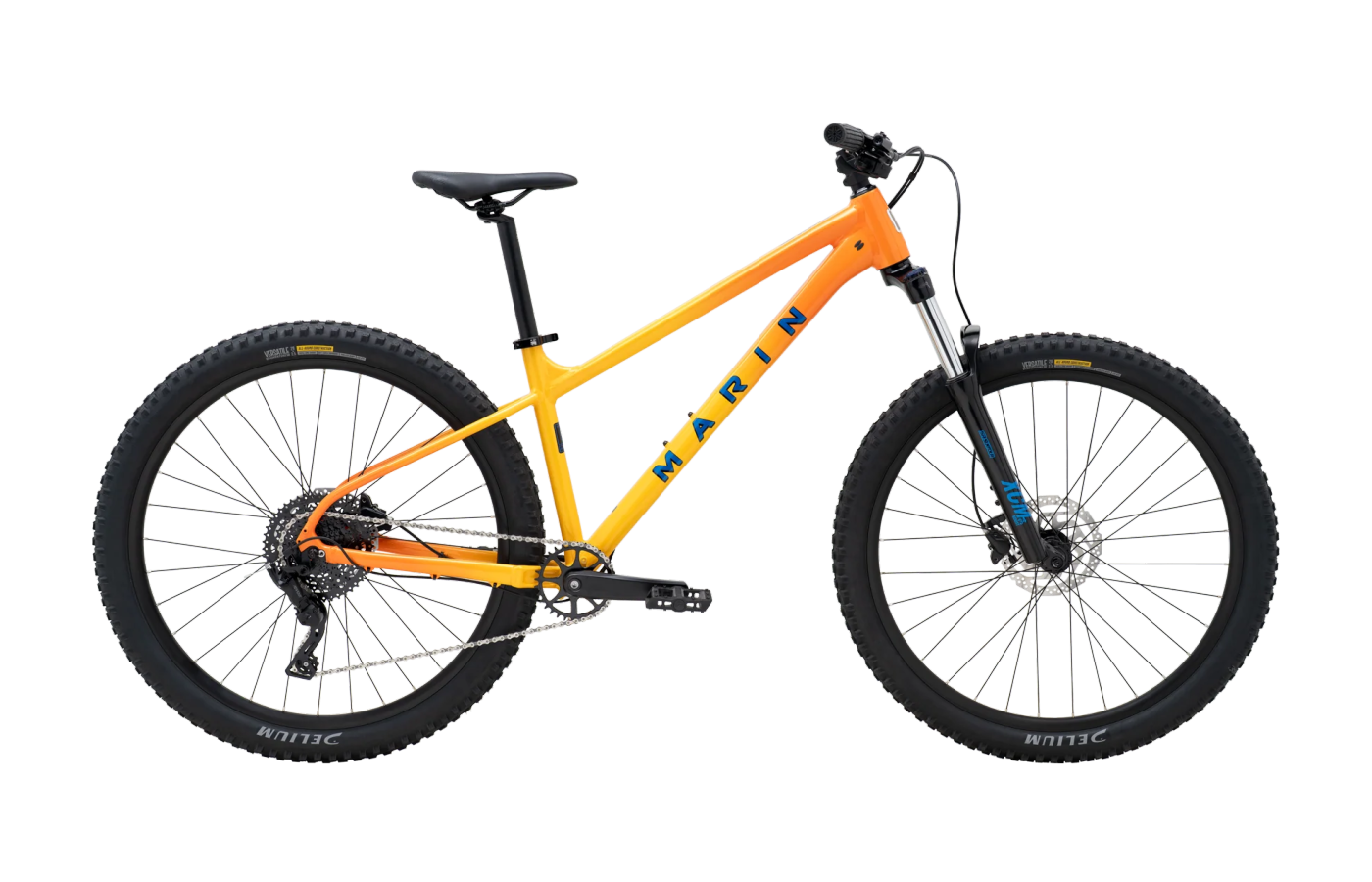
The Marin San Quentin is the value play in this segment — same aggressive-hardtail DNA, $400+ less than the Honzo Base. If you want shred-ready geometry on a tight budget, this is the obvious cross-shop.
Compare →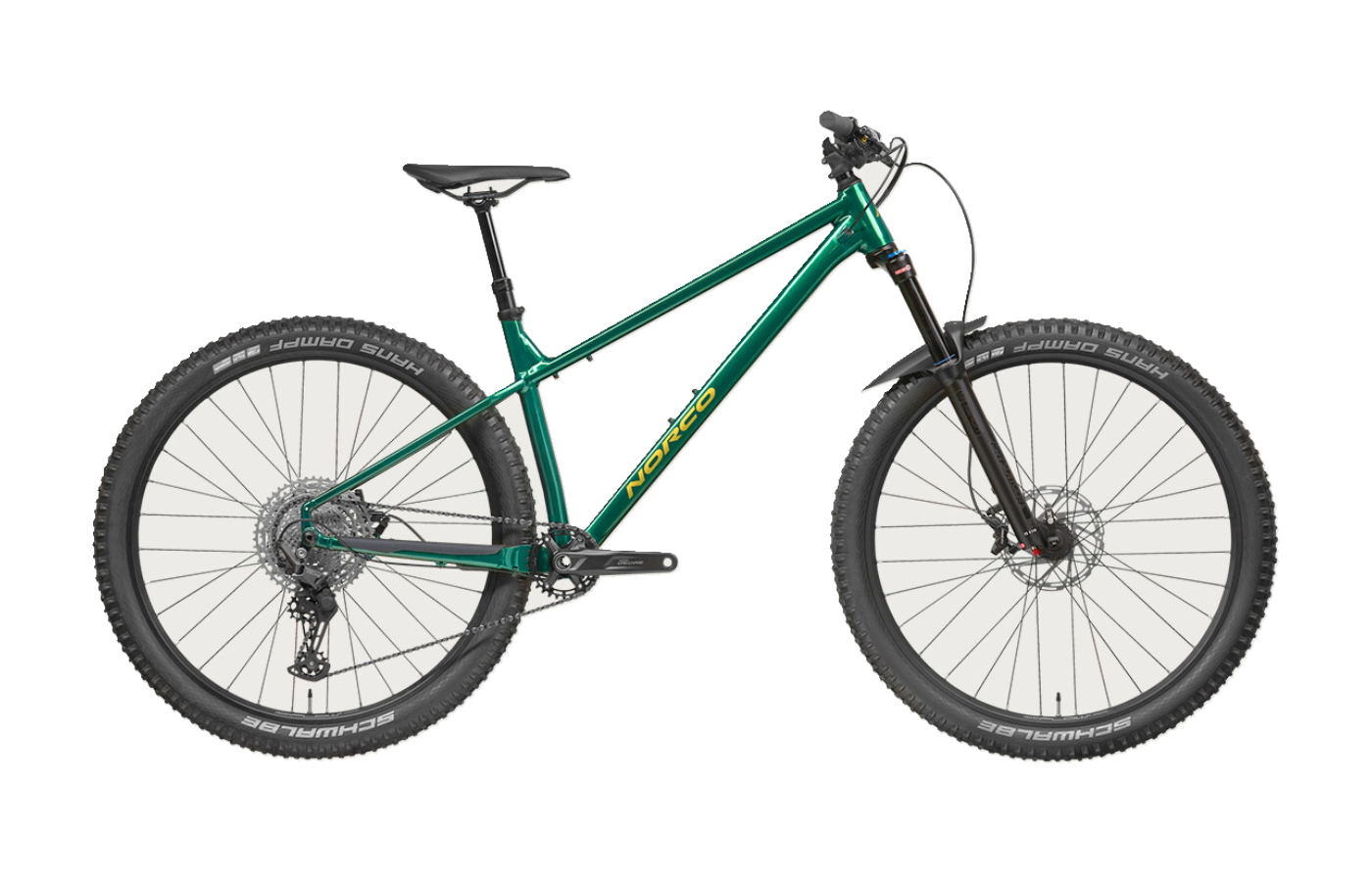
Torrent
The Norco Torrent is the chromoly-steel alternative to the Honzo ESD — built for fast, chunky descents with the natural compliance of steel. Worth a look if the steel Honzo's compliance is what's drawing you in.
Compare →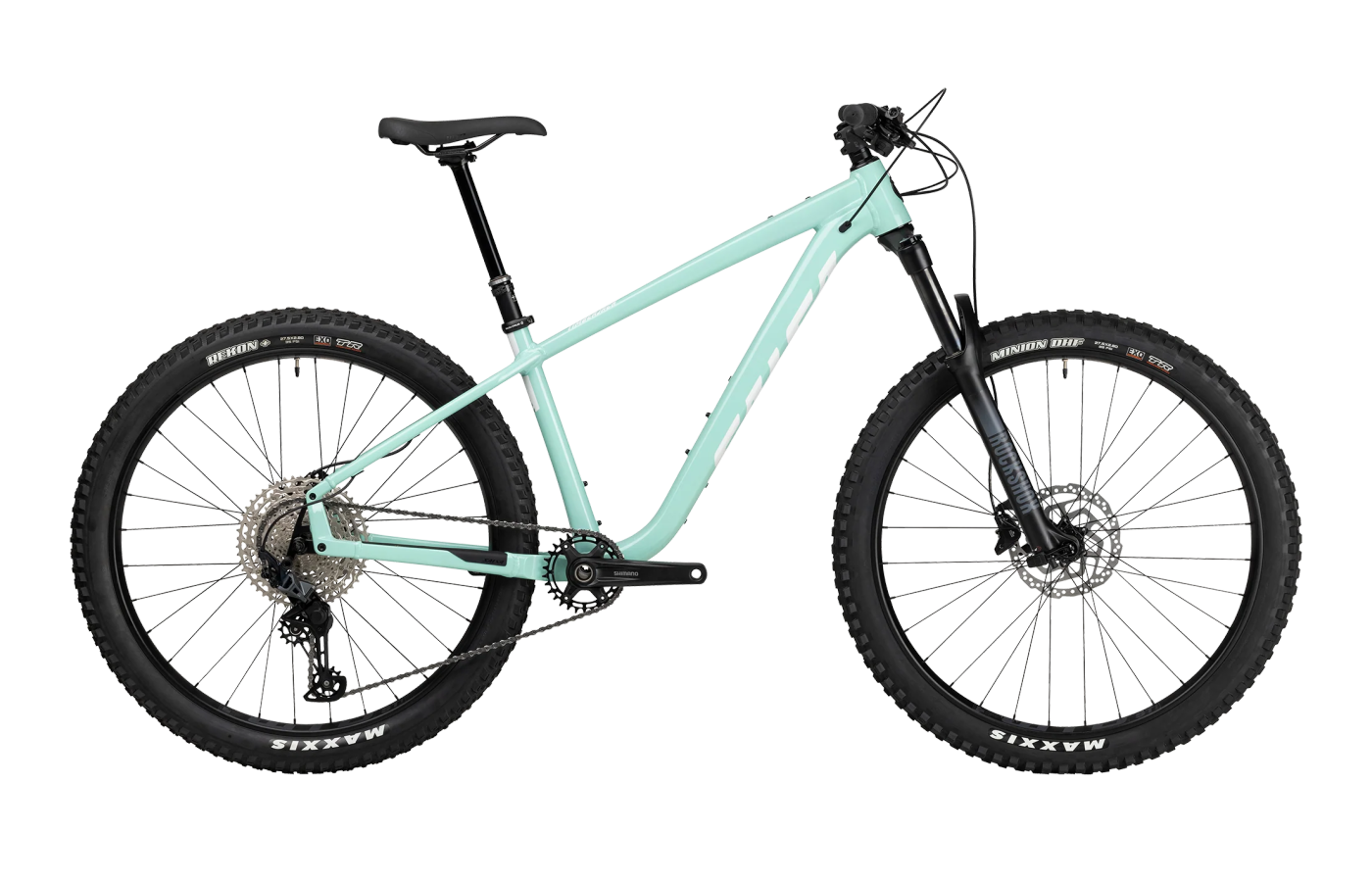
Timberjack
The Salsa Timberjack is the bikepacking-leaning alternative to the Chameleon — fewer convertibility tricks, but a frame designed around long days, multiple mounts, and dropper compatibility. Best if multi-day riding is most of what you do.
Compare →