Honzo
vsTransAM
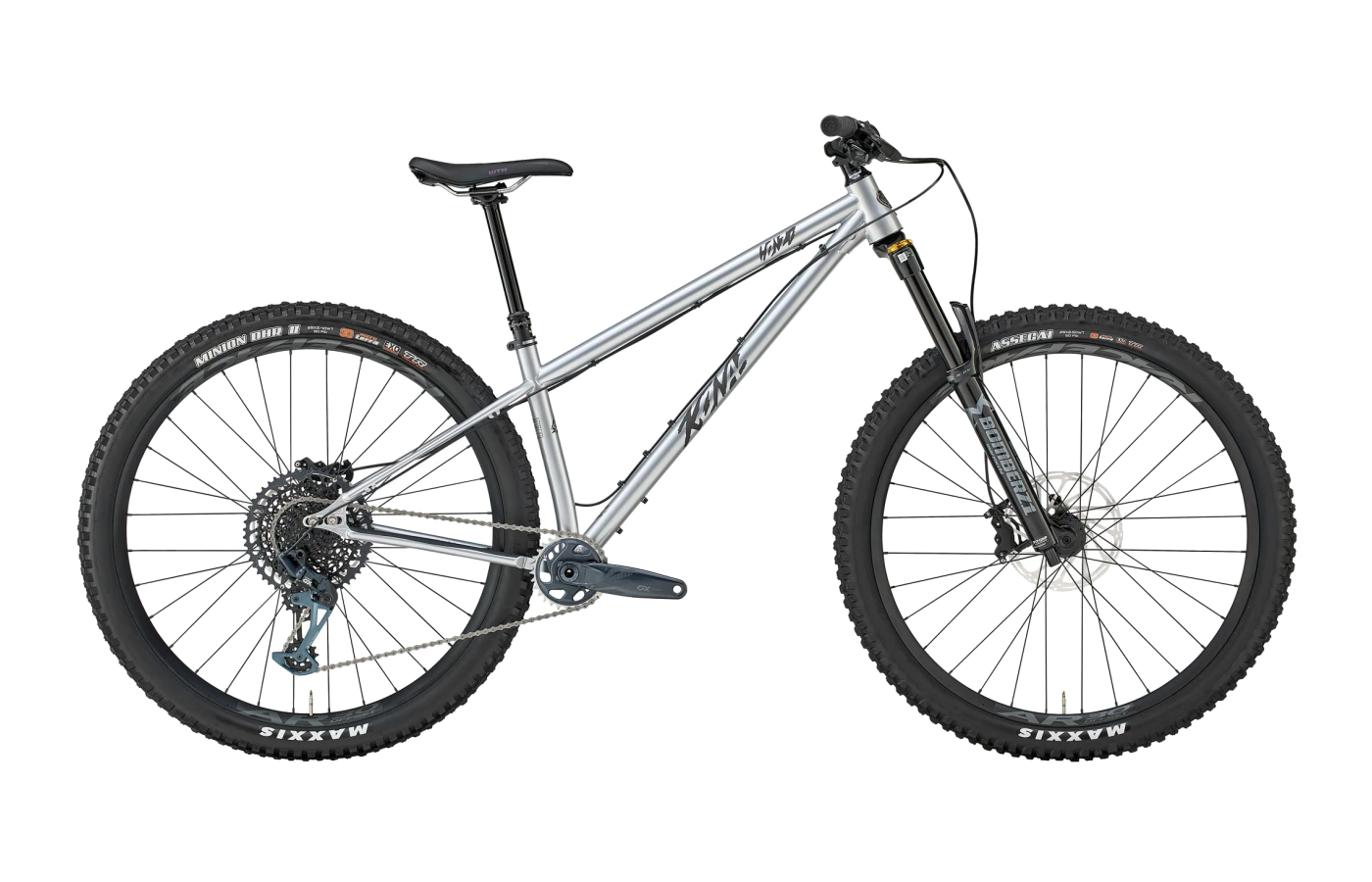
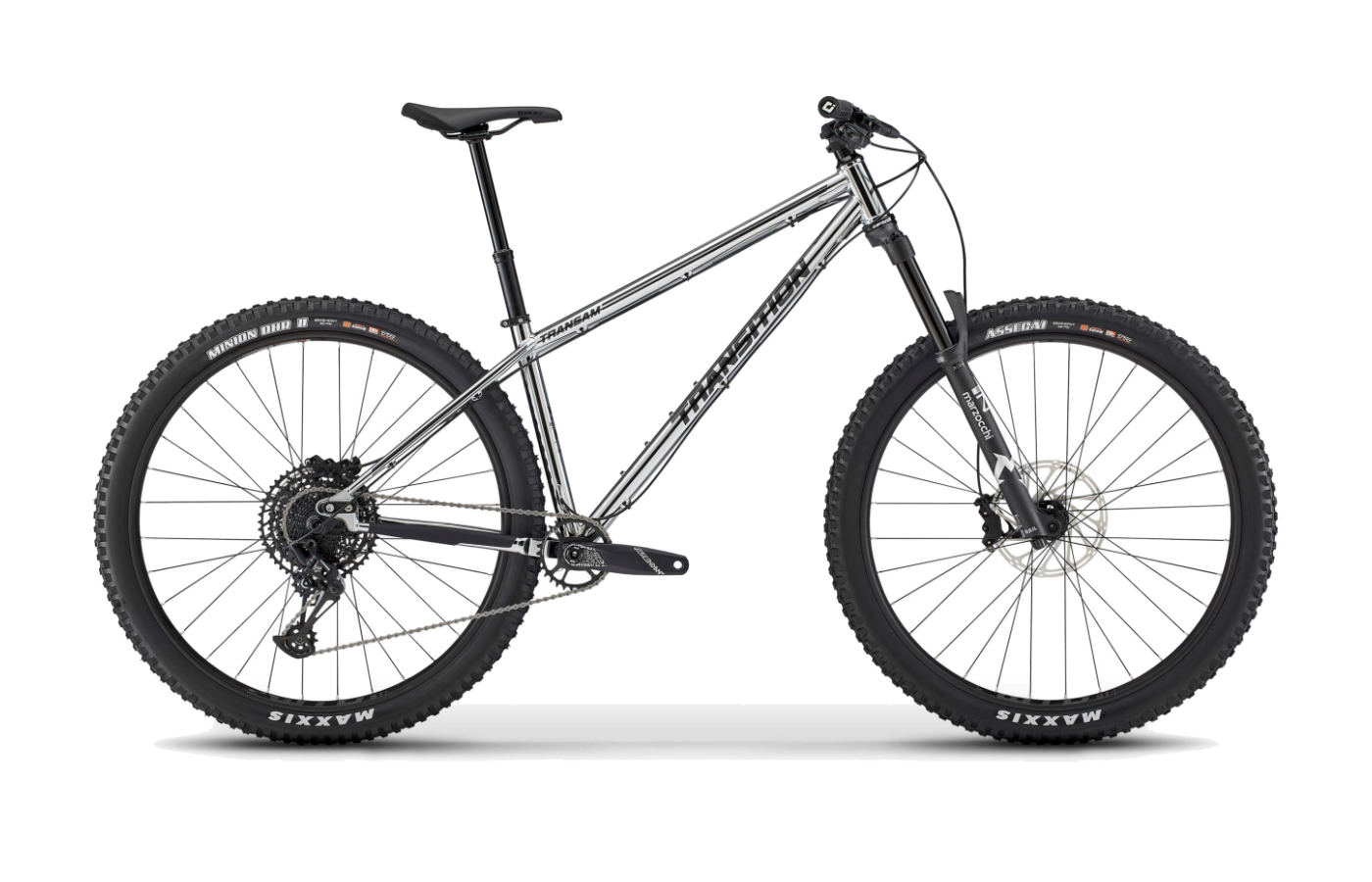
Two steel hardtails, two definitions of 'aggressive.'
The Kona Honzo is the playful all-rounder that wants to manual everything. The Transition TransAM is the planted bruiser built to plow.
Honzo
- Deep build range — from $1,299 alloy Base to $2,399 steel ESD 36SR; you can pick your entry point.
- Playful, snappy handling — short 425 mm chainstays and 66.5 degree head angle reward an active rider.
- Long-running platform with broad dealer support — Kona's network makes parts and warranty easy.
- Aluminum models are notably stiff — lighter riders can feel hammered on chunky terrain.
- Stock Shimano MT410 brakes on the cheaper builds use resin-only rotors, capping upgrade paths.
TransAM
- Glued-to-the-ground stability — 64 degree head angle and 33-pound build hold a line through fast tech.
- Steep 76.5 degree seat tube — excellent technical climber that keeps the front wheel weighted on steep pitches.
- Lifetime frame warranty plus a $799 frame-only option — a real 'forever frame' play.
- Lethargic on flats — the heavy build and slow Maxxis Assegai/DHR II combo are not subtle.
- Only one complete build, at $1,999, with NX Eagle — no entry-level or premium option.
Editor’s analysis
On paper, both are 150 mm chromoly hardtails on 29-inch wheels. On the trail, they barely feel like the same category of bike.
The Kona Honzo and Transition TransAM occupy the same shelf at your local shop, both pitched as steel hardtails for riders who want capability without the maintenance bill of full suspension. Read the geometry charts and you find two very different ideas of what that means. The Honzo runs a 66.5 degree head angle and 1176 mm wheelbase in size M; the TransAM swings to a much slacker 64 degree head angle and a 1219 mm wheelbase in MD. That 2.5 degree gap is the entire difference between a trail hardtail and a hardcore one.
The Honzo is the lighter, livelier bike. Reviewers consistently land on words like 'zippy,' 'snappy,' and 'easy to throw around.' The 425 mm chainstays are short, the 75 degree seat tube is modern but not aggressive, and the bike rewards an active rider who wants to manual rollers and pump every transition. It also gives you a real range — from a $1,299 alloy Base to a $2,399 steel ESD 36SR — so you can buy in cheap and upgrade, or go straight for the chromoly.
The Transition picks one lane and commits. The 76.5 degree seat tube angle puts you over the bottom bracket for steep technical climbs; the slack head angle and 33-pound build weight glue the bike to the ground when things get fast. Multiple reviewers describe it as 'planted' and 'lethargic' on flat ground, then transformed the moment the trail gets steep and chunky. There is exactly one build, at $1,999, with NX Eagle and a 150 mm Marzocchi Z2 — and a $799 frame-only option that the Honzo platform does not offer.
Put another way: the Kona Honzo is the bike you buy when you want one hardtail that does everything from XC laps to weekend chunder. The Transition TransAM is the bike you buy when you already know your trails are steep, your speeds are high, and 'playful' is the last adjective on your wishlist.
Where the builds differ.
Comparing our editor's-pick builds side-by-side. Winners highlighted row-by-row — lower price and weight, and the better-spec component, each mark a point.
Build variants & pricing
The Honzo spans $1,100 of range across four builds; the TransAM ships in a single $1,999 spec (or $2,099 in chrome).
Editor's pick on the Honzo side is the steel ESD 36SR ($2,399, SRAM GX Eagle, Marzocchi Z1) — the closest tier-and-frame-material match to the TransAM Complete ($1,999, SRAM NX Eagle, Marzocchi Z2). Cheaper aluminum Honzo builds (DL, Base) exist if budget is the priority.
How they fit, how they steer.
Kona Honzo M and Transition TransAM MD are both fit-picked sizes. The TransAM sits 5 mm lower, 5 mm longer in reach, 43 mm longer in wheelbase, and a full 2.5 degrees slacker at the head tube — the geometry of a bike built to descend, not pivot.
Which size should I buy?
Both ranges cover S through XL but use different conventions; pick by stack and reach against your usual fit, then expect the TransAM to feel longer at the same nominal label.
→These are starting points. Flexibility, riding style, and preferred position all shift the answer — if you’re between sizes, a professional fit beats a chart.
What the magazines said.
Published reviews from trusted cycling outlets. Click through for the full write-up.
Which one should you buy?
If you want one playful hardtail that does it all on a budget, get the Kona Honzo. If your trails are steep and you only ride one bike for the descents, get the Transition TransAM.
Honzo
If you want a fun, lively hardtail for mixed terrain and you'd rather not buy two bikes, the Honzo is the answer. The cheaper alloy builds get you in the door for $1,299; the steel ESD models are a serious aggressive-trail platform without losing the bike's playful DNA.
TransAM
If your trails are steep, fast, and chunky — and you'd rather plow than pivot — the TransAM is the right tool. Build it from the $799 frame for a custom rig, or take the $1,999 complete and plan to swap tires when you want it to feel quicker.
Questions buyers actually ask.
Short answers to the things we get emailed about most often.
01Which is better for technical descents?
The Transition TransAM, with caveats. The 64 degree head tube angle (vs 66.5 on the Honzo), 1219 mm wheelbase in MD (vs 1176 on the Honzo M), and 33-pound build weight all push the bike into 'planted charger' territory — reviewers consistently rate it among the most composed hardtails in fast, rocky tech.
The caveat is the 150 mm Marzocchi Z2 fork. On successive hits, several reviewers noted a 'stapler effect' where the long travel causes the head angle to oscillate, making the bike less predictable in slow trialsy chunk than in fast braking bumps. The Honzo, with shorter-travel forks (130 to 150 mm depending on build) and steeper geometry, is more agile but gives up high-speed composure.
02Which climbs better?
It depends on the climb. The TransAM's 76.5 degree seat tube angle is steeper than the Honzo's 75 degrees, which puts the rider over the bottom bracket and helps the bike churn over technical climbs without the front wheel wandering.
But the TransAM is a 33-pound bike with slow-rolling Maxxis Assegai/DHR II tires. On smooth fire roads and flats, reviewers describe it as 'lethargic' or feeling like 'lead in the tires.' The lighter Honzo builds — particularly the alloy DL at around 32.5 pounds with faster tires — accelerate noticeably better on mellow ground.
03What's the maximum tire clearance?
Kona Honzo: roughly 61 mm (about 2.4 inches).
Transition TransAM: roughly 63.5 mm (about 2.5 inches).
Both ship with 29x2.5 front and 29x2.4 rear Maxxis tires on the steel builds. The TransAM has the slightly wider tolerance, but the practical difference is small — both bikes will run modern aggressive trail rubber comfortably.
04Steel or aluminum — which Honzo should I get?
If you ride flowy, smoother trails or you're a heavier rider (200 lb+) who likes a stiff platform, the alloy Honzo Base ($1,299) or DL ($1,599) is plenty of bike and the better value.
If you ride chunky, technical terrain and you're a lighter rider, the chromoly ESD ($2,299) or ESD 36SR ($2,399) is significantly more compliant. Reviewers describe the alloy Honzo as 'harsh' on prolonged rough descents — the steel ESD frames specifically address that, with the 36SR adding a SRAM GX Eagle drivetrain over the Shimano XT/SLX of the standard ESD.
05Is the TransAM's NX Eagle drivetrain a problem?
It's the weakest point of the build, but it's not a deal-breaker. SRAM NX Eagle is the entry tier of 12-speed Eagle — it's heavier, shifts a touch less crisply, and falls out of adjustment faster than GX or X0 once worn in.
The TransAM's brakes (SRAM DB8 mineral oil) and dropper (OneUp V2, with 210 mm travel on Large and XL) are genuine highlights at this price. If you buy the complete, plan on the drivetrain being your first upgrade — or skip straight to the $799 frame-only and build it your way.
06Can I run a single speed setup?
Both bikes support it, but the TransAM does it better. Transition's custom sliding dropouts give you 12 mm of chainstay length adjustment (425 to 437 mm) and integrated ISCG tabs, which is exactly what single-speeders look for.
The Honzo DL has had adjustable dropouts in past iterations, but the current ESD models use fixed dropouts. For a dedicated single speed build, the TransAM frame is the more flexible platform.
07What's the long-term ownership story on each?
Kona has a wide dealer network, which makes warranty service and parts straightforward. The aluminum frames are durable; reviewers report no structural concerns over hundreds of miles. The MT410 brakes on cheaper builds wear out and benefit from upgrading to better pads or full caliper swaps.
Transition offers a lifetime frame warranty and a strong crash replacement program — frequently called out as one of the best in the segment. One known issue: early TransAM frames had a slightly oversized seat tube ID (around 31.05 mm vs the 30.9 spec) that caused dropper slippage; carbon paste and a higher torque on the collar resolves it for most riders.
08Which one should I actually buy?
Match the bike to your trails. If you ride a mix of XC, flowy singletrack, and the occasional chunky descent — and you want to spend less or have an upgrade path — the Honzo wins. The alloy DL at $1,599 is one of the best-value trail hardtails on the market.
If your local rides are dominated by steep, sustained, technical descents and you don't mind a heavy bike on the way up — the TransAM is the more capable tool, and the $799 frame-only option makes a custom build genuinely affordable.
Similar bikes
If your priorities don’t map cleanly onto either of these, one of these adjacent bikes probably fits better.
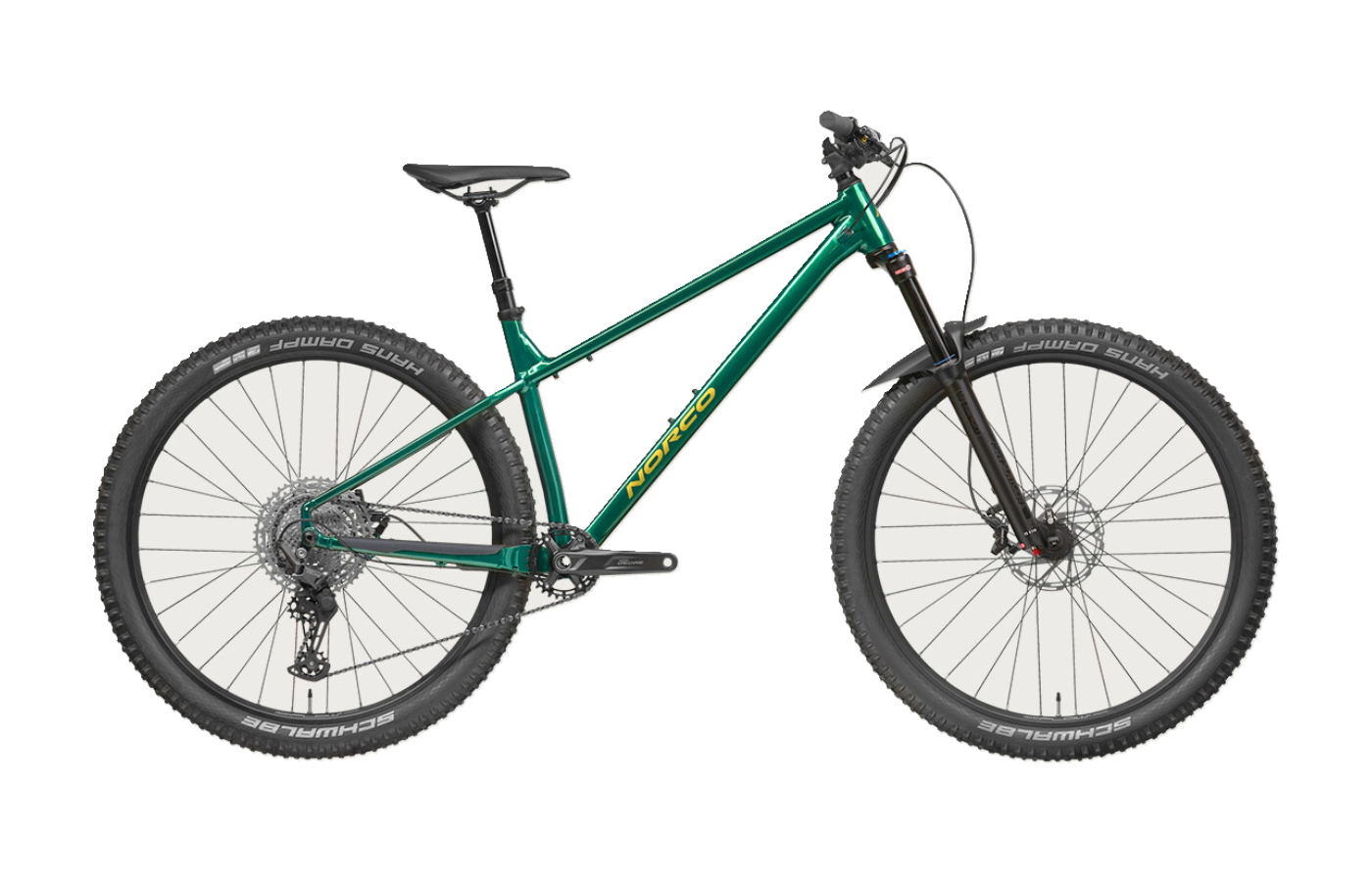
Torrent
Norco's steel hardcore hardtail — sits in the same conversation as the Honzo ESD and TransAM for aggressive geometry and downhill bias. The pick if you want a third option in the same chromoly bruiser bracket.
Compare →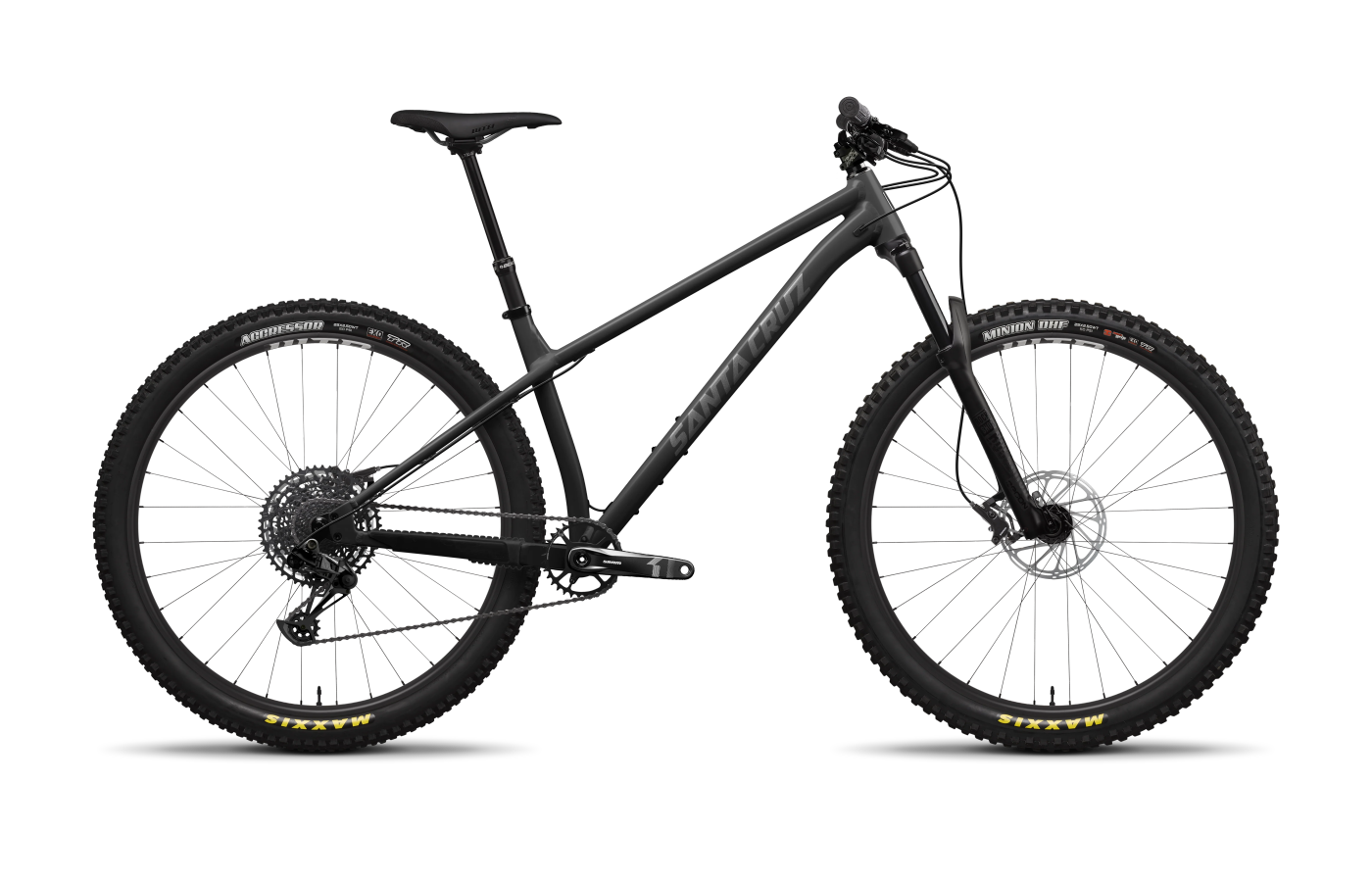
Chameleon
Santa Cruz's playful aluminum hardtail with adjustable dropouts. Splits the difference between the Honzo's livelier feel and the TransAM's burly intent — and you can run it as a single speed without modification.
Compare →Roscoe
Trek's mass-market trail hardtail at a similar price. Less aggressive geometry than either bike here, but the most widely available option if your local Trek dealer is closer than your local Kona or Transition shop.
Compare →