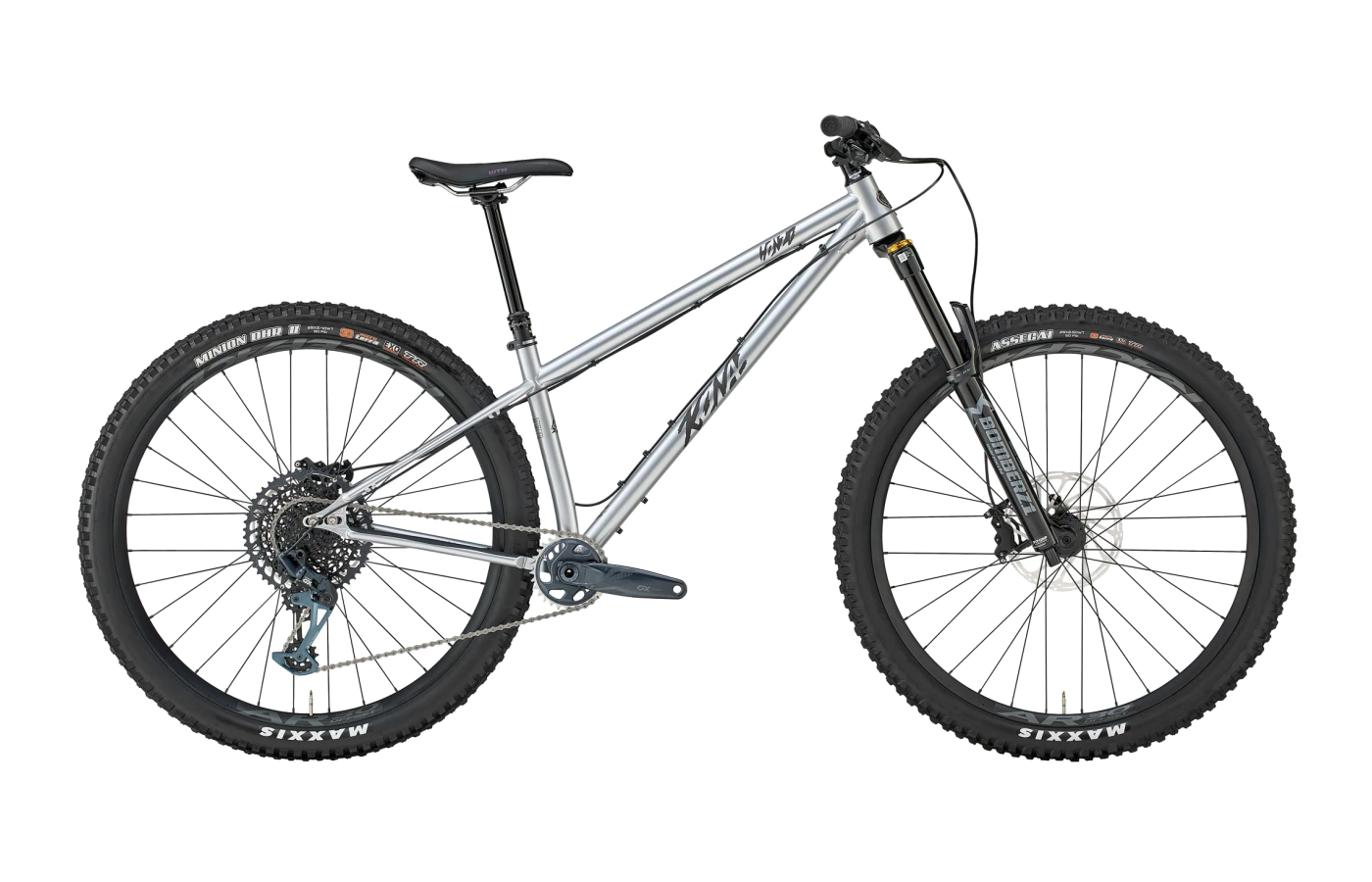
Kona HonzovsTrek Roscoe

The Kona Honzo is the blueprint for the aggressive 29er hardtail, but the Trek Roscoe Gen 4 has grown into a legitimate threat to its dominance. Choosing between them depends on whether you want the modular versatility of a cult classic or the high-tech, overbuilt efficiency of a modern trail slayer.

Kona Honzo
Image pending

Overview

Kona has spent a decade refining the Honzo from a niche steel experiment into a massive family of alloy and steel builds. It remains a "Volkswagen Beetle" of a bike—a versatile platform that riders can lift, lower, or strip down to a single speed. It exists to be tinkered with, offering a range that starts at budget-friendly entry builds like the alloy base model and goes up to the rowdy, steel ESD which uses a 63-degree head angle and a 150mm fork. This modularity is a core part of its identity, allowing for easy geometry tweaks via adjustable dropouts on the higher-end builds. Trek takes a more focused approach with the Roscoe Gen 4, treating the aluminum frame as a high-performance chassis rather than an entry-level compromise. By using their Alpha Platinum Aluminum, Trek gives the Roscoe the same material tech found in their full-suspension enduro rigs. The Gen 4 Roscoe is a "heavy-duty" hardtail through and through, designed to bridge the gap between playful trail sessions and aggressive enduro descents. While Kona offers more frame material variety, Trek delivers a more unified, modern vision of what a high-end alloy hardtail should be.

Ride and handling

The alloy Honzo is a zippy, energetic climber, but that speed comes with a harsh reality when the trail turns chunky. Reviewers frequently note that the 6061 frame is stiff enough to "rattle a lighter rider to pieces," transmitting every root and rock directly to the ankles and knees. It excels on smooth PNW flow where that stiffness translates into instant acceleration, but in rockier terrain like Sedona, the rear end becomes "bouncy" and struggles for traction compared to more compliant frames. If you want a more supple ride from Kona, you have to spend the extra money on the steel ESD model, which is noticeably more damped and forgiving. Trek manages the hardtail trade-off by throwing more suspension and better components at the problem. The 150mm Fox Rhythm 36 fork on the Roscoe 8 provides a massive amount of front-end confidence, using 36mm stanchions to stay composed where thinner forks like the RockShox Recon might flex. While it can’t escape its hardtail nature on long, chattery descents, the Roscoe feels "battleship calm" at speed. The nearly instantaneous engagement of the 108-point rear hub makes it feel significantly more responsive than its 32.5-pound weight suggests during technical maneuvers. Cornering highlights the different philosophies: the Honzo uses ultra-short 415mm to 425mm chainstays to make the bike a "speed demon on tight and twisty singletrack." It pops into manuals and bunny hops with very little effort. The Roscoe, with its 65-degree head angle and longer travel fork, feels more like a mini-enduro bike. It demands a more aggressive stance over the front wheel but rewards the rider with a level of stability on steep drops that the steeper 66.5-degree Honzo can't quite match.

Specifications

Trek wins the braking and hub battle across most comparisons. The Roscoe 8 features four-piston Shimano Deore brakes paired with a massive 203mm front rotor, offering stopping power that is far beyond its price point. Kona often falls short here; several builds use Shimano MT410 calipers and "resin-only" rotors that fade on steep descents and prevent riders from simply swapping in more durable metallic pads without buying new discs. This is a real weakness for a bike that encourages aggressive riding. The Honzo ESD 36SR build stays competitive with a SRAM GX Eagle drivetrain and a 150mm Marzocchi Bomber Z1 fork, which is a stout, reliable combo for $2,399. However, Trek’s inclusion of the 108-point Rapid Drive hub is a major value-add that gives the Roscoe a premium feel on technical climbs. Kona sticks to more traditional Shimano or Formula hubs on its aluminum models that lack that instant "snap" when you need to ratchet through a rock garden. Cockpit quality is a mixed bag for both. Trek includes a high-rise 40mm handlebar that makes for a very comfortable, upright position, but they use a low-quality stem shared with their budget Marlin series. Kona’s finishing kit is generally solid, but their stock grips are famously firm and are usually the first thing owners replace. Both bikes use reliable TranzX dropper posts, but Trek’s frame design allows for a 200mm post even on medium frames, which is a significant advantage for clearing the saddle on steep terrain.

HonzoRoscoe
FRAMESET
FrameKona 6061 Aluminum Butted
ForkRockShox Recon RL Solo Air, 130mm, tapered steerer, 110mm spacing (Boost)
Rear shock
GROUPSET
Shift leversShimano Deore, 11-speed
Front derailleur
Rear derailleurShimano Deore, 11-speed
CassetteShimano Deore, 11-speed, 11-51T
ChainKMC X11
CranksetShimano Deore crankarms, 30T chainring
Bottom bracketShimano Deore, 73mm
Front brakeShimano MT410 hydraulic disc
Rear brakeShimano MT410 hydraulic disc
WHEELSET
Front wheelWTB ST i30 TCS; Shimano 110x15mm (Center Lock); Stainless black 14g
Rear wheelWTB ST i30 TCS; Shimano 148x12mm (Center Lock); Stainless black 14g
Front tireVee Tire Flow Snap Tackee TR 29x2.35
Rear tireVee Tire Crown Gem DCC TR 29x2.3
COCKPIT
StemKona XC/BC 35
HandlebarsKona XC/BC 35
SaddleKona Trail
SeatpostTranzX Dropper +RAD, internal routing, 31.6mm, with Shimano lever
Grips/TapeKona Key Grip

Geometry and fit comparison

The Honzo remains a pioneer of the short-rear-end philosophy, with chainstays as short as 415mm and adjustable dropouts on the DL and ESD builds. A 480mm reach on a size Large is long and spacious, providing plenty of room to move, but the 66.5-degree head angle is conservative compared to the latest "hardcore" hardtails. It is a geometry that favors agility over absolute speed, making it perfect for riders who spend their time on technical, low-speed trails where quick direction changes are more important than plowing through rocks. Trek goes slacker and more aggressive with a 65-degree head angle and a 76-degree seat angle. This positioning keeps the rider centered for efficient seated climbing, which is necessary to counteract the dive of a 150mm travel fork. While the 470mm reach on the Roscoe Large is slightly shorter than the Honzo's 480mm, the slacker head angle gives it a similar wheelbase and a more stable footprint when the trail gets steep. The most clever piece of Trek's geometry isn't a length or an angle, but the removal of bottle bolts on the seat tube to allow for maximum seat post insertion. This allows the Roscoe to fit a massive 200mm dropper post, letting the saddle essentially disappear. For riders with shorter legs or those who want total freedom of movement, this is a massive benefit that the Honzo's more traditional seat tube design can't match.

vs
FIT GEOHonzoRoscoe
Stack655
Reach480
Top tube638
Headtube length120
Standover height728
Seat tube length450
HANDLINGHonzoRoscoe
Headtube angle66.5
Seat tube angle75
BB height315
BB drop60
Trail
Offset42
Front center787
Wheelbase1205
Chainstay length425

Who each one is for

Kona Honzo

The Honzo is the right choice for the tinkerer who values modularity and a zippy, manual-happy rear end. If you want a bike that can be a single-speed one month and a 140mm trail-shredder the next, the Honzo’s adjustable dropouts and versatile frame make it the perfect platform. It suits riders on smoother, flowier trails where the stiffness of the aluminum frame acts as an asset for acceleration rather than a liability for comfort.

Trek Roscoe

The Roscoe is for the rider who wants a high-performance, "pro-level" aluminum hardtail that can handle legitimate enduro terrain. If you spend your weekends on steep, rocky descents and need a bike with "insane" braking power and a saddle that gets completely out of the way, this is the better chassis. It is the better choice for heavier riders who need the stiffness of a Fox 36 fork and the immediate engagement of a high-end hub to keep things moving.

Other bikes to consider

Santa Cruz Chameleon
Marin San Quentin
Marin San Quentin
Rocky Mountain Growler