Libre
vsOuroboros
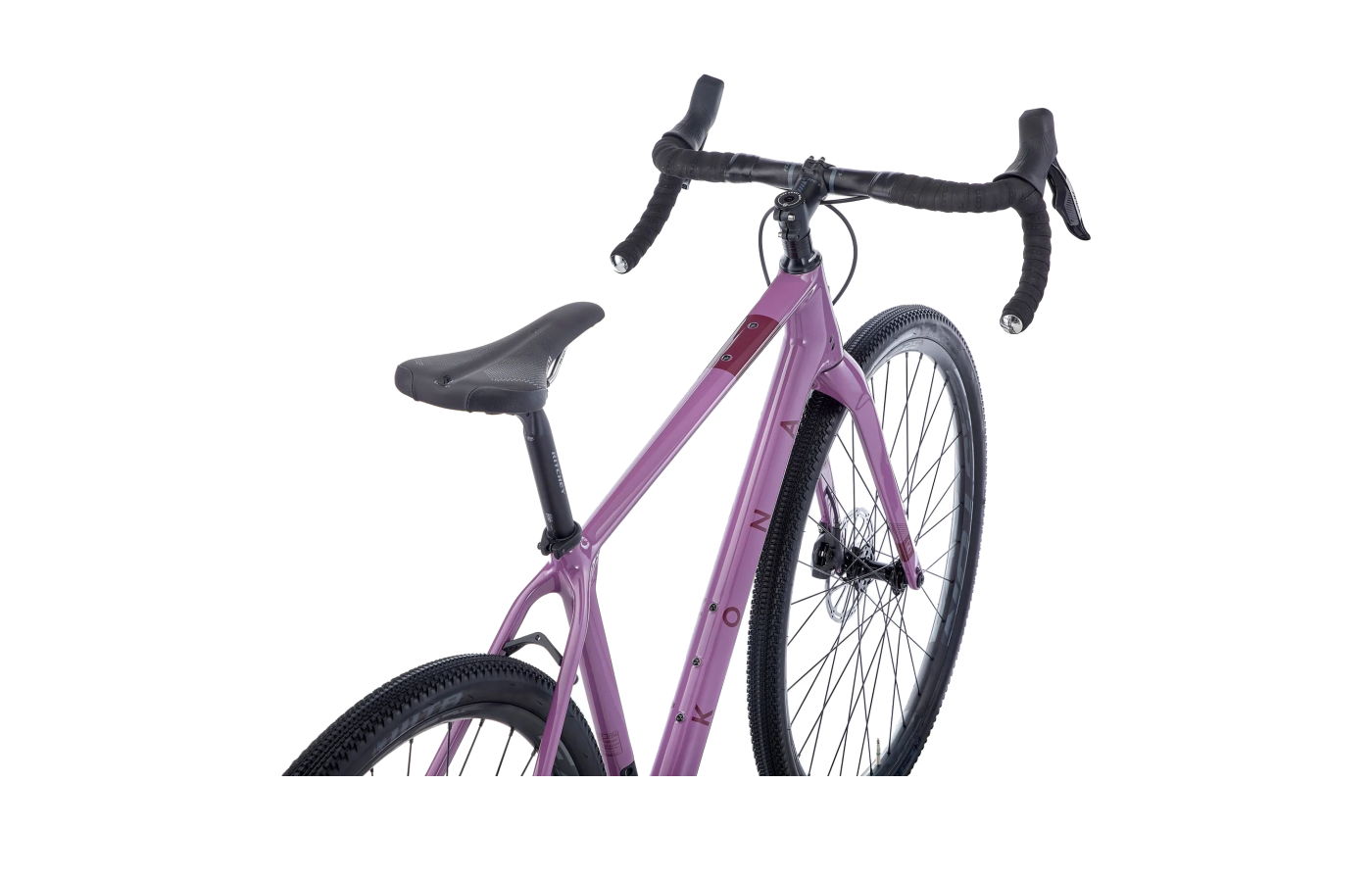
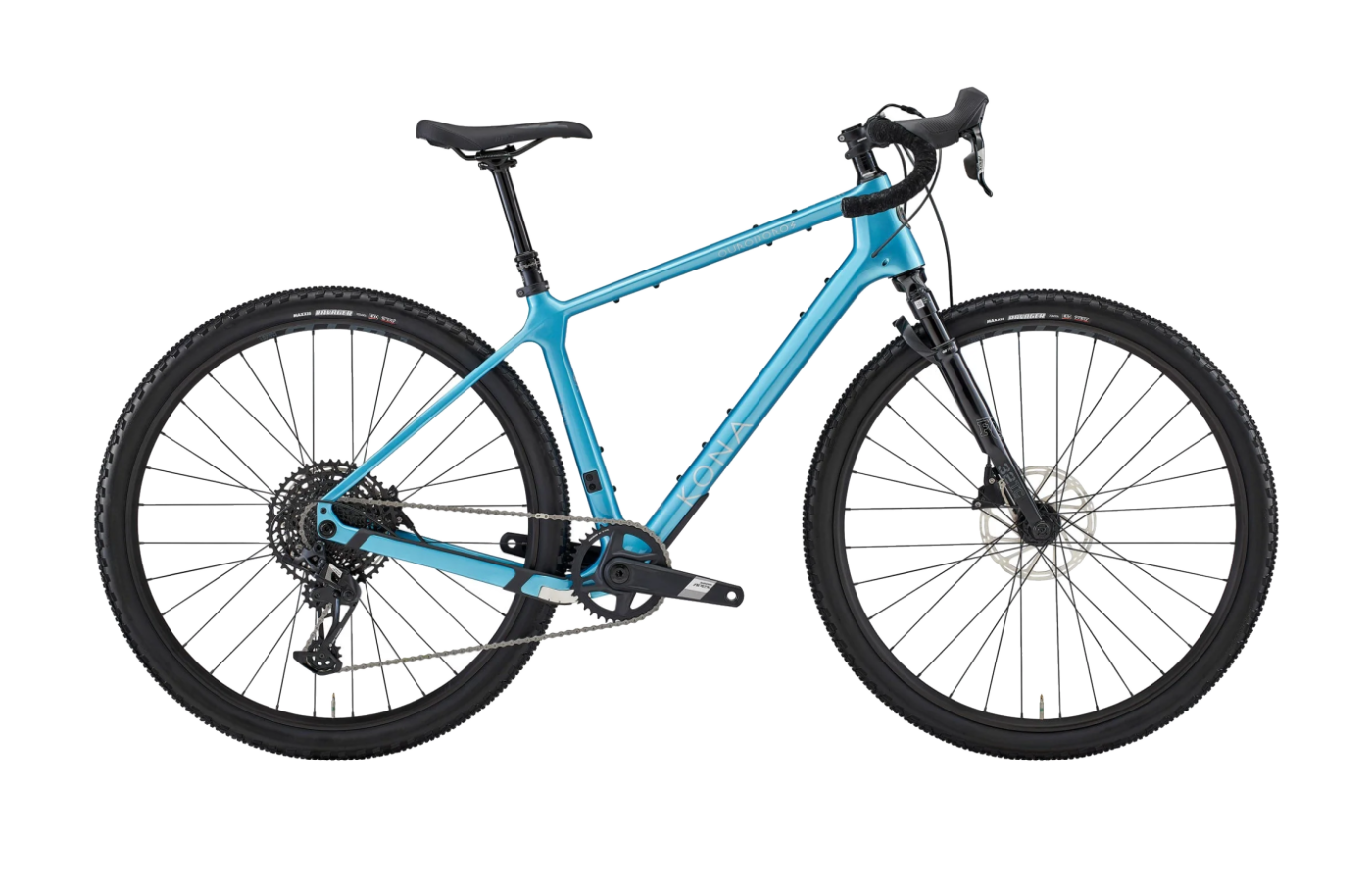
Same brand, opposite ends of the gravel spectrum.
The Libre is Kona's gravel racer — rigid, low, snappy. The Ouroboros is the suspended, slack, wide-bar drop-bar mountain bike for everything else.
Libre
- Faster and snappier — G2's steeper seat tube, shorter 435 mm chainstays, and longer reach make it eager to climb and accelerate.
- Cheaper carbon entry — $4,399 for a wireless-shifted carbon gravel bike with a UDH-equipped frame is competitive in 2025.
- Easier to live with — rigid fork, fully-guided internal cable routing, standard 27.2 mm seatpost, no shock to service.
- Limits show on chunky terrain — reviewers consistently call it less surefooted than the Ouroboros once the surface gets rough.
- Only two builds in the lineup, with a $2,300 jump between alloy Base and carbon CR — no mid-tier option.
Ouroboros
- Suspension changes the equation — a 40 mm fork plus 180 mm rotors and a dropper turn rough fire roads and singletrack into in-bounds terrain.
- Stable, planted geometry — 68.7-degree head angle, 445 mm chainstays, and the upright stack inspire confidence loaded or unloaded.
- Four-build range — from a $2,499 alloy starter to a $6,999 Force AXS / Eagle Transmission Supreme, depending on how deep you want to go.
- Heavier and less lively on tarmac — reviewers note it's not the bike for tight road cornering or a fast paceline.
- No traditional rear rack mounts — Kona only approves Tailfin-style axle-mounted racks, limiting touring loadouts.
Editor’s analysis
Two Konas, one badge — but the geometry charts barely speak the same language.
On the surface, both bikes are carbon, both clear 50 mm tires, both come built around SRAM AXS or Apex drivetrains. Look closer and the philosophies split hard. The Kona Libre is the second-generation race-leaning Libre — a 70.5-degree head tube angle, 435 mm chainstays, a steeper seat tube, and a rigid carbon fork that Kona will void the warranty on if you bolt a suspension fork to it. It's pitched at long, fast gravel days and the occasional race start.
The Kona Ouroboros lives in a category Kona basically invented for itself. A 68.7-degree head tube angle, 445 mm chainstays, a 40 mm-travel suspension fork (Fox TC32 or RockShox Rudy depending on build), 180 mm rotors front and rear, and a dropper post on every model. Reviewers at NSMB, Bikepacking.com, and The Radavist all describe it the same way — a drop-bar XC bike with gravel branding.
The geometry deltas are not subtle. At our fit-picked sizes (Libre 50, Ouroboros 52 — both for a 5'8" rider), the Ouroboros sits 16 mm taller in stack and 8 mm shorter in reach. Its head tube is 1.8 degrees slacker. Its wheelbase is 31 mm longer. The Libre wants to be tucked low and pedaled hard; the Ouroboros wants to be pointed downhill at things a Libre rider would walk around.
Pricing follows the philosophy. The Libre lineup tops out at $4,399 with the carbon CR. The Ouroboros stretches from $2,499 (alloy Base, microSHIFT) all the way to $6,999 (Supreme, Force AXS, RockShox Reverb, Zipp 101 XPLR). If you want carbon with electronic shifting on the Libre, the CR at $4,399 is the only option; the Ouroboros gives you three carbon tiers to pick from.
Where the builds differ.
Comparing our editor's-pick builds side-by-side. Winners highlighted row-by-row — lower price and weight, and the better-spec component, each mark a point.
Build variants & pricing
The Libre runs two builds; the Ouroboros runs four. Both share Kona's carbon frame at the upper tiers — what changes is the fork, the drivetrain, and how much suspension you're paying for.
Editor's picks are tier-matched on SRAM Apex 1x12 and a carbon frame. The Libre CR runs Apex AXS wireless; the Ouroboros CR is mechanical Apex — Kona has no entry-level Apex AXS Ouroboros build, so this is the closest apples-to-apples carbon pairing.
How they fit, how they steer.
The fit-picked sizes for a 5'8" rider — Libre 50 and Ouroboros 52. The Ouroboros sits 16 mm taller in stack and 8 mm shorter in reach despite the larger nominal label, with a 1.8-degree slacker head tube and a 31 mm longer wheelbase.
Which size should I buy?
Both ranges run 48–58. Stack and head angle differ enough that the same nominal size feels meaningfully different on each bike — pick by stack and reach, not the number on the seat tube.
→These are starting points. Flexibility, riding style, and preferred position all shift the answer — if you’re between sizes, a professional fit beats a chart.
What the magazines said.
Published reviews from trusted cycling outlets. Click through for the full write-up.
Which one should you buy?
If you want a fast, low gravel race bike, get the Libre. If you'd rather have suspension, dropper, and slack geometry for chunkier terrain, get the Ouroboros.
Libre
If most of your riding is fast group gravel, mixed-surface long days, and the occasional race start — and you don't care about descending technical singletrack on a drop bar — the Libre is the snappier, lighter, easier bike. The G2's geometry update finally makes it feel competitive against modern aggressive gravel race bikes.
Ouroboros
If your gravel rides routinely include singletrack, washboard fire roads, or multi-day bikepacking on terrain a normal gravel bike makes you wince through — the Ouroboros is genuinely a different kind of tool. It's slower on pavement and harder to sprint, and that's the point.
Questions buyers actually ask.
Short answers to the things we get emailed about most often.
01Can I put a suspension fork on the Libre?
No. Kona explicitly states the Libre G2's geometry is not suspension-corrected, and bolting a suspension fork to it voids the frame warranty. If you want front suspension on a drop-bar Kona, the Ouroboros is the bike — it's designed around a 40 mm-travel fork from the ground up.
02How much tire clearance do they have?
Both frames clear up to 50 mm tires. The Libre ships with 700x45c WTB Vulpines on both builds; the Ouroboros ships with 700x50c Maxxis Ravagers on the Supreme and CR. Reviewers at NSMB note the Ouroboros can run up to 2.5" with a rigid fork option, but the suspension-fork builds cap at 50c.
03Why is the Ouroboros so much more expensive at the top end?
The Libre lineup stops at $4,399 because Kona only offers two builds — alloy Base and carbon CR. The Ouroboros runs four builds spanning $2,499 to $6,999, with the Supreme adding a RockShox Rudy Ultimate XPLR fork, RockShox Reverb AXS dropper, SRAM Force AXS shifters paired with X0 Eagle Transmission, and Zipp 101 XPLR carbon wheels.
There's no Libre-equivalent Supreme tier. If you want flagship Kona gravel, the Ouroboros is the only path.
04Is the Ouroboros really a gravel bike or a mountain bike with drop bars?
Reviewers keep landing on both, deliberately. NSMB calls it "a bit of a freak" living between the categories. Bikepacking.com compares it to a Salsa Cutthroat with sharper edges. The Radavist describes it as "next-gen gravel."
The geometry tells the same story: 68.7-degree head tube angle, 445 mm chainstays, suspension fork, 180 mm rotors, dropper post. That's a hardtail XC spec sheet attached to drop bars. If you're coming from mountain biking, it'll feel familiar. If you're coming from road, it'll feel slow on pavement.
05How much taller is the Ouroboros at the same rider size?
At our fit-picked sizes — Libre 50 vs Ouroboros 52 for a 5'8" rider — the Ouroboros stack is 16 mm taller (581 mm vs 565 mm) and reach is 8 mm shorter (377 mm vs 385 mm). That's a meaningfully more upright cockpit, and it's by design.
If you compared at the same nominal label (both at 52), the gap widens — Ouroboros 598 mm stack vs Libre 580 mm. Either way, the Ouroboros sits the rider up and back; the Libre tucks them down and forward.
06Which one is better for bikepacking?
Depends on the route. For smooth-to-moderate gravel and graded forest road tours, the Libre is lighter, faster, and has plenty of frame-bag space. GearJunkie's reviewer ran a 168-mile loaded trip on the Libre CR with no complaints.
For rougher terrain — washboard, chunder, hike-a-bike sections, multi-day singletrack — the Ouroboros's suspension and slack geometry make a real difference, and it's the more comfortable bike to live on for days. Caveat: the Ouroboros has no traditional rear rack mounts. Kona only approves Tailfin-style axle racks. Pannier-tour riders should look at the Kona Sutra instead.
07Are both compatible with a 2x drivetrain?
Yes — both frames are 2x compatible. The Libre Base ships with a Shimano Cues 2x10 setup; the Ouroboros CR/DL ships with SRAM Rival eTap AXS Wide 2x12. Note that BikeRadar criticized the 2x setup on the Ouroboros as "at odds" with the bike's adventurous spirit, citing reduced tire clearance and dropper compatibility. 1x is the default on every other build for a reason.
08What's the warranty?
Both bikes carry a lifetime frame warranty to the original owner against manufacturing defects, with a one-year warranty on the complete bicycle. Reviewers have flagged Kona's recent corporate ownership changes as a question mark on long-term support, though there's been no reported impact on warranty service to date.
Similar bikes
If your priorities don’t map cleanly onto either of these, one of these adjacent bikes probably fits better.
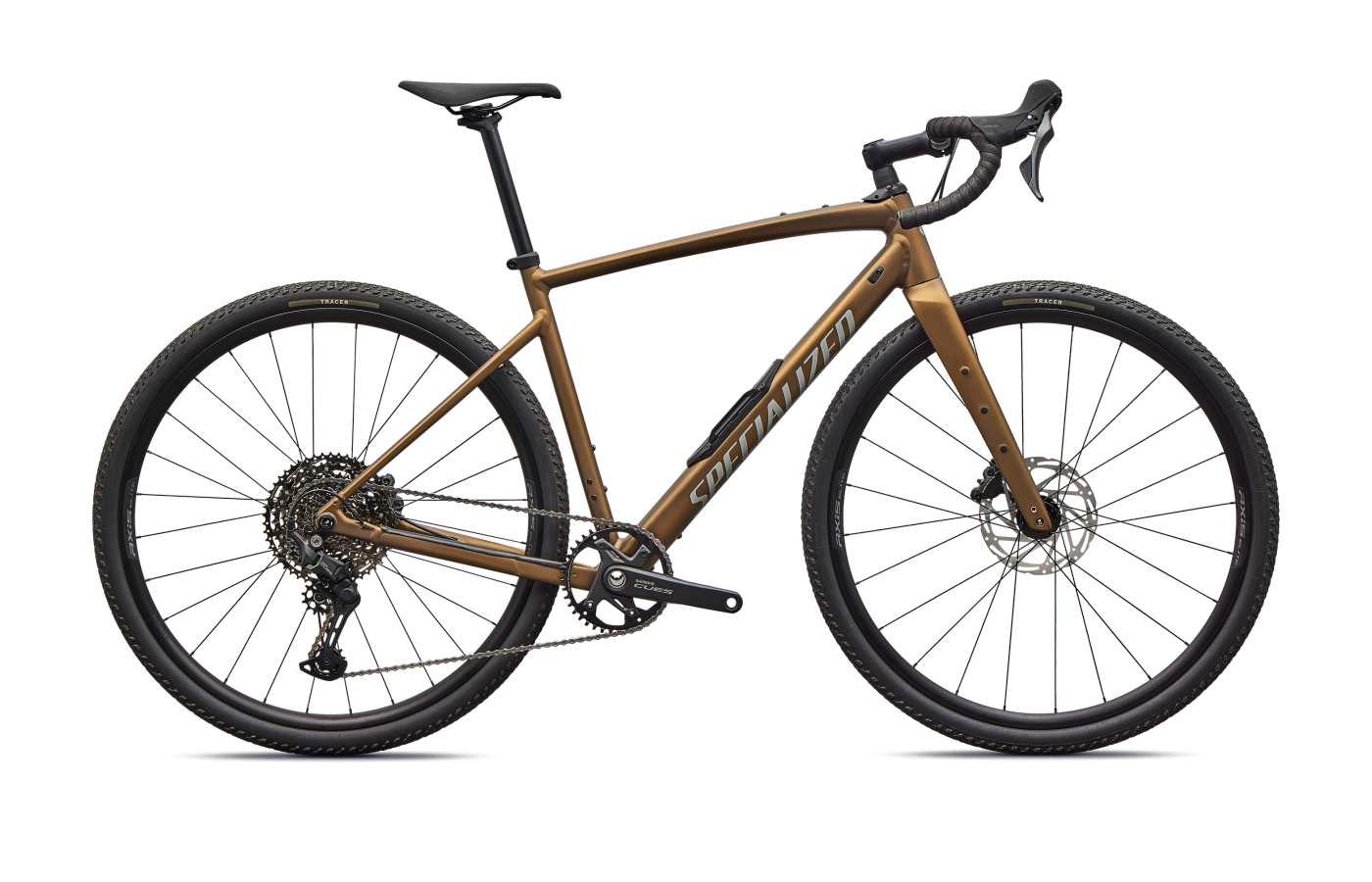
Diverge
The Specialized Diverge splits the difference with its Future Shock head-tube suspension — front-end compliance without committing to a full suspension fork. A more conventional gravel geometry than the Ouroboros, but a similar appetite for rough roads.
Compare →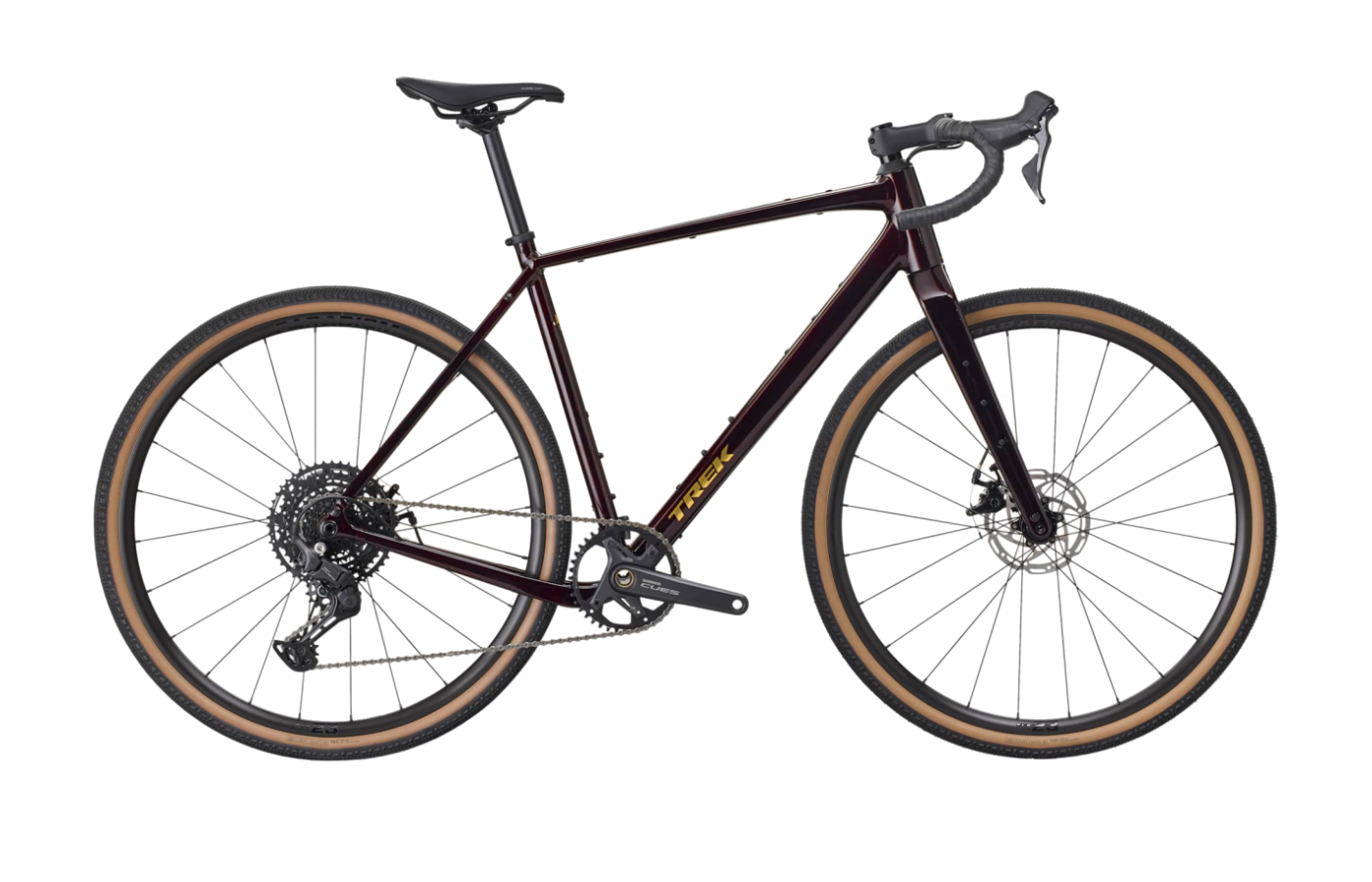
Checkpoint
The Trek Checkpoint covers both ends of this comparison in one model line — race-tuned SLR builds compete with the Libre, while ALR/SL adventure builds compete with the Ouroboros. A bigger range of price points than either Kona.
Compare →Grizl
The Canyon Grizl is the rugged alternative to the Ouroboros for riders who want clearance and stability without the suspension fork. Direct-to-consumer pricing, rigid carbon fork, and tire clearance that pushes into MTB territory.
Compare →