Libre
vsRove
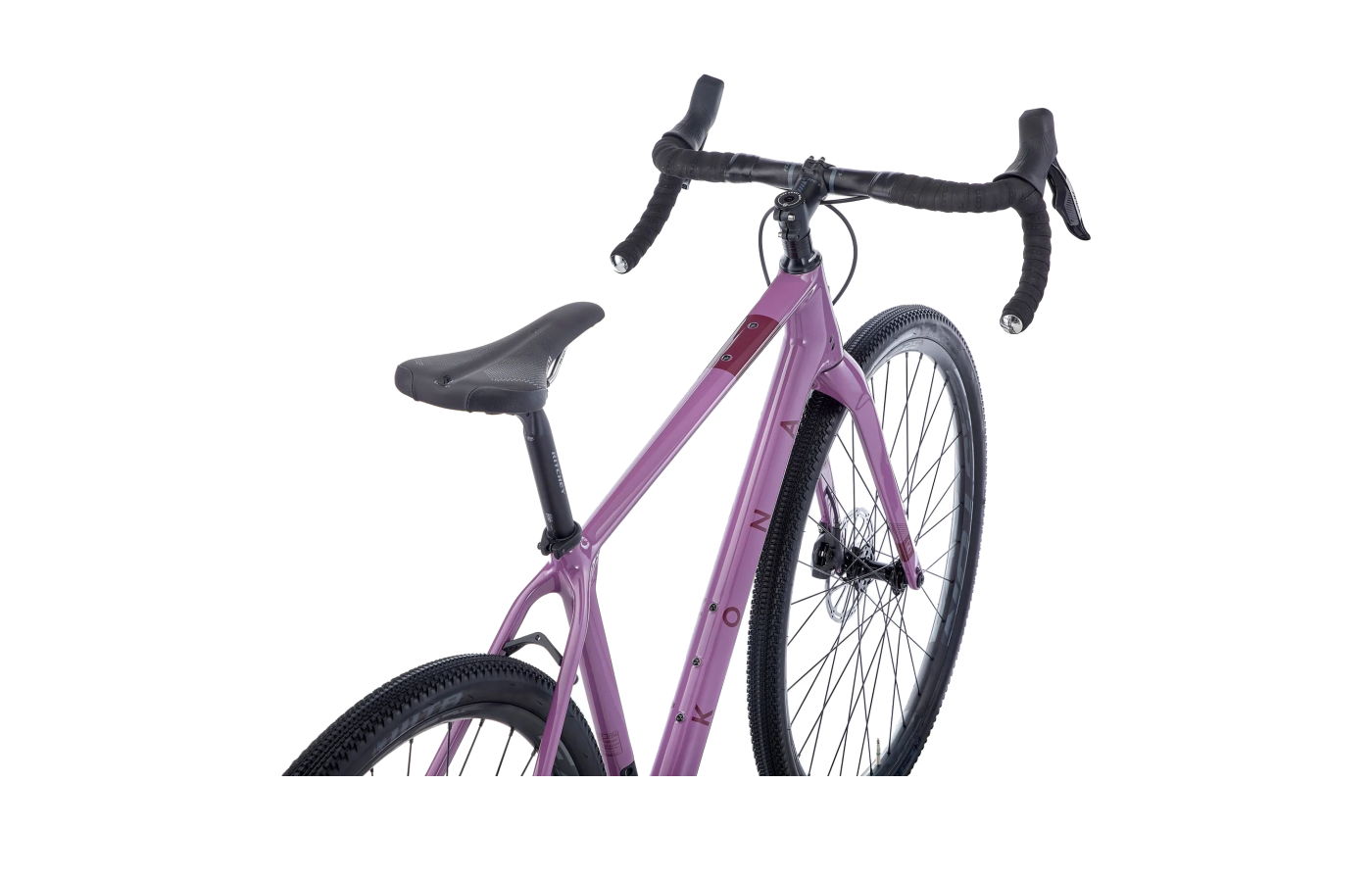
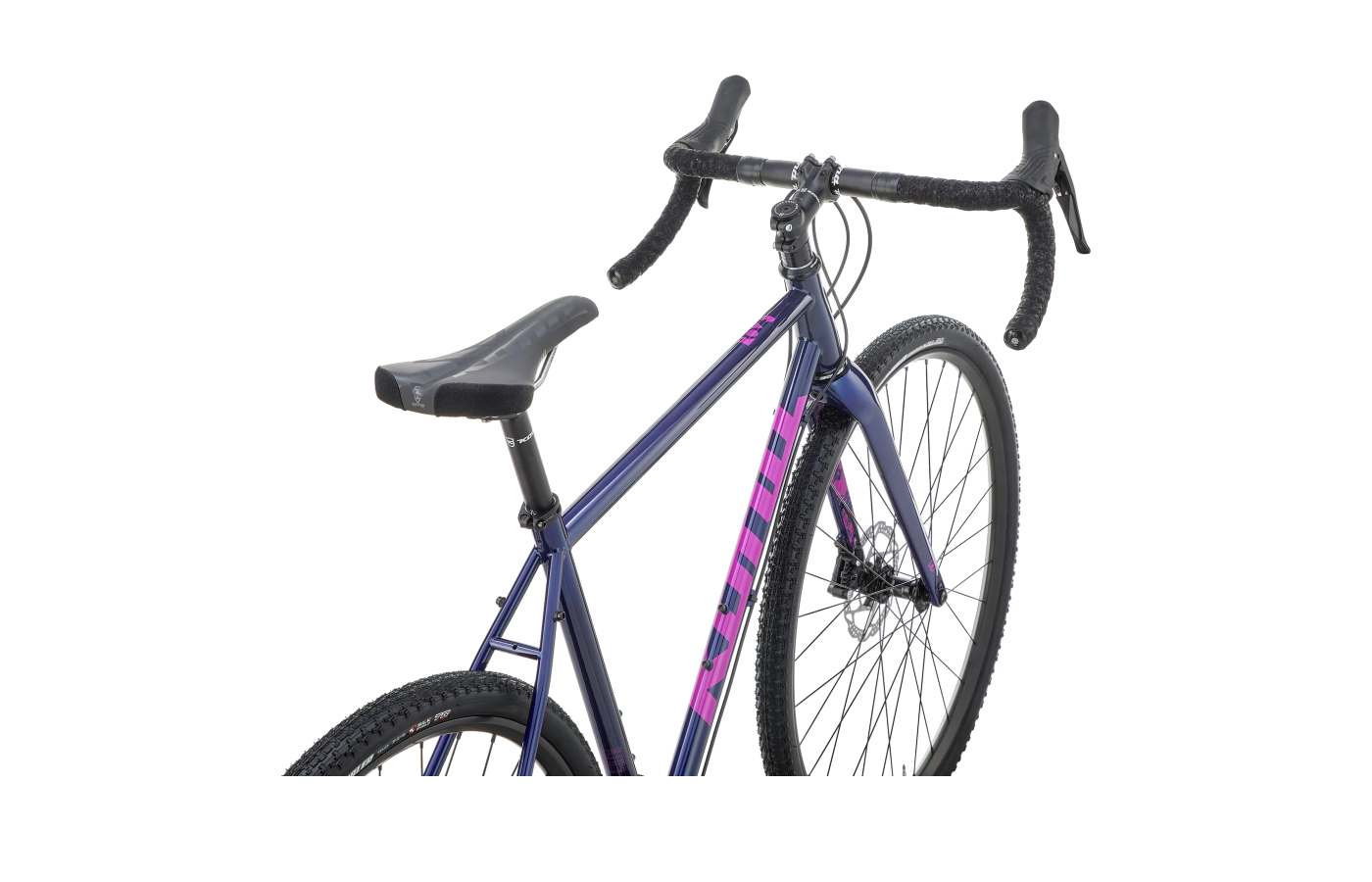
Same brand, two materials, two missions.
The Libre is Kona's carbon gravel racer. The Rove is the steel adventure workhorse that's been in the catalog for a decade.
Libre
- Carbon frame with modern race geometry — longer reach, steeper seat tube, UDH compatible.
- Wireless electronic shifting at $4,399 — SRAM Apex AXS is entry-tier, but reviewers found it indistinguishable from Force AXS in daily use.
- 50 mm tire clearance — wider than the Rove's 42 mm, unusual for a race-oriented carbon frame.
- Only two builds — no middle ground between the $2,099 alloy Base and the $4,399 carbon CR.
- Not suspension-corrected; Kona voids the warranty if you swap to a suspension fork.
Rove
- Price of entry under $1,000 — the AL 700 starts at $949, and the steel DL is still only $1,799.
- Steel frame with touring-grade comfort — plush over rough pavement, field-repairable, built to last.
- Carries load beautifully — the frame's stiffness becomes an asset once you strap on 30+ lb of gear, per Bikepacking.com.
- No carbon frame, no electronic shifting option anywhere in the range.
- Heavier (~11 kg for LTD vs ~8–9 kg typical for a carbon gravel bike); not quick off the line unloaded.
Editor’s analysis
This isn't a lineup stairstep — it's a fork in the road. Carbon and race-minded on one side, steel and go-anywhere on the other.
The Kona Libre G2 and Kona Rove share a brand, a chainstay length (435 mm on both), and absolutely nothing else about their design intent. The Libre is a $2,099–$4,399 carbon gravel bike reimagined for 2025 with a longer reach, steeper seat tube, and 50 mm tire clearance — reviewers consistently describe it as 'fast, playful, and fun' and 'a rocket' once you strip the bags off. The Rove is a $949–$2,899 butted chromoly steel platform that's been Kona's adventure-tourer since the 2010s, prized for comfort over speed and a frame that 'absorbs and you don't even notice' the small bumps.
The price gap tells most of the story. The cheapest Libre (Base, alloy, Shimano Cues) starts at $2,099 — which is roughly where the mid-tier Rove DL sits. At the top, the carbon Libre CR runs $4,399 with SRAM Apex AXS wireless shifting and a Ritchey cockpit; the top-spec Rove LTD (36SH) is $2,899 with Shimano GRX 2x12 mechanical and a full carbon fork. You're buying a different class of bike at a different price, not two rungs on the same ladder.
Geometry reinforces the split. At comparable sizes (Libre 50 vs Rove 52), both have identical 435 mm chainstays and 70.5-degree head tube angles, but the Libre sits 14 mm lower (565 mm stack vs 570 mm on the Rove) with a longer top tube — the rider ends up more forward and aerodynamic. The Rove's frame is also famously torsionally stiff for a steel tourer, which Bikepacking.com called 'unyielding' unloaded but 'a well-mannered platform' once you strap gear to it. The Libre flips that: it's liveliest unloaded, and reviewers note it starts to feel 'less surefooted' on truly chunky terrain.
Put simply: the Kona Libre is the bike you buy to go fast on mixed surfaces. The Kona Rove is the bike you buy to live on for a week with a tent strapped to it. They both say Kona on the down tube, and that's about where the overlap ends.
Where the builds differ.
Comparing our editor's-pick builds side-by-side. Winners highlighted row-by-row — lower price and weight, and the better-spec component, each mark a point.
Build variants & pricing
The Libre starts at $2,099 and has two builds. The Rove starts at $949 and has six — no electronic or carbon options anywhere.
Prices are current US MSRP. The two platforms don't line up tier-for-tier — the Rove has no carbon frame, and the Libre has no build under $2k. Editor's picks below reflect each lineup's top-spec build rather than a forced tier match.
How they fit, how they steer.
Libre at size 50, Rove at size 52 — the fit algorithm's picks for the same rider on each bike. Reach is nearly identical (385 vs 383 mm), but the Rove's stack is 5 mm taller, putting the rider in a slightly more upright posture by default.
Which size should I buy?
Size recommendations based on stack, reach, and effective top tube. Both sizing tables use Kona's 48–58 cm convention, but the bikes' stack differs ~15–20 mm at matched labels.
→These are starting points. Flexibility, riding style, and preferred position all shift the answer — if you’re between sizes, a professional fit beats a chart.
What the magazines said.
Published reviews from trusted cycling outlets. Click through for the full write-up.
Which one should you buy?
If you want to go fast on gravel, get the Libre. If you want to go far with gear, get the Rove.
Libre
If your weekends are local gravel races, chasing Strava times on fire roads, and fast group rides on mixed surfaces — the Libre is the sharper tool. Modern carbon geometry, wireless shifting, and 50 mm tire clearance give it range without softening the edge.
Rove
If you're loading racks, strapping on bikepacking bags, or just want a comfortable long-haul bike that'll take abuse for a decade — the Rove is the classic choice. Steel comfort, utilitarian mounts, mechanical groupsets you can fix in the field.
Questions buyers actually ask.
Short answers to the things we get emailed about most often.
01Which is faster?
The Kona Libre, by a clear margin. Its carbon frame, more aggressive geometry (longer reach, steeper seat tube), and lighter overall weight make it 'fast. Really fast' per Bike Rumor — the kind of bike reviewers call a 'rocket' once you strip the bags off.
The Rove LTD weighs around 11.1 kg versus a Libre CR that's noticeably lighter (Kona hasn't published an exact figure, but reviewers repeatedly describe it as 'light on its feet'). The Rove's steel frame is also torsionally stiff enough that one long-term reviewer called sprinting on it 'a bit plodding' when unloaded.
02Which is more comfortable on long rides?
This one's closer than you'd think. The Rove's steel frame is the textbook comfort story — reviewers describe it as 'plush and comfortable even on harsh, badly maintained roads,' and the 650b or 700c tires run at touring pressures soak up road buzz well.
That said, the Libre isn't a harsh ride. Its 27.2 mm seatpost is chosen specifically for compliance, and reviewers found the carbon frame 'comfortable and composed' on rides up to 168 miles loaded for bikepacking. If your definition of comfort is 'floats over chip-seal,' take the Rove. If it's 'doesn't beat you up over 6 hours,' either works.
03What's the tire clearance on each?
Libre: 50 mm officially (Kona updated from the launch spec of 45 mm after testing). Most reviewers fit a true 45–48 mm tire comfortably.
Rove: 42 mm on 700c wheels, or a 47 mm 650b tire on the smaller sizes. The Rove isn't trying to be a monster-truck — it's built around touring-size rubber, and 42 mm is plenty for gravel and hardpack.
Neither is a drop-bar mountain bike. If you need true trail-going clearance, look at Kona's Ouroboros instead.
04Does either come with electronic shifting?
Only the Libre CR ($4,399), which ships with SRAM Apex XPLR AXS 1x12 wireless. It's SRAM's entry-level electronic group — but reviewers found the shift action 'feel no different than with SRAM Red and Force AXS' (CX Magazine).
The Rove doesn't have an electronic option anywhere in the lineup. The top-spec LTD (36SH) uses Shimano GRX 2x12 mechanical with a 46/30T crankset and 11-36T cassette — a wide, touring-friendly range but cable-actuated.
05Which can carry more gear?
The Rove, by design. It has mounts for three bottle cages, front and rear racks, and fenders; the LTD's full carbon fork adds a trio of mounts per blade for cargo cages. It's a steel-framed bike purpose-built to be loaded down.
The Libre G2 can be bikepacked — GearJunkie did 168 miles loaded on it — but Kona stripped fork mounts from the G1, so you lose some cargo real estate on the front. It keeps two triangle bottle mounts, one under the downtube, and a top-tube bag mount. Fine for a weekend, limiting for a transcontinental.
06Is the Rove's low bottom bracket an issue?
One reviewer (mal woanders) flagged the Rove's low ground clearance as a concern in 'sharp corners on the road' and on technical terrain, noting pedal strikes were possible. The 54 cm Rove has a 72 mm BB drop, which is at the low end for a gravel bike.
In practice, most reviewers don't mention this as a real-world problem for touring or mixed-surface riding. But if your riding involves aggressive mid-corner pedaling or narrow, rutted trails, it's worth knowing about. The Libre doesn't get flagged for this.
07Can I put a suspension fork on the Libre?
No. Kona explicitly states that the Libre G2's geometry 'is not suspension-corrected' and that pairing one with the Libre CR voids the frame warranty. If you want a gravel bike with suspension, Kona makes the Ouroboros for exactly that use case.
The Rove is also a rigid platform, but the steel frame and 650b/47c tire option give you meaningful natural compliance without a fork. Drop to 30 psi tubeless and the ride softens noticeably.
08Which should I buy if I've never owned a gravel bike?
Depends on budget and intent. If you have under $2,000 and want to learn gravel without committing hard, the Rove DL at $1,799 or the base Rove at $1,399 is exactly the bike — comfortable, forgiving, impossible to outgrow quickly.
If you already know you want to race, ride fast group gravel events, or chase KOMs, the Libre CR at $4,399 gives you the right platform without needing a second upgrade cycle. Avoid the middle — the Libre Base at $2,099 is aluminum with mechanical Cues shifting; for that money the Rove LTD at $2,399 gets you more capable gear.
Similar bikes
If your priorities don’t map cleanly onto either of these, one of these adjacent bikes probably fits better.
Diverge
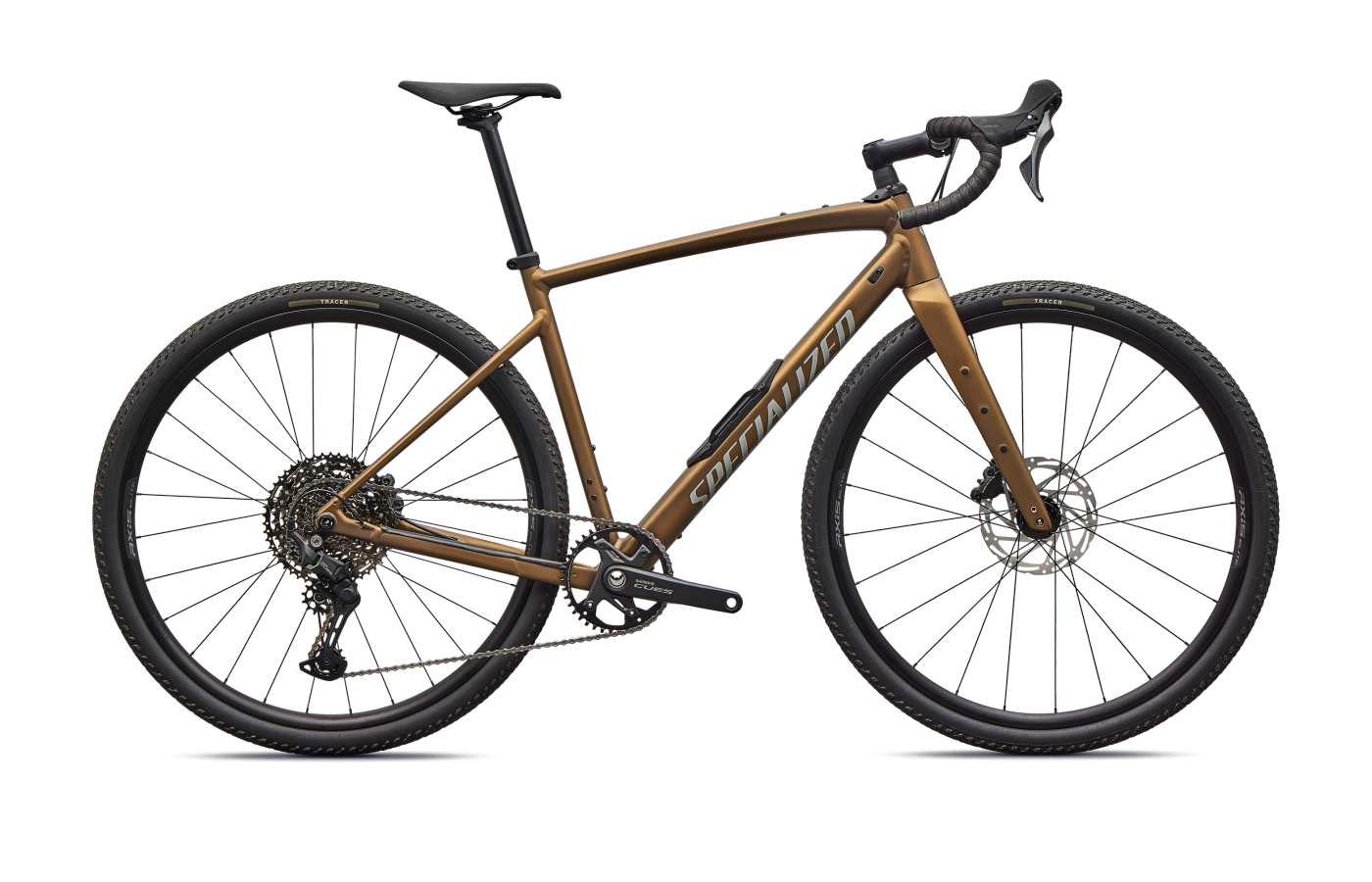
Specialized's race-oriented carbon gravel bike, with the Future Shock head-tube damper that softens rough terrain without a full suspension fork — a more compliant alternative to the rigid Libre if you ride rough stuff regularly.
Compare →Grizl
Canyon's rugged adventure gravel bike — similar geometry philosophy to the Rove but with a carbon frame option and Canyon's direct-to-consumer pricing. More bikepacking-friendly than the Libre, faster than the Rove.
Compare →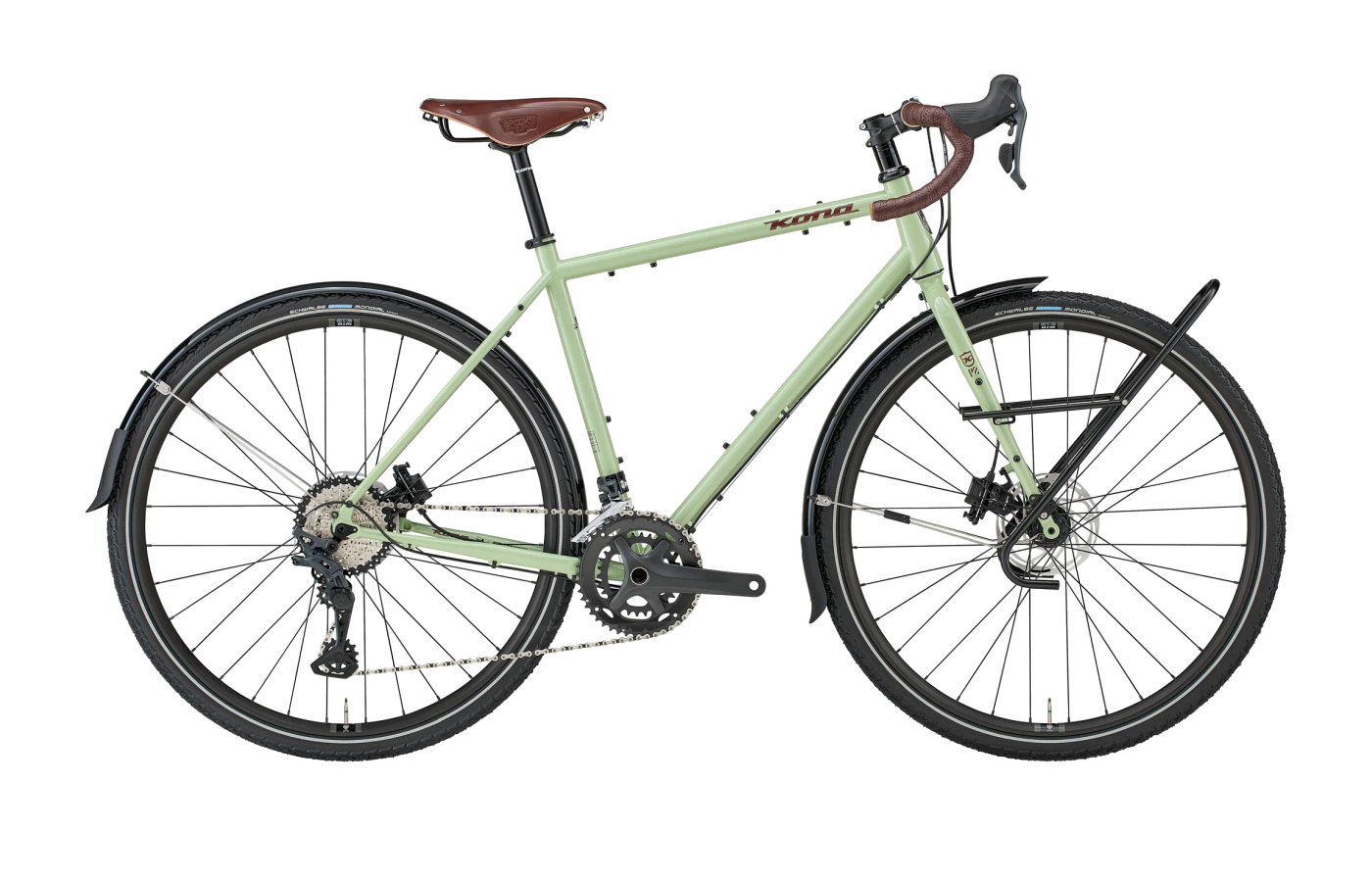
Sutra
Kona's own dedicated long-haul touring bike — steel like the Rove but built for heavier loads and bigger trips. The natural upgrade if the Rove's adventure DNA is what drew you in, but you want true transcontinental capability.
Compare →