Mahuna
vsRockhopper
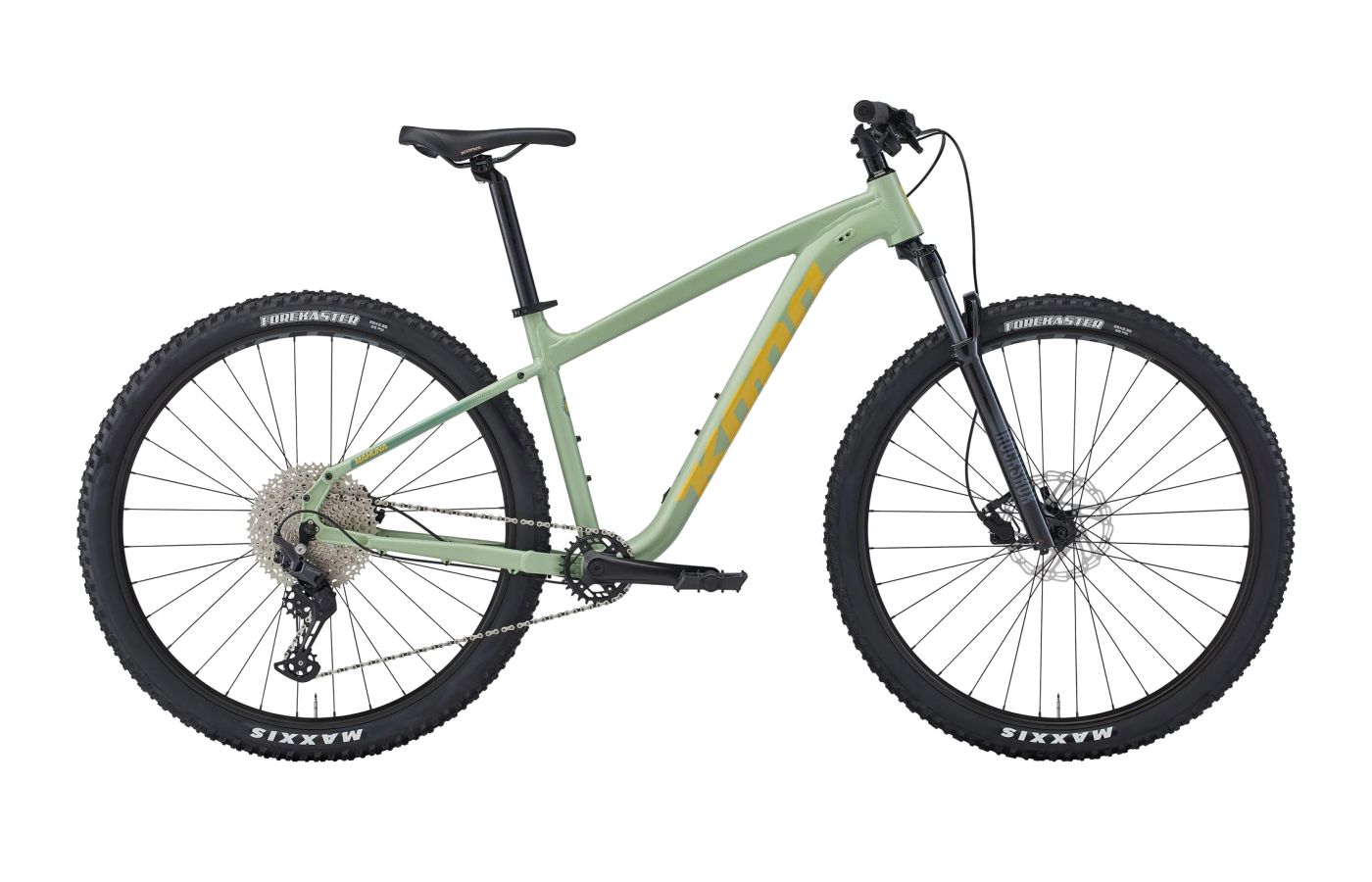
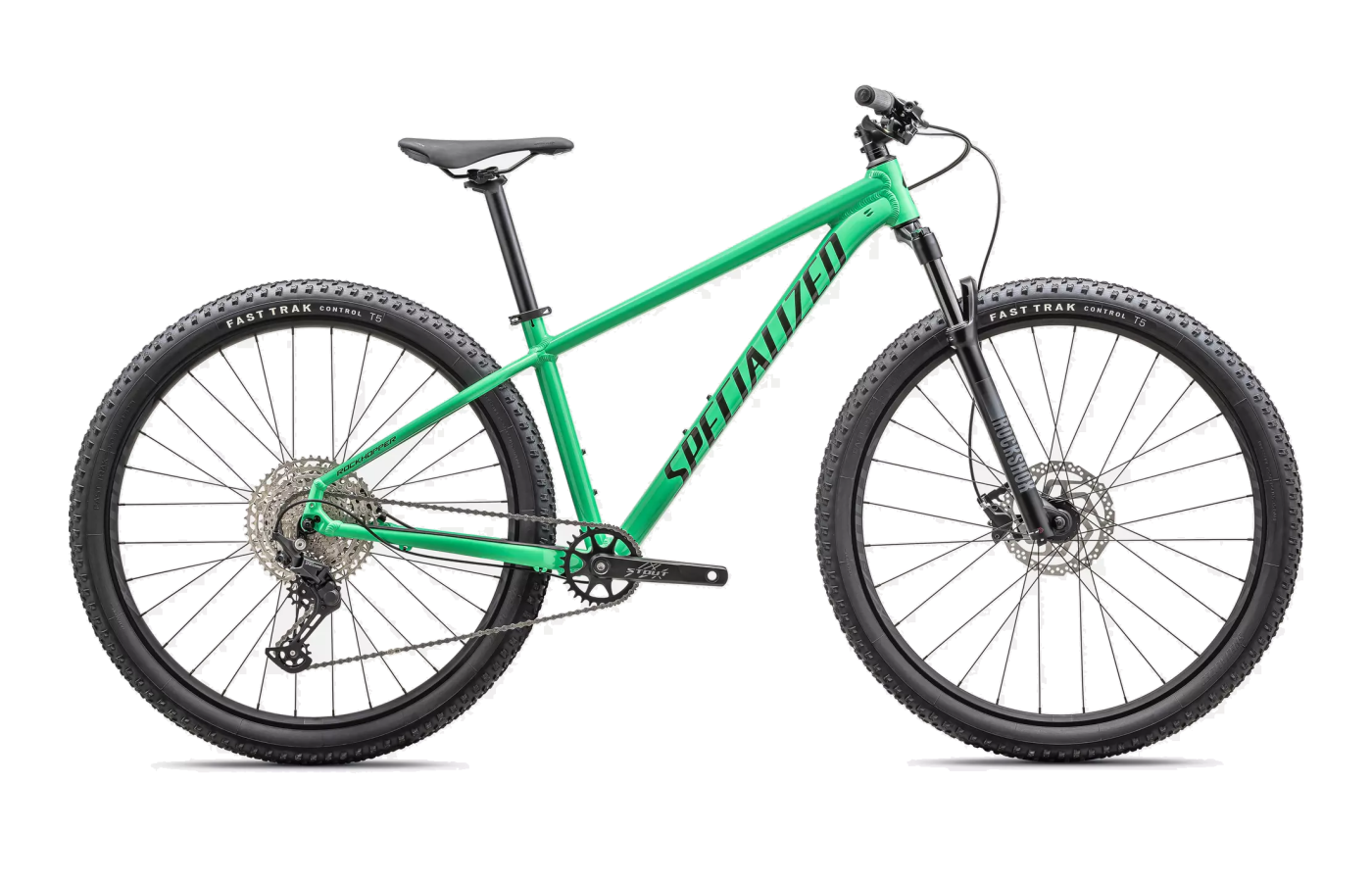
Two sub-$1k hardtails, two opposite frame briefs.
The Mahuna is built around a compliant, steel-like alloy frame that soaks up chatter. The Rockhopper is built around an efficient, whippy race chassis that rewards the pedals.
Mahuna
- Unusually compliant alloy frame — reviewers repeatedly compared it to steel, not aluminum.
- Long 450 mm chainstays — a wheelbase that approaches full-suspension trail bikes for a planted, surefooted ride.
- Steep 75-degree seat tube — sets you up directly over the bottom bracket for efficient seated climbing.
- Square-taper bottom bracket adds weight and flex — universally flagged as the first upgrade.
- Only two builds available and both at $899 — no step-up option without changing platforms.
Rockhopper
- Much lighter chassis — 12.67 kg on the Expert, about 1.5 kg under the Mahuna for the same tire and fork.
- Whippy, agile geometry — 68.5-degree head angle plus short 440 mm chainstays reward active, precise riding.
- Huge nine-build range from $649 to $1,299 — easier to pick an exact price-performance sweet spot.
- Straight 1-1/8" head tube and QR axles sharply limit future fork and wheel upgrades.
- Stiff alloy frame transmits more chatter on rough terrain — reviewers called it "harsh" on rough stuff.
Editor’s analysis
At $899 and $999 these sit a hundred bucks apart — but the frames, not the parts, are what you're actually choosing between.
Both bikes land in the same beginner-to-intermediate 29er hardtail pocket. Both run a RockShox Judy air fork at 100 mm, both roll on WTB or Specialized alloy rims, and both ship with some flavor of Shimano Deore 11-speed when you pick the builds that match up. The price gap is only a hundred dollars. On paper, picking between them looks close.
Spend a minute on the geometry and the personalities diverge. The Kona Mahuna puts 450 mm chainstays under a 68-degree head tube and a 75-degree seat tube — long in back, steep up front. Reviewers keep reaching for the word "steel-like" to describe the ride: MBR called out a wheelbase that "approaches a modern full-suspension trail bike," and multiple testers flagged the 6061 butted frame as the most compliant thing in the category. It's a bike that wants to go long.
The Specialized Rockhopper runs the opposite playbook. Shorter 440 mm chainstays, a steeper 68.5-degree head angle, a 73.5-degree seat tube, and a notably stiff A1 Premium alloy frame that BikeRadar weighed at 12.67 kg in the Expert trim — roughly 1.5 kg lighter than the Mahuna. The feel is "zippy" and "whippy" on the climbs and in tight bermed singletrack, but the same numbers make it "twitchy" at speed and transmit more trail chatter than the Kona.
Put bluntly: the Mahuna is the hardtail you buy to ride far. The Rockhopper is the hardtail you buy to ride fast. Neither is wrong — they're solving different problems for different riders, and the $100 price gap is a rounding error next to that choice.
Where the builds differ.
Comparing our editor's-pick builds side-by-side. Winners highlighted row-by-row — lower price and weight, and the better-spec component, each mark a point.
Build variants & pricing
The Mahuna comes in just two near-identical $899 builds. The Rockhopper spans $649 to $1,299 across nine variants — more ways to hit your number.
Prices are current US MSRP. The editor's pick here is the Rockhopper Expert at $999 with Shimano Deore M5100 11-speed and a RockShox Judy Solo Air — the tier-match to the Mahuna (36SH)'s Deore 11-speed and Judy Silver TK fork.
How they fit, how they steer.
Both at their fit-picked size for a 5'8" rider. The Mahuna sits 5 mm shorter on stack and 15 mm longer on reach; its 68-degree head tube is a half-degree slacker, chainstays run 10 mm longer, and the wheelbase extends 36 mm further — the Mahuna is the longer, lower, more stable bike at a comparable fit.
Which size should I buy?
Size recommendations based on stack, reach, and effective top tube. The Rockhopper's multi-wheelsize lineup offers more granular fit options; the Mahuna covers S through XL on a single 29er platform.
→These are starting points. Flexibility, riding style, and preferred position all shift the answer — if you’re between sizes, a professional fit beats a chart.
What the magazines said.
Published reviews from trusted cycling outlets. Click through for the full write-up.
Which one should you buy?
If you want the smoothest-riding alloy frame at this price and plan to ride long, get the Mahuna. If you want the lightest, most XC-responsive chassis and a lineup that lets you dial in your budget, get the Rockhopper.
Mahuna
Pick the Mahuna if you prioritize frame feel and stability over raw snap. The long chainstays, steep seat tube, and compliant 6061 frame make it a genuinely comfortable distance bike that many testers would ride all day over bikes costing twice as much.
Rockhopper
Pick the Rockhopper if you value low weight, quick handling, and flexibility on price. A 1.5 kg weight advantage and a steeper, whippier cockpit make it the sharper climber and the more engaging bike on flowy singletrack — and there's a Rockhopper for almost every budget from $649 up.
Questions buyers actually ask.
Short answers to the things we get emailed about most often.
01Which one climbs better?
The Rockhopper Expert, in most cases. BikeRadar weighed it at 12.67 kg for a size medium versus Bike Perfect's 14.28 kg figure for the Mahuna — a 1.5 kg gap, which translates to a real advantage on sustained climbs and standing attacks.
That said, the Mahuna's 75-degree seat tube angle is 1.5 degrees steeper than the Rockhopper's 73.5, which puts you more directly over the bottom bracket and feels more efficient when seated. If you do almost all your climbing in the saddle, the Mahuna closes the gap more than the weight numbers suggest.
02Which one is more stable on descents?
The Kona Mahuna, fairly clearly. It runs 450 mm chainstays against the Rockhopper's 440 mm, and at the fit-picked sizes the Mahuna's wheelbase is 36 mm longer (1164 mm vs 1128 mm). MBR specifically called out that Mahuna wheelbase as approaching a modern full-suspension trail bike.
The Rockhopper's shorter, steeper geometry is described by reviewers as "whippy" and "twitchy" at speed, requiring more constant steering input. Neither is a descending bike — but if you ride chunky trails, the Mahuna holds its line with less effort.
03Which fork is better?
At the editor's-pick tiers, both ship with the RockShox Judy Solo Air at 100 mm of travel — the same fork family. Reviewers' complaints are similar across both bikes: 30 mm stanchions, QR axle, and damping that gets overwhelmed on repeated large hits. Neither is a genuine trail fork.
Below the Rockhopper Expert, the Sport and base builds drop down to SR Suntour XCM or XCE coil forks, which reviewers consistently described as "sticky" and pogo-like. If fork quality matters, stay on the Rockhopper Comp ($999) or Expert ($999) builds — or go to the Mahuna, where both $899 builds run the Judy Silver TK air fork.
04What about drivetrain?
Both editor's-pick builds run Shimano Deore 11-speed (Mahuna: Deore M5100-family with 11-46T or 11-51T cassette; Rockhopper Expert $999: Deore M5100 11-speed). Shifting quality is effectively the same.
The Rockhopper also offers a $999 Comp build with 12-speed Shimano Deore M6100, which is a generation newer than M5100 and a step up in range and precision. If you specifically want 12-speed, the Rockhopper lineup has it; the Mahuna does not.
05Which has better upgrade potential?
The Mahuna, by a large margin. It has a tapered head tube and internal routing for a dropper post — meaning a higher-end fork (the 120 mm through-axle upgrade reviewers universally recommend) is a realistic future purchase.
The Rockhopper has a straight 1-1/8" head tube and 9 mm QR axles front and rear, which Bike Perfect and Off.road.cc flagged as a genuine limitation: most modern performance forks need a tapered steerer, and most good wheelsets now use Boost thru-axles. Specialized designed the Rockhopper to be ridden as-sold, not evolved.
06Which has better tires and wheels?
Mahuna: WTB ST i27 TCS rims with Maxxis Forekaster 2.35 tires. MBR called the Forekasters "the best tyre combo in this category by a country mile" — they roll fast but hook up in loose and wet conditions.
Rockhopper Expert: Specialized's own 25 mm-internal hookless alloy rims with Ground Control 2BR 2.35 tires. Fast-rolling on hardpack, but reviewers flagged the T5 rubber as thin-feeling and prone to rolling in hard corners. Several testers suggested a front-tire swap as an early upgrade.
Both sets are tubeless-ready — set them up without tubes and you'll save weight and get better puncture protection on either bike.
07Are these dropper-post compatible?
Both frames have internal routing for a dropper post — neither ships with one. Adding a dropper is probably the single best upgrade you can make to either bike for trail riding, and budget models (PNW, OneUp, Brand-X) start around $150.
Heads-up on the Mahuna: reviewers specifically called out that the short seat tube gives you room for a longer-drop dropper than you'd expect at this price.
08Which one should a first-time mountain biker buy?
If you want the safest, most forgiving learner's bike, the Mahuna. Its longer wheelbase and slacker head angle are more stable when you make mistakes, and multiple reviewers named it MBR's Hardtail of the Year in 2022 specifically for being confidence-inspiring.
If you're on a tighter budget or you know you want the lightest bike possible, the Rockhopper. Its $649 base model is genuinely rideable and the Expert at $999 is 1.5 kg lighter than the Mahuna, which makes climbs less demoralizing when you're still building fitness.
Similar bikes
If your priorities don’t map cleanly onto either of these, one of these adjacent bikes probably fits better.
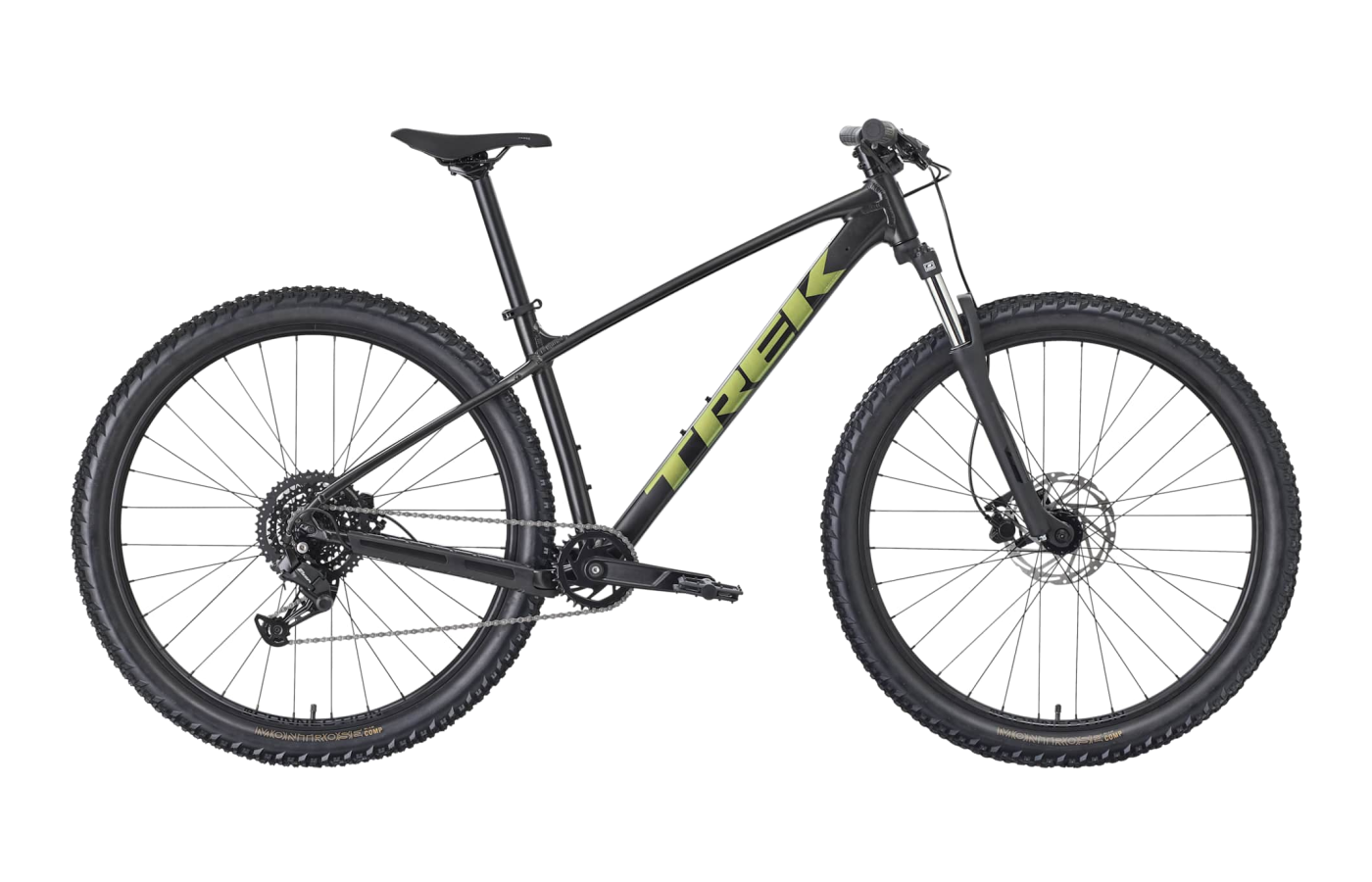
Marlin
The most direct cross-shop to the Rockhopper — Trek's entry-level 29er hardtail, similar price, similar geometry, and better dealer coverage in North America. Worth walking into both shops before you decide.
Compare →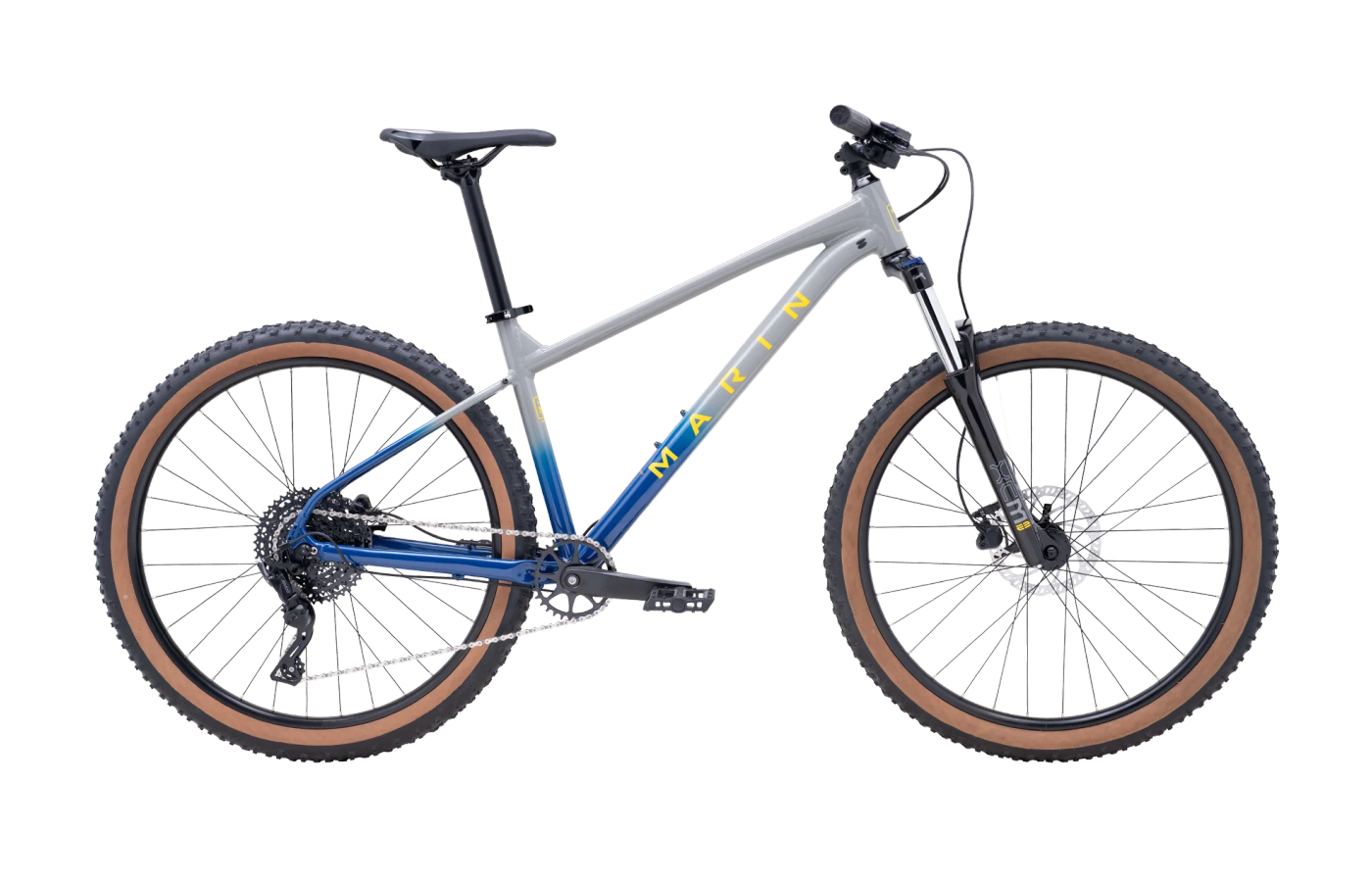
Bobcat Trail
The modern-geometry pick. More aggressive numbers than either bike here, and some builds offer Boost thru-axles — which means a real upgrade path, unlike the Rockhopper. If you think you'll want to grow into trail riding, start here.
Compare →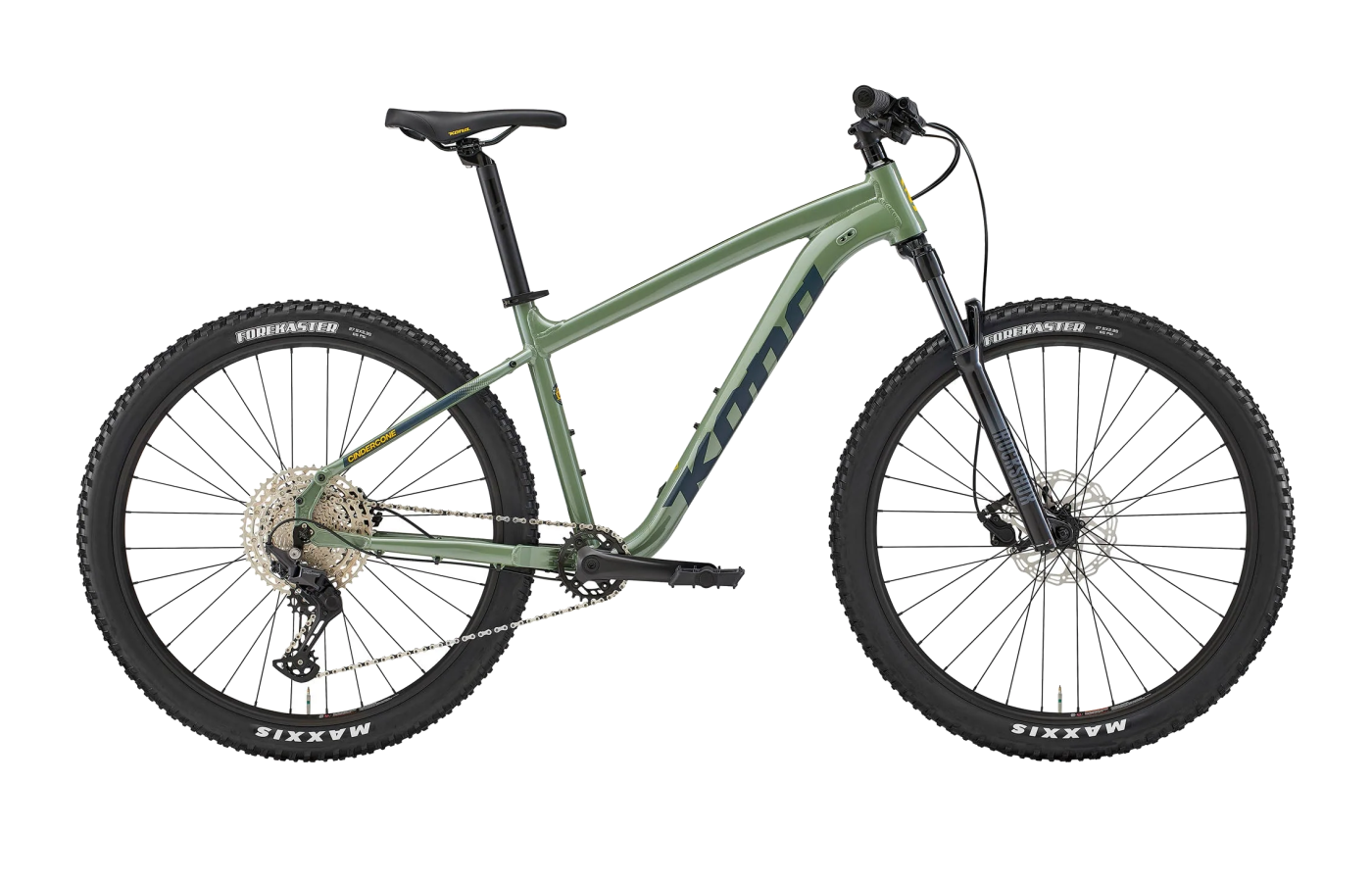
Cinder Cone
The 27.5-wheel sibling to the Mahuna, sharing the same butted 6061 frame philosophy. If you're on the smaller end of the size range or prefer the quicker feel of smaller wheels, this gets you the same compliant ride character.
Compare →