Rove
vsFour Corners
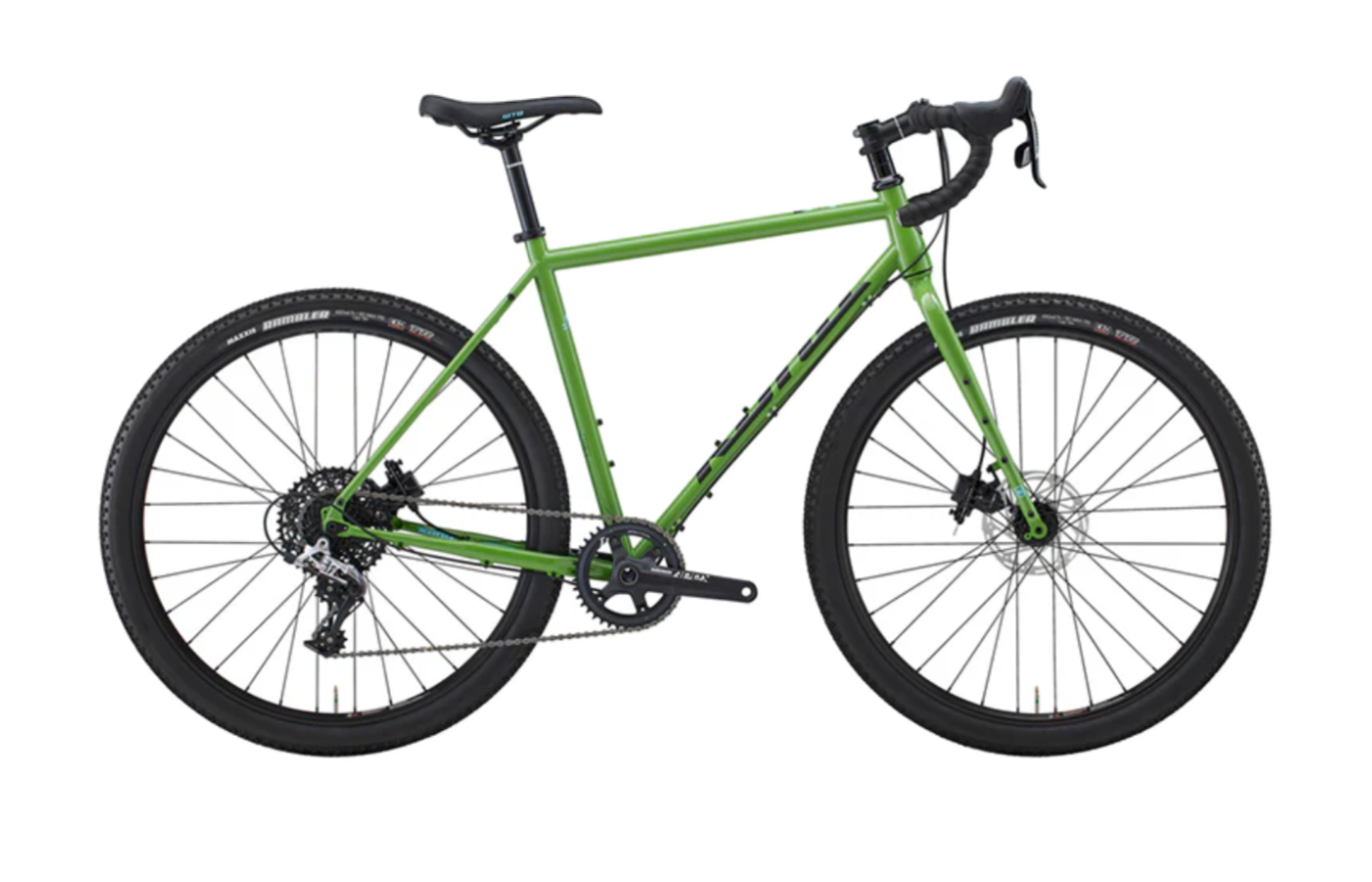
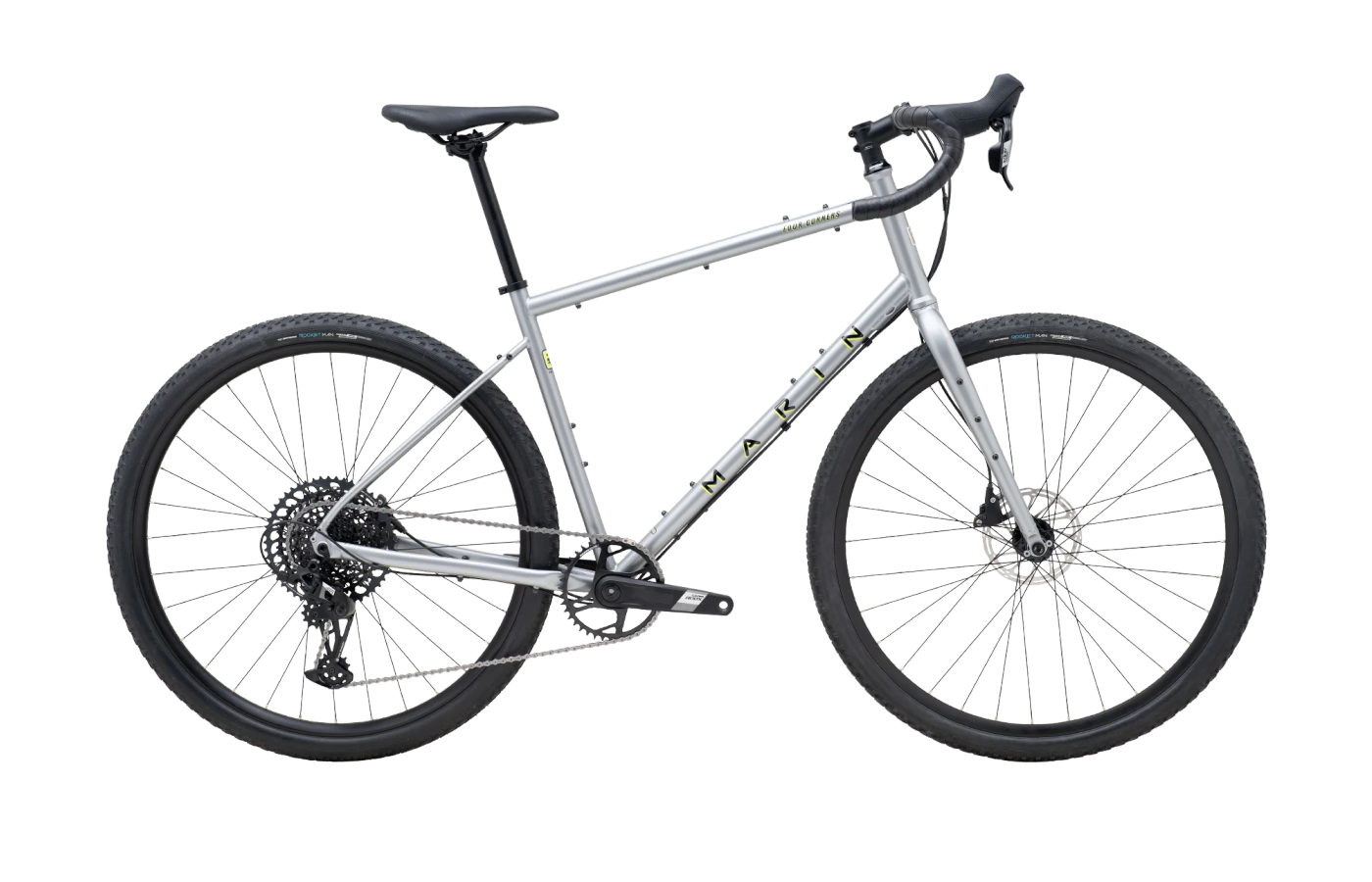
Two steel adventurers, two different missions.
The Kona Rove is the all-road opportunist. The Marin Four Corners is the loaded-touring specialist that cares more about panniers than PRs.
Rove
- Quicker handling — 71-degree HTA and shorter 1036 mm wheelbase give more engaged steering than the Marin.
- Carbon fork at this tier — the Kona Rove Verso carbon fork damps vibration and saves weight vs. the all-steel Marin.
- Deeper build range — six builds from $949 Claris to $2,899 GRX Di2-grade, so it scales with budget and ambition.
- Tire clearance capped at 42 mm — enough for gravel, not enough for chunky bikepacking tires.
- Reviewers flag the frame as torsionally stiff; unloaded it can feel "plodding" compared to more compliant steel gravel bikes.
Four Corners
- 50 mm tire clearance — the widest in this matchup, room for proper bikepacking rubber without rubbing.
- Upright touring posture — extra-long head tube puts bars high for all-day comfort without a stem full of spacers.
- Mounts everywhere — three bottles on the downtube, fork-leg triples, rack and fender eyelets front and rear.
- Steel fork is heavier and less damped than the Kona's carbon fork at the same tier.
- Geometry is built for stability, not agility — reviewers describe steering as "leisurely" and not built for acceleration.
Editor’s analysis
Same frame material, same category on paper — but the Rove wants to play on gravel while the Four Corners wants to carry your life across continents.
Both bikes are butted chromoly steel gravel-slash-adventure platforms, both come with SRAM Apex at the comparison tier, both ship with 650b wheels and high-volume tires in the smaller sizes. From 10 meters away they look like siblings. Ride them back-to-back and the design priorities diverge almost immediately.
The Kona Rove is the more gravel-oriented of the two. Its 650x47c Maxxis Ramblers and 71-degree head tube angle give it a composed but reasonably engaged steering feel, and the 1036 mm wheelbase at size 52 keeps it on the quicker end of the adventure-bike spectrum. Tire clearance tops out at 42 mm — enough for most gravel, but it's a hard ceiling if you want to go properly wide.
The Marin Four Corners bends further toward classic loaded touring. Its head tube angle at size S is a full degree slacker (70 degrees), the wheelbase is 11 mm longer at 1047 mm, and Marin pushes clearance all the way to 50 mm. The long head tube makes the front end sit tall for a back-friendly upright posture, and the frame is covered in bosses — three bottles on the downtube, fork-leg triple mounts, rack and fender eyelets everywhere.
Put another way: the Kona Rove is the bike you buy when "gravel" and "all-road" are the priorities and you'll maybe load it up sometimes. The Marin Four Corners is the bike you buy when loaded touring is the priority and you'll maybe rip some unloaded gravel sometimes. Different defaults, different bikes.
Where the builds differ.
Comparing our editor's-pick builds side-by-side. Winners highlighted row-by-row — lower price and weight, and the better-spec component, each mark a point.
Build variants & pricing
The Rove spans $949 to $2,899 across six builds. The Four Corners is narrower — just two builds, $1,249 and $2,299.
Prices are US MSRP. The Rove's lineup goes both cheaper (Claris AL 700 at $949) and pricier (GRX LTD at $2,899) than anything Marin offers on the Four Corners, so pick your spot on the range.
How they fit, how they steer.
Kona size 52 vs. Marin size S — the fit-picked frames on each side. The Rove is 10 mm lower in stack (570 vs. 580), 2 mm longer in reach (383 vs. 381), and 1 degree steeper at the head tube (71 vs. 70). Wheelbase is 11 mm shorter on the Kona (1036 vs. 1047) and chainstays are 3 mm longer (435 vs. 432) — the Kona steers quicker, the Marin tracks straighter.
Which size should I buy?
Size recommendations based on stack, reach, and effective top tube. Both ranges overlap closely in the middle, but the Kona extends smaller (size 48) while the Marin stretches taller (XL).
→These are starting points. Flexibility, riding style, and preferred position all shift the answer — if you’re between sizes, a professional fit beats a chart.
What the magazines said.
Published reviews from trusted cycling outlets. Click through for the full write-up.
Which one should you buy?
If you want a do-most-things steel gravel bike with a carbon fork and six price points, get the Rove. If loaded touring and maximum tire clearance are the priorities, get the Four Corners.
Rove
If your weekends mix paved roads, hardpack gravel, and the occasional bikepacking weekend — and you want a steel bike that doesn't feel like a slug unloaded — the Rove is the more versatile pick. The carbon fork and slightly quicker geometry lean it toward "gravel bike" first, "tourer" second.
Four Corners
If the priority is multi-week tours, heavy panniers, and unshakeable stability on long days in the saddle, the Four Corners is the tool. The upright posture, 50 mm tire clearance, and mounting-point overload make it one of the best-value pure touring platforms you can buy.
Questions buyers actually ask.
Short answers to the things we get emailed about most often.
01Which has more tire clearance?
The Marin Four Corners, comfortably. Marin rates the frame to 50 mm; the Kona Rove maxes out at 42 mm. That 8 mm gap matters — it's the difference between running a 45 mm gravel tire with margin and running the same tire with nothing to spare. For chunky bikepacking treads or genuinely mixed-terrain touring, the Marin has the headroom.
02Which is more comfortable over long miles?
Both are praised for steel-frame compliance, but they get there differently. The Four Corners leans on a very long head tube and upright posture — reviewers describe the ride as "sumptuous" and back-friendly, purpose-built for all-day saddle time.
The Rove pairs a more moderate posture with a carbon fork that damps front-end buzz. For a rider who wants comfort without feeling "tall," it's the more balanced pick. For a rider who wants the most upright touring position they can buy in this price range, the Marin wins.
03Which climbs better?
Neither is a climber in the race-bike sense — both weigh 11–13 kg depending on build. But the Rove is the more responsive of the two. At size 52 it's on a shorter wheelbase (1036 mm vs. 1047 mm) and has a carbon fork that saves weight over the Marin's steel fork.
That said, the Four Corners 2's 10-52T cassette gives it genuinely mountain-bike-low gearing that the Rove's road-oriented 11-42T can't match for fully loaded climbing. If the question is "can I spin up a 15% grade with 20 kg of gear," the Marin's gear range actually wins.
04Which has better mounts for bikepacking?
The Marin Four Corners has a slight edge. Reviewers specifically call out the main triangle: three water-bottle mounts on the downtube (two on top, one on the bottom), plus seat tube, under-top-tube triple braze-ons, and fork-leg triples for cargo cages — a "map" of mounts Marin publishes for frame-bag makers.
The Rove is also well-mounted (three bottles, fork mounts, racks, fenders), but the Marin has a denser grid of braze-ons, especially on the fork legs.
05Is the Rove's carbon fork actually a meaningful upgrade?
Yes, within limits. Reviewers note it saves ~300–400 g over a comparable steel fork and noticeably damps high-frequency vibration from rough roads. The Rove LTD rides lighter up front than an all-steel equivalent.
The tradeoff is repairability: a steel fork can be welded by a village blacksmith on a world tour; a cracked carbon fork needs a replacement. For domestic gravel riding, the Kona's carbon fork is the better fork. For crossing a continent unsupported, the Marin's steel fork is the safer bet.
06Can I fit fenders and a rack on both?
Yes on both. Both bikes have full fender and rack mounts front and rear, plus matching bottle-cage bosses and accessory mounts. Either works as a full-on commuter, a light tourer, or a fendered winter bike. The Marin simply has more of everything.
07Which drivetrain is better — the Marin's 1x or the Kona's 1x at this tier?
At this price point, both are SRAM Apex 1x12. The Marin Four Corners 2 runs SRAM Apex Eagle with a 10-52T cassette — a genuinely enormous range. The Kona Rove LTD at $2,399 runs SRAM Apex XPLR with a 40T chainring. Both are reliable, field-serviceable, and use the same shifters and brakes.
If you step up to the Kona Rove LTD (36SH) at $2,899, you get Shimano GRX 2x12 instead — tighter gear steps, more road-bike feel, but more moving parts to maintain. The $2,399 Apex build is the cleaner apples-to-apples comparison to the Four Corners 2.
08Which holds its resale value better?
Neither steel gravel platform depreciates as fast as carbon race bikes — both have a reputation as long-term keepers. The Rove has the longer lineage (the model has been in Kona's catalog for over a decade), which tends to stabilize used-market pricing.
The Four Corners is a more recent reboot, but its value proposition at sub-$2,300 new means the used-market floor is already low. In practice, both are bikes people keep for years rather than flipping.
Similar bikes
If your priorities don’t map cleanly onto either of these, one of these adjacent bikes probably fits better.
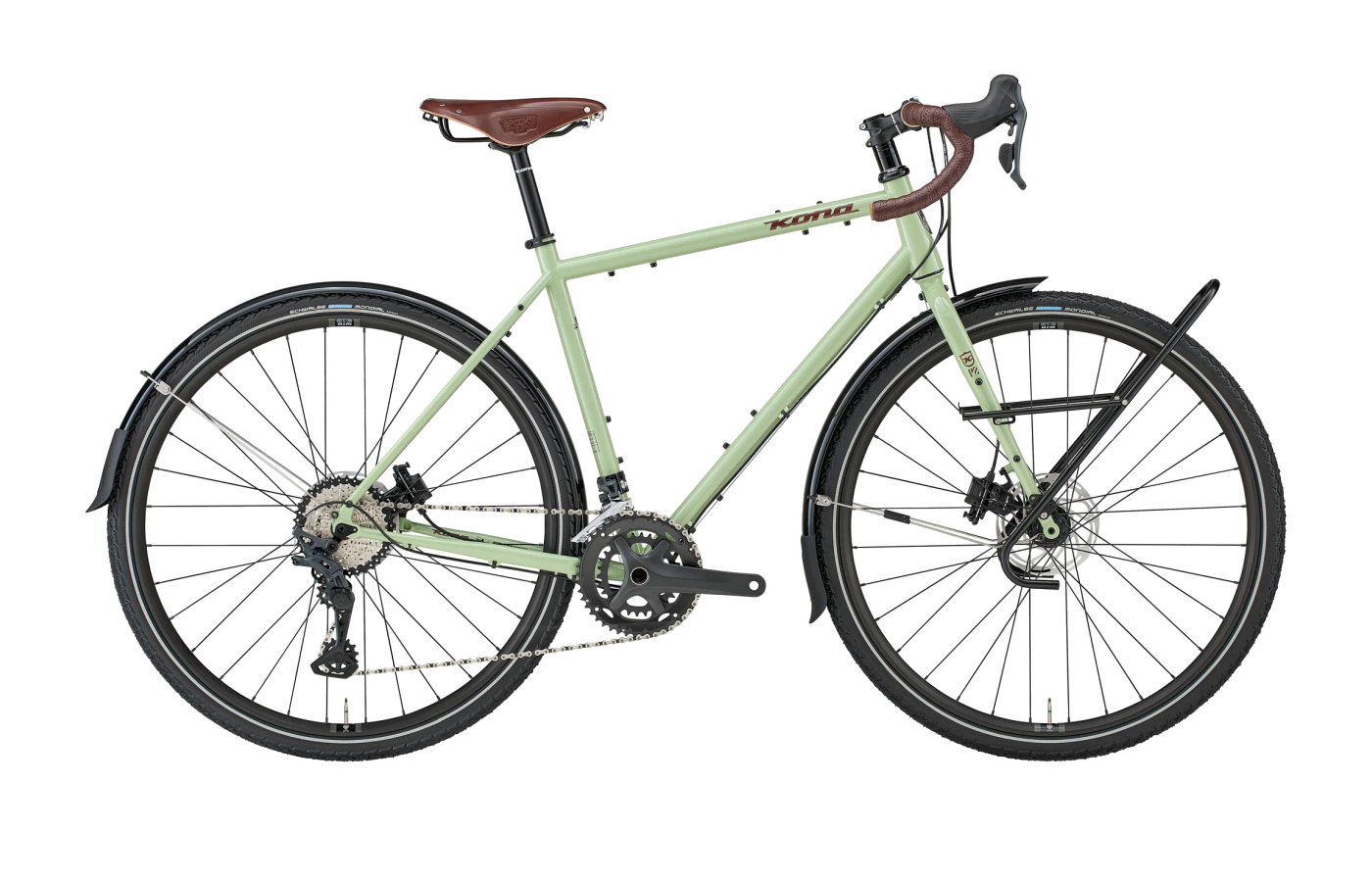
Sutra
Kona's dedicated touring bike — a full steel frame-and-fork build that tilts even further than the Four Corners toward loaded, long-haul duty. If the Rove feels too gravel-leaning, the Sutra is the purer tourer from the same brand.
Compare →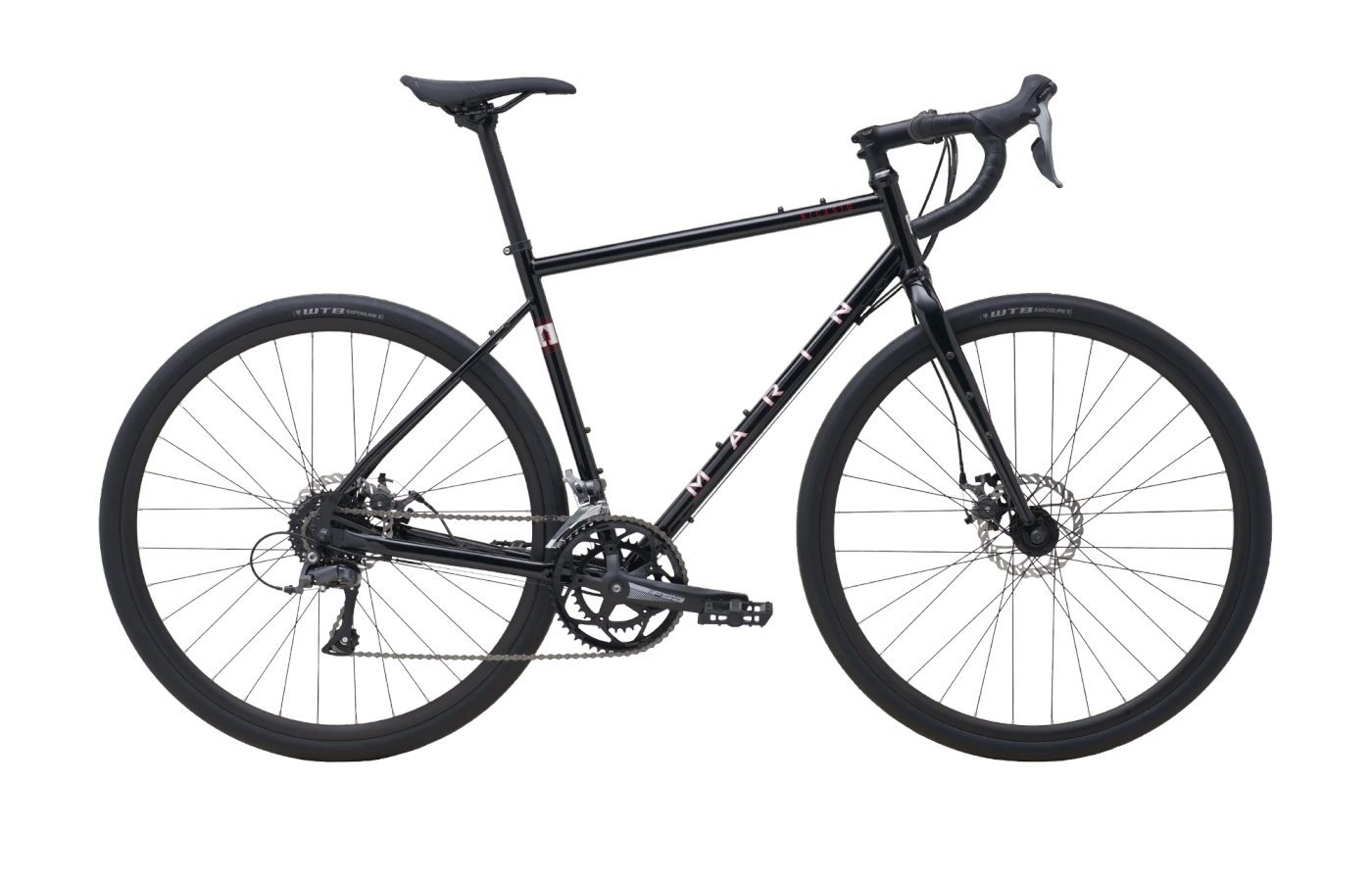
Nicasio
The Four Corners' cheaper sibling — same steel philosophy, simpler spec, lower price. Best if the Marin's adventure DNA appeals but the budget is tighter.
Compare →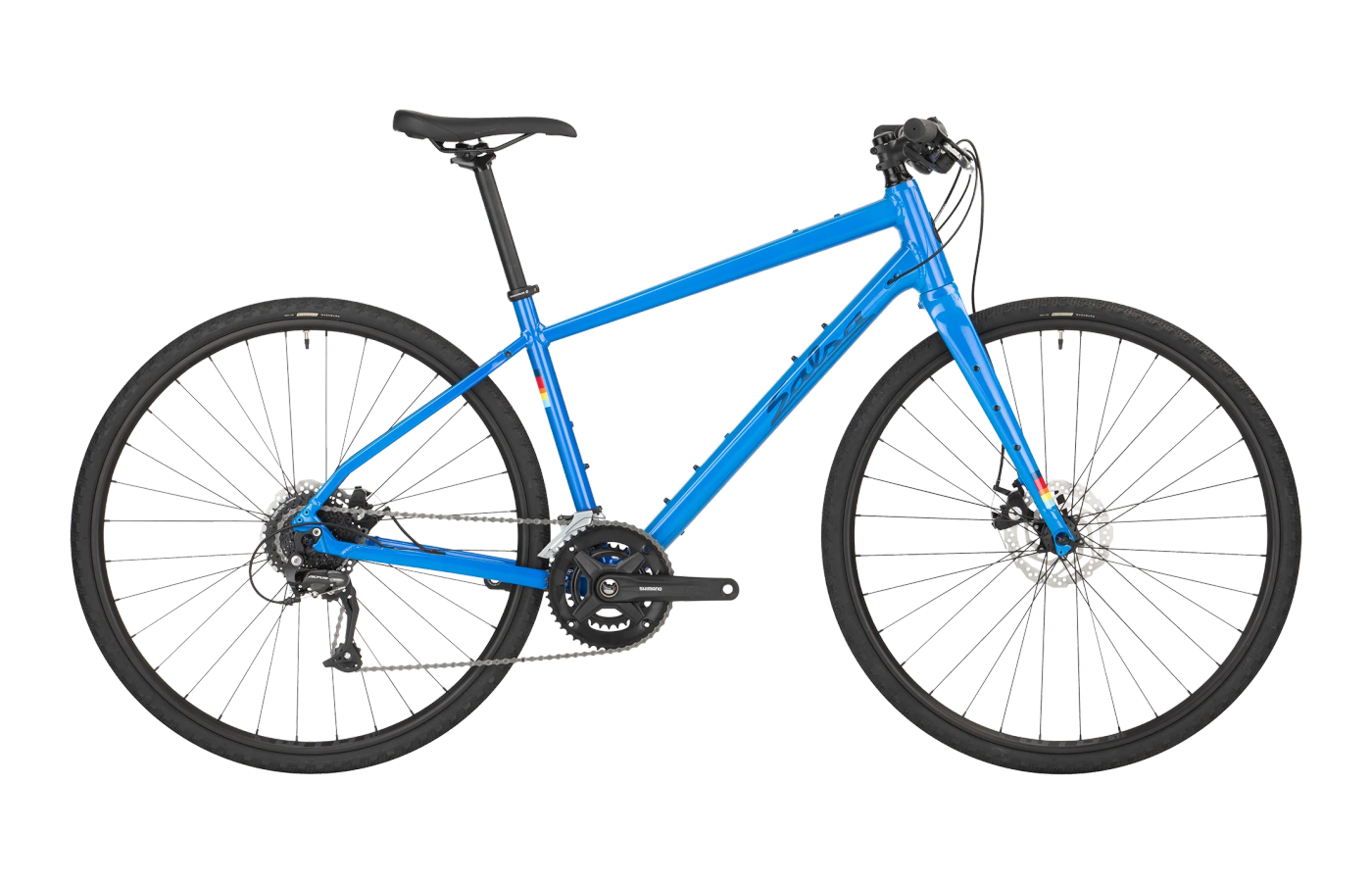
Journeyer
Salsa's all-purpose gravel-slash-bikepacking platform, available in both steel and aluminum with a wide price spread. A strong alternative if you want more build flexibility than either the Rove or Four Corners offer in a single model.
Compare →