Sutra
vsFour Corners
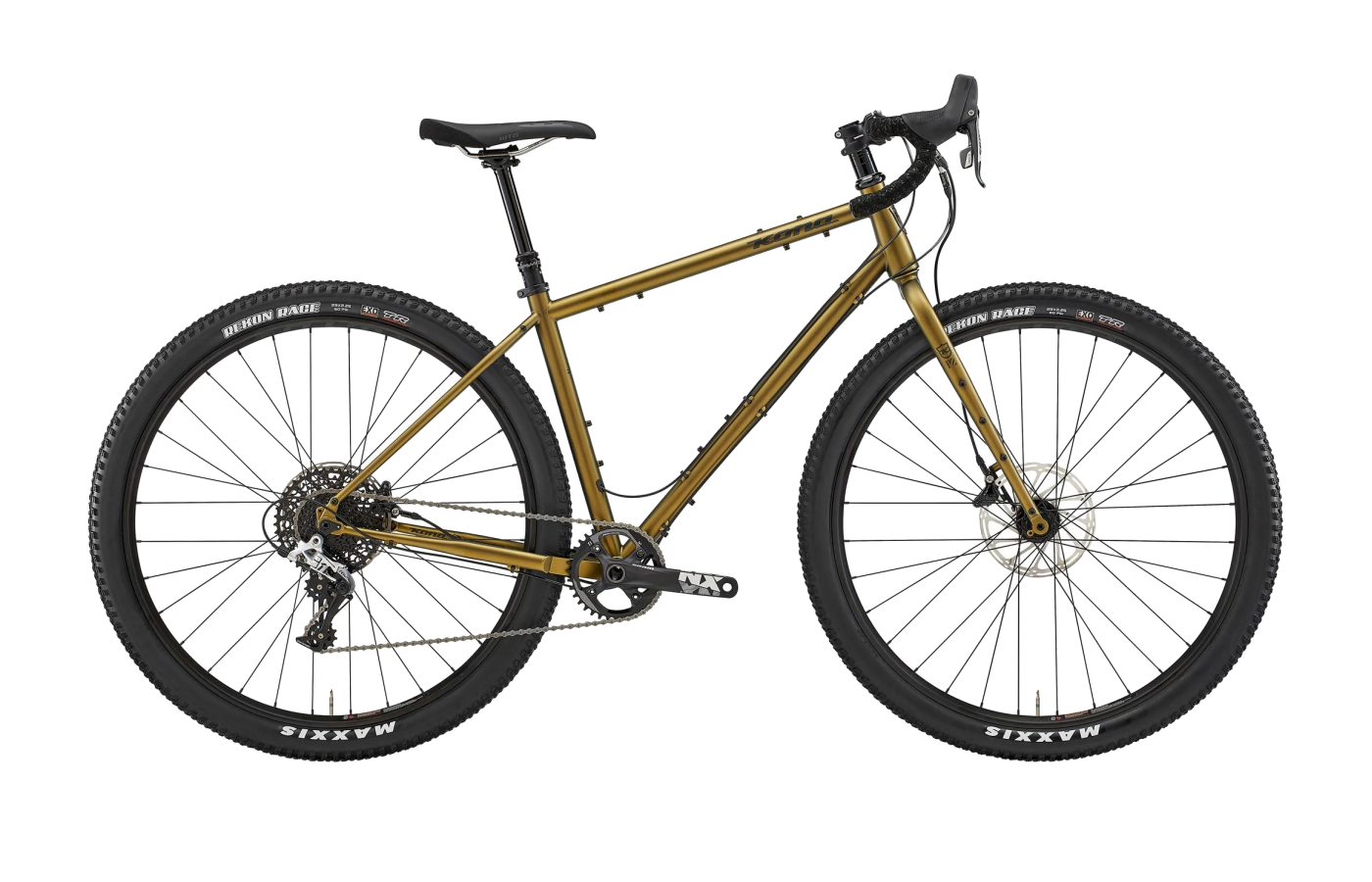
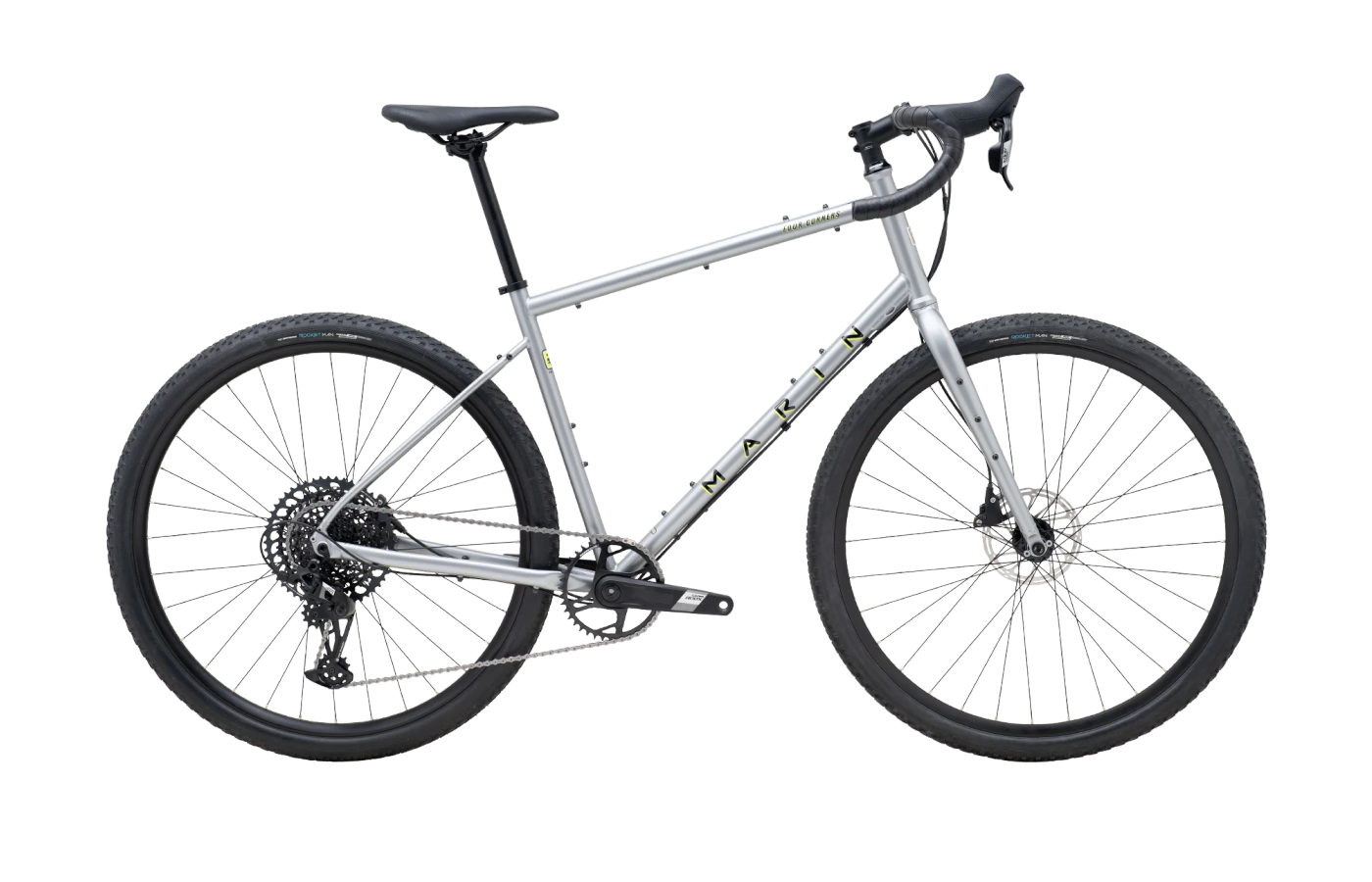
Two steel tourers, two takes on the same brief.
The Kona Sutra is the venerable classic — Brooks saddle, lowrider rack, 2x drivetrain. The Marin Four Corners is the modern reboot — 1x12, hydraulic, thru-axles.
Sutra
- Complete touring kit out of the box — Brooks B17 saddle, full fenders, and a Tubus Tara front lowrider rack are all included on the Standard.
- Mechanical-everything serviceability — Microshift drivetrain and TRP HY/RD cable-actuated brakes are the easiest spec on the planet to fix in the field.
- True 2x climbing range with 46/30 chainrings and an 11-36 cassette — small jumps, easy bailout gear, the way tourers used to be built.
- Touring-spec tires (40c) and 2x mechanical drivetrain feel a generation behind the Four Corners 2.
- Plastic rear fender is widely flagged as the first thing to break on rough roads.
Four Corners
- Modern drivetrain at a tourer price — SRAM Apex 1x12 with a 10–52T cassette covers everything from 50 km/h cruise to first-gear climb.
- Hydraulic brakes and thru-axles — stiffer wheel mounting, less brake rub, and far more stopping power than cable discs when loaded down.
- Tubeless-ready rims out of the box with 44mm Vee Rocket Man tires — set up tubeless and forget about thorns.
- No included rack, fenders, or saddle — the lower sticker assumes you're buying accessories yourself.
- Straight 1-1/8" steerer rules out most carbon or suspension fork upgrades down the line.
Editor’s analysis
Both bikes carry chromoly into the same job — load up, head out, ride for days. The fight is whether you want the traditional version of that, or the 2024 version.
On paper, the Kona Sutra and Marin Four Corners share more than they differ. Both are steel-frame, drop-bar touring bikes built for fenders, racks, and long days at moderate speed. Both have slack-ish head tubes, long chainstays, and tire clearance well beyond what road-racers will ever bolt on. Both top out around $2,300 and were designed to outlast their owners.
Where they split is intent. The Sutra is the heritage tourer — Kona has been building this bike with mechanical drivetrains, a 2x crankset, and a Brooks B17 saddle for two decades, and the current Standard build still ships exactly that way (Microshift Sword 2x9, 40c tires, plastic fenders, Tubus Tara front rack). It is designed to be repaired by a stranger in a small town with hand tools.
The Marin Four Corners 2 is the 2024 answer to the same question. Same chromoly, same touring brief, but with SRAM Apex 1x12, hydraulic disc brakes, thru-axles, tubeless-ready 44mm rubber, and a 10–52T cassette that ranges from spin-up-anything to road-cruise. It is the bike that asks: why are we still building tourers like it's 2005?
The Sutra rewards the rider who wants the bike of their grandfather's era with disc brakes bolted on. The Four Corners rewards the rider who wants modern componentry on a steel frame at a price that doesn't insult them. Both are correct answers — they're just answering different questions.
Where the builds differ.
Comparing our editor's-pick builds side-by-side. Winners highlighted row-by-row — lower price and weight, and the better-spec component, each mark a point.
Build variants & pricing
The Sutra spans $1,599 to $2,899 across three builds; the Four Corners spans $1,249 to $2,299 across two. The editor's-pick comparison sets the Sutra LTD against the Four Corners 2 — both at $2,299, both 1x SRAM hydraulic.
Prices are current US MSRP. The Sutra LTD runs SRAM Rival 1 (one tier above the Four Corners 2's Apex 1) — informative, not disqualifying. If you want the canonical touring Sutra with the Brooks saddle, fenders, and front rack, that's the $1,599 Standard build with a Microshift 2x9 drivetrain — closer in spec to the $1,249 Four Corners 1.
How they fit, how they steer.
The fit algorithm picks Sutra 50 against Four Corners S for a 5'8" rider — both run an identical 1047 mm wheelbase. The Four Corners sits 10 mm taller in stack with virtually matched reach (381 vs 380), runs a slightly slacker 70° head angle, and shaves 13 mm off the chainstays. Note the Marin S rides on 650b wheels by design, while the Sutra is 700c across all sizes.
Which size should I buy?
The Sutra runs numeric sizes from 48 to 58; the Four Corners uses XS through XL with size-specific wheels (650b on XS/S, 700c on M/L/XL). Both ranges cover roughly the same rider height span.
→These are starting points. Flexibility, riding style, and preferred position all shift the answer — if you’re between sizes, a professional fit beats a chart.
What the magazines said.
Published reviews from trusted cycling outlets. Click through for the full write-up.
Which one should you buy?
If you want the heritage tourer with the saddle, rack, and fenders included, get the Sutra. If you want a modern 1x hydraulic build on a steel touring frame for $2,300, get the Four Corners.
Sutra
If your idea of touring includes a Brooks saddle, a front lowrider rack carrying canvas panniers, and cable brakes you can adjust roadside with one Allen key — this is the bike. Kona has been refining this exact formula for twenty years and it works.
Four Corners
If you want steel-frame comfort with 2024 componentry — hydraulic discs, thru-axles, a 10–52T cassette, tubeless-ready rims — at a price that undercuts every other modern adventure tourer, this is the answer. You'll source your own rack and saddle, but the bike is dialed.
Questions buyers actually ask.
Short answers to the things we get emailed about most often.
01Which is more comfortable for long days in the saddle?
Both bikes lean on the same trick — chromoly steel frame and fork, plus voluminous tires — to soak up road chatter. Reviewers call the Sutra's ride a "cozy perch" and a "calm and collected feel over pavement and well-maintained gravel," and the Four Corners draws nearly identical praise: "sumptuous," "super-comfortable," "takes the sting out of poor road surfaces."
The Four Corners ships with wider 44mm tires versus the Sutra Standard's 40c, which gives it a slight comfort edge on rough surfaces. Out of the box, the Sutra includes a Brooks B17 leather saddle — beloved by tourers once it breaks in, but stiff for the first few hundred miles.
02What's the maximum tire clearance on each?
Kona Sutra: 58 mm officially. The frame swallows 700 x 50 mm or 650b x 66 mm tires comfortably, and the LTD builds ship with 29 x 2.25" Maxxis Rekon Race rubber — that's effectively a hardtail tire.
Marin Four Corners 2: 50 mm officially, with reviewers noting wider may fit. Note that the XS and S frames use 650b wheels by design, while M, L, and XL use 700c.
Neither is a singletrack bike, but both have far more clearance than a typical race-gravel frame.
03Why is the editor's pick the Sutra LTD instead of the Standard?
Two reasons. First, price parity — the Sutra LTD and Four Corners 2 are both $2,299, which makes the spec table apples-to-apples. Second, drivetrain parity — both are 1x SRAM hydraulic builds, so the comparison shows real frame and component differences instead of conflating mechanical vs hydraulic.
That said, the Sutra Standard at $1,599 is the canonical touring Sutra — Microshift Sword 2x9, 40c tires, Brooks saddle, fenders, Tubus Tara front rack. It's a closer match to the Four Corners 1 at $1,249 if budget touring is your priority. Both are the spiritual cousins of each platform.
04Can I run a dropper post on either?
Yes on both, and Marin even routes the Four Corners 2 frame internally for one — explicit forward-thinking design. The Sutra LTD ships with one already (TranzX dropper) on the higher build. Reviewers of the Four Corners specifically call out the dropper-readiness as a useful upgrade for riders venturing onto rougher singletrack.
05Which has better gearing for loaded climbing?
Both are well-geared for loaded touring, but they take different approaches.
The Four Corners 2 runs a SRAM Apex 1x12 with a 40T chainring and a 10–52T cassette — a huge spread that lets you spin up almost any grade with panniers. One reviewer (a 205-lb rider with a maximalist load) noted the lowest gear felt "moderately high" on extreme singletrack, but for road touring it's more than enough.
The Sutra Standard uses a 2x10 with 46/30 chainrings and an 11–36T cassette — a classic touring setup that gives you tighter spacing between gears and an easy bailout when loaded. Reviewers report climbing "20 percent ramps" with a loaded bike.
06Are the brakes serviceable on tour?
Sutra Standard: TRP HY/RD hybrid brakes — cable-actuated with a hydraulic caliper. You get hydraulic stopping power but service them like cable brakes. Reviewers praise this exact combination for touring because mid-ride adjustments only need an Allen key.
Sutra LTD and Four Corners 2: full hydraulic (SRAM Rival and Apex respectively). More power and modulation, but a leaky hose on day three of a tour means a bleed kit and patience.
If you tour somewhere remote, the Sutra Standard's brakes are the most field-friendly option in this comparison.
07How much do the included accessories matter?
More than you might think. The Sutra Standard ships with a Brooks B17 leather saddle (~$140 retail), full front and rear fenders, and a Tubus Tara low-rider front rack (~$170 retail). Add those up and you're already $300+ into the kit before swapping a single bolt.
The Four Corners 2 ships with none of that — its lower price assumes you'll source your own. So the real-money comparison for a touring-ready setup is closer than the $1,599 vs $2,299 sticker suggests.
08Which holds up better on rough off-road?
Both are touring frames first, gravel-race second, and singletrack-grinder third. Reviewers of both bikes note they handle "poor road surfaces, canal towpaths and light gravel" well, but feel "clumsy" or limited on "narrow, boulder-strewn singletrack with sharp ups and downs."
The Sutra LTD with 29 x 2.25" Maxxis Rekon Race tires is the one build in this comparison that genuinely belongs off-road — it's effectively a drop-bar hardtail. If your touring routes include real dirt, that's the build to look at.
Similar bikes
If your priorities don’t map cleanly onto either of these, one of these adjacent bikes probably fits better.

Fargo
The Salsa Fargo is the off-road tourer's tourer — monster tire clearance, 29er-ready geometry, drop bars. Pick it if your idea of touring involves more singletrack than tarmac.
Compare →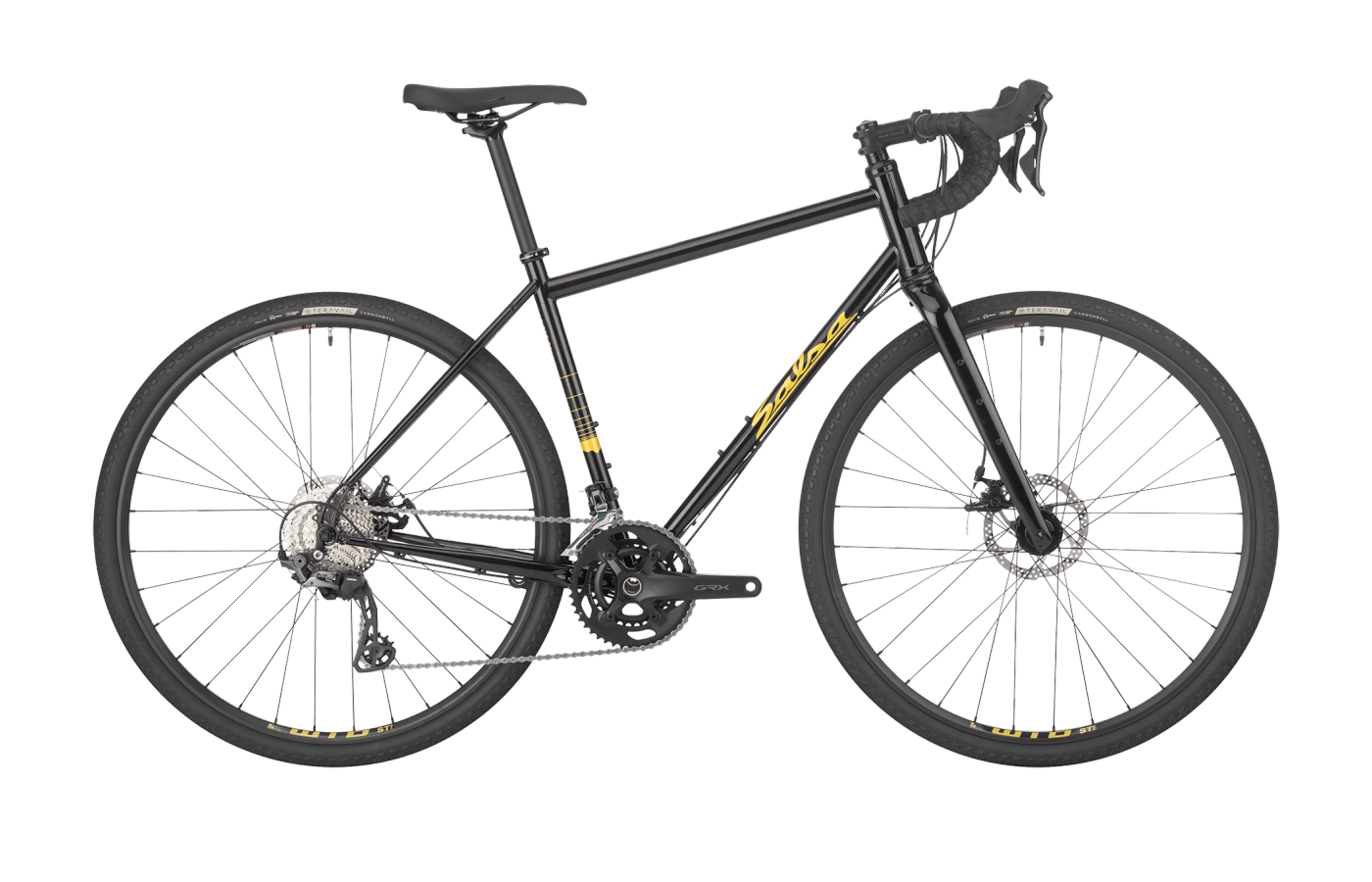
Vaya
The Salsa Vaya plays in the same lane as the standard Sutra — classic steel all-road touring with comfortable geometry and ample mounts. A good cross-shop if Kona's color year doesn't grab you.
Compare →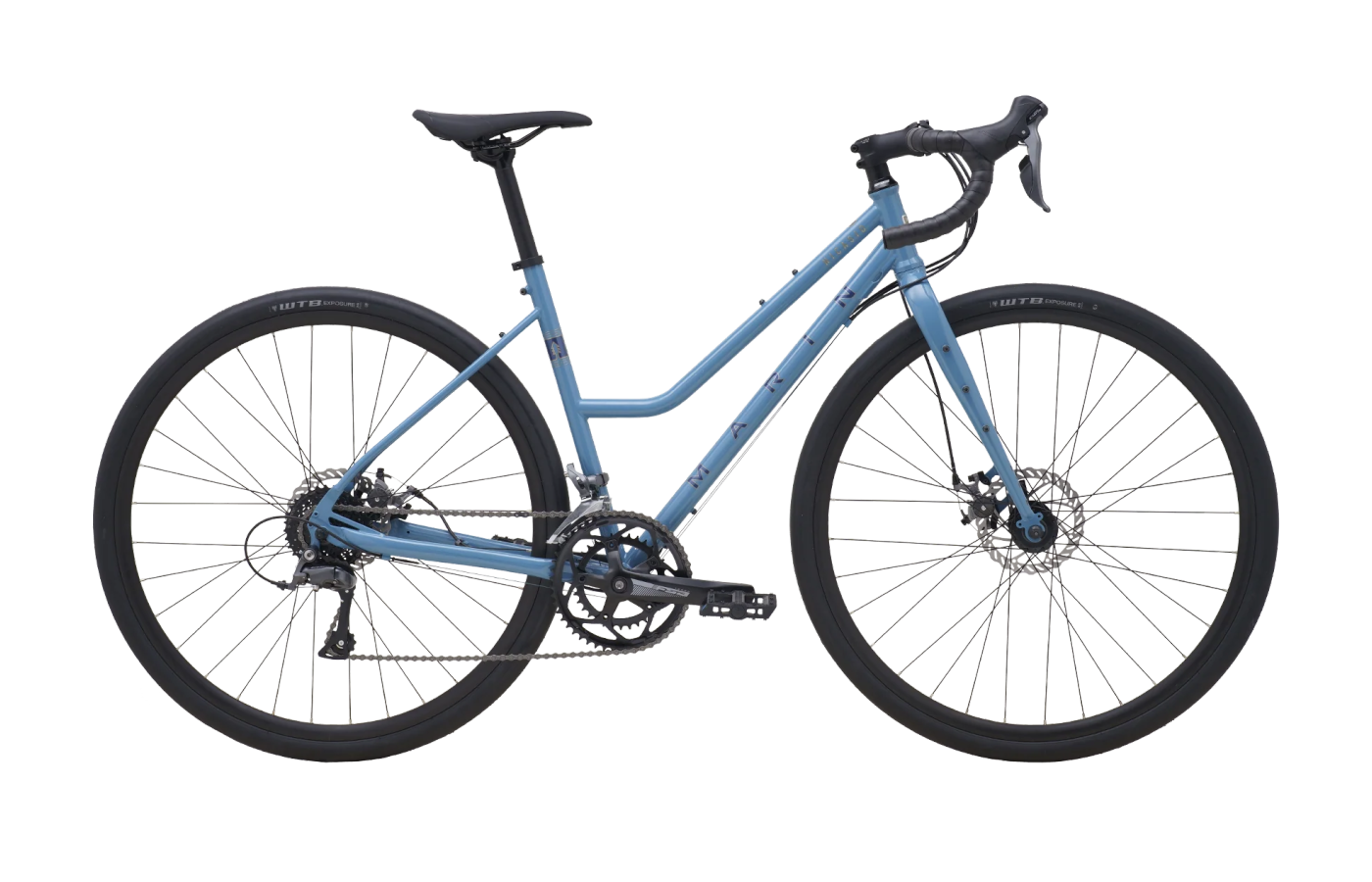
Nicasio
The Marin Nicasio is the budget-friendlier cousin to the Four Corners — same steel comfort, lighter on the touring-specific features, more at home as a daily commuter or light gravel rig.
Compare →